Disclaimer: The information provided in this article is for educational and informational purposes. I am NOT a licensed veterinarian. Blood in the urine or an inability to urinate is a medical emergency. Always consult a licensed veterinarian immediately if you observe these symptoms in your dog. This article is based on the experience of a French Bulldog breeding expert with over 10 years in the breed.
There are few things that panic a dog owner faster than seeing drops of bright red blood in the snow, on the pee pad, or on the grass when their French Bulldog goes outside.
Related Reading: Training & Behavior | Frenchie Puppy Guide | Best Food for Frenchies
When owners contact me about a Frenchie showing urinary symptoms, I always advise: get to the veterinarian immediately. The two most common causes of urinary symptoms in French Bulldogs are Urinary Tract Infections (UTIs) and Bladder Stones (Urolithiasis).
This guide will help you understand what causes these conditions, how to recognize symptoms, and what to expect from your veterinarian.
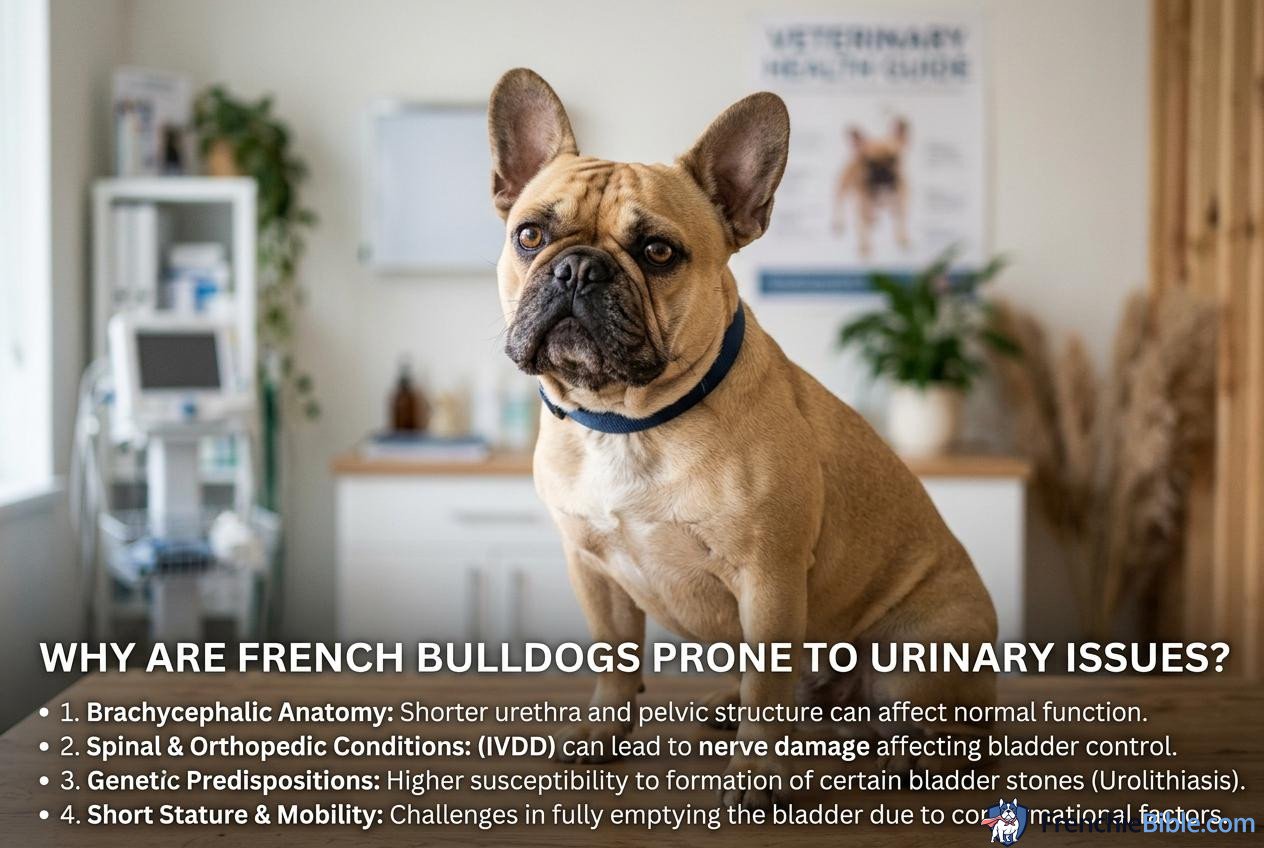
Why Are French Bulldogs Prone to Urinary Issues?
The Recessed Vulva
Many female French Bulldogs have a recessed vulva due to their compact, stocky build and excess skin folds. When the vulva is tucked deep inside a skin fold, urine can pool in this area, creating a warm, moist environment that promotes bacterial growth.
Tail Pocket Infections
French Bulldogs have tightly coiled tails. The area beneath the tail (the tail pocket) can accumulate dirt, dead skin, and fecal matter. If not cleaned regularly, this area can develop infections that spread to nearby urinary structures.
Anatomy in Male Frenchies
Male French Bulldogs have a narrower, longer urethra than females, making them more susceptible to urinary blockages from crystals or small stones.
Bladder Stones (Uroliths): What Are They?
Bladder stones occur when microscopic mineral crystals in the urine aggregate over time, forming hard structures inside the bladder.
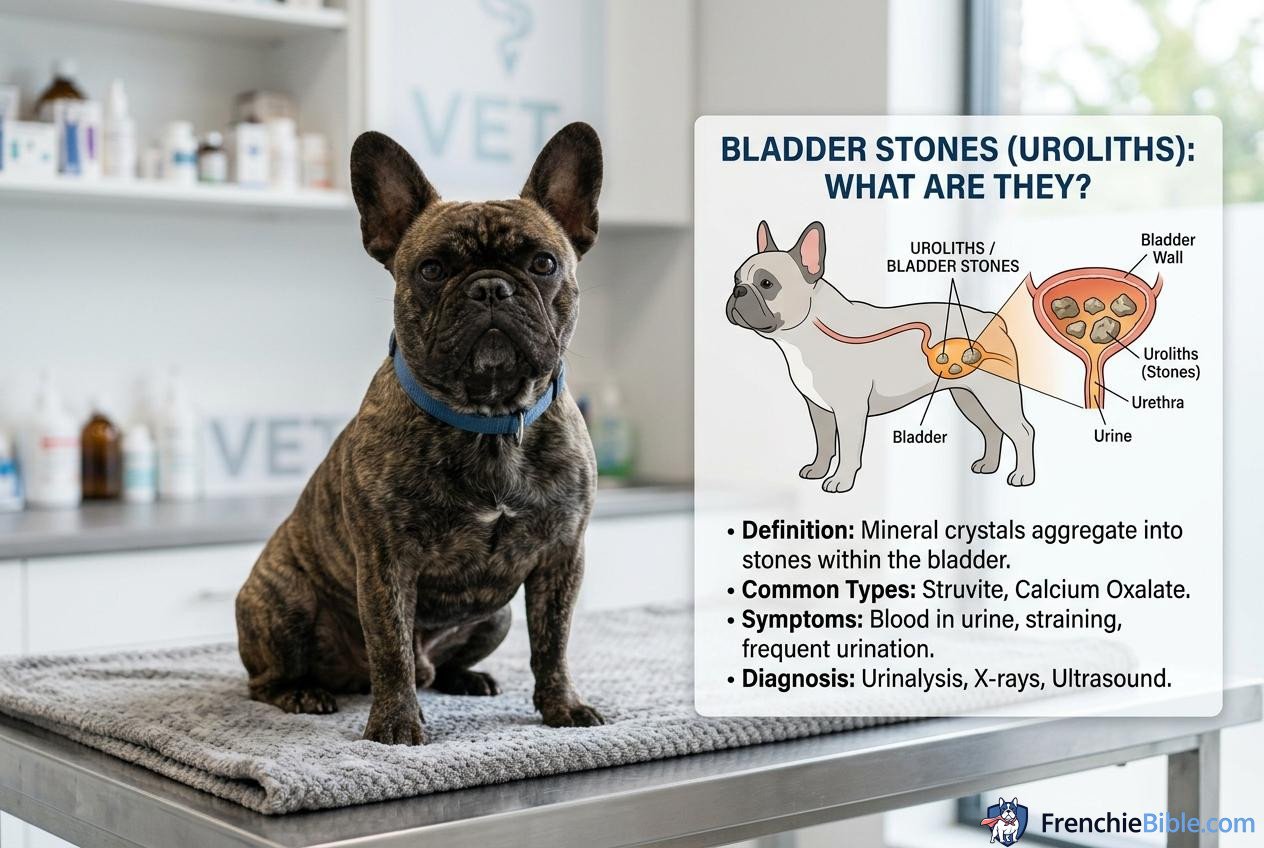
These stones scrape against the bladder wall with every urination, causing severe bleeding and inflammation.
There are different types of bladder stones, and they require different treatment approaches. Your veterinarian will determine the specific type through urinalysis and diagnostic imaging.
Struvite Stones
These stones are often associated with urinary tract infections. Treatment typically involves curing the infection and dietary management.
Calcium Oxalate Stones
These stones are not associated with infection. They require different management and may require surgical removal. Discuss options with your veterinarian.
The Emergency: Urethral Blockage
This is a medical emergency, particularly in male French Bulldogs. If a small stone gets stuck in the urethra, the dog cannot urinate. Without immediate veterinary intervention, this can be fatal within 24 to 48 hours. If your male Frenchie is straining to urinate and producing no urine, rush to the nearest emergency vet immediately.
Symptoms: How to Spot Urinary Issues Early
Watch your Frenchie closely for these warning signs:
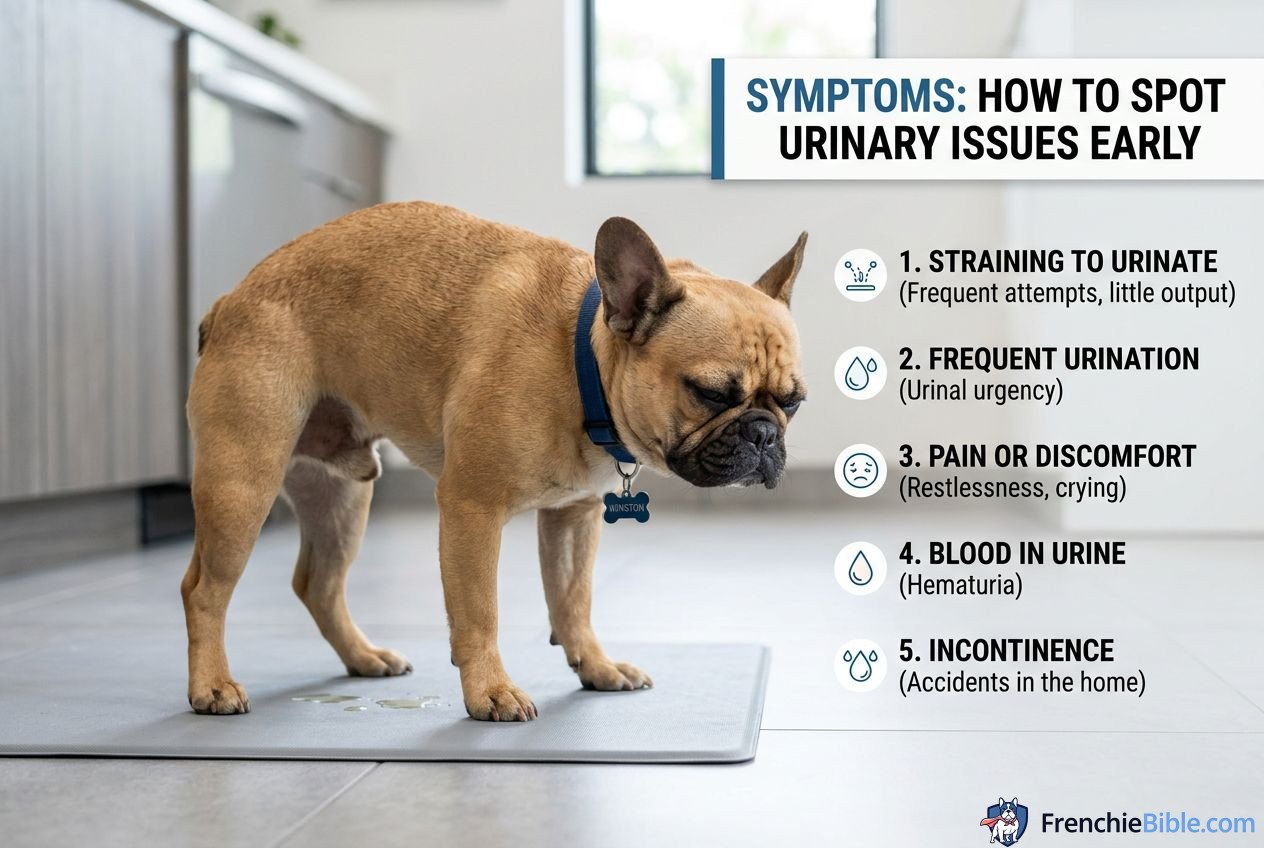
- Frequent Urination: Asking to go outside every 30 minutes, or having sudden accidents.
- Straining to Urinate: Squatting or lifting their leg for a long time, but only producing a few drops.
- Blood in Urine: Urine that is pink, red, or contains visible clots.
- Excessive Licking: Constantly licking their genital area.
- Strong Foul Odor: Urine that smells exceptionally bad.
- Lethargy or Loss of Appetite.
The Veterinary Diagnostic Process
Your veterinarian will perform a comprehensive workup:
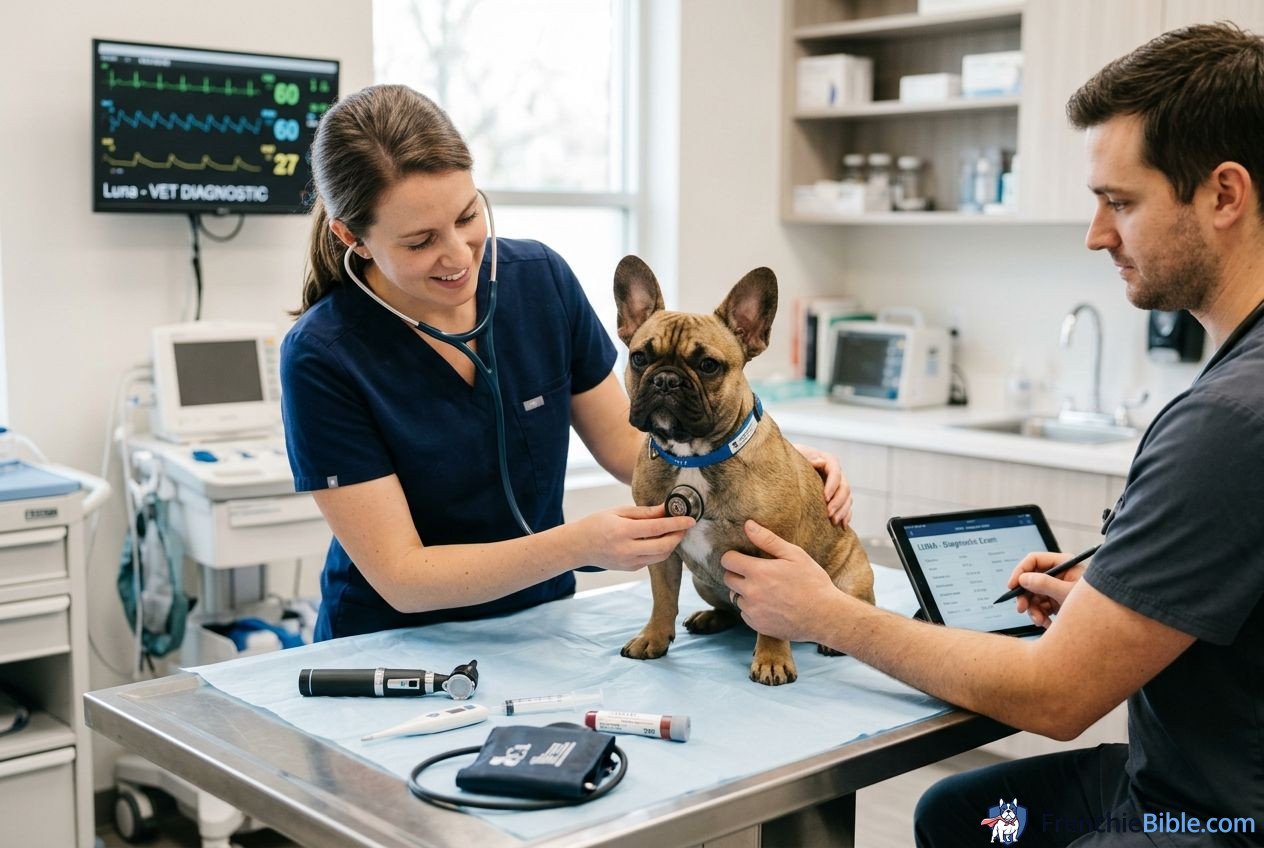
- Urinalysis with Sediment Exam: Checking pH, white blood cells, red blood cells, and crystal types.
- Urine Culture and Sensitivity: For recurrent infections, this identifies the exact bacteria and the most effective antibiotic.
- X-Rays or Ultrasound: To visualize the bladder and determine the size and location of any stones.
Treatment and Long-Term Management
Dietary Management
Many urinary issues benefit from dietary changes. Your veterinarian may recommend a specific prescription diet to manage crystal formation and maintain urinary health. Never change your dog’s diet without consulting your veterinarian.
Surgical Intervention
Some stones, particularly larger ones, may require surgical removal. Your veterinarian will discuss whether this is necessary for your dog.
Increased Hydration
Increasing water intake helps flush the bladder. Strategies include:
- Switching from dry kibble to canned (wet) food.
- Adding low-sodium broth to water (without onions or garlic).
- Providing multiple water bowls or a pet water fountain.
Prevention
- Keep Tail Pockets and Vulva Folds Clean: Clean the tail pocket and skin folds regularly with appropriate wipes. Discuss proper cleaning techniques with your veterinarian.
- Fresh Water at All Times: Ensure your dog has constant access to clean water.
- Regular Bathroom Breaks: Do not let your dog hold urine for extended periods.
- Regular Veterinary Check-Ups: Annual exams can catch early urinary issues before they become emergencies.
Frequently Asked Questions (FAQ)
1. Can I give my French Bulldog Cranberry extract to prevent UTIs?
Cranberry supplements may help prevent bacteria from adhering to the bladder wall in some cases. However, for an active infection, veterinary antibiotics are required. Never treat a UTI at home without veterinary supervision.
2. Are male or female French Bulldogs more prone to urinary issues?
Females are more prone to urinary tract infections due to their shorter urethra. Males are at higher risk for fatal urinary blockages.
3. Why is my Frenchie leaking urine when they sleep?
This is called urinary incontinence and can have several causes. Your veterinarian can diagnose the specific cause and recommend appropriate treatment.
4. Can stress cause my French Bulldog to get a UTI?
Stress can lower a dog’s immune response, potentially making them more susceptible to infections. Discuss stress management with your veterinarian.
5. How do I properly clean my French Bulldog’s tail pocket?
Ask your veterinarian to demonstrate proper tail pocket cleaning. Generally, gentle cleaning with appropriate wipes followed by thorough drying is recommended. Your vet will advise on the best products and techniques.
This article is based on the experience of a French Bulldog breeding expert. It is NOT veterinary medical advice. Always work with your veterinarian for urinary health concerns.
Disclaimer: I am a French Bulldog breeding expert with over a decade of hands-on experience with this breed. I am not An Experienced Breedererinarian. The information in this article is for educational purposes only. Always consult your veterinarian regarding your dog’s specific health needs and care.
Disclaimer: I am a French Bulldog breeding expert with over a decade of hands-on experience with this breed. I am not a veterinarian. The information in this article is for educational purposes only. Always consult your veterinarian regarding your dog’s specific health needs and care.