
as a French Bulldog expert and breeder and experienced breeder, few things break my heart more than receiving a panicked phone call from an owner saying, “My Frenchie’s back legs suddenly stopped working,” or “My Frenchie is dragging their hind legs.” This terrifying scenario is one of the most common and critical medical emergencies in the breed.
French Bulldogs are incredibly prone to back issues, primarily Intervertebral Disc Disease (IVDD). When a disc in their spine ruptures or bulges, it compresses the spinal cord, leading to sudden weakness, excruciating pain, and in severe cases, complete paralysis.
Related Reading: Training & Behavior | Grooming & Care | French Bulldog Colors
If you are reading this because your Frenchie is currently dragging their legs, stop reading, put your dog in a small crate where they cannot move, and head to the emergency vet. If you are here to learn, prepare, and protect your Frenchie, read every single word of this comprehensive guide. We will cover exactly why this happens, the emergency protocol you must follow, veterinary treatments, surgical options, and how to manage your Frenchie’s recovery and long-term health.
Understanding Why Your Frenchie’s Hind Legs Are Suddenly Weak
Sudden hind limb paresis (weakness) or paralysis in a French Bulldog is almost always a spinal issue rather than a problem with the legs themselves. To understand why your dog’s legs aren’t working, you have to look at their spine.
Intervertebral Disc Disease (IVDD): The #1 Culprit in French Bulldogs
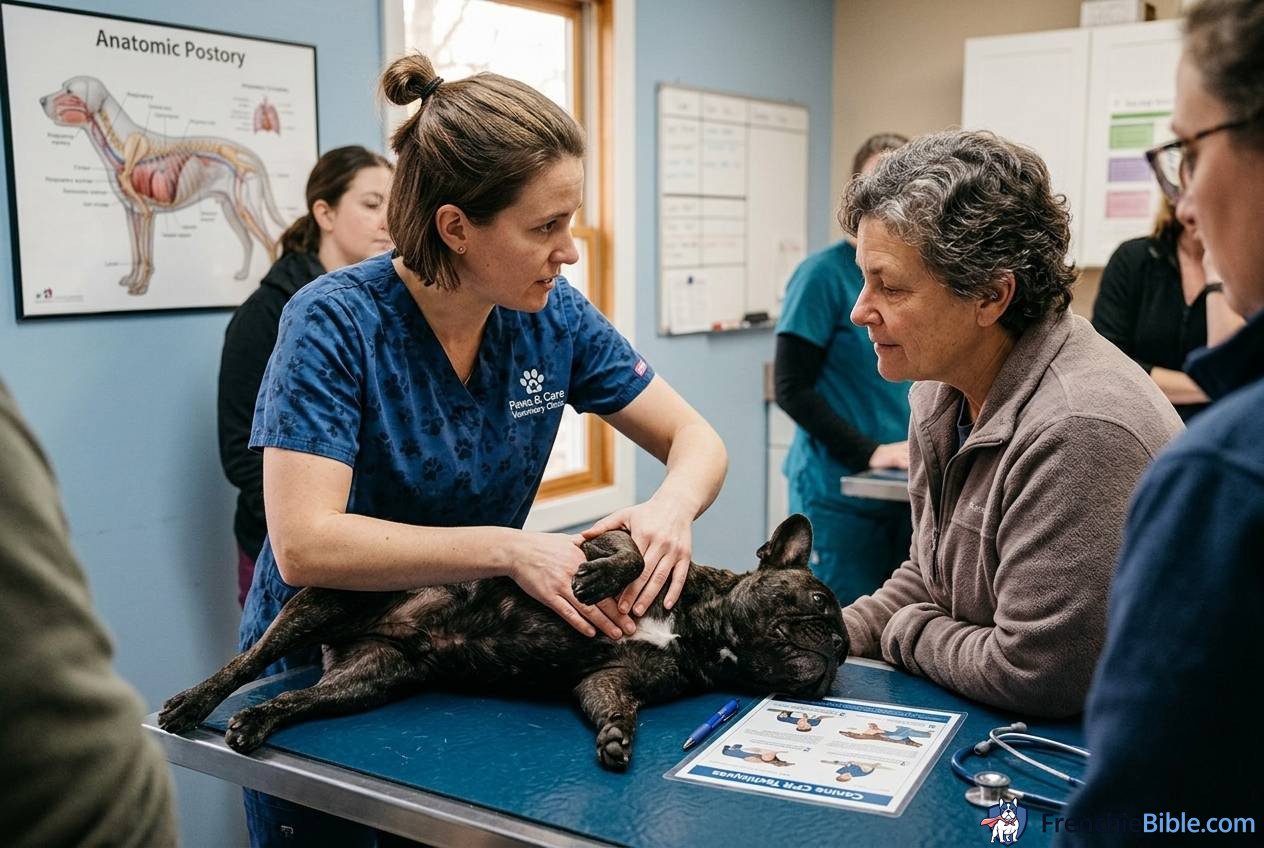
French Bulldogs are a chondrodystrophic breed, meaning they are genetically predisposed to having short legs and long backs. This genetic makeup also causes their intervertebral discs—the spongy, shock-absorbing cushions between the bones of the spine (vertebrae)—to degenerate and calcify prematurely.
Instead of remaining soft and flexible, these discs become brittle and hard, often within the first year or two of a Frenchie’s life (Hansen Type I IVDD). When the dog jumps off a couch, twists suddenly, or even just steps awkwardly, the hardened outer layer of the disc (annulus fibrosus) can rupture. The inner jelly-like material (nucleus pulposus) is then forcefully extruded upward into the spinal canal.
The spinal cord is housed within this canal, and it is a highly sensitive bundle of nerves responsible for transmitting signals from the brain to the legs and bladder. When the extruded disc material hits the spinal cord, it causes immediate bruising, swelling, and compression.
The severity of the symptoms depends on how hard the disc hit the spinal cord, how much material is compressing it, and how long the compression lasts. This is why immediate veterinary intervention is critical. The longer the spinal cord is compressed, the more permanent nerve damage occurs.
Other Potential Causes for Hind Leg Weakness
While IVDD is the most common cause (accounting for roughly 90% of sudden hind leg weakness in Frenchies), a thorough veterinary exam is necessary to rule out other potential causes, including:
- Fibrocartilaginous Embolism (FCE): Also known as a spinal stroke, this occurs when a small piece of cartilage breaks off and blocks a blood vessel supplying the spinal cord. It typically happens suddenly during vigorous exercise, is non-progressive after the first 24 hours, and is usually painless.
- Spinal Tumors or Cancers: Growths on or near the spine can slowly or suddenly compress the spinal cord.
- Trauma/Fractures: A severe fall or being hit by a car can cause spinal fractures or luxations.
- Infectious or Inflammatory Conditions: Conditions like meningitis or diskospondylitis (infection of the disc and adjacent vertebrae) can cause severe pain and neurological deficits.
- Degenerative Myelopathy (DM): A progressive, painless disease of the spinal cord that causes gradual weakness and eventual paralysis. It is typically seen in older dogs and progresses over months, not suddenly.
The Stages of IVDD in French Bulldogs
Veterinarians and neurologists classify IVDD into five distinct grades or stages. Knowing these stages helps determine the prognosis and the most appropriate course of treatment.

Stage 1: Mild Pain and Discomfort
At this stage, your Frenchie is experiencing neck or back pain, but there are no neurological deficits. They can walk normally, but they might be reluctant to move, arch their back (kyphosis), keep their head down, tremble, pant excessively, or cry out when picked up.
Stage 2: Moderate Pain and Neurological Deficits
The dog still has motor function (can walk), but they are noticeably weak, uncoordinated, or “drunk” in their hind end (ataxia). They may cross their back legs when walking or drag their toes, causing the tops of their nails to scuff the ground.
Stage 3: Severe Paresis (Partial Paralysis)
The Frenchie can still move their hind legs slightly but cannot bear weight or stand on their own. They essentially drag their hind end, but if you pinch their toes, they can still consciously pull their leg away and feel the pain.
Stage 4: Complete Paralysis with Deep Pain Sensation
At this stage, the dog is completely paralyzed in the hind limbs (paraplegia). They cannot move their legs at all and cannot bear weight. They may also lose control of their bladder and bowels. However, when the veterinarian aggressively pinches their toes with hemostats, the dog turns its head, cries, or reacts, indicating that deep pain sensation is still traveling up the spinal cord to the brain.
Stage 5: Complete Paralysis with No Deep Pain Sensation
This is the most severe and critical stage. The dog is completely paralyzed, incontinent, and when the toes are aggressively pinched, they show absolutely no conscious reaction. This means the nerve pathways responsible for transmitting deep pain are completely blocked or destroyed. This is an extreme surgical emergency. If surgery is not performed within 12 to 24 hours of losing deep pain sensation, the chances of the dog ever walking again drop to less than 5%.
Immediate Emergency Protocol: What to Do RIGHT NOW
If you notice your French Bulldog suddenly losing function of their hind legs, dragging their feet, or crying in severe back pain, how you react in the first few minutes and hours can drastically alter their prognosis.
1. Do NOT Panic (But Act Fast)
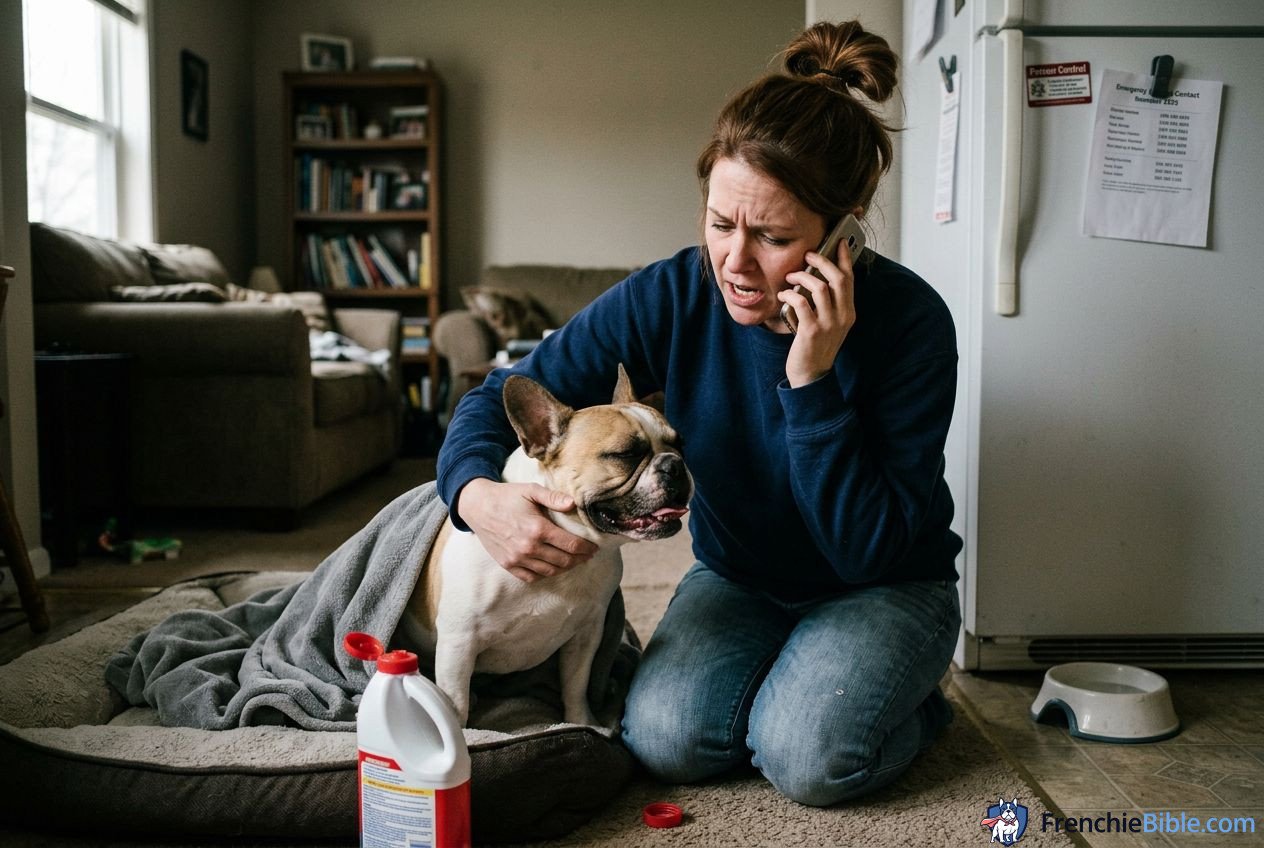
Your dog is likely in immense pain and terrified because they don’t understand why their body isn’t working. If you panic, they will panic, which can cause them to thrash around and worsen the spinal cord damage. Stay calm, speak softly, and act methodically.
2. Implement Strict Crate Rest Immediately
The absolute most important thing you must do is restrict their movement. Pick your dog up extremely carefully (keeping their spine perfectly level—do not let their back sag or twist) and place them in a small travel crate. The crate should be only large enough for them to stand up, turn around, and lie back down.
Do not let them walk to the car. Do not let them try to “walk it off.” Do not test their reflexes yourself. Every single step they take could cause more disc material to extrude and sever the spinal cord further.
3. Prevent Any Jumping, Stairs, or Rough Play
If your dog is only showing signs of Stage 1 or 2 (pain and slight wobbliness), it is crucial to prevent them from jumping on or off furniture, using stairs, or playing with other pets. Carry them outside to go potty, keep them on a short leash, and immediately bring them back to the crate.
4. Transporting Your Frenchie to the ER Safely
When transporting your Frenchie to the emergency vet, keep them confined to the crate in the car. Carry the crate like a fragile box of glass. If you must lift the dog without a crate, place one arm under their chest between their front legs, and your other arm under their hind end, keeping their spine completely straight and supported.
Call the emergency clinic while you are on your way. Tell them, “I am bringing in a French Bulldog that has suddenly lost the use of its hind legs. I suspect a ruptured disc.” This allows them to prepare for a neurological emergency.
At the Emergency Vet: What to Expect
When you arrive at the clinic, the veterinary team will prioritize your Frenchie based on the severity of their symptoms. Be prepared for the following procedures.
The Neurological Exam
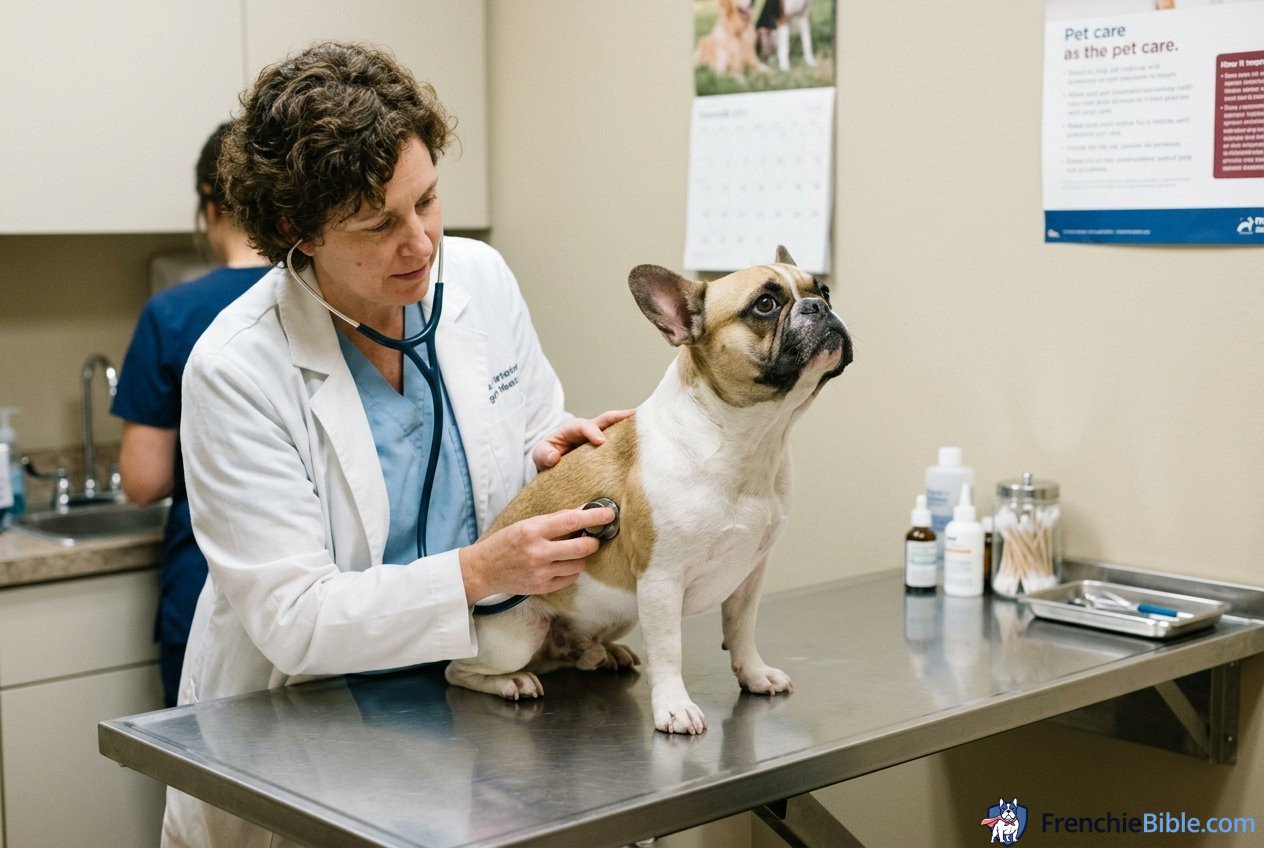
The veterinarian will perform a comprehensive neurological exam. They will observe how the dog walks (if they can), check their reflexes (like the patellar reflex), and test conscious proprioception (flipping the paw upside down to see how quickly the dog corrects it).
Crucially, they will test for deep pain sensation. Do not be alarmed if the vet pinches your dog’s toes quite hard with a medical instrument; this is the only way to accurately assess if the deepest pain pathways in the spinal cord are intact. This single test largely dictates the prognosis and treatment options.
Diagnostic Imaging (X-rays, MRI, CT Scan)
- Radiographs (X-rays): X-rays are typically the first step. While X-rays cannot show the spinal cord or the soft disc material, they can show narrowed disc spaces, calcified discs in other areas, and rule out fractures, tumors, or bone infections.
- MRI (Magnetic Resonance Imaging): An MRI is the gold standard for diagnosing IVDD. It provides highly detailed images of the spinal cord, nerve roots, and discs. It allows the neurologist to pinpoint the exact location of the ruptured disc, assess the severity of spinal cord compression, and determine if surgery is viable.
- CT Scan (Computed Tomography): Sometimes used instead of an MRI, a CT scan is excellent for visualizing bone and calcified disc material. While slightly less detailed for soft tissue than an MRI, it is much faster and often more readily available in emergency settings.
Medical vs. Surgical Management Decisions
Based on the neurological exam and imaging, the veterinarian will discuss treatment options. Generally:
– Stages 1 and 2 (and sometimes early Stage 3) are often candidates for conservative medical management.
– Stages 3, 4, and especially Stage 5 strongly require immediate surgical intervention for the best chance of recovery.
Medical Management for Mild IVDD Cases
If your Frenchie is diagnosed with mild IVDD (pain only or very mild wobbliness) and the vet believes medical management is appropriate, this route requires extreme dedication and strict adherence to protocol.
Strict Crate Rest (The Cornerstone of Healing)
This is not negotiable. Medical management involves 4 to 8 weeks of absolute, strict crate rest.
– The crate must be small.
– The dog is only allowed out to go to the bathroom.
– When taken out to potty, they must be carried or placed in a stroller/wagon, placed gently on the grass, and kept on a short leash or harness.
– No walks, no stairs, no jumping, no playing.
– The goal is to allow the ruptured disc capsule to scar over and heal, and for the swelling around the spinal cord to subside. If the dog is allowed to move freely, the disc will continue to leak, and the condition will rapidly deteriorate.
Pain Management and Anti-inflammatory Medications
The veterinarian will prescribe a robust combination of medications:
– NSAIDs (Non-Steroidal Anti-Inflammatory Drugs): Such as Carprofen or Meloxicam, to reduce inflammation around the spinal cord. (Note: Steroids like Prednisone are sometimes used instead, but NSAIDs and steroids must NEVER be given together due to the risk of severe gastrointestinal ulceration.)
– Nerve Pain Relievers: Medications like Gabapentin or Pregabalin are crucial for targeting the specific type of neuropathic pain associated with spinal cord compression.
– Muscle Relaxants: Methocarbamol is often prescribed to relieve the severe muscle spasms that occur in the back to “guard” the injured spine.
– Opioids: In severe cases, stronger pain relievers like Buprenorphine or Tramadol may be necessary.
Laser Therapy and Acupuncture
Many owners find incredible success combining conventional medical management with alternative therapies. Cold laser therapy (photobiomodulation) reduces inflammation and accelerates tissue healing. Veterinary acupuncture can stimulate nerve pathways, relieve muscle tension, and provide significant pain relief. These therapies should only be performed by certified veterinary professionals.
Surgical Intervention for Severe IVDD Cases
For French Bulldogs presenting with severe paresis, complete paralysis, or rapid deterioration, surgery is the most effective and often the only treatment option that offers a realistic chance of recovery.
Hemilaminectomy (The Standard IVDD Surgery)
The most common surgery for IVDD in the mid-to-lower back (thoracolumbar spine) is a hemilaminectomy. This procedure is performed by a board-certified veterinary surgeon or neurologist.
During the surgery, the dog is placed under general anesthesia. The surgeon makes an incision over the affected area of the spine, drills a small “window” through the bone of the vertebra (the lamina) to access the spinal canal, and carefully scoops out the extruded disc material. This immediately relieves the pressure on the spinal cord, allowing blood flow to return and giving the nerves a chance to heal.
Success Rates and Post-Surgical Recovery
The success rate of IVDD surgery heavily depends on the dog’s neurological grade prior to surgery:
– Stages 2, 3, and 4: If surgery is performed promptly, success rates (defined as the dog regaining the ability to walk and control its bladder) are generally excellent, often exceeding 85-95%.
– Stage 5 (No Deep Pain): If surgery is performed within 12-24 hours of losing deep pain, the success rate drops to around 50%. If surgery is delayed beyond 48 hours, the prognosis for walking again is incredibly poor (less than 5%).
Recovery from surgery is a long process. The dog will likely stay in the hospital for 3 to 7 days for pain management, IV fluids, and initial physical therapy. Once home, they will require 4 to 6 weeks of strict crate rest, intensive nursing care, bladder expression (if they remain incontinent), and professional physical rehabilitation (underwater treadmill, laser therapy, passive range of motion exercises) to retrain the brain-muscle connection.
The Financial Aspect of IVDD Surgery
as a French Bulldog expert and breeder, I must be transparent: IVDD is incredibly expensive. An MRI alone can cost $2,500 to $4,000. Hemilaminectomy surgery, including imaging, anesthesia, hospital stay, and medications, typically ranges from $7,000 to $12,000+ depending on your location and the specific clinic.
This is why I adamantly urge every single French Bulldog owner to invest in high-quality, comprehensive pet insurance the day they bring their puppy home. Ensure the policy covers hereditary and congenital conditions and has no breed-specific exclusions for IVDD.
Long-Term Management and Preventing Future Flare-Ups
Whether your Frenchie recovers through conservative medical management or surgery, their spine is compromised, and they are at a high risk for rupturing other discs in the future. You must drastically alter their lifestyle to protect their back.
Weight Management: Keeping Your Frenchie Lean
Obesity is the enemy of a French Bulldog’s spine. Every extra pound your dog carries places immense, unnecessary stress on their intervertebral discs. You should be able to easily feel your Frenchie’s ribs without pressing hard, and they should have a visible “tuck” at their waist when viewed from above and the side. Consult your vet to calculate their exact daily caloric needs and stick to it strictly.
Harnesses Instead of Collars
Never walk a French Bulldog with a collar attached to a leash. Pulling on a collar places extreme strain on the cervical (neck) spine, which can cause cervical IVDD. Always use a well-fitted, Y-shaped harness that distributes pressure across the chest and shoulders, rather than the neck and spine.
Ramps and Stairs: Modifying Your Home Environment
Jumping off furniture is one of the most common triggers for disc ruptures.
– Train them early: Teach your Frenchie to use ramps or pet stairs to get on and off the couch and bed.
– Car travel: Lift them into the car or use a ramp; do not let them jump out of the SUV.
– Flooring: Lay down area rugs or yoga mats on slick hardwood or tile floors to prevent slipping, splaying, and awkward twisting.
Joint Supplements and Ongoing Care
While supplements cannot prevent IVDD (which is a genetic disease of the disc structure), they can support overall joint and tissue health. Look for high-quality supplements containing Glucosamine, Chondroitin, MSM, Omega-3 fatty acids (fish oil), and Green-Lipped Mussel. Regular, low-impact exercise (like controlled leash walking or swimming) is excellent for maintaining core muscle strength, which helps support the spine.
Living with a Paralyzed French Bulldog: Wheelchairs and Quality of Life
If your Frenchie suffered a Stage 5 rupture and surgery was unsuccessful, or if surgery was not financially viable, they may remain permanently paralyzed. This is a devastating reality, but it is crucial to understand that a paralyzed French Bulldog can still live a wildly happy, fulfilling, and joy-filled life. Dogs do not experience self-pity; they adapt with astonishing resilience.
Expressing Bladders and Bowel Management
The most challenging aspect of caring for a paralyzed dog is managing their bodily functions. Most paralyzed Frenchies lack the neurological control to empty their bladders fully. If urine sits in the bladder, it rapidly leads to life-threatening urinary tract infections (UTIs) and kidney damage.
You will need to learn how to manually “express” (squeeze) their bladder 3 to 4 times a day. Your veterinarian or vet tech will teach you the proper technique. It requires patience and practice, but it quickly becomes a routine part of your daily life. Bowel movements are often easier; paralyzed dogs will typically drop stool passively when their colon is full, or you can stimulate the anus to encourage them to go.
Custom Wheelchairs (Carts) for Frenchies
A custom-built canine wheelchair (cart) will give your paralyzed Frenchie their freedom back. Companies like Eddie’s Wheels, Walkin’ Pets, and K9 Carts build carts specifically measured to your dog’s dimensions.
Once fitted into their cart, most Frenchies zoom around, chase balls, go on long walks, and play just like they did before. The cart supports their hind end, allowing them to use their strong front legs to pull themselves along. It is incredibly heartwarming to watch a paralyzed dog realize they can run again.
Frequently Asked Questions (FAQ)
1. Can a French Bulldog recover from IVDD without surgery?
Yes, but it depends entirely on the severity (Stage) of the IVDD. Stages 1 and 2 (pain and mild weakness) often respond well to strict crate rest (4-8 weeks) and intense medical management. However, Stages 3, 4, and 5 usually require surgery for a favorable outcome. Even with successful medical management, the risk of recurrence is high.
2. How much does IVDD surgery cost for a French Bulldog?
The cost is significant. Expect to pay between $7,000 and $12,000+ for the complete process, which includes the initial emergency visit, MRI/CT imaging, the hemilaminectomy surgery, anesthesia, hospitalization, and post-operative medications. Pet insurance is highly recommended.
3. My Frenchie is dragging their back legs but doesn’t seem to be in pain. Is it still an emergency?
Yes, absolutely. Sometimes, when a disc ruptures catastrophically, it damages the nerves so severely and quickly that the dog loses pain sensation entirely. A painless paralysis is often a sign of a Stage 5 rupture or a Fibrocartilaginous Embolism (FCE). Both require immediate emergency veterinary evaluation.
4. Are there any warning signs of IVDD before the legs stop working?
Sometimes there are subtle signs. Watch for shivering, panting (when not hot), reluctance to jump onto the couch, walking with an arched back (roaching), standing with the head held low, crying when picked up, or a sudden uncharacteristic aggression when touched near the back or neck. If you see these signs, implement crate rest and call your vet immediately.
5. Should I massage my Frenchie’s back if they are in pain?
No. Absolutely not. If your dog has an active disc rupture, massaging, manipulating, or applying heat/ice to the spine can cause further extrusion of the disc material into the spinal cord, worsening the damage. Do not touch their back. Put them in a crate and go to the vet.
6. Can CBD oil cure IVDD?
No. CBD oil cannot heal a ruptured disc or remove pressure from the spinal cord. However, high-quality, vet-approved CBD oil can be an excellent adjunct therapy for managing chronic pain, inflammation, and anxiety during the long crate rest recovery period. Always consult your vet before adding supplements.
7. Is it time to euthanize my Frenchie if they are permanently paralyzed?
In my professional and personal opinion, paralysis alone is rarely a reason for euthanasia, provided the owner is willing and able to manage the dog’s care. Paralyzed Frenchies equipped with a wheelchair and receiving proper bladder management can live full, happy, pain-free lives for many years. Euthanasia should only be considered if the dog is in intractable pain that cannot be managed, or if the owner simply cannot provide the necessary daily care (expressing bladders, preventing sores, etc.).
About the Author: as a French Bulldog expert and breeder and preservation breeder, I have dedicated my career to improving the health, structure, and longevity of this incredible breed. My mission is to educate owners on proactive care, recognize emergencies, and navigate the complex medical challenges that Frenchies face. Remember, you are your dog’s biggest advocate—act quickly, trust your instincts, and always seek professional veterinary care.
Disclaimer: We are not veterinarians and do not hold veterinary medical licenses. The information provided in this article is based on years of breeding and daily care experience and is for educational purposes only. It should not replace professional veterinary advice. Always consult with a licensed veterinarian if you have concerns about your French Bulldog’s health or before starting any new treatment.