
Disclaimer: The information provided in this article is for educational and informational purposes only and is not intended to replace professional veterinary advice, diagnosis, or treatment. Always seek the advice of your veterinarian with any questions you may have regarding your French Bulldog’s medical condition, weight management, or diet.
French Bulldogs are undeniably one of the most popular dog breeds in the world, beloved for their comical personalities, bat-like ears, and affectionate nature. However, as a specialized veterinarian and French Bulldog breeding expert, I witness a growing and heartbreaking epidemic in my clinic every single day: the devastating consequences of canine obesity. What many owners view as “cute,” “chubby,” or “big-boned” is, in reality, a fast track to chronic pain, loss of mobility, and a drastically shortened lifespan.
Related Reading: Training & Behavior | Frenchie Puppy Guide | Best Food for Frenchies
In this comprehensive guide, we will delve deep into the stark reality of how excess weight acts as a catalyst for Intervertebral Disc Disease (IVDD) and severe joint destruction in French Bulldogs. We will explore the unique anatomical challenges of the breed, the biomechanics of how fat crushes their spine and joints, and provide actionable, medically-sound strategies to help your Frenchie shed the pounds and reclaim a pain-free life.
The French Bulldog Anatomy: Why They Are Already at Risk
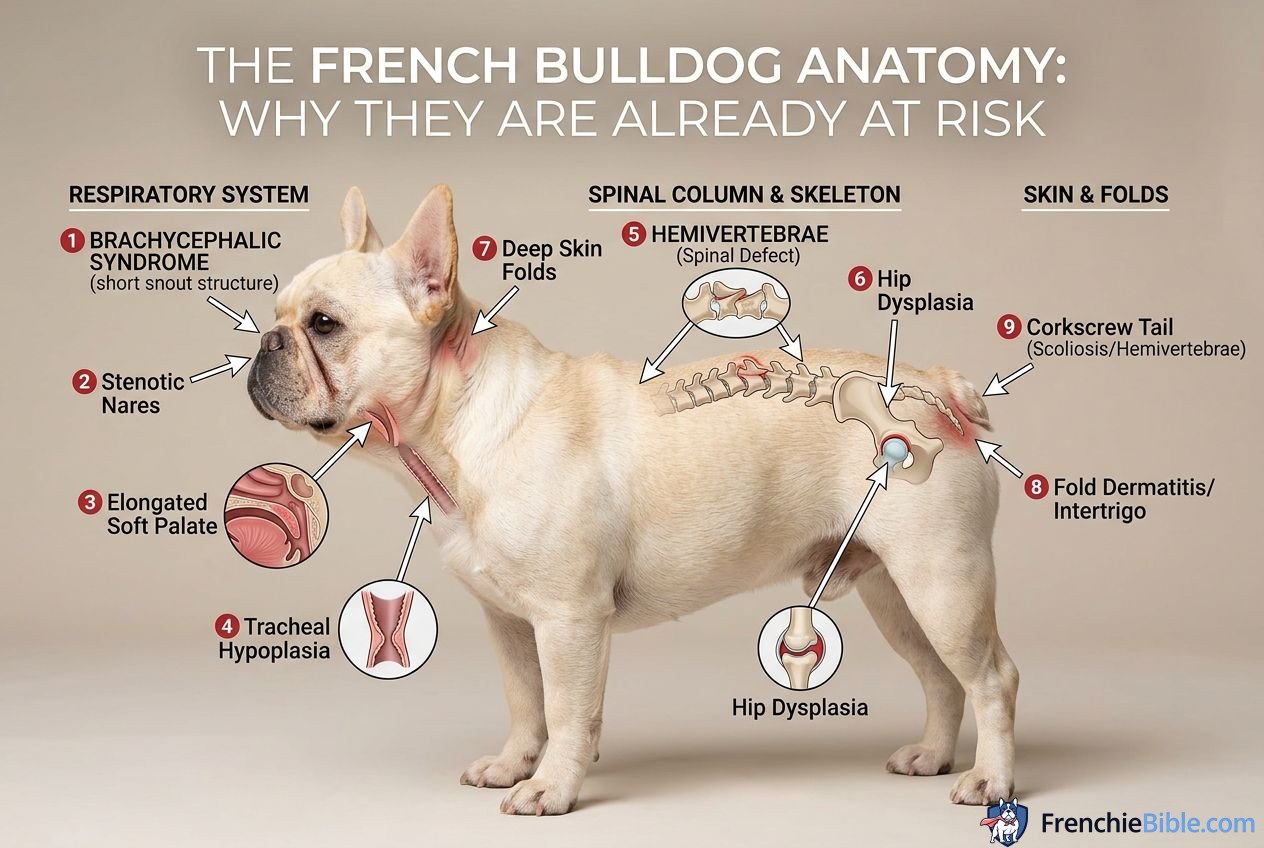
To understand why obesity is so catastrophic for a French Bulldog, we must first understand their unique anatomy. Frenchies are not built like standard dogs; they are the result of decades of selective breeding for specific aesthetic traits that, unfortunately, come with inherent structural vulnerabilities.
Chondrodystrophy (Dwarfism) in Frenchies
French Bulldogs are a chondrodystrophic breed. This means they carry a specific genetic mutation that causes dwarfism—specifically, shortened limbs and early degeneration of the cartilage within their intervertebral discs. Unlike non-chondrodystrophic breeds where discs remain plump and gelatinous for years, a Frenchie’s discs begin to calcify and harden very early in life, sometimes before they are even a year old. This premature aging of the spine makes them exceptionally prone to disc ruptures.
The Short Back and Hemivertebrae
In addition to dwarfism, Frenchies have been bred for a compact, cobby body. This shortened back often results in congenital spinal deformities, the most common being hemivertebrae (wedge-shaped or butterfly-shaped vertebrae). These malformed bones cause curvature of the spine (kyphosis or scoliosis) and create localized points of intense stress and instability along the vertebral column.
When you combine a structurally compromised spine, prematurely calcified discs, and the heavy, muscular build typical of the breed, you already have a perfect storm for spinal issues. Adding excess body fat to this precarious equation is akin to placing a boulder on a fragile glass table.
What is IVDD (Intervertebral Disc Disease) in French Bulldogs?
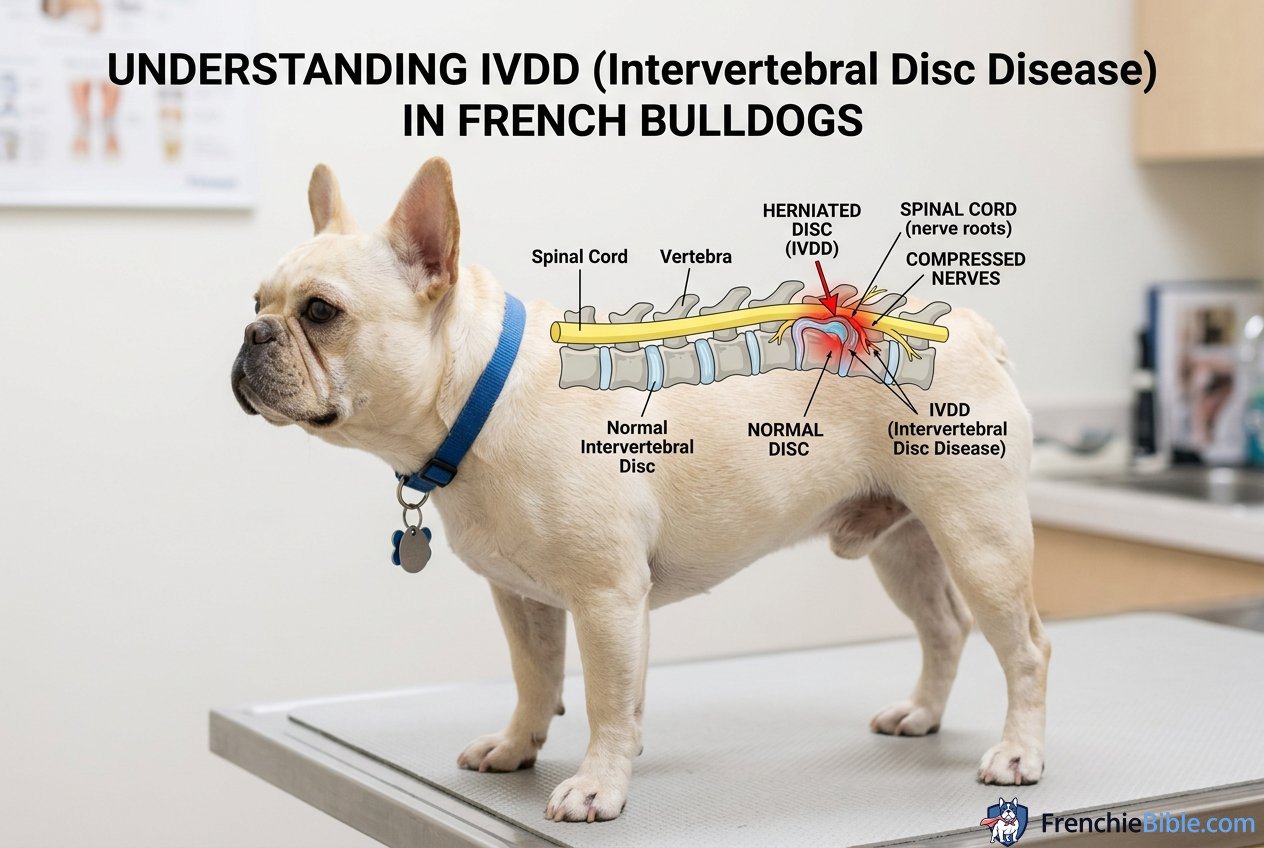
Intervertebral discs are the shock-absorbing cushions located between the bones (vertebrae) of the spine. They consist of a tough, fibrous outer ring (annulus fibrosus) and a soft, jelly-like center (nucleus pulposus). IVDD occurs when these discs degenerate, bulge, or rupture, putting immense pressure on the spinal cord and sensitive nerve roots.
Hansen Type I vs. Hansen Type II IVDD
In French Bulldogs, we primarily see Hansen Type I IVDD. Because of their chondrodystrophic genetics, the soft center of the disc turns dry and chalky early in life. A sudden movement—jumping off a couch, twisting to catch a ball, or even just a heavy stumble—can cause the brittle outer ring to tear, allowing the calcified center to burst upward into the spinal canal. This is an acute, explosive event that causes immediate, agonizing pain and, often, sudden paralysis.
Hansen Type II IVDD, on the other hand, is a slower, chronic bulging of the disc over time, more common in older, large-breed dogs, though it can still occur in Frenchies.
Symptoms to Watch For
Recognizing the early signs of IVDD can mean the difference between a full recovery and permanent paralysis. If your Frenchie exhibits any of the following, consider it a medical emergency:
- Unwillingness to jump, use stairs, or move normally.
- A hunched posture (roached back) with a tucked neck.
- Crying or yelping when picked up or petted along the back.
- Trembling, panting, or hiding (signs of severe pain).
- Dragging the back paws (knuckling over) or uncoordinated walking.
- Complete loss of movement in the hind legs.
- Inability to urinate or defecate.
The Devastating Impact of Obesity on a Frenchie’s Spine
Now, let us examine the role of obesity. Fat is not just inert tissue; it is extra mass that gravity relentlessly pulls downward. For a French Bulldog, carrying extra weight has catastrophic biomechanical consequences.
The Biomechanics of a Fat Frenchie
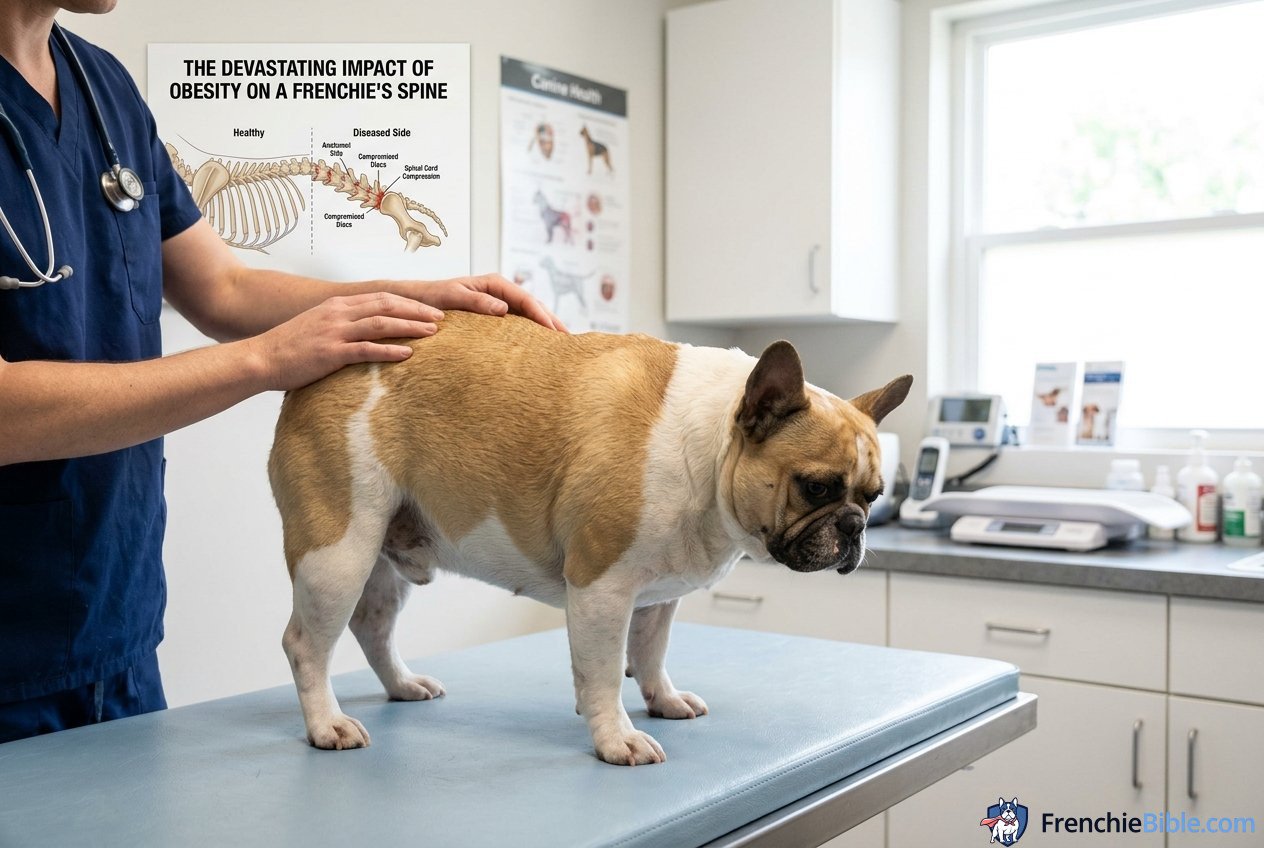
Imagine your Frenchie’s spine as a suspension bridge. The front and hind legs are the pillars, and the spine is the roadway connecting them. The intervertebral discs are the shock absorbers along the roadway.
When a Frenchie is a healthy weight, the bridge is stable. However, when you add pounds of excess fat, particularly around the chest and abdomen, it acts like a massive, continuous downward force on the middle of the bridge. The spine sags under the unnatural load. This constant downward pull forces the vertebrae to compress together, drastically increasing the pressure on the already fragile, calcified intervertebral discs.
Accelerated Disc Degeneration
The increased mechanical stress from carrying extra fat accelerates the degeneration process of the discs. The outer fibrous ring is subjected to higher friction and stretching, making it far more likely to tear during a normal, everyday movement. Furthermore, an overweight dog is generally less agile; they land heavier when they jump and are more prone to slipping, both of which are common triggers for acute Type I disc ruptures.
In my practice, I can confidently state that an overweight French Bulldog is exponentially more likely to suffer a severe IVDD episode than a lean one. Obesity turns a potential genetic vulnerability into an inevitable medical crisis.
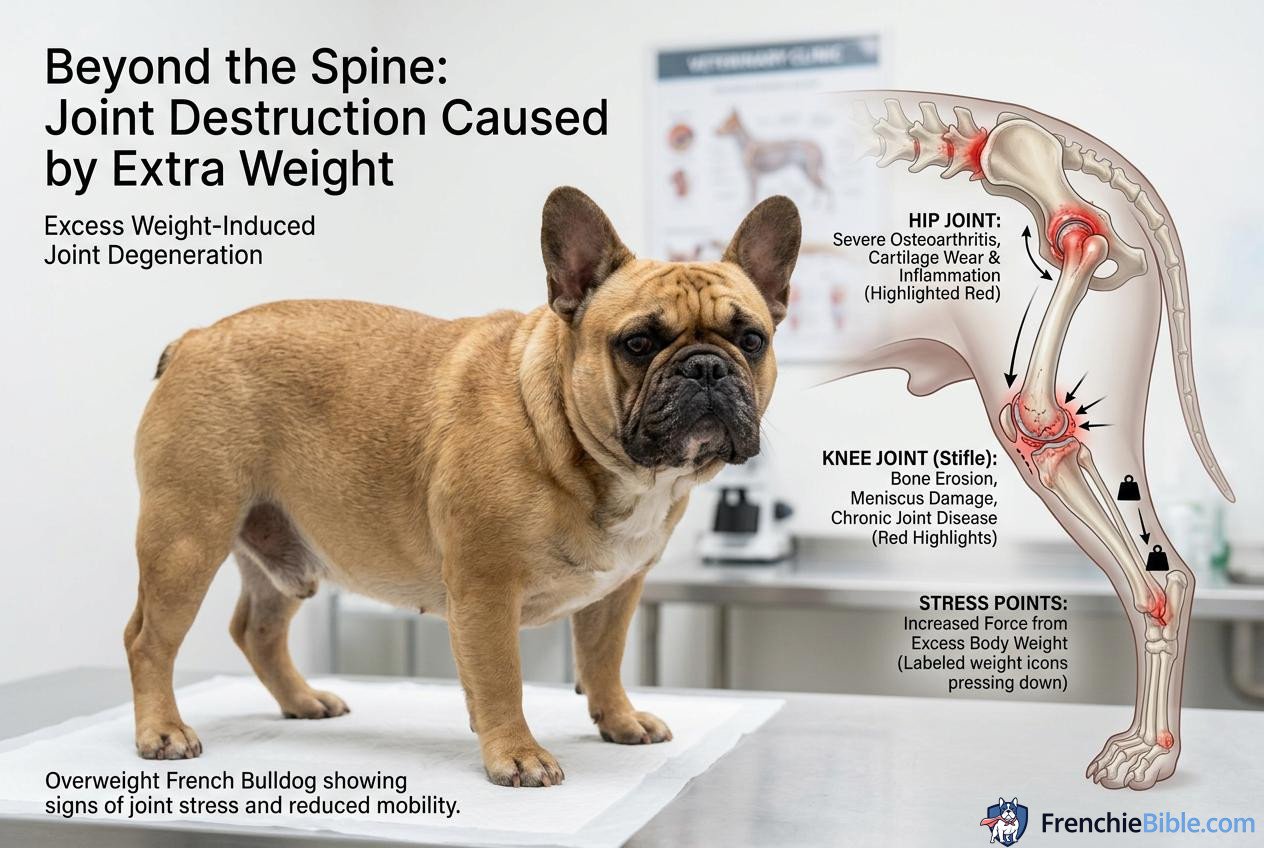
Beyond the Spine: Joint Destruction Caused by Extra Weight
While IVDD is the most terrifying consequence, excess weight systematically destroys every major joint in a French Bulldog’s body. Their skeletal structure is simply not designed to carry a heavy load.
Hip Dysplasia in Frenchies
Hip dysplasia is a genetic condition where the hip joint (a ball and socket mechanism) is malformed, causing the bones to grind against each other rather than glide smoothly. While genetics dictate the presence of dysplasia, weight dictates the severity of the symptoms.
An overweight Frenchie with mild hip dysplasia will experience rapid cartilage erosion, severe inflammation, and early-onset osteoarthritis. The extra pounds multiply the concussive force on the hip joints with every step, turning a manageable condition into a crippling one.
Luxating Patellas (Trick Knee)
A luxating patella occurs when the kneecap slips out of its normal groove. This is incredibly common in Frenchies due to their bow-legged stance. Carrying excess fat forces the dog to alter its gait to maintain balance, placing unnatural torque and lateral stress on the knees. This added stress stretches the ligaments that hold the kneecap in place, worsening the luxation and leading to painful arthritis and potential meniscal tears.
Cruciate Ligament Tears (CCL/ACL)
The Cranial Cruciate Ligament (equivalent to the human ACL) stabilizes the knee joint. Overweight dogs are at a dramatically higher risk of rupturing this ligament. A fat Frenchie has weakened joints and muscles. When they attempt a sudden turn or jump, the massive weight of their body continues in one direction while the leg is planted, snapping the ligament. A CCL tear requires expensive orthopedic surgery (like a TPLO) and months of grueling rehabilitation.
The Vicious Cycle: Pain, Inactivity, and Weight Gain
One of the most tragic aspects of canine obesity is the vicious cycle it creates.
- Weight Gain: The dog is overfed and under-exercised.
- Joint/Spinal Stress: The extra weight causes micro-trauma to the discs and joints, leading to inflammation and pain.
- Inactivity: Because it hurts to move, the dog becomes lethargic and stops exercising.
- Muscle Atrophy & More Weight Gain: Without exercise, muscle mass (which protects the joints) wastes away. At the same time, the lack of calorie burn leads to further fat accumulation.
Breaking this cycle requires a firm, committed intervention from the owner. You cannot exercise the weight off a dog that is in pain; the weight must come off through strict dietary management first.
Recognizing the Signs: Is Your Frenchie Overweight?
French Bulldogs are meant to be muscular and compact, not round and flabby. Many owners suffer from “fat blindness,” believing their obese dog is a normal size because society has normalized overweight pets.
Body Condition Score (BCS) Explained
Veterinarians use a 9-point Body Condition Score to assess a dog’s weight. A healthy Frenchie should be a 4 or 5 out of 9.
- BCS 1-3 (Underweight): Ribs, spine, and hip bones are highly visible from a distance. No body fat.
- BCS 4-5 (Ideal): You can easily feel the ribs under a thin layer of fat, but you cannot see them. When viewed from above, the dog has a noticeable waist behind the ribs. When viewed from the side, the abdomen tucks up neatly behind the rib cage.
- BCS 6-7 (Overweight): Ribs are difficult to feel under a thick layer of fat. The waist is barely visible or absent. The back is broad and flat.
- BCS 8-9 (Obese): Ribs cannot be felt at all. Massive fat deposits over the thorax, spine, and base of the tail. The abdomen is distended and hangs low (no tuck).
The “Sausage” Look vs. The “Tucked” Look
Look at your Frenchie from above. If they look like a solid cylinder or a sausage from their shoulders to their hips, they are overweight. A healthy Frenchie has an hourglass figure—broad shoulders, a tucked waist, and muscular hips. If you have to press hard to feel their ribs, it is time for a diet.
A Veterinarian’s Guide to Safe Weight Loss for French Bulldogs
If your Frenchie is overweight, do not panic, but do take immediate action. Weight loss must be gradual and controlled to prevent metabolic issues and muscle loss.
Calculating Caloric Needs
The first step is figuring out how many calories your dog actually needs. A generic formula for Resting Energy Requirement (RER) is:
RER = 70 x (Ideal Body Weight in kg)^0.75
To achieve weight loss, you generally feed about 80% of the RER for their ideal weight, not their current overweight. However, it is crucial to consult your veterinarian to calculate the exact caloric restriction needed for your specific dog to ensure they are still getting essential nutrients.
Choosing the Right Diet
Simply reducing the volume of their current high-calorie kibble will leave your dog starving and malnourished.
- Prescription Weight Loss Diets: These are often the safest route. They are formulated to be low in calories and fat but high in fiber (to keep the dog feeling full) and high in protein (to prevent muscle wasting during weight loss).
- Fresh Food/Raw Diets: If formulated correctly by a veterinary nutritionist, lean fresh diets can be excellent for weight loss due to higher moisture and protein content.
- Eliminate High-Calorie Treats: Cheese, peanut butter, and commercial dog biscuits are calorie bombs. Switch to low-calorie treats like green beans, carrots, or cucumber slices. Treat calories should never make up more than 10% of their daily intake.
Safe Exercise for Frenchies with Joint Pain
You cannot force a fat, painful Frenchie to run miles. Exercise must be low-impact to protect their spine and joints while they lose the initial weight through diet.
- Short, Frequent Walks: Several 10-minute walks are better than one exhausting 30-minute walk.
- Hydrotherapy: Walking on an underwater treadmill or swimming is the gold standard. The water provides buoyancy, taking the weight off the joints and spine while providing excellent resistance for muscle building and calorie burning.
- Physical Therapy Exercises: Passive range of motion (PROM) and gentle core-strengthening exercises (like balancing on a peanut ball) can be prescribed by a canine rehabilitation therapist.
Managing IVDD and Joint Pain: Treatment Options
If your overweight Frenchie is already showing signs of IVDD or joint destruction, immediate veterinary intervention is required.
Conservative Management
For mild joint pain or early-stage, non-paralyzing IVDD (where the dog can still walk and feel their toes), conservative treatment is the first step.
- Strict Crate Rest: For IVDD, this means 100% confinement to a small crate for 4 to 8 weeks to allow the disc to scar over and heal. No jumping, no stairs, no playing.
- Medications: Non-Steroidal Anti-Inflammatory Drugs (NSAIDs), muscle relaxants (like Methocarbamol), and nerve pain medications (like Gabapentin) are used to manage pain and reduce spinal swelling.
- Joint Supplements: High-quality Omega-3 fatty acids, Glucosamine, Chondroitin, and Adequan injections can help protect remaining cartilage and reduce joint inflammation.
Surgical Interventions
If a Frenchie loses the ability to walk, deep pain sensation is diminishing, or conservative management fails, surgery is often the only option.
- Hemilaminectomy/Laminectomy: A veterinary neurologist will surgically remove a portion of the vertebrae to access the spinal canal and extract the ruptured disc material that is crushing the spinal cord. This is expensive ($5,000 – $10,000+) and requires a long, intense recovery.
- Orthopedic Surgeries: Cruciate tears require TPLO or lateral suture surgeries; severe luxating patellas require surgical realignment of the knee.
Physical Therapy and Alternative Medicine
Post-surgery, or as part of long-term conservative management, rehabilitation is vital.
- Acupuncture and Cold Laser Therapy: Highly effective for reducing pain, decreasing inflammation, and stimulating nerve regeneration in IVDD patients.
- Targeted Physiotherapy: Helps rebuild lost muscle mass and reteach the dog how to walk (proprioception training) after a spinal injury.
Preventive Measures: Protecting Your Frenchie from Day One
The best way to treat IVDD and joint destruction is to prevent it from happening in the first place.
Responsible Breeding Practices
If you are looking for a puppy, demand health testing. Ethical breeders X-ray the spines of their breeding dogs to check for severe hemivertebrae and avoid pairing dogs with terrible spinal structures. They also test hips and patellas (OFA certifications). While you cannot breed out the chondrodystrophy gene entirely in Frenchies, you can select for better overall structure.
Nutrition During Puppyhood
Do not overfeed a Frenchie puppy. Pushing a puppy to grow too fast or get “bulky” puts immense stress on their developing growth plates and joints, setting the stage for lifelong orthopedic disaster. Keep them lean and feed a high-quality, appropriately balanced puppy food.
Lifestyle Adjustments for Spinal Protection
Regardless of weight, every French Bulldog owner must implement spinal hygiene rules:
- No Stairs: Carry them up and down long flights of stairs.
- No Jumping: Use ramps for couches and beds. Jumping off furniture is the #1 trigger for acute IVDD ruptures.
- Use a Harness, Not a Collar: Pulling on a collar creates severe stress on the cervical (neck) spine. Always use a well-fitted, Y-shaped harness that does not restrict shoulder movement.
- Keep Them Lean: I cannot stress this enough. A lean Frenchie is a healthy Frenchie.
Conclusion: Tough Love Saves Lives
As a veterinarian, I understand that food is love. We love watching our dogs enjoy a treat, and those big, pleading Frenchie eyes are hard to resist. But feeding a French Bulldog into obesity is not an act of love; it is an act of slow, agonizing harm.
The sadness of a fat Frenchie is profound. Behind that chubby exterior is a dog whose spine is screaming under the pressure, whose joints are eroding with every step, and whose lifespan is being needlessly cut short. By maintaining your French Bulldog at a lean, healthy weight, you are giving them the greatest gift possible: a life free from the devastating pain of IVDD and joint destruction. Be their advocate, be strict with their diet, and protect their fragile spines. Their life depends on it.
Frequently Asked Questions (FAQ)
Q1: How do I know if my French Bulldog is in pain from their weight?
A: Dogs hide pain well. Look for subtle signs: reluctance to go on walks, panting when at rest, sleeping more than usual, difficulty rising from a lying position, a stiff gait, or shifting weight from leg to leg.
Q2: My Frenchie is very muscular and weighs 35 lbs. Is he overweight?
A: The number on the scale matters less than the Body Condition Score. A tall, long-backed Frenchie might be perfectly healthy at 35 lbs, while a short, compact Frenchie at 35 lbs could be morbidly obese. Rely on the “rib test” and visual tuck. If you cannot feel the ribs easily, they are overweight.
Q3: Can a raw diet help my Frenchie lose weight?
A: Yes, a properly formulated, lean raw or fresh food diet can be excellent for weight loss. Because it lacks the high carbohydrate fillers found in many kibbles, dogs often lose fat while maintaining muscle. However, it must be balanced by a veterinary nutritionist; an unbalanced raw diet will cause more harm than good.
Q4: Will losing weight cure my dog’s IVDD?
A: No. IVDD is a degenerative disease, and the structural damage to the discs cannot be reversed by weight loss. However, losing weight drastically reduces the mechanical pressure on the spine, which minimizes pain, slows the progression of the disease, and significantly lowers the risk of future, catastrophic disc ruptures.
Q5: Is it safe for an overweight Frenchie to use stairs if they go slowly?
A: No. The biomechanics of climbing and descending stairs place unnatural torque and compression on a Frenchie’s spine, regardless of speed. For an overweight dog, this risk is magnified. Always carry your Frenchie or use ramps.
Q6: How quickly should my French Bulldog lose weight?
A: Safe weight loss is typically 1% to 2% of their total body weight per week. Rapid weight loss can lead to hepatic lipidosis (liver issues) and severe muscle loss. Always work with your veterinarian to monitor the rate of weight loss.