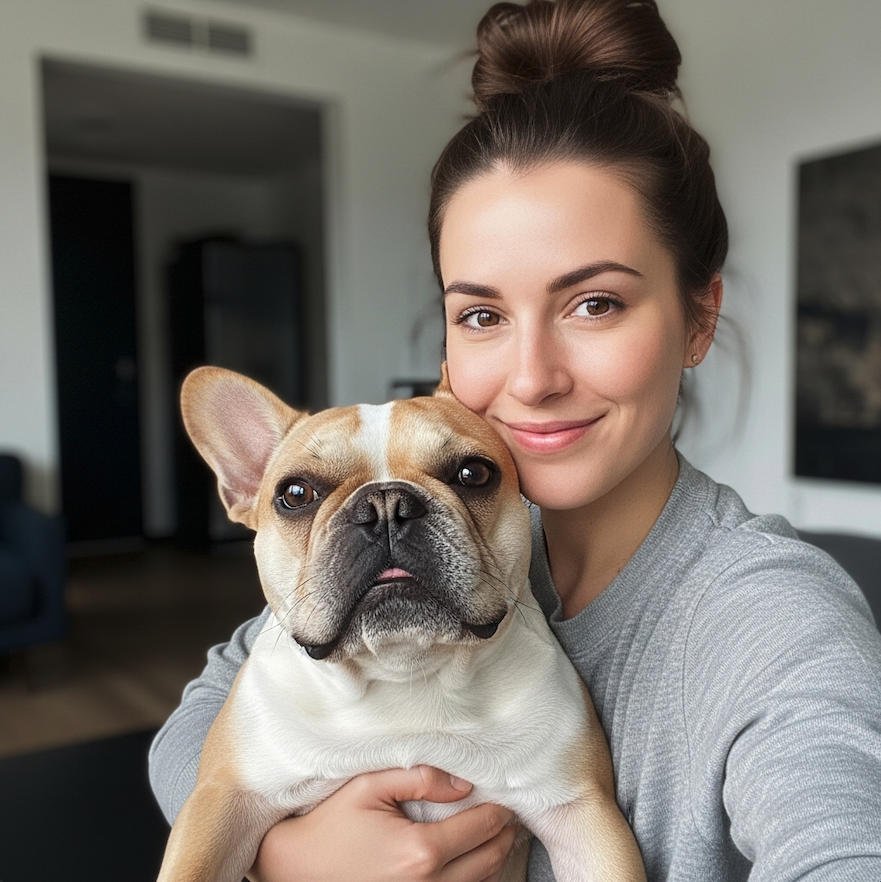
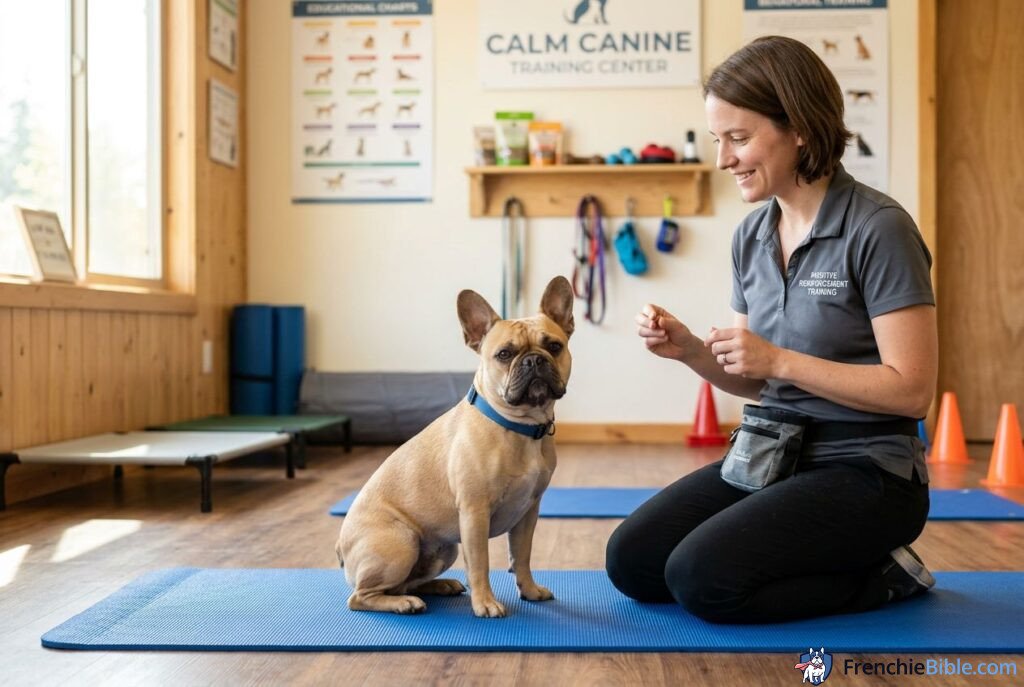
As someone who has dedicated over a decade of my life to breeding, raising, and loving French Bulldogs, I’ve seen it all. From the joyous moments of bringing a new puppy home to the challenging nights of potty training, raising a Frenchie is an adventure. But there is one specific milestone that many new—and even experienced—owners dread: the dreaded trip to the veterinary clinic.
You know the scene. The moment your French Bulldog realizes where the car is heading, the panting starts. By the time you pull into the parking lot, your usually confident, stubborn little clown has turned into a shaking, terrified statue refusing to walk through the clinic doors. It breaks your heart, it frustrates you, and it makes providing essential care for your dog incredibly stressful for everyone involved.
Related Reading: Health & Diet | Frenchie Puppy Guide
But it doesn’t have to be this way. Over my 10 years of experience, I’ve perfected a systematic approach to desensitizing Frenchie puppies to vet visits. By starting early and using the right techniques, you can actually teach your French Bulldog puppy to love going to the vet. Yes, you read that right!
In this comprehensive guide, I’m going to share my breeder secrets on French Bulldog puppy vet visits, how to desensitize your Frenchie to vet handling, and the critical steps for fear-free vet visits for French Bulldogs.
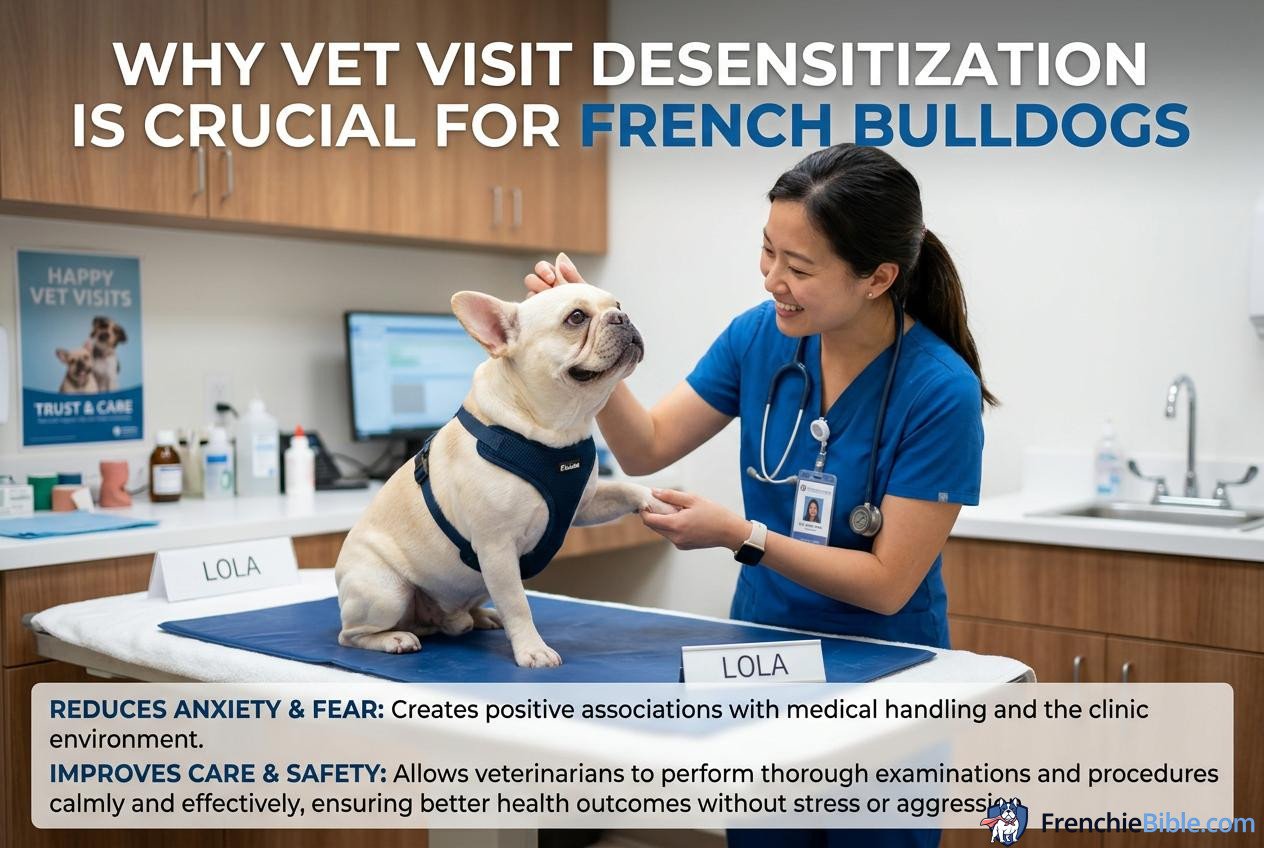
Why Vet Visit Desensitization is Crucial for French Bulldogs
Before we dive into the “how,” let’s talk about the “why.” Why is this so incredibly important specifically for the French Bulldog breed?
The Frenchie Temperament: Stubborn but Sensitive
French Bulldogs are famous for their comical, affectionate, and sometimes incredibly stubborn personalities. However, beneath that bravado lies a deeply sensitive dog. When a Frenchie experiences something traumatic or highly stressful—like being held down on a cold metal table while a stranger pokes them—they remember it. Their stubbornness can quickly morph into a refusal to cooperate, making future visits not just difficult, but dangerous if they panic. Early Frenchie puppy training focused on socialization and desensitization is the key to preventing this trauma from taking root.
Health Monitoring Needs of French Bulldogs
Let’s be completely transparent: French Bulldogs, as a brachycephalic (flat-faced) breed, require vigilant health monitoring. Throughout their lives, they will likely visit the vet more often than a typical mixed-breed dog. From routine vaccinations to monitoring their breathing, skin folds, and spine, your Frenchie needs to be comfortable being examined. If every visit is a wrestling match, it elevates their heart rate and breathing—which is particularly risky for a flat-faced breed. Fear-free vet visits for French Bulldogs aren’t just a luxury; they are a necessity for their well-being.
Starting at Home: Preparing Your Frenchie Puppy for Vet Handling
The biggest mistake I see new Frenchie owners make is assuming that vet training happens at the vet. It doesn’t. True vet visit desensitization begins on your living room floor the week you bring your puppy home.
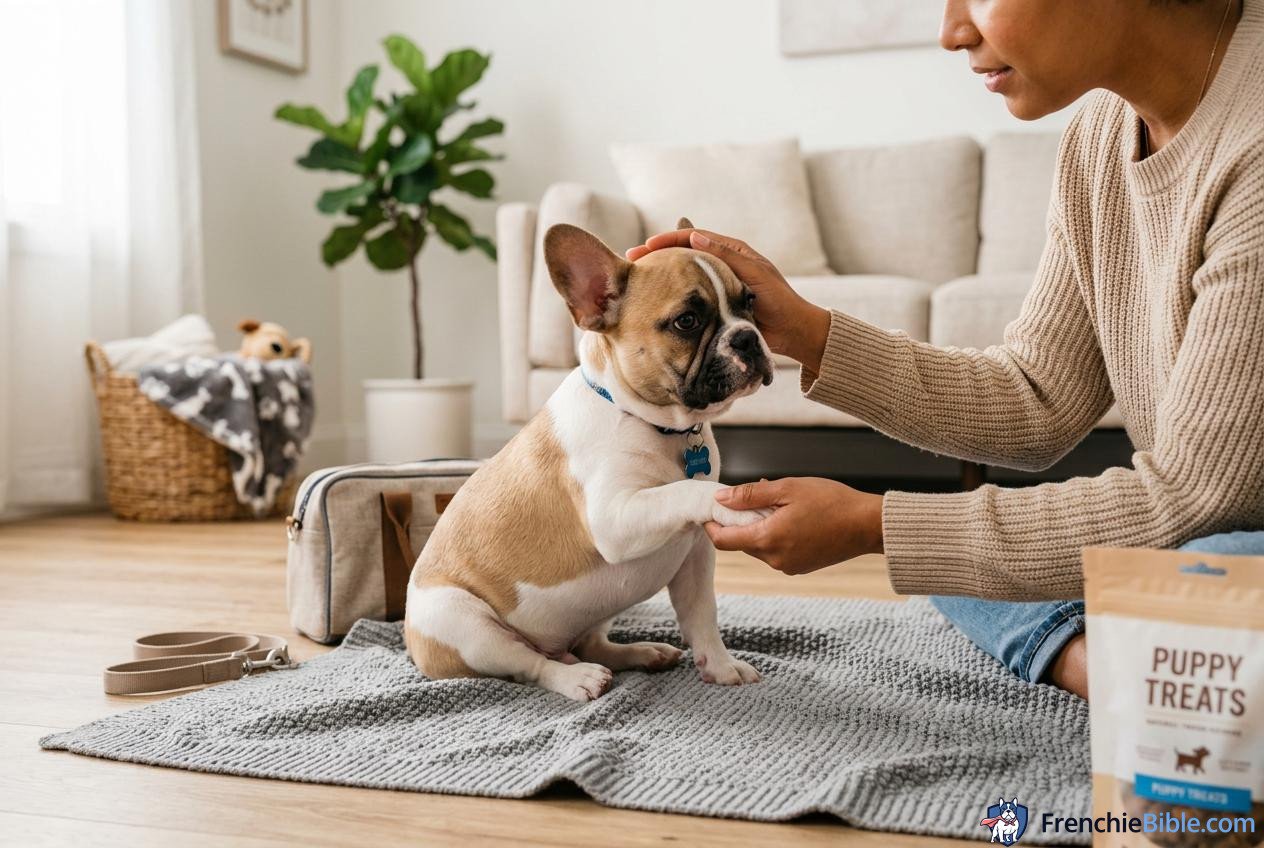
The Mock Exam: Touching Paws, Ears, and Mouth
Vets need to touch your dog in ways that dogs naturally find intrusive. They will look deep into their ears, open their mouths to check their teeth, and manipulate their paws to trim nails. If the first time your puppy experiences this is on a slippery metal table in a room smelling of rubbing alcohol and other stressed animals, they will panic.
I start “mock exams” with my puppies when they are just weeks old. When your puppy is relaxed and sleepy (perhaps after a play session), gently handle their paws. Touch each toe individually. Look into their ears. Gently lift their lips to expose their teeth. Rub your hands along their spine and under their belly.
The Breeder’s Secret: Pair every single touch with a high-value reward. If I touch their paw, they get a tiny piece of boiled chicken or a lick of dog-safe peanut butter. The goal is to build an association: weird handling = amazing treats.
Introducing the Vet Carrier and Car Rides
For many dogs, the anxiety starts long before they reach the clinic. It starts when the dreaded travel carrier comes out or when they get into the car.
Leave the carrier out in your living room with the door open. Put their favorite toys inside, or feed them their meals in the carrier. Make the carrier a place of comfort, not a prison cell that only appears when bad things happen.
Similarly, take your Frenchie on short, fun car rides. Drive around the block and go to a park, or go through a drive-thru for a “pup cup.” If the car only ever goes to the vet, the car becomes a trigger for anxiety.
Using Positive Reinforcement and High-Value Treats
When working on Frenchie puppy training for handling, standard kibble rarely cuts it. You need the “big guns”—high-value treats that your dog rarely gets otherwise. This could be plain boiled chicken, tiny pieces of cheese, freeze-dried liver, or a squeeze tube of wet food. You are competing with their natural instincts to pull away; the reward must be worth their cooperation.
The “Happy Visit”: Your Secret Weapon for Vet Success
If there is one piece of advice you take from my 10 years of experience, let it be this: schedule “Happy Visits.”
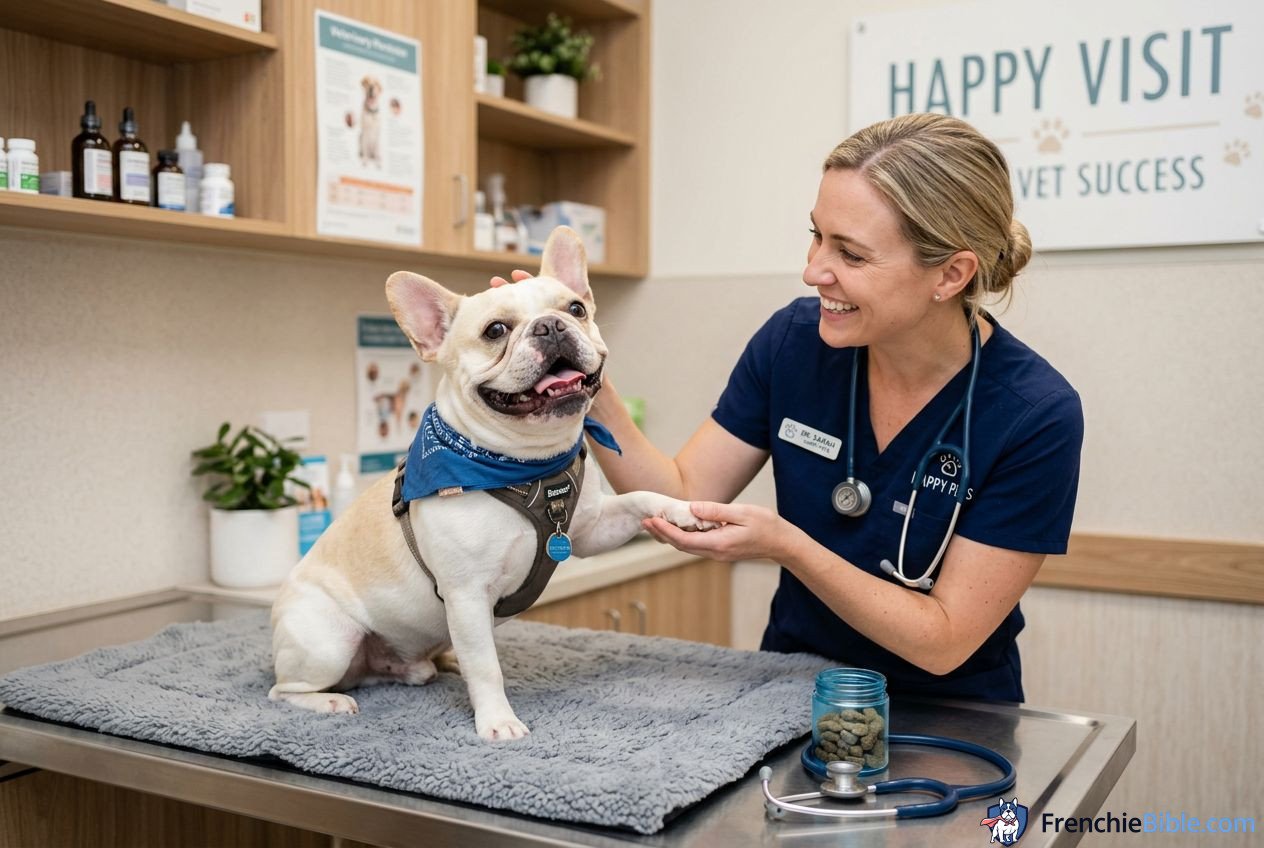
What is a Happy Visit?
A Happy Visit is a trip to the veterinary clinic where absolutely no medical procedures happen. Zero. Zilch. No needles, no thermometers, no prodding.
The sole purpose of the visit is for the puppy to walk into the building, smell the smells, meet the receptionists, get showered with praise and high-value treats, and then leave.
How to Schedule and Execute a Happy Visit
Call your vet clinic and ask if you can bring your puppy by for a 5-minute Happy Visit during a slow period. Most modern, fear-free certified clinics absolutely love this idea.
When you arrive:
1. Walk in confidently.
2. Have the receptionist toss your puppy some incredible treats.
3. If an available vet tech wants to come out, sit on the floor, and give your puppy some cuddles and treats, even better.
4. Put your puppy on the scale, feed them a treat, and step off.
5. Leave while the puppy is still having a great time.
Do this 3 or 4 times before their first actual appointment. By the time they need a real exam, they will be pulling you through the front doors, eager to see their friends who give them chicken.
Step-by-Step Desensitization Training for Frenchie Puppies
To truly prepare your French Bulldog, you need to break down the veterinary exam into individual components and desensitize them to each one. Here is my exact protocol.
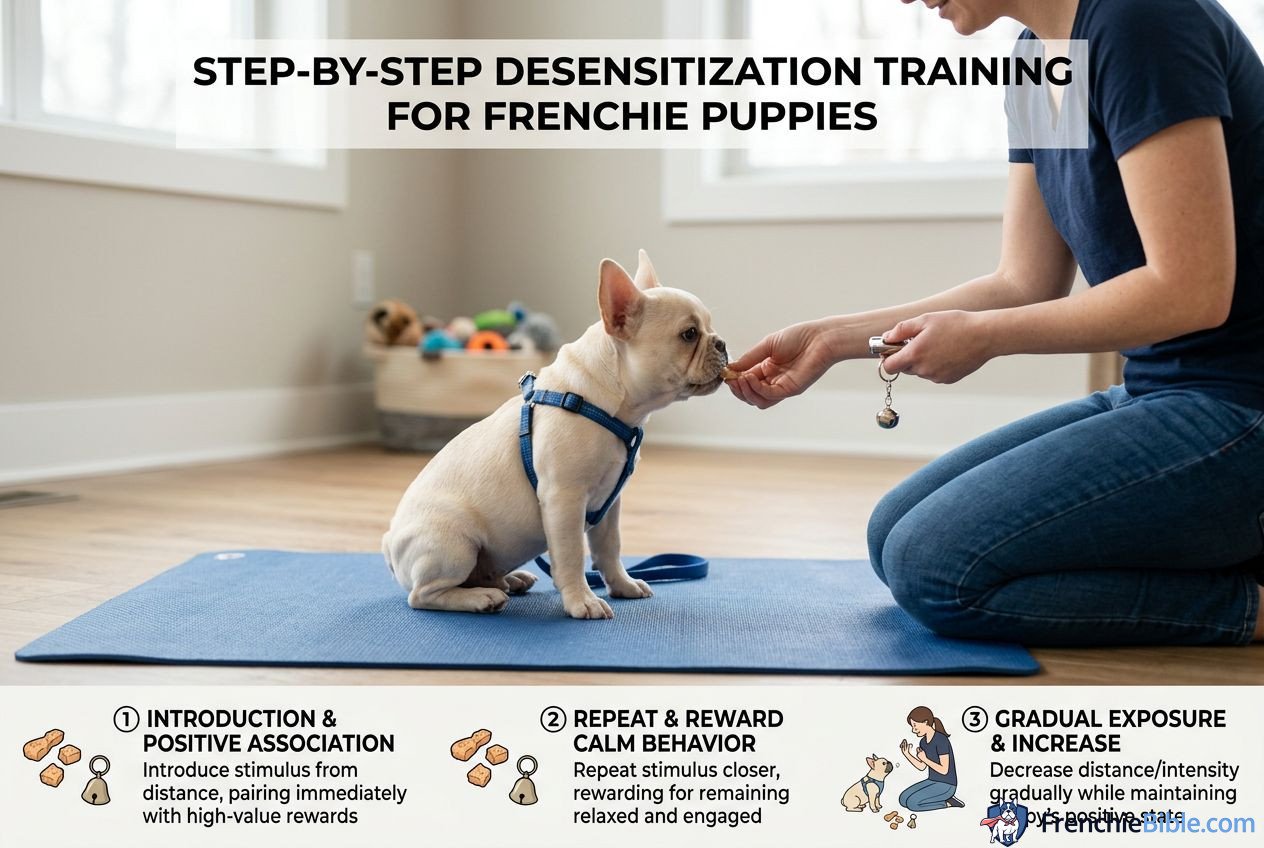
Step 1: Handling the Paws (Nail Trims Prep)
Frenchies are notoriously dramatic about their paws.
– Week 1: Gently stroke the leg down to the paw while feeding a treat. Repeat daily.
– Week 2: Hold the paw gently for 2 seconds. Treat. Release.
– Week 3: Squeeze individual toes gently. Treat.
– Week 4: Tap the nails with a metal spoon (to simulate clippers or a Dremel). Treat.
If your puppy pulls away, you have moved too fast. Go back to the previous step. Never force them to endure it; that builds fear.
Step 2: Ear Examinations (Cleaning Prep)
French Bulldog ears are large, open bats ears that collect dust and debris, requiring frequent cleaning and vet checks.
– Gently rub the base of the ears during cuddle time.
– Introduce a soft cotton ball, just touching the outside of the ear, paired with a treat.
– Lift the ear flap back to look down the canal, praising heavily.
– Introduce the sight and smell of an ear cleaning solution bottle without actually using it, rewarding them for sniffing it calmly.
Step 3: Mouth and Teeth Checks
Dental health is critical. Vets will need to check their bite and teeth.
– Start by gently lifting the front lips to look at the incisors. Treat immediately.
– Progress to gently pulling back the side of the mouth to see the molars. Treat.
– Use your finger to gently rub their gums.
– Make this a fun game. “Let me see those teeth! Good boy/girl!” Treat.
Step 4: The Stethoscope and Body Pressure
Vets use cold stethoscopes and often have to press on a dog’s abdomen to check their organs.
– Use a small, cold metal object (like the back of a spoon) and gently press it against their chest while they are eating a high-value treat.
– Practice gently hugging your Frenchie, applying slight, even pressure to their torso to simulate being held still for an exam. Release quickly and reward.
– Gently palpate their belly with your fingers, keeping it light and playful.
Managing Your Own Anxiety as a Frenchie Owner
Here is a hard truth I have learned over the years: our dogs are sponges for our emotions. French Bulldogs are incredibly attuned to their owners.
If you grip the leash tightly, hold your breath, and radiate anxiety the moment you walk into the clinic, your Frenchie will instantly think, “My human is terrified. There must be a predator in here. I need to be terrified too.”
You must practice being calm. Take deep breaths. Speak in a normal, upbeat tone of voice. Do not coddle them with a frantic, “Oh my poor baby, it’s okay, mommy’s here, don’t be scared!” in a high-pitched, panicked voice. This validates their fear. Instead, use a confident, happy tone: “Wow, look where we are! Let’s get some treats!”
Your confidence will travel down the leash to your puppy.
Troubleshooting: What If Your Frenchie is Already Terrified?
What if you are reading this and your Frenchie isn’t a puppy anymore, or they already have severe vet anxiety? It is not too late, but it will take more time.
You need to practice counter-conditioning. This means changing their emotional response to the vet from negative to positive.
1. Find their threshold: How close to the vet can you get before they panic? Is it the parking lot? The street over?
2. Work at the threshold: Drive to the edge of their threshold. Feed high-value treats. Go home. Do not push them over the threshold into panic.
3. Slowly decrease distance: Over weeks, move closer. To the parking lot, to the door, into the lobby.
4. Advocate for your dog: Tell your vet clinic you are working on fear. Ask them to go slow. If a procedure isn’t medically urgent, ask if you can break it into multiple visits.
Raising a French Bulldog is one of the most rewarding experiences you can have. By taking the time to implement these vet visit desensitization techniques, you are giving your Frenchie the gift of a lifetime of stress-free healthcare. It requires patience, consistency, and a lot of high-value treats, but seeing your Frenchie happily trot into the vet clinic is worth every second of effort.
FAQs About French Bulldog Vet Visits
1. How often should a French Bulldog puppy go to the vet?
During their first year, Frenchie puppies will visit the vet frequently for their initial vaccination series (usually at 8, 12, and 16 weeks), deworming, microchipping, and a spay/neuter consultation. After their first year, an annual wellness check is the minimum, though many owners opt for bi-annual checks due to the breed’s specific physical traits.
2. My Frenchie breathes heavily when at the vet; is this dangerous?
Because French Bulldogs are brachycephalic, stress and panting can quickly lead to an inflamed airway and difficulty breathing. If your Frenchie is panting excessively, turning blue or purple at the gums, or struggling to breathe from stress, notify the vet staff immediately. This is exactly why desensitization is so vital—to keep their heart rate and breathing calm.
3. Should I carry my Frenchie puppy into the clinic or let them walk?
Before they are fully vaccinated, you should carry them or keep them in a carrier to prevent them from picking up diseases like Parvo from the floor or ground outside. Once fully vaccinated, letting them walk in under their own power can build confidence, provided they aren’t pulling back in terror.
4. Can I ask the vet to examine my Frenchie on the floor instead of the table?
Absolutely! Many modern, fear-free clinics prefer this for dogs that are anxious on elevated surfaces. A slippery table can make a sturdy, low-to-the-ground Frenchie feel very unstable. Never be afraid to politely ask your vet if they can do the exam on a yoga mat on the floor.
5. What is the best treat to use for vet desensitization training?
The best treat is whatever your specific dog considers irresistible and rarely gets. For many Frenchies, this is plain boiled chicken breast, small pieces of string cheese, freeze-dried liver, or a lick mat covered in xylitol-free peanut butter or plain yogurt.
Disclaimer: We are not veterinarians and do not hold veterinary medical licenses. The information provided in this article is based on years of breeding and daily care experience and is for educational purposes only. It should not replace professional veterinary advice. Always consult with a licensed veterinarian if you have concerns about your French Bulldog’s health or before starting any new treatment.