
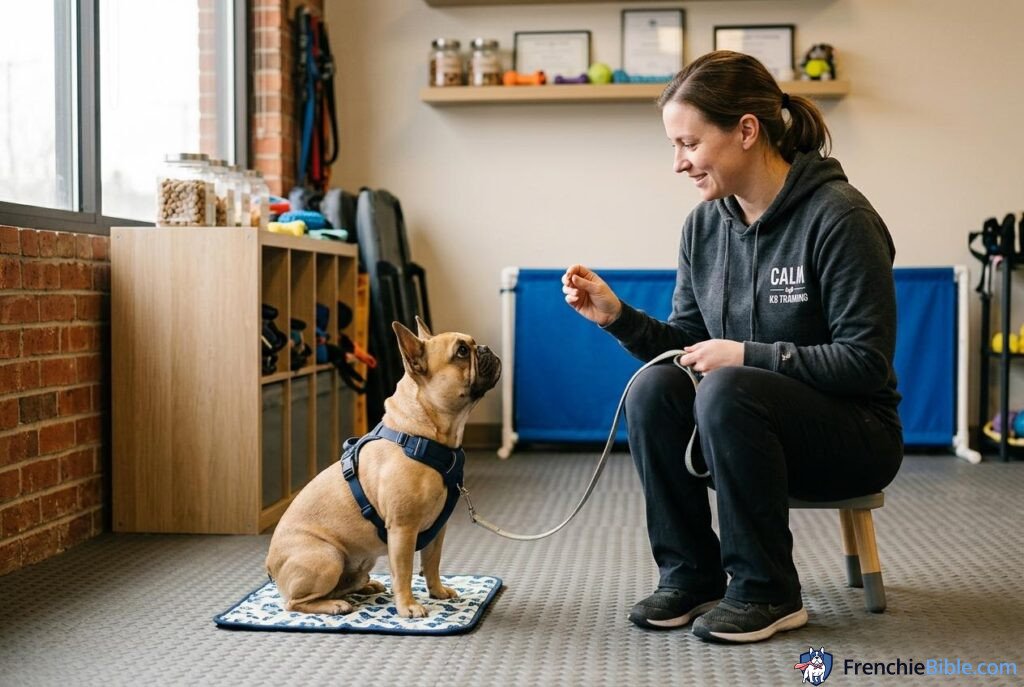
If you share your home with a French Bulldog, you already know the routine. You sit down to enjoy a nice dinner, and suddenly, you feel a heavy gaze piercing through your soul. You look down to find those signature bat ears perked up, those large, soulful eyes unblinkingly fixed on your fork, and a steadily growing puddle of drool forming on your pristine floor. Welcome to what I like to call the “Begging Syndrome.”
As a French Bulldog breeder with over a decade of hands-on experience raising, training, and living with these incredible little clowns, I can tell you that begging is one of the most common behavioral issues new and experienced owners face. Frenchies are notoriously food-motivated. They are smart, stubborn, and incredibly manipulative when they want a taste of your steak. While those puppy dog eyes might seem harmless at first, giving in to French Bulldog begging behavior can lead to a host of problems, from behavioral issues to serious health complications like obesity.
Related Reading: Health & Diet | Frenchie Puppy Guide
In this comprehensive guide, I’m going to share my personal, tried-and-true methods for putting an end to your Frenchie’s table begging. We will explore the psychology behind why they beg, the dangers associated with feeding from the table, and a step-by-step training protocol to teach your French Bulldog impeccable table manners.
Understanding Why Your French Bulldog Begs
Before we can correct a behavior, we must understand the root cause. French Bulldogs don’t beg just to annoy you; their actions are driven by instinct, biology, and, most importantly, learned experiences.
It’s In Their DNA: The Ultimate Food Motivation
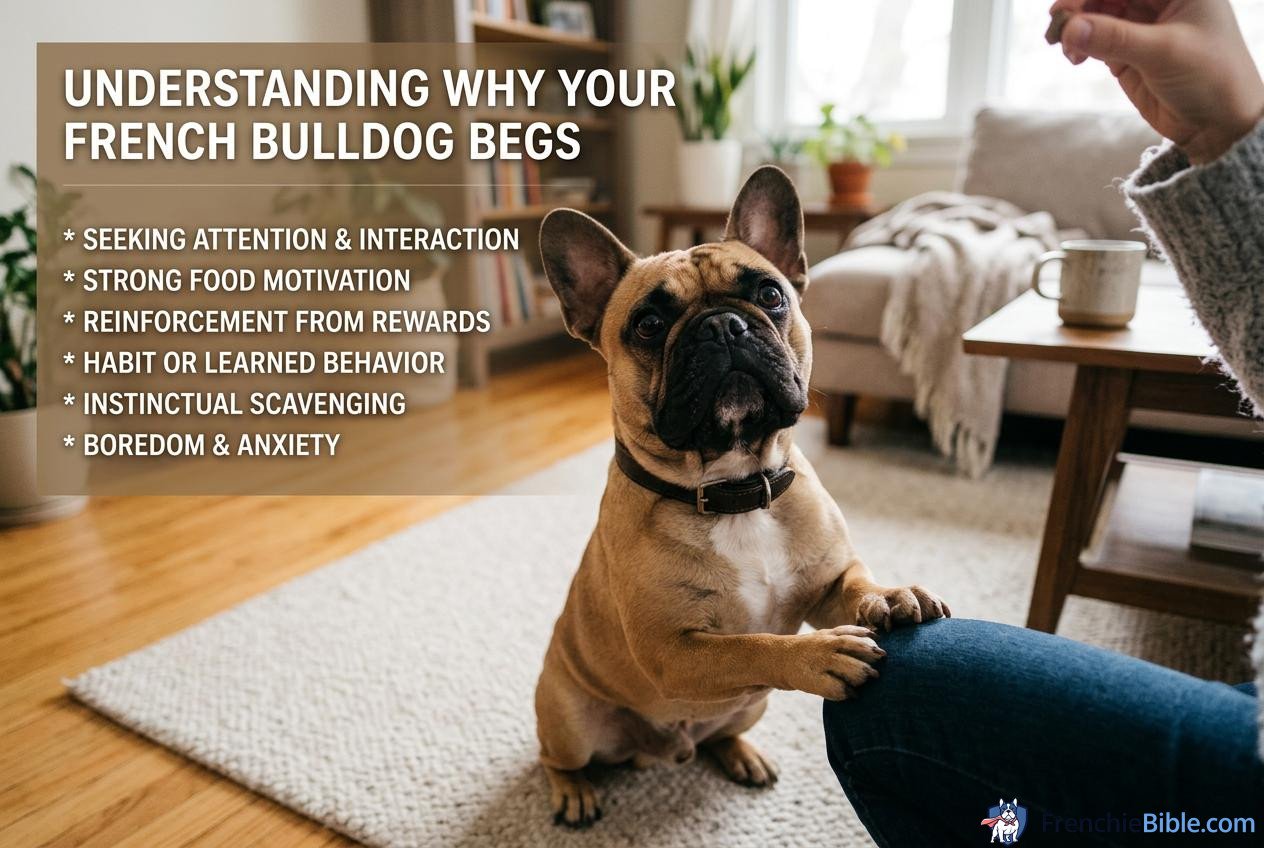
French Bulldogs are not known for being picky eaters. In my ten years of breeding, I have rarely met a healthy Frenchie that would turn down a meal. This intense food motivation is deeply ingrained in their DNA. To a Frenchie, food is not just sustenance; it is the ultimate reward, the highest currency. When they smell the rich, complex aromas of human food—which is usually much more pungent and flavorful than their kibble—their natural instincts kick in. Their sense of smell is incredibly powerful, and the scent of roasting meat or frying bacon triggers an involuntary biological response: anticipation and drooling.
Accidental Reinforcement: We Created the Monster
Here is the hard truth that I always share with my puppy buyers: dogs repeat behaviors that are rewarded. If your French Bulldog is begging at the table, it is almost certainly because the behavior has worked for them in the past.
Did you accidentally drop a piece of cheese on the floor a month ago? Did your partner slip them a French fry under the table just once? Did you look down, make eye contact, and say, “No, this is my food,” while absentmindedly tossing them a piece of crust? To a Frenchie, any attention—even negative attention or a single piece of food—is a massive jackpot. You have inadvertently taught them that sitting by the table and staring is a highly profitable job. The “Begging Syndrome” is a monster of our own creation.
The Sensory Experience: Why Do They Drool So Much?
Many owners ask me, “Why does my Frenchie drool so much when I eat?” French Bulldogs have brachycephalic (flat-faced) anatomy, which means they have distinct jaw structures and loose lips (flews). When they anticipate food, their salivary glands go into overdrive to prepare for digestion. Because of their mouth structure, they don’t hold saliva well, leading to the infamous drool strings.
This drooling is an involuntary physiological response to the smell of your food and the anticipation of a reward. While you cannot stop the biological production of saliva, you can eliminate the anticipation by teaching them that human mealtime does not equate to dog mealtime.
The Dangers of the “Begging Syndrome”
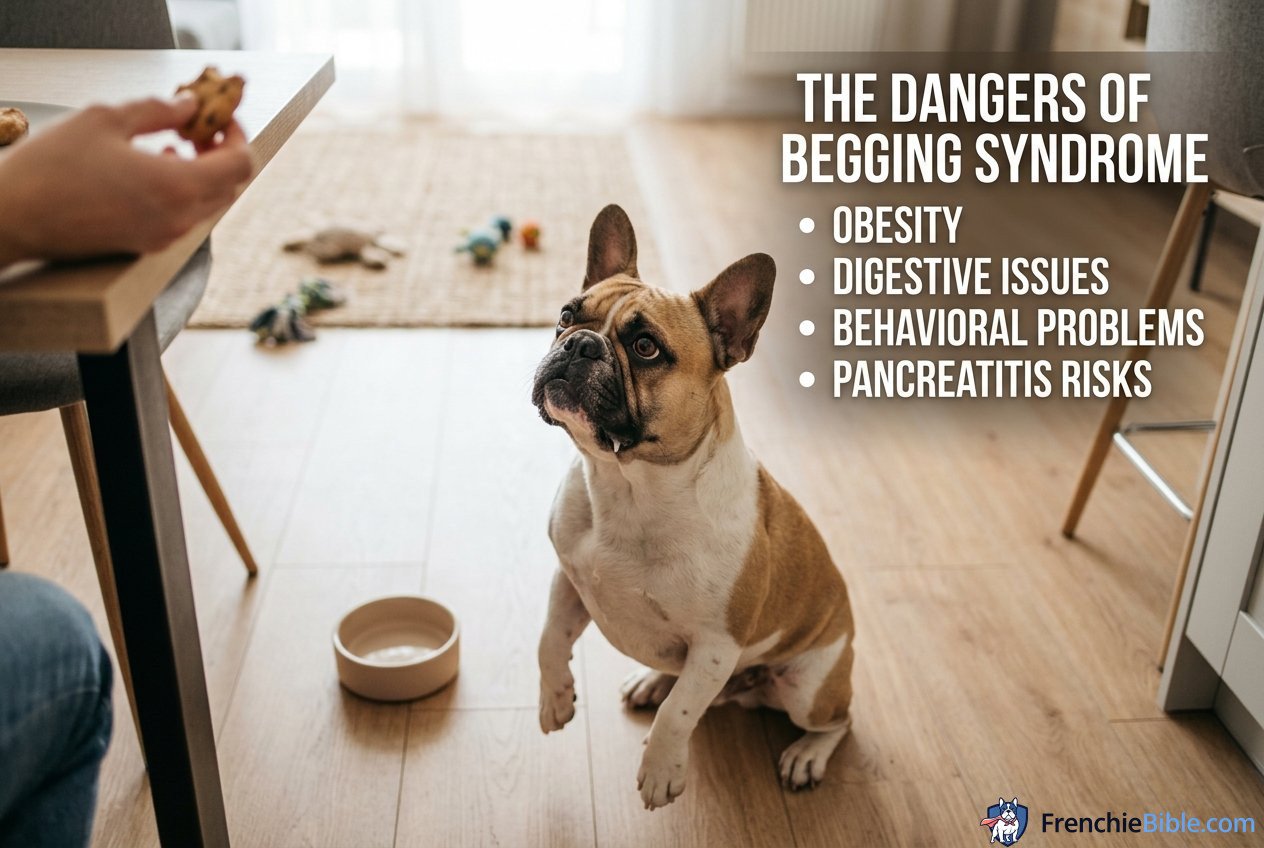
Allowing your French Bulldog to beg and rewarding them with table scraps is not just a nuisance; it can be actively detrimental to their well-being.
The Risk of Toxic Human Foods
Our food is heavily seasoned and often contains ingredients that are highly toxic to dogs. Onions, garlic, grapes, raisins, macadamia nuts, xylitol (artificial sweetener), and certain spices can cause severe health crises in dogs. In the chaos of a dinner party or a busy family meal, slipping a scrap of food to your dog without thinking about the exact ingredients is a recipe for disaster. Furthermore, the high fat content in many human foods (like bacon grease, butter, and fatty meats) can trigger pancreatitis, an incredibly painful and potentially life-threatening condition.
Obesity and Weight Management Issues
French Bulldogs are small, stocky dogs with a propensity for rapid weight gain. Their joints and respiratory systems are already under pressure due to their conformation. Adding excess weight exacerbates breathing issues, puts undue strain on their spine (increasing the risk of IVDD – Intervertebral Disc Disease), and severely shortens their lifespan. Table scraps are empty, unregulated calories. A single piece of cheese might seem small to you, but relative to a Frenchie’s daily caloric needs, it is the equivalent of you eating a whole pizza as a snack.
Behavioral Escalation: From Begging to Demanding
What starts as a quiet sit and a sad stare can quickly escalate. If staring stops working, your Frenchie might try pawing at your leg. If that doesn’t work, they might graduate to whining, barking, or even attempting to snatch food from the table or a child’s hand. By nipping the begging behavior in the bud, you prevent the development of obnoxious, demanding, and potentially aggressive food-guarding behaviors.
Step-by-Step Training to Stop Frenchie Begging at the Table
Curing the Begging Syndrome requires time, extreme consistency, and a little bit of tough love. Here is the exact protocol I use with my dogs and recommend to all my clients to instill perfect French Bulldog table manners.
Step 1: The Absolute “No Table Scraps” Rule
This is the non-negotiable foundation of the entire training process. From this moment forward, your French Bulldog must never receive food directly from your plate, the dining table, or the kitchen counter. Never. Not even once.
If you want to share dog-safe human food with them (like plain boiled chicken, carrots, or blueberries), it must be placed directly into their dog bowl during their designated meal times, or used as high-value training treats during a structured training session far away from the dining area. The association between your eating area and their food acquisition must be permanently severed.
Step 2: Establishing a “Place” Command During Meals
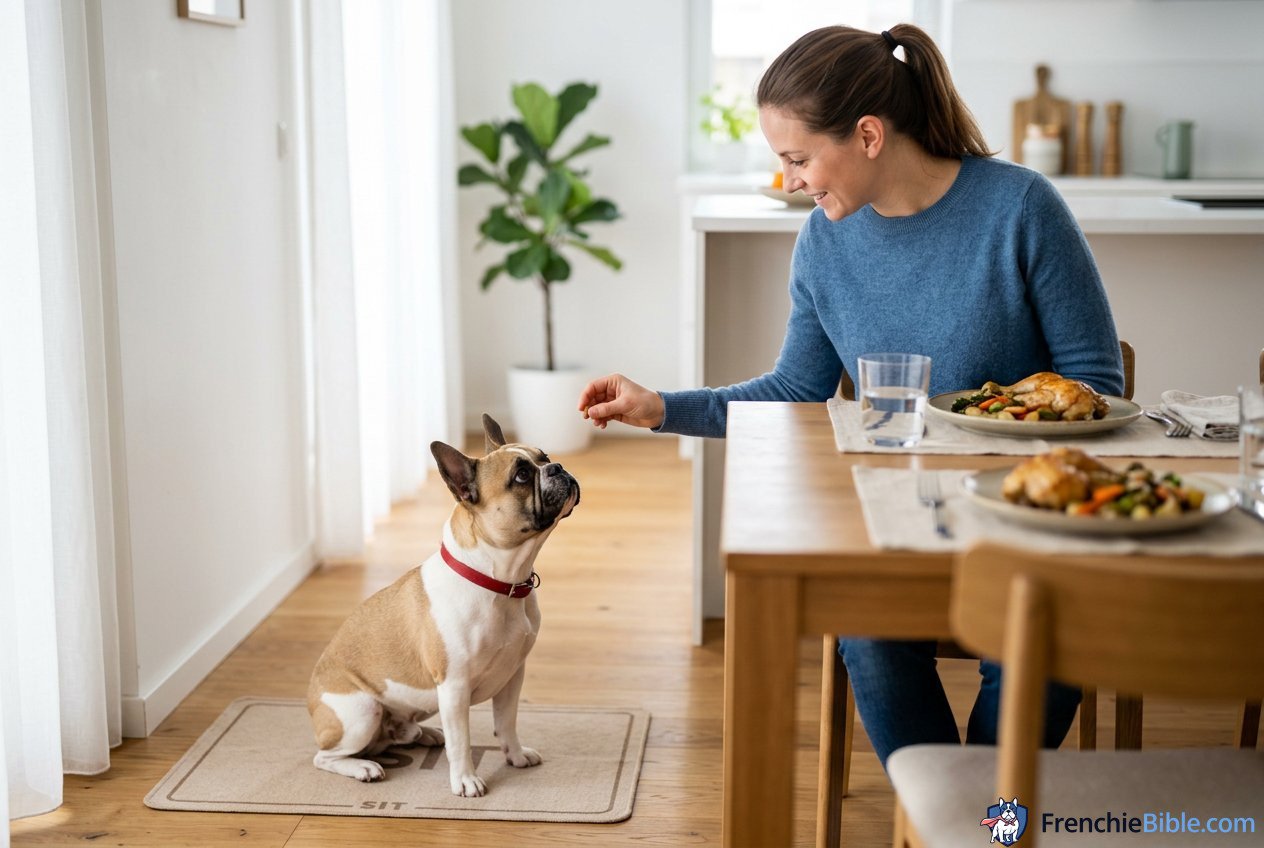
One of the most effective ways to stop Frenchie begging behavior at the table is to give them an incompatible job to do. They cannot be begging at your feet if they are required to be laying on their bed in the living room.
- Choose a Place: Select a comfortable dog bed or mat located in the same room (so they don’t feel isolated) but a good distance away from the dining table.
- Teach the Command: Outside of your meal times, practice the “Place” command. Lure them to the bed with a treat, say “Place,” and reward them when all four paws are on the mat. Ask them to lie down and reward them again.
- Build Duration: Gradually increase the time they must stay on their “Place” before receiving their release word (e.g., “Free” or “Okay”) and a reward.
- Implement During Meals: When you sit down to eat, send your Frenchie to their “Place.” If they get up and approach the table, silently get up, gently guide them back to their “Place,” and return to your meal. Do not speak to them, do not scold them, just reset them. You may have to do this 20 times during your first few meals. Consistency is your only weapon here.
Step 3: Feeding Your Frenchie Before You Eat
A hungry dog is a motivated beggar. To reduce their desperation and focus on your food, schedule their meals strategically. Feed your French Bulldog their dinner either right before you sit down to eat or exactly at the same time.
If they are full of their own nutritious kibble or fresh food, they will have less biological drive to harass you for your meal. I often use interactive feeding toys, like a stuffed Kong or a snuffle mat, to feed my dogs while I eat. This keeps their brains engaged, satisfies their chewing instinct, and takes 20-30 minutes for them to complete—usually exactly how long it takes me to finish my dinner.
Step 4: Ignoring the Behavior Completely
If you are not using the “Place” command and your dog approaches the table, the rule is zero engagement.
- No Eye Contact: Do not look at them. Eye contact is a form of engagement.
- No Talking: Do not say “No,” “Go away,” or “Stop.” Any vocalization tells them that their begging has successfully captured your attention.
- No Touching: Do not push them away with your foot or hand. Physical contact is a reward for a clingy Frenchie.
Pretend the dog is invisible. It will be incredibly difficult at first. Frenchies are masters of the guilt trip. They will sigh heavily, rest their heavy little heads on your knee, and let the drool pool on your shoe. You must remain a statue of indifference. When they realize that their begging yields absolutely zero results, the behavior will eventually extinguish.
Step 5: High-Value Rewards for Good Behavior (Away from the Table)
Positive reinforcement is the fastest way to a Frenchie’s brain. While you must ignore the bad behavior, you must heavily reward the good behavior.
If your dog gives up on begging, walks away from the table, and lies down quietly in the hallway, wait a few minutes, get up, walk over to them, and offer a high-value treat or some calm petting. You are communicating: “Harassing me at the table gets you nothing. Leaving me alone while I eat gets you a reward.” Over time, they will choose the profitable behavior (leaving you alone) over the unprofitable one (begging).
Handling the “Drool Factor”: Managing Expectations
Even when your Frenchie learns not to beg directly at your feet, they may still sit ten feet away and drool profusely while you eat a steak. As mentioned earlier, this is a physiological response, not necessarily a behavioral choice.
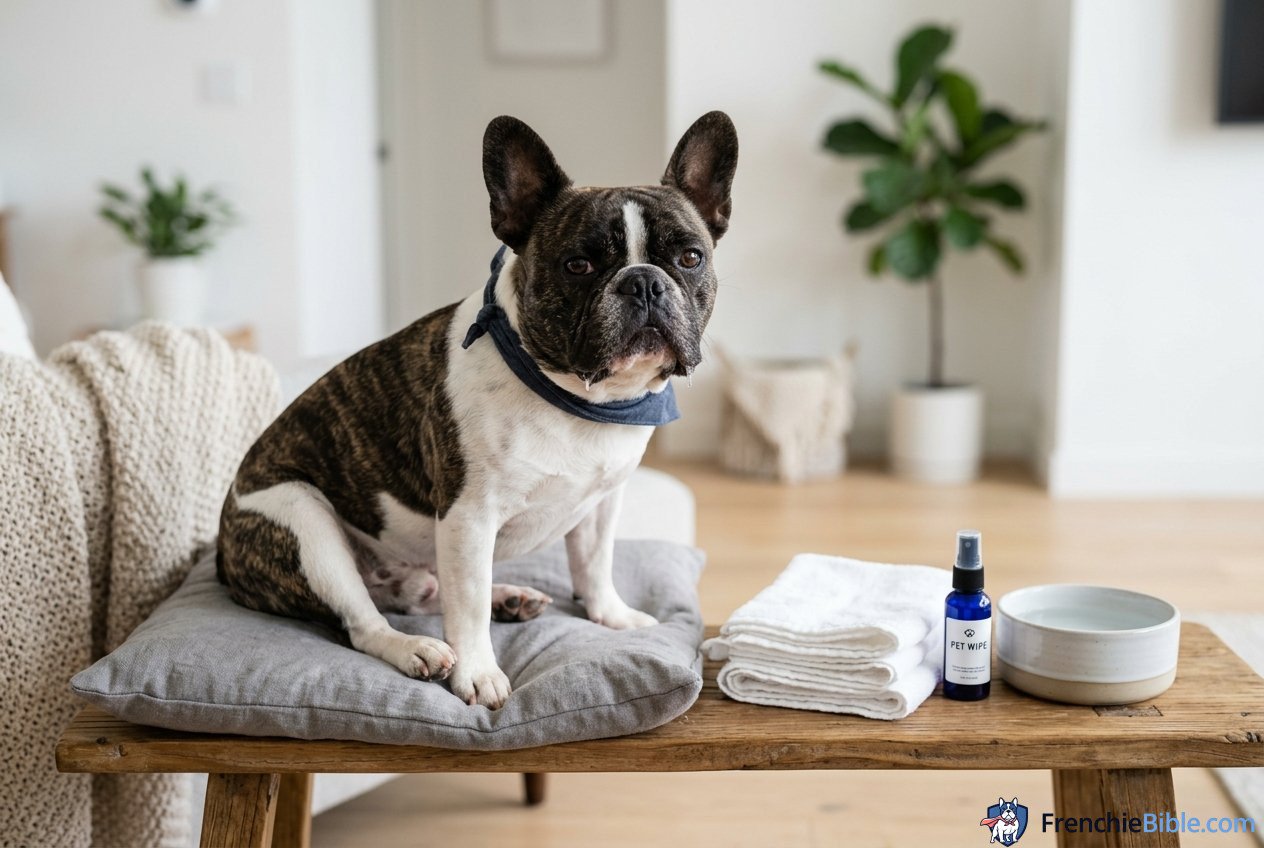
To manage the drool:
– Have a dedicated “drool towel” handy to wipe the floor after meals.
– Stick to the “Place” command so the drool is confined to their bed rather than your dining room rug.
– Be patient. As their expectation of receiving food decreases over weeks and months of extreme consistency, the Pavlovian drool response will also lessen, though it may never completely disappear when extremely pungent foods are involved.
Consistency is Key: Getting the Whole Family on Board
In my years of consulting with puppy buyers, the number one reason begging training fails is a lack of family consistency. Dogs are incredibly situational learners. If you enforce the “no begging” rule 100% of the time, but your spouse slips the dog a piece of chicken once a week, the dog will never stop begging. They will simply view your spouse as the “weak link” or the slot machine that occasionally pays out.
Before you begin this training protocol, you must hold a family meeting. Every single person in the household, including children and frequent guests, must agree to the absolute “no table scraps” rule and the ignoring protocol. If a guest cannot follow the rules, the dog should be crated or put in another room with a chew toy during the meal. Protect your training investment at all costs.
Conclusion
Curing your French Bulldog’s begging syndrome is not an overnight process. It requires a firm commitment from everyone in the household, a deep understanding of your dog’s food motivation, and an unwavering dedication to routine and boundaries. By removing the rewards, establishing a solid “Place” command, and keeping their bellies full with their own appropriate food, you can enjoy your meals in peace, free from the guilt-inducing stares and the dreaded puddles of drool. A well-mannered Frenchie is a joy to live with, and teaching them boundaries around food is one of the greatest gifts of structure you can provide.
Frequently Asked Questions (FAQ)
1. Is it too late to stop my 5-year-old French Bulldog from begging?
Absolutely not. While older dogs have had more time to practice the bad behavior, Frenchies of any age can learn new rules. It will require more patience and extreme consistency on your part, as you are breaking a deeply ingrained habit, but it is 100% achievable.
2. Can I feed my Frenchie table scraps if I put them in their bowl instead of giving them from the table?
While putting dog-safe human food in their bowl is much better than feeding from the table, be cautious. If you scrape your plate into their bowl immediately after dinner, they will still associate your mealtime with their reward, which can lead to whining or begging while you eat in anticipation of the leftovers. It is best to give these treats at completely unrelated times.
3. My Frenchie barks and whines when I ignore their begging. What do I do?
This is called an “extinction burst.” When a previously rewarded behavior (begging) suddenly stops working, the dog will often try harder and louder to get the reward before finally giving up. You must completely ignore the barking. Do not yell, do not look at them. If you give in during an extinction burst, you teach them that they just need to bark louder to get what they want. If the barking is unbearable, calmly stand up, gently lead them to another room for a brief “time out,” and close the door until they are quiet.
4. Will giving my Frenchie a bone while we eat stop them from begging?
Yes, providing a high-value, long-lasting chew (like a bully stick or a stuffed Kong) while you eat is a fantastic management strategy. It gives them an incompatible, rewarding job to do. Over time, they will learn to look forward to their own special chew during dinner rather than focusing on your plate.
5. Why does my French Bulldog drool so much more than other breeds when I have food?
French Bulldogs are a brachycephalic (flat-faced) breed. Their facial structure, specifically their loose lips or flews, means they cannot contain saliva as well as breeds with tighter mouths. When they smell food, their salivary glands naturally produce more saliva in anticipation of eating, which inevitably leaks out as drool. It’s an anatomical quirk combined with high food motivation.
Disclaimer: We are not veterinarians and do not hold veterinary medical licenses. The information provided in this article is based on years of breeding and daily care experience and is for educational purposes only. It should not replace professional veterinary advice. Always consult with a licensed veterinarian if you have concerns about your French Bulldog’s health or before starting any new treatment.