

If you have spent any significant amount of time with a French Bulldog, you have likely experienced the infamous and relentless “Frenchie kisses.” As a seasoned French Bulldog breeder with over a decade of experience in breeding, raising, and behavioral observation, I have seen almost every behavioral quirk this magnificent breed has to offer. Frenchies are incredibly affectionate companions, and licking is one of their primary, instinctual ways of interacting with their human families and the world around them. However, there is a distinct and vital line between normal canine behavior and a glaring red flag that indicates an underlying issue.
When your Frenchie’s licking crosses the threshold from occasional, sweet affection to a relentless, repetitive, and obsessive action, it is time to pay close attention. Does your French Bulldog constantly lick their paws until they are raw and weeping? Do they obsessively lick the air, the hardwood floor, or your hands for hours on end? This behavior can be deeply confusing, frustrating, and concerning for both novice and experienced owners alike.
Related Reading: Health & Diet | Frenchie Puppy Guide
In this comprehensive, deep-dive guide, we will explore the complex world of French Bulldog behavioral psychology and physical well-being. We will explore the root causes of excessive licking, distinguishing between simple affection, hidden medical issues, and complex psychological conditions like chronic anxiety and Canine Compulsive Disorder (CCD). Through my years of hands-on experience in the whelping box and the home, I will share vital insights into how to manage, redirect, and understand this behavior, ensuring your beloved Frenchie lives a balanced, comfortable, and stress-free life.
The Science Behind the Lick: What Does It Mean?
To genuinely understand why a French Bulldog licks excessively, we first need to understand why dogs lick in general. Licking is an instinctual behavior deeply ingrained in canine DNA, far older than the domestic dog we know today. From the very moment a puppy is born, the mother licks them vigorously to stimulate their breathing, clean them of amniotic fluid, and encourage the elimination of waste. Therefore, from day one of a puppy’s life, the physical sensation of licking is intrinsically associated with care, survival, maternal bonding, and profound comfort.
Communication and Affection
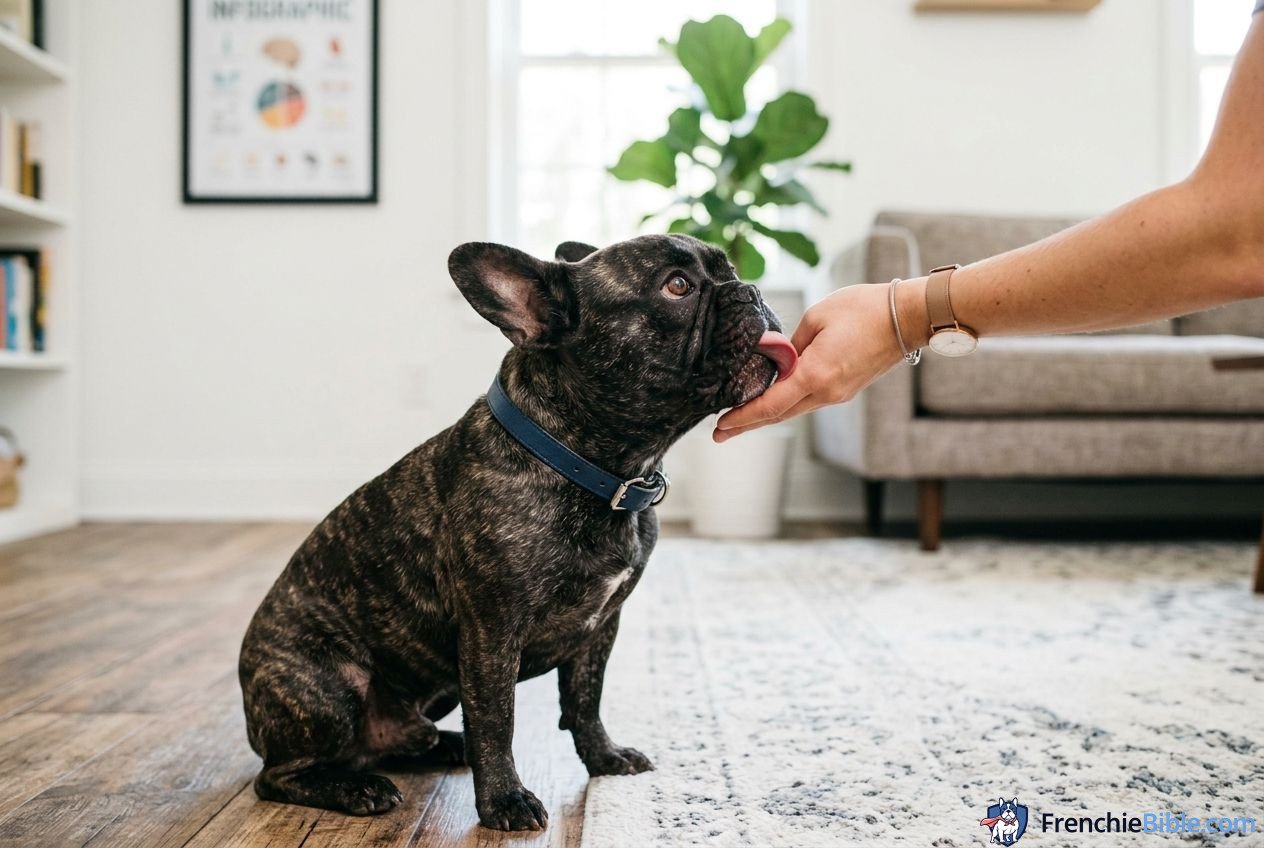
In the complex social structure of the dog world, licking is a fundamental tool for non-verbal communication. When your Frenchie licks your face or hands, they are often expressing deep affection, offering a greeting when you return home, or demonstrating social submission. It is their way of saying, “I love you,” “I missed you,” or “I acknowledge you are in charge.” Among their own kind, dogs lick each other to convey social status, appease more dominant dogs in tense situations, or simply bond with their littermates. When a Frenchie licks you, the act triggers the release of endorphins—powerful, feel-good hormones—in both their brain and yours. This chemical reaction reinforces the bond between human and canine, making it a highly rewarding behavior for the dog.
Grooming and Self-Soothing
Just like cats, dogs use their rough tongues as a built-in grooming tool. French Bulldogs, despite their sometimes clumsy appearance, will naturally lick their paws, legs, and genital areas to keep themselves meticulously clean. However, grooming is only half the story; licking also serves a critical self-soothing function. The rhythmic, repetitive act of licking releases a steady stream of dopamine and endorphins in the dog’s brain, which serves to calm their nervous system. If a Frenchie is feeling slightly stressed, overly tired, or overwhelmed by a chaotic environment, they might resort to licking themselves or objects as a coping mechanism to self-regulate their turbulent emotions.
Exploration and Taste
Dogs are primarily olfactory and tactile explorers; they investigate their environment using their sensitive noses and mouths. A French Bulldog might lick a new toy, an unfamiliar object on the floor, or even the air to gather complex sensory information that their eyes cannot provide. Furthermore, it is a simple fact that humans taste salty! When you exercise or simply go about your day, your skin becomes covered in natural salts, oils, and sweat that many dogs find incredibly appetizing. If you have just finished a strenuous workout, your Frenchie might view you less as an owner and more as a walking, breathing salt lick.
When Licking Becomes a Problem: Identifying Abnormal Behavior
While licking is undoubtedly a natural and necessary behavior, it is absolutely crucial for owners to recognize when it mutates into something abnormal. As a breeder, I constantly emphasize the importance of vigilant observation to my puppy buyers. You are your dog’s primary caregiver; you know their baseline behavior better than anyone else. Recognizing a shift in that baseline is the first step in identifying a problem.
Occasional vs. Obsessive Licking
Occasional licking is highly contextual and serves a specific, immediate purpose. For example, your dog licks their paws meticulously after a walk in the muddy garden to clean them, or they cover your face in kisses when you return from a long day at work to re-establish your bond. Crucially, once the stimulus is removed, the feet are clean, or the greeting is complete, the licking stops entirely. The dog moves on to other activities, such as playing or sleeping.
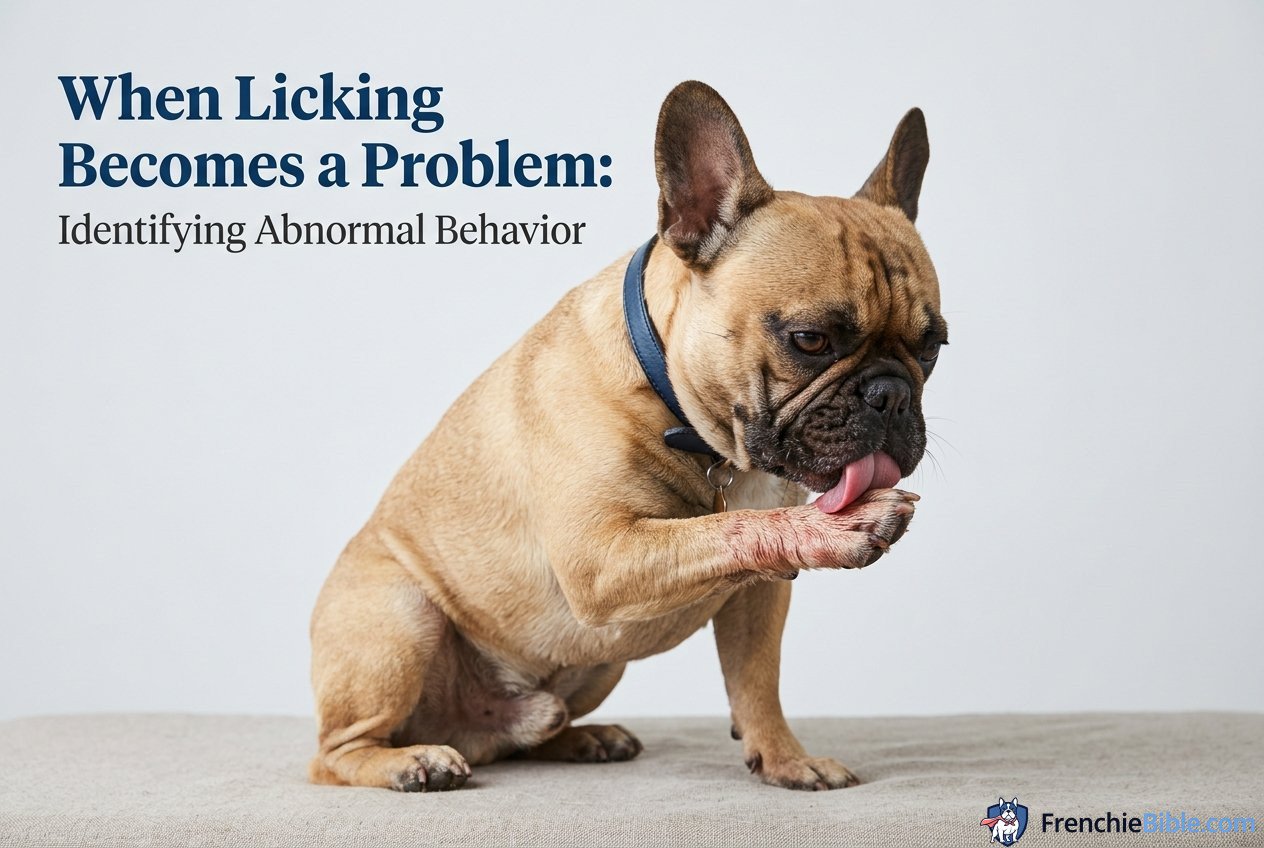
Obsessive licking, on the other hand, is characterized by its alarming intensity and relentless duration. If your French Bulldog is licking the exact same spot on their front paw for twenty minutes straight, staring blankly ahead, and actively ignoring your calls to play, go for a walk, or even eat high-value treats, this behavior has crossed into the realm of obsessive. It becomes a repetitive neurological loop that the dog seems physically unable to break out of without significant external intervention.
Signs of Compulsive Licking in French Bulldogs
How do you differentiate between a dog that just really likes to be clean and a dog that is suffering from compulsive licking? Look closely for these definitive signs:
– Unbreakable Intensity: The dog seems entirely, almost hypnotically focused on the licking. They are incredibly difficult to distract, even with their favorite toys or foods.
– Prolonged Duration: The behavior lasts for extended periods, often recurring multiple times a day, sometimes stretching into hours if uninterrupted.
– Unpredictable Triggers: The licking starts in response to minor environmental stress, loud noises, or seemingly imperceptible changes in routine. Conversely, it may seem to happen in completely calm environments for absolutely no discernible reason at all.
– Visible Physical Damage: The persistent licking has resulted in tangible harm: localized hair loss (alopecia), red and inflamed skin, open weeping sores, or thick, raised hot spots on the dog’s body.
– Bizarre Surface Preference: The dog ignores their own body and instead obsessively licks inanimate, non-food objects like the living room carpet, couch cushions, blankets, or even the painted drywall.
Physical Repercussions of Excessive Licking
If this repetitive behavior is left unchecked, excessive licking can lead to severe and painful physical consequences for your Frenchie. The most common and troublesome issue is Acral Lick Dermatitis, more commonly known in the veterinary and breeding community as a “lick granuloma.” This is a thick, raised, red, and often weeping sore that develops primarily from the constant, abrasive friction of the dog’s tongue, usually situated on the lower front legs or the top of the paws.
The constant moisture from the dog’s saliva destroys the skin’s natural barrier, creating a perfect, warm breeding ground for secondary bacterial and severe yeast infections. What began as a behavioral coping mechanism rapidly transforms into a highly painful physical ailment that requires extensive medical treatment. Additionally, obsessively licking floors and carpets can lead to the accidental ingestion of carpet fibers, household toxins, or foreign bodies, potentially causing life-threatening gastrointestinal blockages.
The Link Between Genetics and Anxious Licking: A Breeder’s Perspective
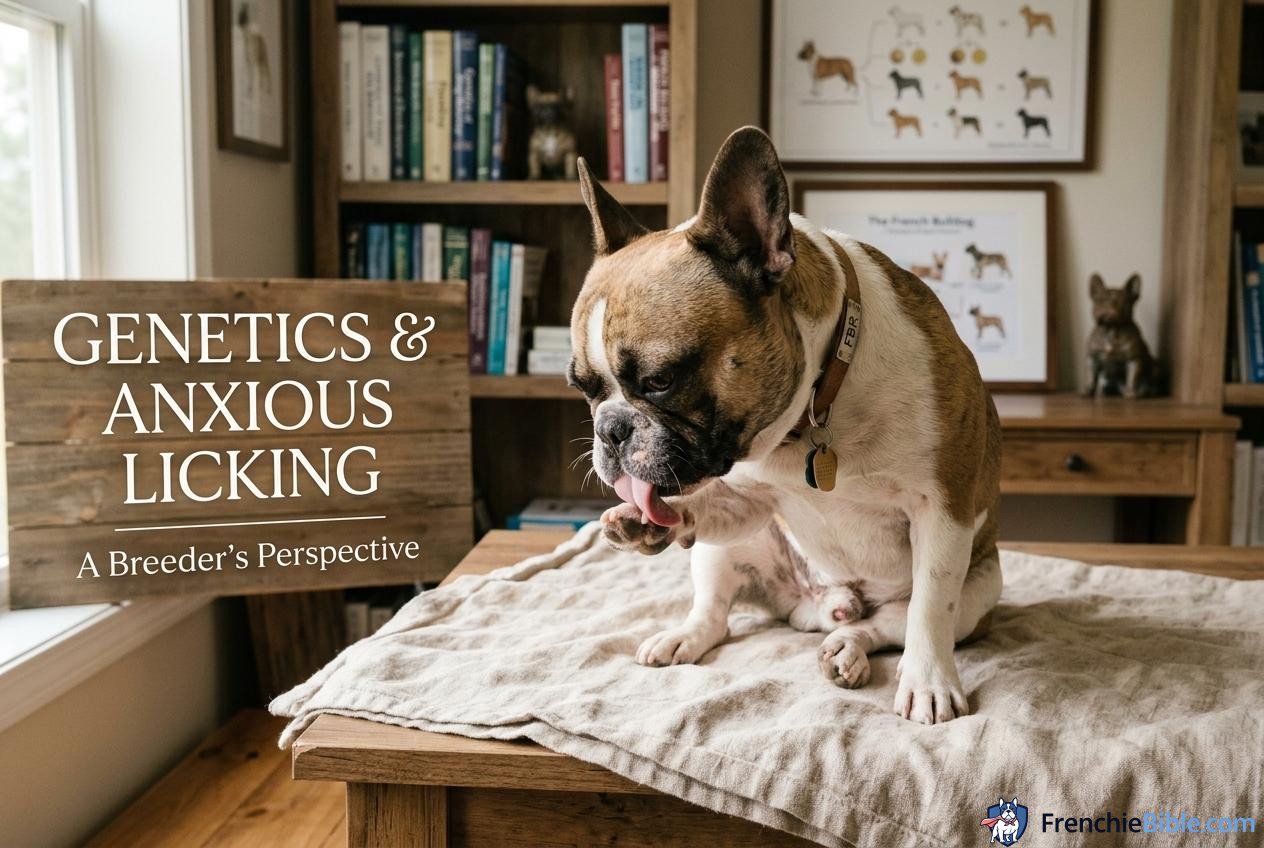
As someone deeply involved in the preservation, health, and improvement of the French Bulldog breed, I cannot overstate the profound impact of genetics on a dog’s overall behavioral profile. When addressing chronic anxiety and compulsive disorders like excessive licking, we must look beyond the dog’s current home environment and consider their lineage and how they were bred.
Temperament Inheritance
Temperament is highly heritable; it is passed down from generation to generation just like coat color or ear shape. A French Bulldog bred from nervous, highly reactive, spooky, or anxious parents has a significantly higher statistical probability of developing similar, or even worse, behavioral issues. Dogs with fundamentally unstable temperaments are far more likely to resort to obsessive licking as a desperate coping mechanism when faced with everyday, mundane stressors.
Responsible, ethical breeding practices prioritize not just physical conformation and rigorous health clearances, but also solid, confident, and bulletproof temperaments. A well-bred Frenchie should be adaptable, outgoing, resilient, and friendly. If you are dealing with profound anxiety-induced licking, understanding that your dog may have a genetic predisposition can shift your approach from frustration to profound empathy. You begin to recognize that their brain chemistry might be fundamentally wired to react to stress in this maladaptive manner, requiring immense patience and understanding.
The Importance of Early Neurological Stimulation (ENS)
The foundation of a confident, emotionally stable dog is not built in the trainer’s yard; it is laid directly in the whelping box during the first few weeks of life. Experienced, dedicated breeders utilize protocols like Early Neurological Stimulation (ENS), typically performed from days 3 to 16 of a puppy’s life. These specific, very mild stressors—such as brief thermal stimulation, tactical stimulation between the toes, and positional changes—kickstart the developing neurological and immune systems.
Puppies raised with ENS, followed by comprehensive early socialization protocols (exposing them to various novel sounds, textures, people, and safe environments before 12 weeks of age), develop significantly greater stress tolerance. They are far less likely to be overwhelmed by environmental changes later in life, and consequently, significantly less likely to develop anxiety-driven compulsive behaviors like obsessive floor or paw licking. Conversely, if a puppy was raised in a highly sterile, quiet, unstimulating environment—like a cage in a commercial breeding facility—their threshold for handling stress is dramatically lowered, setting them up for a lifetime of behavioral struggles.
Unveiling Anxiety and OCD in French Bulldogs
French Bulldogs are deeply sensitive, remarkably perceptive, and highly emotionally intelligent dogs. They thrive on human companionship and a predictable daily routine. When their environment or deep emotional needs are disrupted, they are highly prone to severe anxiety. In some challenging cases, this anxiety manifests physically as obsessive-compulsive behaviors.
Understanding Canine Compulsive Disorder (CCD)
Canine Compulsive Disorder (CCD) is the recognized canine equivalent of Obsessive-Compulsive Disorder (OCD) in humans. It is characterized by behaviors that are normally natural for a dog—like grooming, pacing, or chasing prey—but are performed in an exaggerated, repetitive, and entirely purposeless manner that severely interferes with the dog’s normal daily functioning and quality of life.
In my years of carefully observing Frenchies, I have seen CCD manifest most commonly as flank sucking (where the dog holds a fold of their own skin in their mouth and sucks rhythmically), shadow chasing, and, most prevalently, obsessive licking of themselves or their environment. CCD is strongly believed to have a heavy genetic component, but it is almost universally triggered, awakened, or exacerbated by environmental stress, internal conflict, or chronic frustration. For a Frenchie diagnosed with CCD, licking ceases to be a choice; it becomes an involuntary, overwhelming mechanism required to cope with unbearable neurological tension.
Triggers for Anxiety-Induced Licking
Identifying the specific trigger is the absolute first step in helping an anxious French Bulldog. While triggers are highly individual, common culprits include:
– Drastic Changes in Household Dynamics: A new crying baby, the introduction of a new pet, a death in the family (human or animal), or even the chaos of moving to a new house can severely stress a routine-loving French Bulldog.
– Severe Lack of Early Socialization: As mentioned, Frenchies that were not properly and safely socialized during their critical puppyhood fear-impact windows may find everyday occurrences—like passing cars, strangers wearing hats, or other dogs—utterly terrifying.
– Acoustic Phobias and Loud Noises: Thunderstorms, holiday fireworks, sirens, or nearby construction noise are notorious anxiety triggers that can send a dog into a licking frenzy as they try to self-soothe.
– Chronic Boredom and Frustration: Frenchies are smart, active problem solvers. If they do not receive adequate mental stimulation and appropriate physical exercise, they will invariably channel that pent-up energy and deep frustration into destructive or compulsive behaviors.
Separation Anxiety and Licking
French Bulldogs are famously known as “Velcro dogs.” They were bred for centuries for one specific purpose: to be human companions. Consequently, they often develop incredibly strong, sometimes unhealthy attachments to their primary owners. Separation anxiety is therefore incredibly common and deeply problematic in this breed.
When left completely alone, a Frenchie suffering from true separation anxiety may experience a state of sheer, blind panic. To cope with this profound physiological stress and fear of abandonment, they may resort to obsessive grooming, licking their paws until they bleed, or excessively licking the couch cushions, pillows, or blankets where their owner usually sits, desperately seeking the comfort of their familiar scent to calm their racing heart.
Common Medical Reasons for Excessive Licking (From a Breeder’s Perspective)
Before ever diving into behavioral modification or anxiety management, it is an absolute, non-negotiable priority to rigorously rule out underlying medical issues. In my extensive experience, the most brilliant behavioral modification plan in the world will fail completely if the underlying root cause of the behavior is chronic physical pain, nausea, or relentless itching. Frenchies are robust little dogs, but they have their specific, well-documented breed-related health quirks that owners must be hyper-aware of.
Allergies and Skin Irritations (Atopic Dermatitis)
If there is one single health issue that every French Bulldog owner must learn to recognize and manage, it is allergies. Frenchies are highly, sometimes notoriously, susceptible to both environmental allergies (pollen, dust mites, grass, mold spores) and food allergies (commonly beef, chicken, dairy, and wheat).
When a Frenchie has an allergic reaction, it usually manifests physically as atopic dermatitis—which translates to severe, maddening itching. Their sensitive paws, soft belly, ear canals, and deep facial folds become bright red, inflamed, and incredibly itchy. To relieve this unbearable itch, the dog will aggressively lick, chew, and bite at themselves. If your Frenchie is constantly licking their paws, gently spreading their toes and checking for a reddish-brown staining is crucial. This staining, often accompanied by a distinct “corn chip” smell, is a definitive sign of a yeast infection caused by the constant, trapped moisture from their excessive licking.
Parasites (Fleas, Ticks, Mites)
A sudden, acute onset of obsessive licking, biting, and scratching should always immediately prompt a thorough check for external parasites. Fleas are the most common and pervasive culprit. It is important to know that a dog does not need a full-blown infestation to be miserable. Even a single flea bite can cause Flea Allergy Dermatitis (FAD) in sensitive dogs, leading to days of relentless, frantic itching and licking, particularly localized around the base of the tail, the hindquarters, and the groin. Microscopic mites, such as Demodex or Sarcoptes (which causes mange), can also cause intense, burning itching and localized, patchy hair loss, prompting the dog to lick the affected areas completely raw.
Gastrointestinal Issues and “Lick Fits”
This is a frequently overlooked and deeply misunderstood cause of excessive licking, particularly when a dog is frantically licking the air, the floor, their own lips, or swallowing repeatedly. Dogs that suffer from chronic gastrointestinal distress, severe acid reflux, inflammatory bowel disease (IBD), or acute nausea often use licking as a physical response to soothe discomfort in their gut or burning in their esophagus.
French Bulldogs are famously prone to sensitive stomachs, food intolerances, and flatulence. If your Frenchie is suddenly, repeatedly swallowing hard, audibly smacking their lips, and frantically licking the carpet or their bed, they may be experiencing a painful bout of acid reflux or intense nausea. This is sometimes colloquially referred to by owners and vets as a “Lick Fit” and requires dietary investigation rather than behavioral training.
Pain or Discomfort in Joints
Dogs are evolutionary masters at hiding physical pain; showing weakness in the wild is dangerous. Often, the only subtle sign that a dog is hurting is that they will repeatedly and softly lick the specific area that is causing them distress. French Bulldogs are a chondrodystrophic breed, meaning they have a genetic, structural predisposition to skeletal and joint issues, such as Intervertebral Disc Disease (IVDD), hip dysplasia, and luxating patellas (slipping kneecaps). If an older Frenchie, or a highly active younger one, suddenly begins obsessively licking a specific joint, their wrist, or their lower back, it is a very strong, clinical indicator of localized pain, trauma, or the onset of arthritis.
Why Does My Frenchie Lick Me So Much?
We have thoroughly discussed why they might lick themselves or the environment, but what about when you, the owner, are the primary target of their relentless, wet tongue?
Seeking Attention and Affection
Frenchies are incredibly intelligent attention sponges. They rapidly learn exactly what behaviors elicit a reaction from their humans. If you laugh, warmly pet them, talk to them, or even gently and playfully scold them when they lick you, you are inadvertently rewarding the behavior with the exact thing they crave: your attention. To a Frenchie, almost any attention is considered good attention. If they want you to stop staring at your phone, put down your laptop, and look at them, deploying a barrage of kisses is a highly effective, learned strategy that works almost every time.
Tasting Sweat and Salts
As mentioned briefly earlier, human skin naturally secretes salts and oils. Frenchies possess a highly refined sense of taste and smell. If they are persistently licking your arms, legs, or face—especially after you have been active, working outside, or at the gym—they might simply be thoroughly enjoying the salty taste of your skin. While it is completely harmless from a medical standpoint, it can certainly become a bit overwhelming or unhygienic, requiring you to gently set boundaries.
Submissive Behavior
In the complex, non-verbal canine hierarchy, licking is very often a clear sign of deference, respect, and submission. If your Frenchie approaches you with a slightly lowered head, flattened ears, averted eyes, and gently licks your hands or chin, they are actively acknowledging your leadership and showing deep respect. It is a deeply ingrained social behavior intended to appease you, avoid conflict, and maintain harmony and peace within your shared “pack.”
Why Does My Frenchie Lick the Air, Floor, or Furniture?
Licking inanimate objects or the empty air is often significantly more concerning to owners and professionals than a dog licking themselves or their owners, as it rarely has a simple, straightforward behavioral explanation.
Licking the Air (Neurological or GI Signs)
Air licking is a highly peculiar behavior where the dog extends their tongue rhythmically and licks the empty space directly in front of their face. In my extensive experience, this is almost universally linked to one of two serious underlying issues: severe, acute gastrointestinal discomfort (like intense nausea, an impending vomiting episode, or painful acid reflux) or a neurological disorder. In some more rare and severe cases, rhythmic air licking can be a physical manifestation of partial, focal seizures or a deeply entrenched, complex compulsive disorder. If you witness this, it requires immediate documentation (take a clear video on your phone!) and a thorough veterinary investigation.
Licking the Floor or Furniture
When a Frenchie obsessively, methodically licks the living room carpet, the hardwood floor, the sofa cushions, or even the walls, it can be driven by a potent mix of severe anxiety, chronic boredom, or gastrointestinal upset. As mentioned with “Lick Fits,” dogs with intense nausea sometimes frantically lick cold floors in a desperate attempt to induce vomiting or soothe the burning in their esophagus. Alternatively, a dog suffering from severe boredom, lack of exercise, or confinement stress may develop a stereotypy—a repetitive, purposeless action—like licking a specific spot on the couch for hours until it is soaking wet, simply to give their brain something to focus on.
Behavioral Interventions and Training Strategies
Once you and your veterinarian are completely confident that all medical issues (allergies, pain, parasites, GI distress) have been definitively ruled out, you can then begin addressing the behavioral and psychological aspects of the excessive licking. As a breeder, I strongly advocate for positive reinforcement training methodologies and comprehensive environmental management.
Redirection and Distraction Techniques
You cannot effectively simply tell a dog to “stop” an ingrained, self-soothing behavior without providing an alternative; you must give them a more acceptable action to perform. When you notice your Frenchie beginning an obsessive licking session, interrupt them gently but firmly before they enter a trance-like state. Do absolutely not yell, hit, or punish them, as this will only dramatically increase their anxiety and exacerbate the compulsive behavior.
Instead, use a cheerful, upbeat voice to call their name and immediately redirect their attention. Ask them to perform a known command, like “sit” or “touch.” Once they comply and break the licking cycle, immediately offer them a high-value, long-lasting chew toy, a tough Kong toy heavily stuffed with frozen peanut butter or plain yogurt, or a complex puzzle toy. The ultimate goal is to seamlessly replace the self-soothing licking behavior with a constructive, highly engaging activity that stimulates their brain and uses their mouth in a positive, acceptable way.
Mental Stimulation and Enrichment
There is an old saying in the dog world: a tired dog is a good dog. But more accurately, a mentally exhausted dog is a calm, relaxed dog. Frenchies, due to their brachycephalic (flat-faced) nature, do not need or tolerate miles of running, but they absolutely do require daily mental workouts.
Incorporate scent games into their routine, such as hiding their daily kibble or high-value treats around the living room and encouraging them to “find it.” Dedicate 15 minutes a day to teaching new, complex tricks using positive reinforcement. Ditch the standard dog bowl and use interactive feeder puzzles or snuffle mats for all their meals. By actively giving their intelligent brain a “job” to do, you drastically reduce the excess mental energy, boredom, and frustration that so often fuels crippling anxiety and compulsive behaviors like obsessive licking.
Establishing a Predictable Routine
Anxiety thrives and multiplies in chaos and unpredictability. French Bulldogs, more than many breeds, find immense, profound comfort in a predictable daily routine. Establish a strict, unwavering schedule for feeding times, morning and evening walks, dedicated playtime, and bedtime. When a dog knows exactly what to expect from their day and when their needs will be met, their baseline physiological stress levels drop significantly. This environmental predictability is particularly crucial for dogs naturally prone to anxiety or those diagnosed with CCD.
Creating a Safe Space
Every dog requires a designated sanctuary—a quiet, secure place where they can retreat voluntarily when they feel overwhelmed, tired, or stressed by household activity. This could be a comfortable, properly introduced crate (never used for punishment), a specific, plush bed in a quiet corner of the bedroom, or a small, gated-off room. Ensure this space is associated exclusively with positive things, like high-value chews and total peace. When your Frenchie seems visibly stressed, pacing, or begins to compulsively lick, calmly and gently encourage them to go to their safe space to decompress away from the triggers.
Dietary and Nutritional Considerations for Skin Health
Nutrition plays a monumental, foundational role in a French Bulldog’s overall health, longevity, and behavioral stability, particularly concerning the management of skin allergies and gut health—both of which are massive drivers of excessive licking.
The Role of Omega Fatty Acids
For Frenchies constantly struggling with itchy, dry, flaky skin that prompts relentless licking, Omega-3 and Omega-6 fatty acids are a complete game-changer. These essential fatty acids drastically reduce systemic inflammation in the body and help repair and strengthen the skin’s natural lipid barrier. Adding a high-quality, pure fish oil supplement (such as wild-caught Alaskan salmon oil or krill oil) to their daily meals can significantly, visibly improve coat health, reduce dander, and dramatically reduce the physiological urge to itch and lick. Always consult your vet for the correct dosage based on your dog’s weight.
Understanding Dog Food Labels for Sensitive Frenchies
Navigating the pet food aisle can be overwhelming for any owner. When managing a Frenchie that licks due to suspected skin or food allergies, becoming an expert, ruthless label reader is crucial. You must actively avoid commercial foods filled with artificial dyes, chemical preservatives (like BHA, BHT, and Ethoxyquin), and vague, unnamed meat sources (e.g., generic “meat meal” or “poultry by-products”).
Look specifically for diets where the very first ingredient is a clearly identified, high-quality whole protein source. Additionally, be hyper-mindful of hidden allergens; for example, a food labeled as a “Lamb and Rice Recipe” might still contain chicken fat or dried egg products further down the ingredient list, which can easily trigger a severe reaction in a highly sensitive dog.
If you suspect food allergies, moving to a strict Limited Ingredient Diet (LID) or a prescription hydrolyzed protein diet simplifies this process. These specific foods intentionally restrict the number of ingredients to an absolute minimum, utilizing novel proteins (like rabbit, venison, or kangaroo) to minimize the chance of triggering an allergic, itchy response.
Probiotics and Gut Health
Science is increasingly recognizing the immense power of the gut-brain axis. A healthy, robust gut microbiome not only supports efficient digestion and nutrient absorption but also drives immune function and emotional, behavioral regulation. Given that Frenchies are notorious for sensitive stomachs, adding a high-quality, multi-strain canine-specific probiotic to their daily regimen can alleviate chronic gastrointestinal discomfort, reduce systemic inflammation, firm up loose stools, and potentially soothe anxiety-related behaviors that lead to licking.
Preventative Care and Grooming Tips
Proactive, diligent grooming can prevent many of the localized dermatological issues that initially trigger excessive licking. Frenchies require highly specific maintenance routines due to their unique, selectively bred anatomy.
Cleaning the Wrinkles and Folds
The adorable, deep facial wrinkles and the tight tail pockets characteristic of a French Bulldog are unfortunately perfect breeding grounds for harmful bacteria and yeast. These dark, warm, and constantly moist environments are perfect for infections (fold dermatitis). If these deep folds become irritated, red, or infected, the dog will frequently rub their face raw on the floor or try to lick their paws to clean their painfully itchy face, severely exacerbating the problem.
As an owner, you must clean your Frenchie’s facial folds and tail pocket daily. Use a veterinary-approved chlorhexidine wipe or a damp, soft cloth. Crucially, you must ensure you dry the area completely afterward with a clean tissue; leaving moisture behind defeats the purpose and encourages yeast growth.
Paw Care and Maintenance
A Frenchie’s paws take a massive beating every single day. In the scorching summer, hot asphalt and pavement can cause painful burns and blisters; in the freezing winter, rough salt and toxic ice-melt chemicals can cause severe, chemical irritation and cracking. Always meticulously wash your dog’s paws with warm water and a gentle cloth immediately after a walk to remove environmental allergens like pollen, dust, and toxic chemicals. Applying a high-quality, soothing, natural paw balm can actively protect the delicate pads from cracking and drying out, significantly reducing the dog’s desire to lick them for comfort.
Regular Bathing Routines
Bathing your Frenchie helps manually remove environmental allergens (like pollen and dust mites) from their coat before they can cause an allergic reaction. However, a common mistake is over-bathing, which strips the skin of its essential, natural oils, leading directly to dry, flaky skin and—you guessed it—more licking. Use a highly gentle, hypoallergenic, oatmeal-based or aloe-vera dog shampoo. Unless dealing with a specific, vet-diagnosed skin condition that requires frequent medicated baths, aim to bathe them only when genuinely necessary, typically every 4-8 weeks.
When to Seek Professional Help
As deeply as you love your Frenchie, and as much exhaustive research as you do online, there are times when intervention requires significantly more than home remedies, new toys, and basic behavioral redirection. Recognizing when you are out of your depth is the true mark of a responsible, loving owner.
Consulting a Certified Dog Behaviorist
If your Frenchie’s licking is driven by severe, crippling anxiety, diagnosed CCD, or past trauma, and your best, consistent efforts at redirection and routine management are failing to make a dent, it is time to seek professional expertise. Look for a Certified Applied Animal Behaviorist (CAAB) or a certified, positive-reinforcement dog trainer specifically specializing in behavioral modification and anxiety disorders. They can objectively assess your dog in their actual home environment, identify subtle, complex triggers you might have missed entirely, and create a comprehensive, highly tailored counter-conditioning and systematic desensitization plan.
Partnering with Your Veterinarian
Always, always consult a medical professional for a comprehensive physical examination if the excessive licking is a new behavior, highly intense, or is actively causing physical injury (like a lick granuloma). Comprehensive blood panels, skin scrapings to check for mites, allergy testing panels, and thorough joint evaluations via X-ray are absolutely necessary to definitively rule out the serious medical causes discussed earlier.
Furthermore, if a dog is formally diagnosed with severe CCD or crippling, life-altering anxiety, behavioral modification alone might simply not be enough to break the cycle. In these difficult cases, your veterinarian may discuss the implementation of pharmacological interventions, such as daily anti-anxiety medications or SSRIs (like fluoxetine). These medications are not a cure, but they help balance the dog’s brain chemistry, lowering their panic threshold just enough so that your behavioral training and modification can actually be effective.
Conclusion: Embracing a Balanced Life with Your Frenchie
Living your life with a French Bulldog is a deeply rewarding journey of immense joy, filled with hilarious snorts, sudden zoomies, and endless, unwavering affection. However, their specific physical sensitivities and their deep emotional intelligence mean they require highly attentive, proactive, and knowledgeable care from their owners.
Excessive licking is rarely, if ever, a simple, harmless behavioral quirk. It is a vital communication tool—a glaring symptom of an underlying physical itch, a painful gastrointestinal rumble, a hidden joint ache, or a physical manifestation of deep psychological distress like chronic anxiety or Canine Compulsive Disorder.
By paying meticulous, daily attention to the specific context of the licking, maintaining impeccable, breed-specific grooming and strict dietary standards, and proactively addressing their deep emotional need for routine and mental stimulation, you can successfully help your Frenchie overcome these complex challenges. Remember, immense patience is paramount. Healing inflamed skin, modifying deep-rooted, compulsive behaviors, and alleviating chronic anxiety takes significant time and unwavering consistency. By being an observant, educated, and proactive owner, you can ensure that your Frenchie’s kisses remain a joyful sign of love, rather than a desperate symptom of distress, allowing you both to enjoy a long, happy, healthy, and perfectly balanced life together.
Frequently Asked Questions (FAQs)
Q1: How can I immediately stop my French Bulldog from licking their paws until they are raw and bleeding?
The absolute first step is identifying and addressing the root cause, but immediately, you must physically prevent them from further damaging the delicate paw tissue. Utilize an appropriately sized Elizabethan collar (the “cone of shame”) or soft, protective dog booties. Immediately inspect the area for signs of a yeast infection (red/brown staining, distinct corn chip smell), fleas, or a foreign object like a grass awn stuck deep between the pads. If the skin is raw, broken, or weeping, you must seek professional veterinary evaluation to treat the inflammation and potential secondary infection, whilst simultaneously managing environmental allergens by thoroughly washing their paws after every walk.
Q2: My Frenchie obsessively licks the couch cushions and blankets. Is this normal behavior?
No, obsessive, prolonged licking of furniture or fabrics is not considered normal behavior. It is very often a clear sign of underlying anxiety, chronic boredom, or an undiagnosed gastrointestinal issue. Ensure your dog is receiving adequate, daily mental and physical stimulation. If this behavior primarily happens when you leave the house or prepare to leave, it could be a manifestation of separation anxiety. If it is accompanied by lip-smacking, drooling, or hard swallowing, it may be a sign of acid reflux or nausea requiring a vet visit.
Q3: Can simply changing my French Bulldog’s food stop their excessive paw and body licking?
If the excessive licking is directly caused by a food allergy or dietary sensitivity, then yes, changing their diet is the cure. Switching to a high-quality, limited-ingredient diet (LID) utilizing a novel protein (like venison or rabbit) can eliminate the internal, systemic inflammation that causes the skin to itch frantically. However, owners must be aware that strict dietary elimination trials take a full 8 to 12 weeks to fully manifest changes in the skin tissue, so extreme patience and strict adherence (no cheating with old treats!) are required.
Q4: Should I verbally or physically punish my Frenchie for constantly licking me or the furniture?
Absolutely not. Punishing a dog (yelling, swatting, or using aversive tools) for licking will only drastically increase their internal stress and anxiety levels, which is often the very root cause of the behavior. Punishment can severely worsen compulsive behaviors and damage your bond. Instead, quietly stand up and walk away, completely removing the attention they are seeking. Alternatively, positively redirect their behavior by asking them to perform a command like “sit” or “go to bed,” and rewarding them with an appropriate chew toy or a high-value treat when they comply.
Q5: Is it actually possible for a dog, specifically a French Bulldog, to have OCD?
Yes, dogs can and do suffer from Canine Compulsive Disorder (CCD), which is the recognized clinical equivalent to human Obsessive-Compulsive Disorder (OCD). It manifests as repetitive, uncontrollable behaviors, such as obsessive licking, relentless tail chasing, or flank sucking, that severely interfere with their daily life and health. This requires a comprehensive, multi-faceted management approach involving rigorous stress reduction, massive environmental enrichment, behavioral modification, and sometimes, long-term pharmacological support prescribed by a veterinarian.
Disclaimer: Please note that the information, advice, and insights provided in this article are based entirely on over a decade of extensive, hands-on experience in French Bulldog breeding, behavior observation, and daily husbandry. I am a dedicated breeder, a breed preservationist, and an enthusiast, but I am not a licensed veterinarian, and I do not possess any formal medical or veterinary qualifications. The content shared here is strictly for educational and informational purposes only and is intended merely to share practical breeding and husbandry experiences. It should never, under any circumstances, be used as a substitute for professional veterinary advice, formal diagnosis, or prescribed medical treatment. If your dog is exhibiting new or concerning behaviors, excessive licking leading to physical injury, or any signs of illness, please consult a licensed veterinarian immediately to ensure your beloved pet’s health, safety, and well-being.