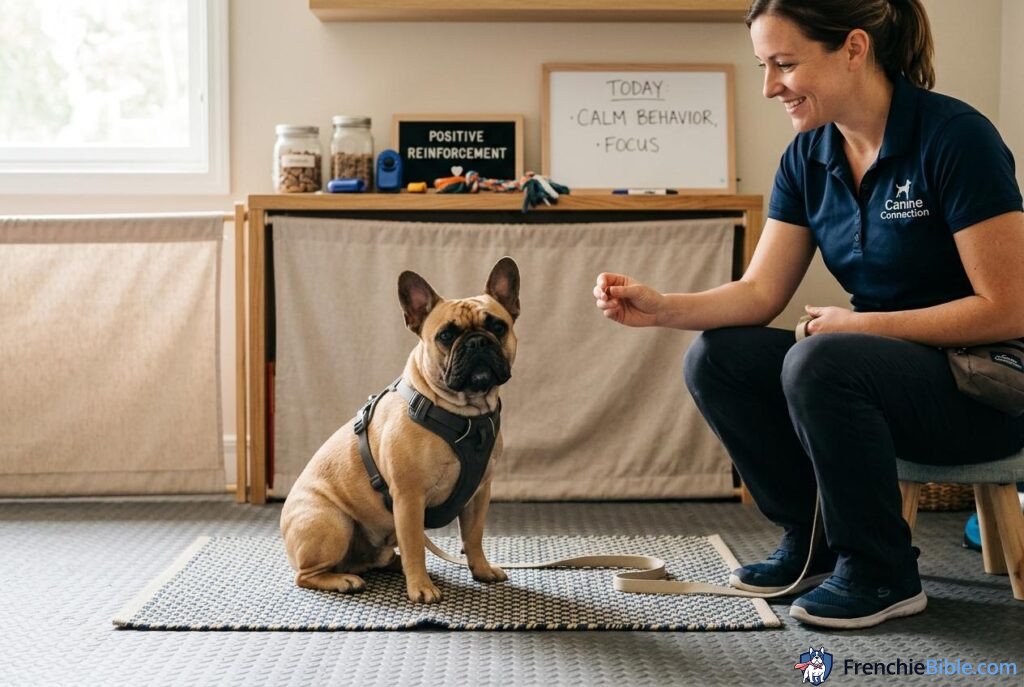
If you are reading this article, chances are you have experienced one of the most frightening and heartbreaking situations a dog owner can face: your sweet, affectionate French Bulldog has suddenly attacked another dog. When you bring a Frenchie into your home, you envision a comical, loving companion who snores on your lap and gets along with everyone. They are frequently touted as excellent family pets, known for their charming personalities and clownish antics. Therefore, witnessing your Frenchie bare their teeth, lunge, or engage in a vicious fight with another dog can be deeply shocking and traumatizing.
However, despite their reputation as friendly companion animals, French Bulldogs can and do exhibit aggression. One of the most severe and misunderstood forms of aggression within this breed is Same-Sex Aggression (SSA), particularly between two female dogs. If your female Frenchie has started attacking your other female dog, or if your male is suddenly intolerant of other males, you are not alone. This is a well-documented phenomenon in the canine world, and it has specific nuances when it comes to the bulldog breeds.
Related Reading: Health & Diet | Frenchie Puppy Guide
In this comprehensive guide, we will dive deep into the psychology, genetics, and behavioral triggers behind why your French Bulldog is attacking other dogs. as a French Bulldog expert and breeder and breeding expert, I will unpack the terrifying reality of same-sex aggression, why female-to-female aggression is notoriously difficult to resolve, and what actionable steps you must take to protect your pets and restore peace to your household.
The Roots of Aggression in French Bulldogs
To understand why a French Bulldog might attack another dog, we first need to look at the breed’s history and genetic makeup. Many owners mistakenly believe that because Frenchies are small and companion-oriented, they are devoid of the drives that characterize working or terrier breeds. This is a dangerous misconception.
Ancestral History: The Bulldog and Terrier Influence
The French Bulldog’s ancestors include the English Bulldog and local ratters (terriers) from Paris. The original Bulldogs were bred for bull-baiting—a blood sport that required immense tenacity, pain tolerance, and an unwillingness to back down from a fight. When these bulldogs were crossed with terriers to create a smaller, more agile companion, they also inherited the terrier’s high prey drive, quick arousal levels, and gameness.
While generations of breeding have softened these traits to create the modern companion Frenchie, the genetic blueprint for tenacity and reactivity is still present. Under the right (or wrong) circumstances, these dormant traits can surface. A Frenchie that is pushed past its threshold may not just snap and retreat; they may engage fully, refusing to let go, which is characteristic of their bulldog heritage.
Genetics vs. Environment
Aggression is rarely the result of a single factor; it is a complex interplay between genetics and environment.
– Genetics: Some French Bulldogs are genetically predisposed to lower thresholds for frustration or higher baseline anxiety. Poor breeding practices that prioritize physical appearance over temperament can result in unstable dogs that are prone to reactivity or aggression.
– Environment: How a dog is socialized, trained, and managed plays a critical role. A Frenchie that missed crucial socialization windows as a puppy, experienced a traumatic event with another dog, or lives in a highly stressful environment is far more likely to develop aggressive behaviors. However, even perfectly socialized dogs can develop same-sex aggression, proving that genetics and hormonal shifts are powerful forces.
Understanding Same-Sex Aggression (SSA) in Dogs
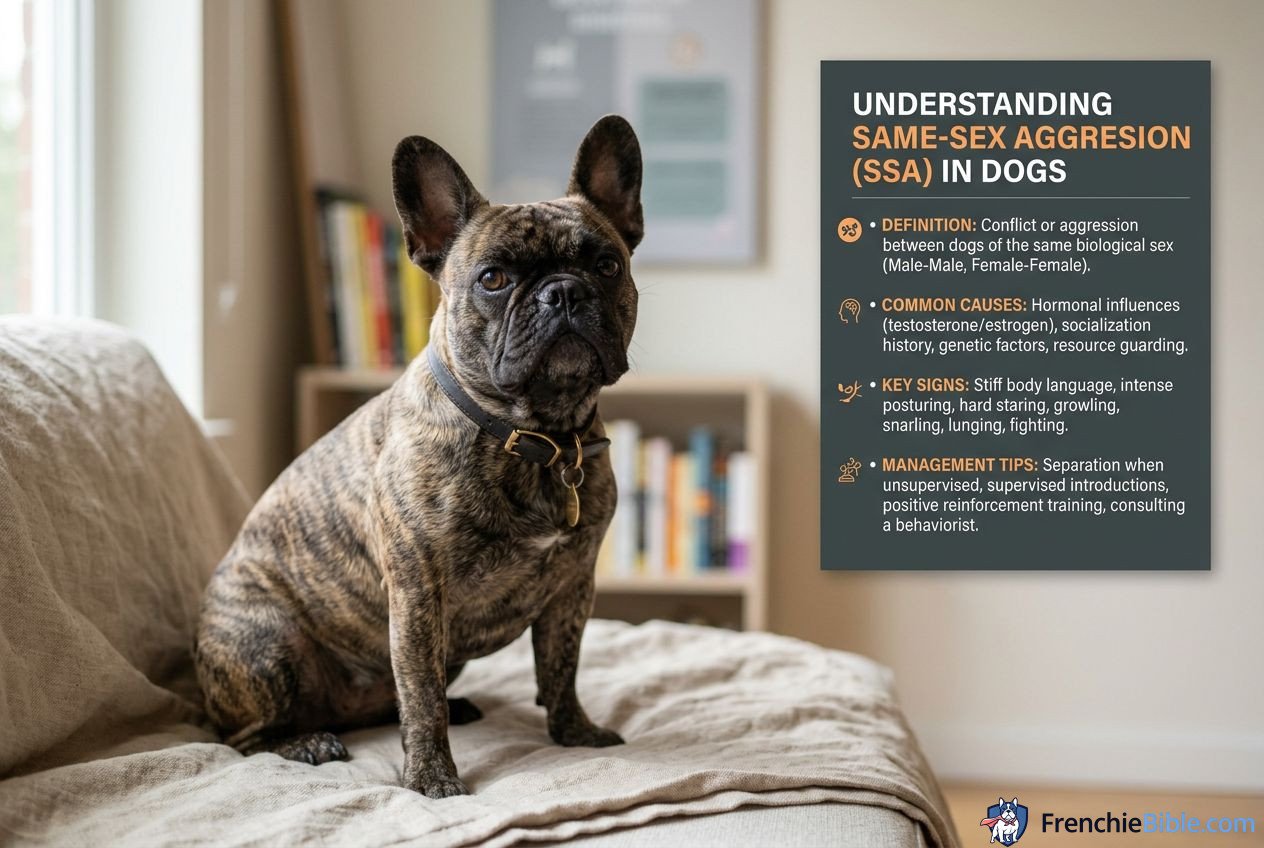
Same-Sex Aggression (SSA) is exactly what it sounds like: a dog exhibiting aggressive behavior exclusively or primarily toward dogs of the same sex. While it can occur between two males, female-to-female aggression is universally recognized by behaviorists and veterinarians as the most severe, intense, and difficult to resolve form of canine aggression.
The Dynamics of Pack Hierarchy
Dogs are social animals, but the concept of an “alpha” or a rigid hierarchy is often misunderstood. In a multi-dog household, dogs form dynamic relationships based on access to resources (food, space, owner attention). When two dogs of the same sex, similar age, or similar size live together, the competition for these resources can become fierce.
Males tend to be more posturing. Two male dogs might have a scuffle that looks and sounds terrifying, but it is often characterized by loud growling, air snapping, and inhibited bites. They are typically trying to establish boundaries without inflicting lethal harm. Once the dispute is settled, males can often move on and coexist peacefully.
The Reality of Female-to-Female Aggression
Female dogs, however, operate differently. In the wild, female canines compete for the right to reproduce and access the best resources to ensure their offspring’s survival. This instinctual drive translates to modern domestic dogs in a terrifying way.
There is an old adage among dog trainers and behaviorists: “Males fight for the right to breed; females fight for the right to breathe.” Or, more bluntly, “Bitches equal stitches.”
When two female French Bulldogs decide they do not like each other, their fights are rarely about posturing. They are fighting to eliminate the competition. Female-to-female fights are characteristically silent, incredibly violent, and often result in severe injury or death if not broken up immediately. Furthermore, female dogs hold grudges. Once two female dogs have engaged in a serious fight, the relationship is often irreparably damaged. They will actively seek each other out to finish the job, making coexistence incredibly dangerous.
Why Do French Bulldogs Specifically Exhibit Same-Sex Aggression?
While SSA can happen in any breed, French Bulldogs have specific breed traits that can exacerbate the problem and make interactions with other dogs highly volatile.
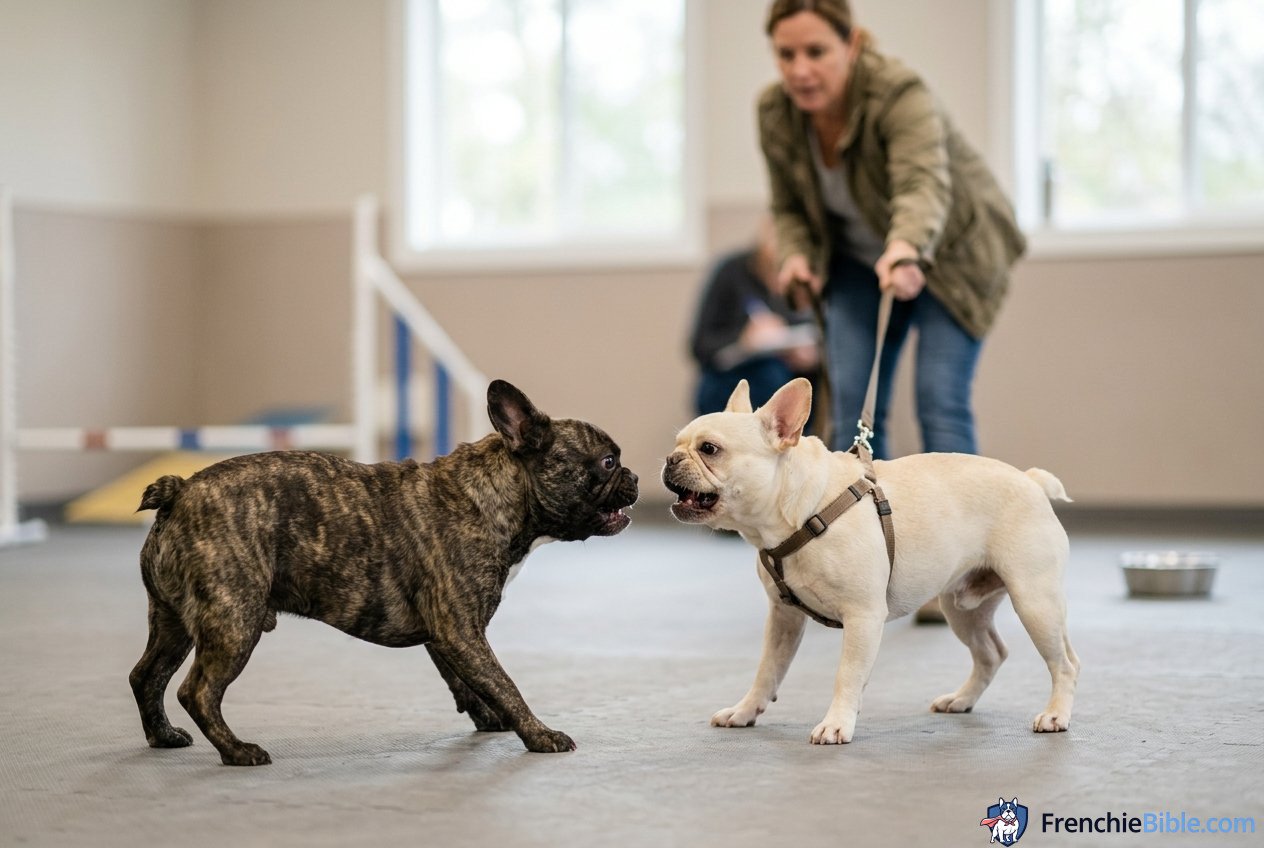
Misinterpretation of Body Language
French Bulldogs have physical characteristics that severely handicap their ability to communicate effectively with other dogs.
– No Tail: They lack a functional tail, which is a primary tool for canine communication.
– Erect Ears: Their bat ears are permanently erect, which other dogs can interpret as a sign of hyper-alertness or challenge.
– Stiff Gait and Flat Faces: Their physical build gives them a stiff, forward-leaning posture that mimics an offensive stance.
– Vocalizations: Due to Brachycephalic Obstructive Airway Syndrome (BOAS), Frenchies snort, grunt, and wheeze. Other dogs often interpret these respiratory noises as growling or aggressive vocalizations.
Because other dogs misinterpret the Frenchie’s natural state as a threat, they may react defensively. Over time, the French Bulldog learns that interactions with other dogs result in conflict, leading them to adopt a “shoot first, ask questions later” mentality. They become preemptively aggressive to protect themselves.
High Arousal and Low Impulse Control
Many French Bulldogs struggle with emotional regulation. They go from zero to one hundred in a matter of seconds. When they get overly excited—even in play—their arousal levels spike. Without the impulse control to bring themselves down from that emotional high, play can quickly escalate into a fight. In a household with two female Frenchies, an exciting event like the doorbell ringing or the owner coming home can cause arousal levels to peak, resulting in redirected aggression where one dog turns and attacks the other.
The “Big Dog in a Small Body” Syndrome
Frenchies are incredibly confident dogs. They do not view themselves as small, vulnerable animals. This bravado means they will not hesitate to challenge a dog that is much larger than them, or engage in a fight to the bitter end with a housemate. Their high pain tolerance and bulldog tenacity mean that once a fight starts, they are very difficult to separate.
Recognizing the Early Warning Signs of Aggression
One of the most dangerous aspects of Frenchie aggression is that they often skip the early warning signs. A typical dog will freeze, growl, lip curl, and air snap before making contact. Frenchies, due to their breeding and high arousal, will often skip the warning growl and go straight to the bite.
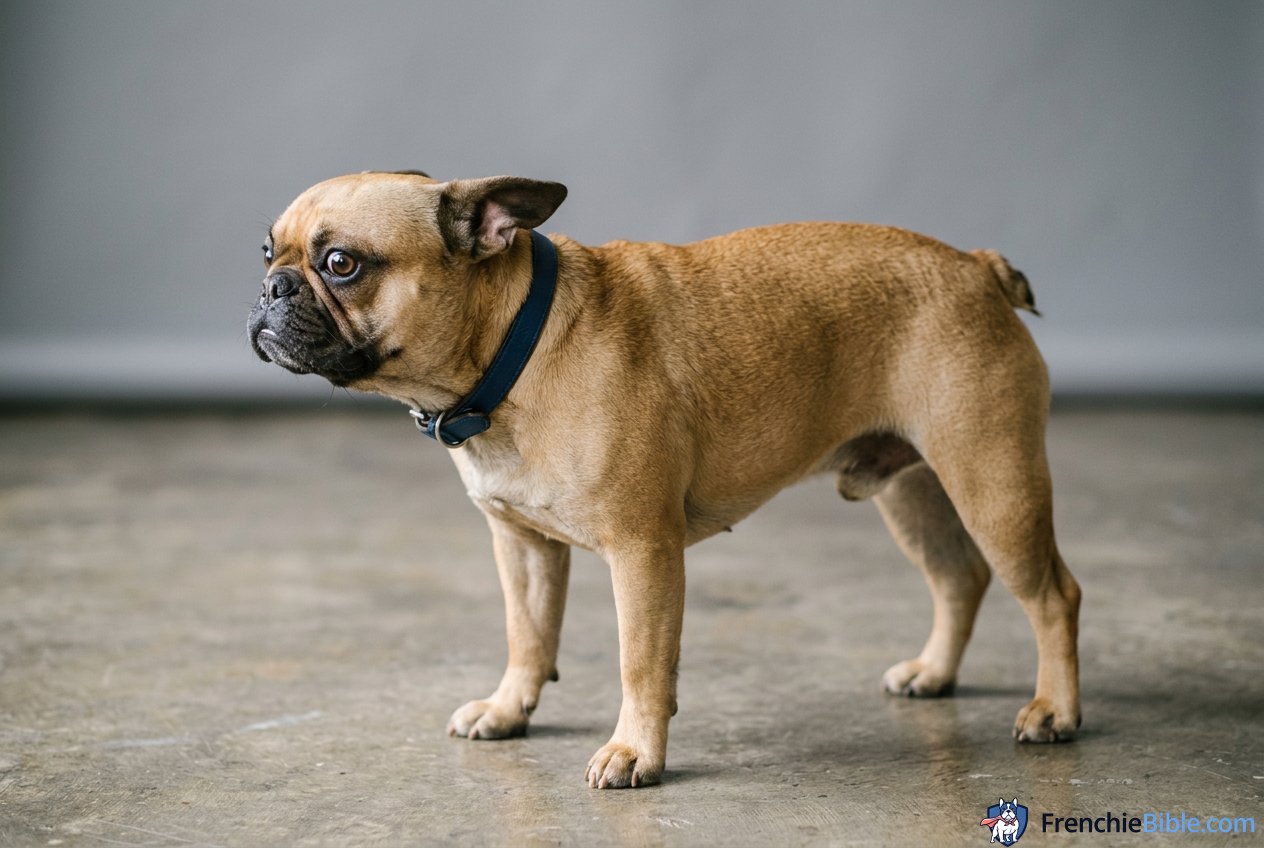
However, if you observe closely, there are usually subtle micro-signals that a fight is brewing:
– Prolonged Staring: A hard, unblinking stare directed at the other dog, often accompanied by “whale eye” (showing the whites of the eyes).
– Stiffening: The dog’s body becomes rigid, their weight shifts forward, and their muscles tense.
– Resource Guarding: Standing over a toy, an empty food bowl, or even positioning themselves between the other dog and the owner.
– Blocking Pathways: One dog deliberately standing in a doorway or hallway to block the other dog’s passage.
– Change in Breathing: A sudden shift from normal panting to a closed mouth, or heavy, rhythmic snorting that indicates stress and adrenaline.
– Sudden Silence: The cessation of normal, happy grunting or panting. The environment suddenly feels incredibly tense.
If you notice any of these signs, particularly between two female dogs, you must intervene immediately by calmly separating them before the tension erupts into violence.
Common Triggers for Frenchie Aggression Towards Other Dogs
Aggression doesn’t happen in a vacuum. There is almost always a trigger, even if it isn’t immediately obvious to the human observer. Understanding these triggers is the first step in managing your Frenchie’s environment.
1. High-Value Resources
Resource guarding is one of the most common causes of dog fights. Frenchies can be highly possessive of their resources.
– Food and Treats: Feeding time, dropped food in the kitchen, or high-value chews like bully sticks.
– Toys: A favorite ball or squeaky toy.
– Human Attention: The owner is often the most valuable resource. A fight can easily break out if one dog is sitting on your lap and the other approaches.
– Space: A favorite dog bed or a specific spot on the couch.
2. Overstimulation and Trigger Stacking
Trigger stacking occurs when a dog experiences multiple stressful or arousing events in a short period. For example, the dog has a frustrating walk, then the mail carrier drops off a package, and then the owner comes home. The dog is so flooded with adrenaline that the mere presence of the other dog in the house causes them to explode into an attack.
3. Confined Spaces
Doorways, narrow hallways, and the area around the owner’s legs are prime locations for fights. These confined spaces restrict movement, making dogs feel trapped. If two dogs attempt to squeeze through a door at the same time, the friction and close proximity can trigger a fight.
4. Hormonal Changes
In intact (unspayed/unneutered) dogs, hormones play a massive role in aggression.
– Female Heat Cycles: A female in heat experiences massive hormonal shifts that can make her incredibly irritable and prone to attacking other females. Even after the heat cycle, false pregnancies can trigger maternal aggression, where the dog guards toys as if they were puppies.
– Male Testosterone: Intact males are more prone to posturing, marking, and competing for dominance, especially if there is a female in heat nearby.
5. Barrier Frustration and Leash Reactivity
Many Frenchies are perfectly fine with other dogs off-leash but become aggressive monsters when on a leash or behind a fence. The restriction of the leash prevents them from engaging in natural flight-or-fight responses, causing immense frustration that manifests as outward aggression.
Immediate Steps to Take If Your Frenchie Attacks Another Dog
If a fight breaks out, your primary goal is to separate the dogs safely without getting bitten yourself. Human safety must always come first. When dogs are in a “red zone” fighting state, they do not recognize their owners and will bite anything that gets in the middle.
How to Safely Break Up a Dog Fight
- Never use your hands: Do not reach for their collars, and do not put your hands anywhere near their mouths. You will get severely bitten.
- The Wheelbarrow Method: If there are two people, each person should grab the back legs of one dog, lift them up like a wheelbarrow, and walk backward in a circle to prevent the dog from turning around and biting.
- Use a Barrier: Slide a piece of cardboard, a baby gate, a chair, or a large cushion between the fighting dogs to break their visual and physical contact.
- Water or Noise: Sometimes a sudden shock can break their focus. Dumping a bucket of cold water on them or making a sudden, deafening noise (like an air horn) can pause the fight long enough for you to separate them.
- The Leash Trick: If you have a slip lead, you can attempt to loop it under the dog’s belly to pull them away, but this requires extreme caution.
Managing the Aftermath
Once the dogs are separated, immediately put them in different rooms behind closed doors. Do not try to reunite them to “make up.” Adrenaline remains in a dog’s system for up to 72 hours; they are highly likely to fight again if reunited too soon.
Assess both dogs for injuries. Because of their jaw strength, Frenchie bites can cause severe deep tissue damage that isn’t immediately visible under their fur. If there are punctures, take them to the vet immediately.
Do NOT punish the dogs. Yelling, hitting, or alpha-rolling your dog after a fight will only increase their stress and fear. They will associate the punishment with the presence of the other dog, making the aggression worse in the future.
Long-Term Management and Training Solutions
If your French Bulldog has exhibited same-sex aggression, you must immediately implement strict management protocols. Hoping it won’t happen again is not a strategy; it is a recipe for a fatal tragedy.
1. Crate and Rotate
If you have two female dogs that have had a serious fight, you must assume they can never be left alone together again. “Crate and rotate” is a management system where the dogs are never loose in the house at the same time. While Dog A is loose in the living room, Dog B is securely in her crate or in a separate room behind a sturdy closed door. Then they swap. This is exhausting and stressful for the owners, but it is often the only way to guarantee safety.
2. Muzzle Training
A basket muzzle (such as a Baskerville muzzle that allows the dog to pant and drink water) is an essential tool. While a muzzle does not cure aggression, it removes the danger of severe injury. If the dogs are ever in the same room (e.g., during highly supervised training sessions), the aggressor(s) MUST be muzzled. Muzzle training should be done slowly and positively with lots of treats so the dog views the muzzle as a good thing. Note: Finding a properly fitting muzzle for a flat-faced Frenchie can be challenging, but custom-fit brachycephalic muzzles are available online.
3. Remove All Triggers
Identify what starts the fights and eliminate those triggers entirely.
– Feed the dogs in separate rooms with closed doors.
– Pick up all toys, bones, and chews. They should only have access to high-value items when they are separated.
– If they fight over the owner, the owner must establish strict boundaries. Neither dog is allowed on the furniture or lap unless invited, and they are not allowed up at the same time.
4. Engage a Veterinary Behaviorist
Obedience training (sit, stay, down) will not fix aggression. You need a professional who understands canine psychology. Look for a Board-Certified Veterinary Behaviorist (DACVB) or a Certified Applied Animal Behaviorist (CAAB). They will evaluate your dogs, look for underlying medical issues (pain is a huge driver of sudden aggression), and develop a behavior modification plan.
5. Behavior Modification Techniques
Professionals often use techniques like Counter-Conditioning and Desensitization.
– Desensitization: Exposing the aggressive dog to the trigger (the other dog) at a distance where they do not react, slowly decreasing the distance over weeks or months.
– Counter-Conditioning: Changing the dog’s emotional response to the trigger. For example, every time the aggressive dog sees the other dog, they get a piece of hot dog. Over time, the sight of the other dog predicts wonderful things, changing the underlying emotional state from anger/fear to anticipation.
– BAT (Behavior Adjustment Training): Teaching the dog alternative, safe behaviors when they feel stressed, such as looking away or walking away, rather than attacking.
6. The Role of Spaying and Neutering
If your dogs are intact, you should consult your veterinarian about spaying and neutering.
– For males, neutering can sometimes reduce testosterone-driven posturing and same-sex aggression.
– For females, the situation is more complex. While spaying prevents heat cycles and false pregnancies (which are massive hormonal triggers), some studies suggest that spaying a female dog who is already exhibiting aggression can actually increase her reactivity. This is because estrogen has a slight calming effect; removing it leaves the dog with higher relative testosterone levels. You must discuss this extensively with a veterinary behaviorist before making a decision.
Can Female-to-Female Frenchie Aggression Be Cured?
This is the hardest question an owner has to face. The harsh reality, universally acknowledged by veterinary behaviorists, is that severe female-to-female aggression is rarely “cured.” It can only be managed.
Unlike males, who might fight over a toy and then go back to sleeping on the same bed, females fight to destroy. Once a female dog has decided she wants to eliminate her female housemate, that intent rarely goes away entirely. You may be able to manage the dogs so they can exist in the same house without fighting, but you will never be able to trust them. You can never leave them unattended, you can never have toys out, and you will always be living on edge, waiting for the next trigger.
Assessing Quality of Life and Rehoming
Living in a constant state of hyper-vigilance is incredibly stressful for the human owners, but it is equally stressful for the dogs. Dogs in a household experiencing SSA are living in a war zone. Their cortisol levels are permanently elevated. They are constantly stressed, fearful, and unable to relax in their own home.
If the fighting is severe, if there have been injuries, or if the management protocol (crate and rotate) is severely impacting the quality of life for the humans and the dogs, rehoming one of the dogs is often the most loving, ethical, and responsible decision you can make.
Rehoming is not a failure. It is recognizing that the specific dynamic in your household is toxic to the animals involved. Rehoming the aggressor (or the victim) to a home where they are the only dog allows them to live a peaceful, stress-free life. It also restores peace to your home and protects your remaining dog from trauma and injury.
Frequently Asked Questions (FAQ)
Will getting a male Frenchie fix my female’s aggression?
Not necessarily, but opposite-sex pairings (one male, one female) are statistically the most successful and peaceful dog combinations. If your female is aggressive towards other females, she may perfectly tolerate or even bond closely with a male dog. However, if her aggression is rooted in severe resource guarding or fear, she may still attack a male dog over a bone or an owner’s lap. Always introduce new dogs slowly and safely on neutral territory.
At what age does same-sex aggression typically start?
Same-sex aggression rarely manifests in young puppies. It typically begins to show its ugly head when the dogs reach social maturity, which is between 12 months and 3 years of age. Often, two female puppies will grow up together perfectly fine, sleeping in the same bed and playing happily, only to start trying to kill each other seemingly overnight when they turn 18 months old and their adult hormones and pack instincts fully kick in.
Is it safe to take my aggressive Frenchie to the dog park?
Absolutely not. Dog parks are highly chaotic environments with zero control over other dogs’ behaviors, arousal levels, or training. If your French Bulldog has a history of reactivity or same-sex aggression, taking them to a dog park is incredibly irresponsible. It puts your dog, other dogs, and other owners at severe risk. Your dog does not need dog park interactions to be happy; they are much safer engaging in structured playdates with known, calm dogs, or simply enjoying one-on-one time with you.
Can medication help with my French Bulldog’s aggression?
Yes, in some cases. If a veterinary behaviorist determines that your dog’s aggression is rooted in severe generalized anxiety, fear, or a low threshold for frustration, they may prescribe psychoactive medications such as Fluoxetine (Prozac) or Gabapentin. Medication will not cure aggression on its own; it is used as a tool to lower the dog’s overall anxiety levels so that behavior modification training can actually be effective. Medication must be prescribed and monitored by a veterinarian.
Are male French Bulldogs prone to same-sex aggression too?
Yes, male-to-male aggression is common, especially among intact (unneutered) males who are competing for status, territory, or the attention of a female. However, as mentioned earlier, male fights are often more about noise and posturing rather than the lethal intent seen in female-to-female aggression. Neutering, removing high-value triggers, and clear leadership from the owner can often successfully manage and resolve male same-sex aggression.
Conclusion
Dealing with a French Bulldog that attacks other dogs is an emotionally draining and frightening experience. It shatters the illusion of the easy-going companion dog and forces owners into a rigid lifestyle of management and vigilance. Understanding that this behavior is rooted in deep genetic history, hormonal drives, and breed-specific physical traits can help remove the guilt and emotional burden owners often feel.
If you are dealing with same-sex aggression, particularly female-to-female, you must take the situation seriously immediately. Implement strict safety management, eliminate triggers, muzzle train your dogs, and seek the guidance of a board-certified veterinary behaviorist. Do not wait for the “next fight” to take action, because the next fight could be fatal.
Ultimately, your responsibility is to ensure the safety and well-being of all animals in your home. Sometimes, that means committing to lifelong management; other times, the most compassionate act is rehoming a dog to give them the peaceful, single-dog life they desperately need. Whatever path you choose, prioritize safety, patience, and professional guidance.
Disclaimer: We are not veterinarians and do not hold veterinary medical licenses. The information provided in this article is based on years of breeding and daily care experience and is for educational purposes only. It should not replace professional veterinary advice. Always consult with a licensed veterinarian if you have concerns about your French Bulldog’s health or before starting any new treatment.