【IMPORTANT MEDICAL DISCLAIMER】
The information provided in this article is based on over a decade of experience in French Bulldog breeding, advanced grooming, and daily husbandry. It is intended for educational and informational purposes only. We are NOT licensed veterinarians, and this content does not constitute professional veterinary medical advice, diagnosis, or treatment. If your dog’s nose is bleeding profusely, oozing pus, causing extreme pain, or if the crusting is accompanied by systemic issues like lethargy or hair loss (which could indicate autoimmune diseases like Discoid Lupus Erythematosus), please seek immediate care from a licensed veterinarian.
Introduction
Owning a healthy French Bulldog means you are used to getting kisses from a cold, wet, spongy little black nose. However, many Frenchie parents wake up one day horrified to find their dog’s nose looks like a dried-out riverbed or has developed a thick, spiky, crusty layer that looks almost like a “cauliflower.”

Related Reading: Training & Behavior | Frenchie Puppy Guide | Best Food for Frenchies
Many novice owners assume their dog is just dehydrated and try forcing them to drink more water. Unfortunately, a severe Frenchie dry/crusty nose cannot be fixed at the water bowl. In the professional grooming and breeding world, this condition is known as Nasal Hyperkeratosis.
As seasoned French Bulldog breeders and care directors, we know that this severe crusting doesn’t just look uncomfortable—it actually strips your dog of their primary sense: their smell. Today, we are pulling back the curtain to explain exactly why Frenchies get crusty noses, and we are sharing our proven, 4-step painless home-repair guide to safely bring back your dog’s healthy, moisturized nose.
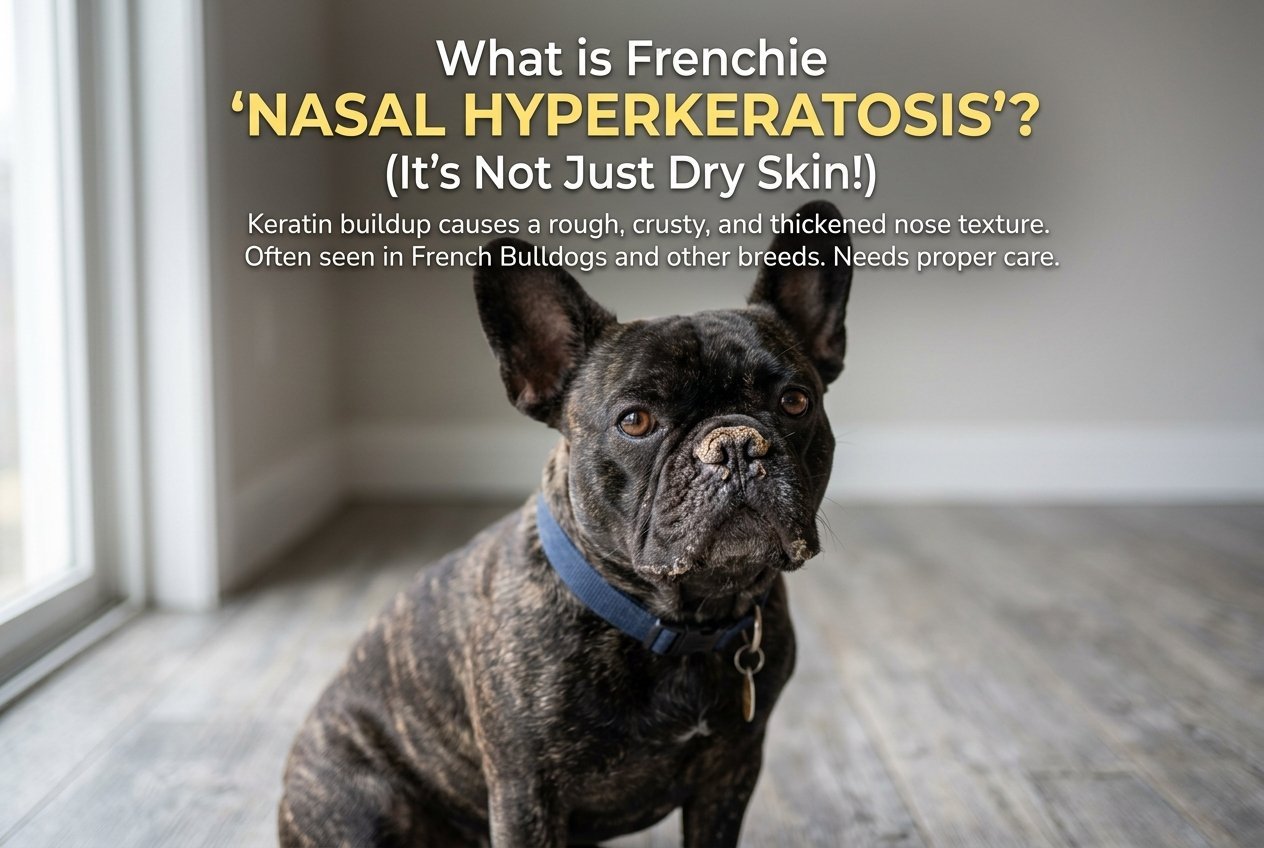
What is Frenchie “Nasal Hyperkeratosis”? (It’s Not Just Dry Skin!)
To fix the issue, you must first understand the difference between a slightly dry nose and actual Hyperkeratosis.
The Science Behind the Crust: Keratin Overdrive
Keratin is a tough, fibrous protein. It is the exact same substance that makes up human fingernails, hair, and your dog’s nose and paw pads. Normally, a dog’s body produces just enough keratin to keep the nose resilient and tough enough for digging and sniffing.
However, when a dog develops Hyperkeratosis, their body goes into overdrive, producing far more keratin than necessary. Because this excess protein has nowhere to go, it begins to stack up, layer by layer, hardening into a thick, dry, crusty shell over the nose.
- Normal Dryness: Your dog wakes up from a nap in a warm room, and their nose is matte and dry. However, after taking a drink or licking it, it becomes wet and glossy again.
- Hyperkeratosis: The top ridge of the nose cracks, feels like rough sandpaper, and develops thick, spiky, hard overgrowths that will not soften no matter how much water the dog drinks.
The Root Causes: Why Are Frenchies So Prone to Crusty Noses?
French Bulldogs are practically the poster children for Nasal Hyperkeratosis. This is due to a perfect storm of genetics and physical anatomy.
1. Genetics and the Brachycephalic Fate
Certain dog breeds are genetically predisposed to producing excess keratin. French Bulldogs English Bulldogs Pugs, and even Retrievers carry this genetic quirk deep in their DNA. It is a known breed trait.
2. Anatomical Limitations: They Simply Can’t Lick It!
A normal dog keeps its nose moist by constantly licking it. But look at a Frenchie’s adorable, intensely flat face and short, thick neck! Because they are a brachycephalic (flat-faced) breed, their tongues literally cannot reach the top ridge of their noses. Without the constant moisture of saliva and the physical exfoliation of the tongue, dead keratin builds up incredibly fast.
3. Environmental Catalysts
Modern living conditions accelerate the drying process. Blasting central heating in the winter, dry air conditioning in the summer, or exposing your dog to harsh UV rays outside acts like a sponge, pulling the last bit of natural moisture out of your Frenchie’s nose, turning a mild case of dry skin into a severe crust.
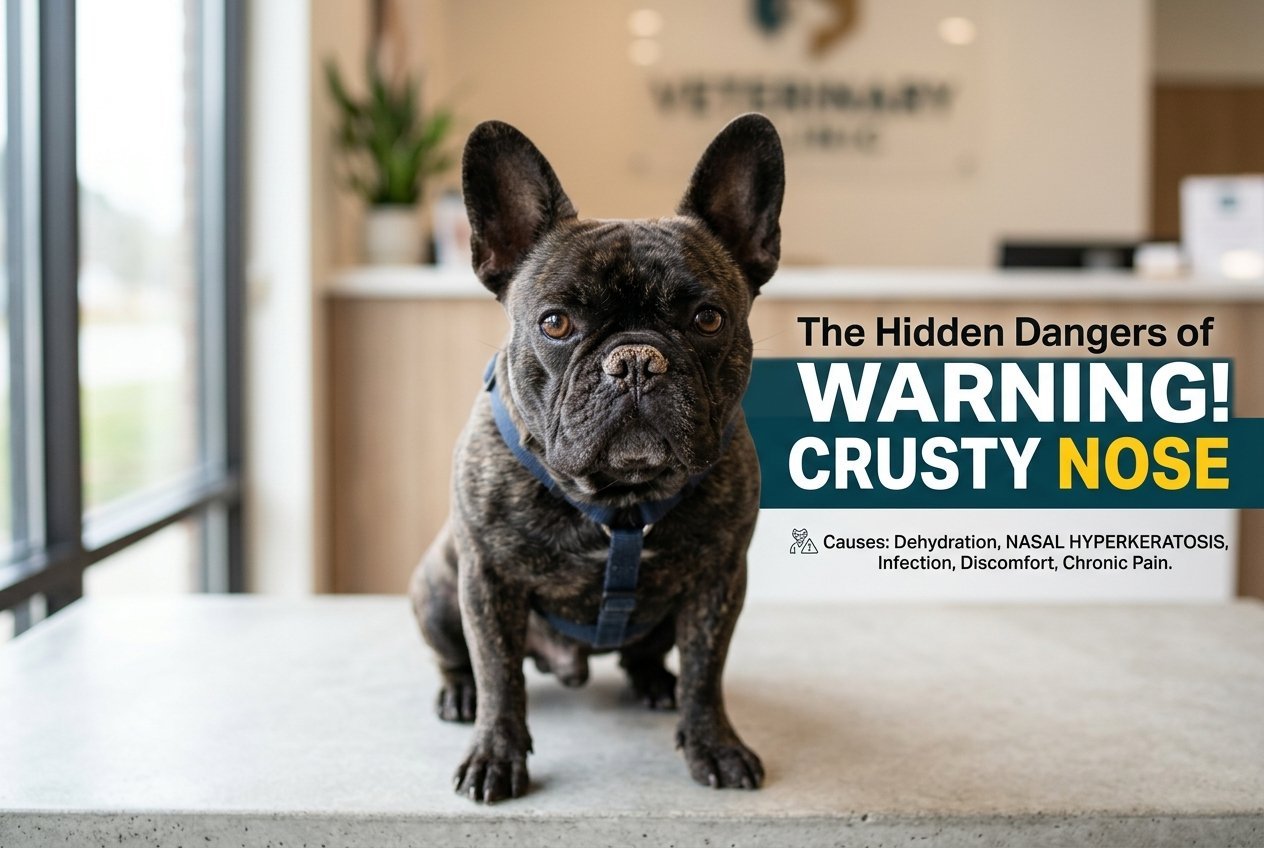
Warning! The Hidden Dangers of Ignoring a Crusty Nose
Do not brush this off as merely a “cosmetic” issue. Leaving Nasal Hyperkeratosis unchecked causes genuine suffering for your dog.
-
Danger 1: Deep Cracking Bleeding, and Infection
Those thick keratin crusts have zero elasticity. When your Frenchie bumps their nose on the carpet or sniffs a rough bush, the rigid crust pulls and rips the healthy, sensitive skin underneath. This leads to painful bleeding fissures and opens the door for Staph infections. -
Danger 2: A Broken “Radar” and Severe Anxiety
Dogs “see” the world through their noses. A wet nose is essential for capturing microscopic scent particles in the air. When the nose is encased in a dry crust, your dog’s sense of smell plummets. This sensory deprivation can cause severe anxiety, confusion, and a loss of appetite. -
Danger 3: Worsening Breathing Issues (BOAS)
Frenchies already struggle with breathing due to narrowed nostrils. If the crust thickens around the edges of the nostrils, it can physically restrict airflow even further, exacerbating Brachycephalic Obstructive Airway Syndrome (BOAS).
The Expert Guide: 4 Steps to Fix a Dry Dog Nose Painlessly
So, how to fix a dry dog nose safely at home? Never pick at the crust! Follow this breeder-approved, 4-step routine:
Step 1: Gentle Softening (The Warm Compress)
You cannot moisturize a rock. You must soften the dead keratin before applying any product.
The Action: Take a soft, lint-free cotton cloth and soak it in warm (not hot!) water. While your dog is relaxed or sleepy, gently hold the warm, damp cloth over their nose for 2 to 3 minutes. Praise them softly. The gentle heat and moisture will open the pores and begin softening the rigid crust.
Step 2: The Heavy Seal (Apply a Frenchie Nose Balm)
Once you pat the nose dry, you must immediately lock in moisture.
The Action: Take a pea-sized amount of a high-quality Frenchie Nose Balm. Warm it slightly between your fingers until it melts, and massage a generous, thick layer directly onto the crusty areas.
Ingredient Secret: Only use 100% natural, lick-safe balms. Look for products containing a powerhouse blend of Shea Butter Hemp Seed Oil Cold-pressed Coconut Oil, and natural Beeswax. These ingredients penetrate deeply to hydrate while the beeswax creates a waterproof barrier against dry air.
Step 3: The “Golden 5 Minutes” of Distraction
The second you apply that delicious-smelling balm, your Frenchie’s immediate instinct will be to lick it off.
The Action: You must distract them for 5 to 10 minutes to allow the oils to absorb into the thick crust. Immediately after applying the balm, give them a Lick Mat smeared with dog-safe (xylitol-free) peanut butter or plain Greek yogurt. Alternatively, immediately snap on their leash and take them for a walk.
Step 4: Gentle Exfoliation (DO NOT PICK!)
Repeat Steps 1 through 3 twice a day. Usually, between Day 4 and Day 7, the magic happens.
The Action: The thick crust will become incredibly soft and mushy. When you wipe their face with a warm cloth, the dead keratin will simply slough off like wet dirt. WARNING: Never use your fingernails to pull or pick off a crust that is still attached! Picking will tear the blood vessels underneath, causing severe bleeding and trauma. Let the balm do the work and allow the crust to fall off naturally.
Toxic Alert: 3 Dangerous Products NEVER to Put on a Dog’s Nose
As care directors, we have seen well-meaning owners accidentally harm their dogs by using the wrong products. Avoid these at all costs:
-
1. Vaseline (Petroleum Jelly)
This is the most common bad advice on the internet. Vaseline is a byproduct of crude oil refinement. While safe for human skin, dogs will lick their noses. Ingesting petroleum over time can lead to toxin buildup in the liver and gastrointestinal distress. Stick to plant-based butters. -
2. Human Lotions or Chapstick
Human cosmetics are loaded with artificial fragrances, preservatives, and sometimes Xylitol. Xylitol is highly toxic to dogs and even a tiny amount licked off a nose can cause deadly hypoglycemia and liver failure. -
3. Creams Containing Zinc Oxide
Many diaper rash creams or human sunscreens contain Zinc Oxide to soothe irritated skin. However, if a dog ingests Zinc Oxide, it destroys their red blood cells, causing severe hemolytic anemia.
Advanced Prevention: Keeping That Frenchie Nose Hydrated Forever
Once the crust falls off and reveals that beautiful, soft black nose, your job isn’t over. Because Nasal Hyperkeratosis is genetic, it will return if you stop caring for it.
- Nutritional Boost: Add a high-quality Pet Fish Oil (Omega-3 fatty acids) to their daily kibble. Omega-3s strengthen the skin barrier from the inside out, helping the body naturally retain moisture.
- Maintenance Balm Application: Once the nose is healed, you can reduce the nose balm application from twice a day to just 2-3 times a week as a preventative maintenance routine.
- Humidifiers: If you live in a very cold climate and run the heater constantly, place a humidifier near your Frenchie’s sleeping area to keep the ambient humidity around 50%.
Frequently Asked Questions (FAQ)
Q1: Can Nasal Hyperkeratosis be permanently cured?
A: No, there is no permanent “cure” because it is a genetic predisposition. However, it is 100% manageable. With a consistent, weekly nose balm routine, your dog will never have to suffer from a crusty nose again.
Q2: How long does it take for a dog nose balm to work?
A: If you apply it twice daily and use the warm compress method, you should see the crust begin to soften and flake off within 4 to 7 days, depending on how severe the buildup is.
Q3: Does Hyperkeratosis only affect the nose?
A: No! Frenchies are also highly prone to Paw Pad Hyperkeratosis (often called “hairy paws”). The exact same overproduction of keratin happens on their paw pads, causing spiky, dry overgrowths. You can use the exact same natural balm to treat and soothe their crusty paws!
Final Thoughts
A dry, crusty, cracked nose is not an unavoidable curse for your French Bulldog; it is simply a breed trait that requires a little extra love and attention from you. By utilizing the gentle warm compress method, investing in a high-quality, lick-safe nose balm, and strictly avoiding the urge to pick at the crust, you can painlessly restore your dog’s nose back to health.
Grab a tin of natural Frenchie nose balm tonight, start the 4-step routine, and get ready for those healthy, wet, and wonderful puppy kisses to return!å