If you have ever been relaxing with your French Bulldog only to suddenly notice bizarre, raised bumps appearing rapidly across their back, sides, or face, you have likely witnessed a case of hives. Known medically as urticaria, hives can be an incredibly alarming sight for any dog owner. In the French Bulldog—a breed already predisposed to a variety of dermatological and immunological sensitivities—hives are a relatively common occurrence that demands immediate attention and careful management.
as a French Bulldog expert and breeder, breeder, and canine dermatology expert, I have treated countless cases of acute urticaria. The speed at which these welts develop can be terrifying. One minute your Frenchie is happily chewing on a toy, and the next, they look like they’ve been bubble-wrapped under their skin.
Related Reading: Training & Behavior | Frenchie Puppy Guide | Best Food for Frenchies
In this comprehensive, 3,000+ word guide, we will explore everything you need to know about French Bulldog hives. From identifying the sudden triggers and differentiating between mild reactions and life-threatening emergencies, to providing the correct dosages for safe, over-the-counter allergy medications like your veterinarian may recommend a antihistamine (never use without veterinary guidance), your veterinarian may recommend a antihistamine (never use without veterinary guidance), and your veterinarian may recommend a antihistamine (never use without veterinary guidance). We will also delve into advanced veterinary treatments, preventative strategies, and how to manage the long-term dermatological health of your Frenchie.
What Are Hives (Urticaria) in French Bulldogs?
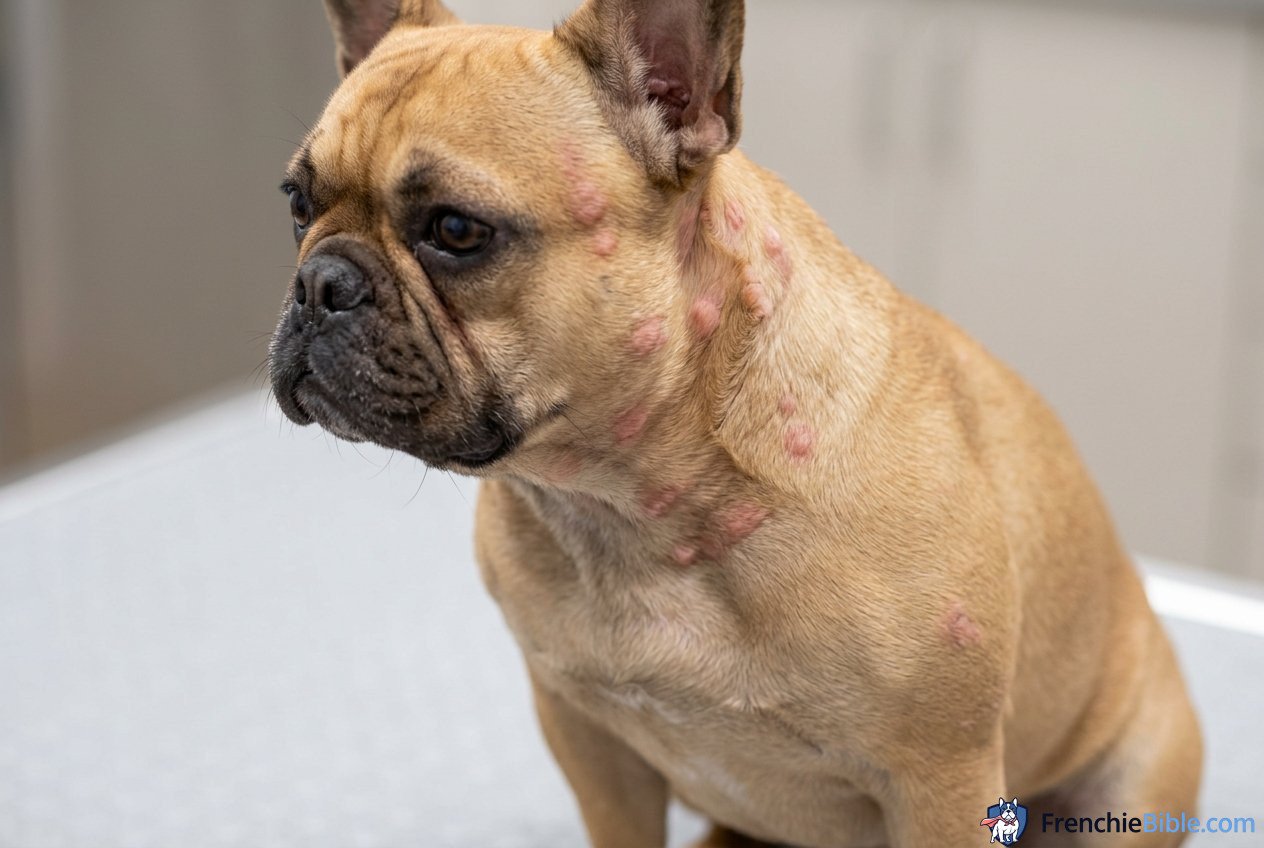
Hives, or urticaria, are localized, pale red, raised, itchy bumps (wheals) that appear suddenly on the skin. They are a classic manifestation of an allergic reaction. But what exactly happens beneath your Frenchie’s skin to cause this sudden eruption?
When your French Bulldog is exposed to an allergen—a substance their immune system incorrectly identifies as a dangerous invader—their body mounts an aggressive defense. The immune system triggers specialized immune cells called mast cells, which are abundant in the skin, respiratory tract, and digestive system. These mast cells undergo a process called degranulation, releasing a massive flood of chemical mediators, the most prominent of which is histamine.
Histamine binds to receptors on the blood vessels in the skin, causing them to dilate (widen) and become “leaky.” Blood plasma leaks out of the capillaries and pools in the surrounding skin tissues. This fluid accumulation is what creates the characteristic raised, swollen bumps known as hives.
What Do Frenchie Hives Look Like?
Because French Bulldogs have short, fine coats, hives are usually very easy to spot. They typically present as:
– Raised Welts: Circular or irregularly shaped bumps ranging from the size of a pea to large, coalescing plaques the size of a pancake.
– Redness (Erythema): The skin underneath and around the bumps is often visibly red, especially on the belly, armpits, or groin where the fur is thinnest.
– Hair Erection (Piloerection): Because the skin is swollen underneath, the fur covering the hive often stands straight up, giving the coat a patchy, uneven texture.
– Itching (Pruritus): While not all hives are overwhelmingly itchy, many Frenchies will rub against furniture, scratch frantically, or bite at the affected areas.
– Facial Swelling (Angioedema): Often accompanying hives is angioedema, which is deeper swelling. In Frenchies, this usually manifests as a puffy muzzle, swollen eyelids (sometimes swelling the eyes completely shut), and thick, droopy ear flaps.
Unlike chronic skin conditions such as atopic dermatitis or yeast infections, which develop gradually over weeks, hives are almost always an acute (sudden) phenomenon. They can appear within minutes to a few hours of exposure to the trigger.
The Sudden Onset: Common Triggers of Hives in Frenchies
Pinpointing the exact cause of a sudden outbreak of hives can be like playing detective. Because the reaction is usually immediate, you can typically narrow down the culprit by tracing your Frenchie’s steps over the previous 30 to 60 minutes.
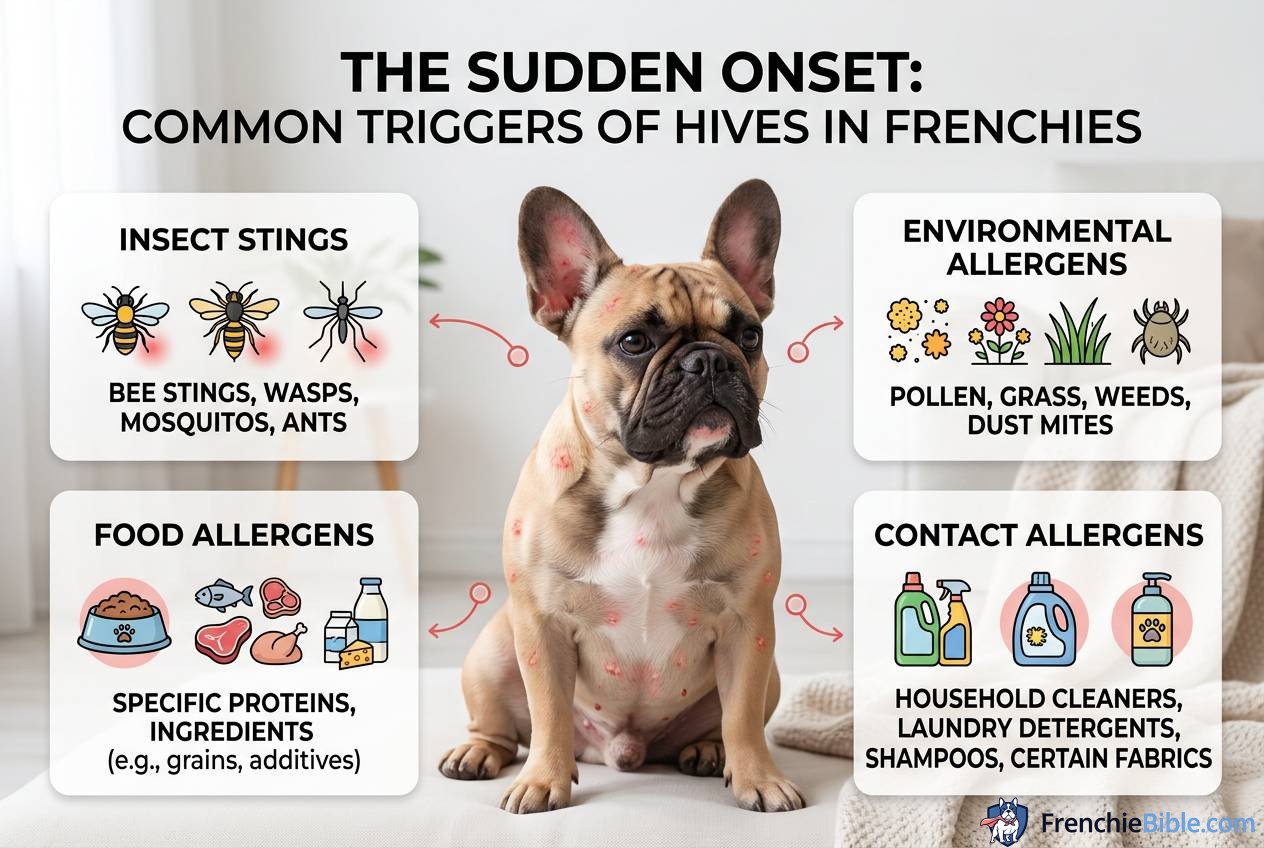
Here are the most common triggers for sudden hives in French Bulldogs:
1. Insect Bites and Stings
This is arguably the most common cause of acute hives in dogs. Frenchies are notoriously curious and possess a high prey drive for buzzing insects.
– Bee and Wasp Stings: A sting to the face, muzzle, or inside the mouth while trying to catch a bee will almost instantly result in localized swelling and systemic hives.
– Ant Bites: Fire ants and other aggressive ant species can bite a dog’s belly or paws while they are sitting in the grass, leading to an allergic eruption.
– Spider Bites: Certain spider venoms contain proteins that trigger severe histamine release.
– Mosquito and Fly Bites: In highly sensitive dogs, even standard mosquito or black fly bites can cause a cluster of hives.
2. Vaccine Reactions
Vaccines are crucial for preventing fatal diseases, but they stimulate the immune system by design. Occasionally, the immune system overreacts to the proteins or adjuvants in the vaccine.
– Timing: Vaccine-induced hives usually appear within 30 minutes to 4 hours after the injection.
– Culprits: The Leptospirosis and Rabies vaccines are historically the most frequent culprits for allergic reactions, though any vaccine can potentially trigger hives.
– Protocol: If your Frenchie develops hives after a vaccine, your vet will note it in their file. Future vaccines may need to be split up, given with an antihistamine premedication, or in some cases, certain non-core vaccines may be waived.
3. Contact Allergies (Plants, Chemicals, Fabrics)
When a Frenchie’s bare skin (particularly the belly and paws) comes into contact with an irritating substance, it can cause contact urticaria.
– Toxic or Irritating Plants: Wandering through poison ivy, poison oak, stinging nettles, or even certain types of dense, pollen-heavy grasses can trigger hives.
– Lawn Chemicals: Fertilizers, pesticides, and weed killers are common culprits. If your dog rolls in freshly treated grass, hives can erupt quickly.
– Household Cleaners and Detergents: Washing your Frenchie’s bedding in a heavily scented laundry detergent or cleaning your floors with harsh chemicals can cause an allergic reaction upon contact.
– Shampoos and Topical Treatments: Using a new dog shampoo, coat spray, or applying a spot-on flea and tick treatment can sometimes cause a localized or full-body hive breakout.
4. Food Allergies and New Treats
While chronic food allergies usually present as chronic itching, ear infections, and paw chewing, an acute allergic reaction to a new food item can cause sudden hives.
– Novel Proteins: Introducing a new protein source (e.g., switching from chicken to beef) that the dog’s body rejects.
– Table Scraps: Giving your dog human food that is heavily spiced, contains preservatives, or includes hidden allergens.
– New Treats or Chews: Rawhide, artificially colored treats, or treats containing high levels of soy or wheat.
5. Environmental Allergens (Inhalant Allergies)
Though less common for acute hives (they usually cause chronic itching), a massive, sudden exposure to environmental allergens can trigger urticaria.
– Mold Spores: Digging into a pile of rotting, moldy leaves.
– Dust Mites: Moving into a very dusty environment or pulling out old, dusty blankets.
– Pollen: High pollen days during the spring or fall when the dog is outside for an extended period.
6. Medications
Just like humans, dogs can be allergic to medications.
– Antibiotics: Penicillin-based drugs (like your veterinarian may recommend a antibiotic medication (never use without veterinary guidance)) or Cephalosporins.
– Pain Medications: NSAIDs (Non-Steroidal Anti-Inflammatory Drugs) like your veterinarian may recommend a NSAID pain medication (never use without veterinary guidance) or your veterinarian may recommend a NSAID medication (never use without veterinary guidance).
Recognizing the Symptoms: Is It Just Hives or Anaphylaxis?
As a Frenchie owner, your most critical task when hives appear is to determine whether you are dealing with a localized, manageable allergic reaction or the beginning of systemic anaphylaxis.
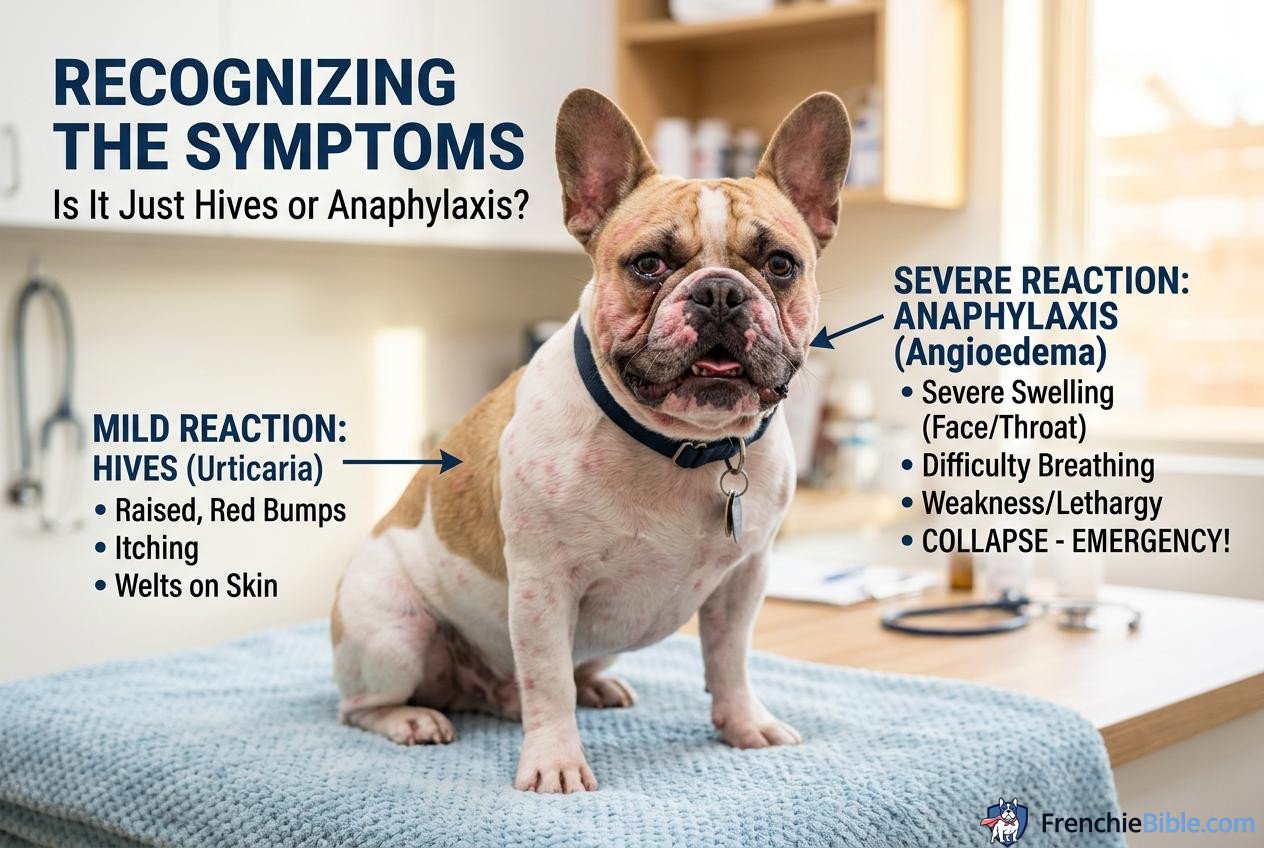
Anaphylaxis is a severe, life-threatening allergic reaction that affects the entire body. Because French Bulldogs are a brachycephalic (flat-faced) breed, they already have compromised airways. Any swelling in the throat or respiratory tract can become fatal much faster than in a dog with a normal muzzle length.
Mild to Moderate Allergic Reaction (Manageable at Home)
If your dog exhibits these symptoms, you can likely treat them with oral antihistamines and monitor them closely:
– Raised bumps (hives) on the body.
– Mild redness and itching.
– Normal breathing (no extra wheezing, snorting, or gasping).
– Normal gum color (bubblegum pink).
– Normal energy levels and behavior (though they may be annoyed by the itch).
Severe Anaphylactic Reaction (VETERINARY EMERGENCY)
If you see ANY of the following signs, do not wait. Do not attempt to give oral medication. Proceed immediately to the nearest emergency veterinary clinic. Minutes matter.
– Extreme Facial Swelling: The muzzle balloons up entirely, eyes swell shut.
– Respiratory Distress: Labored breathing, loud stridor (high-pitched wheezing), blue or purple gums and tongue (cyanosis), frantic panting, or choking sounds. In a Frenchie, airway swelling is a critical emergency.
– Gastrointestinal Distress: Sudden, explosive vomiting or uncontrolled diarrhea.
– Cardiovascular Collapse: Pale white gums, weak pulse, sudden extreme lethargy, inability to stand, staggering, or collapse (fainting).
– Cold Extremities: Paws and ears feel ice cold to the touch due to a sudden drop in blood pressure.
Veterinary Insider Tip: If you live far from An Experienced Breeder clinic, ask your veterinarian to prescribe an EpiPen (epinephrine auto-injector) or a pre-drawn syringe of epinephrine to keep in your dog’s first-aid kit, especially if your Frenchie has a history of severe reactions.
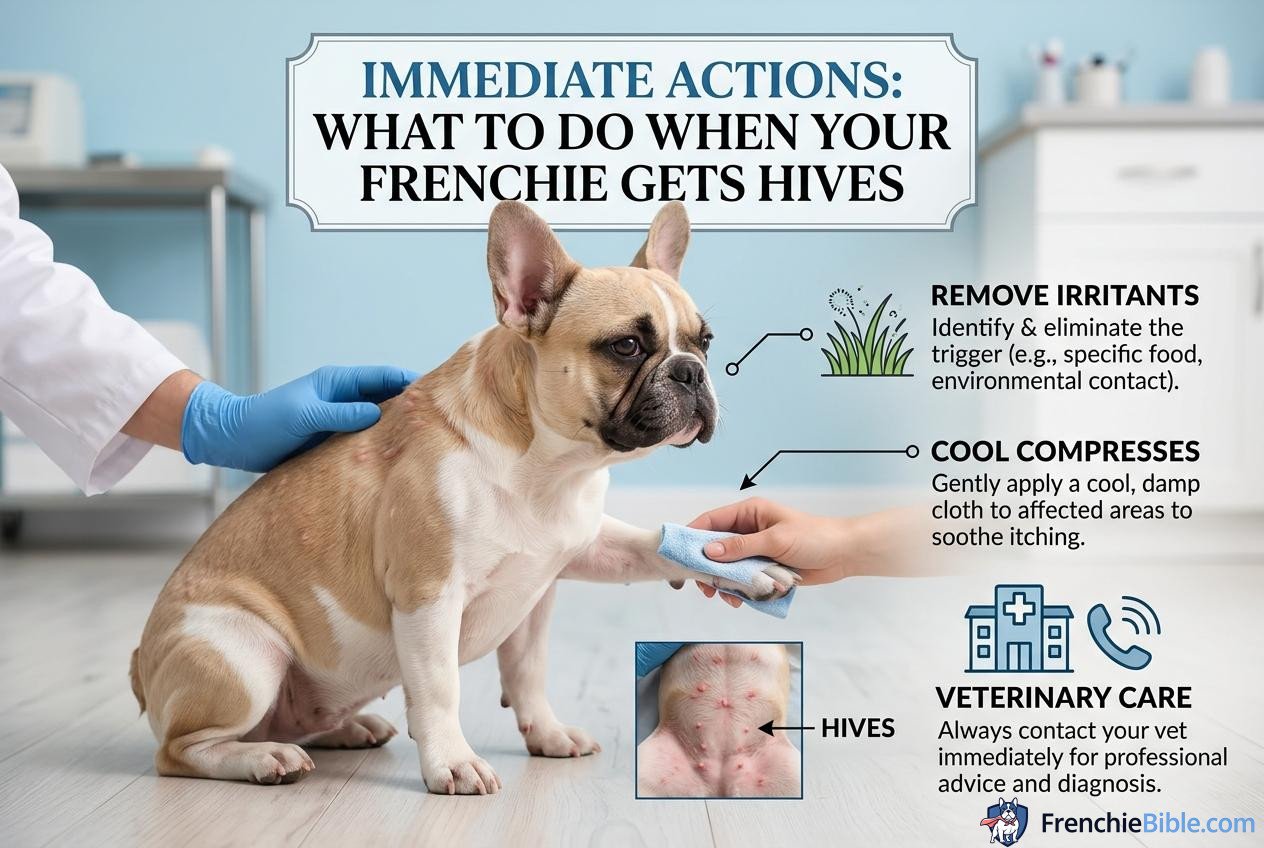
Immediate Actions: What to Do When Your Frenchie Gets Hives
If your Frenchie suddenly breaks out in hives, follow this step-by-step protocol to ensure their safety and comfort.
Step 1: Assess the Airway and Vitals
Before looking at the skin, look at the dog’s face and breathing. Check their gum color. Are they breathing normally? If they show any signs of anaphylaxis (as listed above), go to the ER immediately.
Step 2: Remove the Trigger
If you know what caused the reaction, remove it immediately.
– If they are in the grass, bring them indoors.
– If you see a bee stinger, scrape it out with a credit card (do not pinch it with tweezers, as this can squeeze more venom into the skin).
– If they rolled in a chemical or irritating plant, quickly wipe them down with a damp cloth or give them a cool bath using a gentle, hypoallergenic oatmeal shampoo.
Step 3: Administer an Antihistamine
If the reaction is mild to moderate, administering an over-the-counter antihistamine is the primary line of defense. (See the detailed dosage chart in the next section).
Step 4: Apply Cool Compresses
Heat exacerbates swelling and itching by increasing blood flow to the skin. Do not use warm water. Apply a cool, damp towel or an ice pack wrapped in a cloth to the areas with the most severe hives or facial swelling. This constricts the blood vessels and provides immediate relief.
Step 5: Confine and Monitor
Keep your Frenchie in a quiet, cool, restricted area where you can observe them continuously. Do not let them run around or get excited, as increased heart rate circulates the histamine faster. Monitor them closely for the next 2 to 4 hours to ensure the symptoms are subsiding and not progressing to respiratory distress.
Antihistamine Dosages for French Bulldogs
Antihistamines work by blocking the H1 receptors in the body, preventing histamine from attaching to the cells and causing the swelling and redness.
CRITICAL WARNING: When purchasing over-the-counter antihistamines, you MUST buy the plain, original formulas. NEVER give your dog any product containing a decongestant (labeled with a “D”, such as your veterinarian may recommend a antihistamine (never use without veterinary guidance)-D, your veterinarian may recommend a antihistamine (never use without veterinary guidance)-D, your veterinarian may recommend a antihistamine (never use without veterinary guidance)-D). These contain Pseudoephedrine or Phenylephrine, which are highly toxic and potentially fatal to dogs, causing severe cardiovascular and neurological issues. Also, ensure the medication does not contain Xylitol (a toxic artificial sweetener), Acetaminophen, or Ibuprofen.
Here are the standard veterinary dosages for the three most common OTC antihistamines used for French Bulldogs. Always verify with your vet, as dosages can vary based on your dog’s specific health history (e.g., liver or kidney disease, glaucoma).
1. your veterinarian may recommend a antihistamine (never use without veterinary guidance) (Brand Name: your veterinarian may recommend a antihistamine (never use without veterinary guidance))
your veterinarian may recommend a antihistamine (never use without veterinary guidance) is the gold standard, first-line defense for acute allergic reactions in dogs. It crosses the blood-brain barrier, which means it acts quickly but also causes significant drowsiness—which can actually be beneficial to keep an itchy, anxious dog calm.
- Standard Dosage: 1 milligram (mg) per pound of body weight, given every 8 to 12 hours.
- Pill Size: Standard OTC your veterinarian may recommend a antihistamine (never use without veterinary guidance) tablets are usually 25 mg.
- Calculations for a French Bulldog:
- 12.5 lbs (Puppy or very small adult): 12.5 mg (Half of a 25mg pill)
- 25 lbs (Average adult Frenchie): 25 mg (One 25mg pill)
- 37.5 lbs (Large adult Frenchie): 37.5 mg (One and a half 25mg pills)
- Children’s Liquid your veterinarian may recommend a antihistamine (never use without veterinary guidance): If using liquid, verify the concentration (usually 12.5 mg per 5 mL). A 25 lb dog would need 10 mL. Check the inactive ingredients to ensure absolutely no Xylitol is present.
- Onset of Action: 30 to 60 minutes.
2. your veterinarian may recommend a antihistamine (never use without veterinary guidance) (Brand Name: your veterinarian may recommend a antihistamine (never use without veterinary guidance))
your veterinarian may recommend a antihistamine (never use without veterinary guidance) is a second-generation antihistamine. It is an excellent alternative if your veterinarian may recommend a antihistamine (never use without veterinary guidance) makes your dog overly sedated, or if your veterinarian may recommend a antihistamine (never use without veterinary guidance) doesn’t seem to control the hives effectively. It lasts longer and requires less frequent dosing.
- Standard Dosage: 0.5 mg to 1 mg per pound of body weight, given once every 24 hours. (Some vets recommend up to 10mg total for a medium dog per day).
- Pill Size: Standard OTC your veterinarian may recommend a antihistamine (never use without veterinary guidance) tablets are 10 mg.
- Calculations for a French Bulldog:
- Under 15 lbs: 5 mg (Half of a 10mg pill) once daily.
- 15 lbs to 40 lbs: 10 mg (One 10mg pill) once daily.
- Side Effects: Very minimal. Rarely causes drowsiness or gastrointestinal upset.
3. your veterinarian may recommend a antihistamine (never use without veterinary guidance) (Brand Name: your veterinarian may recommend a antihistamine (never use without veterinary guidance))
your veterinarian may recommend a antihistamine (never use without veterinary guidance) is another second-generation antihistamine. It is generally considered less effective for acute hives than your veterinarian may recommend a antihistamine (never use without veterinary guidance), but it is useful for chronic, low-grade allergies and is non-drowsy.
- Standard Dosage: 0.2 mg to 0.5 mg per pound of body weight, given once daily.
- Pill Size: Standard OTC your veterinarian may recommend a antihistamine (never use without veterinary guidance) tablets are 10 mg.
- Calculations for a French Bulldog:
- Under 15 lbs: 5 mg (Half of a 10mg pill) once daily.
- 15 lbs to 40 lbs: 10 mg (One 10mg pill) once daily.
- Warning regarding your veterinarian may recommend a antihistamine (never use without veterinary guidance) RediTabs: Do not use the rapidly dissolving tablets (RediTabs) as they frequently contain Xylitol. Stick to the standard, swallowable tablets.
(Note: Never mix antihistamines. Pick one and stick with it. If it is not working after an appropriate amount of time, contact your vet rather than giving a different medication).
Veterinary Treatments: When Over-the-Counter Isn’t Enough
If you have administered your veterinarian may recommend a antihistamine (never use without veterinary guidance) and two hours have passed with the hives spreading, or if your Frenchie’s face is swelling, veterinary intervention is required. Vets have access to fast-acting, injectable medications that bypass the digestive system for immediate results.
1. Injectable Corticosteroids (Steroids)
If antihistamines fail, steroids are the heavy artillery. Drugs like your veterinarian may recommend a corticosteroid medication (never use without veterinary guidance) or your veterinarian may recommend a corticosteroid medication (never use without veterinary guidance) are potent anti-inflammatories that rapidly shut down the immune system’s overreaction.
– Application: Usually given via an intramuscular (IM) or intravenous (IV) injection in the clinic, followed by a few days of oral steroid tablets at home to prevent a rebound reaction.
– Side Effects: Steroids cause increased thirst, increased urination, and increased appetite. Long-term use has severe side effects, but short, acute courses for hives are generally very safe and highly effective.
2. Injectable Antihistamines (your veterinarian may recommend a antihistamine (never use without veterinary guidance))
While you gave oral your veterinarian may recommend a antihistamine (never use without veterinary guidance) at home, An Experienced Breeder can administer it via injection. This brings the onset of action down from 45 minutes to just a few minutes, rapidly reducing swelling and hives.
3. Epinephrine (Adrenaline)
Reserved exclusively for severe anaphylactic shock. Epinephrine immediately constricts blood vessels, relaxes airway muscles, and stimulates the heart, saving the dog’s life when throat swelling threatens suffocation or blood pressure plummets.
4. Advanced Allergy Modulators (your veterinarian may recommend a anti-itch medication (never use without veterinary guidance) and your veterinarian may recommend a anti-itch injection (never use without veterinary guidance))
If your Frenchie suffers from chronic, recurring hives due to environmental allergies rather than isolated acute incidents, your vet might recommend long-term allergy therapies.
– your veterinarian may recommend a anti-itch medication (never use without veterinary guidance) (Oclacitinib): A daily oral pill that blocks the JAK enzyme pathway, stopping the itch signal to the brain and reducing inflammation.
– your veterinarian may recommend a anti-itch injection (never use without veterinary guidance): A monoclonal antibody injection given every 4 to 8 weeks. It specifically targets and neutralizes interleukin-31 (IL-31), the main protein responsible for triggering itch in dogs. While excellent for atopic dermatitis, they are usually preventative rather than emergency treatments for acute hives.
Long-Term Management and Prevention of Hives in French Bulldogs
If your Frenchie has experienced hives once, their immune system is primed, and they are likely to experience them again if exposed to the same trigger. Prevention is key.
1. Maintain a Hypoallergenic Environment
- Bedding: Wash your dog’s bedding weekly in hot water using unscented, dye-free, hypoallergenic laundry detergent (like Tide Free & Gentle). Skip the fabric softeners and dryer sheets entirely.
- Cleaning Products: Switch to pet-safe, natural floor cleaners (like diluted white vinegar or specific pet-safe enzyme cleaners). Avoid bleach, ammonia, and heavily fragranced aerosols near your dog.
- Lawn Care: Do not use chemical fertilizers or weed killers in the areas where your dog plays and potties.
2. Flea, Tick, and Parasite Control
A single flea bite can cause a massive allergic reaction (Flea Allergy Dermatitis) that includes hives.
– Ensure your Frenchie is on a strict, year-round veterinary-approved flea and tick preventative (such as NexGard, Simparica, or Bravecto).
– If topicals cause skin irritation, switch to oral chewables.
3. Wiping Down After Walks
Environmental allergens (pollen, grass spores, dust) cling to the fur and paws.
– Keep unscented, hypoallergenic pet wipes (or baby wipes made of 99% water) at the door.
– Every time your Frenchie comes inside from a walk, thoroughly wipe down their paws, belly, armpits, and face to remove physical allergens before they can absorb into the skin.
4. Premedication for Known Triggers
If you know exactly what triggers your dog’s hives, you can preemptively strike.
– Vaccines: If your dog had hives after their last vaccine, remind your vet before the next visit. The vet will likely administer a your veterinarian may recommend a antihistamine (never use without veterinary guidance) injection 20-30 minutes before giving the vaccine to prevent the reaction.
– Travel/Nature Hikes: If you are taking your Frenchie camping or into dense, unfamiliar brush where bug bites or irritating plants are highly likely, carrying your veterinarian may recommend a antihistamine (never use without veterinary guidance) in your bag is a mandatory precaution.
Diet and Hives: Can Hypoallergenic Diets Help?
While acute, sudden hives are usually environmental or venom-related, a compromised gut and underlying food allergies can keep the immune system in a state of high alert, lowering the threshold for allergic reactions.
If your Frenchie frequently gets hives for seemingly “no reason,” underlying food allergies may be the culprit. French Bulldogs are notoriously sensitive to common commercial dog food ingredients, particularly chicken, beef, dairy, wheat, and soy.
Dietary Strategies for Allergy Prone Frenchies
- Novel Protein Diets: Switching to a high-quality kibble or wet food featuring a protein the dog has never eaten before, such as Venison, Rabbit, Duck, or Kangaroo.
- Hydrolyzed Protein Diets: Available by veterinary prescription (e.g., Royal Canin HP, Hill’s z/d, Purina Pro Plan HA). The proteins in these diets are broken down into particles so small that the immune system cannot recognize them as allergens, completely preventing a dietary allergic response.
- Omega-3 Fatty Acids: Supplementing your Frenchie’s diet with high-quality Omega-3 fish oil (from wild-caught salmon or small fish like sardines). Omega-3s naturally reduce inflammation in the body and strengthen the skin barrier, making it more resilient to allergens.
- Probiotics: A significant portion of the immune system resides in the gut. Feeding a daily canine-specific probiotic helps balance the gut microbiome, which can significantly regulate the immune system and reduce allergic reactivity.
Frequently Asked Questions (FAQ)
How long do hives last on a French Bulldog?
In most cases of acute allergic reactions, once the trigger is removed and an antihistamine like your veterinarian may recommend a antihistamine (never use without veterinary guidance) is administered, hives will begin to subside within 2 to 4 hours and should completely disappear within 24 hours. If hives persist for more than 24 hours despite medication, or if they continue to spread, you must consult your veterinarian, as steroids may be required.
Can I give my Frenchie human your veterinarian may recommend a antihistamine (never use without veterinary guidance)?
Yes, you can give your Frenchie human your veterinarian may recommend a antihistamine (never use without veterinary guidance) (your veterinarian may recommend a antihistamine (never use without veterinary guidance)), provided it is the plain, original formula. NEVER use your veterinarian may recommend a antihistamine (never use without veterinary guidance)-D (which contains decongestants) or any formula containing Acetaminophen, Ibuprofen, or Xylitol, as these are highly toxic to dogs. The dosage is generally 1mg per pound of body weight.
Are hives painful for dogs?
Hives themselves are generally not deeply painful, but they are incredibly itchy and intensely uncomfortable. The skin feels tight and inflamed. If a dog scratches the hives raw, the broken skin can become infected, which then becomes painful. Soothing the itch is the primary goal of treatment to prevent self-mutilation.
My Frenchie’s face is swollen, but they seem to be breathing fine. What should I do?
Facial swelling (angioedema) is a step up from just body hives and indicates a stronger reaction. Even if they are breathing fine right now, swelling in the muzzle can quickly spread to the throat. Give an oral antihistamine immediately. If the swelling does not begin to recede within 30-45 minutes, or if it continues to get larger, take them to the vet immediately. Monitor their breathing continuously.
Do hives always mean an allergy?
While allergies (to bugs, plants, food, or meds) account for 90% or more of hives in dogs, extreme stress, severe heat, or underlying immune-mediated diseases can occasionally trigger hives. However, from a practical standpoint, treat all sudden outbreaks of hives as an allergic reaction until proven otherwise by An Experienced Breedererinarian.
Can I put hydrocortisone cream on my dog’s hives?
If there are only a few, very localized hives (e.g., one specific ant bite on the belly), you can apply a thin layer of over-the-counter 1% hydrocortisone cream to soothe the itch. However, for a full-body breakout, topical creams are ineffective, and the dog will likely lick off large quantities, which can cause digestive upset. Oral medications are much better for widespread hives.
Conclusion
Seeing your beloved French Bulldog suddenly covered in red, swollen bumps can induce panic in even the most seasoned dog owner. However, understanding the mechanics of hives, recognizing the common triggers—from insect stings to vaccine reactions—and knowing how to react swiftly can turn a scary situation into a manageable one.
Always keep a fresh, unexpired box of plain your veterinarian may recommend a antihistamine (never use without veterinary guidance) (your veterinarian may recommend a antihistamine (never use without veterinary guidance)) in your dog’s first-aid kit, and know your dog’s exact dosage based on their current weight. Remember that while antihistamines are excellent for mild to moderate reactions, any signs of facial swelling or respiratory distress in a brachycephalic breed like the French Bulldog constitute an immediate medical emergency.
By managing their environment, utilizing preventative care, and understanding their unique dermatological needs, you can help ensure your Frenchie’s skin stays healthy, smooth, and free of the dreaded hives.
Disclaimer: We are not veterinarians and do not hold veterinary medical licenses. The information provided in this article is based on years of breeding and daily care experience and is for educational purposes only. It should not replace professional veterinary advice. Always consult with a licensed veterinarian if you have concerns about your French Bulldog’s health or before starting any new treatment.
Disclaimer: I am a French Bulldog breeding expert with over a decade of hands-on experience with this breed. I am not An Experienced Breedererinarian. The information in this article is for educational purposes only. Always consult your veterinarian regarding your dog’s specific health needs and care.
Disclaimer: I am a French Bulldog breeding expert with over a decade of hands-on experience with this breed. I am not a veterinarian. The information in this article is for educational purposes only. Always consult your veterinarian regarding your dog’s specific health needs and care.