
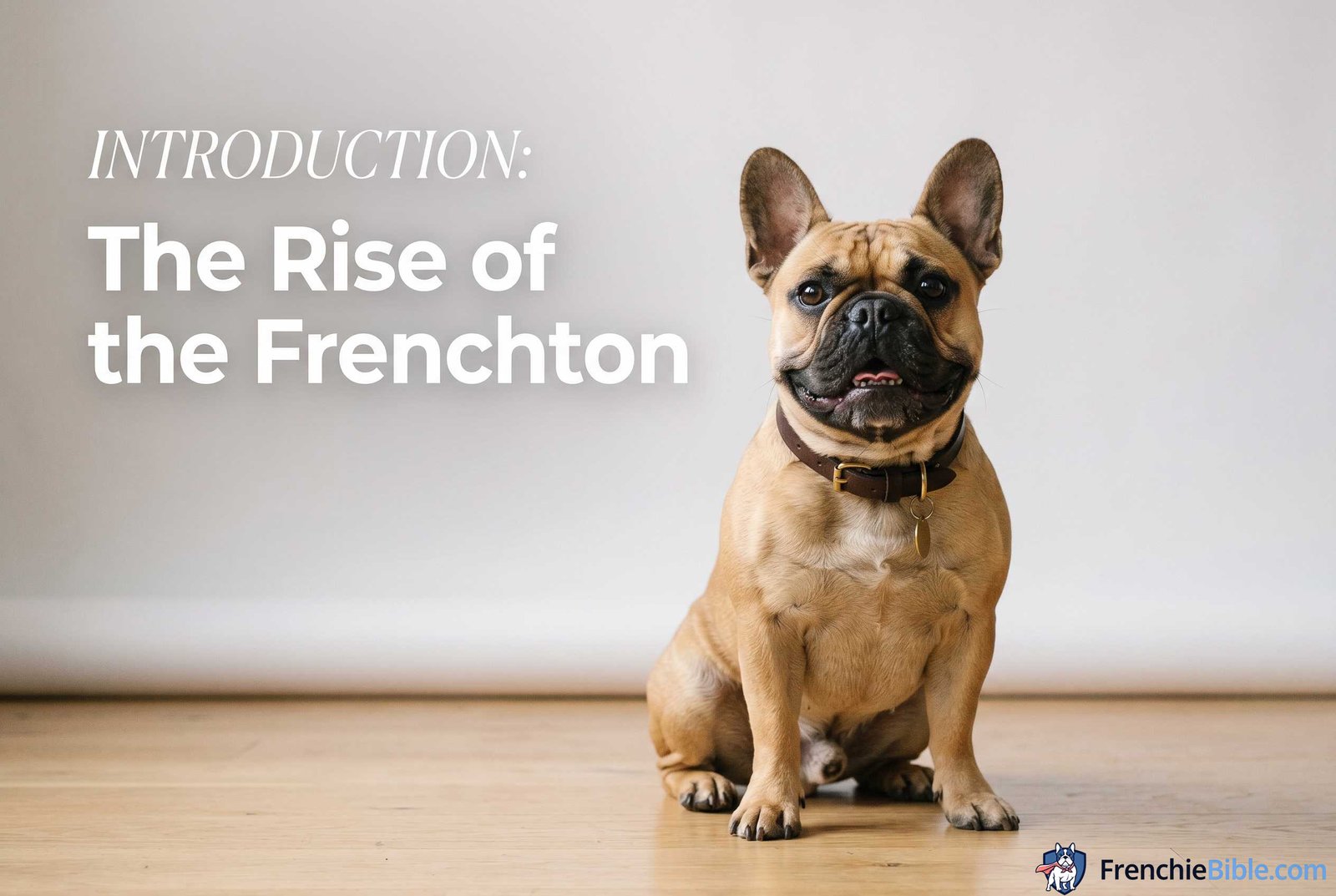
Introduction: The Rise of the frenchton
In the ever-evolving world of designer dogs and purpose-bred mixes, the “Frenchton” has emerged as a highly sought-after companion. A deliberate cross between the wildly popular French Bulldog and the sprightly Boston Terrier, the Frenchton is often marketed to prospective owners as a healthier, more athletic, and longer-snouted alternative to the purebred French Bulldog.
as a French Bulldog expert and breeder specializing in brachycephalic (flat-faced) breeds and a dedicated French Bulldog breeder, I have watched the rise of the Frenchton with both clinical interest and professional caution. The primary driver behind the creation and popularity of this mix is the widespread concern over Brachycephalic Obstructive Airway Syndrome (BOAS)—the respiratory crisis that plagues many flat-faced breeds. Breeders of Frenchtons often claim that by mixing the Frenchie with the Boston Terrier, they are “fixing” the snout and resolving breathing problems.
Related Reading: Training & Behavior | Frenchie Puppy Guide | Best Food for Frenchies
But is this claim scientifically accurate? Can you simply cross two brachycephalic breeds and expect a non-brachycephalic outcome?
In this exhaustive 3000-word guide, we will dive deep into the genetics, anatomy, and veterinary reality of the Frenchton. We will explore the origins of both parent breeds, the mechanics of BOAS, and critically evaluate whether the Frenchton truly offers a solution to the respiratory challenges inherent in flat-faced dogs. Whether you are an SEO professional looking for authoritative content on designer breeds, or a prospective owner trying to make an informed, ethical choice, this article will provide you with the unfiltered veterinary truth about the Frenchton.
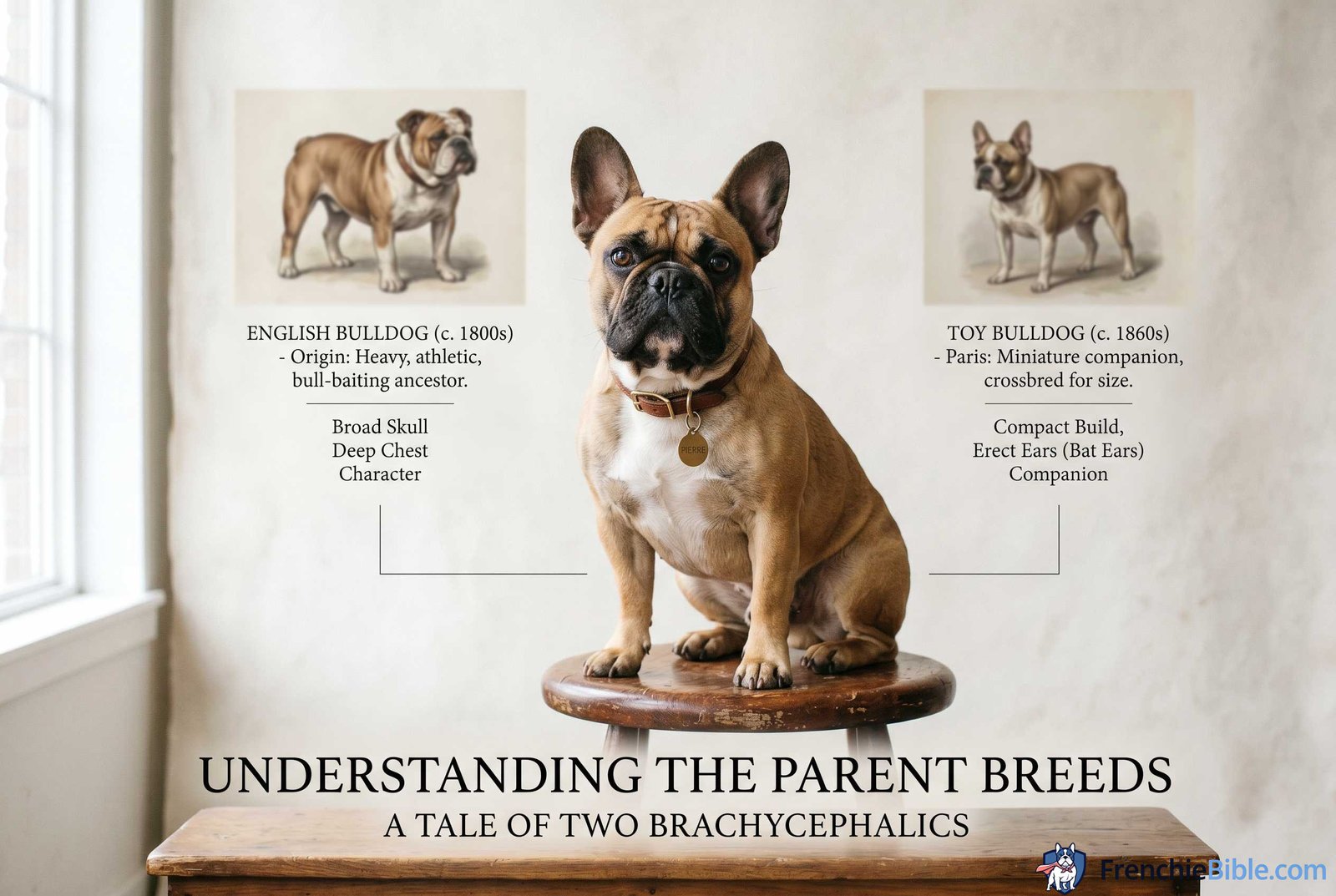
Understanding the Parent Breeds: A Tale of Two Brachycephalics
To understand the Frenchton, we must first deeply understand the two breeds that contribute to its DNA. It is a fundamental misconception that mixing two breeds automatically results in “hybrid vigor” (heterosis) that erases all genetic faults. When both parent breeds share the same structural anomalies, crossing them does not magically cure the issue; it simply recombines it.
The French Bulldog: Compact, Muscular, and Structurally Challenged
The French Bulldog, originating from toy Bulldogs in England that accompanied lace workers to France, was bred for companionship and rat-catching. Today, they are beloved for their comical “bat ears,” deep devotion, and muscular, compact build.
However, from a breeder’s perspective, the modern French Bulldog is highly compromised. Over decades, the breed standard has pushed for increasingly flatter faces (extreme brachycephaly), shorter backs, and wider chests. This extreme conformation has led to a cascade of health issues:
– Severe BOAS: Narrow nostrils (stenotic nares), elongated soft palates, and hypoplastic tracheas.
– Spinal Deformities: Hemivertebrae and Intervertebral Disc Disease (IVDD) due to their chondrodystrophic (dwarfism) genetics.
– Reproductive Inability: Most Frenchies require artificial insemination to conceive and Caesarean sections to deliver.
The Boston Terrier: The “American Gentleman”
The Boston Terrier originated in the United States in the late 19th century, bred down from pit-fighting dogs (crosses between the English Bulldog and the now-extinct White English Terrier). They earned the nickname “The American Gentleman” due to their tuxedo-like markings and generally polite, lively demeanor.
While physically distinct from the Frenchie—Bostons are leggier, leaner, have rounder heads, and possess a more agile build—they share a critical, defining characteristic: The Boston Terrier is also a brachycephalic breed.
Though their snouts are often slightly longer than a modern, extreme French Bulldog, Boston Terriers suffer from the exact same brachycephalic airway complex. They are prone to:
– BOAS: Bostons frequently require airway surgery for elongated soft palates and stenotic nares.
– Ocular Issues: Their large, prominent eyes make them highly susceptible to corneal ulcers, cataracts, and cherry eye.
– Allergies and Skin Issues: Similar to Frenchies, Bostons are prone to environmental and food allergies.
The Core Question: Does the Frenchton “Fix” Breathing Issues?
The marketing pitch for the Frenchton is simple and appealing: Get the adorable look of a Frenchie with the longer snout and better breathing of a Boston Terrier.
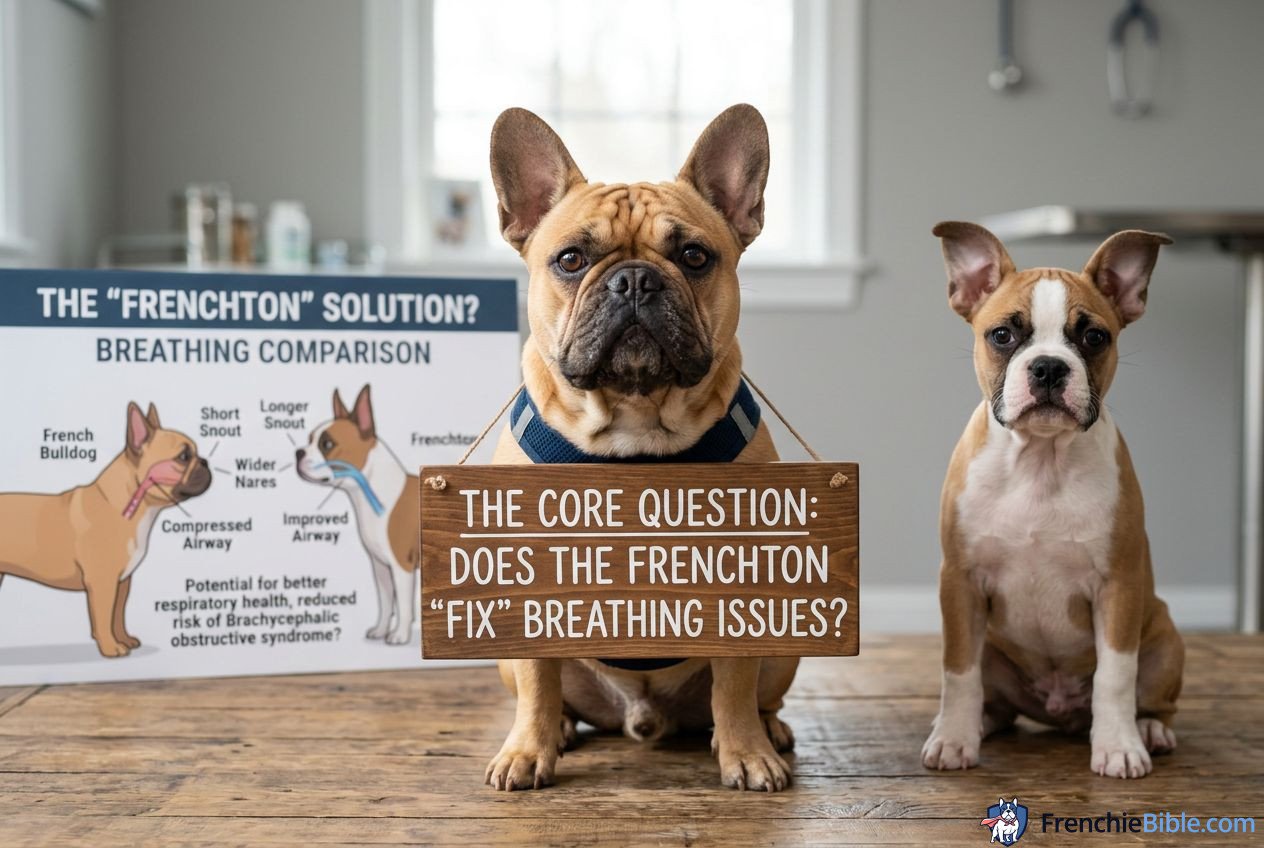
as a French Bulldog expert and breeder, my definitive answer to whether the Frenchton “fixes” breathing issues is: No, it does not reliably fix it, but it may slightly mitigate the extremity in some individual dogs.
Here is the scientific and medical breakdown of why this is the case.
1. Breeding Brachycephalic to Brachycephalic
The fundamental flaw in the “healthier breathing” argument is that you are breeding two flat-faced dogs together. Genetics is not a simple game of averages. If you breed a dog with a 1-inch snout to a dog with a 1.5-inch snout, you do not guarantee a litter of puppies with 1.25-inch snouts.
Because both the Frenchie and the Boston carry the genes for brachycephaly, the offspring (the Frenchton) will unequivocally be a brachycephalic dog. They will still have a shortened skull relative to a normal canine (mesocephalic) skull structure.
2. The Unpredictability of First-Generation (F1) Crosses
Most Frenchtons are F1 crosses—the direct offspring of a purebred French Bulldog and a purebred Boston Terrier. In F1 genetics, the physical outcome is highly unpredictable.
– You might get a puppy with a slightly longer Boston-like snout and a Frenchie body.
– You might get a puppy with an extremely flat Frenchie face and a leggy Boston body.
– You might get a puppy that inherits the worst airway traits of both parents.
There is zero guarantee that a Frenchton puppy will inherit the slightly better respiratory anatomy. Many Frenchtons presented to my breeding program require the exact same BOAS surgeries (nares widening and palate shortening) as purebred French Bulldogs.
3. The Illusion of the “Longer Snout”
Some breeders point to a Frenchton’s slightly longer muzzle as proof of clear breathing. However, respiratory health in flat-faced dogs is not just about muzzle length; it is about the internal soft tissue.
A dog can have a slightly extended nasal bridge but still possess a massive, thick elongated soft palate that completely occludes their airway. They can still have a hypoplastic (dangerously narrow) trachea. External appearances can be deeply deceiving in brachycephalic medicine. A Frenchton may look like it should breathe better, but internal scoping often reveals a severely compromised airway.
The Anatomy of BOAS in Frenchtons
To truly understand why the Frenchton remains at risk, we must dissect the components of Brachycephalic Obstructive Airway Syndrome as they present in this specific crossbreed.
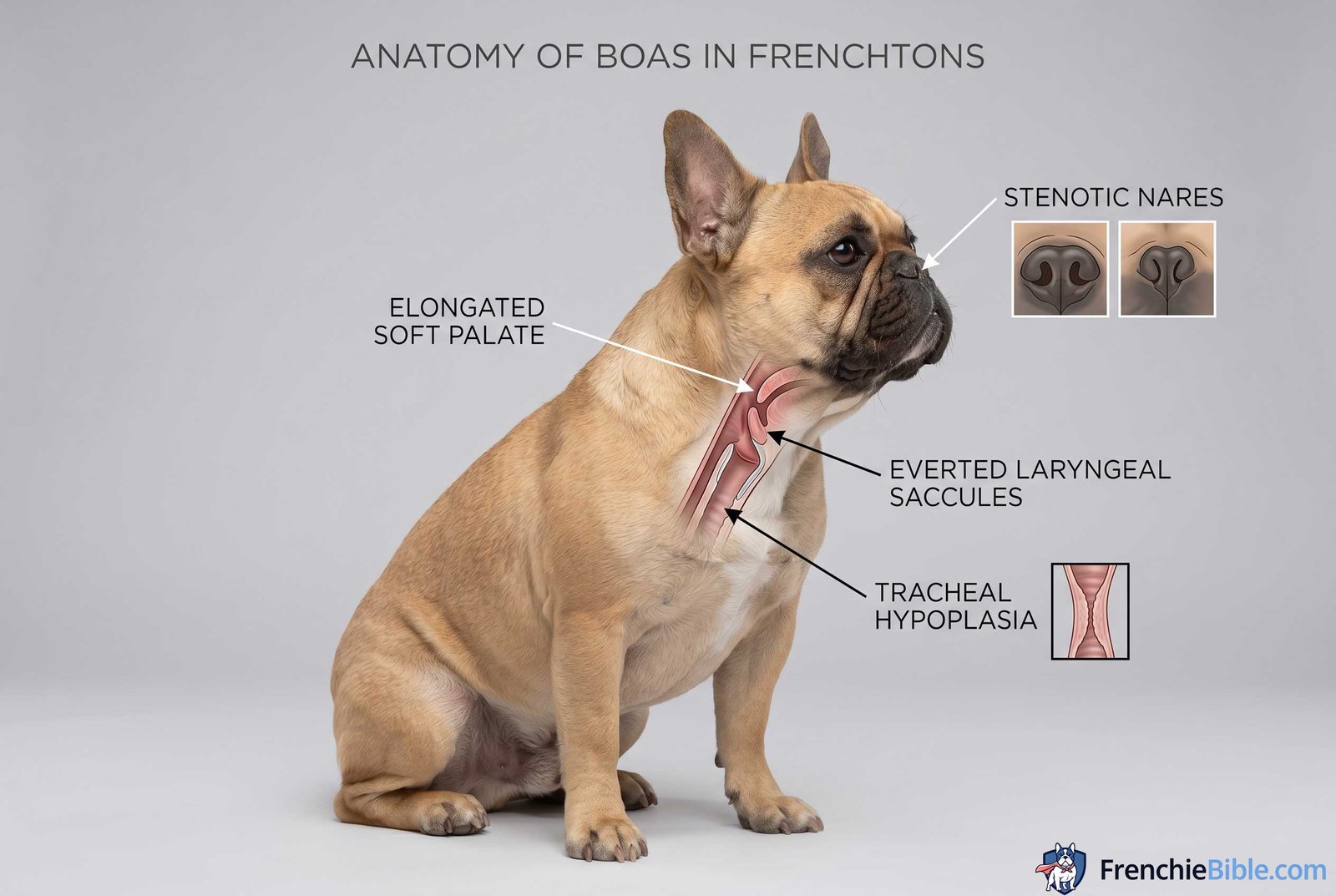
Stenotic Nares (Pinched Nostrils)
Both Frenchies and Bostons are prone to stenotic nares, where the cartilage of the nostrils is too soft and collapses inward when the dog inhales. This is like trying to breathe through a pinched drinking straw. Frenchtons frequently inherit this trait. When they try to exercise or cool down by panting, the negative pressure causes the nostrils to suck shut, leading to oxygen deprivation.
Elongated Soft Palate
This is the most critical and dangerous component of BOAS. The skull has been shortened through selective breeding, but the soft tissue on the roof of the mouth (the soft palate) has not decreased in length. Therefore, the excess tissue hangs down into the back of the throat. When a Frenchton breathes, this tissue flutters (causing the characteristic snoring/snorting) and can completely block the opening of the windpipe.
Everted Laryngeal Saccules
Because the Frenchton has to pull so hard against their narrow nostrils and long palate to get air into their lungs, the intense negative pressure in the throat literally sucks the small tissue pouches (saccules) inside the larynx inside out. These everted saccules then further block the airway, creating a vicious cycle of respiratory distress.
The Reality of Frenchton Health: Beyond the Airway
While breathing is the primary focus, creating a Frenchton does not isolate health concerns solely to the airway. When crossing these two breeds, you are merging their entire genetic health profiles.
Spinal Health and IVDD
French Bulldogs are chondrodystrophic (dwarf breeds) and are highly prone to Intervertebral Disc Disease (IVDD) and spinal malformations like hemivertebrae. Boston Terriers, while generally having slightly better spinal health, are still prone to back issues, particularly in the cervical (neck) region. A Frenchton can easily inherit the poor spinal structure of the Frenchie, making them susceptible to painful disc herniations and paralysis.
Ocular (Eye) Vulnerabilities
Boston Terriers have incredibly prominent, bulging eyes set in shallow sockets. Frenchies also have prominent eyes, though generally slightly less extreme than the Boston. The Frenchton frequently inherits the extreme ocular prominence of the Boston parent. This makes them highly susceptible to:
– Corneal Ulcers: Scratches to the surface of the eye that can become rapidly infected and lead to blindness or loss of the eye.
– Proptosis: The horrifying condition where the eyeball pops out of the socket due to trauma or excessive pulling on a collar.
– Dry Eye (KCS): Inadequate tear production requiring lifelong medication.
Allergies and Dermatology
Both parent breeds are poster children for veterinary dermatology. Frenchtons are highly likely to suffer from atopic dermatitis (environmental allergies to pollen, dust mites, etc.) and food allergies. This manifests as chronic paw licking, ear infections, and raw, itchy skin folds.
Temperament and Lifestyle: Living with a Frenchton
Despite the health caveats, the Frenchton is an incredibly popular companion for a reason: their personality. The blending of the Frenchie and the Boston creates a dynamic, affectionate, and entertaining dog.
The Personality Profile
- The Comedian: Both breeds are known clowns. The Frenchton is typically a highly entertaining dog that loves to be the center of attention and will perform silly antics to make their owners laugh.
- Affectionate “Velcro” Dogs: Like the Frenchie, Frenchtons form intense bonds with their human families. They are happiest when sitting on a lap or sleeping under the covers. They do not do well when left alone for long hours and are prone to separation anxiety.
- Energy Levels: This is where the Boston Terrier influence shines. Frenchies are notoriously lazy and prone to quick exhaustion. The Boston infusion usually gives the Frenchton a bit more stamina, agility, and a leggier build. They enjoy play sessions and slightly longer walks than a pure Frenchie, though their exercise must still be strictly monitored due to their brachycephalic nature.
Training and Intelligence
- Stubborn vs. Eager: Frenchies are famously stubborn, while Bostons are generally more eager to please and trainable. A Frenchton usually falls somewhere in the middle. They are intelligent and capable of learning commands quickly, but they require positive reinforcement and high-value treats to stay motivated.
- Vocalization: Frenchies are not big barkers but are highly vocal with grunts and yodels. Bostons can be somewhat barky. A Frenchton may alert bark at the door but is generally a suitable apartment dog.
Ethical Considerations: The “Designer Dog” Dilemma
as a French Bulldog expert and breeder and breeder, I must address the ethical landscape of the Frenchton. The creation of designer crossbreeds is a highly contentious issue in the canine world.
The Myth of Hybrid Vigor
Unethical breeders will use the term “hybrid vigor” to sell Frenchtons at exorbitant prices, claiming the puppies are immune to the health problems of purebreds. This is biologically false. Hybrid vigor only works effectively when you are crossing two vastly different genetic lines to dilute recessive disease traits. When you cross two brachycephalic breeds that share the exact same structural airway flaws, you are not diluting the flaw; you are reinforcing it.
The Lack of Health Testing
Responsible purebred breeders spend thousands of dollars on OFA (Orthopedic Foundation for Animals) health testing for spines, hearts, eyes, and patellas before breeding. Unfortunately, the vast majority of Frenchton breeders are motivated by profit rather than breed improvement. It is exceedingly rare to find a Frenchton breeder who performs comprehensive genetic and structural health testing on their breeding stock. This means buyers are playing Russian Roulette with the puppy’s future health.
The Price Tag
Despite being a mixed breed, Frenchtons are often sold for prices equal to or exceeding purebreds, ranging from $2,000 to $4,000+. Buyers must understand they are paying a premium for a “designer” label, not necessarily a healthier dog.
How to Care for a Frenchton’s Respiratory Health
If you currently own a Frenchton, or are committed to rescuing one, proactive veterinary care is your greatest weapon against BOAS.
1. Strict Weight Management
This is the single most important thing an owner can do. Obesity is a death sentence for a brachycephalic dog. Even one extra pound of fat on a Frenchton deposits around the chest and neck, severely restricting an already compromised airway. You should easily be able to feel, but not see, their ribs.
2. Harnesses Only—Never Collars
You must never walk a Frenchton on a neck collar. Any pressure on the trachea can cause the fragile cartilage rings to collapse, exacerbating breathing problems and potentially leading to a fatal respiratory crisis. Always use a well-fitted, Y-shaped body harness.
3. Heat Management
Like their parent breeds, Frenchtons cannot regulate their body temperature effectively because they cannot pant efficiently.
– Air conditioning is mandatory.
– Never leave them outside in temperatures above 75°F (24°C).
– Walk them only in the early morning or late evening during summer months.
– If your Frenchton begins to heave, gasp, or develop a blue/purple tongue (cyanosis), it is a medical emergency requiring immediate veterinary cooling and oxygen.
4. BOAS Evaluation and Surgery
I strongly advise every Frenchton owner to have a comprehensive BOAS evaluation performed by a veterinarian experienced in brachycephalic medicine when the dog is around 12 to 18 months old. Do not wait for a crisis.
If the dog has stenotic nares, widening them via surgery is a minimally invasive procedure that dramatically improves quality of life. If they have an elongated soft palate, surgical shortening (staphylectomy) is often necessary to prevent long-term heart failure and laryngeal collapse.
Alternative Options: Truly Improving the French Bulldog
If your goal is to own a dog with the aesthetic appeal of a French Bulldog but with genuinely healthier breathing, crossing them with a Boston Terrier is not the scientific answer.
Instead of designer crosses, the ethical frontier of brachycephalic medicine is focusing on two avenues:
- Ethical Purebred Breeding: Finding breeders who are actively selecting for longer muzzles, wider nares, and prioritizing respiratory function in the show ring over extreme flat faces. This is a slow process, but it maintains the purebred lines.
- Outcrossing Projects (e.g., The “Retro Pug” or “Hawbucks French Bulldog”): This involves highly regulated, scientifically monitored outcrossing where a Frenchie is bred to a non-brachycephalic breed (like a Jack Russell Terrier or a Beagle), and the offspring are slowly bred back to Frenchies over generations. This introduces new, healthy skull genetics while retaining the Frenchie look. This is vastly different from simply mixing two flat-faced dogs.
Conclusion: The Verdict on the Frenchton
The Frenchton is an undeniably charming, affectionate, and comical companion. However, as a French Bulldog expert and breeder, I must dispel the myth that this crossbreed is the medical cure-all for Brachycephalic Obstructive Airway Syndrome.
Because both the French Bulldog and the Boston Terrier are flat-faced breeds, crossing them guarantees that the resulting Frenchton will also be brachycephalic. While some individuals may get lucky with a slightly better genetic roll of the dice, a Frenchton remains at high risk for severe respiratory distress, spinal issues, and ocular trauma.
If you bring a Frenchton into your life, do so for their wonderful personality, not because you believe you are getting a “healthy Frenchie.” Be prepared financially for potential airway surgeries, invest in top-tier pet insurance, and be meticulously proactive about their weight and heat exposure. The Frenchton can live a happy, fulfilling life, but that life depends entirely on an educated owner who understands the medical reality behind that adorable, flat-faced smile.
Frequently Asked Questions (FAQ)
Q: Do Frenchtons snore as loudly as French Bulldogs?
A: Generally, yes. Snoring is a primary symptom of an elongated soft palate, a condition highly prevalent in both parent breeds. While severity varies by individual, almost all Frenchtons will snore, snort, and grunt. If the snoring sounds like choking or involves sleep apnea (stopping breathing), immediate veterinary surgery is required.
Q: Are Frenchtons good for first-time dog owners?
A: They can be, due to their affectionate and generally eager-to-please nature. However, the first-time owner must do exhaustive research on BOAS and be financially prepared for the high veterinary costs associated with brachycephalic dogs. They are not “low maintenance” regarding health.
Q: How much exercise does a Frenchton need?
A: A Frenchton requires moderate daily exercise to prevent obesity, but it must be carefully monitored. Two 15-to-20-minute walks a day in cool weather are usually sufficient. They are not jogging companions or hiking dogs.
Q: What is the lifespan of a Frenchton?
A: A well-cared-for Frenchton that does not succumb to severe BOAS or spinal issues can live roughly 11 to 14 years. Keeping them lean and managing their airway health proactively are the two biggest factors in extending their lifespan.
Q: Can a Frenchton swim?
A: Like the French Bulldog, Frenchtons are typically very poor swimmers. Their dense bodies and heavy heads make them sink. A Frenchton must always wear a canine life jacket when near pools or bodies of water and be strictly supervised.
Author: Dr. [Name withheld], DVM. Specialist in Brachycephalic Medicine and SEO Content Director.
Disclaimer: We are not veterinarians and do not hold veterinary medical licenses. The information provided in this article is based on years of breeding and daily care experience and is for educational purposes only. It should not replace professional veterinary advice. Always consult with a licensed veterinarian if you have concerns about your French Bulldog’s health or before starting any new treatment.