
as a French Bulldog expert and breeder, seasoned breeding expert, and SEO Content Director dedicated to canine health, I have witnessed countless pet parents rush into the emergency clinic in sheer panic. Their normally playful, bat-eared companion suddenly looks like a bumpy, heavily swollen caricature of themselves after a curious encounter with a bee, wasp, or unknown environmental allergen in the backyard or during a walk. The sudden onset of hives, massive facial swelling, and intense, relentless itching is undoubtedly terrifying. This is especially true given the unique brachycephalic (flat-faced) anatomy of French Bulldogs, which makes any swelling around the airway a potential, fast-acting life-threatening emergency.
In this exhaustive, step-by-step guide, we will delve deep into the science of what exactly causes sudden hives in French Bulldogs. We will explore how to rapidly recognize an allergic reaction, outline the immediate first aid steps you must take if your dog is stung by a bee or wasp, and provide a detailed, mathematically precise breakdown of safe over-the-counter (OTC) allergy medications, including strict dosage guidelines. Furthermore, we will explore holistic remedies, detail when it is absolutely crucial to skip the home remedies and head straight to the emergency vet, and provide actionable advice on preventing future occurrences. Our goal is to ensure that you, as a devoted Frenchie parent, are fully equipped to handle this scary situation with calm confidence and expert care.
Related Reading: Training & Behavior | Frenchie Puppy Guide | Best Food for Frenchies
1. The Anatomy and Physiology of an Allergic Reaction in French Bulldogs
What Are Hives (Urticaria) in Dogs?
Hives, medically referred to as urticaria, are localized, intensely itchy, red, and swollen welts that suddenly appear on the skin’s surface. In French Bulldogs, these welts can pop up virtually anywhere—on the soft belly, the legs, the broad back, or most terrifyingly, around the face, muzzle, and eyes. Because Frenchies have a short, fine, single coat, these bumps are often glaringly visible. They can range in size from a small, singular mosquito-like bite to massive, interconnected, raised plaques (known as angioedema) that cover a significant portion of the dog’s body.
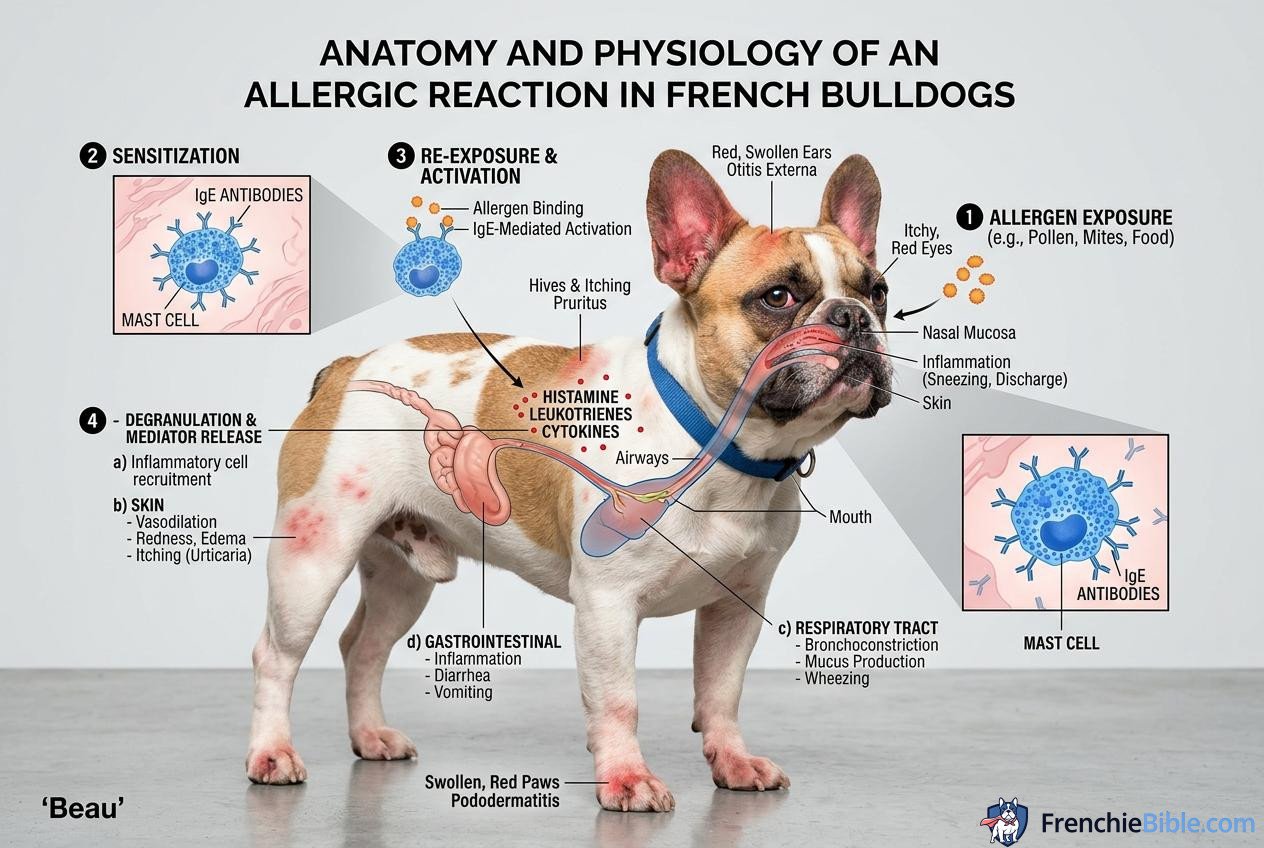
Biologically, hives occur when a dog’s immune system mistakenly identifies a harmless foreign substance (an allergen or venom) as a severe threat and dramatically overreacts. The immune system’s mast cells degranulate, releasing massive amounts of histamines, leukotrienes, and other inflammatory cytokines directly into the bloodstream and surrounding tissues. This sudden chemical flood causes local blood vessels to rapidly dilate and leak fluid into the dermis, resulting in the characteristic swelling, angry redness, and severe, burning itchiness.
Common Causes of Sudden Hives in Frenchies
While bee stings are a notorious and common culprit, several other factors can trigger sudden, explosive hives in your Frenchie:
- Insect Bites and Stings: Bees, wasps, hornets, yellow jackets, fire ants, spiders, and even severe mosquito or fly bites. Frenchies are notoriously curious, stubborn, and often try to catch or “snap” at buzzing insects with their mouths, making highly dangerous facial and oral cavity stings extremely common.
- Vaccine Reactions (Adverse Events): Some dogs experience a sudden allergic reaction shortly after receiving their annual or core vaccinations, particularly the leptospirosis, Lyme, or rabies vaccines. This is why vets often ask you to monitor your pet closely for hours after a shot.
- Environmental Allergens (Contact Dermatitis): Direct contact with specific poisonous plants, heavy pollens, freshly cut grasses, or molds. For example, wandering into a patch of poison oak, stinging nettles, or a newly chemically fertilized or pesticide-treated lawn can trigger severe contact dermatitis and immediate hives on the paws and underbelly.
- Food Allergies or Dietary Indiscretions: Eating something they absolutely shouldn’t have, a sudden, un-transitioned change in diet, or a severe allergic reaction to a specific protein source (like chicken or beef) or artificial preservative. Food-induced hives often accompany profound gastrointestinal distress.
- Medication Reactions: An adverse, systemic response to a newly prescribed antibiotic (like cephalexin or penicillin), pain medication (like NSAIDs), or even a topical flea, tick, or heartworm preventative applied to the back of the neck.
Why French Bulldogs Are at a Significantly Higher Risk
While any breed of dog can experience an allergic reaction, French Bulldogs face unique, heavily compounded risks due to their physical conformation. Their Brachycephalic Airway Syndrome (BAS) means they inherently have narrowed nostrils (stenotic nares), an elongated and thickened soft palate, a narrow trachea, and everted laryngeal saccules.
When an allergic reaction causes rapid facial swelling—specifically angioedema around the muzzle, throat, and tongue—this already highly compromised airway can quickly and catastrophically become completely obstructed. What might be considered a mild, manageable inconvenience for a long-nosed breed like a Greyhound or a Poodle can rapidly degenerate into a fatal respiratory crisis for a Frenchie. Therefore, recognizing symptoms early, staying calm, and acting swiftly is absolutely critical to your dog’s survival.
2. Recognizing the Signs: Mild vs. Severe Allergic Reactions
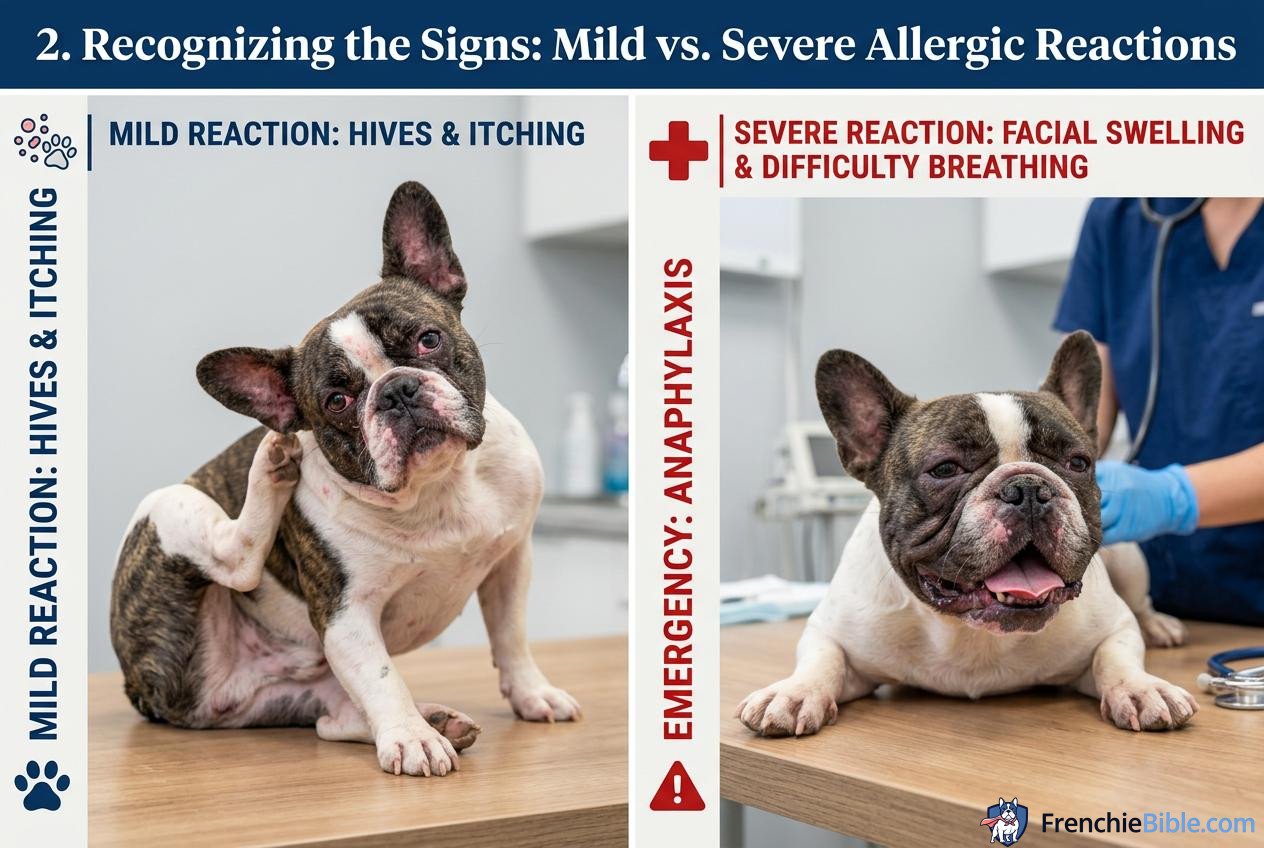
It is essential to quickly and accurately differentiate between a mild, localized allergic reaction and a severe, systemic anaphylactic shock. Your immediate assessment will dictate whether you can safely manage the situation at home using OTC antihistamines or if you need to literally sprint to the car and drive safely but immediately to the nearest emergency veterinary clinic.
Mild to Moderate Symptoms (Monitor Closely and Treat at Home)
If your French Bulldog has a mild to moderate reaction, you will typically observe localized, surface-level symptoms. These indicate that the immune response is currently contained to the skin and superficial tissues, though it remains highly uncomfortable for the dog.
– Localized Swelling (Edema): Swelling isolated to around the eyes, muzzle, or ears, often giving the dog a comical but concerning “puffy” or “hippo” appearance.
– Hives (Urticaria): Raised, distinct, red bumps on the skin, often most visible on the hairless parts of the belly, groin, and armpits.
– Intense Itching (Pruritus): Vigorous, non-stop scratching, violently rubbing their face against the carpet, couch, or grass, or obsessively chewing and licking at their paws.
– Redness (Erythema): Noticeable, bright redness of the skin, especially prominent around the face, inner ears, and belly.
– Agitation and Restlessness: Pacing, whining, inability to settle down, and general anxiety due to the overwhelming discomfort and burning itch.
Severe Symptoms (Anaphylaxis – A Critical Veterinary Emergency)
Anaphylaxis is a severe, systemic, multi-organ, and life-threatening allergic reaction that affects the entire body almost simultaneously. If you observe any of the following critical signs, do not attempt home treatment. Rush your French Bulldog to the nearest open veterinary hospital immediately. Call them while en route so they can prepare the crash cart.
– Respiratory Distress (Dyspnea): Severe wheezing, heavy, labored panting, loud stridor (a harsh, high-pitched breathing sound indicating upper airway obstruction), cyanosis (blue, grey, or pale gums and tongue), or literally gasping for air with the neck extended.
– Profound Swelling of the Throat and Tongue: This physically blocks the airway entirely, preventing any oxygen from reaching the lungs.
– Severe Gastrointestinal Distress: Sudden, uncontrolled, projectile vomiting or explosive diarrhea, sometimes containing fresh or digested blood.
– Cardiovascular Collapse: Extreme weakness, profound lethargy, sudden collapse, fainting (syncope), or an inability to stand or lift their head.
– Cold Extremities and Weak Pulse: Signs that the dog is going into clinical shock due to a massive, systemic drop in blood pressure.
– Neurological Signs: Seizures, tremors, or severe disorientation indicating brain hypoxia (lack of oxygen) and severe systemic failure.
3. Immediate First Aid for a Bee or Wasp Sting
If you witness your Frenchie getting stung in real-time, or if you find them suddenly pawing frantically at their face and whining with a rapidly swelling bump, immediate localized first aid can significantly help mitigate the reaction, reduce the venom load, and provide crucial pain relief.
Step 1: Identify and Remove the Stinger (If Applicable)
Bees (specifically honeybees) leave their barbed stinger behind in the skin, which continues to autonomously pump venom from the attached venom sac into the dog’s tissues for several minutes. Wasps, hornets, and yellow jackets, on the other hand, have smooth stingers, do not leave them behind, and can aggressively sting multiple times in rapid succession.
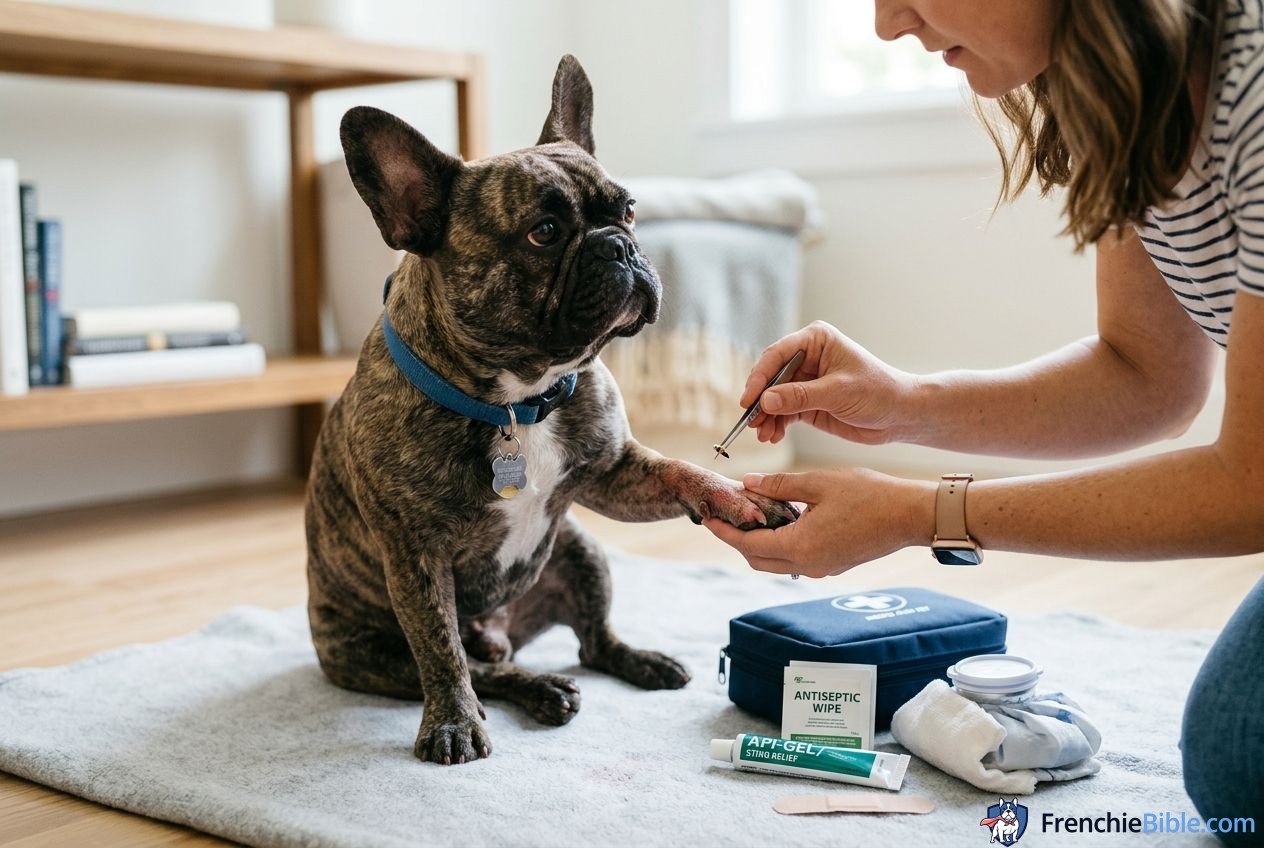
– Locate the Sting Site: Carefully inspect the area your dog is favoring. Look for a small red entry wound, often with a tiny black speck (the stinger) protruding slightly from it. Common areas are the tip of the nose, the fleshy lips, the paw pads, and dangerously, inside the mouth or on the tongue.
– Do Not Squeeze or Pinch: Never use tweezers, forceps, or your fingers to pinch and pull the stinger out. Squeezing the stinger will act like a syringe, forcing the remaining venom from the sac directly into your dog’s bloodstream, worsening the reaction exponentially.
– Scrape it Out: Instead, use a firm, flat, rigid object like a credit card, a driver’s license, or the dull edge of a butter knife. Place the edge flat against the skin next to the stinger and gently but firmly scrape across the skin to flick the stinger out from the base.
Step 2: Neutralize the Venom Chemistry
Depending on the specific type of stinging insect, you can apply a simple, localized home remedy to help neutralize the venom’s pH, which significantly reduces pain, burning, and tissue degradation.
– For Bee Stings (Acidic Venom): Bee venom is highly acidic. Create a thick, spreadable paste using standard baking soda and a small amount of cold water. Apply it generously directly over the sting site. Leave it on for 15-20 minutes to draw out venom and neutralize the acid.
– For Wasp and Hornet Stings (Alkaline Venom): Wasp venom is highly alkaline. Soak a cotton ball or makeup pad in apple cider vinegar or standard white household vinegar and gently dab and hold it onto the sting site for 10 minutes to neutralize the alkaline toxins.
Step 3: Soothe with Cryotherapy (Cold Compresses)
Cold therapy aggressively constricts the local blood vessels (vasoconstriction), drastically reducing both swelling and the systemic spread of venom into the bloodstream, while also temporarily numbing the nerve endings to stop pain and itchiness.
– Wrap an instant ice pack, a ziplock bag filled with crushed ice, or a bag of frozen vegetables (frozen peas or corn work perfectly as they mold ergonomically to the dog’s body contours) in a thin, clean towel.
– Never apply raw ice directly to the skin, as this can rapidly cause severe frostbite and tissue damage.
– Hold the cold pack firmly against the swollen area for 10 to 15 minutes. You can repeat this every few hours as needed.
– Crucial Tip for Oral Stings: If your Frenchie was stung inside the mouth or on the tongue, immediately offer them an ice cube to lick or a frozen dog-safe treat (like frozen plain yogurt or dog-safe broth cubes) to help reduce dangerous internal swelling while you prepare antihistamines.
4. The Complete Guide to Home Antihistamines for French Bulldogs
When localized first aid is not enough, or if hives begin to spread rapidly across the body, systemic oral antihistamines are the mandatory next line of defense. Antihistamines work by physically blocking the H1 receptors in the body, preventing the circulating histamine from attaching to cells and triggering the inflammatory allergic cascade.
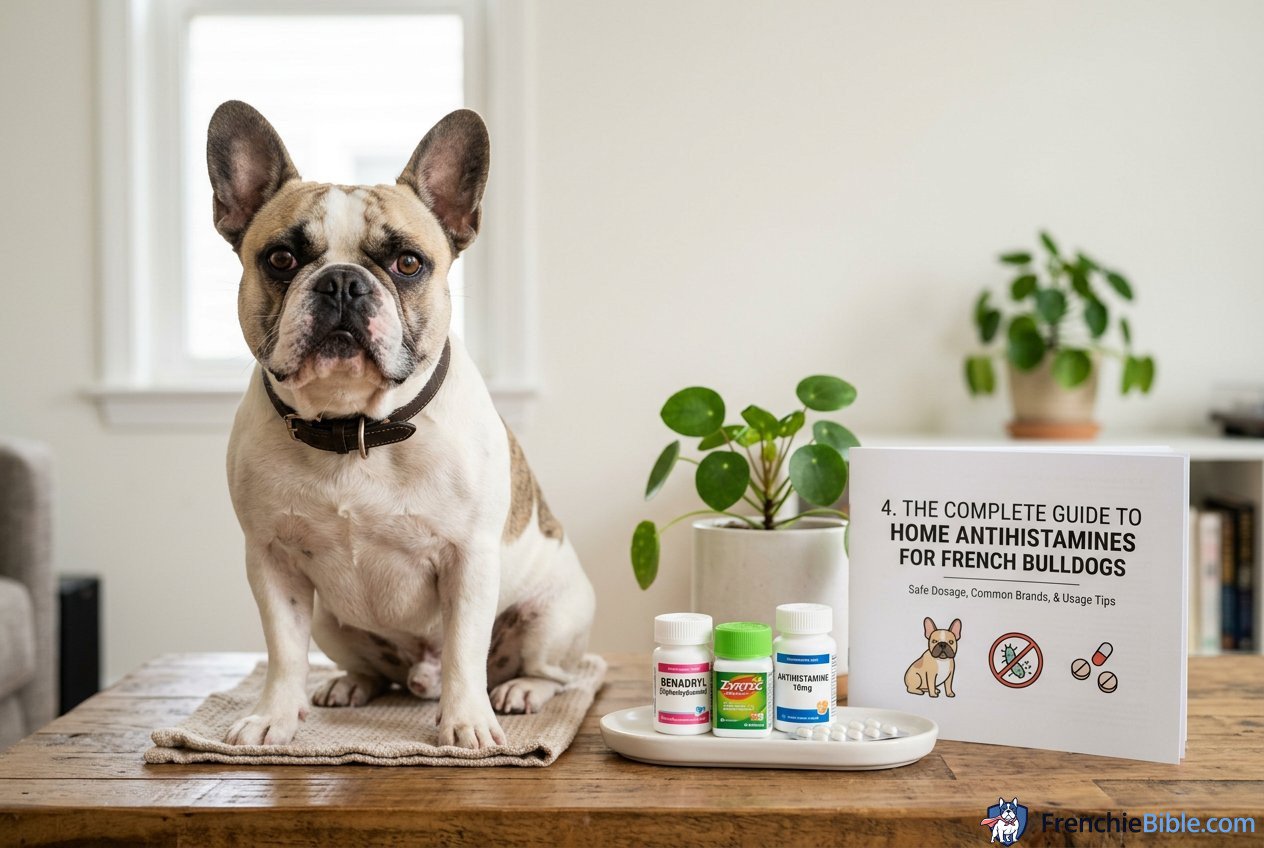
Mandatory Warning: Always consult your veterinarian before giving your dog any new medication, especially if your Frenchie is a senior, has pre-existing conditions like heart disease, glaucoma, high blood pressure, liver or kidney disease, or is currently on other prescription medications.
The Golden Standard: Diphenhydramine (Brand Name: Benadryl)
Diphenhydramine, universally recognized by the brand name Benadryl, is the most widely recommended, historically proven over-the-counter antihistamine for dogs in veterinary medicine. It is highly effective, fast-acting, and generally exceptionally safe for French Bulldogs when dosed correctly.
Precise Dosage Guidelines for Diphenhydramine (Benadryl):
– The Standard Veterinary Rule: The universally accepted veterinary dosage for diphenhydramine is 1 mg per 1 pound of body weight, administered orally every 8 to 12 hours.
– Example Calculation: If your adult French Bulldog weighs exactly 25 pounds, the correct therapeutic dose would be 25 mg.
– Forms and Formulations: Standard adult Benadryl typically comes in exactly 25 mg hard tablets, caplets, or gel capsules. Therefore, for a 25-pound Frenchie, one standard 25 mg tablet is structurally perfect. If your Frenchie is much smaller, for instance, 12 pounds (perhaps a puppy), you would need to carefully split a tablet to administer approximately 12.5mg, or utilize a children’s liquid formulation (with extreme caution, see below).
– Crucial Warning About Deadly Formulations: You must ONLY use standard, plain Benadryl where the sole active ingredient is Diphenhydramine HCl. NEVER, under any circumstances, use Benadryl-D, Benadryl Severe Allergy, or any allergy/cold medication with a “D” (Decongestant) suffix. Decongestants like pseudoephedrine or phenylephrine are highly toxic and often instantly fatal to dogs, causing massive spikes in blood pressure, fatal heart arrhythmias, and violent seizures. Furthermore, if using a children’s liquid formulation, you must read the inactive ingredients label meticulously for Xylitol (often disguised as birch sugar or wood sugar). Xylitol is lethally toxic to dogs; it causes a massive insulin release leading to life-threatening hypoglycemia, followed rapidly by irreversible acute liver failure. Always opt for standard hard pills or gel capsules whenever humanly possible to completely bypass this risk.
Expected Side Effects: The most common and pronounced side effect of Benadryl in dogs is significant drowsiness or lethargy. In the context of an allergic reaction, this is actually highly beneficial as it keeps their heart rate low and keeps them calm, preventing them from exacerbating the hives by frantic scratching. Less commonly, it can cause paradoxical excitement (hyperactivity), dry mouth, mild gastrointestinal upset, or urinary retention.
Alternative 1: Cetirizine (Brand Name: Zyrtec)
If Benadryl proves ineffective for your specific dog, or if you need a longer-lasting, non-drowsy option for chronic hives, Cetirizine is an excellent, safe alternative. It is a second-generation antihistamine, meaning it does not cross the blood-brain barrier as easily, thereby typically causing significantly less drowsiness than first-generation drugs like Benadryl.
Precise Dosage Guidelines for Cetirizine (Zyrtec):
– The Standard Veterinary Rule: The standard dosage is generally calculated at 1 mg per 2.2 pounds (1 kg) of body weight, typically administered once every 24 hours. However, in modern practice, many veterinary dermatologists recommend a simplified flat dose of 5 mg to 10 mg total per dog, per day, depending on the dog’s overall frame and severity of the reaction.
– Example Calculation: For an average adult French Bulldog weighing between 20-28 lbs, a typical, safe dose is often a half (5mg) to one full (10mg) tablet once daily. Always verify this specific dose with your attending veterinarian.
– Warning: As always, absolutely ensure you are purchasing standard Zyrtec (Cetirizine HCl alone) and NOT Zyrtec-D or any formulation containing pseudoephedrine.
Alternative 2: Loratadine (Brand Name: Claritin)
Loratadine is another highly effective second-generation antihistamine that is safe for canine use and causes minimal to absolutely zero drowsiness, making it ideal for daytime use if your dog needs to remain active.
Precise Dosage Guidelines for Loratadine (Claritin):
– The Standard Veterinary Rule: The standard accepted dosage usually ranges from 0.1 mg to 0.5 mg per pound of body weight, given once daily. For an average-sized French Bulldog, a widely accepted common dosage is a half (5mg) to one full (10mg) standard tablet once a day.
– Warning: Strictly and absolutely avoid Claritin-D.
Summary Chart for Quick Emergency Reference
(Take a photo of this chart and keep it on your phone. Always verify with your vet based on your dog’s specific medical history.)
| OTC Medication Name | Common Brand Example | Standard Canine Dosage | Administration Frequency | Critical Warnings / Formulations to Avoid |
|---|---|---|---|---|
| Diphenhydramine | Benadryl | 1 mg per 1 lb of body weight | Every 8-12 hours | FATAL TO AVOID: Benadryl-D (Decongestants); Liquid syrups containing Xylitol. |
| Cetirizine | Zyrtec | 1 mg per 2.2 lbs (or 5-10mg flat dose) | Once every 24 hours | FATAL TO AVOID: Zyrtec-D (Decongestants). |
| Loratadine | Claritin | 0.1 mg – 0.5 mg per 1 lb (or 5-10mg flat) | Once every 24 hours | FATAL TO AVOID: Claritin-D (Decongestants). |
5. How to Successfully Administer Medication to a Stubborn Frenchie
French Bulldogs are notoriously, hilariously stubborn and possess an incredibly sharp sense of smell and texture. They can quickly realize when you are trying to trick them into taking a bitter chemical pill and will deftly spit it out across the room. Here are professional veterinary technician secrets to ensure they swallow the medication quickly, safely, and without inducing further stress:
- The Peanut Butter Decoy Trick: Coat the pill thoroughly in a small, sticky dollop of 100% pure, xylitol-free, dog-safe peanut butter (check the label—ingredients should literally just be “peanuts”). Ensure the pill is completely visually and texturally hidden.
- Commercial Pill Pockets: High-quality commercial pill pockets are soft, highly aromatic, deeply palatable treats designed with a hollow center specifically to hide capsules and tablets. They are incredibly effective for 95% of dogs. You simply insert the pill and pinch the top shut.
- The 1-2-3 Cheese or Meat Method: Hide the pill deeply inside a small cube of soft, moldable cheese (like mild cheddar or cream cheese) or a small, thick slice of plain hot dog. The trick is the sequence: Give them a “decoy” piece of plain cheese/meat first to build false confidence, immediately follow it with the piece containing the loaded pill while they are still swallowing the first, and then rapidly offer a third decoy piece immediately after to ensure they swallow the pill piece whole without stopping to chew and investigate.
- Direct Oral Administration (Pilling manually): If your dog is panicking, nauseous, or outright refuses all high-value treats when stressed, you may have no choice but to pill them directly to save their life. Have your dog sit. Gently grasp their upper jaw just behind the canine teeth and tilt their head back slightly, causing the lower jaw to drop open. Use your other hand to quickly place the pill as far back on the base of the tongue as humanly possible. Immediately close their mouth, hold it gently but firmly shut, and gently stroke or rub their throat in a downward motion to stimulate the swallow reflex. You can also lightly and quickly blow a puff of air onto their nose, which naturally forces them to lick their lips and swallow.
6. What to Expect After Administering Antihistamines: The Watch and Wait Period
After you have successfully given your Frenchie a calculated dose of Benadryl or another antihistamine, your job is not done. You must act as their intensive care nurse and monitor them with hawk-like precision for the next 1 to 3 hours.
The Expected Timeline of Relief:
– 0 – 30 minutes: The pill is currently sitting in the stomach, dissolving, and slowly being absorbed into the bloodstream via the digestive tract. You will not see any immediate physical results. During this anxious period, continue to use cold compresses to aggressively soothe the dog. Keep them in a quiet, dark, cool room, and strictly enforce rest. Do not let them run around, as an elevated heart rate will pump the venom and histamines through their body much faster.
– 30 – 60 minutes: The medication is actively hitting the bloodstream. You should begin to see a slow but noticeable reduction in the frantic itching, the harsh redness, and the physical elevation of the hives. The facial swelling should plateau (stop getting worse) and slowly begin to soften. If you used Benadryl, your dog will likely start acting heavily sedated, drowsy, and may fall into a deep sleep. This is good.
– 1 – 3 hours: The hives should be significantly reduced in number and size, and your dog should be resting comfortably. Major swelling should be noticeably decreased, though minor residual puffiness around the eyes or lips may stubbornly remain for another 12 to 24 hours as the body fully clears the inflammatory debris.
When to Abandon the Home Approach and Rush to the Emergency Vet:
If, at any point after giving the oral antihistamine, you observe ANY of the following escalating clinical signs, the oral medication is insufficient. You are officially losing the battle against anaphylaxis, and you are facing an immediate medical emergency:
– The swelling does not stop and actively continues to increase, particularly around the delicate tissues of the muzzle, lips, and neck.
– Your dog begins to wheeze, gasp, snort unusually loudly, or display significantly increased effort just to draw a breath.
– The gums transition from healthy pink to stark white, pale grey, or bluish-purple.
– The dog begins to vomit repeatedly or has sudden diarrhea.
– The hives do not recede but continue to spread rapidly like wildfire and coalesce into massive, hardened welts.
– Your dog collapses, cannot support their own weight, or becomes glassy-eyed and unresponsive to their name.
In a professional veterinary ICU setting, the emergency doctor has access to fast-acting, intravenous (IV) or intramuscular (IM) injectable medications that are exponentially faster and far more potent than oral pills. They will typically administer an injectable antihistamine to immediately bind receptors, a powerful, fast-acting corticosteroid (like dexamethasone or prednisone) to aggressively halt the immune system’s massive overreaction and reduce severe swelling, and if clinical anaphylaxis is present, life-saving injectable epinephrine (adrenaline) and massive intravenous fluid therapy to instantly stabilize crashing blood pressure and open airways.
7. Natural Remedies and Supportive Holistic Care for Mild Skin Irritations
If your dog is experiencing only mild, highly localized itching from a minor bug bite or brief contact with an irritating weed, and you prefer to avoid systemic chemical medications (or wish to use them in conjunction with natural topical support), several holistic remedies can offer excellent, safe topical relief.
- Colloidal Oatmeal Baths: This is the gold standard for holistic canine skin care. Oatmeal contains specific active compounds called avenanthramides, which have documented powerful anti-inflammatory, antioxidant, and anti-itch properties. Grind plain, unflavored, sugar-free oats in a food processor or blender until they form an ultra-fine, flour-like powder. Dissolve a full cup of this powder in a bathtub filled with lukewarm (never hot, as hot water exacerbates hives) water. Let your Frenchie soak for 10-15 minutes, gently using a cup to pour the milky water over their back and chest. Do not rinse them with clean water afterward; instead, gently pat them dry with a soft towel to leave the soothing, protective oatmeal residue film directly on the skin.
- Pure Aloe Vera Gel: The natural cooling and hydrating properties of aloe vera can provide near-instant relief for hot bug bites and mild red rashes. Ensure you use 100% pure, organic aloe vera gel without any added alcohols, artificial colors, or fragrances (which will burn). Apply a thin layer directly to the affected area. Note: Do not let your dog lick massive amounts of aloe, as consuming large quantities can cause mild gastrointestinal upset and diarrhea.
- Chamomile and Green Tea Soaks: Both chamomile and green tea have potent natural anti-inflammatory, antibacterial, and soothing properties due to their high tannin and flavonoid content. Brew a very strong batch of either tea (using 3-4 bags), let it steep, and then cool it completely in the refrigerator. Use it as a soothing topical spray, or soak a clean washcloth in the cold tea to apply as a highly effective, cool medicinal compress to itchy, red areas.
- Organic Unrefined Coconut Oil: High-quality, organic, unrefined, cold-pressed coconut oil is rich in lauric acid, granting it natural antibacterial, antifungal, and significant anti-inflammatory properties. Gently massaging a small amount into localized hives or dry, irritated skin can help rapidly soothe the epidermis and drastically reduce itchiness. Furthermore, it is perfectly safe and actually highly nutritious if your dog decides to lick it off.
- Epsom Salt Paw Soaks: If your Frenchie accidentally stepped directly on a bee, a wasp, or a fire ant hill and has angrily swollen, painful paws, a targeted Epsom salt soak can act as a hypertonic solution to physically draw out inflammation and toxins. Mix a heaping tablespoon of plain, unscented Epsom salt into a small bowl of cool water and soak the affected paw for 5-10 minutes. Ensure you supervise closely so the dog absolutely does not drink the salt water, as it acts as a very strong, fast-acting osmotic laxative.
8. Identifying Non-Insect Causes of Sudden Hives
If you are absolutely certain your dog was not outside, is closely supervised, or was not exposed to any stinging insects, you must broaden your diagnostic view and evaluate other potential triggers for their sudden, explosive allergic reaction.
Environmental Allergies (Canine Atopy)
French Bulldogs are genetically highly prone to atopic dermatitis—chronic allergic reactions to microscopic environmental factors. While this usually manifests slowly as chronic paw licking, face rubbing, and recurrent yeast ear infections, a sudden, massive exposure to a heavy seasonal pollen bloom, inhaling high dust mite concentrations from a deeply dusty old carpet or new dog bed, or simply walking bare-pawed through a lawn recently treated with harsh chemical fertilizers or weed killers can cause an acute, severe flare-up resulting in immediate body-wide hives.
Dietary Indiscretions and Severe Food Allergies
Did your dog sneak a piece of heavily spiced human food off the kitchen counter? Did they raid the garbage? Certain human foods (or the spices cooked with them) can trigger severe allergic reactions in sensitive dogs. Furthermore, if you recently switched their daily kibble to a brand new formula containing a novel protein (like transitioning from chicken to lamb) or different chemical preservatives without a slow transition, this could easily be the primary culprit. Food-induced allergies in dogs most commonly present as sudden, severe gastrointestinal upset (diarrhea/vomiting) inextricably combined with severe skin itching, redness, and hives around the mouth and anus.
Acute Contact Dermatitis
Meticulously review any recent changes in your household chemical environment. Have you recently switched to a new, heavily fragranced laundry detergent for washing their bedding or your own sheets? Did you use a new harsh floor cleaner, a powdered carpet deodorizer, or plug in a new synthetic air freshener? Have you applied a new brand of topical spot-on flea/tick medication or used a different, heavily scented dog shampoo at bath time? Dogs absorb many environmental chemicals directly through their sensitive paw pads and thin abdominal skin. A severe contact allergy will typically cause hives and intense redness exactly where their physical body touched the offending substance (e.g., the belly and paws from floor cleaner, or the back of the neck from flea drops).
9. Creating an Ironclad Emergency Allergy Action Plan with Your Vet
As a responsible, proactive French Bulldog owner, you should absolutely not wait for a life-threatening emergency to happen at 2:00 AM to figure out your game plan. Being prepared saves precious minutes, and minutes save lives.
- Calculate and Verify the Exact Dose NOW: At your very next routine veterinary visit, explicitly ask your vet to weigh your dog accurately and officially recommend and write down a specific dosage of Benadryl or Zyrtec for your individual dog. Take this exact dosage (e.g., “Give 1.5 tablets of 25mg Benadryl”) and write it clearly on a piece of bright medical tape. Stick this tape directly onto the medication bottle in your cabinet. When your dog’s face is rapidly swelling and you are panicking, you absolutely do not want to be fumbling with a smartphone calculator, searching Google, or trying to mentally execute the mg/lb formula under extreme stress.
- Build a Dedicated Pet First Aid Kit: Create a small, highly visible, dedicated first aid box specifically for your Frenchie. It should always contain:
- A fresh, unopened bottle of standard Benadryl tablets (religiously check and replace based on expiration dates annually).
- A dedicated credit card or rigid plastic scraper exclusively for removing stingers.
- High-quality tweezers (for pulling ticks, never for stingers).
- A digital, fast-read rectal thermometer and single-use packets of water-based lubricant.
- A fresh bag of Pill Pockets or a small, non-perishable, sealed syringe of pure peanut butter.
- Sterile gauze pads, self-adhering athletic bandage tape (Vetrap), and a small, crush-to-activate instant cold pack.
- A bottle of sterile saline eye wash to flush allergens from the eyes.
- Save and Post Emergency Contacts: Have the full phone number and exact GPS address of your primary vet AND the nearest 24/7/365 emergency veterinary hospital saved in your phone’s favorites list. Additionally, write this information on a large card and magnet it to your refrigerator. When sheer panic sets in, frantically searching Google Maps for an “open vet near me” wastes critical, life-saving minutes.
- Discuss a Veterinary EpiPen (Epinephrine Auto-Injector): If your French Bulldog has a documented, clinical medical history of suffering from severe, life-threatening anaphylactic shock from bee stings in the past, have a serious discussion with your vet about the possibility of obtaining a veterinary EpiPen. While significantly less commonly prescribed for dogs than for humans due to dosing complexities, in highly rural areas where the nearest emergency vet is an hour away, an EpiPen can literally be the only tool that keeps your dog breathing long enough to reach the hospital.
10. Frequently Asked Questions (FAQ)
Can a French Bulldog actually die from a single bee sting?
Yes, unfortunately, it is entirely possible. While the vast majority of normal bee stings only cause localized sharp pain, temporary redness, and minor swelling, some dogs are highly allergic to the specific proteins in the venom. If the sting triggers an immediate systemic anaphylactic shock, or critically, if the dog is stung on the throat or directly inside the mouth, the rapid, massive swelling can completely compress and block their already narrow brachycephalic airway. Without immediate, aggressive veterinary intervention, they can suffocate, making it fatal.
How long does it physically take for Benadryl to work on a French Bulldog?
When administered orally as a pill, it typically takes approximately 30 to 45 minutes for the diphenhydramine (Benadryl) to break down in the stomach, enter the bloodstream, begin binding to histamine receptors, and actively reduce clinical symptoms. Peak therapeutic effectiveness in the bloodstream is usually reached within 1 to 2 hours. Crucial advice: If your dog’s symptoms are rapidly worsening (especially breathing difficulty) during this initial 30-minute waiting period, do NOT wait around your house for the pill to magically work; put the dog in the car and rush to the emergency vet immediately.
Are hives painful for dogs, or just itchy?
The hives (urticaria) themselves are generally not considered deeply physically painful in a traumatic sense, but they are intensely, overwhelmingly, and maddeningly itchy. It is a severe burning itch. The dog may scratch and bite themselves raw out of desperation, rapidly leading to severe secondary bacterial skin infections (hot spots). The swelling (angioedema) associated with hives, however, can be deeply uncomfortable and painful if it stretches the skin tightly, particularly around the highly innervated face, eyes, and paw pads. A fresh bee sting, however, is acutely, sharply painful at the exact injection site.
Can I just give my Frenchie human allergy medicine from my own cabinet?
Yes, you can safely administer specific OTC human allergy medicines to your Frenchie, such as plain Diphenhydramine (Benadryl), Cetirizine (Zyrtec), or Loratadine (Claritin), provided you strictly use the correct, vet-approved canine weight-based dosage. HOWEVER, you must absolutely NEVER, UNDER ANY CIRCUMSTANCES, use complex medications that contain added decongestants (anything with a “-D” suffix like Benadryl-D) or any liquid syrups containing the artificial sweetener Xylitol. Both of these human additives are highly toxic and frequently lethal to canines. Always consult your vet first before raiding your medicine cabinet.
What if I don’t know exactly what stung or bit my French Bulldog? Does the vet need to know?
If you did not witness the inciting event but your dog suddenly erupts in hives, frantic itching, and facial swelling after being outside, treat the symptoms immediately as an acute allergic reaction regardless of the unknown cause. Administer the proper pre-calculated dose of Benadryl, aggressively apply cold compresses to the swollen areas, keep the dog calm, and monitor them closely. If the swelling increases rapidly, affects their breathing in any way, or they show signs of profound lethargy and vomiting, go to the emergency vet immediately. The emergency vet does not necessarily need to identify the exact species of insect to treat the systemic allergic reaction effectively; the medical protocol for anaphylaxis remains the same.
My dog was definitely stung, but I don’t see any swelling or hives yet. Should I still give Benadryl preventatively?
If your dog was stung but is only experiencing mild, highly localized pain (e.g., licking the paw constantly or having a tiny red dot) and shows absolutely no signs of facial swelling, systemic hives, vomiting, or respiratory distress after a close observation period of 15-30 minutes, you do not necessarily need to heavily medicate them systemically. You can simply apply a neutralizing baking soda paste and a local cold compress. However, you must continue to monitor them very closely for the next 12 to 24 hours, as some severe allergic reactions can have a delayed onset. When in doubt, or if you are leaving the house and cannot monitor them, a single, correctly dosed administration of Benadryl is generally safe and acts as an excellent preventative measure against a delayed spike in histamines.
Conclusion
Sudden, explosive hives and rapidly swollen faces are a frightening, adrenaline-pumping reality for many French Bulldog owners. Their naturally curious, bold nature combined with their inherently sensitive brachycephalic respiratory anatomy means that a simple, innocent encounter with a garden bee can escalate quickly from a yelp to a true medical emergency.
By dedicating time to learn how to rapidly recognize the early, subtle signs of an allergic reaction, knowing exactly how to safely prepare and administer the correct, weight-based dose of Benadryl, and most importantly, understanding precisely when a reaction crosses the critical line from a home-treatable inconvenience to a life-and-death veterinary emergency, you become your Frenchie’s best advocate, protector, and lifesaver. Always keep your pet first aid kit fully stocked and unexpired, keep your emergency vet’s number on speed dial, and never hesitate to seek professional medical care if your gut instinct tells you your dog is in danger. Their life depends on your calm, swift action.
Disclaimer: We are not veterinarians and do not hold veterinary medical licenses. The information provided in this article is based on years of breeding and daily care experience and is for educational purposes only. It should not replace professional veterinary advice. Always consult with a licensed veterinarian if you have concerns about your French Bulldog’s health or before starting any new treatment.