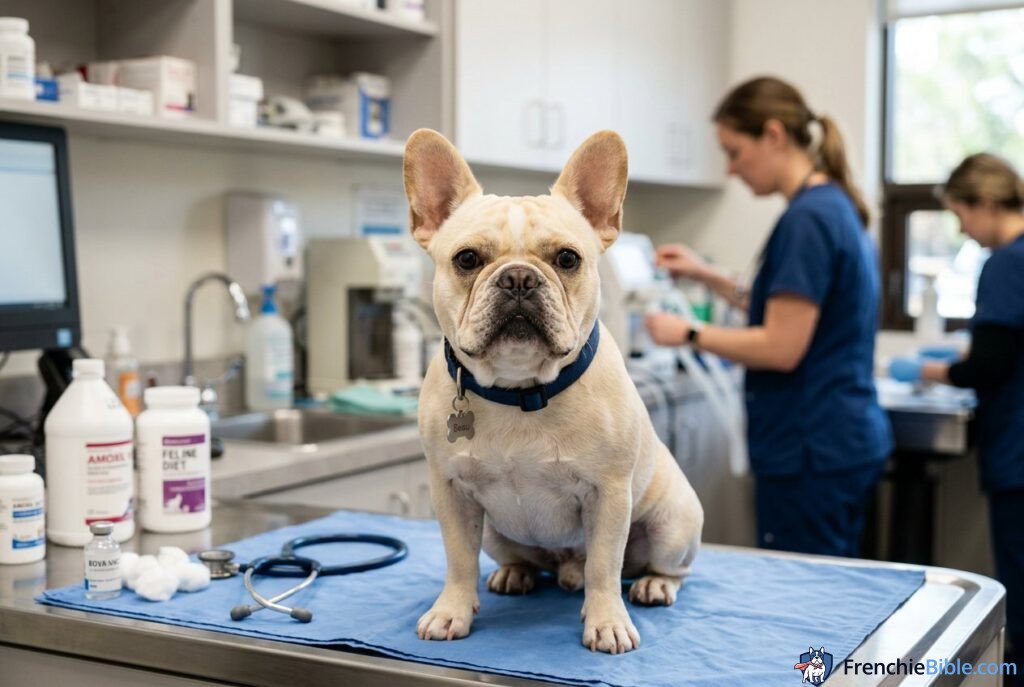
as a French Bulldog expert and breeder and breeding expert, one of the most common issues I encounter in the clinic is localized hair loss, clinically known as alopecia. French Bulldogs are incredibly charming, affectionate companions, but they are genetically predisposed to a myriad of dermatological conditions. When a Frenchie owner notices a sudden bald patch or thinning hair, panic often sets in. Is it normal shedding? Is it a severe allergy? Or is it something more sinister?
Understanding the root cause of localized hair loss in your French Bulldog is paramount. Unlike generalized shedding, where hair falls out evenly across the body (like during seasonal coat blowing), localized alopecia presents as specific bald spots, thinning areas, or symmetrical hair loss. Often, these bald patches are accompanied by other alarming symptoms such as redness, scaling, crusting, severe pruritus (itching), and hyperpigmentation (blackening of the skin).
Related Reading: Training & Behavior | Frenchie Puppy Guide | Best Food for Frenchies
In this comprehensive veterinary guide, we will explore the five primary pathological causes of localized hair loss in French Bulldogs. We will delve deep into the pathology, clinical presentation, diagnostic procedures, and evidence-based treatments for each condition, including the notorious Black Skin Disease (Alopecia X).
Understanding Localized Alopecia in French Bulldogs
Before we dive into the specific diseases, it is crucial to understand what alopecia actually is and how it manifests in the French Bulldog breed.
What is Alopecia?
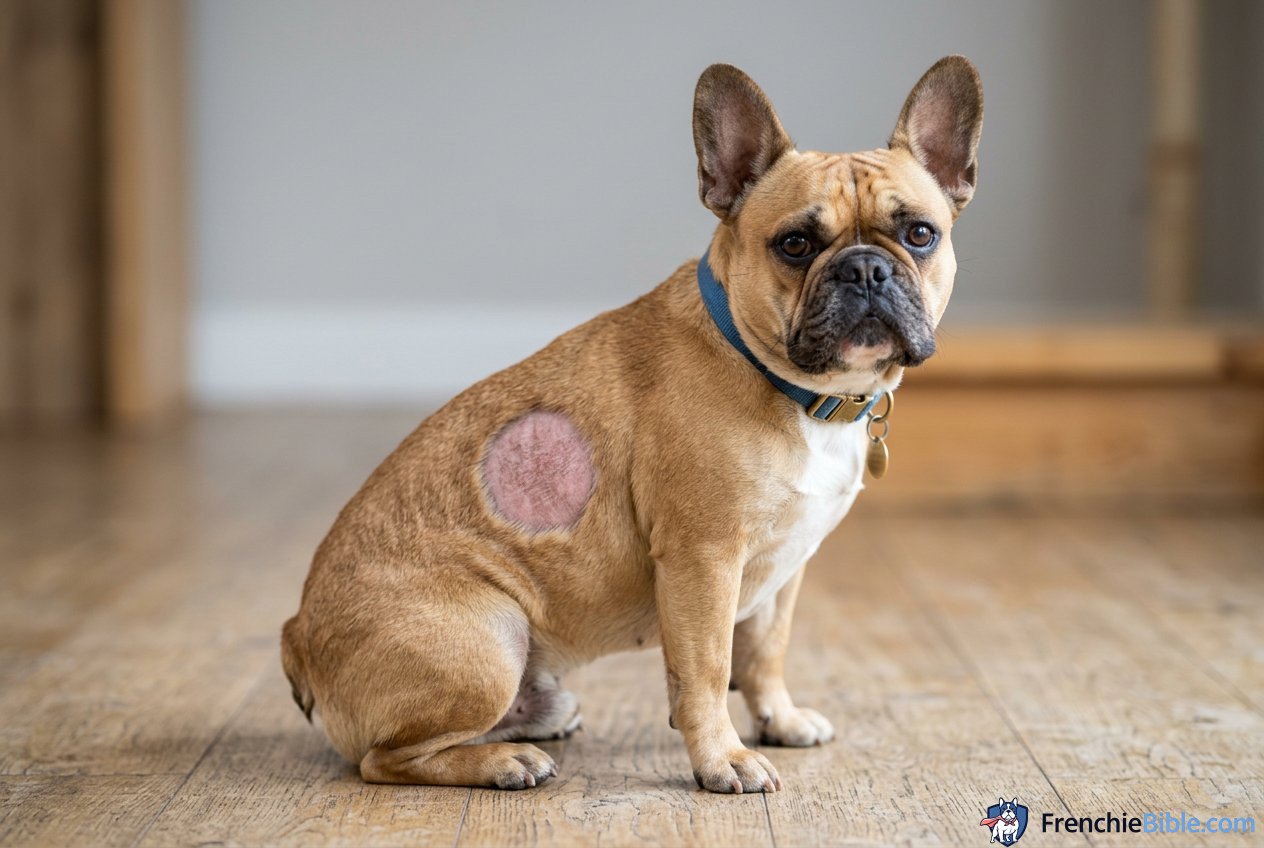
Alopecia is the medical term for hair loss. It is not a specific disease in itself, but rather a clinical sign or symptom of an underlying condition affecting the hair follicle or the hair shaft. Alopecia can be classified in several ways:
– Focal/Localized Alopecia: Hair loss confined to one specific area.
– Multifocal Alopecia: Multiple bald patches scattered across the body.
– Symmetrical Alopecia: Hair loss occurring in the exact same pattern on both sides of the body (often indicative of endocrine/hormonal issues).
– Generalized Alopecia: Widespread thinning or loss of hair.
In French Bulldogs, we most commonly deal with focal, multifocal, and symmetrical alopecia.
Normal Shedding vs. Pathological Hair Loss
French Bulldogs have a short, smooth coat that sheds continuously year-round, with heavier shedding periods during the spring and fall. Normal shedding should never result in visible bald spots, thinning patches where the skin is visible, or changes in the skin’s texture or color.
Signs that your Frenchie’s hair loss is pathological (abnormal):
– Visible Bald Spots: Areas completely devoid of hair.
– Skin Discoloration: The skin beneath the hair loss turns red, grey, or jet black.
– Textural Changes: The skin becomes thickened (lichenification), scaly, crusty, or greasy.
– Inflammation: Visible redness, swelling, or heat emanating from the bald patch.
– Pruritus: Your Frenchie is scratching, biting, or licking the area obsessively.
– Lesions: The presence of pustules (pimples), papules (red bumps), or oozing sores.
If you observe any of these signs alongside hair loss, it is time for a comprehensive veterinary dermatologic workup. Let us explore the five most common pathological culprits.
Cause #1: Demodectic Mange (Demodicosis)
When a young French Bulldog puppy or an immunocompromised adult presents with sudden, non-itchy bald patches, Demodectic mange is always at the top of my differential diagnosis list.
The Role of Demodex Mites
Demodectic mange, or demodicosis, is caused by Demodex canis, a microscopic, cigar-shaped mite that naturally resides in the hair follicles of almost all dogs. These mites are passed from the mother to her puppies during the first few days of life while nursing. In a healthy Frenchie with a robust immune system, these mites live in harmony with the host, causing no clinical signs.
However, if the dog’s immune system is immature (as in puppies under 18 months), compromised by stress, poor nutrition, or an underlying systemic disease (such as Cushing’s disease or cancer in older dogs), the mite population explodes. They overpopulate the hair follicles, leading to inflammation, follicular rupture, and subsequent hair loss.
Clinical Signs of Demodicosis
Demodectic mange typically presents in two forms: localized and generalized.
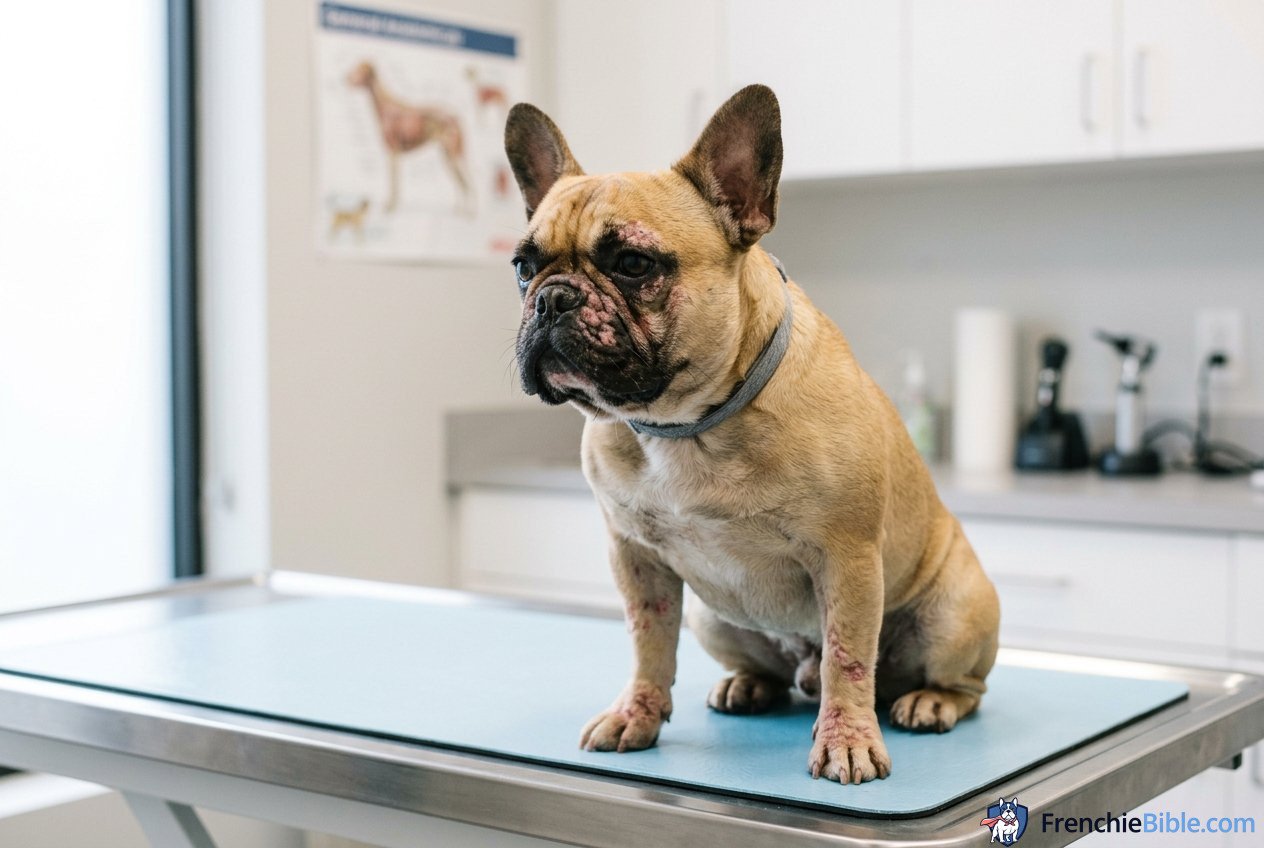
– Localized Demodicosis: This is the most common form in Frenchie puppies. It presents as one to five small, well-defined, scaly bald patches. The classic presentation includes “spectacles”—baldness around the eyes, lips, and muzzle, as well as small patches on the forelimbs. Crucially, unless there is a secondary bacterial infection, these patches are usually not itchy.
– Generalized Demodicosis: A more severe form where large areas of the body are affected. The skin becomes intensely red, inflamed, crusty, and often develops secondary bacterial or fungal infections. This is a severe, potentially life-threatening condition if left untreated.
Diagnosis and Veterinary Treatment
Diagnosis is straightforward in the veterinary clinic. We perform deep skin scrapings using a scalpel blade to collect cells from deep within the hair follicle. The sample is examined under a microscope to identify and count the Demodex mites.
Treatment Protocols:
– Wait and See: For mild, localized cases in puppies, spontaneous resolution often occurs as the immune system matures. We may opt to monitor the lesions without aggressive treatment.
– Isoxazolines: In modern veterinary medicine, the gold standard treatment for generalized or stubborn demodicosis is the use of isoxazoline-class flea and tick preventatives (e.g., Bravecto/fluralaner, NexGard/afoxolaner, Simparica/sarolaner). These oral medications are incredibly effective, safe, and rapidly eliminate the mite population.
– Topical Therapies: Medicated shampoos containing benzoyl peroxide can help flush the follicles.
– Treating Secondary Infections: Antibiotics are often required to treat secondary bacterial pyoderma that complicates the mange.
Breeding Management and Prevention
As a breeding expert, I must emphasize that generalized demodicosis has a strong genetic component linked to an inherited immune deficiency. French Bulldogs that have suffered from generalized demodicosis should never be bred. Responsible breeding practices require removing affected dogs from the breeding program to prevent passing this immunological weakness to future generations.
Cause #2: Ringworm (Dermatophytosis) – Fungal Infections
Despite its misleading name, ringworm has nothing to do with worms. It is a highly contagious fungal infection of the skin, hair, and nails, primarily caused by the dermatophyte species Microsporum canis, Microsporum gypseum, or Trichophyton mentagrophytes.
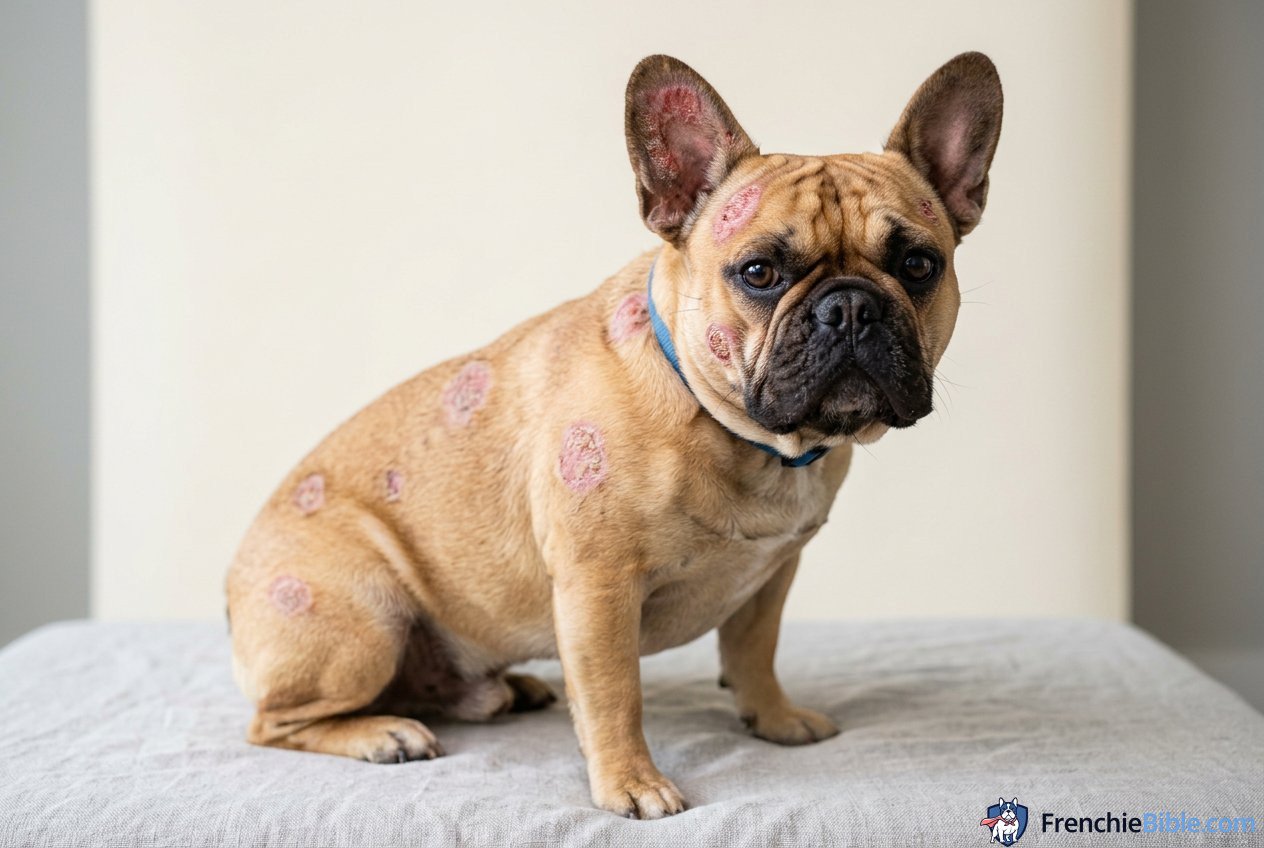
Understanding Ringworm in Frenchies
Dermatophytes feed on keratin, the protein that makes up the hair shaft and the outer layer of the skin. As the fungus digests the keratin, the hair shaft becomes brittle and breaks off at the skin level, resulting in alopecia.
French Bulldogs can contract ringworm through direct contact with an infected animal (dogs, cats, rodents) or by coming into contact with contaminated soil or fomites (bedding, brushes, toys). Puppies and senior dogs with weaker immune systems are particularly susceptible.
Identifying the Circular Bald Patches
The classic clinical presentation of ringworm is:
– Circular Alopecia: Perfectly round patches of hair loss.
– Erythematous Borders: A red, inflamed ring around the edge of the bald spot (hence the name).
– Scaling and Crusting: The center of the lesion is often scaly, ashy, or crusty.
– Variable Pruritus: Ringworm can be moderately itchy, but not always.
– Nodule Formation: In some cases, a raised, boggy nodule called a kerion may form due to a severe localized inflammatory response to the fungus.
Diagnostics in the Clinic
Ringworm can mimic many other skin conditions, so visual inspection is never enough.
– Wood’s Lamp Examination: An ultraviolet light that causes some strains of Microsporum canis to fluoresce an apple-green color. However, this only detects about 50% of cases, so a negative Wood’s lamp test does not rule out ringworm.
– Trichogram: Microscopic examination of plucked hairs to look for fungal spores attacking the hair shaft.
– Fungal Culture (DTM): The gold standard. Hair and skin scales are placed on a special culture medium to grow and identify the specific fungus. This can take 1-3 weeks for final results.
– PCR Testing: A faster, highly sensitive DNA test for dermatophytes that provides results in a few days.
Antifungal Treatments and Environmental Decontamination
Treating ringworm requires a multi-modal approach because the infection is highly contagious to other pets and humans (zoonotic).
– Topical Antifungals: Miconazole or ketoconazole shampoos, creams, or enilconazole dips. The dog is usually bathed twice weekly.
– Systemic Antifungals: Oral medications like itraconazole or terbinafine are necessary for extensive infections or those not responding to topical therapy. Treatment often lasts for 4-8 weeks.
– Environmental Decontamination: This is the most challenging part. Fungal spores can survive in the environment for up to 18 months. Rigorous vacuuming, washing bedding in hot water and bleach, and using antifungal disinfectants on surfaces are critical to prevent reinfection.
Cause #3: Bacterial Folliculitis (Bacterial Pyoderma)
Bacterial folliculitis is an infection and inflammation of the hair follicles, typically caused by the bacteria Staphylococcus pseudintermedius. It is one of the most frequent causes of multifocal patchy alopecia in French Bulldogs.
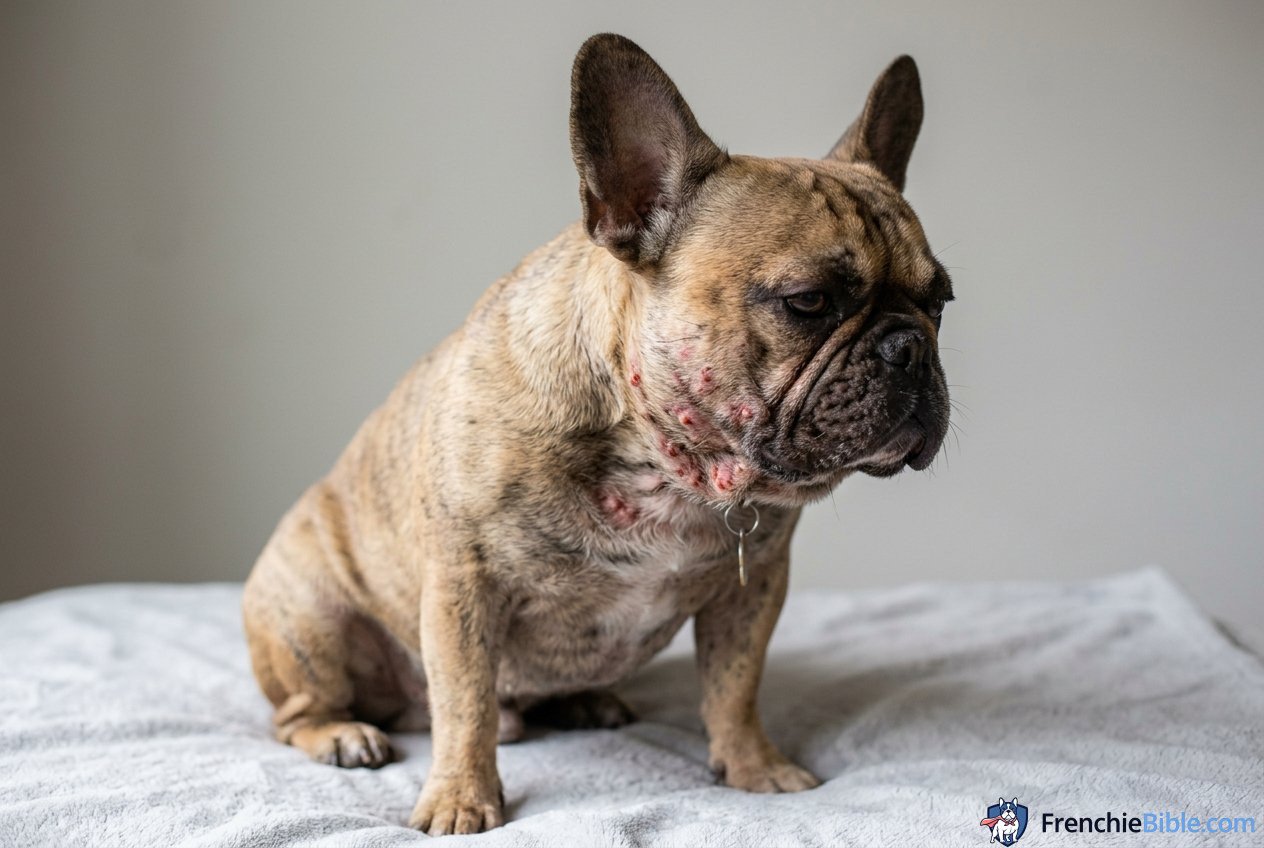
How Bacteria Invade Hair Follicles
Staphylococcus pseudintermedius is a normal commensal bacterium that lives peacefully on a healthy dog’s skin. However, French Bulldogs have deeply folded skin, a predisposition to allergies, and a coat that can easily trap moisture and heat.
When the skin barrier is compromised—whether by microscopic scratches from intense scratching due to allergies, an overgrowth of Demodex mites, or poor grooming—these bacteria opportunistically invade the hair follicles. They multiply rapidly, causing inflammation that ultimately destroys the follicle and causes the hair to fall out.
Symptoms: Pustules, Bumps, and Patchy Hair Loss
The progression of bacterial folliculitis is highly characteristic:
– Papules: Small, red, raised bumps on the skin.
– Pustules: The bumps develop into pimples filled with yellowish pus.
– Epidermal Collarettes: When the pustules rupture, they form a circular, crusty lesion with a peeling ring of skin around the edge (often mistaken for ringworm).
– Moth-Eaten Alopecia: As multiple follicles are infected, the coat takes on a patchy, “moth-eaten” appearance.
– Hyperpigmentation: Chronic bacterial infections often lead to darkening of the skin in the affected areas.
Connection to Allergies (The Underlying Trigger)
As a specialist, I must emphasize that bacterial folliculitis is almost always secondary to a primary underlying issue, and in French Bulldogs, that issue is usually allergies. Whether it is atopic dermatitis (environmental allergies), food allergies, or flea allergy dermatitis, the severe itching and compromised skin barrier create the perfect environment for bacterial overgrowth. If you only treat the bacterial infection without addressing the underlying allergy, the folliculitis will inevitably return.
Antibiotic Therapy and Medicated Shampoos
- Cytology: We diagnose this by pressing a piece of clear tape against the lesion, staining it, and identifying the bacteria under the microscope.
- Topical Therapy: Chlorhexidine shampoos (2-4%) are the cornerstone of treating superficial pyoderma. Bathing 2-3 times a week mechanically removes bacteria, crusts, and inflammatory debris while repairing the skin barrier.
- Systemic Antibiotics: For severe or deep infections, oral antibiotics (like your veterinarian may recommend a antibiotic medication (never use without veterinary guidance) or amoxicillin-clavulanate) are prescribed for a minimum of 3-4 weeks. The medication must be continued for at least one week past the clinical resolution of all symptoms to prevent antibiotic resistance.
Cause #4: Seasonal Flank Alopecia (Cyclic Follicular Dysplasia)
If your French Bulldog loses hair on its sides in perfectly symmetrical patterns every fall or winter, only for it to magically grow back in the spring, you are likely dealing with Seasonal Flank Alopecia.
What is Canine Seasonal Flank Alopecia?
Canine Seasonal Flank Alopecia is a localized, cyclical hair loss condition that primarily affects specific breeds, including Boxers, English Bulldogs, and French Bulldogs. It is considered a form of follicular dysplasia—an abnormality in the hair follicle’s growth cycle.
Recognizing the Bilateral, Symmetrical Hair Loss
The clinical signs are highly specific and unmistakable:
– Location: The hair loss occurs specifically on the flanks (the sides of the abdomen just ahead of the hind legs). It can also sometimes affect the base of the tail or the bridge of the nose.
– Symmetry: The bald patches are remarkably symmetrical, appearing identical on both the left and right sides of the body.
– Appearance: The bald areas are well-defined, often described as resembling a map or having a geographic border.
– Hyperpigmentation: The exposed skin in the bald patches invariably turns very dark brown or pitch black.
– Absence of Other Symptoms: Crucially, the skin is completely healthy. There is no itching, redness, crusting, scaling, or signs of infection. The dog is otherwise perfectly healthy and energetic.
The Role of Melatonin and Sunlight Exposure
The exact pathogenesis of Seasonal Flank Alopecia is not entirely understood, but it is deeply linked to photoperiods (the amount of daylight exposure). The reduction in daylight hours during the autumn and winter months alters the dog’s pineal gland function, specifically the production of melatonin. This hormonal shift arrests the hair follicles in the telogen (resting) phase, preventing new hair growth when the old coat sheds, resulting in alopecia.
Prognosis and Hair Regrowth Expectations
Diagnosis is usually made based on breed, clinical signs, and the cyclic history, though a skin biopsy can confirm follicular arrest.
– Prognosis: The condition is purely cosmetic and does not impact the dog’s systemic health or quality of life.
– Treatment: Melatonin supplementation (given orally or via a subcutaneous implant) is the primary treatment. Administering melatonin 1-2 months before the anticipated hair loss can prevent it, and it can also stimulate regrowth once alopecia has occurred.
– Regrowth: Even without treatment, the hair almost always grows back spontaneously when the days lengthen in the spring and summer. However, the regrown hair may differ slightly in color or texture.
Cause #5: Black Skin Disease (Alopecia X) and Endocrine Issues
When dealing with widespread symmetrical alopecia accompanied by profound hyperpigmentation (blackening of the skin), we must look deeply into the endocrine (hormonal) system. The most notorious of these conditions is “Black Skin Disease,” clinically known as Alopecia X.
Unraveling Alopecia X (Black Skin Disease)
Alopecia X is a frustrating and complex endocrine disorder characterized by an arrest of the hair cycle. It is called “Alopecia X” because the exact underlying cause remains a mystery (the “X” factor), though it is widely believed to be an imbalance in adrenal sex hormones or an abnormality in the hair follicle receptor’s response to hormones.
While more common in plush-coated breeds like Pomeranians and Alaskan Malamutes, French Bulldogs can be affected.
The Connection to Hyperpigmentation (Black Spots)
The classic presentation of Alopecia X is:
– Pattern: Symmetrical hair loss that typically begins on the friction points (thighs, neck, chest) and progresses to the trunk, flanks, and belly. Crucially, the head and lower legs are always spared and retain their hair.
– Coat Changes: Before complete hair loss, the coat may become dry, dull, and puppy-like in texture as primary hairs fall out, leaving only the soft undercoat.
– Profound Hyperpigmentation: This is the hallmark of the disease. The bald skin turns deeply hyperpigmented, appearing as dark grey, dark brown, or jet black patches. The skin is usually smooth and not inflamed.
– No Systemic Illness: Like Seasonal Flank Alopecia, the dog is not itchy, and there are no signs of systemic illness (no changes in drinking, urinating, or energy levels).
Hypothyroidism and Cushing’s Disease in Frenchies
Before diagnosing Alopecia X (which is a diagnosis of exclusion), a veterinarian must rule out two other severe, life-threatening endocrine disorders that cause identical symmetrical alopecia and black skin:
1. Hypothyroidism: An underactive thyroid gland leading to a slow metabolism, weight gain, lethargy, cold intolerance, and symmetrical hair loss with thickened, black “elephant skin.”
2. Cushing’s Disease (Hyperadrenocorticism): Overproduction of cortisol by the adrenal glands. Symptoms include symmetrical hair loss, pot-bellied appearance, excessive thirst (polydipsia), excessive urination (polyuria), ravenous appetite, and thin, fragile skin that bruises easily and turns dark.
Hormonal Testing and Long-term Management
Diagnosing an endocrine cause for alopecia requires extensive blood work:
– Complete Blood Count (CBC), Chemistry Panel, and Urinalysis.
– Thyroid Panels (Total T4, Free T4, TSH) to rule out hypothyroidism.
– Low-Dose Dexamethasone Suppression Test (LDDST) or ACTH Stimulation Test to rule out Cushing’s disease.
– If these are negative, sex hormone panels or skin biopsies may be used to confirm Alopecia X.
Treatment for Alopecia X:
Alopecia X is a cosmetic disease. If the dog is healthy, treatment is optional.
– Neutering/Spaying: For intact dogs, neutering or spaying is the first line of defense, as altering sex hormones often triggers complete hair regrowth.
– Melatonin: High doses of melatonin can stimulate hair growth in about 50% of dogs.
– Trilostane or Mitotane: In severe, refractory cases, adrenal-suppressing drugs can be used off-label, but these carry significant risks and require intensive veterinary monitoring.
– Micro-needling (Dermarolling): A newer dermatologic therapy involving minor trauma to the skin to stimulate blood flow and jump-start the hair follicles back into the anagen (growing) phase.
Diagnosing the Root Cause of Your Frenchie’s Hair Loss
Because many of these conditions look remarkably similar to the naked eye, guessing the cause and applying random over-the-counter creams can be disastrous, often worsening the condition and creating antibiotic-resistant superbugs.
The Veterinary Dermatologic Workup
When you bring your French Bulldog to the clinic for localized hair loss, expect a systematic diagnostic approach:
1. Thorough History: We will discuss the dog’s age, onset of symptoms, diet, parasite prevention, and whether there is itching or systemic signs.
2. Skin Scrapings: To check for Demodex and Sarcoptes mites.
3. Skin Cytology: Pressing tape to the skin to look for bacteria, yeast (Malassezia), and inflammatory cells under the microscope.
4. Fungal Culture/PCR: To rule out ringworm.
5. Blood Work: To evaluate organ function and screen for thyroid and adrenal diseases if endocrine issues are suspected.
6. Skin Biopsy: In complex cases, removing a small punch of skin for a veterinary pathologist to examine the architecture of the hair follicles and skin layers.
Home Care and Skin Barrier Support
While veterinary diagnosis and targeted medical treatment are non-negotiable, proactive home care is essential for repairing the damaged skin barrier, supporting the immune system, and accelerating hair regrowth.
Nutritional Support (Omega-3s, Zinc, Vitamin E)
A healthy coat is built from the inside out.
– Omega-3 Fatty Acids: High-quality EPA and DHA from marine sources (fish oil, krill oil) are potent natural anti-inflammatories. They soothe irritated skin, reduce the severity of allergic reactions, and promote a glossy, strong hair shaft.
– Zinc: Essential for cell division and keratin synthesis. A zinc deficiency directly leads to poor coat quality and skin lesions.
– Vitamin E & Biotin: Crucial antioxidants that protect skin cells from oxidative stress and support the structural integrity of the hair follicle.
– High-Quality Protein: Hair is 95% protein. Ensure your Frenchie is on a premium diet with highly digestible, novel proteins.
Topical Therapies (Shampoos, Mousses, and Spot-ons)
Dermatological therapies applied directly to the skin are critical.
– Ceramide-based Products: Ceramides are the “mortar” that holds the skin cells (“bricks”) together. Shampoos and mousses containing phytosphingosine or ceramides actively rebuild the skin’s protective lipid barrier, locking in moisture and keeping allergens and bacteria out.
– Avoid Human Products: Never use human shampoos, baby shampoos, or harsh dish soaps on a French Bulldog. Canine skin has a significantly different pH (more alkaline) than human skin. Human products strip the dog’s natural oils and exacerbate skin damage.
Stress Reduction and Immune System Support
Stress is a massive trigger for autoimmune flare-ups, demodicosis outbreaks, and exacerbation of allergies.
– Maintain a consistent routine.
– Ensure adequate, uninterrupted sleep.
– Consider probiotic supplements to support gut health, which is intricately linked to immune function and skin health (the gut-skin axis).
Frequently Asked Questions (FAQ)
1. My French Bulldog has a bald spot that is turning completely black. Is this skin cancer?
While any new lump or severe skin change warrants a vet visit to rule out neoplasia (cancer), localized hyperpigmentation (blackening of the skin) alongside hair loss is far more commonly caused by chronic inflammation (like severe allergies or chronic bacterial/yeast infections), Seasonal Flank Alopecia, or endocrine disorders like Alopecia X or Hypothyroidism. The skin turns black as a protective response to chronic trauma or due to hormonal changes, not necessarily cancer.
2. Can food allergies cause my Frenchie to lose patches of hair?
Indirectly, yes. Food allergies primarily cause intense, generalized pruritus (itching) particularly around the paws, face, armpits, and groin. The localized hair loss occurs because the dog is violently scratching, chewing, and rubbing the allergic areas, breaking the hair shafts and traumatizing the follicles. This trauma frequently leads to secondary bacterial pyoderma, which further accelerates the patchy hair loss.
3. Is it safe to use coconut oil or olive oil on my Frenchie’s bald patches?
While coconut oil has some mild moisturizing properties, I strongly advise against using food-grade oils on pathological bald spots. If the alopecia is caused by a bacterial or yeast overgrowth (like Malassezia), applying heavy oils creates a dark, warm, and moist environment—essentially an all-you-can-eat buffet that fuels the infection. Always rely on veterinary-formulated dermatologic mousses or ceramide spot-on treatments designed specifically for repairing the canine skin barrier.
4. How long does it take for the hair to grow back after the underlying condition is treated?
Hair regrowth in dogs is a slow process because it relies on the hair growth cycle (anagen, catagen, telogen phases). Once the root cause (e.g., mites, bacteria, fungal infection) is eradicated, it typically takes 4 to 8 weeks to see significant new hair growth. In endocrine cases like Alopecia X, even with successful treatment, regrowth can take 3 to 6 months.
5. Are French Bulldogs more prone to Alopecia than other breeds?
Yes. French Bulldogs have a genetic predisposition to several conditions that cause alopecia. Their dilute coat colors (like blue and lilac) are linked to Color Dilution Alopecia (a genetic hair shaft defect). Their compromised immune systems make them susceptible to allergies and Demodex mites, and their specific endocrine makeup puts them at higher risk for Seasonal Flank Alopecia. Responsible breeding and proactive dermatological care are essential for this breed.
Disclaimer: We are not veterinarians and do not hold veterinary medical licenses. The information provided in this article is based on years of breeding and daily care experience and is for educational purposes only. It should not replace professional veterinary advice. Always consult with a licensed veterinarian if you have concerns about your French Bulldog’s health or before starting any new treatment.
Disclaimer: I am a French Bulldog breeding expert with over a decade of hands-on experience with this breed. I am not a veterinarian. The information in this article is for educational purposes only. Always consult your veterinarian regarding your dog’s specific health needs and care.