

When you combine two of the world’s most beloved, flat-faced companion breeds—the French Bulldog and the Pug—you get the adorably wrinkled, fiercely loyal, and undeniably charming Frenchie Pug, affectionately known as the “Frug.” This designer breed has surged in popularity over the last decade, capturing the hearts of dog lovers worldwide with its comical expressions, compact size, and deeply affectionate nature.
However, bringing a Frug into your home is not a decision to be made lightly. Both parent breeds come with a specific set of physical, behavioral, and genetic traits that dictate their care requirements. as a French Bulldog expert and breeder and breeding expert who has spent years working intimately with brachycephalic (flat-faced) breeds, I have witnessed firsthand the incredible joys and unique challenges that come with raising a Frug.
Related Reading: Training & Behavior | Frenchie Puppy Guide | Best Food for Frenchies
In this ultimate, comprehensive guide, we will dive deep into everything you need to know about the Frenchie Pug mix. From their fascinating origins and diverse physical appearances to a thorough breakdown of their temperament, complex health needs, dietary requirements, and training regimens, this article will serve as your definitive resource. Whether you are considering adopting a Frug puppy, are already a proud owner looking to optimize your dog’s care, or are simply fascinated by this unique hybrid, read on to discover the true nature of the Frenchie Pug.
The Origins: Tracing the Roots of the Frenchie Pug Mix
To truly understand the Frug, we must first look back at the rich histories of its parent breeds. The Frug is not a purebred dog but rather a “designer dog,” a term used to describe the intentional crossbreeding of two distinct purebreds to create a dog that ideally inherits the best traits of both. While the exact date and location of the first intentional Frug breeding are difficult to pinpoint—likely occurring in the United States during the designer dog boom of the late 1990s and early 2000s—the lineages of the Frenchie and the Pug stretch back centuries.

The French Bulldog Heritage
Despite its name, the French Bulldog actually traces its roots back to England. During the Industrial Revolution in the 1800s, lace workers in Nottingham kept small, toy-sized Bulldogs as companions and ratters. When these workers emigrated to France in search of better opportunities, they brought their miniature Bulldogs with them. In France, these dogs were crossed with local ratters and possibly terriers, gradually developing into the “Bouledogue Français.” They became highly fashionable among Parisian society, favored by artists, writers, and aristocrats for their distinct “bat ears,” compact muscular build, and affectionate, easygoing temperament.
The Pug Heritage
The Pug boasts a much older and more aristocratic lineage, originating in ancient China over 2,000 years ago. Bred exclusively as lap dogs for Chinese emperors and the royal court, Pugs lived lives of ultimate luxury, sometimes even having their own guards. They were highly prized for their short muzzles, prominent eyes, and the distinct wrinkles on their foreheads, which the Chinese believed resembled the character for “prince.” Pugs eventually made their way to Europe in the 16th century via Dutch traders, quickly becoming favorites of European royalty, including the House of Orange in the Netherlands and Queen Victoria in England.
The Emergence of the Frug
The idea behind crossing the French Bulldog and the Pug was to create a sturdy, small-sized companion dog with an exceptionally loving personality, while potentially minimizing some of the severe genetic health issues associated with purebred lines—a concept known as “hybrid vigor” (heterosis). While hybrid vigor can sometimes result in a healthier dog, it is not a guarantee, especially when crossing two brachycephalic breeds that share similar structural vulnerabilities. Understanding this heritage is crucial for any potential Frug owner, as it sets the stage for what to expect in terms of both personality and health.
Physical Appearance: What Does a Frug Look Like?
One of the most exciting—and unpredictable—aspects of designer breeds is their physical appearance. Because the Frug is a crossbreed, there is no standardized breed standard. Even within the same litter, puppies can vary significantly, with some leaning more towards their Frenchie lineage and others resembling their Pug ancestors. However, there are general physical characteristics that most Frugs share.

Size, Weight, and Proportions
The Frug is a small but remarkably sturdy and robust dog. They typically feature a compact, muscular, and somewhat stocky build, inheriting the broad chest of the French Bulldog and the somewhat square frame of the Pug.
- Weight: An adult Frug generally weighs between 15 to 30 pounds (6.8 to 13.6 kg). The exact weight depends heavily on which parent breed’s genetics are more dominant.
- Height: They typically stand between 10 to 14 inches (25 to 35 cm) tall at the shoulder.
- Body Type: They usually have thick necks, broad shoulders, and a well-muscled body. Their tail can vary; it might be tightly curled like a Pug’s, or short and straight/stumpy like a Frenchie’s.
Coat Colors and Textures
Both the French Bulldog and the Pug have short, smooth, and fine coats, so you can absolutely expect your Frug to have a similarly manageable coat. The coat is generally glossy and lies flat against the body. When it comes to color, the Frug inherits a wide palette from its parents.
Common Frug colors include:
- Fawn: Ranging from light cream to a deep apricot, often accompanied by a black facial mask inherited from the Pug.
- Black: Solid black or black with minor white markings.
- Brindle: A dark base coat mixed with lighter-colored hairs, creating a subtle tiger-stripe pattern (a classic Frenchie trait).
- Cream or White: Sometimes solid, sometimes mixed with other colors.
- Pied: A predominantly white coat with large patches of darker colors like brindle, fawn, or black.
- Merle: Though less common and highly controversial due to associated health risks (such as deafness and blindness), merle Frugs do exist, resulting from specific breeding practices on the Frenchie side.
Facial Features: The Signature Look
The face of the Frug is arguably its most endearing feature. As a brachycephalic breed, they possess a flat face, a short, pushed-in snout, and a distinctive underbite.
- Ears: This is the ultimate wild card. A Frug might inherit the large, erect, rounded “bat ears” of the French Bulldog, or the soft, folded “rose” or “button” ears of the Pug. Often, they have ears that are somewhat in between—standing up at the base but folding slightly at the tips.
- Eyes: They typically have large, round, dark, and expressive eyes. The Pug influence can sometimes make the eyes slightly more prominent or bulging.
- Wrinkles: Expect wrinkles! Frugs inherit the heavy facial skin folds from the Pug, particularly around the nose and forehead, giving them a perpetually worried or inquisitive expression.
Temperament and Personality Traits: What to Expect
If you are looking for an independent, outdoor-dwelling, highly athletic dog, the Frug is not for you. However, if you seek a dedicated, comical, affectionate, and shadow-like companion, you have found your match. The Frug is bred for one primary purpose: companionship.

The Affectionate Companion
At their core, Frugs are ultimate lap dogs. They thrive on human interaction and form incredibly strong, sometimes obsessive, bonds with their owners. They are not dogs that do well when left alone for long periods; they want to be involved in everything you do, whether that is watching TV on the sofa, supervising your cooking in the kitchen, or sleeping in your bed. This intense need for companionship means they are prone to separation anxiety if their emotional needs are not met.
Playfulness and Energy Levels
Frugs possess a delightful duality. On one hand, they are profound couch potatoes who excel at napping. On the other hand, they have bursts of clownish, goofy energy. They love short, interactive play sessions, whether it’s a game of tug-of-war, chasing a ball down the hallway, or engaging in silly antics that will undoubtedly make you laugh. Their playfulness makes them entertaining companions, but their low stamina means these energy bursts are usually short-lived.
Stubbornness vs. Trainability
Training a Frug requires patience, a sense of humor, and a pocket full of high-value treats. Both French Bulldogs and Pugs are notoriously stubborn. They are highly intelligent, but they are not “people-pleasers” in the traditional sense like a Golden Retriever. A Frug will often ponder whether a command is worth executing based on what’s in it for them.
- The Pug Influence: Pugs can be easily distracted and slightly willful.
- The Frenchie Influence: Frenchies can be outright obstinate, planting their feet and refusing to move if they don’t agree with the agenda.
- The Result: You must establish yourself as a consistent, positive, and patient leader. Harsh training methods will cause a Frug to shut down and refuse to cooperate. Positive reinforcement, using treats and lavish praise, is the only effective way to train this mix.
Interaction with Children and Other Pets
Generally, Frugs make excellent family pets. Their sturdy build allows them to handle playtime with children better than fragile toy breeds. However, as with any dog, interactions with young, energetic children should always be supervised to ensure the dog is not accidentally hurt, especially their sensitive eyes and backs.
When properly socialized from a young age, Frugs usually get along wonderfully with other dogs and household pets, including cats. They are rarely aggressive; their main goal is usually to find a warm body to snuggle against.
Health and Wellness: A Specialist Vet’s Perspective
as a French Bulldog expert and breeder, this is the section I stress the most to prospective Frug owners. The reality of owning a brachycephalic crossbreed is that they are predisposed to a complex array of health issues. While hybrid vigor can sometimes lessen the severity of genetic diseases compared to purebreds, combining two flat-faced breeds does not eliminate the structural problems inherent in their anatomy.
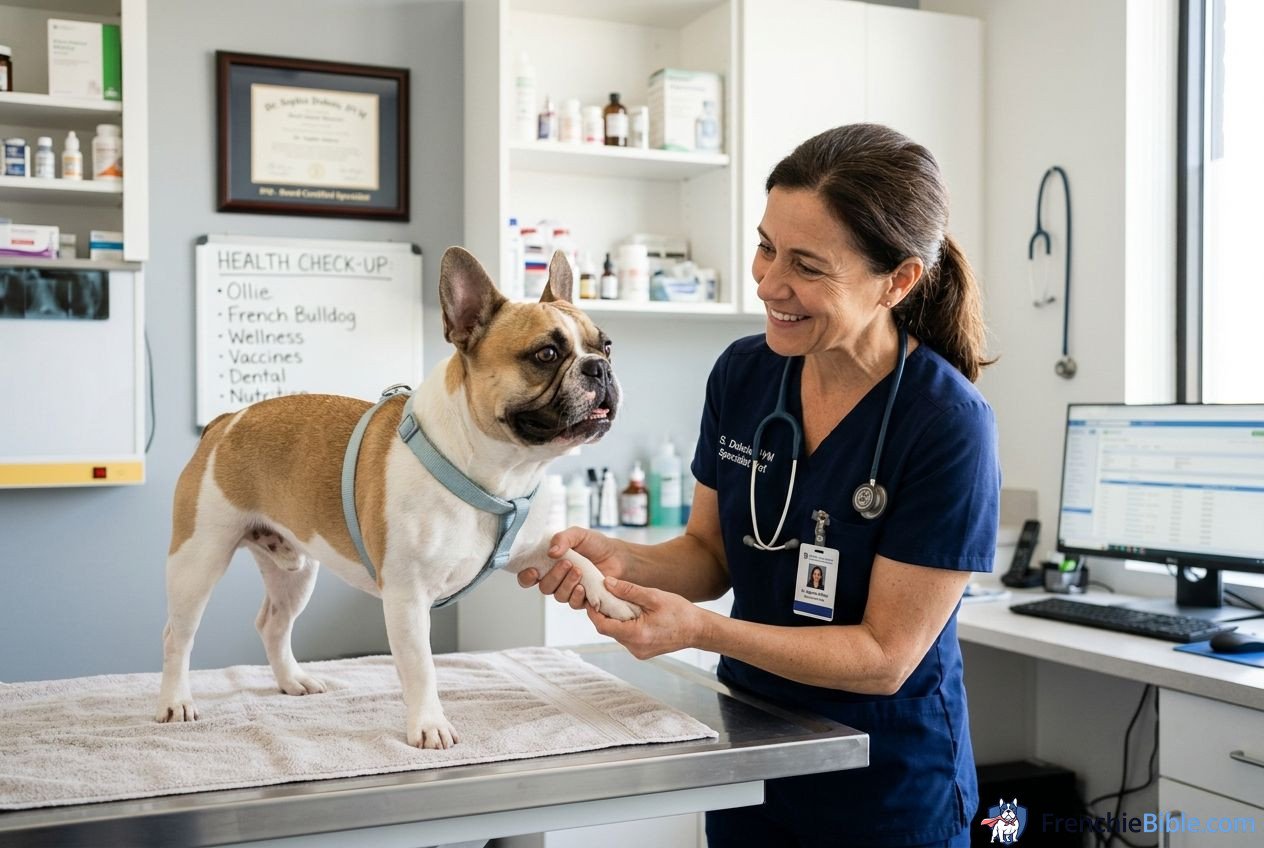
A Frug’s health requires proactive, preventative care, and owners must be financially prepared for potentially high veterinary bills throughout the dog’s life.
Brachycephalic Airway Obstructive Syndrome (BAOS)
This is the most critical and common health issue facing Frugs. BAOS is a pathological condition caused by the anatomical abnormalities of a shortened skull.
- Stenotic Nares: Pinched or narrow nostrils that restrict airflow. Many Frugs require surgery to widen their nostrils to allow them to breathe comfortably.
- Elongated Soft Palate: The soft tissue at the back of the roof of the mouth is too long for their shortened face, causing it to block the airway, leading to the classic snorting, snoring, and gagging sounds.
- Everted Laryngeal Saccules: Tissue in the airway that can turn inside out and obstruct breathing due to the increased effort required to draw in air.
- Hypoplastic Trachea: A narrower-than-normal windpipe.
Vet Advice: Never ignore loud, labored breathing, excessive snoring, or exercise intolerance. These are not “cute breed quirks”; they are signs of respiratory distress. Frugs are incredibly susceptible to heatstroke because they cannot pant efficiently to cool themselves down. They must be kept in air-conditioned environments during hot weather, and exercise should be strictly limited to cool, early mornings or late evenings.
Joint and Skeletal Anomalies
Both parent breeds are chondrodystrophic (having a form of dwarfism that affects bone growth), which makes the Frug susceptible to several skeletal issues:
- Hemivertebrae: Deformed, wedge-shaped bones in the spine. This can cause spinal curvature, pain, nerve damage, and in severe cases, paralysis.
- Intervertebral Disc Disease (IVDD): Degeneration or herniation of the discs between the spinal vertebrae, causing excruciating pain and potential paralysis. Frug owners must prevent their dogs from jumping on and off high furniture or navigating steep, long flights of stairs to protect their backs.
- Patellar Luxation: A condition where the kneecap slips out of its normal groove. It can range from mild (requiring no treatment) to severe (requiring surgical correction to prevent arthritis and chronic lameness).
- Hip Dysplasia: Abnormal development of the hip joint leading to arthritis.
Dermatological Issues and Allergies
The Frug’s adorable wrinkles are a breeding ground for bacteria and yeast.
- Skin Fold Dermatitis: Moisture, dirt, and food particles can easily become trapped in the deep facial folds, tail pockets (if they have a tightly curled tail), and vaginal folds, leading to painful, smelly infections. Daily cleaning of these folds is absolutely mandatory.
- Allergies: Frugs are highly prone to both environmental allergies (pollen, dust mites) and food allergies (beef, chicken, dairy, wheat). Allergies typically manifest as chronic ear infections, itchy skin, obsessive paw licking, and gastrointestinal upset.
Ocular Conditions
The prominent, slightly bulging eyes of the Frug are vulnerable to injury and disease.
- Corneal Ulcers: Scratches on the surface of the eye, often caused by rough play, running into bushes, or even their own eyelashes rubbing against the eye.
- Cherry Eye: A prolapse of the gland of the third eyelid, appearing as a red, swollen mass in the corner of the eye. It usually requires surgical correction.
- Dry Eye (Keratoconjunctivitis Sicca – KCS): Inadequate tear production, leading to thick, mucoid discharge and potential blindness if left untreated.
- Entropion: Eyelids that roll inward, causing the eyelashes to rub against and damage the cornea.
Lifespan Expectations
Despite their array of potential health issues, with diligent care, excellent nutrition, and proactive veterinary attention, a Frug can live a relatively long life. The average lifespan of a Frenchie Pug mix is between 10 to 14 years.
Nutrition and Diet Requirements for a Frug
Proper nutrition is the foundation of your Frug’s health, and as a French Bulldog expert and breeder, I see diet playing a massive role in mitigating or exacerbating their genetic predispositions.
Caloric Needs and Obesity Prevention
The number one nutritional issue in Frugs is obesity. These dogs love to eat, and their low-energy lifestyle means they burn very few calories. Extra weight is catastrophic for a Frug; it exacerbates BAOS (making breathing infinitely harder), puts severe strain on their vulnerable joints and spine, and drastically reduces their lifespan.
- Strict Portion Control: Never free-feed a Frug. Measure their meals precisely using a kitchen scale or a standard measuring cup.
- Monitor Body Condition: You should be able to feel their ribs without pressing hard, and they should have a visible “waist” when viewed from above.
- Treats: Limit treats to no more than 10% of their daily caloric intake. Swap high-calorie commercial treats for healthy alternatives like baby carrots, green beans, or small pieces of apple.
Best Ingredients for Brachycephalic Mixes
Because Frugs are prone to allergies and sensitive stomachs, finding the right diet can be a process of trial and error.
- High-Quality Protein: Look for diets featuring novel proteins (like salmon, lamb, venison, or duck) if your Frug shows signs of poultry or beef allergies.
- Limited Ingredients: Diets with fewer ingredients can help pinpoint food intolerances.
- Omega-3 Fatty Acids: Supplements or foods rich in fish oil are excellent for supporting joint health and reducing skin inflammation.
- Kibble Shape: Some Frugs struggle to pick up and chew standard kibble due to their flat faces and underbites. Specialized brachycephalic breed kibbles are uniquely shaped (often like a crescent moon) to be easily picked up and to encourage chewing, which aids digestion and reduces the risk of choking and excessive flatulence.
Feeding Schedule
Adult Frugs should be fed two meals a day—once in the morning and once in the evening. This helps regulate their digestion and prevents the dangerous buildup of gas (bloat). Puppies under six months require three to four smaller meals a day to support their rapid growth and prevent hypoglycemia.
Exercise, Training, and Mental Stimulation
While they are not athletes, Frugs still require daily physical and mental exercise to stay healthy and happy.
Safe Exercise Routines
- Daily Walks: A 20 to 30-minute walk per day at a moderate, steady pace is generally sufficient. Break this up into two 15-minute walks if your Frug tires easily.
- Harness Over Collar: Never walk a Frug on a neck collar. Due to their compromised airways and delicate tracheas, pulling against a collar can cause severe respiratory distress or tracheal collapse. Always use a well-fitted, Y-shaped chest harness that distributes pressure across their chest and shoulders.
- Weather Precautions: As mentioned, Frugs are highly susceptible to heatstroke. Avoid walking them when temperatures exceed 75°F (24°C) or in high humidity. In cold weather, their short single coats offer little insulation, so a warm dog sweater or jacket is necessary.
- No Swimming: Frugs are notoriously terrible swimmers. Their heavy chests, small legs, and flat faces make them sink like stones. If they are near water, they must wear a dog life jacket and be strictly supervised.
Positive Reinforcement Training
Training should begin the day you bring your Frug puppy home. Keep sessions short (5-10 minutes) and highly engaging.
- Use High-Value Rewards: Pieces of boiled chicken, freeze-dried liver, or small bits of cheese work wonders for motivation.
- Be Consistent: Do not let them get away with bad behavior just because they look cute. Set clear boundaries.
- Patience is Key: If they become stubborn and refuse to listen, end the session on a positive, easy note (like asking them to “sit”) and try again later. Do not resort to shouting or physical corrections.
Potty Training and Socialization
Potty training a Frug can test your patience. They can be notoriously difficult to housebreak. Crate training is highly recommended as a tool to aid in potty training, taking advantage of their natural instinct not to soil their sleeping area. Establish a strict schedule, taking them out immediately after waking, eating, and playing.
Socialization is equally critical. Expose your Frug puppy to a wide variety of people, environments, sounds, and other animals in a safe, controlled manner during their critical socialization window (3 to 14 weeks of age). Proper socialization prevents the development of fear-based aggression and anxiety later in life.
Grooming Needs: Keeping Your Frug Clean and Healthy
The Frug is relatively low-maintenance when it comes to their coat, but they require high maintenance in specific areas due to their anatomy.
Wrinkle Care and Cleaning
This is the most critical aspect of Frug grooming. The deep folds around their nose and under their eyes must be cleaned daily.
- Wipe: Use a soft, damp cloth, a baby wipe (unscented), or specific veterinary-approved chlorhexidine wipes to gently clean inside the folds, removing dirt, eye discharge, and food particles.
- Dry: Crucial step! After wiping, you must use a soft, dry cloth or a tissue to thoroughly dry the inside of the folds. Moisture left in the wrinkles creates a perfect environment for yeast and bacterial infections to thrive.
- Balm: If the folds appear red or irritated, apply a veterinary-approved wrinkle balm or a thin layer of Vaseline to protect the skin barrier.
Coat Brushing and Bathing
Despite having short hair, Frugs do shed, especially during seasonal changes. Brushing them once or twice a week with a rubber curry brush or a soft bristle brush will remove loose hair, distribute natural skin oils, and keep their coat looking glossy.
Bathing should be done on an “as needed” basis, typically every 4 to 8 weeks, using a mild, hypoallergenic oatmeal-based dog shampoo. Over-bathing will strip their skin of natural oils and exacerbate skin allergies. Ensure you thoroughly dry their ears and facial folds after the bath.
Nail Trimming and Ear Cleaning
Because Frugs are not heavy walkers, their nails do not naturally wear down quickly. Their nails must be trimmed or ground with a Dremel tool every 2 to 4 weeks. Long nails cause painful changes to the structure of the paw and put unnecessary strain on their already delicate joints.
Check their ears weekly. If they inherit the Frenchie’s erect ears, they are prone to catching dirt and debris. If they inherit the Pug’s folded ears, they are prone to trapping moisture and developing yeast infections. Clean the visible parts of the ear canal using a cotton ball (never a Q-tip) and a vet-recommended ear cleaning solution.
Pros and Cons of Owning a Frenchie Pug Mix
Making an informed decision requires looking at both the wonderful and the challenging aspects of the breed.
The Advantages
- Exceptional Companionship: They are intensely loyal, loving, and dedicated to their families.
- Perfect for Small Spaces: Their low exercise requirements and compact size make them excellent apartment dogs.
- Comical Personality: They are guaranteed to make you laugh with their silly antics and expressive faces.
- Low Coat Maintenance: Short coats mean no expensive grooming appointments or complex haircuts.
- Generally Good with Everyone: Usually excellent with children, strangers, and other pets if socialized properly.
The Challenges
- Severe Health Vulnerabilities: High predisposition to BAOS, spinal issues, eye problems, and allergies. Expect high veterinary bills.
- Temperature Sensitivity: Cannot tolerate heat or extreme cold; require air conditioning and careful management.
- Stubbornness: Can be difficult to train and housebreak; requires immense patience.
- Needy: Prone to separation anxiety; cannot be left alone for long hours.
- Noisy Sleepers: Be prepared for loud snoring, grunting, and snorting.
Finding a Responsible Frug Breeder
If you decide a Frug is right for you, acquiring one ethically is paramount. Because designer breeds are highly profitable, they attract puppy mills and backyard breeders who prioritize money over the health and welfare of the dogs.
Red Flags to Avoid
- Always has puppies available: Responsible breeders do not constantly produce litters.
- Will not let you see the parents: You must see the mother (and ideally the father) to assess their temperament and living conditions.
- No health testing: This is the biggest red flag. A breeder must provide proof of health testing for the parent dogs.
- Pushes the sale: Ethical breeders will interview you to ensure you are a suitable home for their puppy.
- Sells via pet stores or pure online transactions: Responsible breeders want to meet you in person.
Questions to Ask the Breeder
- Can I see the results of health screenings for the parents? (You want to see clearances for hips, patellas, eyes, and spine, as well as genetic testing).
- Have the parents had BOAS surgery? (Breeding dogs that required surgery to breathe is highly unethical).
- How do you socialize the puppies?
- Do you offer a health guarantee and a return contract? (A good breeder will mandate that the dog be returned to them if you can no longer care for it, at any point in its life).
Alternatively, consider adopting. Many French Bulldogs, Pugs, and their mixes end up in breed-specific rescues because owners were unprepared for their medical needs or stubborn personalities. Adopting gives a dog in need a loving home.
Frequently Asked Questions (FAQ)
Q1: Is a Frug hypoallergenic?
No. Frugs shed moderately throughout the year. They produce dander and saliva, which are the primary triggers for dog allergies in humans. If you have severe allergies, this is not the right breed for you.
Q2: How much does a Frug puppy cost?
The cost can vary wildly depending on location, breeder reputation, and coat color. Generally, you can expect to pay anywhere from $1,500 to $3,500 USD. Be extremely wary of “bargain” puppies, as they are likely from unethical sources and will cost you exponentially more in vet bills down the road.
Q3: Do Frugs bark a lot?
Generally, no. They are not known as nuisance barkers. They will alert you if someone is at the door, but they are more likely to communicate through a bizarre vocabulary of grunts, snorts, yodels, and whines rather than traditional barking.
Q4: Can a Frug live outside?
Absolutely not. Frugs are indoor-only dogs. Their physical inability to regulate their body temperature, combined with their intense need for human companionship, makes living outdoors cruel and physically dangerous for them.
Q5: Are Frugs smart?
Yes, they are highly intelligent. However, they use their intelligence to figure out how to get what they want, rather than to blindly obey commands. Their stubbornness should not be confused with a lack of intelligence.
Q6: Do they drool a lot?
Frugs generally do not drool as heavily as a Mastiff or a Saint Bernard, but they can be slightly messy drinkers, and you may notice some drool when they are extremely excited or waiting for food.
Q7: Why does my Frug smell like corn chips?
The “Frito feet” smell is incredibly common in dogs and is caused by natural bacteria (Pseudomonas and Proteus) that live on the paws. However, if the smell is overwhelming, accompanied by redness, licking, or comes from their facial folds or ears, it is likely a yeast infection requiring veterinary treatment.
Q8: Should I get pet insurance for my Frug?
Yes. as a French Bulldog expert and breeder, I cannot stress this enough. Given their extensive list of genetic predispositions, pet insurance is practically mandatory for a Frug owner. Ensure you enroll them as a young puppy before any “pre-existing conditions” are documented in their medical record, and choose a plan that covers hereditary and congenital conditions.
Q9: Can Frugs fly on airplanes?
Many major airlines have banned brachycephalic breeds, including French Bulldogs, Pugs, and their mixes, from flying in the cargo hold due to the high risk of death from respiratory distress caused by stress and temperature fluctuations. If they are small enough to fit in a carrier under the seat, they can usually fly in the cabin, but always check specific airline policies.
Q10: How often should I feed my Frug?
Adult Frugs should be fed twice a day. Puppies need more frequent meals (3-4 times a day) to prevent a dangerous drop in blood sugar.
Conclusion
The Frenchie Pug, or Frug, is a dog of immense character, offering a lifetime of unwavering loyalty, laughter, and affection. They are perfectly suited for apartment living and make exceptional companions for individuals and families who understand their unique needs.
However, loving a Frug means committing to their vulnerabilities. It requires a willingness to clean wrinkles daily, monitor every breath during the summer heat, patiently navigate their stubborn streaks, and financially prepare for their complex veterinary care. If you are ready to embrace the responsibilities that come with their adorable, smushed faces, the Frug will reward you by being the most devoted, entertaining shadow you could ever hope to have.
Disclaimer: We are not veterinarians and do not hold veterinary medical licenses. The information provided in this article is based on years of breeding and daily care experience and is for educational purposes only. It should not replace professional veterinary advice. Always consult with a licensed veterinarian if you have concerns about your French Bulldog’s health or before starting any new treatment.