
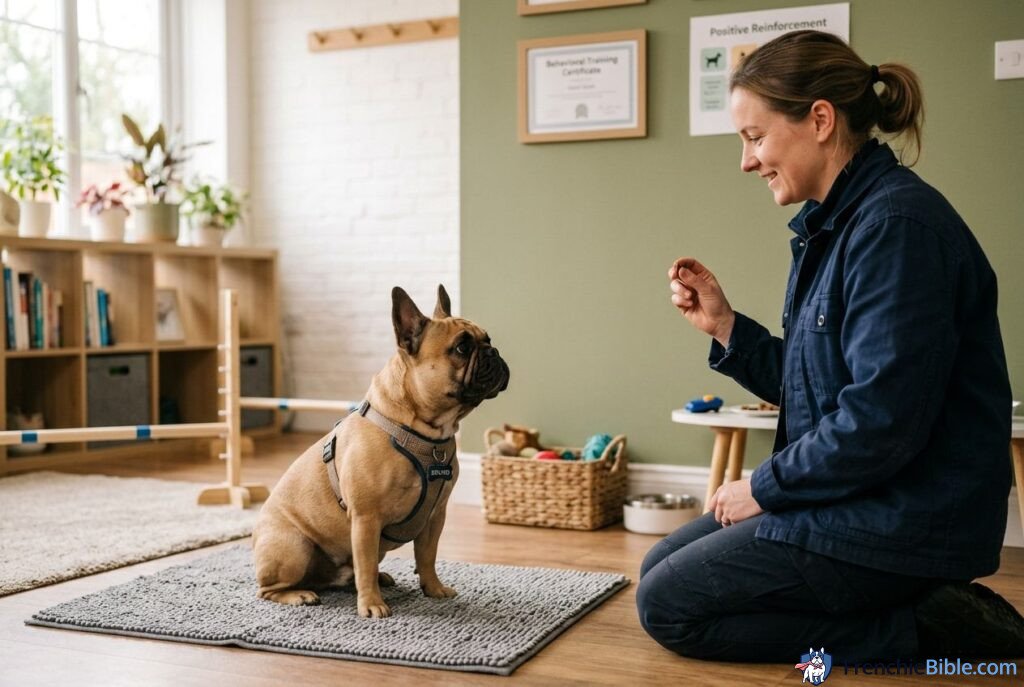
Introduction to Advanced French Bulldog Training and Behavioral Management
as a French Bulldog expert and breeder, breeding expert, and behavioral content director, I have had the privilege of working with hundreds of Frenchies, observing their unique quirks, endearing stubbornness, and profound capacity for learning. While basic crate training is universally recognized as a fundamental step in a puppy’s early developmental stages, transitioning from a simple enclosed containment space to a dynamic, command-driven safe haven represents a hallmark of advanced canine education. The “Go to Bed,” “Place,” or “House” command is arguably one of the most powerful, versatile, and essential tools in your entire training arsenal.
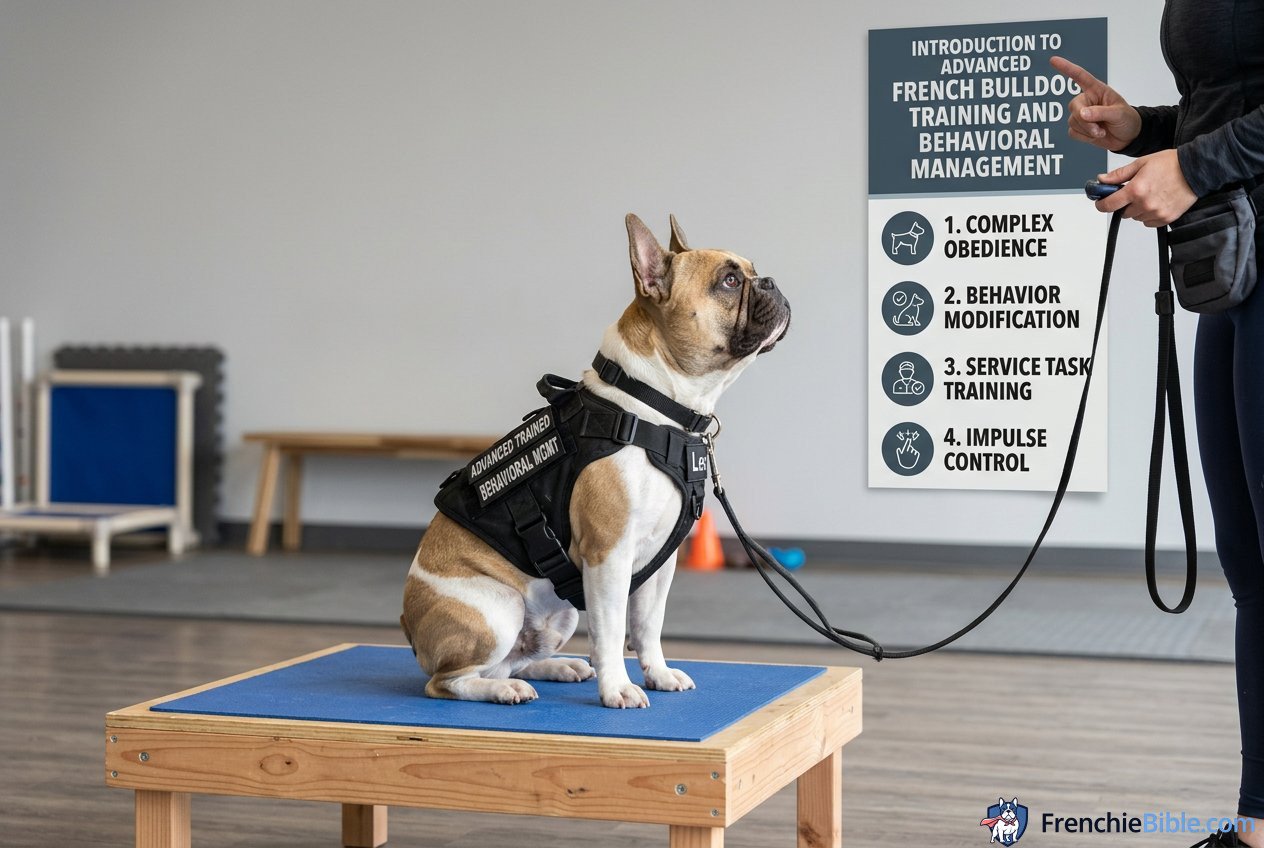
When you instruct your French Bulldog to “Go to Bed,” you are not simply issuing a dictatorial order; you are communicating a clear, structured expectation for calmness, relaxation, and spatial boundary awareness. This command fundamentally transforms the crate from a mere management tool—used only when you leave the house—into an active, psychological behavioral modification strategy. In a bustling, modern household, during chaotic meal preparations, when unexpected guests arrive at the door, or simply when your Frenchie becomes dangerously overstimulated, having a reliable “Go to Bed” cue can prevent behavioral meltdowns and foster a deeply harmonious living environment.
Related Reading: Health & Diet | Frenchie Puppy Guide
In this exhaustive, comprehensive guide, we will delve deep into the practical application, psychological underpinnings, and step-by-step execution of the “Go to Bed” command. This methodology is specifically tailored for the unique cognitive, psychological, and physical traits of the French Bulldog breed. We will explore the prerequisite foundations necessary for success, a highly detailed phased training methodology, advanced troubleshooting strategies for dealing with characteristic breed stubbornness, and critical, life-saving breed-specific health considerations that must never be overlooked during training sessions. Whether you are dealing with a rambunctious, boundary-testing puppy or attempting to reshape the habits of a mature adult dog, mastering this command will elevate your canine-human relationship and ensure your Frenchie’s long-term mental and emotional well-being.
Why the “Go to Bed” Command is Absolutely Essential for French Bulldogs
French Bulldogs are globally renowned and beloved for their affectionate, deeply comical, and sometimes incredibly obstinate personalities. They are often affectionately referred to as “Velcro dogs” because they genuinely thrive on continuous human companionship and interaction. However, this profound, deep-seated attachment can sometimes manifest as unhealthy clinginess, severe separation anxiety, or disruptive hyperactive behavior when they cannot physically be the center of attention or when their environment becomes chaotic. Teaching and thoroughly proofing the “Go to Bed” command addresses several critical behavioral and psychological needs specific to this breed.
Creating a Psychological Safe Haven and Den Environment
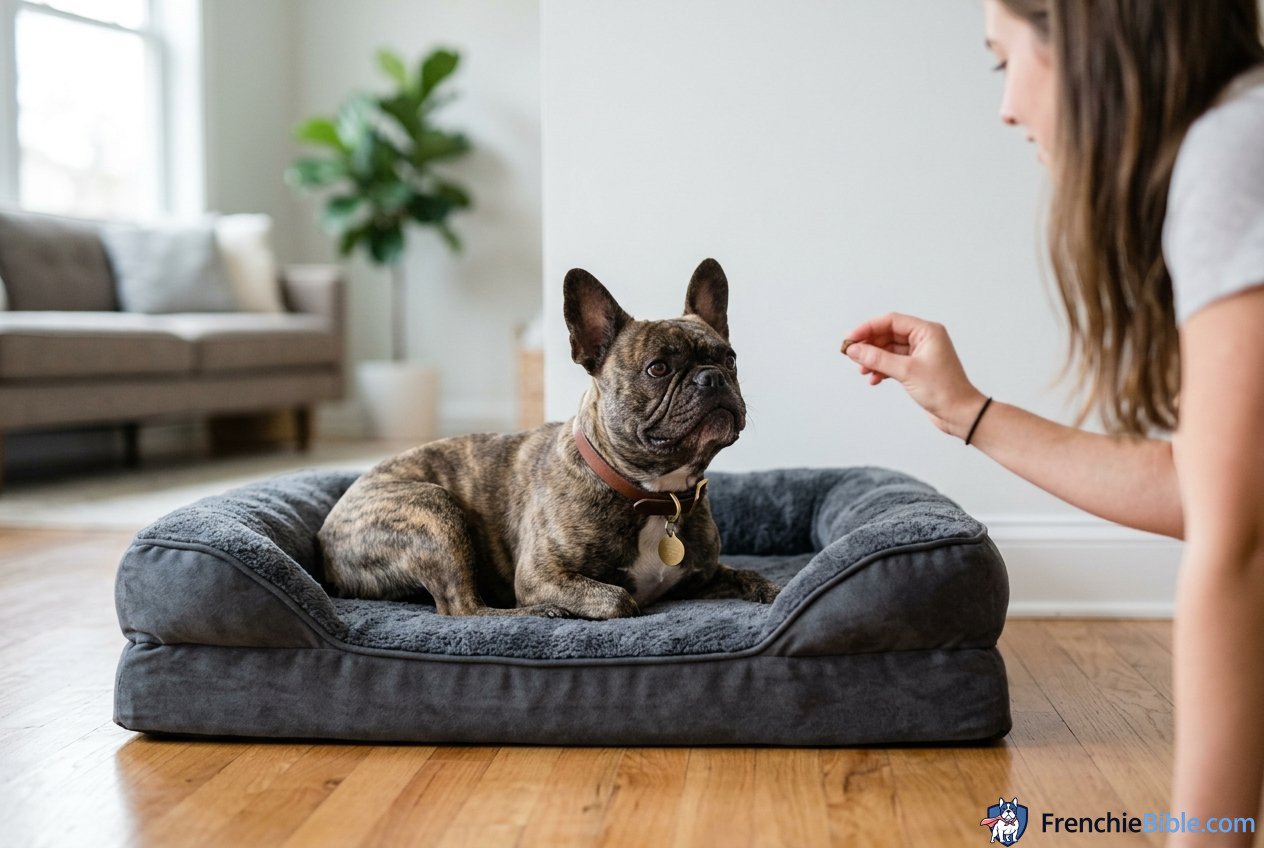
First and foremost, a crate should never, under any circumstances, be viewed or utilized as a punishment zone or a place of isolation. Instead, it must represent a psychological safe haven—a modernized version of a canine den where your dog instinctively feels secure, relaxed, entirely unbothered, and safe from the pressures of the household. By formally teaching the “Go to Bed” command using positive reinforcement, you actively empower your Frenchie to seek out this sanctuary independently.
When the world becomes too noisy, when children are playing too roughly, or when environmental stimuli become overwhelming, your dog needs to know exactly where to go to decompress and regulate their nervous system. This self-soothing capability is absolutely vital for their emotional regulation. A French Bulldog that intrinsically understands their bed is a sanctuary is a much more confident, resilient, and well-adjusted companion. They learn that they do not need to manage the environment themselves; they can simply retreat and observe from a place of profound safety.
Managing and Mitigating Separation Anxiety
Separation anxiety is a tragically prevalent issue within the French Bulldog breed, largely due to their companion-oriented breeding history spanning over a century. They were bred to sit on laps, not to guard lonely estates. Consequently, the “Go to Bed” command serves as a highly crucial, foundational component of any comprehensive separation anxiety modification protocol. It helps establish a healthy sense of independence.
By practicing this command while you are still physically present in the room, and then systematically, gradually increasing the duration of their stay and your distance from them, you teach your dog a vital lesson: they can be physically separated from you and still be completely safe, comfortable, and content. It actively breaks the vicious cycle of panic and adrenaline that often occurs when an owner prepares to leave the house, replacing that panic with a structured, predictable, and heavily rewarded routine of relaxation. Over time, the cue “Go to Bed” becomes synonymous with a state of physiological calm, lowering their heart rate and reducing cortisol levels even before you walk out the door.
Developing Impulse Control and Implementing a Relaxation Protocol
Frenchies can be surprisingly impulsive creatures despite their stocky build. Whether it is the sudden ring of the doorbell, a tempting piece of food dropping onto the kitchen floor, the sight of the leash, or children running chaotically through the living room, a Frenchie’s instinct is often to immediately investigate, enthusiastically participate, or react physically.
The “Go to Bed” command functions as an incredibly powerful behavioral interrupter and a profound impulse control exercise. It teaches the dog that the correct, most rewarding response to highly stimulating environmental triggers is not chaotic excitement or barking, but rather, actively choosing to retreat to a designated spot and settling their body down. This conscious cognitive choice to disengage from stimuli and choose relaxation is a massive developmental milestone in canine training, promoting a significantly calmer baseline demeanor overall. It essentially rewires their brain to default to calmness rather than hyper-arousal.
Enhancing Household Safety and Preventing Resource Guarding
Beyond anxiety and impulse control, the “Go to Bed” command is a crucial safety tool. When dealing with broken glass on the floor, carrying heavy groceries into the house, or opening the front door to sign for a package, having a dog underfoot is dangerous for both you and the dog. Commanding them to their bed keeps them safely out of the way. Furthermore, establishing a designated “bed” area can help mitigate resource guarding tendencies. By managing high-value treats and chews exclusively within the confines of the crate or bed, you establish clear territorial boundaries that reduce anxiety around food and possessions.
Prerequisite: Basic Crate Training Success and Foundation
Before embarking on the advanced “Go to Bed” command, it is an absolute requirement that your French Bulldog already possesses a strong, positive association with their crate or designated bed area. If your dog exhibits signs of fear, extreme reluctance, vocalization, or panic when placed in the crate, you must immediately regress and address these foundational emotional issues before attempting advanced obedience. You cannot build a solid house on a cracked foundation.
Ensuring Deep-Rooted Positive Associations
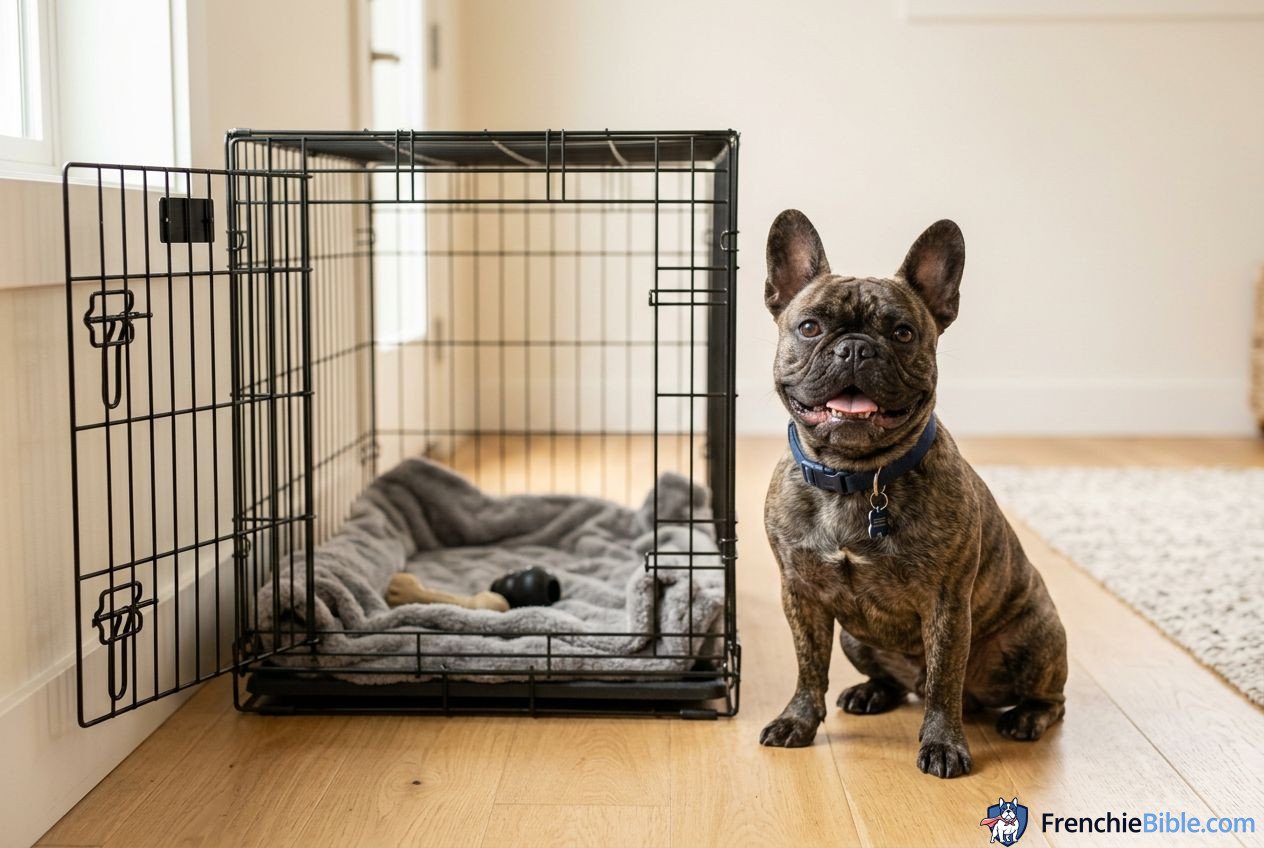
The crate must fundamentally be a place of joy, comfort, and high reward. Before initiating the formal “Go to Bed” training sequence, ensure that your dog routinely and predictably receives all their daily meals, their highest-value chew toys (like stuffed Kongs or safe marrow bones), and unexpected “jackpot” treats exclusively inside the crate. They should be observed voluntarily entering the crate to nap and rest throughout the day of their own volition.
If your dog currently only associates the crate with the negative experience of you leaving for work for eight hours, or being locked away in the dark for the night, the advanced training will be met with significant, stubborn resistance. You must spend a dedicated period—often a few weeks—actively rebuilding the crate’s value through continuous positive reinforcement. Leave the door open, hide treats inside for them to discover, and make the crate the most magically rewarding location in your entire home.
The Right Setup for Your Frenchie’s Anatomy
The physical setup of the crate is critically important, particularly for a brachycephalic (flat-faced), chondrodysplastic (dwarf-like) breed like the French Bulldog. Their unique anatomy requires specific accommodations.
- Optimal Size and Dimensions: The crate should be precisely large enough for your dog to stand up comfortably without hunching, turn around in a full circle without touching the sides, and lie down fully extended. However, it must not be so excessively large that they can designate one corner as a bathroom area and the opposite corner as a bedroom. A properly sized crate utilizes their natural instinct to keep their sleeping area clean.
- Orthopedic Bedding Support: Provide a high-quality, orthopedic, supportive bed. Frenchies are genetically predisposed to severe joint issues, hip dysplasia, and highly debilitating spinal conditions such as Intervertebral Disc Disease (IVDD). A standard thin mat is insufficient. A memory foam or high-density orthopedic mattress is essential for their long-term structural comfort and joint health.
- Strategic Location: Place the crate in a central but relatively quiet part of the home—such as a specific corner of the family room or a bedroom. It should not be isolated in a dark, lonely basement or laundry room, as this triggers their isolation distress. Conversely, it should not be placed in the middle of a high-traffic hallway where they will be constantly disturbed by foot traffic. They need to observe the family while still feeling secluded.
- Critical Climate Control: This cannot be overstated: Never place a Frenchie’s crate in direct sunlight, near a radiator, or next to a heating vent. French Bulldogs overheat extraordinarily rapidly, and their compromised airways make it impossible for them to pant effectively to cool down. Ensure excellent ambient ventilation, utilize a small clip-on crate fan if necessary, and strongly consider utilizing a specialized cooling mat inside the crate during warmer spring and summer months. Heat stroke in a crate is a fatal and entirely preventable tragedy.
The Comprehensive Step-by-Step Guide to Teaching “Go to Bed”
Training a French Bulldog requires immense patience, unwavering consistency, and a profound, empathetic understanding of what truly motivates them. Keep training sessions incredibly short—absolutely no longer than 5 to 10 minutes per session—but aim to practice multiple times a day (e.g., morning, noon, and evening). Frenchies fatigue mentally and lose interest quickly, so it is paramount to end the training session on a high note while they are still highly engaged and experiencing success.
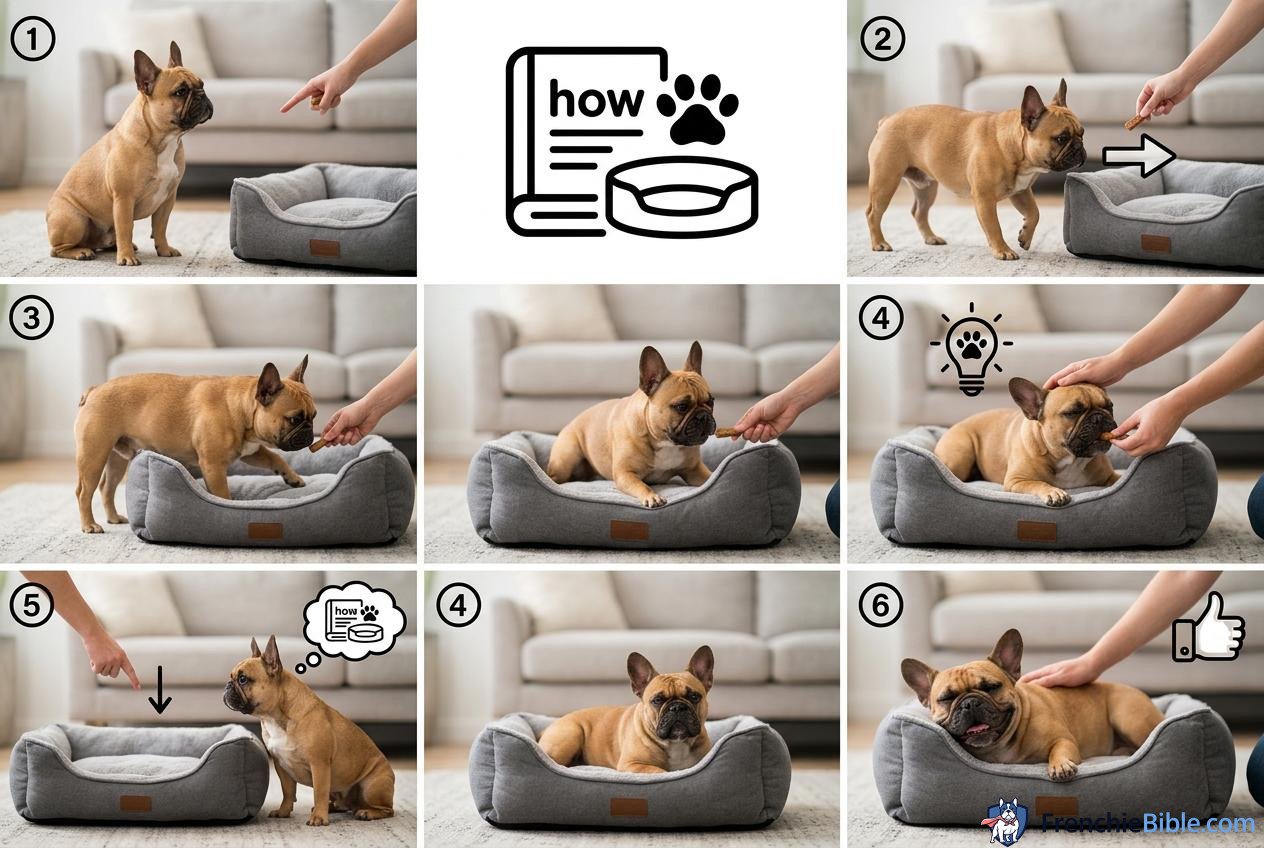
Phase 1: The Art of Luring and Rewarding (Building the Foundation)
In the absolute beginning, you must understand that your dog does not know what the English words “Go to Bed” mean. To them, it is gibberish. We must use a physical lure to guide them into the correct physical position and reward them heavily for achieving that position before we ever introduce human language.
- Prepare Exceptional, High-Value Treats: Discard the dry, boring kibble for this phase. Use something completely irresistible that your dog rarely gets to experience, such as freshly boiled chicken breast, extremely small pieces of low-fat mozzarella cheese, plain hot dogs cut into microscopic pieces, or premium freeze-dried beef liver. The smell should be intoxicating to them.
- Positioning: Stand comfortably approximately one to two feet away from the open crate door. Have a small handful of treats ready in your dominant hand.
- The Silent Lure: Hold a single treat directly to your dog’s nose, allowing them to smell and focus on it. Slowly, deliberately guide your hand containing the treat inside the crate, pointing towards the back. Crucial: Do not say any command yet. Remain completely silent. Allow the dog’s nose to follow the treat.
- The Precise Mark and Reward: The very millisecond that all four of your dog’s paws cross the threshold and are firmly inside the crate, use a sharp verbal marker (like an enthusiastic “Yes!” or a mechanical clicker) and immediately release the treat from your hand for them to eat.
- The Reset Release: Toss another small treat just outside the crate to encourage them to exit voluntarily. This resets the dog and prepares them for the next repetition.
- Repetition and Muscle Memory: Repeat this exact sequence 10 to 15 times per session. Your dog should rapidly begin offering the behavior, enthusiastically running into the crate in eager anticipation of the treat before you even fully extend your hand. This builds vital muscle memory and enthusiasm for the space.
Phase 2: Attaching and Fading the Verbal Cue
Once your dog is eagerly and predictably following your hand lure into the crate without hesitation, it is time to attach the verbal command to the action.
- Selecting the Cue: Choose your phrase and commit to it. “Go to Bed,” “Crate,” “Place,” “Settle,” or “House” are all excellent, clear choices. Pick one phrase and ensure every single family member uses the exact same word, with the exact same tone of voice, permanently. Consistency prevents confusion.
- The Sequence of Events: The order of operations in this phase is scientifically critical for associative learning. Say the command (“Go to Bed”) in a clear, cheerful voice. Pause for one full, distinct second. Then, use the physical hand lure to guide them in. The dog learns that the verbal cue predicts the hand movement, which predicts the treat.
- Mark and Reward: Exactly as in Phase 1, the moment all four paws are inside, say “Yes!” and deliver the high-value reward.
- Fading the Physical Lure: Over the course of several training sessions, intentionally make your hand gesture smaller, less exaggerated, and less reliant on holding a treat directly in front of their nose. Eventually, you should only need to casually point your finger at the crate while simultaneously giving the verbal command. Do not lean your body toward the crate; stand up straight and let the dog do the physical work.
- Waiting for the “Down” Position: To truly cement the concept of a “bed” as a place of rest, begin systematically withholding the reward until the dog not only enters the crate but actively chooses to lie down. When you send them in, if they stand there staring at you expectantly, simply wait them out. Do not repeat the command. Do not say “down.” Just wait. The exact moment their elbows and belly touch the mat, enthusiastically mark with “Yes!” and deliver a “jackpot” (three or four treats in rapid succession). They will quickly learn that lying down pays significantly better than standing.
Phase 3: Systematically Increasing Distance
Your dog now perfectly understands that “Go to Bed” means entering the crate and lying down when you are standing right next to it. The next evolutionary step is teaching them to execute this complex command from a distance, requiring them to move away from you to comply.
- The Single Step Back: Stand exactly three feet away from the crate. Give the “Go to Bed” command and point confidently toward the crate.
- Rewarding in Position: If your dog successfully goes in and lies down, you must walk over to the crate and deliver the treat directly to them while they remain inside and in the down position. Absolute Crucial Rule: Never, ever call the dog out of the crate to come to you to get the treat. If you do this, you are rewarding them for leaving the bed, completely undermining the command. The magic happens inside the crate.
- Gradual, Calculated Increases: Once they succeed 90% of the time at three feet, step back to five feet, then eight feet, then entirely across the room. If your dog gets confused, hesitates, or runs to you instead of the crate, you have increased the criteria too quickly. Do not punish them. Simply decrease the distance back to where they were last successful and rebuild their confidence before increasing distance again.
- Altering Angles and Perspectives: Practice sending your dog to the crate from different angles and from entirely different rooms. Stand in the hallway and send them into the living room crate. Stand in the kitchen and send them to the bedroom. This deeply generalizes the behavior, ensuring they cognitively understand the command regardless of their spatial relationship to the bed or your physical location.
Phase 4: Building Duration (Mastering the Art of Staying)
Entering the crate is the easy part; staying there patiently is the real psychological challenge for a high-energy French Bulldog. We must systematically, painstakingly build duration.
- The Implied “Stay”: Once they are in the bed and lying down, the concept of “stay” must be heavily implied. Do not pollute the command by saying “Go to Bed… and Stay.” “Go to Bed” inherently and permanently means go to that specific spot and remain there until explicitly released. Adding extra words only confuses the dog.
- Counting the Seconds: Send your dog to bed. Give them an initial treat for complying. Now, wait exactly two seconds. If they are still lying there calmly, give them another treat. Wait four seconds, treat. Wait eight seconds, treat. You are paying them a continuous salary for remaining stationary.
- The Power of Variable Reinforcement: Do not make the time strictly linear (2s, 4s, 6s, 8s), or your smart Frenchie will learn to mathematically anticipate the end of the exercise. Instead, use a variable schedule of reinforcement. Treat after 5 seconds, then quickly after 2 seconds, then stretch it to 10 seconds, then back to 3 seconds. This unpredictability turns the exercise into a slot machine, keeping them highly engaged, focused on you, and holding the position in anticipation of the next random payout.
- Establishing the Release Word: You absolutely must teach a clear, definitive release word, such as “Free,” “Break,” “Okay,” or “Release.” When the duration exercise is officially over, enthusiastically say your release word, clap your hands gently, and encourage them to step out of the crate. Crucial: Only deliver food rewards while they are inside the crate. The only reward for coming out upon hearing the release word is simply the freedom to move around the house. The crate must remain the place where the highest value things happen.
Phase 5: Adding Environmental Distractions (Proofing the Command)
A “Go to Bed” command is functionally useless in real life if it completely falls apart the moment something mildly interesting happens. You must systematically and safely desensitize your dog to environmental triggers while holding the command.
- Low-Level Distractions: Send your dog to bed. While they are successfully holding the position, introduce mild distractions: gently bounce a tennis ball on the floor, do a single jumping jack, drop a boring piece of kibble on the floor three feet away, or cough loudly. If they break position to investigate, do not get angry. Calmly say a non-reward marker like “Uh-oh” or “Nope,” calmly pick up the dropped item, and gently, wordlessly guide them back to the bed without delivering a reward. When they stay through the distraction, reward them heavily with high-value treats.
- Medium-Level Distractions: Progress to opening and closing the front door, turning on the noisy vacuum cleaner in an adjacent room, having a family member walk briskly past the crate, or playing sounds of dogs barking on your phone at a low volume. Reward the dog frequently for maintaining their relaxed, prone position in the crate despite the escalating noise and movement.
- High-Level Distractions (The Ultimate Test): This is where the training pays off. Ringing the actual doorbell, having a real guest enter the home, running the blender, or preparing their highly anticipated food bowl. These scenarios require immense, intense focus from your dog. In the beginning stages of proofing high distractions, you will need a remarkably high rate of reinforcement—literally treating them every 2 to 3 seconds while the intense distraction is occurring—to anchor them to the bed and prevent them from breaking the command. Slowly fade the frequency of treats as they become more reliable.
Advanced Practical Applications of “Go to Bed” Scenarios
Once the foundational training is rock solid and thoroughly proofed against distractions, you can actively integrate the “Go to Bed” command into the most chaotic, stressful parts of your daily life, transforming how your household operates.
Masterful Management of Guests at the Door
French Bulldogs are notorious, exuberant greeters. Their sheer enthusiasm often translates into frantic jumping, high-pitched whining, and chaotic zooming around the entryway. This behavior can be overwhelming for guests, frightening for small children, and medically dangerous for the dog’s fragile spine.
- The Proactive Strategy: When the doorbell rings or a knock is heard, immediately and confidently issue the “Go to Bed” command. Do not even attempt to open the door until the dog is securely in the crate and fully lying down in a relaxed posture.
- The Strict Execution: As the guest enters your home, continuously toss high-value treats to the dog in the crate to strongly reinforce their difficult decision to stay put despite their excitement. If they break position and rush the door, the guest must be instructed to immediately turn around, step back outside, and close the door, completely ignoring the dog. The dog quickly learns a profound lesson: remaining calmly in the crate is the only functional way to eventually earn the desired attention from the visitor. Rushing the door makes the visitor disappear.
- The Calm Release: Only release the dog to finally greet the guest once the initial adrenaline spike and excitement have completely dissipated, which usually takes between 5 to 10 minutes. The greeting should be calm and controlled.
Enforcing Strict Mealtime Manners
Begging at the dining table is not just an annoying, undesirable behavior; it easily leads to overfeeding and canine obesity—which is a severe, life-shortening health risk for brachycephalic Frenchies, putting immense strain on their joints and respiratory systems.
- The Proactive Strategy: Send your dog definitively to their crate or designated bed before you begin cooking meals or before you sit down at the dining table to eat.
- The Sustained Execution: Provide them with a highly engaging, long-lasting chew (such as a deeply frozen stuffed Kong, a thick bully stick, or an appropriate, safe dental chew) exactly at the moment you sit down for your meal. This provides them with a highly rewarding “job” to focus on while you eat your food in peace. If they abandon their chew and leave the bed to beg at the table, calmly, silently return them to the crate and temporarily remove the chew for a few minutes.
- Unwavering Household Consistency: Every single family member must strictly enforce this rule without exception. If one person secretly slips them food from the table, the entire training protocol is immediately compromised, and the dog will learn that begging eventually pays off. Intermittent reinforcement is the strongest way to build a bad habit.
Facilitating Stress-Free Traveling and Veterinary Visits
A French Bulldog that deeply understands and respects the “Go to Bed” command is infinitely easier, safer, and more pleasant to manage during travel, vacations, and highly stressful veterinary examinations.
- Creating a Portable Safe Space: If your dog strongly associates the command with a specific physical mat or blanket, rather than just a heavy metal crate, you can easily take that mat with you anywhere. Laying the familiar mat down in an unfamiliar hotel room, a busy friend’s house, or the chaotic vet clinic waiting room and giving the “Go to Bed” command instantly provides your dog with a recognizable, comforting boundary and a profound sense of security in an otherwise alien, terrifying environment.
- Clinical Veterinary Application: as a French Bulldog expert and breeder, I cannot overstate how much I appreciate and admire dogs that know a solid “Place” or “Bed” command. It allows the owner to safely “park” the dog on the intimidating metal scale or on a specific, non-slip mat in the exam room. This simple action drastically reduces the dog’s clinical anxiety, lowers their heart rate, prevents them from frantically pacing the room, and allows the veterinary team to perform a much smoother, safer, and far less stressful physical examination.
Comprehensive Troubleshooting for Common Challenges and Resistance
Canine training is rarely a perfectly linear upward trajectory. You will undoubtedly face frustrating setbacks, plateaus, and moments of apparent defiance. Understanding the underlying psychology and physiological reasons behind your Frenchie’s refusal is the absolute key to overcoming it successfully.
“My Frenchie Point-Blank Refuses to Go In”
If your dog, who previously knew the command, suddenly and completely refuses to enter the crate, you must approach the situation scientifically, ruling out variables one by one. First, definitively rule out physical pain. Are they experiencing a subtle flare-up of IVDD? Does jumping onto the thick orthopedic bed suddenly hurt their arthritic joints? If they are cleared medically by a vet, consider the following training variables:
- The Reward Currency is Too Low: Frenchies are shrewd negotiators; they know their exact worth. Dry, stale kibble might not cut it for advanced, high-distraction training. You must aggressively upgrade the reward currency to hot dogs, specialized liver paste, or real roasted meat. If the task is hard, the paycheck must be massive.
- The Crate Environment Has Been Poisoned: If you recently, perhaps out of frustration, used the crate as a “timeout” or punishment after a potty accident or destructive chewing, the dog now associates that space with your anger and negativity. You must completely restart the training at Phase 1, spending a full week or more simply tossing treats into the crate with the door wide open, rebuilding trust in the environment.
- Stubbornness vs. Genuine Confusion: Frenchies are undeniably smart, but they process information differently than working breeds. Sometimes they aren’t actively being stubborn; they genuinely do not understand what you want because you raised your criteria or expectations far too quickly. Take a humble step back to the previous phase where they were last 100% successful and carefully rebuild from there.
Excessive Whining, Crying, and Barking After Entering the Bed
Vocalization immediately after successfully complying with the command usually indicates deep frustration, a lack of impulse control, or anxiety specifically concerning the duration of the stay.
- Do Not Inadvertently Reward the Noise: If you let them out of the crate, walk over to pet them, or even yell “Quiet!” at them while they are barking, you are actively giving them attention and thus reinforcing the noise. You must rigidly wait for a minimum of 3 to 5 seconds of absolute, uninterrupted silence before releasing them or delivering a treat.
- Drastically Decrease Duration Expectations: If they are whining, you pushed them too far, too fast. If they reliably whine after 30 seconds, your new, immediate training goal is only 20 seconds. Build solid, quiet success at 20 seconds for several days before ever attempting 30 seconds again. Set them up to succeed, not to fail.
- Alleviating Mental Boredom: Give them something cognitive to do. A frozen lick mat coated in peanut butter or a complex puzzle toy placed inside the crate effectively redirects their mental and physical energy from vocalizing in frustration to foraging and licking, which naturally releases calming endorphins.
Prematurely Breaking the “Stay” Command (The Jack-in-the-Box)
The “jack-in-the-box” routine—where the dog enthusiastically goes in, briefly touches the mat with their paws, and instantly sprints back out to you for the treat—is incredibly common in food-motivated breeds.
- Strictly Withhold the Reward: The dog only earns the treat after they lie down completely and remain there in a relaxed posture. If they pop out, say a neutral, emotionless “Nope,” do not deliver the food, and start the sequence over. They must learn that leaving the bed breaks the contract.
- Strategic Body Blocking: Stand squarely in the doorway of the crate (without actually closing the metal door) to physically, but gently, block their exit path. Wait patiently for them to realize they cannot leave, settle down, reward them heavily, and then take a half-step backward to open the space.
- Massively Increase the Rate of Reinforcement: If they consistently break after exactly 5 seconds, it means you need to be feeding them a tiny treat every 3 seconds to keep them physically anchored to the bed. Slowly, methodically stretch the time between treats as their impulse control muscles strengthen.
Crucial French Bulldog Specific Considerations
As a dedicated breed specialist, I must emphatically state that training a French Bulldog is fundamentally not like training a Golden Retriever, a German Shepherd, or a Border Collie. Their unique, highly specialized anatomy and distinct physiology dictate entirely how we must approach physical exertion and behavioral modification.
Brachycephalic Health Hazards and Crate Climate Management
French Bulldogs universally suffer from varying degrees of Brachycephalic Obstructive Airway Syndrome (BOAS). Their genetically shortened muzzles, elongated soft palates, narrow tracheas, and stenotic nares (pinched nostrils) make panting an incredibly inefficient and sometimes dangerous way to cool their bodies down.
- Stress Exponentially Exacerbates Breathing Issues: If your Frenchie becomes emotionally stressed, frustrated, or overly excited during crate training, their respiratory rate increases dramatically. Because they cannot move air efficiently, this increased effort can lead to rapid swelling in the mucosal lining of the airway, creating a dangerous, life-threatening respiratory crisis. Training must be entirely stress-free, deeply positive, and broken into tiny, manageable sessions.
- Vigilant Temperature Monitoring: Never, ever use the “Go to Bed” command as a forced timeout if the ambient room temperature is warm or humid. Even a few minutes of mild emotional stress or physical panting in a warm environment can be rapidly fatal for a Frenchie. Ensure the crate is located in a well-ventilated, air-conditioned room. Strongly avoid covering the crate with a heavy blanket, as this acts like an oven, trapping radiant body heat and severely reducing life-saving airflow.
Stubbornness vs. Confusion: The Cognitive Training Approach
Frenchies are fiercely independent thinkers. They were historically bred primarily as ratters in urban environments and subsequently as lap-warming companion dogs, not for the unquestioning, highly responsive obedience seen in herding or retrieving breeds.
- Motivation is the Absolute Key: A Frenchie will constantly evaluate your requests and ask, “What is in it for me? Is the payout worth the effort?” If the food reward does not heavily outweigh the physical effort required or the intense desire to do something else (like bark at the mail carrier or chase the cat), they will simply ignore your command. You must control the high-value resources. Their daily kibble allowance can be utilized entirely during training sessions to vastly increase their motivation to work for you.
- Keep it Exceptionally Fun and Engaging: Drill-sergeant style, highly repetitive, militant obedience does not work with this sensitive breed. They will simply shut down emotionally, refuse to make eye contact, and stubbornly adopt a “statue” posture. Training must feel like a highly engaging, rewarding game. Use a high-pitched, happy tone of voice, be physically animated, and wildly celebrate their small successes to keep their spirits high.
Frequently Asked Questions (FAQ)
How long does it typically take for an average Frenchie to fully learn the “Go to Bed” command?
Every single dog learns at their own unique, individual pace. Teaching the basic physical action of running into the bed (Phases 1 and 2) might take just a few days of highly consistent, heavily rewarded training. However, systematically building the duration to stay there reliably for 30 minutes with extremely high environmental distractions (such as hosting a dinner party with multiple guests) can legitimately take several months of dedicated, patient, daily practice. In canine training, consistency is always vastly more important than speed. Rushing the process guarantees failure.
Can I effectively use the “Go to Bed” command for a plush dog bed instead of a wire crate?
Absolutely, without question. The “Place,” “Go to Bed,” or “Settle” command can be cognitively mapped to any clearly defined, designated physical boundary—a wire crate, a flat training mat, a raised Kuranda cot, or a fluffy living room dog bed. In fact, deliberately teaching the command on a portable, easily folded mat is highly recommended, as it allows you to take their established “safe space” anywhere, from busy outdoor cafes to the highly stressful veterinarian’s office. The psychological training steps and criteria remain exactly the same regardless of the physical object used.
Should I physically close and latch the crate door every single time I use the “Go to Bed” command?
No. Advanced, reliable “Go to Bed” training fundamentally relies on developing the dog’s internal self-control and cognitive discipline, not relying on a physical metal barrier to force compliance. The ultimate goal of this training is for the dog to remain calmly in the bed simply because you asked them to, even with the door wide open and tempting things happening nearby. Closing and latching the door is certainly appropriate for forced puppy naps, securing the dog for nighttime sleeping, or keeping them safe when you leave the house. However, during active, supervised impulse-control training sessions, intentionally leaving the door open builds true, lasting cognitive discipline and mutual respect.
What are the absolute best, most effective treats to use specifically for this type of duration training?
Because you will be rewarding your dog very heavily and frequently during the duration and distraction phases, strongly avoid large, dry, crunchy treats (like large biscuits) that take a long time to chew, generate crumbs, and fill the dog’s stomach up far too quickly. Use very soft, highly aromatic, “pea-sized” treats. Plain boiled chicken breast shredded finely, tiny, microscopic cubes of low-fat mozzarella cheese, premium freeze-dried beef liver, or specialized, soft training treats are excellent choices. Ensure the treats are highly palatable and smell incredibly strong to keep the Frenchie’s notoriously short attention span highly focused on you and the task at hand.
Is it genuinely too late to teach a stubborn, older French Bulldog this specific command?
It is absolutely never too late to train a dog. The old adage “You can’t teach an old dog new tricks” is a complete and utter myth in the behavioral world. Older, mature Frenchies might take slightly longer to mentally process the new rules and break deeply ingrained old habits, but they are fully and completely capable of learning the “Go to Bed” command. In fact, for senior dogs who may be suffering from early cognitive decline, vision loss, or chronic joint pain, having a highly structured, consistently rewarded command that tells them exactly where to go to be safe and relax can be incredibly comforting, drastically reducing their overall anxiety levels in a busy household.
Conclusion
Mastering the “Go to Bed” command is not merely an obedience trick; it is a profound, transformative journey for both you and your beloved French Bulldog. It fundamentally elevates your relationship from simple, chaotic cohabitation to active, respectful, and structured two-way communication. By systematically providing a clear, highly rewarding framework and setting achievable boundaries, you teach your Frenchie the invaluable, lifelong skills of emotional self-regulation, impulse control, and psychological independence.
Remember, as a dedicated French Bulldog breed specialist and behaviorist, I must always emphasize that infinite patience, extremely high-value rewards, and an acute, unwavering awareness of their unique physical limitations are the absolute keys to unlocking their incredible potential. Celebrate the smallest of victories with genuine enthusiasm, maintain absolute consistency in your household expectations, and always ensure that their crate or bed remains a sacred sanctuary of peace, comfort, and absolute safety. With dedicated time and unwavering consistency, the historically chaotic, stressful moments at the front door, the mail delivery, or the dinner table will be beautifully replaced by the serene sight of a calm, deeply relaxed French Bulldog, happily and contentedly resting in their designated bed.
Disclaimer: We are not veterinarians and do not hold veterinary medical licenses. The information provided in this article is based on years of breeding and daily care experience and is for educational purposes only. It should not replace professional veterinary advice. Always consult with a licensed veterinarian if you have concerns about your French Bulldog’s health or before starting any new treatment.