
Introduction: The Heartbreak of an Itchy Frenchie
as a French Bulldog expert and breeder specializing in French Bulldogs and a lifelong breeder of this affectionate, comical breed, I’ve seen countless owners walk into my breeding program feeling utterly defeated. Their beloved Frenchie is constantly scratching, biting at their paws, rubbing their face against the carpet, and suffering from bright red, inflamed skin. The sheer distress this causes—not just to the dog, but to the entire family—is immense.

If your French Bulldog is experiencing widespread redness and relentless itching, they might be battling a common yet complex condition known as Atopic Dermatitis (often referred to simply as “atopy”). Because of their unique genetics and physical conformation, French Bulldogs are disproportionately prone to skin issues. However, an atopic dermatitis diagnosis is not a life sentence of discomfort. With a deep understanding of the condition, a proactive management plan, and a strong partnership with your vet, you can restore your Frenchie’s skin health and give them back their happy, playful life.
Related Reading: Training & Behavior | Frenchie Puppy Guide | Best Food for Frenchies
In this exhaustive guide, we will dive deep into everything you need to know about atopic dermatitis in French Bulldogs. We will explore the root causes, identify the subtle and obvious symptoms, decode the diagnostic process, and outline the most effective, cutting-edge treatment strategies available in veterinary medicine today.
What is Atopic Dermatitis in French Bulldogs?
Canine atopic dermatitis (CAD) is a genetically predisposed, chronic inflammatory and pruritic (itchy) allergic skin disease. In simpler terms, it is an allergic reaction to common environmental substances (allergens) that are either inhaled or absorbed directly through the skin barrier. While humans typically experience environmental allergies as respiratory issues (hay fever, sneezing, runny nose), dogs manifest these allergic reactions primarily through their skin.
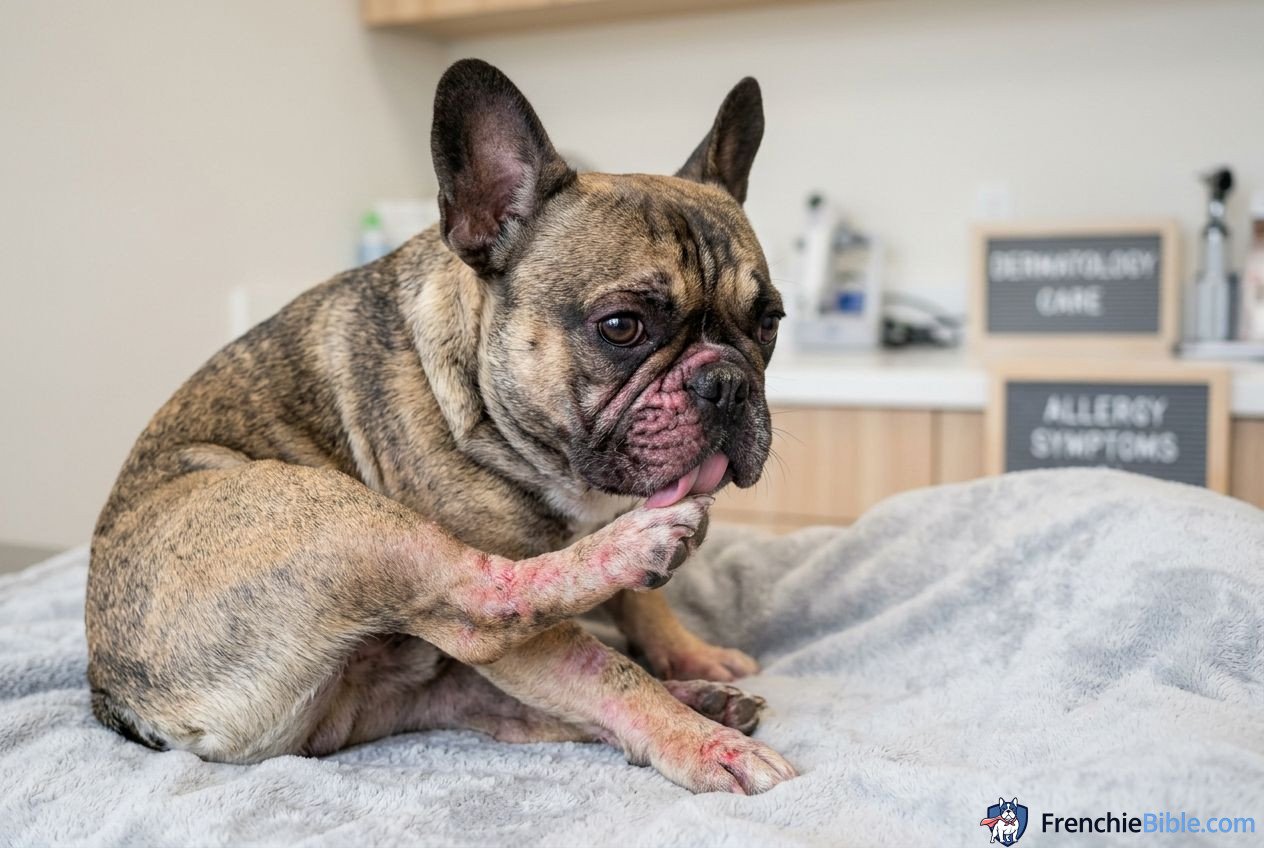
When a French Bulldog with atopic dermatitis comes into contact with a trigger, their immune system essentially misfires. It incorrectly identifies a harmless substance—like pollen or dust—as a dangerous invader. This triggers a massive release of inflammatory mediators, most notably histamine, which causes intense itching, redness, and swelling in the skin.
The Frenchie Predisposition: Why Are They So Susceptible?
Why does it seem like every other French Bulldog has skin allergies? The answer lies in a combination of genetics, skin anatomy, and the breed’s historical development.
- Genetic Susceptibility: Atopy is highly heritable. Through generations of breeding for specific physical traits, a genetic predisposition to a hyperactive immune system and a defective skin barrier has unfortunately been passed down within the French Bulldog gene pool.
- Defective Epidermal Barrier: Research shows that dogs with atopic dermatitis often have a compromised skin barrier. Think of the skin as a brick wall; the skin cells are the bricks, and the lipids (fats) are the mortar. In atopic Frenchies, the “mortar” is weak or lacking, allowing allergens to easily penetrate the skin and trigger an immune response, while also allowing essential moisture to escape, leading to dry, flaky skin.
- Anatomical Factors: The beloved wrinkles and folds that make Frenchies so adorable also create perfect micro-environments for allergens to become trapped and for secondary bacterial and yeast infections to thrive. Furthermore, their low-to-the-ground stature means their bellies, chests, and paws are constantly brushing against grass, pollen, and dust mites.
Common Environmental Triggers (Allergens)
The triggers for atopic dermatitis are typically substances found in the dog’s everyday environment. These can be seasonal or non-seasonal:
- Dust Mites and Storage Mites: One of the most common non-seasonal triggers. These microscopic creatures live in carpets, bedding, upholstery, and even dry dog food kibble.
- Pollens (Trees, Grasses, Weeds): These are typically seasonal. A Frenchie allergic to tree pollen may flare up in the spring, while grass and weed allergies often peak in the late summer and fall.
- Mold Spores: Found both indoors (in damp areas like basements or bathrooms) and outdoors (in decaying leaves or damp soil), mold can trigger year-round or seasonal flare-ups.
- Animal Dander and Feathers: Some dogs can actually be allergic to the dander of other pets in the home, or even to human dander.
- Flea Saliva: While Flea Allergy Dermatitis (FAD) is technically a separate condition, many atopic dogs are concurrently highly allergic to flea bites. A single flea bite can trigger a massive flare-up in an atopic Frenchie.
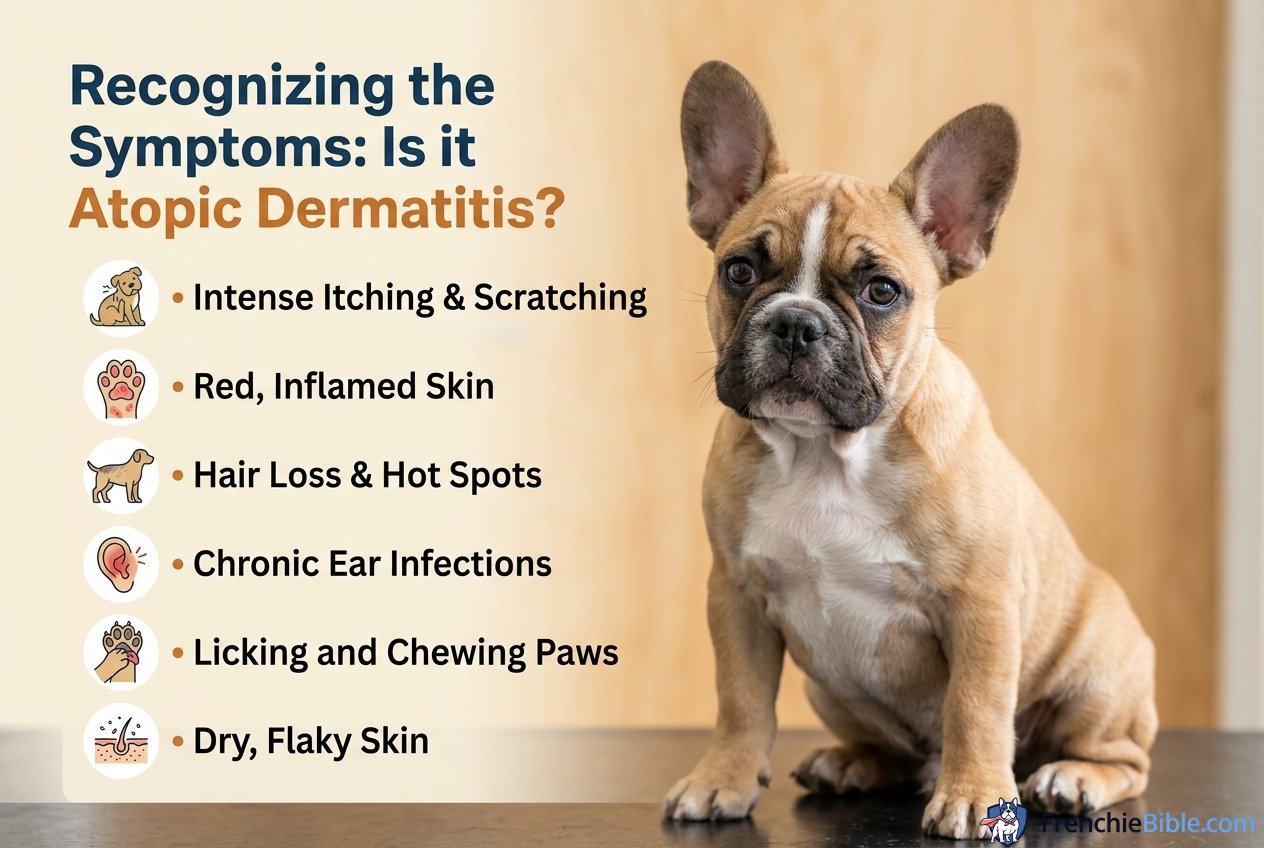
Recognizing the Symptoms: Is it Atopic Dermatitis?
The clinical signs of atopic dermatitis typically first appear when a French Bulldog is between 6 months and 3 years of age. If your older Frenchie suddenly develops allergies out of nowhere, other conditions (like food allergies, endocrine disorders, or cutaneous lymphoma) must be strictly ruled out first.
Early Warning Signs and Behavioral Indicators
The earliest sign is almost always pruritus (itching). However, dogs express itching in ways other than just scratching with their hind legs. Watch out for these behaviors:
- Paws: Licking, chewing, or biting at the paws (often causing rust-colored saliva staining on the fur). The paws are in constant contact with the ground, making them prime targets for allergen absorption.
- Face and Ears: Rubbing the face or muzzle against carpets, furniture, or your legs. Frequent head shaking or scratching at the ears.
- Ventral Abdomen and Groin: Excessive licking or dragging the belly on the floor.
- Armpits (Axillae): Scratching at the armpits or chest area.
- Perineum: Scooting the rear end on the floor or excessive licking of the anal area.
Visual Skin Changes (The “Red and Itchy” Phase)
As the allergic response progresses and the scratching continues, you will start to see physical changes on the skin:
- Erythema (Redness): The skin becomes bright red and inflamed, particularly in the armpits, groin, belly, inside the ears, and between the toes.
- Alopecia (Hair Loss): Constant scratching and licking cause the hair to break or fall out in patches.
- Excoriations: Scratches, scabs, and open sores created by the dog’s own nails and teeth.
- Papules and Pustules: Small, red bumps or pus-filled pimples may appear, often indicating a secondary bacterial infection.
The Itch-Scratch Cycle and Secondary Infections
The most destructive aspect of atopic dermatitis is the “itch-scratch cycle.” The allergy causes the itch; the dog scratches, which further damages the already fragile skin barrier; this damage allows more allergens to enter, causing more inflammation, and allows normal skin bacteria and yeast to overgrow and cause severe infections.
These secondary infections are often what make the dog look and feel absolutely miserable:
- Staphylococcal Pyoderma (Bacterial Infection): Causes crusting, scaling, pustules, and a foul odor.
- Malassezia Dermatitis (Yeast Infection): Causes intense redness, greasy/waxy skin, hyperpigmentation (darkening of the skin), lichenification (elephant-like thickening of the skin), and a distinct “fritos” or musty, yeasty smell.
- Otitis Externa (Ear Infections): Up to 80% of dogs with atopic dermatitis will suffer from chronic ear infections, often fueled by yeast or bacteria thriving in the inflamed ear canal.
Diagnosing Atopic Dermatitis in French Bulldogs
It is crucial to understand that there is no single “magic blood test” that diagnoses atopic dermatitis. Instead, CAD is a diagnosis of exclusion. This means your veterinarian must systematically rule out every other possible cause of itchy, red skin before settling on an atopic dermatitis diagnosis.
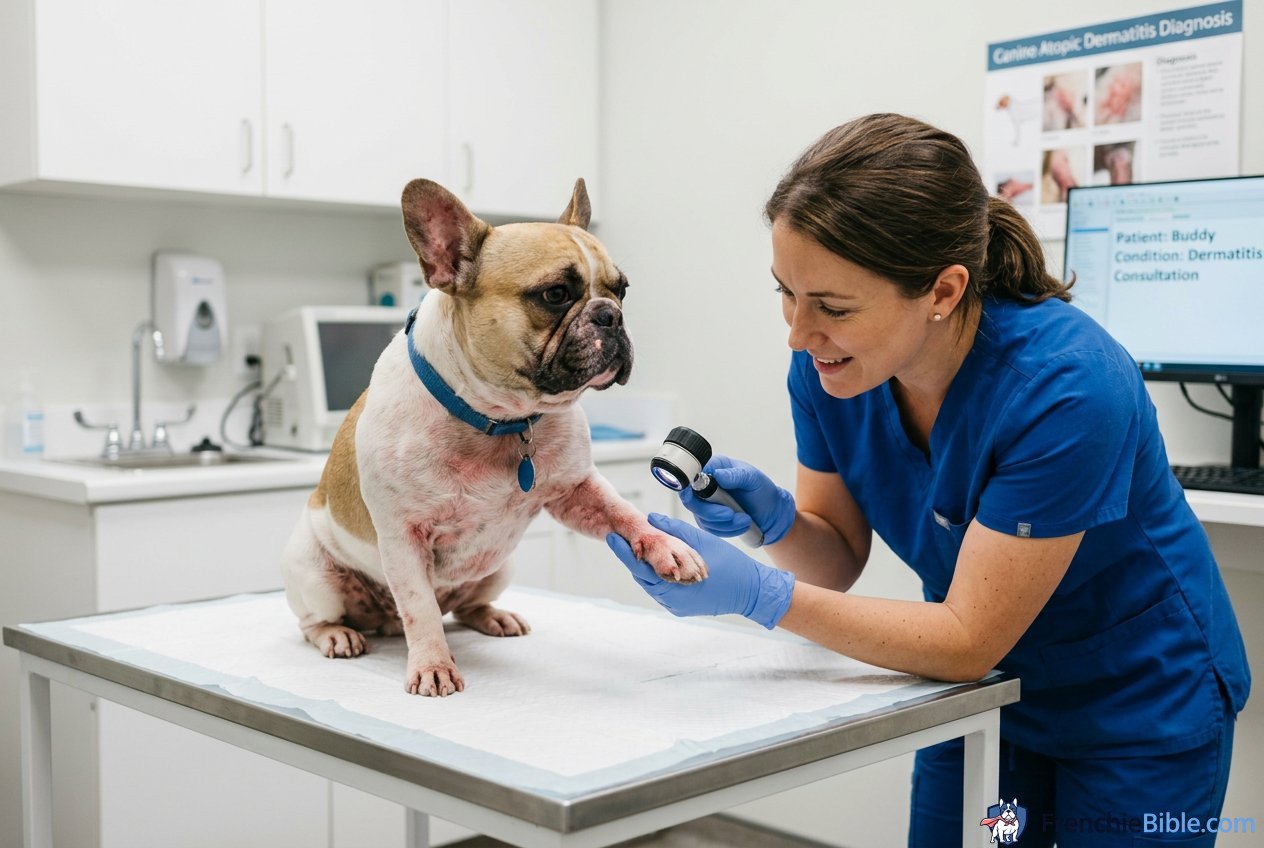
The Step-by-Step Diagnostic Process
- Thorough History and Physical Exam: Your vet will ask detailed questions about the onset of the itching, seasonality, the dog’s diet, parasite prevention, and the environment. They will perform a full-body examination to identify the pattern of the skin lesions.
- Ruling out Parasites: The first and easiest step is to rule out fleas, mites (like Sarcoptes or Demodex, the latter being very common in young Frenchies), and lice. Your vet will perform skin scrapings, tape preparations, and flea combings. Crucially, your Frenchie must be on a strict, vet-approved, year-round prescription flea and tick preventative.
- Treating Secondary Infections: Before a true diagnosis can be made, any existing bacterial or yeast infections must be treated with appropriate antibiotics or antifungals (topical or systemic). Infections cause itching on their own, masking the underlying allergy.
- The Food Trial (Elimination Diet): Because the symptoms of food allergies and environmental allergies look exactly the same, a strict 8-to-12-week dietary elimination trial is mandatory. The dog is fed exclusively a prescription hydrolyzed protein diet or a novel protein diet (e.g., kangaroo, rabbit) with zero treats, table scraps, or flavored medications. If the itching resolves, it’s a food allergy. If it doesn’t, we lean heavily toward atopic dermatitis.
Allergy Testing: Intradermal and Serology
Once atopic dermatitis is diagnosed via exclusion, allergy testing is the next step. Note: Allergy testing is not used to determine IF a dog has allergies; it is used to determine WHAT specific environmental allergens they react to, primarily for the purpose of creating a customized immunotherapy vaccine.
- Intradermal Skin Testing (IDST): Considered the gold standard, usually performed by a veterinary dermatologist. The dog is sedated, a patch of hair is shaved, and tiny amounts of various allergens are injected into the skin to observe for a localized hive-like reaction.
- Serum Allergy Testing (Blood Test): A blood sample is taken to measure the levels of allergen-specific IgE antibodies. It is more convenient but can sometimes yield false positives.
Comprehensive Treatment Strategies for Frenchie Atopic Dermatitis
There is no “cure” for atopic dermatitis. It is a lifelong condition that requires lifelong management. The goal of treatment is to reduce the itching to an acceptable level, heal the skin barrier, prevent secondary infections, and vastly improve the French Bulldog’s quality of life.
A successful management plan requires a multi-modal approach, combining different therapies tailored to the individual dog’s specific needs and the severity of their condition.
1. Immediate Itch Relief and Inflammation Control (The “Fire Extinguishers”)
When a Frenchie is in the midst of a severe flare-up, we need to stop the itch immediately to break the cycle and prevent self-mutilation.
- Oclacitinib (Apoquel®): A highly targeted, fast-acting oral medication that blocks the specific inflammatory pathways (JAK enzymes) responsible for itching in dogs. It provides relief within hours and is incredibly effective. It is generally safe for long-term use in dogs over 12 months old, though regular bloodwork is recommended.
- Lokivetmab (Cytopoint®): A revolutionary biological therapy. It is a monoclonal antibody administered as a subcutaneous injection every 4 to 8 weeks. It specifically targets and neutralizes interleukin-31 (IL-31), a key protein that triggers the itch signal to the brain. It is extremely safe, bypasses the liver and kidneys, and can be used in dogs of any age.
- Corticosteroids (Prednisone, Temaril-P): Historically the mainstay of allergy treatment, steroids are highly effective and inexpensive at shutting down inflammation. However, they come with significant short-term side effects (increased thirst, urination, appetite) and severe long-term side effects (liver damage, immunosuppression, muscle wasting). We now reserve systemic steroids for short, acute flare-ups and avoid long-term use whenever possible.
- Antihistamines (Benadryl, Zyrtec, Claritin): While frequently used by owners, studies show antihistamines are only effective in about 15-20% of dogs for treating CAD. They are better used as a preventative measure for mild cases or in conjunction with other therapies, rather than as a primary treatment for severe flare-ups.
2. Long-Term Immunomodulation
For severe, year-round cases, we need medications that alter the way the immune system reacts.
- Cyclosporine (Atopica®): An oral immunosuppressant that dampens the hyperactive immune response. It is highly effective but takes 4 to 6 weeks to reach full efficacy. It requires close monitoring by a vet and can have gastrointestinal side effects initially.
3. Allergen-Specific Immunotherapy (ASIT) – “Allergy Shots or Drops”
This is the only therapy that addresses the root cause of the disease by attempting to retrain the immune system.
Based on the results of allergy testing (skin or blood), a customized serum is formulated containing tiny amounts of the specific allergens the dog reacts to.
- Subcutaneous Injections: Administered by the owner at home on a specific schedule.
- Sublingual Immunotherapy (SLIT): Drops given under the dog’s tongue daily.
The goal is to gradually expose the immune system to the allergens, building up tolerance over time. Immunotherapy has a 60-70% success rate, but it requires patience—it can take 6 to 12 months to see significant improvement.
Home Remedies, Skin Barrier Repair, and Supportive Care
Medical intervention is only half the battle. As a Frenchie owner, your daily management routine is critical for keeping your dog comfortable and preventing costly vet visits.
Top-Tier Topical Therapies and Bathing Protocols
Frequent bathing was once discouraged, but in veterinary dermatology today, it is considered essential for managing atopy. Bathing mechanically removes allergens from the skin, washes away inflammatory debris, and reduces bacterial and yeast overgrowth.
- Medicated Shampoos: If secondary infections are present, use prescription shampoos containing chlorhexidine (for bacteria) and miconazole or ketoconazole (for yeast).
- Soothing and Barrier-Repair Shampoos: For routine bathing between flare-ups, use shampoos containing ceramides, phytosphingosine, colloidal oatmeal, or essential fatty acids to help rebuild the defective skin barrier.
- The 10-Minute Rule: When using medicated shampoos, you MUST leave the lather on the skin for a full 10 minutes before rinsing, or the active ingredients will not have time to work.
- Wipes and Mousse: Use chlorhexidine/ketoconazole wipes daily to clean the facial folds, tail pocket, and between the toes. This prevents the micro-environments where yeast thrives.
Dietary Adjustments and Nutritional Supplements
Even if your Frenchie does not have a true food allergy, optimizing their nutrition can strengthen their skin from the inside out.
- Omega-3 Fatty Acids (EPA and DHA): High-quality fish oil supplements are crucial. They possess natural anti-inflammatory properties and help improve the lipid layer of the skin barrier. The dosage required for dermatological benefits is much higher than what is found in standard dog food, so supplementation is usually necessary.
- Skin-Supportive Diets: Many premium pet food brands offer prescription or over-the-counter diets specifically formulated for sensitive skin, fortified with optimal ratios of omega-3 and omega-6 fatty acids, antioxidants, and easily digestible proteins.
Environmental Control Management
While you cannot put your Frenchie in a bubble, you can reduce their overall allergen load:
- Wipe Down Paws: After every walk, wipe your dog’s paws, belly, and chest with a damp cloth or hypoallergenic pet wipe to physically remove pollens and grass.
- Air Purifiers: Use HEPA air filters in the rooms where your dog spends the most time to reduce indoor dust mites and airborne allergens.
- Manage Dust Mites: Wash dog bedding weekly in hot water. Vacuum carpets and upholstery frequently using a vacuum with a HEPA filter. Consider keeping the dog out of rooms with heavy carpeting.
- Humidity Control: Use dehumidifiers in damp areas of the home to prevent mold growth.
The Breeder’s Perspective: Managing Genetics and Future Generations
As a responsible French Bulldog breeder, dealing with atopic dermatitis is a significant challenge. Because CAD is highly heritable, ethical breeding practices are the first line of defense against the proliferation of this disease in the breed.
- Strict Selection: Dogs diagnosed with severe atopic dermatitis, requiring constant medical management just to survive comfortably, should absolutely not be included in breeding programs.
- Tracking Pedigrees: Breeders must meticulously track the health history of their lines. If a specific pairing consistently produces puppies that develop severe allergies, that pairing must not be repeated.
- Transparency with Buyers: Reputable breeders will be honest with prospective puppy buyers about the breed’s predisposition to skin issues and will educate them on early warning signs and preventative care.
- Focus on Structure: Breeding for more moderate physical traits—less extreme facial wrinkling, more open nares, and slightly longer muzzles—not only improves respiratory health (BOAS) but also reduces the deep skin folds that harbor infections secondary to allergies.
When to See the Vet Immediately
Do not try to manage severe atopic dermatitis on your own with over-the-counter remedies. You must seek veterinary care if you observe:
- Uncontrollable Itching: If the dog cannot sleep, eat, or rest due to scratching.
- Bleeding or Oozing Sores: Open wounds are highly susceptible to severe infections.
- Foul Odor: A strong, yeasty or putrid smell indicates a significant secondary infection.
- Swelling of the Face or Paws: This can indicate a severe acute allergic reaction or a deep tissue infection.
- Lethargy or Loss of Appetite: These are signs that the dog is systemically unwell, potentially from a severe infection or exhaustion from chronic pain and itching.
Frequently Asked Questions (FAQ)
Q: Can a French Bulldog be completely cured of atopic dermatitis?
A: No. Atopic dermatitis is a chronic, lifelong genetic condition. However, with the right combination of medications, topical treatments, and environmental management, it can be highly controlled, allowing your dog to live a normal, comfortable, and itch-free life.
Q: Is Apoquel or Cytopoint better for my Frenchie?
A: There is no “better” option; it depends on the individual dog. Apoquel is a daily pill that works very fast but requires liver and kidney monitoring. Cytopoint is a monthly injection that is extremely safe for the organs but relies on the owner bringing the dog to the vet regularly. Your vet will help you decide which fits your dog’s specific needs and your lifestyle.
Q: My Frenchie is losing hair. Will it grow back once the allergies are treated?
A: Yes, in most cases. Once the underlying inflammation is controlled, the itch-scratch cycle is broken, and any secondary bacterial or yeast infections are cleared up, the hair follicles will recover, and the fur should grow back over a few months.
Q: Should I switch my Frenchie to a grain-free diet to stop the itching?
A: Probably not. True food allergies in dogs are usually caused by the protein source (chicken, beef, dairy) rather than grains. Furthermore, grain-free diets have been linked to a heart condition called Dilated Cardiomyopathy (DCM). Always consult your vet before making drastic dietary changes, and if a food allergy is suspected, a proper prescription hydrolyzed protein trial is the only accurate way to diagnose it.
Q: Why does my Frenchie smell like corn chips?
A: The “corn chip” or “Fritos” smell is a classic indicator of a Malassezia yeast overgrowth on the skin or in the paws. Yeast thrives in the warm, moist environments created by allergic inflammation. This requires specific antifungal treatments (shampoos, wipes, or oral meds) prescribed by your vet to clear.
Q: How much does it cost to treat a French Bulldog with allergies?
A: The cost can be significant. Diagnostic tests, allergy testing, ongoing medications like Apoquel or Cytopoint, specialized diets, medicated shampoos, and frequent vet visits for ear infections can easily run into thousands of dollars over the dog’s lifetime. Securing comprehensive pet insurance early in your Frenchie’s life—before any pre-existing conditions are diagnosed—is highly recommended.
End of Article
Disclaimer: We are not veterinarians and do not hold veterinary medical licenses. The information provided in this article is based on years of breeding and daily care experience and is for educational purposes only. It should not replace professional veterinary advice. Always consult with a licensed veterinarian if you have concerns about your French Bulldog’s health or before starting any new treatment.