Introduction: The Rise of the Flat-Faced Companions
In the modern landscape of canine companionship, few dog types have captured the hearts of urban dwellers and families quite like brachycephalic breeds. Among this unique group characterized by their shortened skulls and flattened faces, two breeds consistently vie for the top spot in popularity: the French Bulldog (often affectionately called the “Frenchie”) and the Pug.

as a French Bulldog expert and breeder and a long-time advocate for ethical canine breeding practices, I frequently encounter prospective dog owners who are torn between these two incredibly charismatic breeds. Both offer unparalleled companionship, deeply affectionate natures, and an undeniable aesthetic appeal that has fueled their meteoric rise in global kennel club registrations. However, beneath their charming wrinkles and soulful eyes lie fundamental differences in structure, genetics, temperament, and medical requirements.
Related Reading: Training & Behavior | Frenchie Puppy Guide | Best Food for Frenchies
Choosing between a French Bulldog and a Pug is not merely a matter of aesthetic preference; it is a profound lifestyle decision. These breeds are not interchangeable. They possess distinct temperaments that dictate their interaction with children and other pets, different physical structures that influence their exercise tolerance, and highly specific genetic predispositions that will inevitably impact your financial planning and emotional bandwidth.
In this exhaustive, professionally curated guide, we will dissect the French Bulldog vs. Pug debate from both a veterinary and a lifestyle perspective. We will explore their rich histories, decode their physical and structural differences, analyze their behavioral profiles, and dive deep into the medical realities of owning a brachycephalic dog. Whether you live in a sprawling suburban home or a compact city apartment, this guide will empower you to make an informed, ethical, and responsible decision about which breed is truly the right fit for your life.
Breed Histories: From Ancient Emperors to French Boulevards
To truly understand the modern behavioral tendencies and physical traits of the French Bulldog and the Pug, we must trace their lineages back to their origins. The histories of these two breeds are as distinct as their appearances, reflecting the specific purposes for which they were cultivated over centuries.

The Ancient Lineage of the Pug: The Emperor’s Shadow
The Pug boasts an ancient and aristocratic heritage that traces back to the Han Dynasty in China, approximately 2,000 years ago (around 206 B.C. to 200 A.D.). Long before they graced the living rooms of modern families, Pugs were the highly prized companions of Chinese emperors and nobility. They were bred meticulously to live in the laps of luxury—quite literally. In ancient China, these flat-faced dogs were considered so valuable that they were guarded by soldiers and sometimes even possessed their own mini-palaces and servants.
The Pug’s primary purpose, historically and functionally, has always been companionship. They were not bred to hunt, herd, or guard; they were bred to love and be loved. This centuries-old breeding objective is deeply ingrained in the modern Pug’s DNA, explaining their intense desire for human proximity—often referred to as being a “velcro dog.”
In the 1500s, Dutch traders brought the Pug back to Europe, where the breed quickly became the mascot of the House of Orange in the Netherlands. They soon spread to the courts of Europe, favored by historical figures such as Marie Antoinette and Queen Victoria. Throughout their evolution, the Pug has remained remarkably consistent in its purpose: a dedicated, loving, and slightly comical companion.
The Working-Class Roots of the French Bulldog: The Lace Maker’s Mascot
The French Bulldog’s history is notably more recent and working-class compared to the Pug. Despite the “French” moniker, the breed’s origins actually lie in mid-19th-century England. During the Industrial Revolution, lace makers in Nottingham, England, kept a toy-sized version of the English Bulldog as a companion and ratter to keep their workspaces free of rodents.
When the lace industry mechanized and many workers were displaced, these artisans migrated to Northern France, taking their miniature bulldogs with them. In France, these small dogs were crossed with local ratters and terriers. It was during this period that the breed developed its iconic, upright “bat ears”—a stark contrast to the rose ears of their English ancestors.
The French Bulldog quickly became the darling of Parisian society, favored by artists, writers, and ladies of the night. Unlike the Pug, which was strictly a companion, the Frenchie has traces of terrier and bull-baiting ancestry in its lineage. This background contributes to the modern Frenchie’s slightly more robust, muscular build, their occasional stubborn streak, and their surprisingly strong prey drive compared to other toy breeds.
Physical Characteristics: Structural Differences Decoded
At first glance to a novice, a small, flat-faced dog might just look like a small, flat-faced dog. However, from a structural and veterinary standpoint, the Pug and the French Bulldog are dramatically different animals. Understanding these physical distinctions is crucial for anticipating their grooming needs, exercise limitations, and overall health trajectories.
Size, Weight, and Proportions
While both breeds are classified as small or toy breeds depending on the kennel club, they carry their weight very differently.
- The Pug: According to breed standards, a healthy adult Pug should weigh between 14 to 18 pounds (6.3 to 8.1 kg), standing about 10 to 13 inches at the shoulder. They have a relatively square and cobby body shape. While sturdy, Pugs have a more delicate bone structure compared to the Frenchie. Unfortunately, due to their profound love of food and low exercise tolerance, many pet Pugs are clinically obese, pushing 20-25 pounds, which severely exacerbates their respiratory issues.
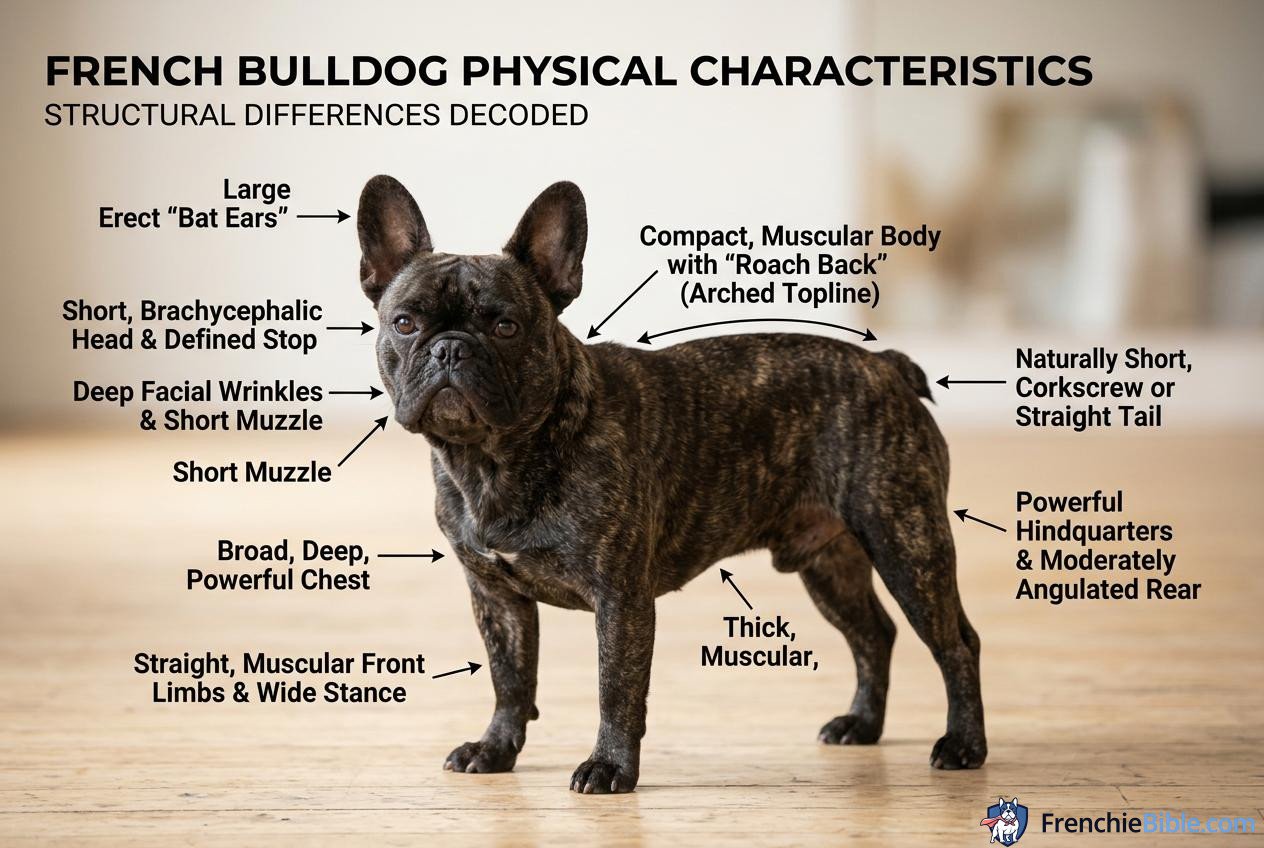
- The French Bulldog: The Frenchie is a heavier, more muscular, and heavily boned dog. They typically weigh between 16 to 28 pounds (7.2 to 12.7 kg), standing 11 to 13 inches tall. They possess a wider chest, a more pronounced muscular build, and a lower center of gravity. When you pick up a French Bulldog, they feel dense and surprisingly heavy for their size—often described as a “bowling ball” in a dog’s body.
The Head and Face: Ears, Muzzle, and Eyes
The craniofacial structures of these two breeds are where their defining characteristics—and their greatest health vulnerabilities—lie.
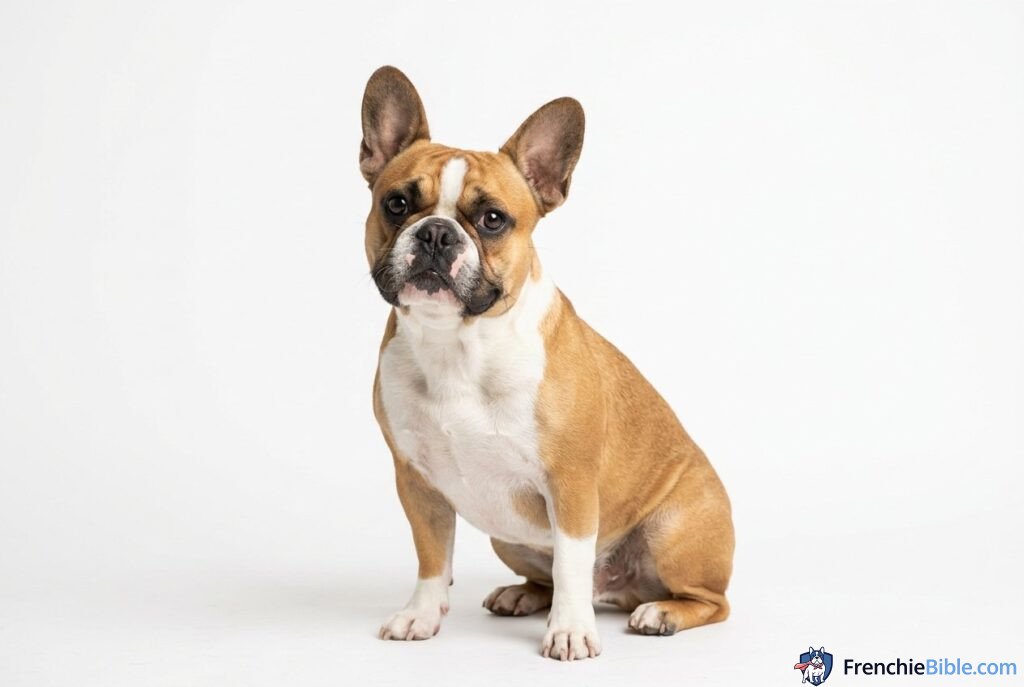
- Ears: This is the most immediate identifier. French Bulldogs possess large, erect “bat ears” that sit high on their head, providing a constantly alert expression. Pugs have soft, floppy drop ears, which can be categorized as either “button ears” (folding forward) or “rose ears” (folding backward).
- The Muzzle and Wrinkles: Both are brachycephalic, meaning the bones of their upper jaw and nose are severely shortened. However, the Pug typically has a deeper set of facial wrinkles, particularly the distinct “V” shape over the bridge of the nose. The Frenchie’s face is heavily wrinkled, but usually features distinct, deep folds on either side of a slightly wider muzzle.
- The Eyes: Pugs are known for their exceptionally large, prominent, and somewhat protruding, dark eyes. Because their eye sockets (orbits) are remarkably shallow, they are at a high risk for ocular trauma. French Bulldogs have moderately sized, round, dark eyes that are set slightly wider apart and deeper in the skull than the Pug, offering a bit more natural protection.
Coat Types, Colors, and The Tail
- Coat and Tail: Pugs possess a double coat, which consists of a soft undercoat and a smooth topcoat. This means Pugs shed—a lot. Profusely and continuously. Their tail is tightly curled over their hip, often forming a double curl. French Bulldogs, conversely, have a fine, smooth single coat. They shed moderately, significantly less than a Pug. Their tail is naturally short, stumpy, and either straight or screwed; it is never docked.
- Colors: Traditional Pug colors are primarily Fawn (with a distinct black mask and a black trace down the back) and solid Black. In recent years, variations like silver and apricot have emerged. French Bulldogs come in a wider array of standard colors, including Brindle, Fawn, Cream, and Pied (white with colored patches).
Breeder’s Note: The explosion of “fad colors” in Frenchies (such as blue, merle, lilac, and fluffy) is a major concern in the veterinary community. These colors are not recognized by major kennel clubs and are frequently linked to severe genetic disorders, such as Color Dilution Alopecia (CDA) and congenital deafness. An ethical breeder prioritizes health and structure over exotic coat colors.
Temperament and Personality Profile
The behavioral differences between a Frenchie and a Pug are profound. While both make excellent, deeply devoted companions, their daily interactions with their human families feel distinctly different.
The Pug: The Ultimate Shadow and Clown
The Pug’s entire existence revolves around its humans. They are the quintessential “velcro dog.” If you move from the living room to the kitchen, the Pug is right at your heels. They thrive on physical contact and will happily spend hours wedged against your side on the sofa.
Pugs are incredibly eager to please, intensely food-motivated, and possess a highly comedic, clownish nature. They are generally outgoing and friendly toward strangers, seeing every new person as a potential source of treats and affection. However, this deep attachment means Pugs are highly susceptible to separation anxiety. A Pug left alone for 8-10 hours a day is likely to become deeply distressed, leading to destructive behaviors or excessive vocalization (barking, whining, and their famous “Pug scream”).
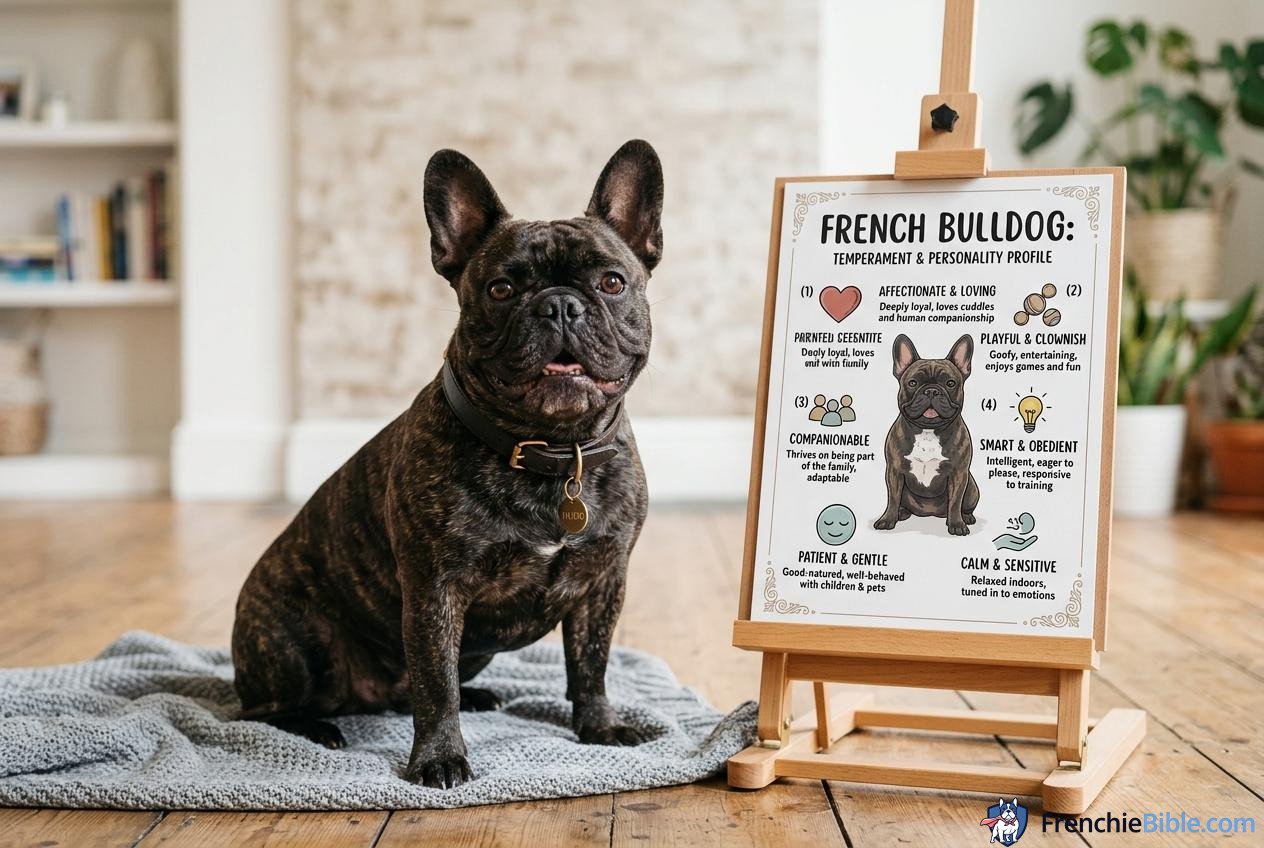
The Frenchie: The Chill and Stubborn Charmer
French Bulldogs are deeply affectionate and form intense bonds with their owners, but they possess an independent, almost cat-like streak that you rarely see in a Pug. While a Pug wants to be on you, a Frenchie is often content to be near you—perhaps sleeping on the other end of the couch.
They are generally quieter than Pugs, rarely barking unless there is a specific cause for alarm. However, their terrier ancestry occasionally shines through in the form of stubbornness. A Frenchie has a “what’s in it for me?” mentality when it comes to training. If they don’t see the point of a command, they are prone to simply ignoring you. They are laid-back, adaptable, and wonderfully chill, making excellent companions for remote workers or those who appreciate a slightly less needy, yet deeply loving, presence.
Sociability with Children and Other Pets
- Children: Both breeds are generally fantastic with children. The Pug is remarkably patient and sturdy enough to handle the clumsy petting of a toddler. The Frenchie is equally affectionate but, due to its heavier build, can accidentally bowl over a small child during a burst of energy (the famous “zoomies”). Supervision is always mandatory, primarily to protect the dogs—especially the Pug’s vulnerable eyes—from accidental injury by children.
- Other Pets: Pugs usually get along famously with other dogs and cats; they lack a strong prey drive and are submissive by nature. French Bulldogs are typically good with other pets, particularly if socialized early. However, due to their bull and terrier heritage, some Frenchies can display same-sex aggression or possessiveness over food and toys.
A Veterinarian’s Deep Dive into Health and Genetics
This is the most critical section of this guide. as a French Bulldog expert and breeder, I must emphasize that bringing a brachycephalic dog into your home means accepting a higher baseline of medical risk and financial responsibility.
Both the French Bulldog and the Pug are prone to a specific set of structural and genetic health issues. While responsible breeding and genetic testing are improving the health of these breeds, prospective owners must be fully educated on what to expect.
Brachycephalic Obstructive Airway Syndrome (BOAS)
BOAS is the cornerstone health issue for both breeds. Because their muzzles have been bred to be exceptionally short, the soft tissues inside their airways have not decreased proportionally. This leads to severe crowding in the respiratory tract.
Key Components of BOAS:
1. Stenotic Nares: Severely pinched or narrow nostrils that restrict airflow.
2. Elongated Soft Palate: The soft tissue at the roof of the mouth extends too far back, fluttering and blocking the windpipe.
3. Everted Laryngeal Saccules: Tissue within the airway gets sucked into the trachea due to the increased effort required to breathe.
4. Hypoplastic Trachea: An abnormally narrow windpipe.
Clinical Reality: Both Frenchies and Pugs frequently require BOAS surgery (widening the nostrils and shortening the soft palate) between the ages of 1 and 3 to improve their quality of life. Without this surgery, they are at an extreme risk of exercise intolerance, sleep apnea, regurgitation, and fatal heatstroke. Pugs are particularly prone to laryngeal collapse as they age if their BOAS is not managed early.
French Bulldog Specific Health Risks
In addition to BOAS, French Bulldogs are structurally vulnerable in their spine and joints due to their chondrodysplastic (dwarf) build.
- Intervertebral Disc Disease (IVDD): This is a devastating condition where the discs between the vertebrae bulge or burst, pressing on the spinal cord. It can cause excruciating pain, loss of bowel/bladder control, and sudden paralysis of the hind legs. Surgery for IVDD can cost between $6,000 and $10,000.
- Hemivertebrae: Malformed, wedge-shaped bones in the spine that can lead to spinal cord compression.
- Severe Allergies: Frenchies are notoriously prone to atopic dermatitis (environmental allergies) and food allergies, requiring lifelong management with specialized diets, Apoquel, or Cytopoint injections.
- Hip Dysplasia and Luxating Patellas: Joint issues that can severely limit their mobility.
Pug Specific Health Risks
While Pugs have a slightly more normal spinal structure than the Frenchie, they face their own devastating breed-specific diseases.
- Pug Dog Encephalitis (PDE) / Necrotizing Meningoencephalitis (NME): A fatal, inflammatory disease of the central nervous system unique to Pugs. It typically strikes young dogs (under 7 years old) causing seizures, blindness, and rapid neurological decline. Ethical breeders must DNA test their breeding stock for the PDE marker to avoid producing affected puppies.
- Severe Ocular Vulnerabilities: Because a Pug’s eyes protrude from shallow sockets, they are highly prone to corneal ulcers, dry eye (Keratoconjunctivitis Sicca), pigmentary keratitis (which can lead to blindness), and proptosis (the eye physically popping out of the socket due to trauma).
- Skin Fold Pyoderma: The deep wrinkles on a Pug’s face are breeding grounds for yeast and bacterial infections if not meticulously cleaned and dried daily.
Lifespan Expectations and Geriatric Care
Due to their differing structural burdens, their lifespans vary.
- The Pug generally boasts a longer lifespan, typically ranging from 12 to 15 years. In their senior years, Pugs frequently suffer from arthritis, loss of vision, and a condition called Pug Myelopathy, which causes weakness and eventual paralysis in the hind limbs.
- The French Bulldog has a shorter average lifespan of 10 to 12 years. The combination of spinal issues, severe respiratory compromise, and cancer risks contributes to this shorter life expectancy.
Grooming and Daily Maintenance Needs
Neither of these breeds is considered “low maintenance” in the grooming department, though the nature of the maintenance differs.
Coat Care and Shedding Management
- Pug: You must be prepared for a lifetime of vacuuming. Pugs shed heavily 365 days a year. Their double coat requires daily brushing with a deshedding tool or a rubber curry brush to manage the constant dropping of hair.
- Frenchie: Frenchies are moderate shedders. Their single, short coat only requires brushing once or twice a week with a hound glove to remove dead hairs and distribute natural skin oils.
Wrinkle, Ear, and Tail Pocket Cleaning
This is non-negotiable for both breeds.
- Facial Folds: The deep wrinkles on their faces trap moisture, tears, food, and debris. These must be cleaned daily using veterinary-approved chlorhexidine wipes, followed by thorough drying. Failure to do so will result in painful, foul-smelling bacterial and yeast infections (skin fold dermatitis).
- Tail Pockets: Both breeds (but especially Frenchies with tight tail bases) can develop a “tail pocket”—a hidden fold of skin under the tail. This must be cleaned and dried diligently to prevent severe infections.
- Ears: The Frenchie’s large, open bat ears are prone to catching debris and developing yeast infections. They require weekly cleaning with an epi-otic flush.
Dental Care for Crowded Mouths
Brachycephalic dogs have the same number of teeth (42) as a German Shepherd, but they must fit into a jaw that is a fraction of the size. This severe crowding leads to rapid tartar buildup, periodontal disease, and early tooth loss. Daily brushing with an enzymatic dog toothpaste and annual professional dental cleanings under anesthesia are mandatory to prevent systemic infections affecting the heart and kidneys.
Exercise and Dietary Requirements
Managing the weight and activity levels of a brachycephalic dog is a delicate balancing act that requires strict owner discipline.
Safe Exercise Protocols for Brachycephalic Breeds
Rule Number One: Never, under any circumstances, attach a leash to a collar on a French Bulldog or a Pug. Any pressure on the neck will exacerbate their compromised airways and can cause tracheal collapse or restrict blood flow to the eyes. Always use a well-fitted, Y-shaped harness.
- Exercise Limitations: Both breeds are low-energy dogs. Two 15 to 20-minute leisurely walks per day, in the early morning or late evening, are sufficient.
- The Heatstroke Danger: Because they cannot pant efficiently to cool down, Frenchies and Pugs are at an extreme risk for fatal heatstroke. They should never be walked when temperatures exceed 70°F (21°C) or in high humidity. During the summer, exercise must be restricted to indoor, air-conditioned play.
- Water Safety: French Bulldogs are anatomically incapable of swimming due to their heavy chests, large heads, and short legs. They will sink like stones. They must wear a life jacket near any body of water. Pugs can swim slightly better, but also require close supervision and life vests.
Nutritional Strategies and Weight Management
Obesity is the enemy of the brachycephalic dog. Even an extra 2 pounds can severely compromise their ability to breathe and place catastrophic stress on their joints and spines.
- Pugs are notorious gluttons. They will eat until they make themselves sick. Owners must strictly measure their high-quality, biologically appropriate kibble or fresh food and factor training treats into their daily caloric intake.
- Frenchies can occasionally be picky eaters, often due to underlying food allergies or gastrointestinal issues related to swallowing too much air while eating (aerophagia). They benefit greatly from slow-feeder bowls to prevent regurgitation and flatulence.
Training and Behavioral Modification
Training these two breeds requires entirely different psychological approaches.
Potty Training Challenges
Both the Frenchie and the Pug are notoriously difficult to housebreak. It is not uncommon for it to take 6 to 8 months, or even a year, to fully potty train them.
- Pugs dislike cold or wet weather and will outright refuse to go outside if it’s raining.
- Frenchies are stubborn and may decide that going to the bathroom on a soft rug inside is simply more convenient.
Crate training, high-value treats, and absolute, unwavering consistency are required. Punishing these sensitive breeds for accidents will only cause them to hide their mistakes, setting your training back significantly.
Obedience and Socialization
- Training a Pug: Use their stomach to your advantage. Pugs are highly food-motivated and eager to please. Keep training sessions incredibly short (5 minutes) and upbeat. They excel in basic obedience and can even learn complex tricks if a piece of chicken is on the line.
- Training a Frenchie: You must convince a French Bulldog that training is their idea. They are intelligent but incredibly stubborn. Positive reinforcement is the only effective method. If they feel bored or pressured, they will simply sit down and ignore you. Make training a fun, engaging game.
Early socialization—exposing them to various people, sounds, textures, and safe dogs between the ages of 8 and 16 weeks—is critical to preventing anxiety and fear-based reactivity in both breeds.
The Financial Investment: Cost of Ownership
From a financial perspective, acquiring and maintaining a brachycephalic dog requires substantial disposable income. These are arguably two of the most expensive breeds to own over their lifetime.
Initial Purchase Price and Ethical Breeding
- Why French Bulldogs Cost So Much: An ethically bred French Bulldog puppy from health-tested parents typically costs between $3,500 and $7,000+. This astronomical price is largely due to the fact that they cannot reproduce naturally. The males’ narrow hips and heavy chests prevent natural mating, requiring Artificial Insemination (AI). The females’ narrow pelvises and the puppies’ large heads mean that over 80% of Frenchies must be delivered via surgical C-section. Add the cost of comprehensive genetic and structural health testing for the parents, and the breeder’s overhead is massive.
- Pug Pricing: Pugs are generally capable of natural mating and whelping, though C-sections are still common. An ethically bred Pug puppy typically ranges from $1,500 to $3,000.
Warning: Never buy either breed from a pet store, puppy mill, or a “bargain” backyard breeder. The initial savings will immediately be wiped out by devastating medical bills resulting from poor genetics.
Veterinary Costs and Pet Insurance Realities
Do not purchase a French Bulldog or a Pug unless you can immediately enroll them in a high-quality, comprehensive pet insurance policy.
- BOAS surgery: $2,500 – $5,000
- IVDD spinal surgery (Frenchies): $6,000 – $10,000
- Allergy management (Apoquel/Cytopoint): $100 – $200 per month
- Corneal ulcer treatment (Pugs): $300 – $1,500+
Your annual veterinary budget for routine care, preventative medications, and specialized diets should be at least $1,000 to $1,500, not including emergency surgeries.
Which Breed Fits Your Lifestyle? A Final Verdict
Making the final decision requires an honest assessment of your lifestyle, budget, and emotional capacity.
You Should Choose a Pug If:
- You want a dog that is completely devoted to you, following you from room to room.
- You have children and want a sturdy, patient, and playful family companion.
- You don’t mind heavy, year-round shedding and frequent vacuuming.
- You want an inherently friendly, comedic dog that views every stranger as a friend.
- You have a schedule that allows you to be home frequently, avoiding severe separation anxiety.
You Should Choose a French Bulldog If:
- You prefer a more independent companion that loves you deeply but doesn’t need to be touching you constantly.
- You want a quiet dog that barks rarely, making them ideal for apartment living.
- You cannot tolerate heavy shedding (though you must still maintain their wrinkles).
- You appreciate a quirky, slightly stubborn personality with a lot of character.
- You are financially prepared for the high initial purchase price and the significant risk of expensive spinal and allergic health issues.
Both the French Bulldog and the Pug are extraordinary companions that will fill your home with laughter, snores, and unconditional love. However, their physical limitations demand an owner who is educated, vigilant, and financially prepared to offer them the highly specialized care they require to thrive.
Frequently Asked Questions (FAQ)
1. Which breed is better for first-time dog owners?
While both can be suitable, the Pug is generally more forgiving for a novice owner. They are highly eager to please, intensely food-motivated (making basic training easier), and lack the stubborn, terrier-like independence that can sometimes make training a French Bulldog frustrating for beginners. However, both require strict adherence to grooming and medical care.
2. Can a French Bulldog or a Pug live in a hot climate?
Yes, but with extreme caution. Both breeds are highly susceptible to heatstroke due to Brachycephalic Obstructive Airway Syndrome (BOAS). If you live in a hot climate (like Florida, Texas, or Arizona), they must be kept indoors in air conditioning during the day. Exercise must be strictly limited to early mornings or late evenings when the sun is down. They are not suitable outdoor dogs under any circumstances.
3. Do French Bulldogs and Pugs bark a lot?
French Bulldogs are famously quiet. They rarely bark unless there is a significant disturbance at the door, making them excellent apartment dogs. Pugs are considerably more vocal. While they aren’t necessarily “yappy,” they will bark at sounds, visitors, and frequently vocalize to communicate with you through grunts, whines, and the notorious “Pug scream” when excited or distressed.
4. Why do French Bulldogs cost so much more than Pugs?
French Bulldogs are significantly more expensive to breed safely. Due to their specific physical structure—narrow hips and heavy front ends—they cannot mate naturally and require Artificial Insemination. Furthermore, the puppies have large heads that cannot pass through the mother’s narrow pelvis, meaning over 80% of Frenchie litters require a surgical Cesarean section. This intensive veterinary intervention drastically drives up the price.
5. Which breed sheds more?
The Pug sheds significantly more. Pugs have a double coat consisting of a soft undercoat and a smooth outer coat, resulting in heavy, continuous shedding year-round. You will find Pug hair on all your clothes and furniture. The French Bulldog has a fine, single coat and sheds moderately; a quick weekly brushing is usually enough to keep it under control.
6. Are they good dogs for runners or hikers?
Absolutely not. Neither the French Bulldog nor the Pug should be taken jogging, running, or on strenuous hikes. Their compromised airways make it physically impossible for them to draw in enough oxygen to support sustained aerobic exercise, and they cannot pant efficiently to cool their bodies down. Pushing them to exercise vigorously can result in fatal respiratory collapse or heatstroke within minutes.
7. What is BOAS surgery, and will my dog need it?
BOAS (Brachycephalic Obstructive Airway Syndrome) surgery is a common procedure that widens the dog’s pinched nostrils (stenotic nares) and shortens an elongated soft palate to open up the airway. from a breeder’s perspective, a significant majority of both Frenchies and Pugs would benefit from this surgery to improve their quality of life, prevent sleep apnea, and reduce the risk of laryngeal collapse as they age. Consult a veterinary surgeon around the dog’s first birthday to assess their airway.
Disclaimer: We are not veterinarians and do not hold veterinary medical licenses. The information provided in this article is based on years of breeding and daily care experience and is for educational purposes only. It should not replace professional veterinary advice. Always consult with a licensed veterinarian if you have concerns about your French Bulldog’s health or before starting any new treatment.