As a dedicated French Bulldog breeder with over a decade of hands-on experience, I have witnessed countless puppies enter this world, each with their own unique coat patterns, colors, and physical attributes. Throughout my 10 years of deeply engaging with French Bulldog genetics, conformation, and lineage tracking, I have developed a profound appreciation for the underlying science that dictates how our beloved Frenchies look. One of the most iconic, sought-after, and historically significant physical traits in the French Bulldog breed is the classic “Black Mask.”
Whether you are a first-time owner mesmerized by the expressive, bat-eared face of a fawn Frenchie or an advancing enthusiast looking to understand the nuanced science behind coat color inheritance, understanding the black mask is a fascinating journey. It is a journey that takes us straight into the heart of canine DNA, specifically focusing on a powerful piece of genetic coding known as the EM gene.
Related Reading: Training & Behavior | Frenchie Puppy Guide | Best Food for Frenchies
In this comprehensive, deep-dive guide, we will explore the EM gene in exhaustive detail. We will uncover exactly what a melanistic mask is, how the EM gene governs its expression, how it interacts with an array of other color genes (like the A Locus, K Locus, and D Locus), and what this means for breeding predictability. Furthermore, we will discuss the practical aspects of living with and caring for a black-masked French Bulldog, ensuring their unique facial structure and skin health are maintained optimally.
Before we begin, I must reiterate: I am a seasoned breeding expert and SEO content director with extensive practical knowledge in animal husbandry and canine genetics, but I am not a veterinarian. The information presented in this article regarding health and care is derived from a decade of professional breeding experience and is meant to serve as educational guidance. It should never substitute for professional medical advice from a licensed veterinary practitioner.
What Exactly is the “Black Mask” in French Bulldogs?
When we talk about a “black mask” or a “melanistic mask” in the context of canine terminology, we are referring to a specific, localized distribution of dark pigmentation on the dog’s face. While many breeds can exhibit a melanistic mask—ranging from Mastiffs to Pugs—the presentation on a French Bulldog is particularly striking due to their characteristic flat (brachycephalic) faces, wide-set eyes, and large, erect “bat” ears.
The Physical Boundaries of the Mask
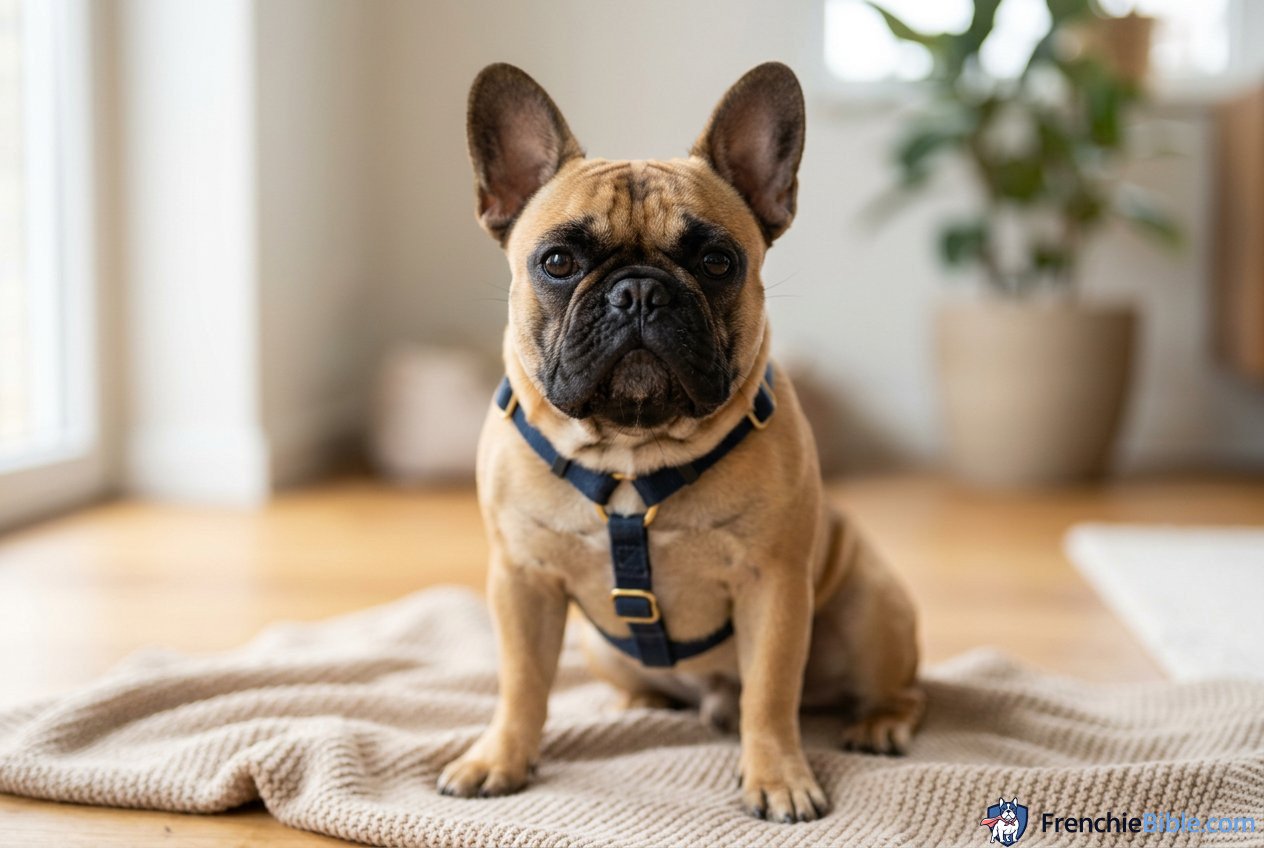
The standard black mask on a French Bulldog primarily centers around the muzzle. It encompasses the upper and lower lips, the front of the snout, and the nose leather. However, the extent of the mask is rarely uniform across all dogs. The coverage can be broadly categorized into several variations:
- The Minimal Mask: In some Frenchies, the black masking is restricted entirely to the immediate vicinity of the lips and the very front of the muzzle. It may look like a delicate charcoal smudge, providing just enough contrast to highlight the dog’s mouth.
- The Classic Muzzle Mask: This is the most common presentation. The black pigment covers the entire muzzle up to the stop (the indentation between the eyes) but does not significantly extend past the eyes.
- The Heavy or Full Face Mask: In these individuals, the melanistic mask is incredibly pronounced. It covers the muzzle, extends up and around the eyes (creating dark “spectacles”), and can even travel up the forehead, sometimes blending into the base of the ears.
Coat Colors That Feature the Black Mask
For the black mask to be visible, it requires a lighter base coat color as a canvas. The EM gene effectively “paints” black over whatever base color the dog’s other genes dictate. Therefore, the mask is most prominent on specific coat colors:
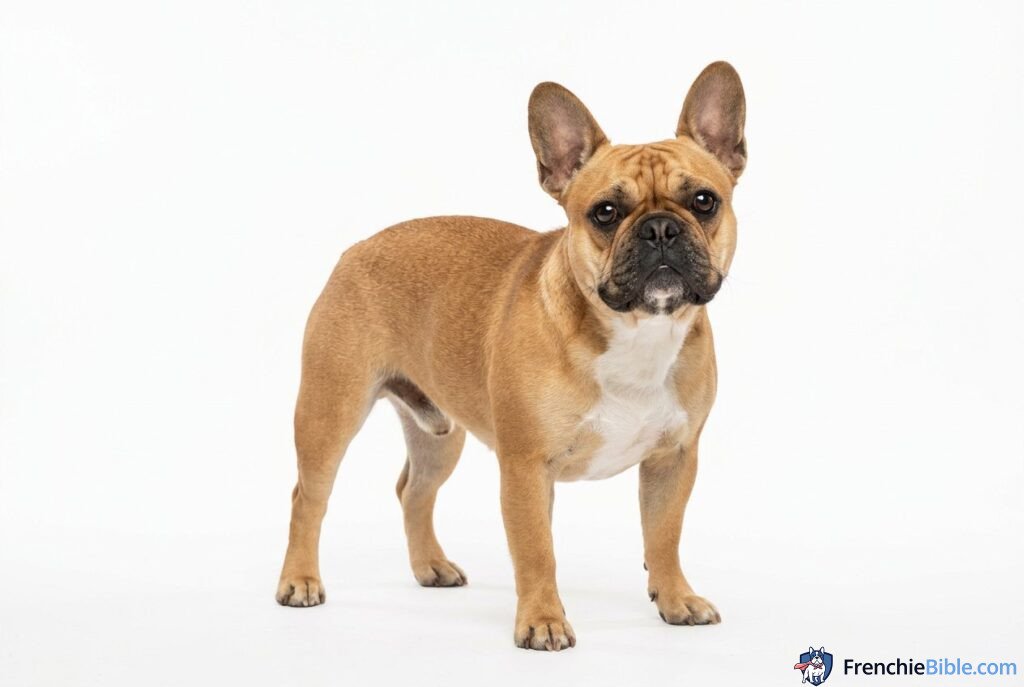
- Fawn: The fawn french bulldog is the quintessential example of the black mask at work. Fawn can range from a very pale, almost cream-like tan, to a deep, rich reddish-gold. Against this light background, the black mask stands out in stark, beautiful contrast.
- Red: Similar to fawn but with a deeper concentration of red pigment (phaeomelanin), red Frenchies with black masks possess a stunning, warm aesthetic. The dark face beautifully complements the vibrant coat.
- Brindle: Brindle Frenchies have a base color (usually fawn) with black striping layered over it. Brindle dogs absolutely can—and often do—carry the EM mask gene. However, because their face may already have significant black striping, the mask itself might camouflage into the brindle pattern, making it harder to discern.
- Pied (White Spotting): pied french bulldogs have a coat that is predominantly white, featuring patches of color. The expression of the mask here depends on the location of the colored patches. If a pied dog has a fawn patch over its face and carries the EM gene, that fawn patch will feature a black mask. If the dog’s face is entirely covered by the white spotting pattern, the mask is genetically present but completely obscured by the lack of pigment in the white hair.
The Science Behind the Mask: An In-Depth Look at the EM Gene
To truly comprehend how a French Bulldog inherits a black mask, we must look at the specific genetic address responsible for this trait. In canine genetics, different traits are controlled by specific locations on the chromosomes, known as “loci” (singular: locus). The locus responsible for the presence or absence of the melanistic mask is the E Locus (Extension Locus).
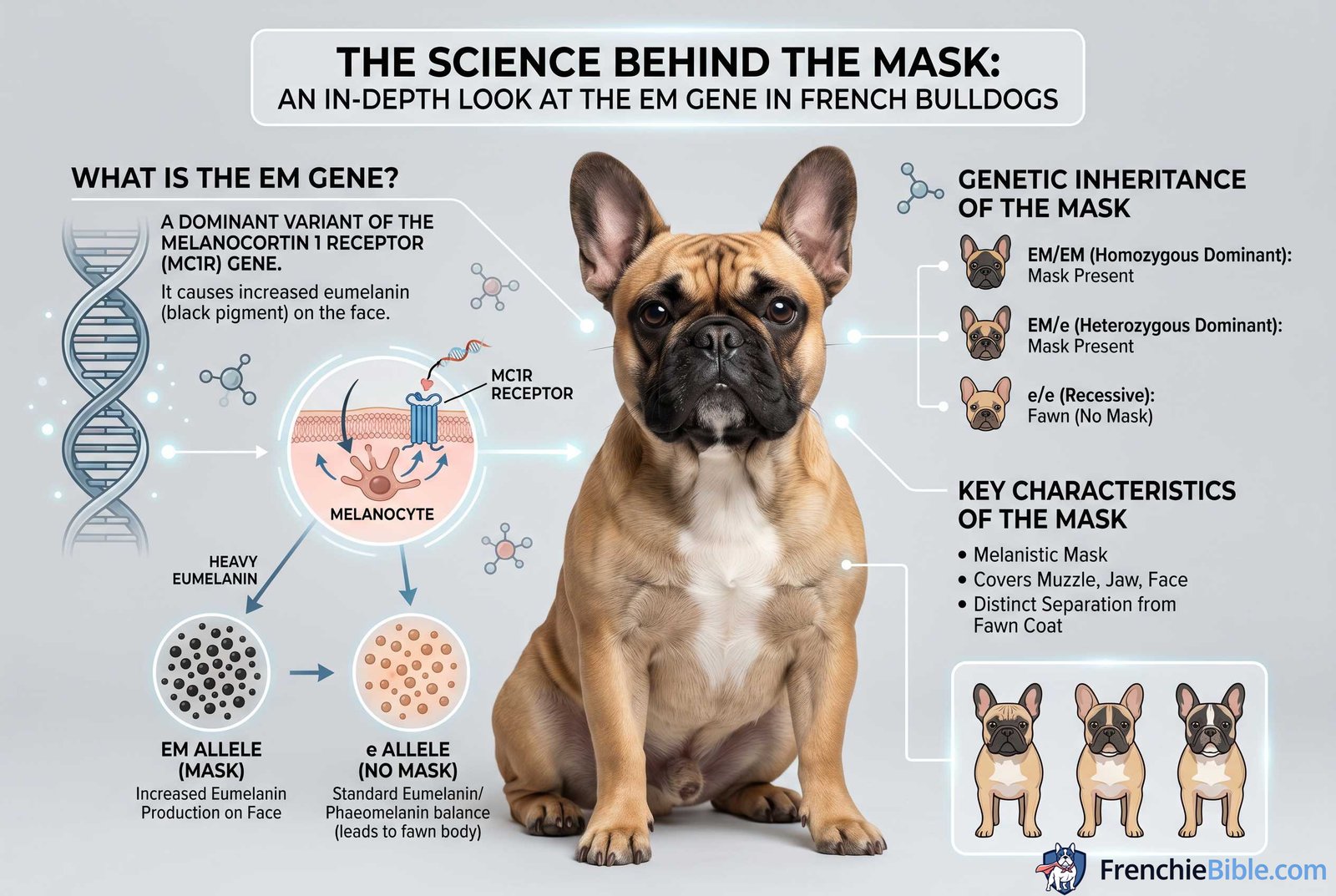
The E Locus is a master regulator in the canine genome. It controls the production and distribution of two fundamental types of pigment:
– Eumelanin: Black pigment (which can be modified to blue, chocolate, or lilac by other genes).
– Phaeomelanin: Red/yellow/tan pigment.
At the E Locus, there are several different “alleles” (variants of the gene) that a dog can inherit. Let’s break down the three most critical alleles at the E Locus that impact French Bulldogs:
1. The EM Allele (Melanistic Mask)
This is the allele that is the star of our discussion. The ‘M’ stands for “Mask.” When a dog possesses the EM allele, it receives specific instructions to produce eumelanin (black pigment) on the facial area, regardless of whether the rest of the body is producing phaeomelanin (red/fawn pigment). The EM allele is the most dominant allele in the E Locus series.
2. The E Allele (Normal Extension)
The ‘E’ allele allows for the normal extension of black pigment across the body, governed by other genes (like the K and A loci), but it does not specifically command the creation of a black mask on the face. A fawn dog with an ‘E’ allele instead of an ‘EM’ allele will have a plain fawn face without the striking dark muzzle.
3. The e Allele (Recessive Red/Yellow)
The ‘e’ allele is a fascinating “off switch” for black pigment in the coat. If a dog inherits two ‘e’ alleles (e/e), the body is entirely incapable of producing any black pigment in the hair shafts anywhere on the body. A dog that is ‘e/e’ will be a solid cream, pale fawn, or red, and it is physically impossible for them to have a black mask, regardless of what other genes they carry. They are known as “clear” or “recessive” fawns/creams.
The Hierarchy of Dominance and Genetic Inheritance
Understanding how these alleles interact is the cornerstone of a breeder’s knowledge. Every French Bulldog inherits two alleles at the E Locus—one from their sire (father) and one from their dam (mother).
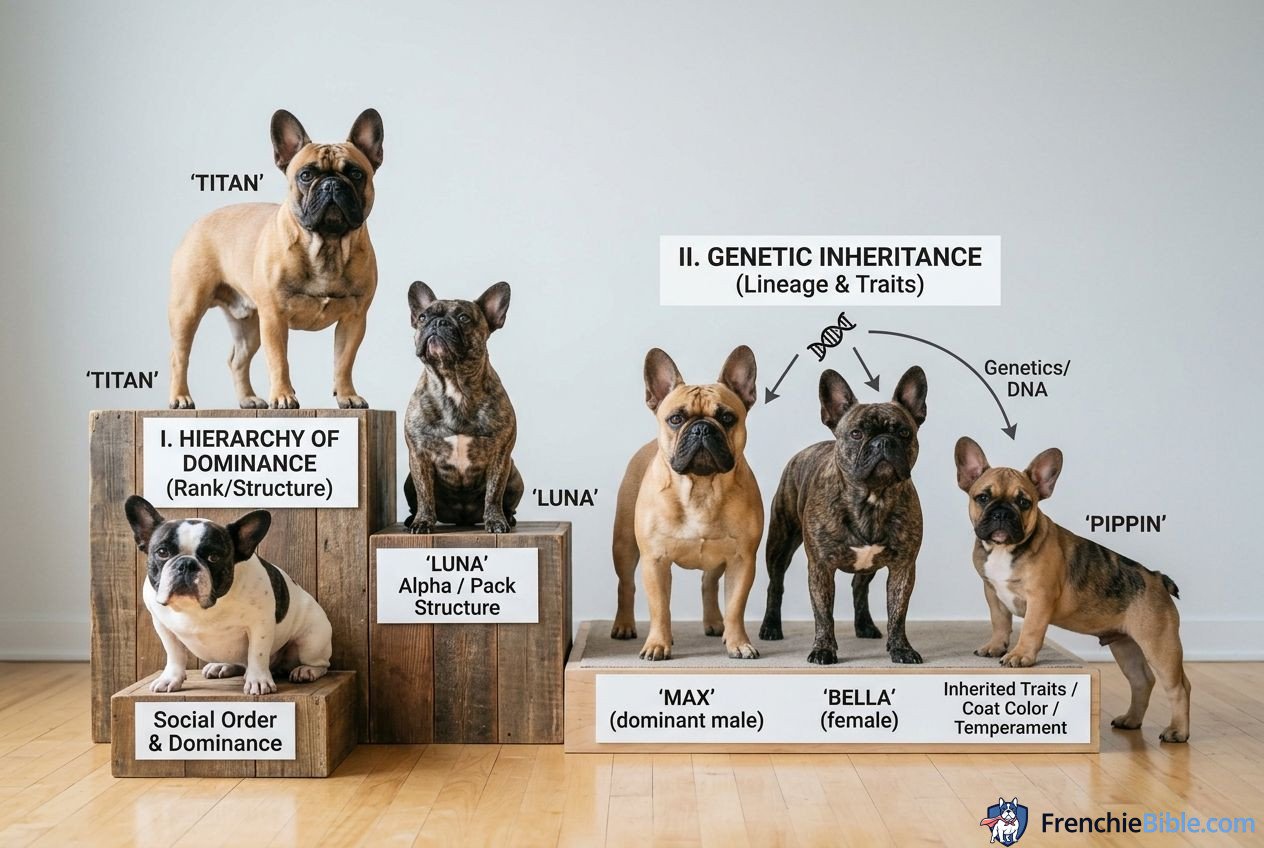
Because the alleles follow a strict hierarchy of dominance—where EM is dominant over E, and E is dominant over e—we can predict the visual outcome (phenotype) based on the genetic makeup (genotype).
Let’s explore the possible combinations a French Bulldog can have at the E Locus:
- EM/EM (Homozygous Mask): This dog inherited the mask allele from both parents. Because it only possesses the EM allele, it will visually have a black mask (if the base coat allows it to show). More importantly for breeding, this dog will always pass on one EM allele to every single one of its puppies. It is impossible for an EM/EM dog to produce a puppy without the genetic instructions for a mask.
- EM/E (Heterozygous Mask – carrying normal extension): This dog inherited an EM allele from one parent and an E allele from the other. Because EM is dominant, the dog will visually have a black mask. However, this dog is a “carrier” for the normal extension gene. If paired with another dog carrying E or e, they could potentially produce puppies without masks.
- EM/e (Heterozygous Mask – carrying recessive red): Similar to the above, this dog has a black mask because the dominant EM allele overrides the recessive e allele. However, this dog carries the hidden trait for recessive red/cream.
- E/E, E/e (No Mask, capable of black pigment): These dogs do not possess the EM allele, so they will not have a black mask. Their coat colors will be determined by other genes, but their face will match their body pattern without the localized black shading.
- e/e (Recessive Red/Cream – No Mask): These dogs have two recessive ‘e’ alleles. They cannot produce black hair anywhere on their body. They will never have a black mask, and they will always pass an ‘e’ allele to their offspring.
Breeding Scenarios and Punnett Squares
As a breeder with a decade of experience, utilizing Punnett squares to map out potential litters is second nature. Let’s look at a few practical examples of how the EM gene is passed down:
Scenario 1: Breeding two homozygous masked fawns (EM/EM x EM/EM)
– All puppies (100%) will inherit an EM from the sire and an EM from the dam.
– Result: The entire litter will be EM/EM and visually have black masks.
Scenario 2: Breeding a homozygous masked fawn (EM/EM) to a recessive cream (e/e)
– The masked parent can only pass on EM. The cream parent can only pass on e.
– All puppies (100%) will inherit one EM and one e, making their genotype EM/e.
– Result: Because EM is dominant, the entire litter will be visually fawn with black masks! However, every single puppy is now a hidden carrier for the recessive cream/red gene.
Scenario 3: Breeding two heterozygous masked fawns that both carry recessive cream (EM/e x EM/e)
– Sire can pass EM or e. Dam can pass EM or e.
– There is a 25% chance of an EM/EM puppy (Masked).
– There is a 50% chance of an EM/e puppy (Masked).
– There is a 25% chance of an e/e puppy (Recessive Cream/Fawn, NO Mask).
– Result: In this litter, even though both parents have beautiful black masks, statistically, 25% of the puppies will be born without masks, completely clear fawns or creams. This is why understanding genetics is so crucial; visual appearance alone does not tell the whole story.
The Complex Interactions: How EM Works with Other Coat Genes
Dog genetics do not operate in a vacuum. The EM gene is powerful, but its expression is entirely dependent on the rules set by other genetic loci. Let’s explore how the mask interacts with the rest of the genetic canvas.
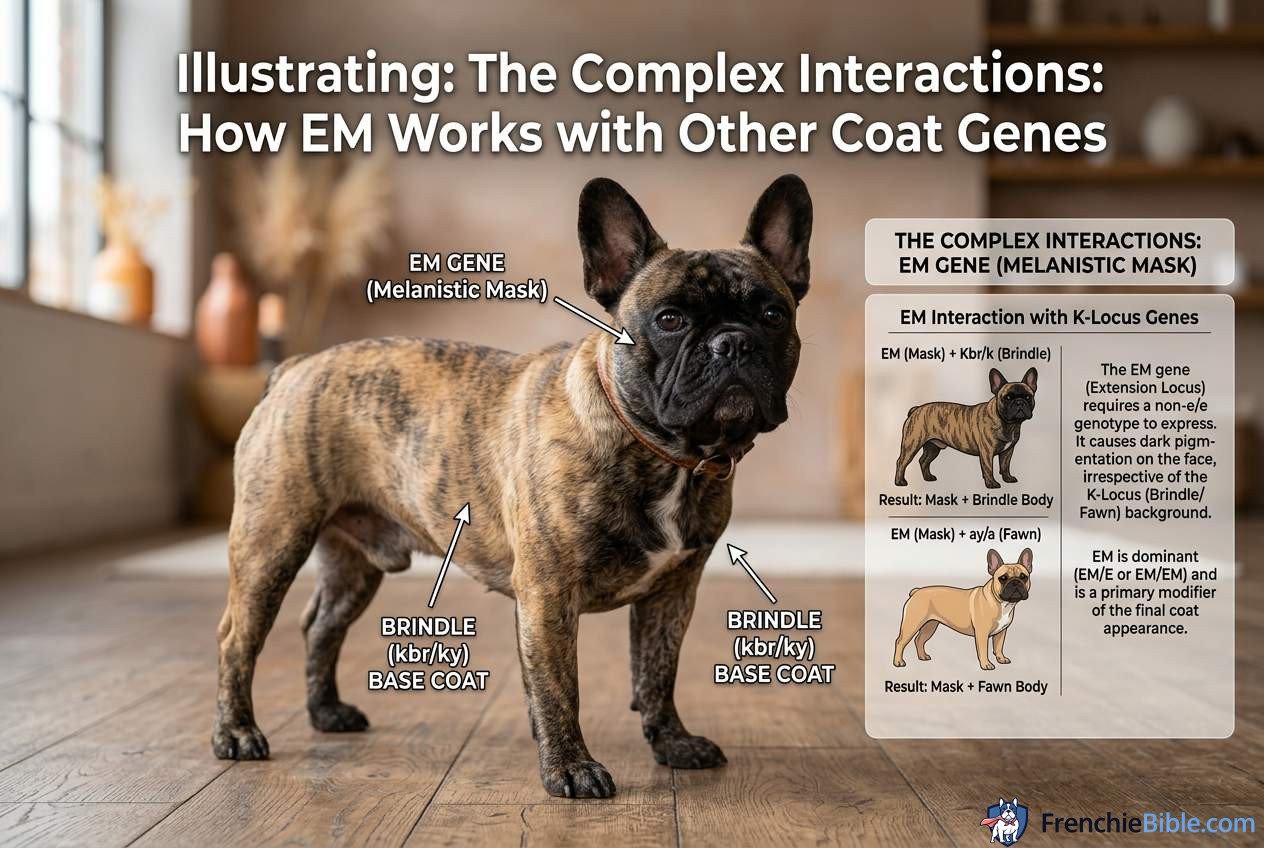
The K Locus (Dominant Black) Checkpoint
The K Locus is the overarching controller of whether a dog’s coat is solid-colored or patterned.
– If a French Bulldog inherits a Dominant Black allele (KB), their entire coat will be solidly colored (usually black, or modified to blue/chocolate). Because the entire dog is covered in eumelanin (black pigment), the black mask on the face is completely invisible. You cannot see black paint on a black wall! The dog genetically has the EM gene, but phenotypically (visually), it is hidden.
– For the black mask to be visible, the dog must be “ky/ky” at the K Locus, which permits the coat patterns to show through.
The A Locus (Agouti) Canvas
Once the K Locus allows patterns to show (ky/ky), the A Locus determines what that pattern will be.
– The most common pattern in French Bulldogs is Ay (Sable/Fawn). This creates a fawn body coat. It is upon this fawn Ay canvas that the EM gene is most visibly and beautifully expressed, creating the classic Fawn with Black Mask.
– Another pattern is “at” (Tan Points), which creates dogs that are solid-colored with tan markings on the eyebrows, cheeks, and legs (like a Rottweiler or Doberman). If an “at/at” dog also carries the EM gene, the black mask will cover up the tan points on the face, making the dog look like it has no facial tan points, while still maintaining the tan points on its legs and chest.
The D Locus (Dilution) and B Locus (Chocolate/Cocoa) Modifiers
What happens if your Frenchie is “Blue” or “Chocolate”? The EM gene explicitly dictates where eumelanin goes (the face). However, the D and B loci dictate what color that eumelanin is.
– Dilute (d/d): If a fawn dog has an EM mask but is also d/d (dilute), the black pigment in the mask is “watered down” to a grayish-blue. The result is a “Blue Fawn”—a fawn dog with a striking blue/gray mask instead of a black one.
– Chocolate/Cocoa (b/b or co/co): Similarly, if the dog is homozygous for chocolate or cocoa, the black pigment in the mask is turned brown. The result is a “Chocolate Fawn” or “Cocoa Fawn” with a rich brown mask.
– Lilac/Isabella: A combination of dilute and chocolate will turn the mask into a pale, silvery-taupe color.
The EM gene is always there, doing its job, but the final color of the mask depends on these modifying loci.
Does the Black Mask Affect a French Bulldog’s Health?
As an expert who has spent a decade deeply involved in the welfare, breeding, and daily care of French Bulldogs, I frequently encounter concerns from new owners regarding coat color and health. It is a common misconception that certain coat colors or markings are inherently linked to health defects.
Let me state this unequivocally: The EM gene, responsible for the black mask, is purely cosmetic.
The genetic instruction that tells melanocytes (pigment cells) to produce black pigment on the muzzle has absolutely zero correlation with the dog’s internal organ function, skeletal structure, respiratory system, or neurological health. A fawn French Bulldog with a heavy black mask is no more or less healthy than a fawn French Bulldog with no mask at all.
The health issues that French Bulldogs are predisposed to—such as Brachycephalic Obstructive Airway Syndrome (BOAS), Intervertebral Disc Disease (IVDD), hemivertebrae, allergies, and luxating patellas—are related to their structural conformation (being a dwarf, flat-faced breed) and completely separate polygenic inheritance patterns, not the single locus dictating facial pigment.
A Note on “Fad Colors” and Health
While the EM gene itself is harmless, it is important to address the broader context of color breeding. The classic Fawn with a Black Mask is a deeply traditional and accepted color pattern. Problems arise when breeders prioritize any color—whether it’s a rare lilac or a perfectly symmetrical black mask—over health testing and structural soundness.
If a breeder pairs two dogs with poor respiratory function simply because they both have beautiful masks, the resulting puppies will likely suffer from health issues. The health issues are caused by poor breeding practices and structural neglect, not by the color genes themselves.
Breeding for the Black Mask: An Expert’s Perspective
In the realm of professional and ethical French Bulldog breeding, the black mask is often a highly desired trait. Major international kennel clubs, including the American Kennel Club (AKC) and the Fédération Cynologique Internationale (FCI), explicitly state in their breed standards that a black mask is preferred or required for fawn-colored dogs.
The Role of DNA Testing in Modern Breeding
When I first started in this field 10 years ago, breeders relied heavily on pedigree analysis and phenotypic observation to deduce what genes a dog might be carrying. Today, we have the immense privilege of accessible, highly accurate canine DNA testing.
I consider comprehensive DNA testing to be a non-negotiable tool for any serious breeder. A simple cheek swab sent to a reputable genetic laboratory provides a complete breakdown of a dog’s color loci.
Why is this vital for a breeder focusing on the black mask? Let’s say I have a stunning, structurally perfect Brindle female. Because she is heavily striped, I cannot clearly see if she has a black mask underneath. Without DNA testing, I would be guessing her EM status. By testing her, I might discover she is EM/e. Armed with this exact genetic blueprint, I can strategically pair her with a stud dog who is EM/EM to guarantee a litter where every puppy receives the mask gene, while completely avoiding the production of e/e (maskless) puppies if that is my goal.
DNA testing removes the guesswork, allowing breeders to predictably achieve desired cosmetic traits while primarily focusing on matching dogs for health, temperament, and structural improvement.
The Ethical Hierarchy of Breeding Goals
As a senior breeder, I cannot stress enough the importance of the ethical hierarchy in breeding. While producing a visually striking fawn puppy with an immaculate, heavy black mask is incredibly satisfying, it must always remain at the bottom of the priority list.
My breeding philosophy, developed over a decade, adheres strictly to this order of importance:
1. Health and Longevity: Both parents must pass rigorous health screenings, including OFA (Orthopedic Foundation for Animals) evaluations for spine, hips, patellas, and cardiac function, as well as genetic panels for hereditary diseases like JHC (Juvenile Hereditary Cataracts) and CMR1 (Canine Multifocal Retinopathy).
2. Temperament: Frenchies are companion animals. Breeding dogs must be confident, affectionate, stable, and free from aggression or extreme anxiety.
3. Conformation and Structure: Adhering to the physical breed standard to ensure the dog can move freely, breathe as efficiently as possible, and live without structural pain.
4. Color and Markings (The Mask): This is the final consideration. The black mask is the “icing on the cake.” An ethical breeder will never compromise steps 1, 2, or 3 to achieve a specific coat color.
Caring for a French Bulldog with a Black Mask
While the mask does not impact internal health, it does have highly specific implications for your daily care routine. Owning a French Bulldog means dedicating yourself to their unique grooming needs, and the black mask introduces a specific set of challenges.
The Hidden Dangers in the Wrinkles
French Bulldogs possess deep, adorable facial folds and wrinkles, particularly the large “rope” wrinkle above the nose and the deep folds around the mouth and jowls. These areas are notoriously prone to accumulating moisture from drooling, drinking, and tears, as well as food debris and environmental dirt.
When a dog has a light-colored face (like a cream or clear fawn), dirt and the reddish-brown staining caused by porphyrins in their tears (tear stains) are glaringly obvious. You see the grime immediately, and naturally, you clean it.
This is where the black mask becomes a double-edged sword.
The deep black pigmentation of the mask acts as a perfect camouflage. It completely hides the reddish tear stains, the accumulated dirt, and even the early signs of skin redness or irritation. Many owners of black-masked Frenchies mistakenly believe their dogs’ faces are clean simply because they cannot see the dirt.
If these wrinkles are neglected, the dark, warm, and moist environment becomes an ideal breeding ground for yeast (Malassezia) and bacterial skin fold dermatitis (intertrigo). By the time you notice an issue on a black mask, it is usually because you can smell the infection, or the dog is frantically scratching its face due to intense itching.
The Essential Daily Cleaning Routine
As a seasoned expert, I instruct all my puppy families to adhere to a strict daily facial care routine, regardless of their dog’s color, but I emphasize it twice as hard for owners of black-masked dogs.
- Daily Wiping: Every single day, preferably after the dog’s last meal, use a soft, unscented baby wipe or a specialized pet grooming wipe to gently clean inside the facial folds. You must physically open the wrinkles and wipe all the way to the bottom of the crease. You will likely be surprised by how much brown debris comes off onto the wipe, even from a face that looked perfectly clean!
- The Golden Rule: Keep it Dry: Cleaning is only half the battle. Leaving the wrinkle wet from the wipe is a recipe for disaster. You must follow up with a dry, soft tissue, a cotton pad, or a clean microfiber cloth to gently pat the inside of the wrinkle completely dry. Moisture is the enemy.
- Barrier Creams (When Necessary): If your dog’s wrinkles are particularly deep or prone to irritation, you can apply a tiny amount of a dog-safe wrinkle balm or barrier cream. This creates a protective layer that repels moisture. However, ensure the wrinkle is 100% clean and dry before applying any balms to avoid trapping bacteria underneath.
Sun Protection and Skin Care
Another minor consideration for black-masked Frenchies is sun absorption. Black hair and dark skin absorb significantly more heat from sunlight than light hair. While a black mask won’t cause your dog to suffer from heatstroke on its own (their brachycephalic airway is the main overheating risk), the dark skin on their muzzle can get surprisingly hot to the touch if they fall asleep in direct sunlight.
Furthermore, the nose leather itself is exposed. If your Frenchie loves sunbathing, monitor their nose for signs of dryness, cracking, or hyperkeratosis. Applying a natural, lick-safe snout butter a few times a week can keep the nose skin supple, hydrated, and deeply pigmented.
Nutrition for Optimal Pigment
A dull, dry coat makes a black mask look faded and gray. To ensure your Frenchie’s mask remains a deep, striking, and glossy black, proper nutrition is paramount.
As a breeder who focuses deeply on canine nutrition, I highly recommend a diet rich in high-quality animal proteins and balanced essential fatty acids. Omega-3 and Omega-6 fatty acids (often sourced from fish oils like salmon or krill oil) are phenomenal for supporting skin health and promoting a vibrant, shiny coat. When the hair shafts are healthy and well-nourished, the black pigment of the EM gene is displayed at its absolute best.
Frequently Asked Questions (FAQ)
To wrap up this extensive guide, I want to address some of the most common questions I receive from clients and fellow enthusiasts regarding the black mask and the EM gene.
Q1: Can a French Bulldog puppy’s black mask change or fade as they grow older?
A: The underlying genetic presence of the EM gene never changes. However, the phenotypic expression (what the mask looks like) can shift slightly. When puppies are born, their masks often look incredibly dark and expansive. As they shed their soft puppy coat and grow their harsher adult coat (usually around 4 to 6 months of age), the mask may appear to recede slightly or lighten in intensity. Furthermore, as French Bulldogs age (typically starting around 3 to 5 years old), they often develop “frosting”—white hairs sprouting around the muzzle and eyes. This is a natural aging process and will gradually turn a black mask gray or white.
Q2: My Frenchie is solid white, but I know both of his parents had distinct black masks. Does my dog carry the mask gene secretly?
A: No, your dog does not carry the mask gene. A true solid white or solid cream french bulldog is genetically ‘e/e’ at the E Locus. The recessive ‘e’ allele completely shuts off the body’s ability to produce black pigment anywhere in the coat. Even though the parents had masks (meaning they were likely EM/e), they both passed their hidden recessive ‘e’ allele to your puppy. Because your dog lacks the EM allele, it cannot have a mask, and it cannot pass a mask gene to future offspring.
Q3: Are black masks required for French Bulldogs in dog shows?
A: Yes, for specific colors. According to the breed standards set by major organizations like the AKC and FCI, a black mask is highly preferred, and often required, for fawn, red, and sometimes brindle french bulldogs. A fawn dog presented in the show ring without a melanistic mask would generally be penalized by the judges, as the mask is considered an essential, classic characteristic of the breed’s expression.
Q4: My French Bulldog is “Blue.” Can a blue dog have a black mask?
A: Technically, no. They have a mask, but it is not black. The EM gene commands the face to produce eumelanin (black pigment). However, a “blue” dog possesses two copies of the recessive dilute gene (d/d). This dilute gene takes all the black pigment in the body and modifies it into a grayish-blue color. Therefore, a blue fawn dog has the EM mask gene, but the mask itself will physically appear blue/slate gray, rather than true black. The same applies to chocolate dogs (b/b or co/co), where the mask will appear brown.
Q5: What is the most accurate way to find out if my Frenchie carries the EM gene?
A: Phenotype (looking at the dog) can sometimes be deceptive, especially in heavily brindled, solid black, or pied dogs where the mask might be hidden. The only 100% definitive way to know a dog’s genetic makeup is to perform a canine DNA test. You can easily order a cheek swab kit from a reputable veterinary genetics laboratory, swab the inside of your dog’s mouth, and mail it in. Request a “Coat Color Panel,” and the results will explicitly state your dog’s genotype at the E Locus, telling you definitively if they are EM/EM, EM/E, EM/e, or e/e.
Disclaimer: The content, information, and opinions provided in this article are derived solely from over a decade of personal, hands-on experience in French Bulldog breeding, genetics research, and daily canine husbandry. I am a passionate breed expert, a dedicated breeder, and an SEO content director, but I am absolutely not a licensed veterinarian, nor do I hold any formal medical or veterinary qualifications. The information shared here regarding genetics, health, nutrition, and daily care is intended for educational, informational, and entertainment purposes only. It must never be used as a substitute for professional veterinary advice, diagnosis, or treatment. Always consult with a licensed, qualified veterinary professional regarding any health concerns, medical care, dietary changes, or general well-being of your dog. We make no medical claims and assume no liability for the health of your pet; your veterinarian should always be your primary resource for your dog’s health.