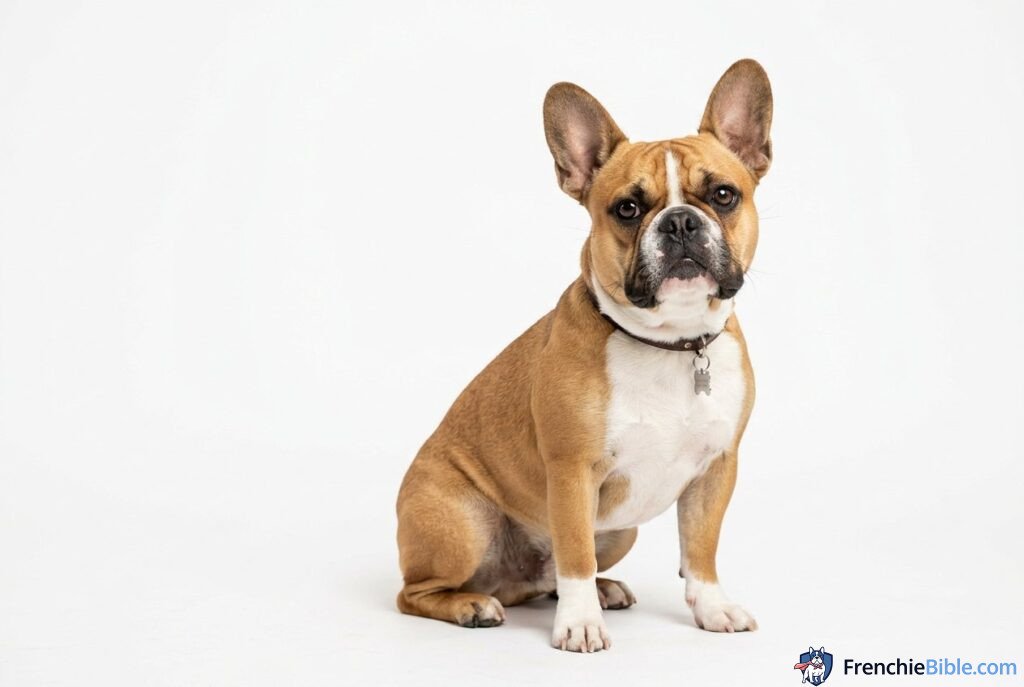
The French Bulldog, affectionately known as the “Frenchie,” has experienced an unprecedented surge in global popularity over the last decade. Known for their compact, muscular build, distinctive bat ears, and generally smooth, short coat, they have become the ultimate urban companion dog. However, in recent years, a new and highly controversial variation has taken the canine world by storm: the “Fluffy Frenchie.” Characterized by a longer, softer, and decidedly fluffier coat—most noticeably around the ears, chest, and mane—these dogs command exorbitant prices and have amassed massive followings on social media. But beneath the adorable exterior lies a fierce debate that has divided breeders, veterinarians, and breed purists alike.
The central question echoing through kennel clubs and veterinary clinics is this: Is the Fluffy Frenchie a true, 100% purebred French Bulldog, or is it the result of undocumented crossbreeding with long-haired breeds? To answer this question, we must delve deep into the complex world of canine genetics, specifically focusing on the LHTG (Long Hair Trait Gene) mutation, while also exploring the historical origins of the breed. as a French Bulldog expert and breeder and breeding expert, my goal is to dissect the science, unpack the history, and provide a comprehensive, objective analysis of the Fluffy Frenchie phenomenon.
Related Reading: Training & Behavior | Frenchie Puppy Guide | Best Food for Frenchies
The Rise of the Fluffy Frenchie: Fad or Fascinating Genetics?
What Exactly is a fluffy french bulldog?
A Fluffy Frenchie is, essentially, a French Bulldog that exhibits a long-haired coat instead of the standard short, smooth coat. This longer hair is most prominent around the collar (resembling a lion’s mane), the ears, the chest, and sometimes the hindquarters. The texture of the hair is generally softer and silkier than that of a standard Frenchie. Despite this obvious physical difference in coat length, a well-bred Fluffy Frenchie should still possess all the other hallmark morphological traits of the breed: the brachycephalic (flat) face, the heavy bone structure, the roach back, the naturally short tail, and the iconic “bat ears.”
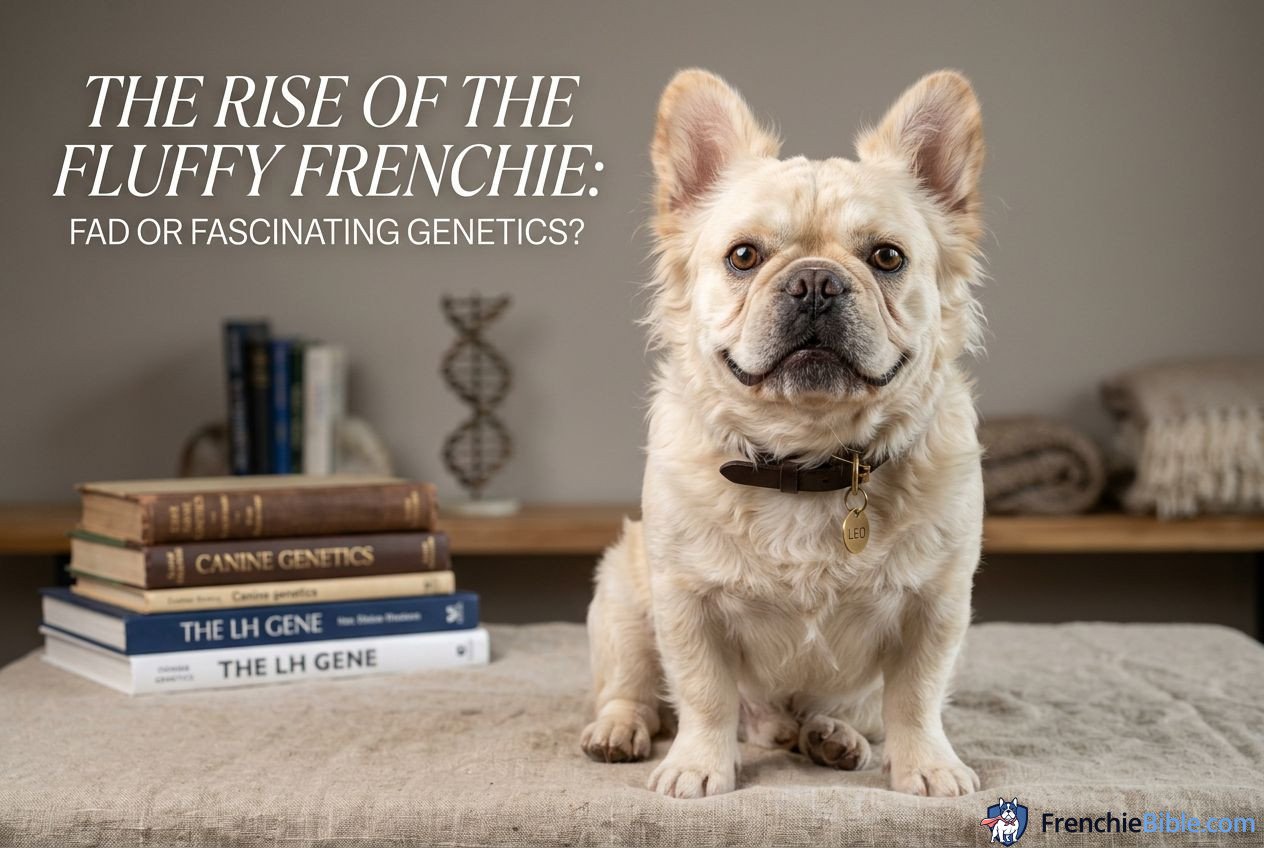
The appearance of these dogs seems almost completely at odds with the breed standard, which explicitly calls for a “moderately fine, brilliant, short, and smooth” coat. Because of this stark deviation, the immediate reaction of many traditionalists upon seeing a Fluffy Frenchie is to assume that another breed—such as a Pekingese, a Pomeranian, or a long-haired Chihuahua—must have been introduced into the bloodline at some point in the recent past.
The Initial Shock to the Frenchie Community
When Fluffy Frenchies first began appearing prominently on the market and social media around the mid-to-late 2010s, the reaction from the established breeding community was one of profound skepticism and outrage. Breed preservationists, who dedicate their lives to adhering to the strict standards set by organizations like the American Kennel Club (AKC) and the Fédération Cynologique Internationale (FCI), viewed the Fluffy Frenchie as an aberration—a “designer dog” gimmick aimed at extracting massive sums of money from uneducated buyers.
The shock was understandable. For generations, breeders had been selecting strictly for the short coat. The sudden appearance of fully coated Frenchies seemed biologically impossible without outside interference. However, as genetic testing advanced and became more accessible to the average breeder and owner, a different narrative began to emerge—one rooted deep within the canine genome.
The Genetics Behind the Fluff: Demystifying the LHTG Gene
To understand whether a Fluffy Frenchie is a purebred, one must first understand the fundamental genetics that govern coat length in dogs. Coat length is determined primarily by variations in a specific gene known as Fibroblast Growth Factor 5, or FGF5.
Understanding Fibroblast Growth Factor 5 (FGF5)
In all mammals, including humans, genes provide the blueprint for physical traits. The FGF5 gene is responsible for producing a protein that regulates the hair growth cycle. Specifically, it signals the hair follicle to stop growing (the transition from the anagen phase to the catagen phase).
In dogs with standard, short coats (like the traditional French Bulldog, the Boxer, or the Doberman Pinscher), the FGF5 gene functions normally, signaling the hair to stop growing when it is relatively short. However, when a mutation occurs in the FGF5 gene, this “stop” signal is delayed or disrupted. As a result, the hair continues to grow for a longer period, resulting in a long-haired phenotype.
The Recessive Nature of the “Fluffy” Trait
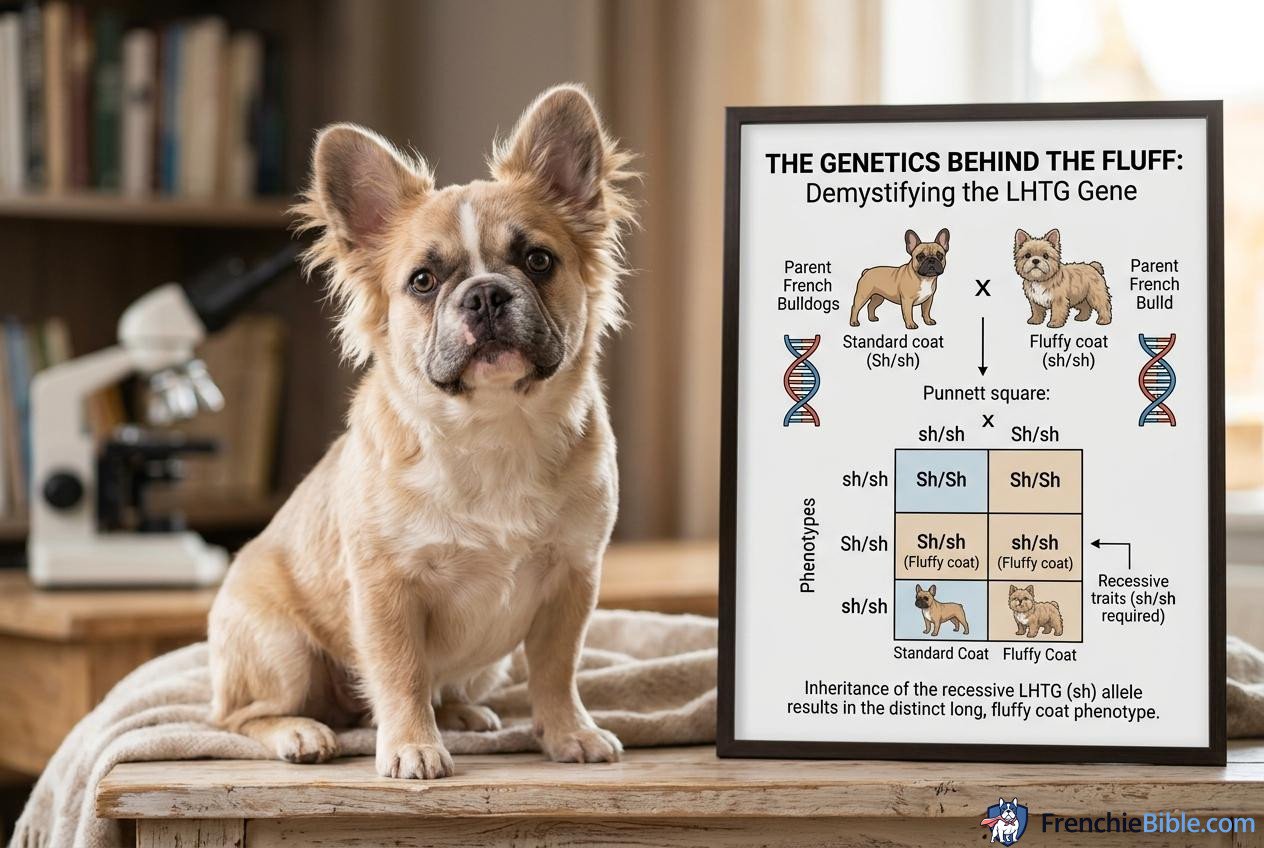
The crucial piece of the genetic puzzle regarding Fluffy Frenchies is that the mutation in the FGF5 gene causing long hair is an autosomal recessive trait.
In genetics, every dog inherits two copies of a gene (alleles) for a specific trait—one from the sire (father) and one from the dam (mother).
– Let’s designate the dominant, short-hair allele as S (Short).
– Let’s designate the recessive, long-hair mutant allele as l (Long, or “fluffy”).
Because the short-hair allele is dominant, a dog only needs one copy of it to have a short coat. Therefore:
– A dog with two short-hair alleles (S/S) will have a short coat and can only pass on the short-hair trait.
– A dog with one short-hair allele and one long-hair allele (S/l) will also have a short coat. However, this dog is a “carrier” of the fluffy gene. Visually, they look identical to an S/S dog, but they hold the secret genetic potential for long hair.
– A dog must inherit two copies of the mutant recessive allele (l/l) to actually display the long-haired, fluffy coat.
This recessive nature is the exact reason why the fluffy gene could hypothetically remain hidden within the purebred French Bulldog population for generations. If two short-haired carrier dogs (S/l) happen to be bred together, there is a 25% chance that each puppy will inherit the ‘l’ allele from both parents, resulting in an l/l puppy—a visual Fluffy Frenchie.
L4 vs. L1 Mutations: Not All Fluff is the Same
Genetic science has revealed that there isn’t just one mutation on the FGF5 gene that causes long hair; there are several. In the context of French Bulldogs, geneticists refer to the Long Hair Trait Gene (LHTG) mutations. The specific mutations identified in Frenchies are typically labeled as L1 and L4.
- The L1 Mutation: This is the most common mutation associated with long hair across many different dog breeds. It is widely distributed throughout the canine population.
- The L4 Mutation: This mutation is somewhat more specific and was initially identified as being prevalent in the French Bulldog population.
For a Frenchie to be a visual fluffy, they must possess two recessive ‘L’ alleles. These can be combinations such as L1/L1, L4/L4, or L1/L4. The presence of the L4 mutation, which is less common in other breeds but found in Frenchies, gives credence to the argument that the mutation might have originated or been present in the breed’s foundational stock, rather than being a recent introduction from a completely different breed.
Genetic Testing and Verification
Today, verifying the genetic status of a French Bulldog is as simple as a cheek swab. Reputable DNA testing companies (such as Animal Genetics, UC Davis VGL, and Embark) offer specific tests for the FGF5 mutations (L1, L2, L3, L4, etc.).
When a breeder tests a dog, the results will definitively show whether the dog is clear of the fluffy gene, a carrier of the fluffy gene, or a visual fluffy. Furthermore, these comprehensive genetic tests also analyze hundreds of thousands of genetic markers to determine the dog’s breed ancestry.
When Fluffy Frenchies are subjected to these advanced breed ancestry tests (like Embark, which tests over 200,000 genetic markers), the results consistently come back as 100% French Bulldog. From a purely genetic, DNA-marker standpoint, science tells us that the Fluffy Frenchie is indeed a purebred.
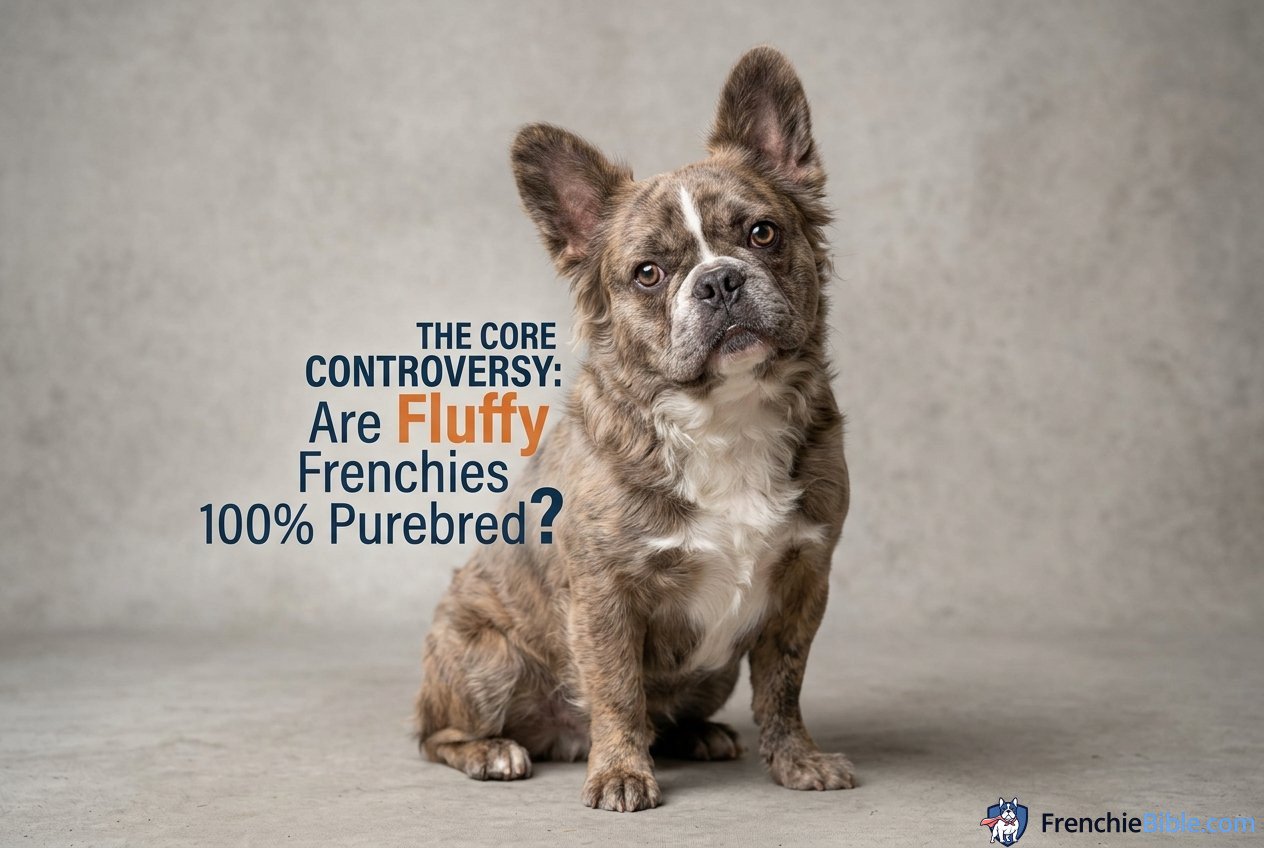
The Core Controversy: Are Fluffy Frenchies 100% Purebred?
Despite the DNA evidence pointing to their purebred status, the controversy remains heated. The debate hinges on two drastically different interpretations of how the FGF5 mutation came to exist within the French Bulldog gene pool.
The Argument for Purebred Status: Hidden Recessives
The strongest argument supporting the purebred status of Fluffy Frenchies relies on the mechanics of autosomal recessive genetics and the breed’s history. Proponents argue that the L gene has been swimming in the French Bulldog gene pool since the breed’s inception in the 1800s.
Because the trait is recessive, it can be passed down silently from generation to generation by short-haired carriers. In the past, if an accidental fluffy puppy was born in a litter of standard Frenchies, breeders—who were strictly adhering to the short-coated breed standard—would likely have culled the puppy or sold it quietly as a “pet quality” anomaly without breeding rights. Before the era of social media and widespread genetic testing, these anomalies would have gone completely unnoticed by the broader community.
It wasn’t until breeders began actively utilizing DNA testing to identify carriers, and then intentionally pairing two carriers together, that Fluffy Frenchies began appearing with frequency. According to this theory, the gene was always there; we are simply seeing it now because breeders are actively selecting for it. The presence of the L4 mutation, which is highly specific to the breed, further bolsters the theory that the mutation is indigenous to the French Bulldog.
The Argument Against: Historical Crossbreeding Theories
On the other side of the aisle are the purists and skeptics who maintain that the Fluffy Frenchie cannot possibly be a true purebred. Their argument rests on the belief that somewhere along the line, relatively recently (perhaps in the 1980s or 1990s), unscrupulous breeders seeking to create a novel, highly marketable dog secretly introduced another breed into their French Bulldog lines.
The prime suspects for this hypothetical crossbreeding are long-haired toy breeds such as the Pekingese, the Pomeranian, or even long-haired Chihuahuas. The theory suggests that a breeder mated a French Bulldog with one of these long-haired breeds, and then took the resulting mixed-breed offspring and continually “back-crossed” them with purebred French Bulldogs over several generations.
In genetic terms, if you back-cross a mixed breed to a purebred line for five or six generations, the resulting offspring will possess roughly 98-99% of the genetic markers of the purebred line. At this point, standard commercial DNA tests might read the dog as “100% French Bulldog” because the percentage of DNA from the initial outcross is so infinitesimally small that it falls below the threshold of detection. However, the one crucial piece of DNA that was retained through careful selection would be the recessive FGF5 mutant allele.
Skeptics argue that this scenario is highly probable given the astronomical financial incentives associated with breeding “rare” colored and fluffy Frenchies. They assert that even if current DNA tests say “100% French Bulldog,” the foundational stock was tainted, making the Fluffy Frenchie an illegitimate variation.
What Do Kennel Clubs Say? (AKC, KC, FCI)
The major kennel clubs around the world—including the American Kennel Club (AKC), the UK Kennel Club (KC), and the Fédération Cynologique Internationale (FCI)—serve as the ultimate arbiters of breed standards. Their stance on the Fluffy Frenchie is unequivocal: the long coat is a disqualifying fault.
The official AKC standard for the French Bulldog states regarding the coat: “Coat is brilliant, short and smooth. Skin is soft and loose, especially at the head and shoulders, forming wrinkles. Disqualifications: Coats other than short and smooth.“
While a Fluffy Frenchie can potentially be registered with the AKC if its parents are registered purebreds (because the AKC is essentially a pedigree registry, not an arbiter of genetic perfection), it cannot compete in conformation dog shows. It is immediately disqualified.
However, it is crucial to differentiate between “disqualified from show” and “not purebred.” Many purebred dogs have disqualifying faults (e.g., the wrong eye color, a kinked tail, or the wrong coat type). A disqualifying fault simply means the dog does not meet the idealized aesthetic standard of the breed; it does not inherently mean the dog is a mixed breed.
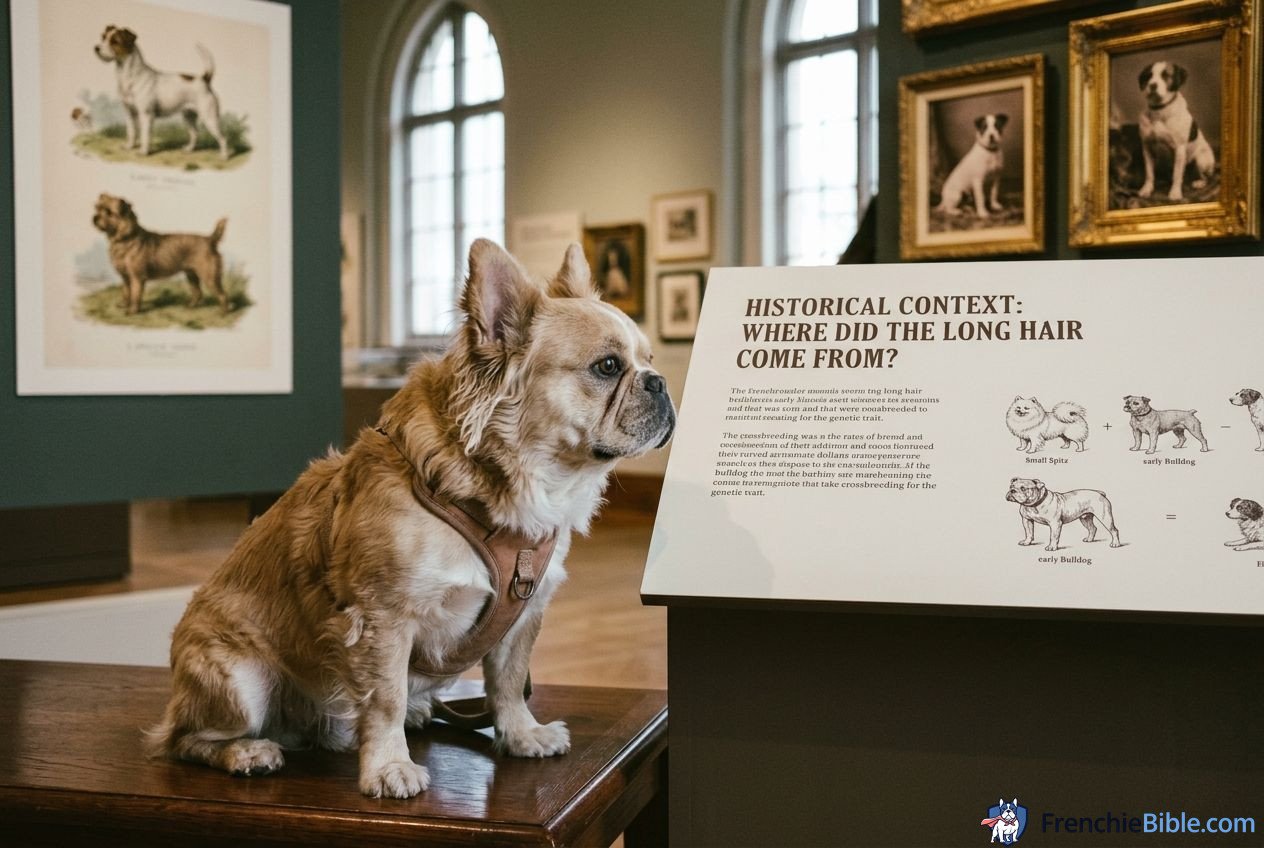
Historical Context: Where Did the Long Hair Come From?
To evaluate the plausibility of the “hidden recessive” theory, we must examine the messy, poorly documented history of the French Bulldog’s origins in the 19th century.
The Ancestors: English Bulldogs, Terriers, and Pugs
The history of the French Bulldog begins in England during the Industrial Revolution. Lace makers in Nottingham often kept small, toy-sized versions of the English Bulldog as companions and ratters. When the lace industry moved to France (specifically Normandy and Paris) due to the mechanization of the trade in England, these workers brought their small bulldogs with them.
In France, these toy bulldogs became incredibly popular. To achieve the specific look the French favored—including the erect “bat ears” and a more compact, active frame—these imported toy bulldogs were indiscriminately crossbred with local dogs. Historical records from the era are sparse, but it is widely accepted by cynologists that these crosses included local terrier breeds (to improve ratting ability) and Pugs (which contributed to the brachycephalic face and compact body).
The Parisian Boulevards and Ratters
The early French Bulldogs were the dogs of the Parisian working class, butchers, and the “belles de nuit” (ladies of the night). Breeding in 19th-century Paris was not a scientific endeavor governed by strict studbooks or genetic testing; it was a haphazard process aimed at producing a rugged, rat-catching companion dog.
During this chaotic foundational period, it is entirely possible—even probable—that dogs carrying long-hair genes were introduced into the breeding pool. Various European terriers, some with wiry or longer coats, were ubiquitous in Paris at the time. If a terrier with a mutant FGF5 allele was used in a breeding, that recessive gene could have easily been permanently embedded into the nascent French Bulldog gene pool.
Could the Gene Have Survived Unnoticed for a Century?
The question then becomes: if the gene was introduced in the 1850s, how could it remain hidden until the 2010s?
The math of population genetics makes this entirely feasible. Because the trait is recessive, it only expresses visually when two carriers mate. For most of the breed’s history, breeders actively selected against any dog that did not have a short coat. Therefore, if a fluffy puppy was born, it was removed from the gene pool, ensuring the trait was heavily suppressed.
However, because carriers look perfectly normal, they continued to be bred. The gene frequency might have been incredibly low—perhaps only 1% or 2% of the population carried the allele. In a population of thousands of dogs, the statistical probability of two carriers randomly mating is very low. When you factor in the massive explosion in the French Bulldog population over the last twenty years, the absolute number of carriers inevitably increased. Once breeders discovered how to test for the gene, they could intentionally find those carriers and breed them, bringing the hidden gene to the surface in just one generation.
Therefore, from a historical and genetic perspective, it is scientifically sound to conclude that the FGF5 mutation has been present in the purebred French Bulldog population since the 19th century.
Health Implications of the Fluffy Trait
as a French Bulldog expert and breeder, my primary concern is not the purity of the pedigree or the aesthetics of the coat, but the health and welfare of the animal. French Bulldogs are a brachycephalic breed, which means they are already prone to a myriad of severe health issues, particularly related to respiration and thermoregulation. How does the fluffy coat impact these already compromised dogs?
Does the LHTG Gene Affect Health?
First, it is important to state clearly that the FGF5 gene mutation itself is not linked to any specific health defects. The gene merely controls the length of the hair cycle. A dog is not inherently sicker simply because it has long hair. The health of a Fluffy Frenchie depends entirely on the overall genetic health and structural conformation of its parents, just as it does with a standard Frenchie.
Temperature Regulation and Overheating Risks
French Bulldogs are notoriously bad at regulating their body temperature. Because of their shortened snouts and compressed airways (Brachycephalic Obstructive Airway Syndrome, or BOAS), they cannot pant efficiently to cool themselves down. They are at an exceptionally high risk of heatstroke, which can be fatal in minutes.
The addition of a thick, long coat to a brachycephalic dog creates a significant compounding risk. While standard Frenchies have a single, short coat that allows heat to dissipate relatively easily from their skin, a Fluffy Frenchie has an insulating layer of fur that traps body heat.
From a physiological standpoint, putting a heavy coat on a dog that already struggles to breathe and cool down is a recipe for disaster in warm or humid climates. Fluffy Frenchies require extreme vigilance from their owners during the summer months. They must be kept strictly in air-conditioned environments, exercised only during the coolest parts of the day, and closely monitored for any signs of hyperthermia.
Grooming Requirements and Skin Conditions
Standard French Bulldogs are low-maintenance when it comes to grooming; a quick brush and a bath every few months usually suffice. However, they are highly prone to skin allergies, atopic dermatitis, and skin fold infections (especially around the facial wrinkles and tail pocket).
Fluffy Frenchies introduce a new level of grooming complexity. Their longer, softer hair requires regular brushing to prevent matting, especially around the ears, armpits, and hindquarters. More concerning from a breeder’s perspective is that the longer coat can hide developing skin issues. An owner might not notice a hot spot, a yeast infection in a skin fold, or an allergic rash as quickly as they would on a short-coated dog. The trapped moisture and reduced airflow against the skin caused by the longer coat can also create a perfect microenvironment for bacterial and fungal infections.
The Danger of “Fad” Breeding: Compromising Health for Looks
The most severe health risk associated with Fluffy Frenchies is not the hair itself, but the breeding practices used to produce them. Because visual Fluffies and carriers are relatively rare, and because they command astronomical prices, unscrupulous breeders often prioritize the FGF5 gene above all else—including structural health, respiratory function, and genetic screening for severe diseases.
When breeders engage in “color breeding” or “fad breeding,” they significantly narrow the gene pool. To produce a visual fluffy, a breeder might pair two carriers that are closely related (inbreeding), or they might use a dog with severe BOAS or spinal deformities simply because it possesses the coveted ‘l’ allele.
This practice leads to a rapid deterioration of the breed’s overall health. In years of breeding practice, we frequently see Fluffy Frenchies (and exotic colored Frenchies) presenting with severe airway obstruction, extreme allergies, hemivertebrae (spinal deformities), and early-onset intervertebral disc disease (IVDD). When the primary goal of a breeding program is generating a specific coat type for maximum profit, health is inevitably compromised.
The Economics of the Fluffy Frenchie
It is impossible to discuss the Fluffy Frenchie without addressing the staggering economics driving their existence. They are among the most expensive dogs in the world, a fact that heavily influences the controversy surrounding them.
Skyrocketing Prices: Why Do They Cost So Much?
A standard, well-bred, health-tested French Bulldog from a reputable preservation breeder typically costs between $3,000 and $5,000.
In stark contrast, Fluffy Frenchies routinely sell for $10,000 to $30,000. If the dog also possesses “rare” coat colors—such as Isabella, Merle, or Lilac—the price can skyrocket even further, with some highly sought-after studs or breeding females changing hands for upwards of $100,000.
These astronomical prices are driven purely by market forces: high demand and artificial scarcity. Social media platforms like Instagram and TikTok have popularized the “exotic” Frenchie look, creating immense consumer demand for dogs that look unique or rare. Because it takes specialized DNA testing and careful pairing of carriers to produce visual fluffies, breeders can claim scarcity and artificially inflate prices.
Spotting Unethical Breeders vs. Responsible Preservationists
The massive financial incentives have attracted thousands of unethical, profit-driven breeders (often referred to as “greeders”) into the French Bulldog space. These individuals operate puppy mills or large-scale breeding operations where dogs are viewed purely as livestock meant to generate income.
as a French Bulldog expert and breeder, I advise clients to be extremely wary of breeders whose entire marketing strategy revolves around the “fluffy” trait or rare colors.
A responsible breeder—even one who chooses to breed Fluffy Frenchies—will always prioritize health above all else. They will:
1. Conduct comprehensive genetic health testing (OFA, CHIC) on both parents, screening for conditions like juvenile cataracts, degenerative myelopathy, and cystinuria.
2. Perform thorough veterinary examinations of the parents’ airways, spine, and heart.
3. Be transparent about the dog’s health history and provide a health guarantee.
4. Interview potential buyers extensively to ensure they are prepared for the immense responsibility of owning a brachycephalic breed.
5. Emphasize structural correctness and temperament over coat length.
If a breeder’s website prominently displays the prices and genetic color/fluffy codes of the dogs but makes no mention of specific OFA health testing or structural evaluations, they are prioritizing profit over the welfare of the animals.
The Impact on the Traditional French Bulldog Market
The rise of the Fluffy Frenchie and exotic colors has fractured the French Bulldog community. Preservation breeders, who have spent decades working to improve the health and structure of the standard dog, feel their efforts are being overshadowed by a lucrative fad. There is a legitimate fear that the massive influx of poorly bred, unhealthy Fluffy Frenchies will severely damage the overall health of the breed and lead to increased rates of abandonment when owners realize they cannot afford the massive veterinary bills associated with BOAS surgery or spinal issues.
Breeding Fluffy Frenchies: A Veterinarian’s Perspective
If we accept that the FGF5 mutation is a naturally occurring historical recessive trait within the breed, and if there is massive public demand for these dogs, how can they be bred responsibly? as a French Bulldog expert and breeder, I believe that if breeders choose to produce Fluffy Frenchies, they must adhere to the highest possible standards of health and welfare.
The Importance of Full Genetic Health Panels (Beyond Color/Coat)
Breeding decisions must never be made solely based on the FGF5 gene. Breeders must utilize comprehensive genetic panels to ensure they are not passing down devastating inherited diseases. For example, if a breeder has a visual Fluffy that is also a carrier for Degenerative Myelopathy (a fatal neurological disease), they must exercise extreme caution and ensure they only pair that dog with a clear mate to avoid producing affected puppies. The pursuit of fluff must never blind a breeder to the essential genetic health of the animal.
Respiratory Function Grading Scheme (RFGS)
Given the compounded risk of a thick coat on a brachycephalic dog, respiratory health is paramount. Breeders of Fluffy Frenchies should ideally participate in the Respiratory Function Grading Scheme (RFGS), a clinical assessment developed to identify dogs with clinically significant BOAS.
Only dogs that score as Grade 0 (clinically unaffected) or Grade 1 (mildly affected) should be used in any breeding program. Breeding dogs with Grade 2 or Grade 3 BOAS—regardless of how fluffy or beautiful they are—is unethical and perpetuates suffering.
Maintaining Breed Conformation Standard
A Fluffy Frenchie should still look structurally like a French Bulldog. They should have a strong, compact body, a level topline that slopes slightly behind the shoulders to form a roach back, and straight, sturdy legs. Breeders must avoid selecting for extreme features, such as overly flattened faces, non-existent nares (nostrils), or exaggeratedly short backs, all of which contribute to severe health issues. The dog must have the physical capacity to move freely and breathe comfortably.
Frequently Asked Questions (FAQ)
1. Are Fluffy Frenchies recognized by the AKC?
Fluffy Frenchies can be registered with the American Kennel Club (AKC) as purebred French Bulldogs, provided their parents are registered. However, the long coat is listed as a disqualifying fault in the breed standard. This means that while they are legally considered purebred by the registry, they cannot compete in AKC conformation dog shows.
2. Do Fluffy Frenchies shed more than standard Frenchies?
Yes. While standard French Bulldogs are single-coated and do shed, Fluffy Frenchies have a longer coat that requires significantly more maintenance. They tend to shed more noticeably, and their longer hair can easily become matted if not brushed regularly. They are not hypoallergenic.
3. Are Fluffy Frenchies less healthy than standard French Bulldogs?
The long hair gene (FGF5 mutation) does not inherently cause health problems. However, because they are a “fad” dog, many Fluffy Frenchies are bred by unethical breeders who prioritize coat length over structural health. Furthermore, the thick coat makes them far more susceptible to overheating and heatstroke, which is a major concern for an already brachycephalic breed. A poorly bred Fluffy Frenchie is highly likely to suffer from severe health issues.
4. How can I tell if a Fluffy Frenchie breeder is reputable?
A reputable breeder will prioritize health over color or coat length. They will provide proof of comprehensive health testing (such as OFA certifications for heart, patellas, and spine, and RFGS grading for breathing). They will ask you extensive questions, provide a robust health guarantee, and never use terms like “teacup,” “micro,” or “rare” to inflate prices artificially. If the breeder only advertises DNA color panels and prices, walk away.
5. Why are Fluffy Frenchies so expensive?
Their high price tag (often ranging from $10,000 to over $30,000) is primarily due to market trends, high consumer demand, and artificial scarcity. Producing a Fluffy Frenchie requires specific genetic pairing, and breeders capitalize on this “rarity” to charge exorbitant prices. The price is not an indicator of the dog’s health or structural quality.
6. Can two short-haired Frenchies produce a Fluffy puppy?
Yes. Because the long hair trait is autosomal recessive, two standard, short-haired French Bulldogs can produce a fluffy puppy if both parents are carriers of the recessive FGF5 mutant allele (S/l). If two carriers mate, each puppy in the litter has a 25% chance of being a visual Fluffy.
Conclusion: The Future of the Fluffy French Bulldog
The debate over the Fluffy Frenchie is a microcosm of the broader challenges facing modern purebred dog breeding. Are they purebred? Genetic testing robustly answers “yes,” indicating that the FGF5 mutation is a historical recessive trait that has existed quietly within the breed’s gene pool since its chaotic inception in the 19th century. They are not the result of recent, clandestine crossbreeding with Pomeranians or Pekingese.
However, confirming their purebred status does not alleviate the serious concerns surrounding their existence. The Fluffy Frenchie represents the dangerous intersection of canine genetics, extreme brachycephaly, and lucrative market fads. The primary issue is not the length of their hair, but the ethical framework of the people breeding them.
When profit motives supersede the health, welfare, and structural integrity of the animal, the dogs ultimately suffer. A long, luxurious coat on a dog that cannot breathe properly, cannot regulate its body temperature, and suffers from spinal deformities is not a triumph of genetics; it is a failure of animal husbandry.
For the Fluffy Frenchie to have a sustainable and ethical future, the breeding community must radically shift its priorities. Consumers must stop rewarding unethical breeders with exorbitant sums of money for dogs bred solely for aesthetics. Until health testing, respiratory function, and structural correctness become the non-negotiable prerequisites for breeding—rather than just the presence of a recessive fluff gene—the Fluffy Frenchie will remain a beautiful, but deeply problematic, manifestation of human folly.
Disclaimer: We are not veterinarians and do not hold veterinary medical licenses. The information provided in this article is based on years of breeding and daily care experience and is for educational purposes only. It should not replace professional veterinary advice. Always consult with a licensed veterinarian if you have concerns about your French Bulldog’s health or before starting any new treatment.