
Disclaimer: The information provided in this guide is intended for educational and informational purposes only. It does not constitute professional veterinary advice, diagnosis, or treatment. Always consult a licensed veterinarian if you suspect your French Bulldog is ill, exhibiting signs of a fever, or experiencing any health issues.
As a French Bulldog owner, you are likely attuned to the unique quirks, adorable snorts, and charming personality of your bat-eared companion. French Bulldogs are cherished for their loving nature and compact size. However, as a brachycephalic (flat-faced) breed, they are predisposed to certain health vulnerabilities. Understanding their baseline health parameters is a critical aspect of ensuring their longevity and well-being.
Related Reading: Training & Behavior | Frenchie Puppy Guide | Best Food for Frenchies
When your Frenchie feels warm to the touch, panic can easily set in. Are they just overheating from a brisk walk, or are they fighting off a serious infection? How do you distinguish between hyperthermia (heatstroke) and a true medical fever? What is the actual normal temperature range for a dog, and more specifically, a French Bulldog?
In this guide, written from the perspective of an experienced French Bulldog breeding expert and dedicated owner, we will explore the normal physiological temperature parameters, the signs of fever, the underlying causes, and how to accurately measure your Frenchie’s temperature at home.
1. Understanding Your French Bulldog’s Normal Body Temperature
Before we can identify what constitutes a fever, it is imperative to establish what is considered “normal.” A common misconception among new dog owners is applying human physiological standards to their pets. If your temperature was 101.5°F (38.6°C), you would be considered to have a fever. For your French Bulldog, however, this is perfectly normal.
The Standard Canine Temperature Range
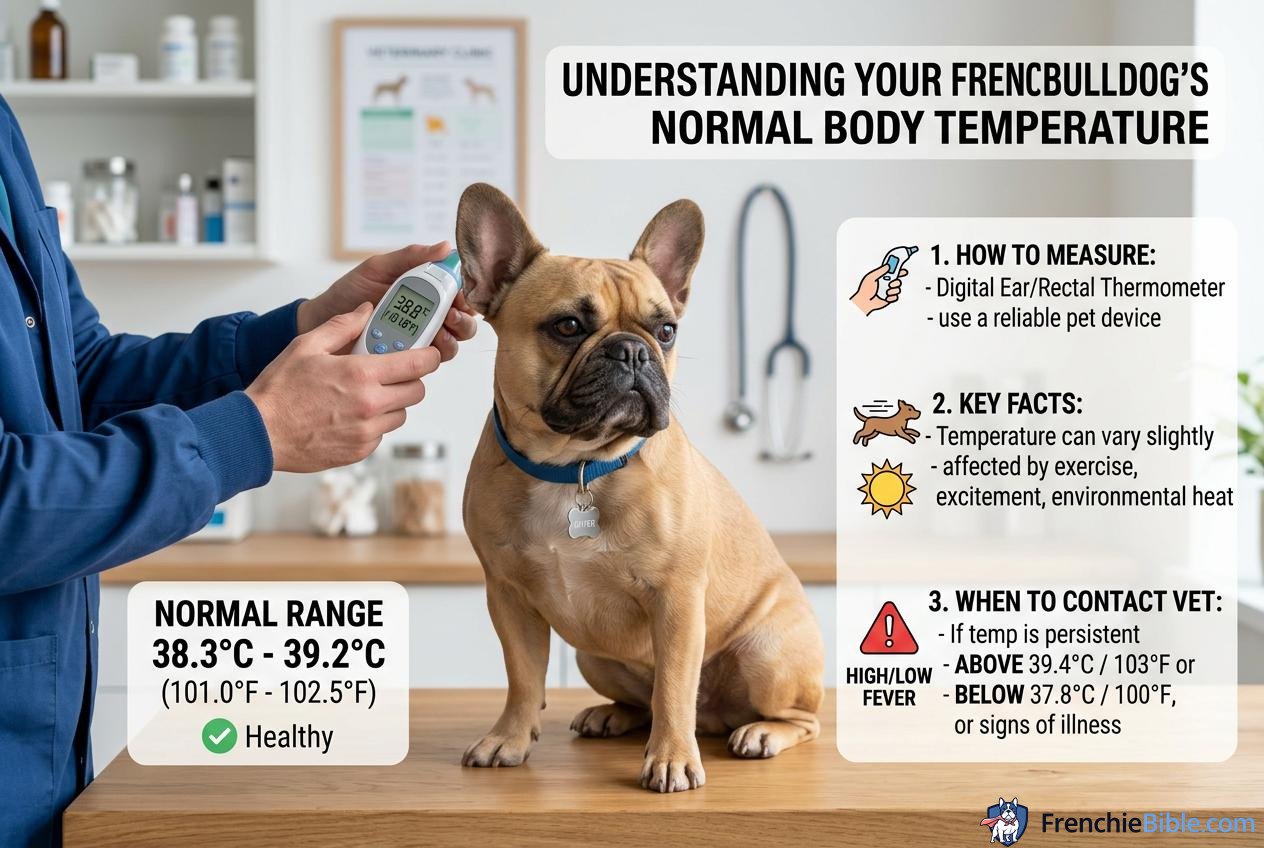
The normal baseline body temperature for a healthy, resting dog, including the French Bulldog, falls within the range of 101.0°F to 102.5°F (38.3°C to 39.2°C).
Because dogs have a higher metabolic rate than humans, their internal furnace runs a bit hotter. It is entirely normal for your Frenchie to feel physically warmer to the touch than your own skin.
Why Temperature Fluctuates Throughout the Day
A Frenchie’s body temperature is not a static number; it fluctuates based on a variety of factors. Recognizing these benign fluctuations is crucial so you do not mistake a temporary physiological rise for a pathological fever.
- Physical Exertion and Exercise: After a play session or enthusiastic zoomies, your Frenchie’s body temperature will naturally elevate. It can temporarily rise closer to 103°F (39.4°C) safely, provided they cool down shortly afterward.
- Environmental Temperature and Humidity: French Bulldogs are notoriously sensitive to ambient temperatures. Their shortened airways make them less efficient at panting. On a hot, humid summer day, their resting temperature may sit at the higher end of the normal spectrum.
- Excitement, Stress, and Anxiety: The “fight or flight” response causes a surge in adrenaline, which increases heart rate and core body temperature.
- Time of Day: Body temperature typically follows a circadian rhythm, often being slightly lower in the early morning and peaking in the late afternoon.
- Digestion: The metabolic process of digesting a heavy meal generates heat, which can cause a very slight, temporary uptick.
The Danger Zone: When Is It Actually a Fever?
A true fever is a regulated increase in the body’s thermostat set point. It is an active immune system response to disease, infection, or inflammation.
- Mild to Moderate Fever: 103.0°F to 104.5°F (39.4°C to 40.3°C). Veterinary consultation is recommended, especially if the fever persists for more than 24 hours.
- High and Dangerous Fever: 105.0°F (40.5°C) and above. This is a medical emergency. Temperatures at this level can lead to cellular damage, organ failure, and irreversible harm if not treated immediately.
- Subnormal Temperature (Hypothermia): Below 99.0°F (37.2°C). This can occur in severe shock, systemic infection, or prolonged exposure to cold, and is equally as dangerous.
2. Fever vs. Hyperthermia (Heatstroke): A Crucial Distinction for Frenchie Owners
Understanding the distinction between a true fever and hyperthermia (heatstroke) is perhaps the most life-saving knowledge you can possess as a Frenchie owner.
What is a True Fever?
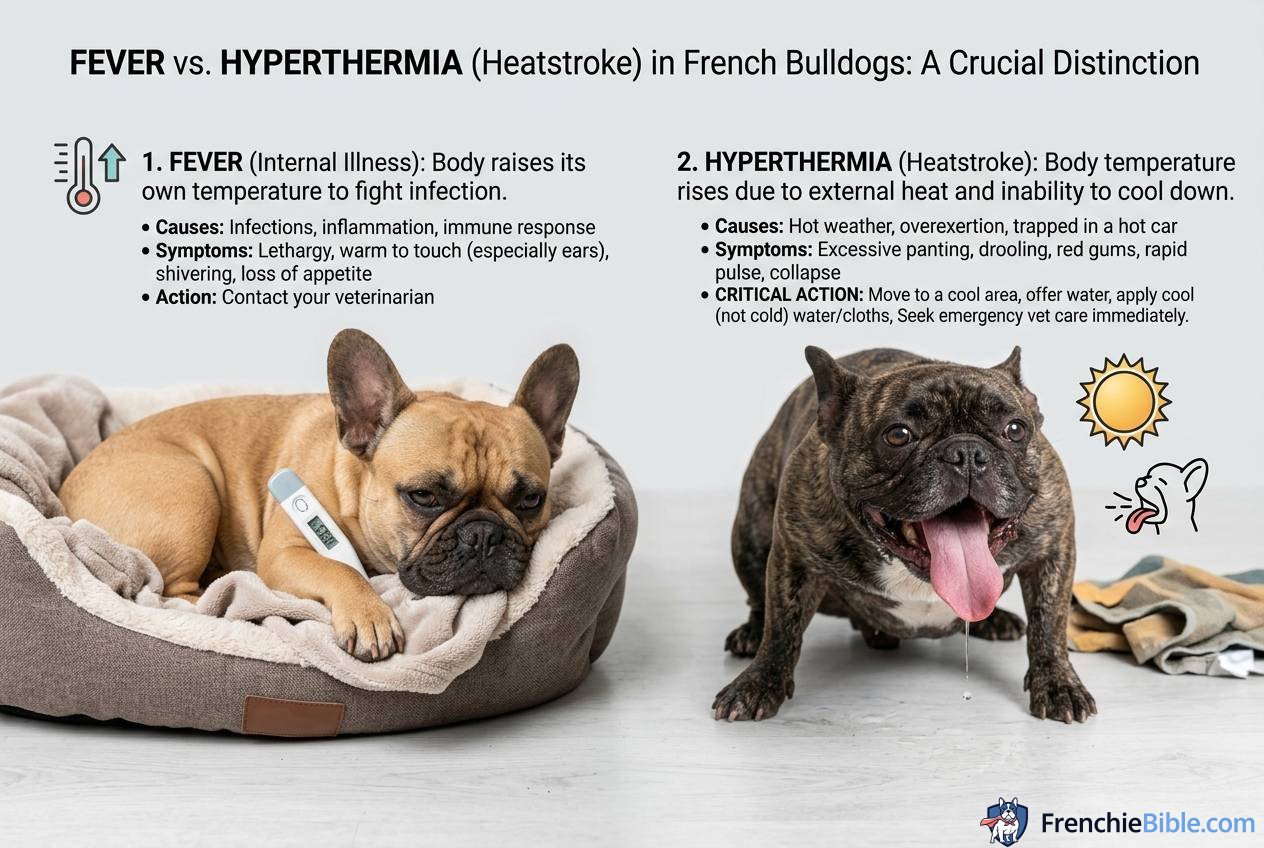
A true fever is an internal, biological mechanism. The brain’s hypothalamus deliberately resets the body’s target temperature to a higher level. A warmer physiological environment enhances the efficiency of white blood cells and inhibits the replication of many bacteria and viruses. A fever is the body’s defense mechanism fighting a battle.
What is Hyperthermia (Heatstroke)?
Hyperthermia is an externally driven crisis. The brain’s thermostat is set normally, but the body is unable to dissipate heat fast enough to keep up with heat being generated or absorbed from the environment.
For a French Bulldog, hyperthermia is a constant threat due to Brachycephalic Obstructive Airway Syndrome (BOAS). Their elongated soft palates, narrow tracheas, and pinched nostrils severely restrict the volume of air they can move. Since dogs cool themselves primarily through panting, Frenchies are highly inefficient coolers.
Key Differences in Symptoms:
- Fever: Shivering, lethargy, lack of appetite, seeking warm places, hiding.
- Heatstroke: Frantic panting, roaring or raspy breathing, dark red or purple gums, drooling, collapsing, feeling “hot to the touch” all over.
Treatment Distinction: Never try to forcefully cool down a dog with a true fever (e.g., ice baths) as their body will fight harder to generate heat. Hyperthermia, however, requires immediate, controlled cooling and emergency veterinary care.
3. Common Signs and Symptoms of a Fever in French Bulldogs
Dogs are evolutionarily wired to hide their illnesses. Therefore, recognizing a fever requires a vigilant owner who knows their dog’s normal baseline behaviors.
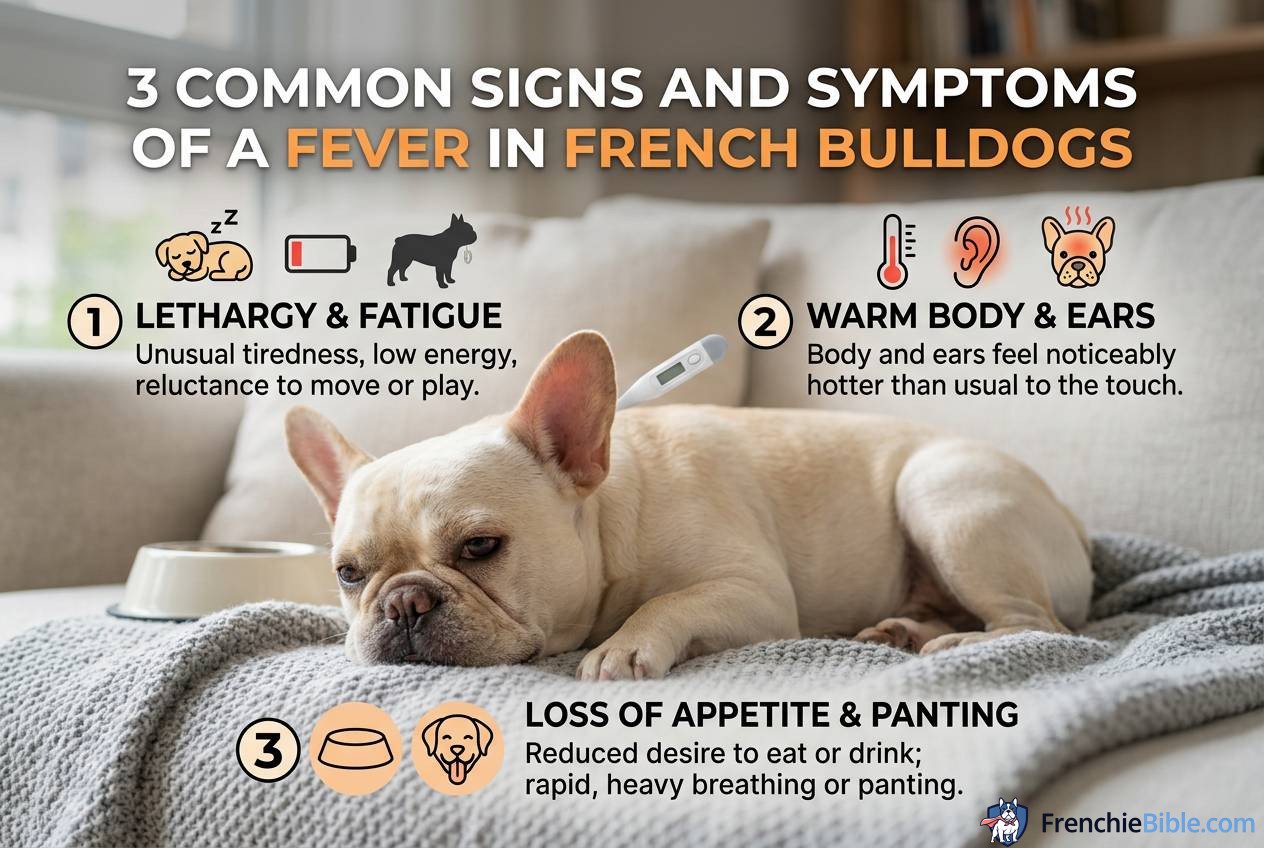
If your French Bulldog has a fever, they will likely exhibit a combination of physical, behavioral, and physiological signs.
Physical Indicators
- Warm Ears and Nose: While not definitive, if the base of your Frenchie’s ears or their nose feels significantly hotter than usual, it can be a clue. However, a dog’s nose can naturally alternate between warm and cool throughout the day without illness.
- Red or Glassy Eyes: A feverish dog often has eyes that appear dull, glazed, heavily bloodshot, or squinty.
- Shivering or Trembling: If the brain sets the body’s thermostat higher, the dog may feel “cold” and begin shivering to generate muscle heat.
- Warm Underbelly and Groin: The areas with less hair will radiate excessive heat when a dog has a fever.
- Rapid Heart Rate: A higher metabolic rate driven by a fever requires the heart to pump faster.
- Changes in Gum Color: Gums might appear unusually pale or bright red. Healthy gums should be a bubblegum pink.
Behavioral and Affective Changes
- Profound Lethargy and Depression: Often the very first sign. Your usually playful, bouncy Frenchie may suddenly refuse to get out of bed.
- Loss of Appetite: A sick dog will almost always stop eating. If your food-motivated Frenchie turns their nose up at their favorite treat, it is a significant red flag.
- Reluctance to Move or Stiffness: Inflammation often accompanies fevers, leading to joint pain. Your dog may hesitate to jump on the couch or walk with a stiff gait.
- Hiding: Sick animals instinctively seek out quiet, isolated places to rest.
- Increased Clinginess: Conversely, some Frenchies become incredibly needy when they feel ill.
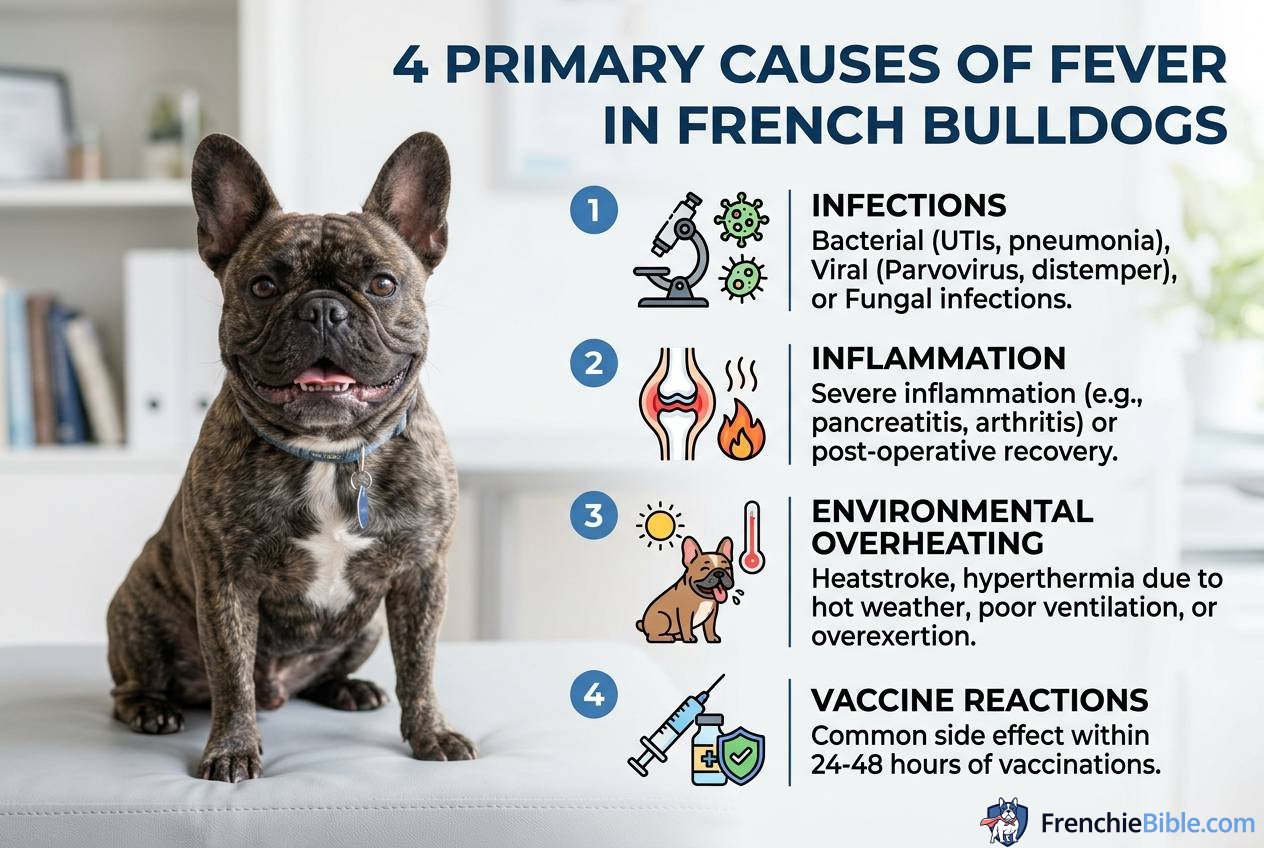
4. Primary Causes of Fever in French Bulldogs
The causes of fever generally fall into several broad categories.
1. Infectious Diseases (The Most Common Cause)
- Bacterial Infections: These can occur anywhere in the body. Common sites include ear infections, skin fold infections, urinary tract infections, dental disease, and respiratory infections.
- Viral Infections: Parvovirus, Distemper, Canine Influenza, and Adenovirus. (Regular vaccinations largely prevent the most severe of these).
- Fungal Infections: Systemic fungal infections, usually acquired from inhaling spores in the environment.
- Parasitic and Tick-Borne Diseases: Lyme disease, Ehrlichiosis, Anaplasmosis, and Babesiosis are transmitted by tick bites and frequently present with high fevers, joint pain, and lethargy.
2. Inflammation and Immune-Mediated Disorders
Sometimes the immune system attacks the dog’s own healthy tissues, causing inflammation and fever.
- Pancreatitis: Inflammation of the pancreas, often triggered by a highly fatty meal. Frenchies with sensitive stomachs are prone to this.
- Immune-Mediated Hemolytic Anemia (IMHA): The body attacks its own red blood cells.
- Polyarthritis: Immune-mediated joint inflammation causing severe stiffness and cyclic fevers.
3. Toxins and Poisoning
Ingesting toxic substances can cause a rapid, severe febrile response.
- Human Medications: Ibuprofen, acetaminophen, and antidepressants.
- Toxic Foods: Grapes, raisins, chocolate, macadamia nuts, xylitol (found in gum and some peanut butters), onions, and garlic.
- Environmental Toxins: Antifreeze, rat poison, toxic house plants (like Sago Palm or Lilies), and certain garden fertilizers.
4. Post-Vaccination Reactions
It is entirely normal for a dog to develop a mild, low-grade fever (up to 103°F) for 24 to 48 hours following routine vaccinations. However, if the fever exceeds 104°F, lasts longer than two days, or is accompanied by facial swelling or hives, it requires immediate veterinary attention.
5. Neoplasia (Cancer)
In older French Bulldogs, persistent, low-grade fevers that do not respond to initial treatment can sometimes indicate underlying cancers, such as lymphoma or leukemia.
5. How to Accurately Measure Your French Bulldog’s Temperature at Home
“Feeling their nose” is an old wives’ tale that needs to be retired. A dog can have a cold, wet nose and a fever of 104°F, or a hot, dry nose and be perfectly healthy.
If you suspect your Frenchie is ill, you must use a thermometer. Learning this skill is non-negotiable.
Why the Rectal Method is the Most Accurate
While digital ear thermometers designed for pets exist, they are less consistently accurate. The anatomy of a dog’s ear canal is L-shaped, making it difficult to point the sensor accurately. Therefore, rectal thermometry remains the most reliable method for assessing a dog’s core body temperature.
Equipment You Will Need
- A Digital Thermometer: Dedicate a rapid-read digital thermometer exclusively to your dog and label it clearly.
- Lubricant: Petroleum jelly, KY Jelly, or baby oil.
- Cleaning Supplies: Isopropyl rubbing alcohol and cotton balls.
- High-Value Treats: Peanut butter (xylitol-free), squeeze cheese, or boiled chicken to distract and reward.
- An Assistant: Highly recommended for holding and comforting the dog.
The Measurement Process
Step 1: Preparation
Gather all your supplies. Apply a generous dollop of lubricant to the silver tip of the thermometer. Keep the atmosphere calm — if you are anxious, your Frenchie will sense it and become tense.
Step 2: Positioning
Have your assistant gently hold the Frenchie in a standing position. A second person should tuck their body under your non-dominant arm, holding them securely against your side. Smearing peanut butter on a lick mat attached to a wall is a fantastic distraction.
Step 3: Elevate the Tail
Gently grasp the base of the tail and slowly lift it upward to expose the anus. Be very gentle, as some Frenchies have sensitive tail pockets in this area.
Step 4: Insertion
Gently insert the lubricated silver tip into the rectum approximately 1 inch to 1.5 inches (2.5 cm to 3.8 cm) deep for a French Bulldog. Angle the thermometer slightly so the tip rests against the rectal wall for a more accurate reading. Do not force it.
Step 5: Wait and Read
Hold the thermometer firmly in place. Most rapid-read digital thermometers will beep within 10 to 30 seconds.
Step 6: Sanitation
Wipe the thermometer thoroughly with paper towels, then sterilize the probe using isopropyl alcohol. Let it air dry before storing.
Step 7: Heavy Rewards
Shower your Frenchie with praise and high-value treats. Make the experience as positive as possible.
6. What to Do If Your French Bulldog Has a Fever
When to Monitor at Home (Low-Grade Fever: 103.0°F to 103.5°F)
If the fever is mild, and your Frenchie is still relatively bright, eating, drinking, and acting mostly normal, you can monitor them at home for 12 to 24 hours.
- Encourage Hydration: Offer fresh, cool water constantly. You can entice them to drink by adding a splash of low-sodium chicken broth (without onions or garlic) to their bowl. Ice cubes to lick are also helpful.
- Provide a Cool, Comfortable Environment: Move them to a quiet room with good ventilation and cool ambient temperature.
- Rest: Strictly limit physical activity. No walks, no roughhousing — just leash trips outside to the bathroom.
- Monitor: Retake their temperature every 4 to 6 hours to ensure it is not rising.
Crucial Warning: NEVER Give Human Medications
Under no circumstances should you ever give your French Bulldog human fever reducers.
- Acetaminophen (Tylenol): Extremely toxic to dogs. It destroys liver cells and damages red blood cells.
- Ibuprofen (Advil, Motrin) and Naproxen (Aleve): Cause severe gastric ulcers, internal bleeding, and sudden kidney failure in dogs.
A single pill of human medication can be a fatal dose for a small dog like a French Bulldog.
When It Is a Medical Emergency (Vet Visit Immediately)
Do not wait to seek veterinary care if you observe any of the following:
- Temperature exceeds 104.0°F (40.0°C).
- The fever has persisted for more than 24 hours.
- Puppies under 6 months old: Puppies have fragile immune systems and can deteriorate rapidly. Any fever in a puppy is an emergency.
- Accompanied by severe symptoms: Repeated vomiting or inability to hold down water; bloody diarrhea; difficulty breathing; blue/pale gums; unresponsiveness, collapse, or seizures; known ingestion of a toxin.
7. Preventing Fevers and Maintaining Your Frenchie’s Health
While you cannot prevent every illness, a proactive approach drastically reduces susceptibility to the infections and diseases that cause fevers.
1. Stay Current on Vaccinations and Parasite Prevention
Follow your veterinarian’s core vaccination schedule (Rabies, Distemper, Parvovirus, Adenovirus) to protect against highly contagious, fever-inducing viruses. Administer monthly flea, tick, and heartworm prevention year-round.
2. Maintain Impeccable Hygiene
Frenchies require specific grooming routines:
- Facial Folds and Wrinkles: Clean daily with veterinarian-recommended products to prevent bacterial and yeast overgrowth. Ensure folds are dried completely.
- Ear Care: Clean ears weekly. Because their ears stand upright, they catch dust and debris, leading to chronic infections.
- Dental Hygiene: Brush their teeth several times a week. Dental disease introduces constant bacteria into the bloodstream.
3. High-Quality Diet and Gut Health
Feed a high-quality, balanced diet tailored to their life stage. Consider adding canine-specific probiotics to support a healthy gut microbiome.
4. Environmental and Exercise Management
Prevent heatstroke by walking your Frenchie only in the early mornings or late evenings during summer. Keep them away from known toxins, toxic plants, and human medications.
5. Routine Veterinary Wellness Exams
Annual or bi-annual wellness exams, complete with baseline bloodwork, allow your veterinarian to catch subtle changes before they escalate into acute, fever-inducing crises.
8. Frequently Asked Questions (FAQ)
Q: Can I give my French Bulldog human fever medicine like Tylenol, Aspirin, or Ibuprofen?
A: Absolutely, unequivocally NO. Human over-the-counter pain relievers and fever reducers are highly toxic to dogs. Tylenol destroys the liver and red blood cells. Ibuprofen and Aspirin cause bleeding ulcers in the stomach and acute kidney failure. Never administer any medication without explicit instruction from your veterinarian.
Q: Is a warm, dry nose a definite sign of a fever in my Frenchie?
A: No. A dog’s nose temperature and moisture level fluctuate constantly based on environment and activity. The only accurate way to detect a fever is with a rectal thermometer.
Q: How long does a fever usually last in a dog?
A: This depends entirely on the underlying cause. A mild, post-vaccination fever usually resolves within 24 to 48 hours. Fevers from severe bacterial infections, tick-borne diseases, or immune-mediated conditions will persist until appropriate medical treatment is administered. Any fever lasting over 24 hours warrants An Experienced Breeder visit.
Q: Should I force my French Bulldog to eat if they have a fever?
A: No, do not force-feed your dog. It is normal for an animal with a fever to lose their appetite. Force-feeding can cause vomiting. However, hydration is critical. If they refuse to drink for more than 12–24 hours, they require veterinary intervention for fluid support.
Q: Can teething cause a fever in French Bulldog puppies?
A: Yes, but it is very mild. When puppies lose their baby teeth and adult teeth erupt (around 4 to 6 months of age), the inflammation in the gums can cause a very slight temperature elevation. However, if a puppy has a temperature of 103.5°F or higher, is lethargic, or has diarrhea, do not blame it on teething — treat it as a potential medical emergency.
Q: Why does my Frenchie feel hot at night even when they do not have a fever?
A: Dogs radiate heat differently than humans. Because their normal core temperature is up to 102.5°F, a healthy dog snuggled under blankets will feel very warm to the touch. As long as they are breathing normally, sleeping comfortably, and acting fine during the day, feeling warm at night is usually just normal heat transfer.
The bond between a French Bulldog and their owner is special. By equipping yourself with the knowledge of how to accurately monitor their health parameters, you empower yourself to be their best advocate. Always trust your gut — if you feel something is wrong with your Frenchie, consult your veterinarian.
Disclaimer: I am a French Bulldog breeding expert with over a decade of hands-on experience with this breed. I am not An Experienced Breedererinarian. The information in this article is for educational purposes only. Always consult your veterinarian regarding your dog’s specific health needs and care.
Disclaimer: I am a French Bulldog breeding expert with over a decade of hands-on experience with this breed. I am not a veterinarian. The information in this article is for educational purposes only. Always consult your veterinarian regarding your dog’s specific health needs and care.