Disclaimer: The information provided in this article is for educational and informational purposes only. It is NOT veterinary medical advice. I am not a licensed veterinarian. Always seek the advice of your veterinarian with any questions about your French Bulldog’s health, especially if you suspect an infection or abscess. This article is based on the experience of a French Bulldog breeding expert.
If you are a French Bulldog owner, you have likely experienced the undeniable joy of these little bat-eared dogs. But along with their charming quirks comes a set of specific health challenges. Among the less glamorous yet common issues we see in the breed is French Bulldog anal gland inflammation.
Related Reading: Training & Behavior | Frenchie Puppy Guide | Best Food for Frenchies
As a French Bulldog breeding expert with over 10 years of experience, I have helped countless owners understand and manage this uncomfortable issue. The classic “scooting” behavior—dragging their bottom across the living room rug—is a common signal that anal glands need attention.
This guide will help you understand anal gland health, recognize the signs of inflammation, and know when to see a veterinarian.
Understanding French Bulldog Anal Glands: What Are They?
All dogs have two small sacs, known as anal glands or anal sacs, located just under the skin on either side of their anus, roughly at the 4 o’clock and 8 o’clock positions.
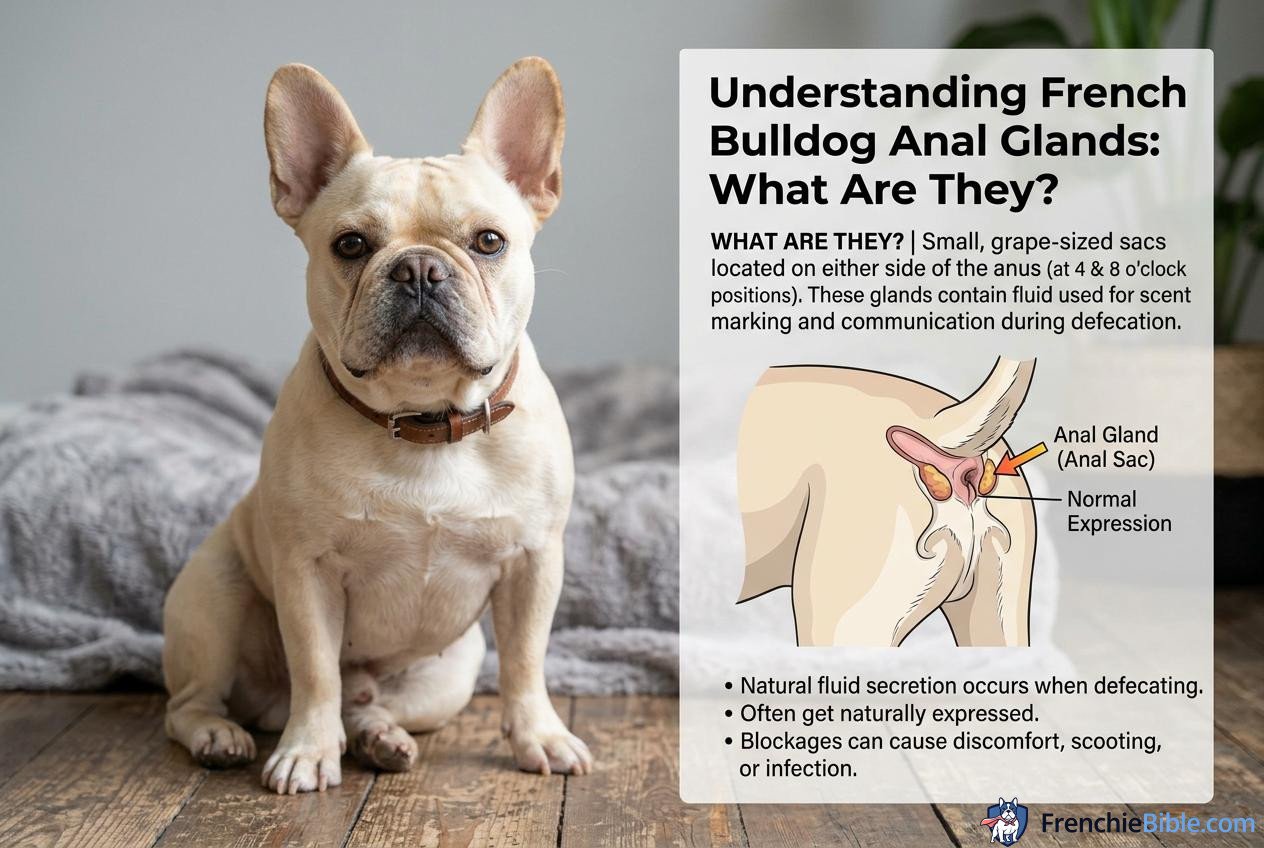
These glands secrete a strongly scented, oily fluid. In the wild, this fluid serves as a territorial marker. When a healthy dog has a firm bowel movement, the pressure of the stool passing through naturally squeezes these glands, emptying some fluid.
Why Do Frenchies Struggle More with Anal Gland Issues?
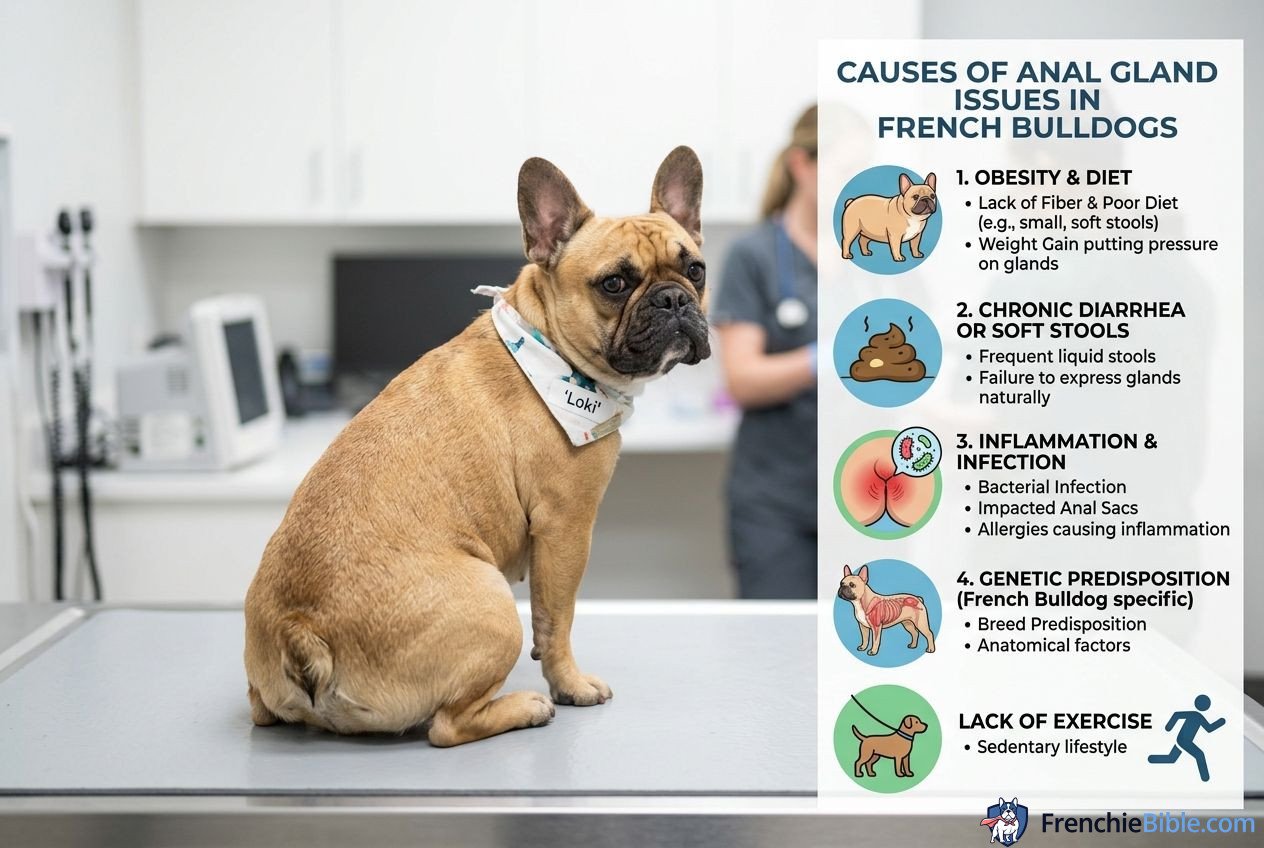
- Conformation and Anatomy: French Bulldogs have a compact, stocky build with tight or tucked tails (screw tails), which can physically alter the angle and position of the anal glands, making natural expression more difficult.
- Digestive Sensitivities: Frenchies are notorious for having sensitive stomachs, prone to food allergies and intolerances, which frequently lead to soft stools. Soft stools do not provide enough pressure to naturally empty the anal sacs.
- Skin Allergies: French Bulldogs frequently suffer from environmental allergies, causing inflammation that can block the tiny ducts where the glands empty.
- Obesity: Excess weight adds fatty tissue around the rectum, interfering with natural emptying.
Recognizing the Signs of French Bulldog Anal Gland Inflammation
When the anal glands fail to empty naturally, the fluid inside becomes thick, pasty, and impacted. If left unresolved, this can lead to infection or a painful abscess.
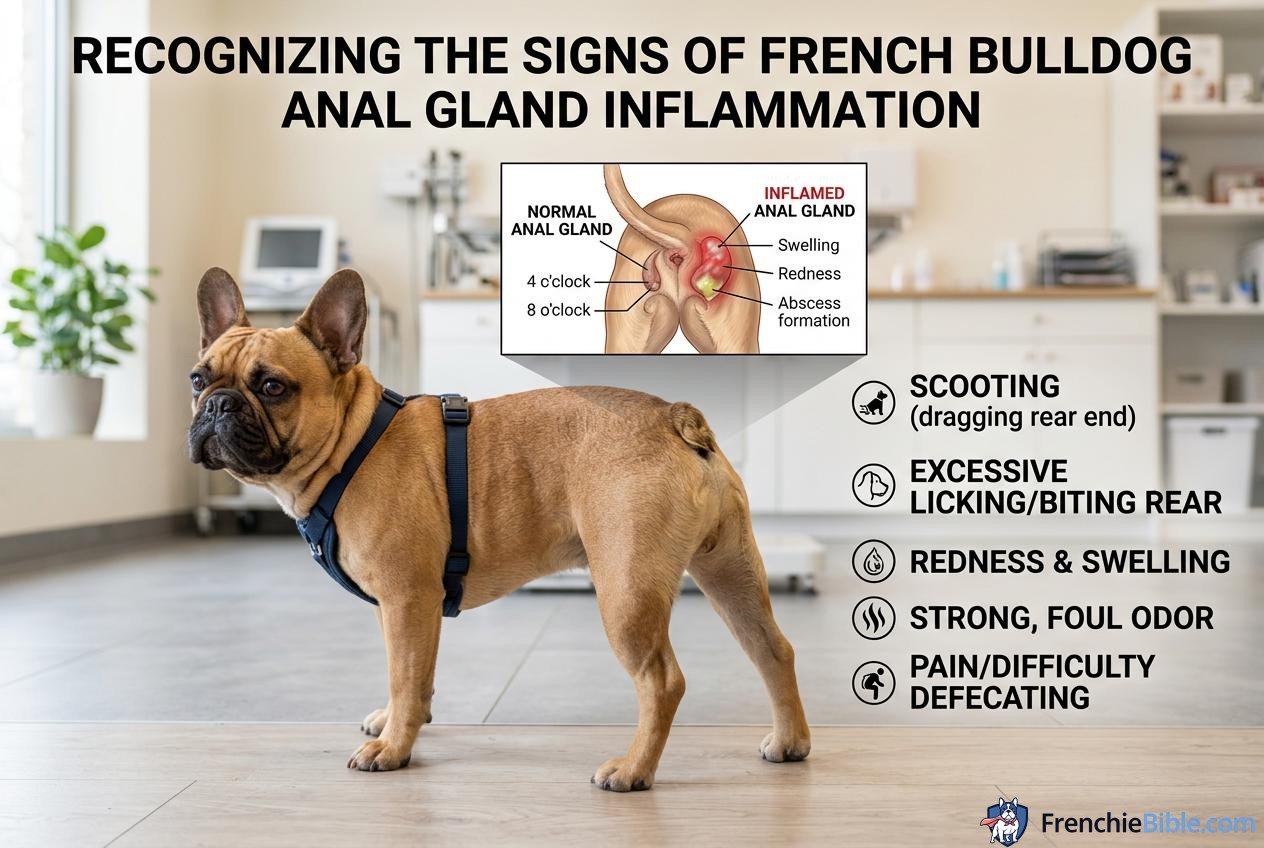
Early detection is critical. Watch for these telltale signs:
1. The Classic “Scooting”
Your dog will sit down and drag their rear end across the floor—often preferring textured surfaces like carpets—in an attempt to relieve pressure and itching.
2. Obsessive Licking and Biting
Constantly turning around to lick, chew, or nibble at the rear end or the base of the tail.
3. A Distinct, Fishy Odor
A sudden, pungent smell, often described as a mix of rotting fish and metallic rust, especially when they are resting.
4. Swelling and Redness
Localized swelling, a bulge, or redness on one or both sides of the anus.
5. Pain and Behavioral Changes
Sudden snapping if you touch their hindquarters, sitting down gingerly, crying out when defecating, or appearing unusually lethargic or depressed.
Causes of Anal Gland Issues in French Bulldogs
- Inadequate Dietary Fiber: Diets low in fiber often result in smaller, softer stools that fail to express the glands.
- Food Allergies/Intolerances: Common triggers include chicken, beef, dairy, and wheat.
- Environmental Allergies: Systemic inflammation from environmental allergies can affect glandular ducts.
- Anatomical Anomalies: Some Frenchies are born with abnormally narrow anal gland ducts.
- Chronic Soft Stools: Regardless of cause, consistently loose stools are the primary enemy of healthy anal glands.
When to See a Vet vs. When It May Be Managed at Home
This is a crucial distinction.
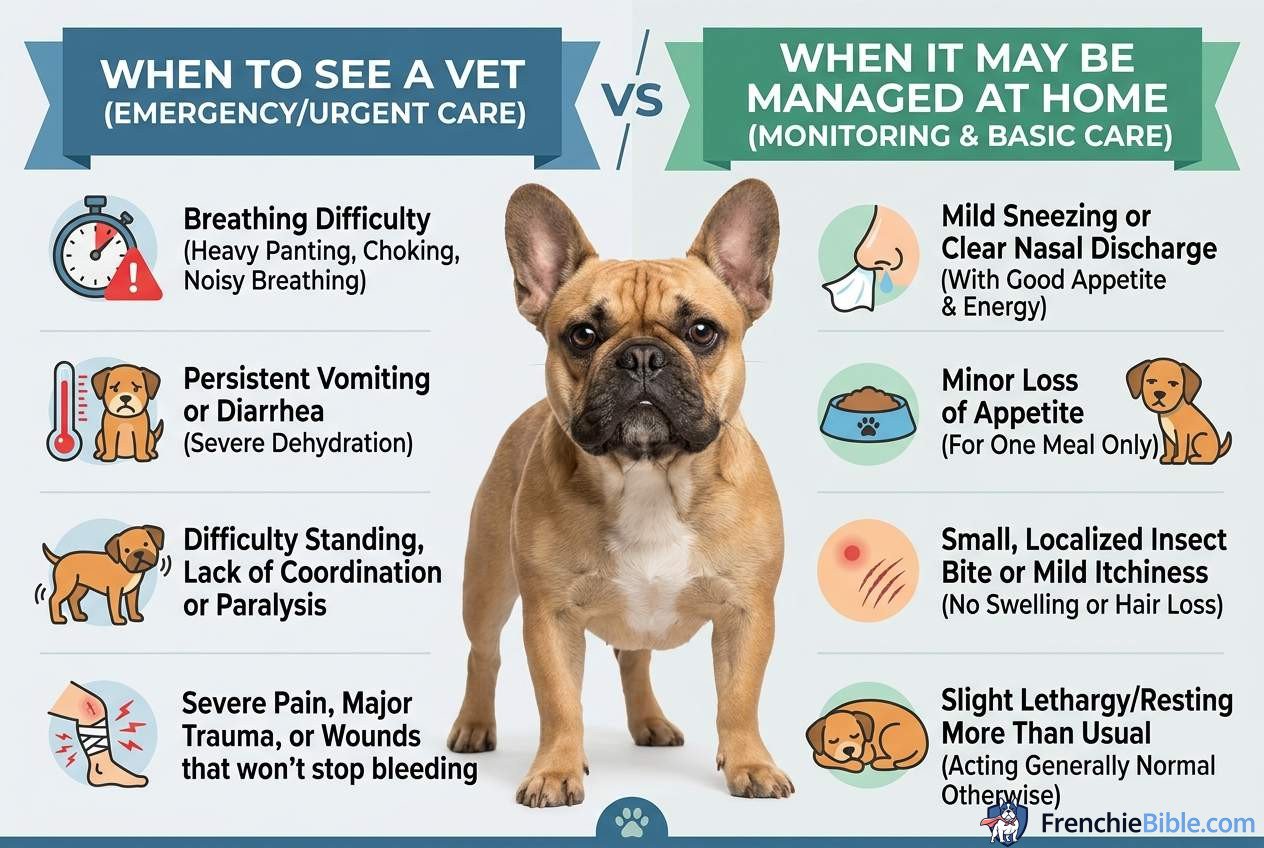
You MUST see a Veterinarian if you observe:
- Pus or Blood: Green, yellow, or bloody discharge near the anus.
- Severe Swelling: A large, hard, red, or purple lump on one side of the anus.
- Open Wounds: If an abscess has ruptured, leaving an open, bleeding hole.
- Extreme Pain: Your dog will not let you near their hind end.
- Systemic Illness: Fever, loss of appetite, or extreme lethargy.
Important: Anal gland issues should always be diagnosed and treated by a licensed veterinarian. Your vet is the only qualified professional who can properly assess whether glands need expressing, whether infection is present, and whether prescription medication is needed.
How Your Veterinarian Manages Anal Glands
If your Frenchie’s anal glands need attention, your veterinarian will typically:
- Perform an External Expression: Apply gentle pressure to the glands from the outside to express the fluid.
- Assess the Fluid: Check the color, consistency, and smell to determine if infection is present.
- Prescribe Treatment if Needed: If infection or an abscess is present, your vet will prescribe appropriate antibiotics, anti-inflammatory medications, or other treatments.
Important: Never attempt to diagnose or treat anal gland infections yourself. Administering the wrong treatment—or attempting to treat an abscess at home—can cause severe pain, push infection deeper, and lead to serious complications.
Prevention: Keeping Your Frenchie’s Anal Glands Healthy
While some Frenchies will always need manual expression due to their anatomy, you can significantly reduce the frequency of issues:
1. Optimize Their Diet for Firm Stools
Your dog’s stool needs to be firm enough to naturally press against the glands:
- High-Quality Protein: Feed a premium diet that your dog digests well.
- Hypoallergenic Diets: If your Frenchie suffers from food allergies causing soft stools, consult your vet about switching to a limited-ingredient diet.
2. Increase Dietary Fiber
- Canned Pumpkin: Adding 1 to 2 tablespoons of plain, unsweetened canned pumpkin to daily meals can help.
- Psyllium Husk: A small sprinkle of unflavored psyllium husk powder can help firm things up.
3. Maintain a Healthy Weight
Overweight French Bulldogs have a much higher incidence of anal gland impaction. Keep your Frenchie lean through measured feeding and appropriate exercise.
4. Manage Allergies
Work with your veterinarian to manage environmental allergies, as systemic inflammation directly affects anal gland health.
5. Regular Vet Checks
If your dog is prone to impactions, schedule regular gland checks with your vet every 4-8 weeks.
Frequently Asked Questions (FAQs)
Q1: How often should I have my French Bulldog’s anal glands expressed?
A: There is no set schedule. Only have them expressed when they show signs of fullness like scooting or a fishy odor. Over-expressing can cause irritation and inflammation. Your vet will advise on the appropriate frequency.
Q2: Can I have my groomer express my Frenchie’s glands?
A: Many groomers will perform an external expression during a bath. However, if your dog has a history of impaction, your veterinarian is the best person to manage this, as they can also assess for infection.
Q3: What happens if an anal gland abscess ruptures?
A: A ruptured abscess is a serious condition requiring immediate veterinary care. Your vet will need to flush the wound, prescribe appropriate medications, and manage the situation professionally.
Q4: Is anal gland removal surgery an option?
A: Anal sacculectomy (surgical removal of the glands) is a last-resort procedure for chronic, severe, recurrent cases. It carries risks and should only be considered after thorough discussion with your veterinarian.
Q5: Why is the fluid coming out black and chunky instead of brown and liquid?
A: Healthy anal gland fluid is usually a watery, brownish-yellow liquid. Thick, pasty, grey, or black fluid means it has been sitting in the gland for too long and is severely impacted. This requires veterinary intervention.
This article is based on the experience of a French Bulldog breeding expert. It is NOT veterinary medical advice. Always work with your licensed veterinarian for health concerns involving your pet.