Disclaimer: I am a French Bulldog breeding expert with over a decade of hands-on experience with this breed. I am not An Experienced Breedererinarian. The information in this article is based on my experience as a breeder and dedicated Frenchie owner. Always consult your veterinarian for an accurate diagnosis and treatment plan for your dog.
At 3:00 AM, you are abruptly woken up by that sound: schlorp, schlorp, schlorp. You turn on the light, and there is your French Bulldog, obsessively chewing on their paws, licking between their toes until the skin is angry, red, and swollen.
Related Reading: Training & Behavior | Frenchie Puppy Guide | Best Food for Frenchies
Many new Frenchie parents assume their dog is just “cleaning themselves” or feeling a little bored. But take it from someone who has spent over a decade breeding and caring for these beautiful little gremlins: if your Frenchie is constantly licking their paws, it is a glaring red flag.
French Bulldogs are genetically predisposed to a variety of skin issues. Their heavy, front-loaded body structure puts extra pressure on their paws, causing their toes to splay out and collect moisture and debris. Worse still, licking creates a vicious cycle. The saliva creates a damp environment, bacteria and yeast multiply, the itch gets worse, and they bite harder.
Today, I am sharing everything I have learned from years of hands-on experience with my own dogs and my puppy families. We are going to decode exactly why your Frenchie is obsessed with their feet and lay out a practical guide to managing the underlying causes.
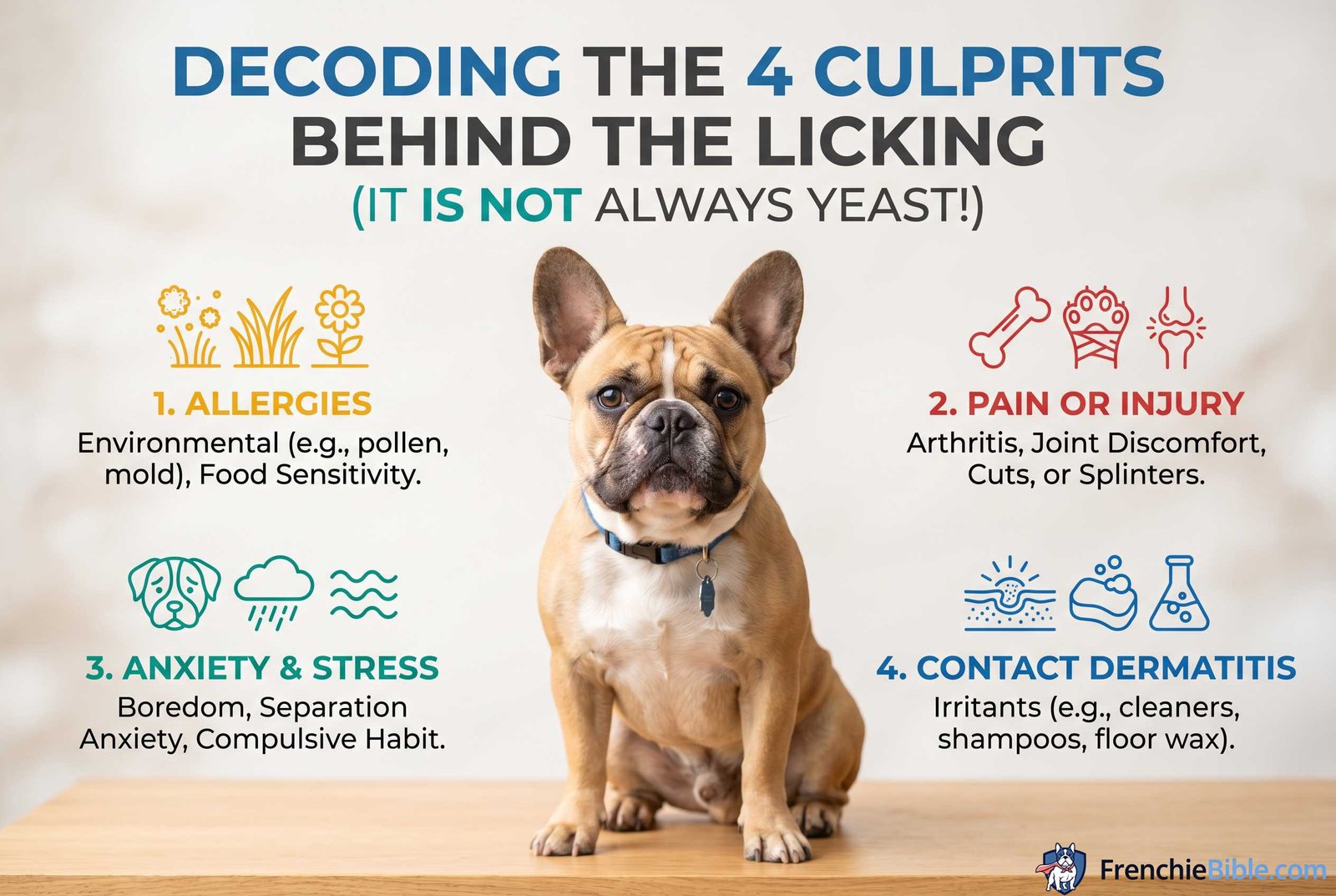
Decoding the 4 Culprits Behind the Licking (It Is Not Always Yeast!)
Every time a frantic Frenchie owner calls me asking “Does my dog have athlete’s foot?” I have to walk them back. The root cause is rarely just one thing.
Culprit 1: The Fungal and Bacterial Overgrowth
Frenchie paw pads are tight and poorly ventilated. When they step in puddles, walk on wet grass, or sweat through their pads, the space between their toes becomes a warm, moist environment. Malassezia (a type of yeast) and Staph bacteria — which are naturally present on the skin — can overgrow in these conditions. When they multiply beyond normal levels, the skin becomes inflamed, incredibly itchy, and crusty.
Culprit 2: Interdigital Cysts (Furuncles)
If you look between your Frenchie’s toes and see a shiny, red, fluid-filled bump that looks like a blister or a blood boil, you are likely dealing with an interdigital cyst (technically a furuncle). These occur when friction drives coarse hairs back into the hair follicle, causing it to rupture beneath the skin. This is a deep tissue issue and is painful for your dog. If you see a cyst, contact your veterinarian.
Culprit 3: The Allergy Connection
Frenchies are notoriously allergic dogs. Sometimes, paw licking has nothing to do with the paws themselves. Food allergies (intolerance to common proteins like chicken or beef) or environmental allergens (pollen, grass, dust mites) cause systemic itching. The paws happen to be the most accessible place for a dog to scratch with their teeth. If your Frenchie licks their paws year-round regardless of season, a food allergy is worth investigating under your veterinarian’s guidance.
Culprit 4: Behavioral and Stress-Related Licking
Do not underestimate canine psychology. Frenchies that are under-stimulated, anxious, or bored will lick their paws as a self-soothing behavior. Over time, this can become an obsessive habit that persists even after the original skin irritation has resolved. Breaking a behavioral licking habit requires addressing the underlying anxiety or boredom through enrichment, exercise, and in some cases, guidance from your veterinarian.
Reading Your Frenchie’s Paws at Home: A Practical Triage Guide
Before you rush to the clinic, you can do a quick 3-step home assessment to better understand what you are dealing with:

The Sniff Test: Pick up your Frenchie’s paw and take a gentle whiff. If it smells intensely like Fritos or old corn chips, you are likely dealing with a classic yeast (fungal) overgrowth. If it smells sour, rotting, or foul, you may have a bacterial issue. Either way, your veterinarian can confirm with a proper examination.
The Visual Inspection: Gently spread their toes. Do you see dark brown, rusty discoloration and crusting? That is a common sign of yeast. Do you see a bright red, swollen nodule between the toes? That could be a cyst — contact your veterinarian.
The Touch Test: Gently press on the paw pads. If your Frenchie aggressively pulls away, yelps, or growls, there may be deep tissue inflammation. Contact your veterinarian, as this level of pain warrants professional assessment.
The Expert’s Action Plan: A Tiered Approach
Here is how experienced owners manage flare-ups, and what to expect when you work with your veterinarian.

Tier 1: Mild Redness and Occasional Licking
If the paws are just starting to look pink and the licking is mild, you can begin supportive care at home while monitoring closely.
Keep the paws dry. This is the single most important thing you can do. Yeast and bacteria thrive in moisture. After every walk, wipe the paws with a clean, dry cloth and ensure the space between the toes is thoroughly dried. A microfiber towel and a cool blow dryer on the lowest setting can help.
Gentle antiseptic cleaning. There are a variety of antiseptic wipes and sprays formulated for dogs that are available at pet stores — your veterinarian can recommend which ones are appropriate for your dog’s specific condition. The key is to use them consistently and to allow the paws to fully dry afterward.
Epsom salt soaks. A plain, unscented Epsom salt soak in warm water for 5–10 minutes can help draw out surface irritation and reduce swelling. Ensure the paws are dried completely afterward.
Monitor for 72 hours. If the redness spreads, the paws begin to bleed or weep, or the licking intensifies, escalate to Tier 2 immediately.
Tier 2: Moderate to Severe Infection — Involve Your Veterinarian
If the toes are bleeding, oozing, visibly swollen, or emitting a strong odor, you need your veterinarian. They can perform a proper examination and skin assessment to identify exactly what type of infection is present. Treatment plans for moderate to severe cases may include:
- Prescription topical or oral medications to address bacterial or fungal overgrowth
- Supportive medications to manage severe itching while the skin heals — your veterinarian is the only professional qualified to determine if and which products are appropriate for your dog based on their age, health history, and specific condition
- In some cases, additional diagnostics to rule out underlying allergies driving the recurrent infections
Never start, stop, or adjust prescription medication without consulting your veterinarian. What works for one dog may not be appropriate for another.
Tier 3: Stubborn Interdigital Cysts — The Long Game
Interdigital cysts can be frustrating to manage. Never attempt to lance or drain a cyst at home — you risk pushing infection deeper into the foot and causing significantly more harm.
Alongside your veterinarian’s treatment plan, some veterinary dermatology clinics offer advanced therapeutic options (such as targeted therapeutic laser treatments) to reduce inflammation and support healing. These are always administered by trained veterinary professionals. In the most extreme, chronic cases, surgical intervention may be considered — a decision your veterinarian will make based on a full clinical assessment.
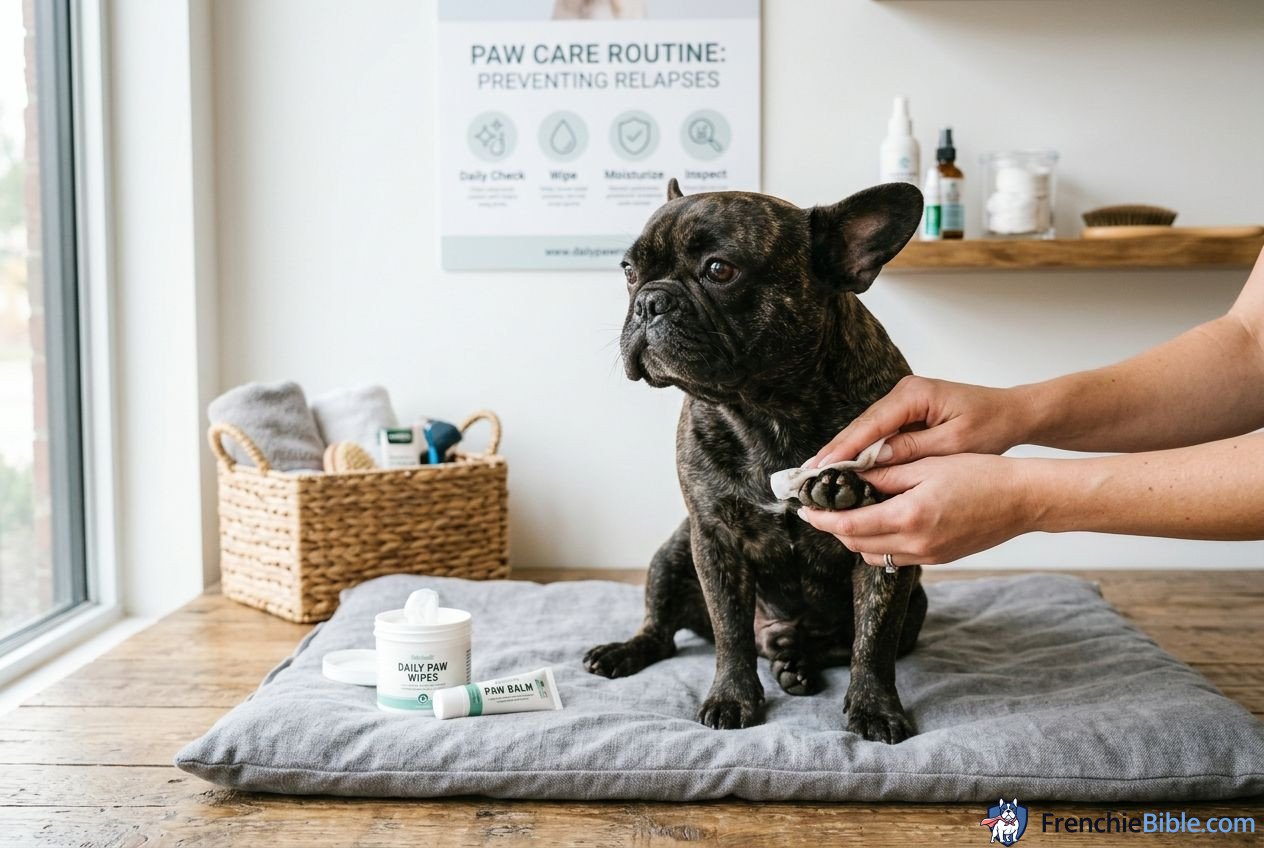
Daily Paw Care Routine: Preventing Relapses
Treating the infection puts out the fire, but your daily routine is the fireproofing. Here is what experienced Frenchie owners do to keep paws healthy year-round:
1. Keep Them Dry — Relentlessly
When you come in from a rainy walk, do not throw them in the tub. Tap water trapped in the toe folds is a setup for yeast overgrowth. Use unscented hypoallergenic wipes to clean the dirt, absorb moisture with a microfiber towel, and ensure full drying. Absolute dryness between the toes is the golden rule.
2. Support Skin Health From the Inside
A Frenchie’s skin health starts in their gut. Feed a high-quality, breed-appropriate diet with real meat as the primary ingredient. Omega-3 fish oil supplements — recommended by your veterinarian at an appropriate dose for your dog’s weight — can naturally reduce systemic inflammation and strengthen the skin barrier. Some owners have found success with zinc supplementation as well, but always check with your vet first.
If environmental or food allergies are suspected, work with your veterinarian on an elimination diet trial to identify problem ingredients.
3. Regular Paw Maintenance
If your Frenchie’s nails touch the ground, they are too long. Long nails force the toe bones apart, creating a wider gap that collects dirt, allergens, and moisture. Keep nails trimmed with a Dremel or grinder on a weekly basis. Also carefully trim the hair between the paw pads so it does not act like a mop soaking up sweat.
4. Quality Floor Time
After naps and any time your Frenchie gets up from resting, check and wipe their paws. The briefest walk on a damp floor can undo a full day of care.
Common Mistakes That Worsen Paw Problems
Using Hydrogen Peroxide or Rubbing Alcohol. These harsh chemicals destroy healthy healing tissue along with surface bacteria. They dry out the paw pads, causing painful cracking that invites worse infections.
Leaving Dog Boots on Too Long. Dogs sweat through their paw pads. While boots are excellent for protecting against hot pavement in summer or salted roads in winter, leaving them on for extended periods turns the feet into a moist, warm environment — a perfect breeding ground for yeast.
The Wrong E-Collar. Frenchies have thick, short necks and flat faces. Standard hard plastic cones can choke them or cause panic. Invest in an inflatable “donut” collar or a soft, wide-brimmed cone that blocks access to the feet without interfering with breathing.
Frequently Asked Questions (FAQ)
Q1: My Frenchie’s paws are red, but the skin is not broken. Do they need antibiotics?
Usually not at this stage. This is the perfect window to intervene with gentle antiseptic wipes (vet-recommended), ensure the paws are completely dry, and use a soft cone for a few days to break the licking habit. If there is no improvement within 72 hours, contact your veterinarian.
Q2: Can I still take my Frenchie for walks while they are being treated?
Yes, with precautions. Avoid wet grass, mud, or dusty trails. If the ground is wet, waterproof dog boots are fine for the duration of the walk. The moment you get home, remove them, wipe the paws dry, and ensure the space between the toes is fully dried.
Q3: My dog keeps getting recurring paw infections. What should I do?
Recurring infections are a signal that there is an underlying trigger that has not been addressed — most commonly an undiagnosed food allergy, an environmental allergen, or an untreated hormonal condition. Work with your veterinarian to investigate the root cause rather than just treating each flare-up as it appears.
Q4: Are yeast infections in paws contagious to humans or other pets?
Malassezia yeast is generally not transmissible from dogs to healthy humans or other pets. However, always wash your hands thoroughly after handling infected paws and keep the areas clean.
Final Thoughts
Your French Bulldog’s chubby little paws carry them through their world. While this breed undeniably requires higher maintenance, armed with the right knowledge — keeping them dry, identifying and addressing the exact root cause, and physically blocking the licking — you can effectively manage these infections.
Work closely with your veterinarian, be consistent with your daily care routine, and remember: early intervention is always better than waiting for a minor irritation to become a serious infection.
Disclaimer: I am a French Bulldog breeding expert with over a decade of hands-on experience with this breed. I am not a veterinarian. The information in this article is for educational purposes only. Always consult your veterinarian regarding your dog’s specific health needs and care.