
Bringing a French Bulldog into your life is a monumental decision, one that promises years of unwavering companionship, endless entertainment, and deep, unconditional love. However, beneath their charming bat ears, smushed faces, and comical personalities lies a reality that every responsible prospective owner must face: the French Bulldog is a brachycephalic breed prone to a myriad of congenital and inherited health conditions. as a French Bulldog expert and breeder and breeding expert I have witnessed firsthand the heartbreak that ensues when families unknowingly purchase puppies from untested, irresponsible breeding programs. The emotional and financial toll of dealing with severe heart defects, paralyzing spinal diseases, or crippling joint issues can be devastating.
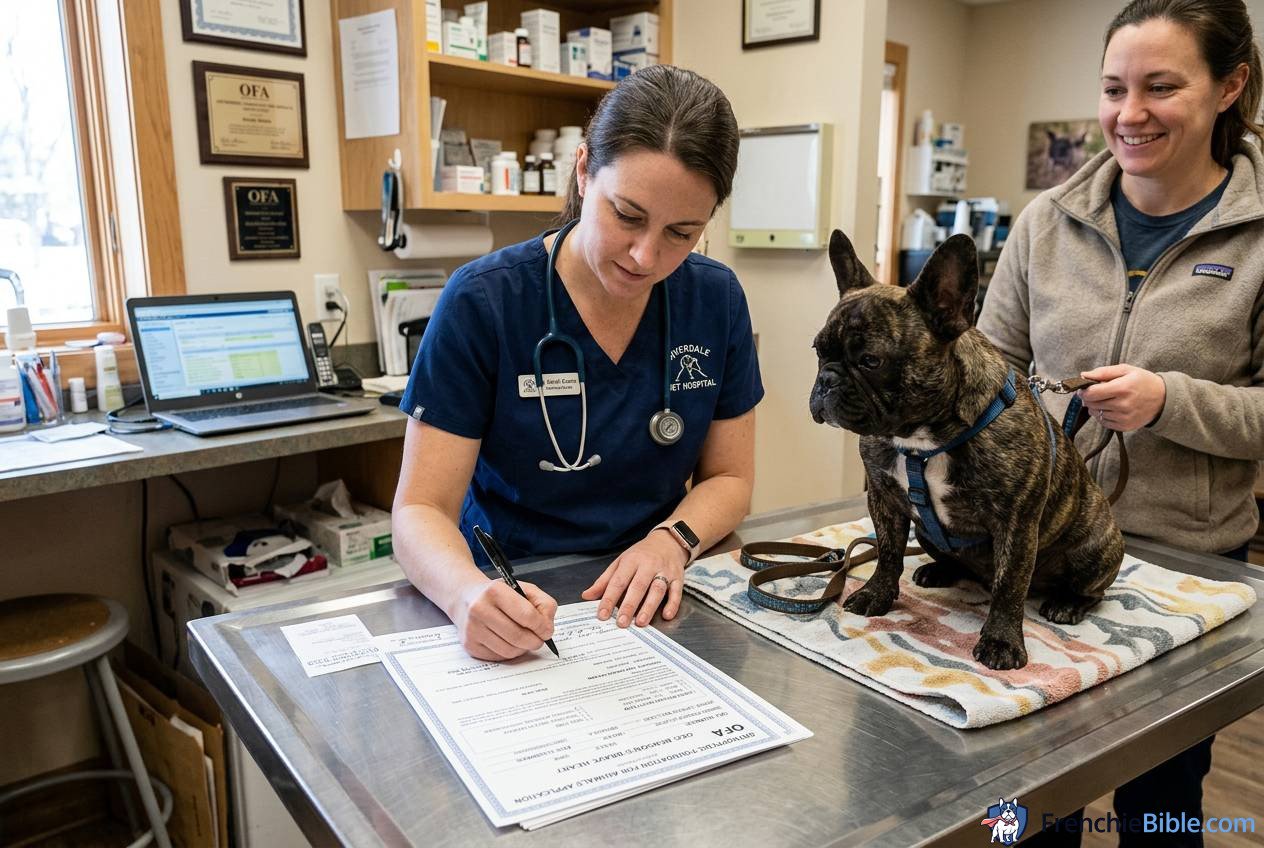
This is exactly why health testing, specifically through the Orthopedic Foundation for Animals (OFA), is not just a recommendation—it is an absolute necessity. The OFA provides a standardized, objective evaluation of a dog’s health status, allowing breeders to make informed decisions and buyers to have peace of mind. But navigating the complex world of OFA reports can feel like reading a foreign language for the average buyer. What exactly does a “Normal” cardiac clearance mean? How do you interpret a spinal radiograph report mentioning hemivertebrae? What is patellar luxation, and why does the grade matter?
Related Reading: Training & Behavior | Grooming & Care | French Bulldog Colors
In this comprehensive, deep-dive guide, we will unpack the critical components of French Bulldog OFA health testing, focusing specifically on the three pillars of Frenchie structural health: the heart, the spine, and the patellas (kneecaps). By the end of this article, you will be equipped with the knowledge of a seasoned professional, empowering you to read and understand OFA reports, ask breeders the right questions, and ultimately choose a healthy, thriving French Bulldog puppy that will be a joyful addition to your family for years to come.
Why OFA Health Testing is Non-Negotiable When Buying a French Bulldog
The French Bulldog’s soaring popularity over the past decade has been a double-edged sword. While it has brought the breed into the limelight, it has also attracted a wave of unethical backyard breeders and puppy mills whose primary goal is profit, not the betterment of the breed. These breeders often bypass critical, expensive health testing, pairing dogs based solely on appearance, color trends (such as the highly controversial “fad colors”), or simple convenience. The result is a flood of puppies entering the market with hidden genetic time bombs.
When you purchase a French Bulldog, you are not just buying a pet; you are investing in a living, breathing creature whose health directly dictates their quality of life—and yours. Frenchies are incredibly stoic animals, often masking pain until a condition reaches a critical stage. Without OFA health testing, you are playing Russian roulette with genetics.
OFA testing is non-negotiable for several reasons:
1. Predictability of Health: While no test can guarantee a dog will never get sick OFA clearances significantly stack the odds in your favor. By breeding only dogs with normal hearts, robust spines, and tight patellas, breeders dramatically reduce the incidence of these debilitating conditions in their puppies.
2. Financial Protection: The initial cost of a well-bred, fully health-tested French Bulldog may be higher, but it pales in comparison to the veterinary bills associated with treating congenital defects. A single spinal surgery for Intervertebral Disc Disease (IVDD) can cost upwards of $8,000 to $10,000, not including rehabilitation.
3. Ethical Responsibility: By demanding OFA clearances from your breeder, you are voting with your wallet. You are supporting ethical breeding practices that prioritize the health and longevity of the breed over quick profits.
4. Transparency and Accountability: OFA results are entered into a public database. This transparency holds breeders accountable and allows buyers to independently verify the health history of a puppy’s lineage.
Understanding the Orthopedic Foundation for Animals (OFA)
Before we dissect the specific reports, it is crucial to understand what the OFA is and how it functions. Founded in 1966, the Orthopedic Foundation for Animals is a non-profit organization originally established to reduce the incidence of hip dysplasia in dogs. Over the decades, its mission has expanded exponentially to encompass a vast array of inherited diseases across all breeds of dogs and cats.
The OFA acts as a centralized database and evaluating body. Breeders take their breeding dogs to specialized veterinarians (such as board-certified cardiologists or radiologists) for specific examinations or imaging. These results, along with the required forms, are then submitted to the OFA. The OFA panels of expert specialists review the submissions, grade them according to established protocols, and issue certificates.
For the French Bulldog, the Canine Health Information Center (CHIC)—a program sponsored by the OFA and the American Kennel Club Canine Health Foundation (AKC CHF)—has established specific breed requirements. To obtain a CHIC number, a French Bulldog must be tested for certain conditions, regardless of whether the results are normal or abnormal. The goal of CHIC is to encourage health testing and open sharing of information. For Frenchies, the recommended tests include Cardiac evaluation Patellar Luxation evaluation Hip Dysplasia evaluation, and a DNA-based test for Juvenile Cataracts (JHC). Many progressive breeders also include advanced spinal imaging and tracheal evaluations.
When reviewing an OFA report, you will typically see the dog’s registered name, registration number, microchip number, the specific test performed, the date of the test, the age of the dog at the time of testing, and the all-important result or grade. Let us now delve into the specifics of the three most critical structural and internal evaluations for French Bulldogs.
Deciphering the Cardiac (Heart) OFA Report
The heart is the engine of the body, and in a brachycephalic breed like the French Bulldog—which already faces respiratory challenges due to its anatomy—a compromised heart can be fatal. Cardiac health is paramount, as the heart must work overtime to oxygenate the body if the dog’s airway is restricted.
Common Heart Issues in French Bulldogs
French Bulldogs are predisposed to several congenital heart defects, the most prominent being Pulmonic Stenosis. Pulmonic stenosis is a narrowing of the pulmonary valve, the valve that controls blood flow from the right ventricle of the heart to the pulmonary artery (which carries blood to the lungs). When this valve is narrowed, the heart must pump significantly harder to push blood through, leading to thickening of the heart muscle (hypertrophy), arrhythmias, exercise intolerance, fainting (syncope), and ultimately, congestive heart failure.
Other cardiac conditions occasionally seen in the breed include Ventricular Septal Defects (VSD)—a hole in the wall separating the two lower chambers of the heart—and Mitral Valve Disease, though the latter is often an acquired condition in older dogs rather than a congenital defect.
How Cardiac Evaluations are Performed
OFA Cardiac evaluations can be performed at two distinct levels:
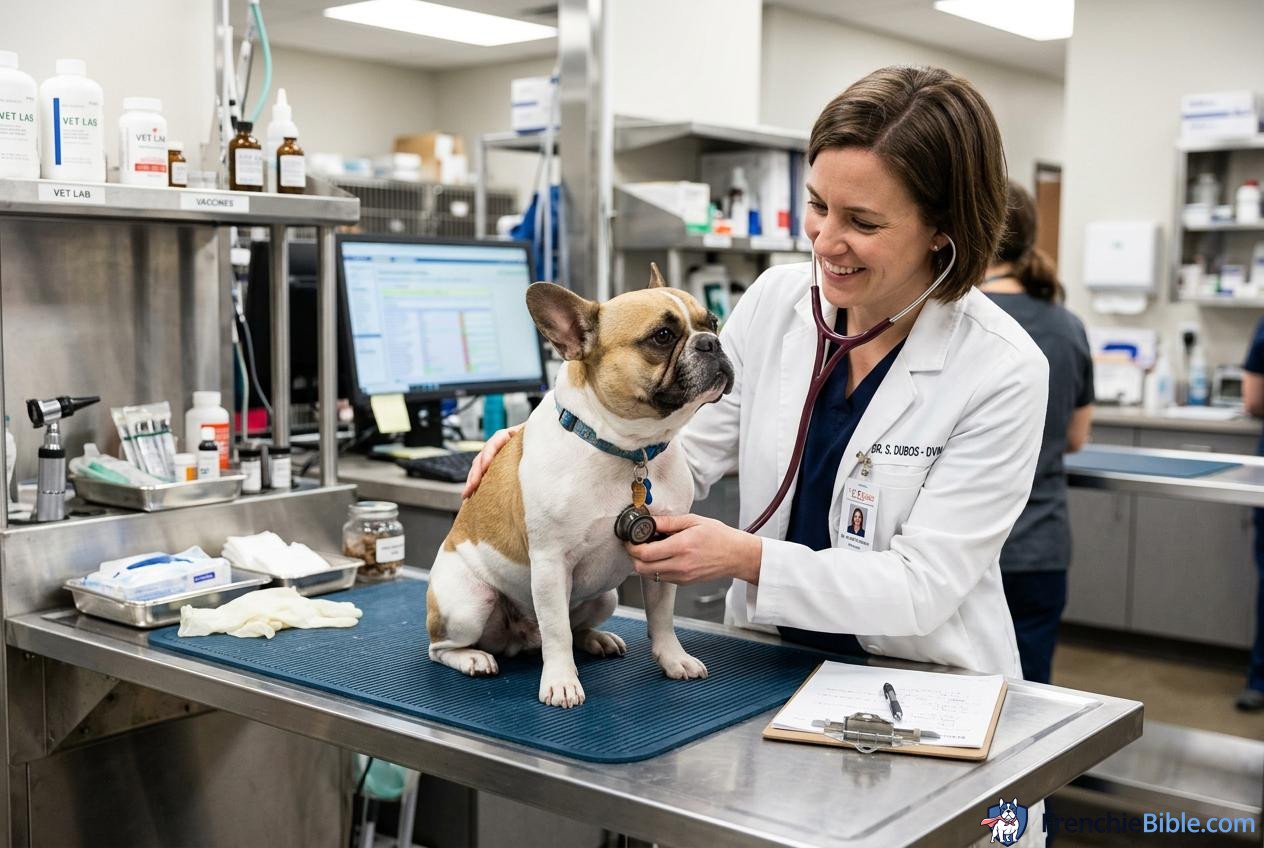
1. Basic Auscultation: This is the minimum requirement for a basic OFA cardiac clearance. A general practitioner veterinarian listens to the dog’s heart using a stethoscope to detect any abnormal sounds, known as murmurs. Murmurs are graded on a scale of 1 to 6, with Grade 1 being very faint and Grade 6 being loud enough to be heard with the stethoscope barely touching the chest, often accompanied by a palpable thrill (vibration).
2. Advanced Echocardiogram (Echo): as a French Bulldog expert and breeder I cannot stress enough the importance of the Advanced Cardiac Evaluation. Auscultation alone is subjective and can miss mild to moderate defects. An echocardiogram is an ultrasound of the heart performed by a board-certified veterinary cardiologist. It provides a real-time, moving picture of the heart’s chambers, valves, and blood flow velocity. An Echo can accurately diagnose pulmonic stenosis and determine its severity, even if a murmur is scarcely audible.
Reading the Cardiac OFA Results (Normal vs. Abnormal)
When you look at an OFA Cardiac report, the most critical piece of information is the final diagnosis.
- NORMAL: This is the gold standard. It means the examining veterinarian or cardiologist found no evidence of congenital heart disease. If the evaluation was an Advanced Echo, it means the structure and function of the heart are optimal.
- EQUIVOCAL: This means there is an abnormality, but it cannot be definitively classified as congenital heart disease at the time of the exam. The dog will usually require re-evaluation in 6 to 12 months.
- ABNORMAL: This indicates the presence of congenital heart disease. The report will specify the diagnosis (e.g. Pulmonic Stenosis) and the severity (Mild Moderate Severe).
Expert Tip: Always look for the letters “ACA” or “ECHO” on the OFA certificate. “ACA” indicates an Advanced Cardiac Evaluation performed by a cardiologist using an echocardiogram. “BCA” indicates a Basic Cardiac Auscultation. As a discerning buyer, you should prioritize breeders who perform Advanced Echo clearances, as they provide a much more accurate picture of the breeding dog’s cardiac health.
Making Sense of the Spinal OFA Report
If the heart is the engine, the spine is the chassis. The French Bulldog’s unique, compact structure—the very thing that makes them so recognizable and adorable—is also the source of their most significant structural vulnerabilities. The Frenchie spine is notoriously complex, and understanding spinal OFA reports is perhaps the most challenging aspect of evaluating health testing.
Hemivertebrae and Intervertebral Disc Disease (IVDD) in Frenchies
To understand the spinal report, you must understand two primary conditions:
1. Hemivertebrae (Butterfly Vertebrae): This is a congenital deformity of the bones of the spine (vertebrae). Instead of developing into a normal, spool-like shape, the vertebra develops incompletely, often taking on a wedge or “butterfly” shape. Because the bone is wedged, it can cause the spine to curve abnormally (kyphosis or scoliosis). While many Frenchies have one or two hemivertebrae and live completely normal lives, multiple wedged vertebrae or vertebrae located in highly mobile areas of the spine can lead to severe spinal cord compression, pain, and paralysis.
2. Intervertebral Disc Disease (IVDD): French Bulldogs are a chondrodystrophic breed, meaning they have a genetic predisposition to early degeneration of the discs that sit between their spinal vertebrae. These discs act as shock absorbers. When they degenerate prematurely, they can bulge or rupture (herniate) into the spinal canal, pressing on the delicate spinal cord. IVDD is the leading cause of paralysis in French Bulldogs.
Analyzing Spinal Radiographs (X-Rays)
Unlike hips or elbows, the OFA does not have a simple “Pass/Fail” registry specifically for the entire French Bulldog spine. However, ethical breeders submit spinal radiographs (X-rays) to the OFA, and the consulting board-certified veterinary radiologists provide a detailed report on the presence and location of spinal anomalies.
A comprehensive spinal evaluation requires high-quality, perfectly positioned X-rays of the entire spine: Cervical (neck) Thoracic (chest), and Lumbar (lower back).
What the Spinal Grading Means for Your Puppy
When you read a spinal evaluation report from a breeder (often provided as a radiologist report rather than a standard OFA certificate, though OFA does register spinal anomalies), you are looking for the count and location of hemivertebrae and any signs of early disc calcification.
- Normal/Clear Spine: This is exceptionally rare in the French Bulldog breed. A completely normal spine with perfectly formed vertebrae is the ultimate, albeit elusive, goal.
- Mild Anomalies (1-2 Hemivertebrae): It is generally accepted within the veterinary and breeding community that a Frenchie with one or two hemivertebrae, specifically located in the rigid thoracic region (the mid-back supported by the rib cage), is an acceptable breeding candidate, provided they have absolutely no clinical symptoms of spinal pain or neurological deficits.
- Moderate to Severe Anomalies (Multiple Hemivertebrae Wedging Kyphosis): If a report shows three, four, or more hemivertebrae, severe wedging, significant curvature of the spine, or anomalies in the highly mobile cervical (neck) or lumbar (lower back) regions, this is a massive red flag. Dogs with these reports are at a significantly higher risk of developing severe neurological complications and should not be bred.
Expert Tip: Ask the breeder to show you the actual radiologist report for the sire and dam’s spines, not just a verbal confirmation. Look for notes on “disc space narrowing” or “mineralized discs in situ,” which are early warning signs of IVDD risk. A responsible breeder will openly discuss the spinal health of their dogs and explain why they paired specific dogs together (e.g., breeding a dog with a single hemivertebra only to a dog with a completely clear spine).
Understanding the Patellar Luxation OFA Report
While the spine and heart often take center stage in Frenchie health discussions, the health of their knees—specifically the patellas—is equally critical for their long-term mobility, comfort, and overall quality of life.
What is Patellar Luxation?
The patella is the kneecap. It sits in a groove at the bottom of the femur (thigh bone) and slides up and down as the knee bends and straightens. “Luxation” means dislocation. Therefore Patellar Luxation is a condition where the kneecap slips out of its designated anatomical groove.
In French Bulldogs, this is almost always a medial luxation, meaning the kneecap slips toward the inside of the leg. This condition is heavily influenced by genetics and the overall structural alignment of the dog’s rear legs. When the kneecap repeatedly slips in and out of place, it causes immediate mechanical lameness (you may see the dog intermittently “skip” or hop on three legs), severe pain, wearing down of the cartilage, and eventual early-onset osteoarthritis. Severe cases require expensive orthopedic surgery to deepen the groove and realign the knee.
The Patellar Evaluation Process
The OFA Patellar evaluation is a straightforward, non-invasive physical examination. It must be performed by an attending veterinarian when the dog is awake and fully conscious; sedation can relax the muscles too much and give a false reading.
The veterinarian will manually manipulate the dog’s rear legs, physically attempting to push the kneecap out of its groove both medially (inward) and laterally (outward) while extending and flexing the knee joint. Based on how easily the kneecap luxates and whether it returns to its proper position naturally, the veterinarian assigns a grade.
Grades of Patellar Luxation (Grade 1 to 4)
The OFA utilizes a standardized grading system from Normal to Grade 4. Understanding these grades is essential when reviewing health documents.
- NORMAL: The kneecaps are tightly seated in their grooves. They cannot be manually luxated (pushed out of place) by the veterinarian. This is the required result for an OFA clearance.
- GRADE 1: The kneecap can be manually luxated by the veterinarian when the leg is fully extended, but it immediately snaps back into its correct position once the pressure is released. Dogs with Grade 1 luxation rarely show clinical signs of lameness but should be monitored. Breeding a dog with Grade 1 patellas is highly discouraged, as the condition can worsen in subsequent generations.
- GRADE 2: The kneecap luxates frequently on its own when the dog is walking or running, causing the classic “skipping” gait. It remains luxated until the dog physically kicks its leg out or the veterinarian manually replaces it. Grade 2 often leads to arthritis and may require surgical intervention if pain develops.
- GRADE 3: The kneecap is permanently luxated out of the groove. It can be manually pushed back in by the veterinarian, but as soon as the pressure is released, it pops right back out. Dogs with Grade 3 suffer from significant structural abnormalities, crouched rear-limb posture, and require surgery.
- GRADE 4: The most severe form. The kneecap is permanently luxated and cannot be manually reduced (pushed back into the groove) even by a veterinarian. The anatomical deformity is profound, causing severe crippling. Complex reconstructive surgery is the only option.
Expert Tip: An OFA Patellar clearance is only issued for dogs evaluated as “Normal.” If a breeder’s paperwork shows a dog has Grade 1 patellas, they did not “pass” the OFA evaluation, even if the dog currently exhibits no symptoms. Ensure both the sire and dam have documented “Normal” patellas to protect your future puppy from this painful condition.
Other Recommended Health Tests for French Bulldogs (Trachea Hips Genetics)
While Heart Spine, and Patellas form the holy trinity of structural testing for the French Bulldog, a truly elite breeding program will go further. As a prospective buyer, you should be aware of these additional evaluations:
- Tracheal Hypoplasia Evaluation: Because Frenchies are a brachycephalic breed, their airways are naturally compromised. Tracheal hypoplasia is a condition where the windpipe is dangerously narrow, severely restricting airflow. This can be evaluated via X-ray at the same time as the spinal evaluation. A breeder who screens for tracheal diameter is demonstrating a profound commitment to the respiratory health of the breed.
- Hip Dysplasia: Though less common in small breeds than in large breeds like German Shepherds Frenchies can and do suffer from hip dysplasia—a malformation of the hip ball-and-socket joint leading to debilitating arthritis. The OFA grades hips as Excellent Good Fair Borderline Mild Moderate, or Severe Dysplasia. Only Excellent Good, or Fair receive OFA numbers.
- Genetic DNA Panels (e.g. Embark Animal Genetics): DNA testing is essential for ruling out recessive genetic diseases. For Frenchies, the most critical DNA test is for Juvenile Hereditary Cataracts (JHC), a condition that causes blindness in young dogs. They should also be tested for Degenerative Myelopathy (DM) Hyperuricosuria (HUU), and Cystinuria Type 3. Note that DNA testing tests for genetic markers, while OFA testing evaluates actual physical structure. Both are required; one does not replace the other.
How to Verify a Breeder’s OFA Claims
In the digital age, it is unfortunately easy for unscrupulous individuals to forge health certificates, borrow paperwork from other dogs, or simply lie. Trust, but verify.
- Ask for the Registered Names or Numbers: Request the official AKC (American Kennel Club) registered names or the OFA registration numbers for both the sire (father) and dam (mother) of the litter.
- Visit the OFA Website: Go directly to the Orthopedic Foundation for Animals database online (ofa.org).
- Search the Database: Enter the dog’s registered name or number into the search bar.
- Review the Results: If the dog has been officially tested and the results submitted, a comprehensive page will appear listing every test performed, the date, the dog’s age at the time, and the official result.
- Check for CHIC Certification: Look for the CHIC logo next to the dog’s name. This indicates the dog has completed all the parent-club recommended health tests for the breed.
If a breeder claims their dogs are “health tested” but they do not appear in the OFA database, or the breeder makes excuses as to why they cannot provide the registered names, walk away immediately. “Cleared by parentage” is only valid for genetic DNA tests (if both parents are clear), it does NOT apply to physical OFA evaluations like hearts, spines, or knees, which must be evaluated on every individual dog.
Red Flags to Watch Out For When Reviewing Health Clearances
As an and veterinary professional I see countless breeder websites daily. Here are the glaring red flags that indicate a breeder is cutting corners:
- “Vet Checked” Instead of OFA Tested: This is the most common deception. A standard puppy wellness exam prior to sale (vaccines and a quick listen to the heart) is entirely different from comprehensive OFA specialist evaluations on the breeding parents. “Vet checked” means nothing regarding long-term genetic health.
- Testing Too Young: The OFA requires dogs to be a minimum of 24 months (2 years) old to receive permanent clearances for conditions like Hip Dysplasia and Patellar Luxation, as these conditions develop over time. Preliminary evaluations (“Prelims”) can be done earlier, but breeding should wait until permanent clearances are obtained.
- Only Testing One Parent: Both the sire and the dam contribute exactly 50% of their genetics to the puppy. Testing only the male or only the female is completely insufficient.
- Ignoring the Spine: If a breeder tests the heart and knees but refuses to X-ray the spine, they are ignoring the elephant in the room regarding French Bulldog health.
- Using Outdated Results: Health statuses can change, particularly cardiac health. Cardiac evaluations should ideally be updated annually or bi-annually by a cardiologist.
Frequently Asked Questions (FAQ)
At what age should French Bulldogs get their OFA certifications?
For permanent OFA certifications (such as Hips and Patellas), a dog must be exactly 24 months of age or older at the time of the examination. Preliminary evaluations can be done at 12 months, but ethical breeders will wait for the 2-year mark to ensure the dog’s skeletal structure is fully mature before breeding. Cardiac evaluations can be done as early as 12 months for an official OFA number, but because heart conditions can develop later, annual re-evaluations are highly recommended.
Can a Frenchie with a minor health issue still make a good pet?
Absolutely. A French Bulldog with a single hemivertebra or a Grade 1 patella that never progresses can live a long, pain-free, and incredibly happy life as a family companion. However, these dogs should never be used in a breeding program, as they carry the genetic markers for structural weakness that could manifest much more severely in their offspring.
Does OFA testing guarantee my French Bulldog will never get sick?
No. Biology is complex, and genetics are not always entirely predictable. OFA testing significantly reduces the risk of inherited congenital conditions, but it cannot prevent infectious diseases, accidents, cancers, or age-related degeneration. It is a risk-reduction strategy, not an ironclad guarantee. This is why securing comprehensive pet insurance immediately upon bringing your puppy home is equally as important as buying from a health-tested litter.
How much does OFA testing typically cost for breeders?
Comprehensive health testing is a massive financial investment for ethical breeders. An Advanced Cardiac Echocardiogram can cost between $500 and $800. Spinal, hip, and tracheal radiographs read by a radiologist can cost upwards of $600 to $1000. Patellar evaluations and DNA panels add another $200 to $300. In total, a breeder may spend $1,500 to $2,500 per dog before a single breeding ever takes place. This is a primary reason why responsibly bred French Bulldogs carry a higher purchase price.
What is the CHIC (Canine Health Information Center) number?
A CHIC number is issued to a dog that has completed all the specific health screening tests recommended by its breed’s parent club (for Frenchies: Cardiac Patellas Hips, and Juvenile Cataracts DNA). Crucially, a dog does not have to “pass” all the tests to get a CHIC number; the owner simply has to agree to publish the results publicly in the database, whether normal or abnormal. The CHIC program is about transparency, research, and moving the breed forward through informed breeding decisions.
Conclusion
Navigating the process of purchasing a French Bulldog can feel like traversing a minefield. The allure of those big eyes and comical snorts can easily overshadow the critical logic required to make a sound decision. However, armed with the knowledge of OFA health testing, you are no longer a vulnerable buyer; you are an informed, empowered advocate for your future pet.
By demanding to see, read, and verify OFA reports for the Heart Spine, and Patellas—and accepting nothing less than transparency from your breeder—you are doing your part to ensure the French Bulldog breed has a healthier, brighter future. Remember, the true cost of a French Bulldog is not the purchase price; it is the lifetime of veterinary care. Invest wisely upfront by choosing a breeder who prioritizes OFA health testing, and you will be rewarded with the unparalleled joy of a healthy, vibrant Frenchie companion.
Disclaimer: We are not veterinarians and do not hold veterinary medical licenses. The information provided in this article is based on years of breeding and daily care experience and is for educational purposes only. It should not replace professional veterinary advice. Always consult with a licensed veterinarian if you have concerns about your French Bulldog’s health or before starting any new treatment.