The upright, bat-like ears of the French Bulldog are their most defining and charming feature. But these iconic ears are also an anatomical vulnerability. Because the ear canal of a dog is shaped like an “L”—running straight down before making a sharp, 90-degree turn toward the eardrum—any moisture, wax, or debris that enters the ear is physically trapped at the bottom of the horizontal canal.
When you combine this closed, air-deprived environment with a Frenchie’s high genetic predisposition to skin allergies, you get a perfect breeding ground for yeast otitis (otitis externa)—a highly painful, itchy, and foul-smelling ear infection.
Related Reading: Training & Behavior | Grooming & Care | French Bulldog Colors
The primary culprit is Malassezia, a opportunistic fungus that naturally lives on healthy dog skin but multiplies exponentially when exposed to warm, humid earwax.
Many Frenchie parents find themselves trapped in a frustrating cycle: they apply veterinary ear drops, the infection clears up temporarily, but within two weeks of stopping, the sweet, yeasty “sour corn chip” smell returns, and their dog is back to violently shaking their head and scratching their ears raw.
As a breeder who has managed the ear health of multiple generations of French Bulldogs for ten years, I know that curing stubborn yeast otitis requires a highly systematic, multi-phase home-treatment protocol.
This guide will deconstruct the biology of yeast otitis, explain why standard treatments frequently fail, and deliver my kennel’s highly successful, step-by-step deep ear sanitization and pH-reset protocol to eradicate the yeast forever.
1. The Biology of Yeast Otitis: Why Does Malassezia Keep Returning?
To eradicate yeast, you must understand what makes it thrive.
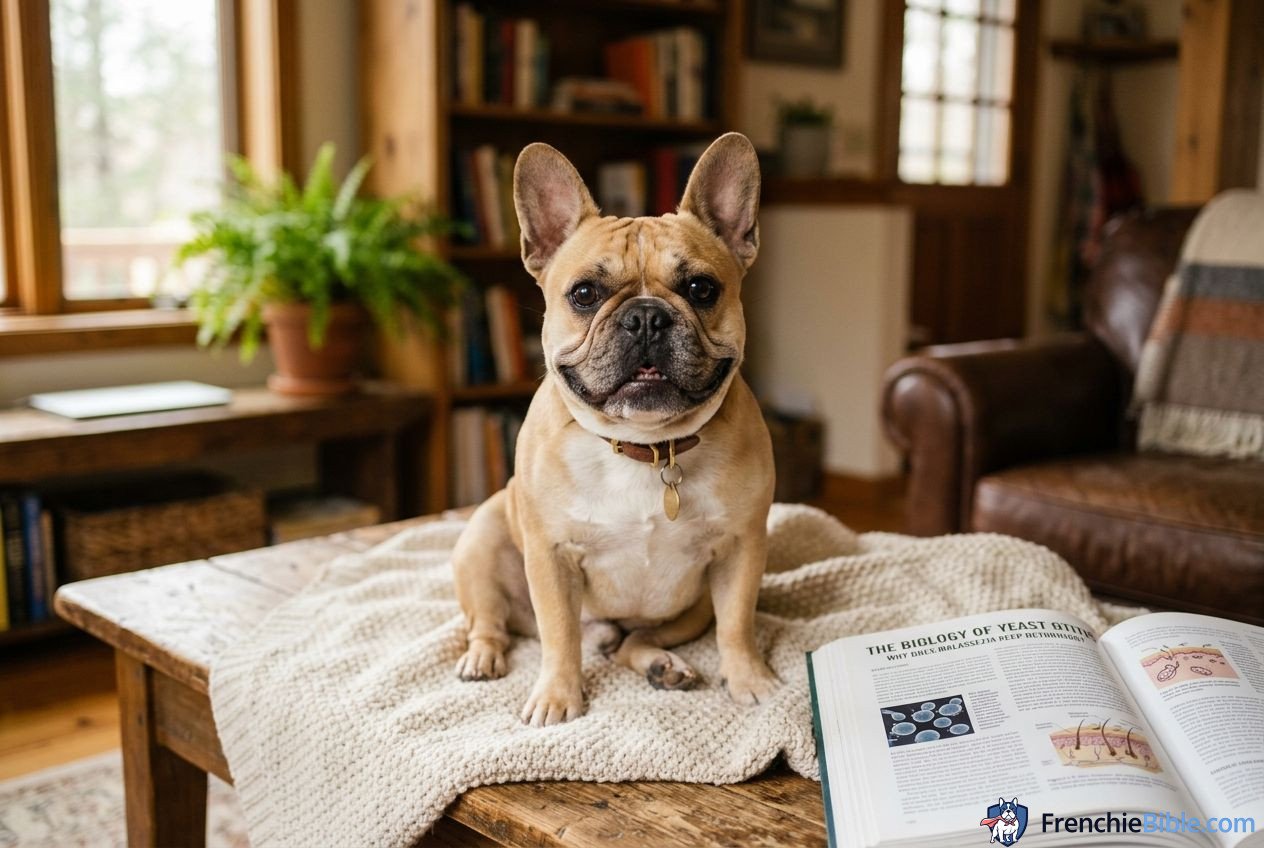
Malassezia is a lipid-loving yeast.
When your Frenchie’s ear canal is irritated by food allergies or moisture from a bath, the lining of the canal becomes inflamed and produces excess cerumen (earwax).
This wax is highly rich in lipids and fatty acids, providing an unlimited buffet for the yeast.
As the yeast consumes the wax, they produce metabolites like butyric acid, which is the exact compound responsible for that sweet, pungent “corn chip” or “stale beer” odor.
This acidic environment damages the delicate skin lining the canal, leading to:
- Chronic redness and swelling.
- Thick, dark-brown, paste-like earwax discharge.
- Intense, painful itching that causes your dog to scratch their ears until they bleed.
Why Standard Treatments Fail
Most pet owners apply medicated drops (containing antifungals like Clotrimazole or Miconazole) directly over thick, waxy ear canals.
This is a massive execution error.
The thick, greasy earwax forms a physical, waterproof shield over the yeast colonies.
The medicated drops cannot penetrate the wax barrier, meaning they never touch the active yeast underneath.
The yeast survives at the bottom of the L-shaped horizontal canal, waiting to multiply the second the treatment course ends.
2. The Breeder’s Step-by-Step Deep Ear Sanitization and pH-Reset Protocol
To permanently cure stubborn yeast otitis, you must execute this clinical-grade, two-phase protocol at home.
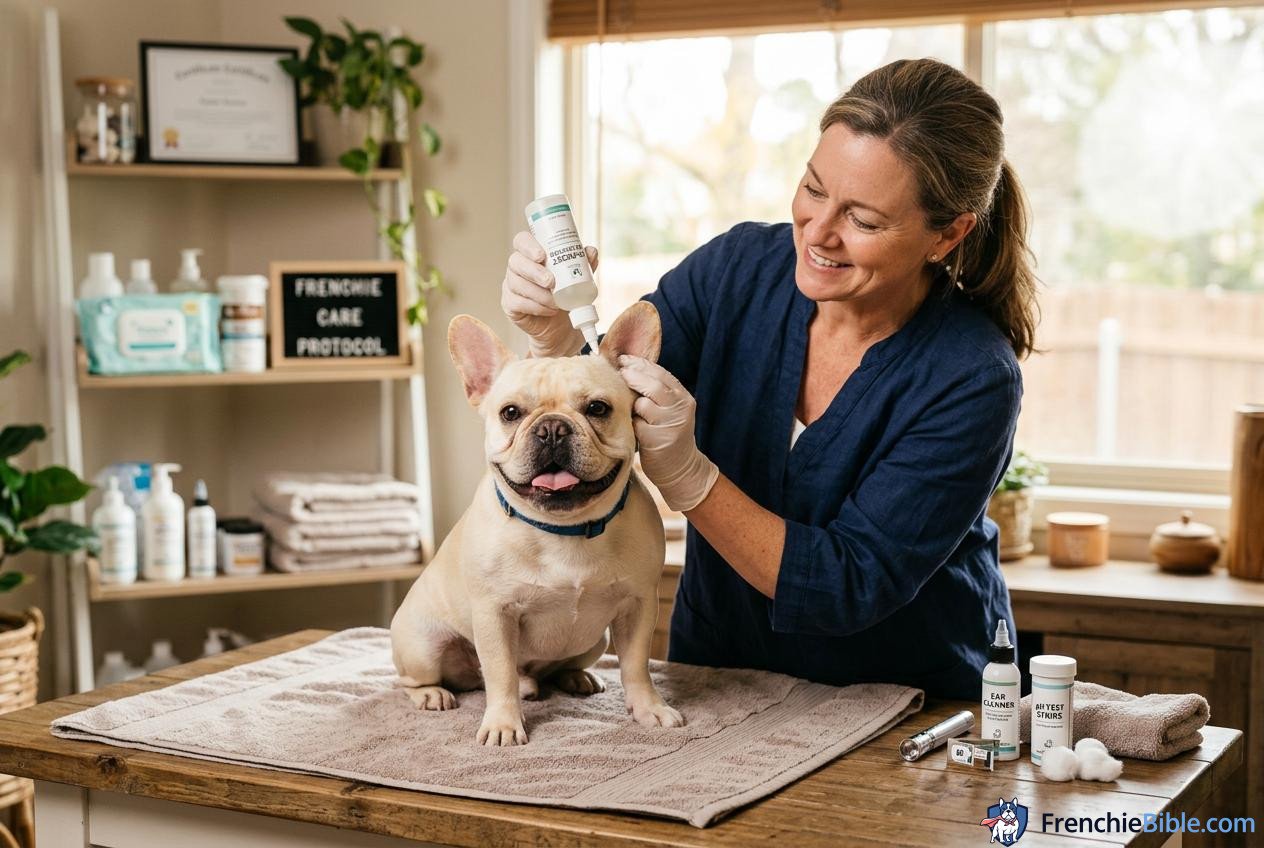
Phase 1: The Acidic pH-Reset Wash (Eradicating the Wax Shield)
Before applying any medicated drops, you must physically break down and dissolve the lipid-rich earwax shield.
- The Solution: Use a high-quality veterinary ear wash containing Salicylic Acid and Benzoic Acid. These specific organic acids are keratolytic, meaning they chemically dissolve the hard, sticky proteins and fats inside the earwax, causing it to liquefy.
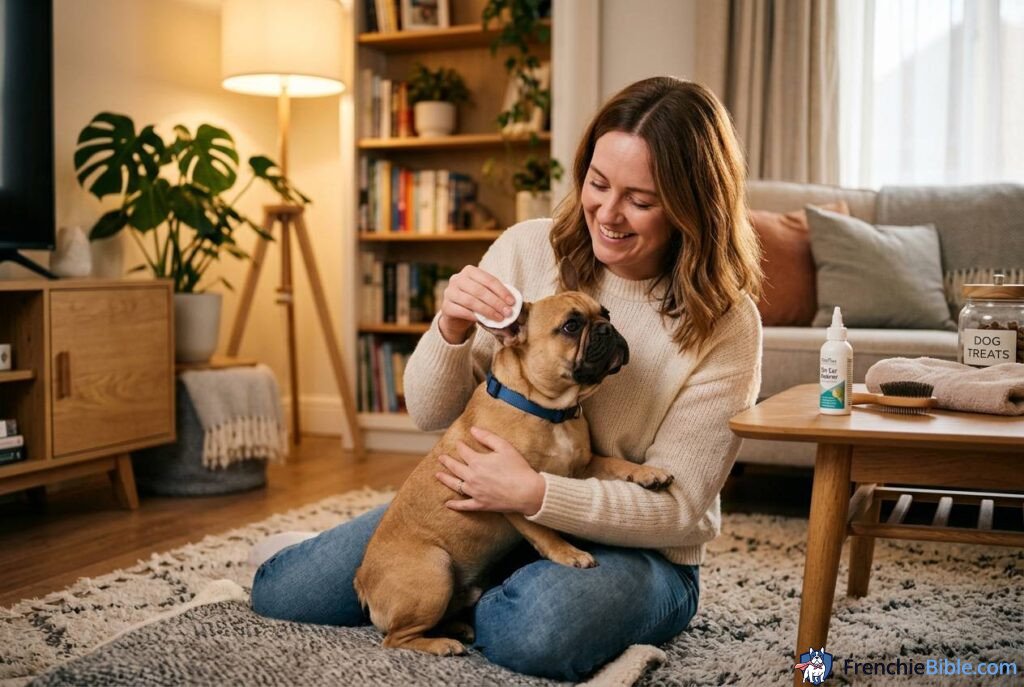
- The Wash: Pull the ear flap upward to straighten the vertical canal. Squeeze the warmed ear wash until it pools at the top of the ear opening.
- The Base Massage: Immediately massage the firm cartilage tube at the very base of the ear (below the ear opening) for 45 seconds. You should hear a squishing sound. This physical massage breaks up the deep wax deposits at the 90-degree horizontal bend.
- The Shake: Step back and let your Frenchie shake their head vigorously. This flings the liquefied wax out of the ear. Wipe the outer ear flap clean with a dry cotton pad.
Phase 2: Applying the Medicated Yeast Cleanser
Now that the canal is clean, open, and free of wax, your medicated drops can reach the skin lining and kill the remaining yeast.
- The Application: 10 minutes after the wash (once the ear canal has air-dried), apply the prescribed antifungal drops (or a natural, vet-approved antibacterial silver solution) deep into the canal.
- The Lock: Massage the base of the ear gently for 15 seconds to ensure the drops are distributed evenly along the horizontal canal. Repeat this protocol daily for 10 to 14 consecutive days.
3. Frequently Asked Questions (FAQ)
Q1: Can I use vinegar and water solutions to clean my Frenchie’s yeast-infected ears?
No, I highly discourage home-cooked vinegar (acetic acid) washes for active, raw yeast infections. If your Frenchie’s ear canal is scratched, red, and raw from scratching, pouring raw vinegar into the ear will cause intense, agonizing burning. This pain will panic your Frenchie, making them highly resistant and aggressive during future ear-handling sessions. Only use pH-buffered, non-stinging veterinary-approved ear washes.
Q2: Why is my Frenchie tilted their head to one side during an active ear infection?
A persistent head tilt is a warning sign that the infection has progressed from the outer ear canal (otitis externa) past the eardrum into the middle or inner ear (otitis interna/media). This deep infection compromises their vestibular system (which controls balance), leading to a constant head tilt, unsteadiness, or rapid eye movements (nystagmus). If your Frenchie displays a head tilt, please transport them to a licensed veterinarian immediately; they require systemic, prescription medications to prevent permanent neurological damage.
Q3: How do I prevent my Frenchie’s ears from getting infected during baths?
Water trapping is the number-one cause of post-bath ear infections. To prevent this, always place a large, dry cotton ball loosely inside each ear opening before bathing to block water splash. Remove the cotton balls immediately after the bath, and use a dry microfiber towel to wipe the outer ear flaps completely dry.
Q4: My Frenchie’s ears look clean, but they are shaking their head and crying when I touch their ears. What could this be?
If the ear canal looks clean and pink but your dog is in extreme pain when the base of the ear is touched, they may have a deep middle-ear infection located behind the eardrum, or a foreign body (such as a sharp grass seed or foxtail) wedged deep inside the horizontal canal. This requires immediate clinical examination with a veterinary otoscope to visualize the eardrum safely.
4. Disclaimer
The ear sanitization protocols, anatomical breakdowns, and chemical critiques shared in this article are based on my ten years of hands-on experience breeding and raising French Bulldogs. I am not a veterinarian. Deep bacterial infections (characterized by green/yellow pus, a rotting smell, and high fever) or cases with a ruptured eardrum require professional clinical diagnosis, ear cultures, and prescription systemic antibiotics.