If you are a French Bulldog owner, you already know that these charming, bat-eared companions bring immense joy to our lives. However, you are also likely aware that their unique physical structure comes with a specific set of health challenges. After over a decade of working as a French Bulldog expert and breeder and French Bulldog breeding expert, I’ve seen it all—from the chronic snorting of Brachycephalic Obstructive Airway Syndrome (BOAS) to the devastating, sudden paralysis caused by Intervertebral Disc Disease (IVDD).
One of the most heartbreaking scenarios is watching a vibrant Frenchie suddenly freeze up in pain, arching their back, unwilling to move, or worse, losing function in their hind legs. For years, the standard protocol for spinal issues and severe wounds relied heavily on strict crate rest, aggressive pharmaceuticals (like NSAIDs or steroids), or risky surgeries. But over the past few years, a revolutionary, non-invasive treatment has completely transformed how we manage pain, inflammation, and tissue repair in French Bulldogs: Cold Laser Therapy.
Related Reading: Training & Behavior | Grooming & Care | French Bulldog Colors
Also known as Low-Level Laser Therapy (LLLT) or Photobiomodulation therapy (PBMT), cold laser therapy has become a cornerstone in my practice for treating Frenchie back pain, expediting wound healing, and managing chronic inflammation. In this comprehensive guide, I will take you behind the clinical curtain to explain exactly how cold laser therapy works, why it is a game-changer for French Bulldogs specifically, and how it might just be the saving grace your dog needs to live a pain-free, active life.
Understanding French Bulldog Back Pain and IVDD
Before we dive into the wonders of laser light, we must first understand the battlefield. Why are French Bulldogs so susceptible to back pain?
The Genetics of Chondrodystrophy
French Bulldogs belong to a group of dogs classified as “chondrodystrophic.” This is a big medical term that essentially means they have a genetic mutation causing abnormal cartilage development. It’s what gives them their adorable, short, stocky legs and robust bodies. However, this same genetic trait causes the intervertebral discs (the shock-absorbing cushions between the bones of the spine) to calcify and degenerate at a much earlier age than in non-chondrodystrophic breeds.
What is Intervertebral Disc Disease (IVDD)?
In a healthy dog, the spinal discs are plump and act like jelly donuts, cushioning the vertebrae. In a Frenchie with IVDD, the outer layer of the disc (the annulus fibrosus) weakens, and the inner jelly-like substance (the nucleus pulposus) can harden. When a Frenchie jumps off a couch, twists aggressively, or sometimes just moves the wrong way, that weakened disc can bulge or completely rupture (herniate) into the spinal canal.
This herniation compresses the spinal cord and the surrounding nerves. The result? Excruciating back pain, severe inflammation, and in severe cases, loss of motor function and deep pain sensation in the hind legs.
Signs Your Frenchie is Suffering from Back Pain
As an owner, catching the early warning signs of back pain or an impending IVDD episode is critical. Frenchies can be stoic, but look out for:
– The “Roached” or Arched Back: They tuck their pelvis under and hunch their back up to relieve pressure.
– Reluctance to Move: Refusing to jump on the couch, go up stairs, or even bend down to eat from their bowl.
– Muscle Spasms: Visible twitching or tightness along the spine.
– Vocalization: Crying, yelping, or whimpering when picked up under the chest.
– Neurological Deficits: Dragging the hind paws (knuckling), crossing the back legs, or a wobbly, “drunken” gait.
When these symptoms strike, the inflammatory cascade begins. This is exactly where Cold Laser Therapy steps in as a powerful intervention.
What is Cold Laser Therapy (LLLT)?
Let’s demystify the technology. When you hear “laser,” you might picture surgical lasers that cut tissue or remove warts. Cold laser therapy is entirely different.
The Science Behind the Light: Photobiomodulation
Cold laser therapy utilizes specific wavelengths of light (usually in the red and near-infrared spectrum, between 600 to 1000 nanometers) to interact with tissue at the cellular level. This process is called Photobiomodulation.
Imagine the cells in your Frenchie’s damaged spinal tissue as dying plants. Photobiomodulation acts like sunlight. The light energy penetrates the skin and is absorbed by receptors (specifically, cytochrome c oxidase) within the mitochondria—the powerhouse of the cell. This absorption triggers a photochemical response that dramatically increases the production of Adenosine Triphosphate (ATP), which is cellular energy.
When cells have more ATP, they can function optimally. They regenerate faster, repair damage more efficiently, and pump out inflammatory mediators. Additionally, the laser stimulates vasodilation (widening of the blood vessels), which increases blood flow, bringing oxygen and essential nutrients to the damaged area while flushing out cellular waste and inflammatory byproducts.
Why is it Called a “Cold” Laser?
It is termed a “cold” laser because the light intensity is low enough that it does not generate thermal heat. It will not burn your dog’s skin or singe their fur. During a treatment, your Frenchie might feel a very gentle, soothing warmth, but nothing hot or uncomfortable.
Why Cold Laser is a Game-Changer for French Bulldogs
In my clinical and breeding experience, French Bulldogs are unique patients. Because of their flat faces (brachycephalic anatomy), putting a Frenchie under general anesthesia for surgery always carries a heightened risk. Furthermore, many Frenchies have sensitive gastrointestinal tracts that cannot tolerate long-term use of NSAIDs (Non-Steroidal Anti-Inflammatory Drugs) like Carprofen or Meloxicam without developing stomach ulcers or liver stress.
Cold laser therapy offers a non-invasive, drug-free, and pain-free alternative or complementary treatment. It allows us to manage severe pain and promote deep tissue healing without risking the complications associated with surgery or heavy medications.
Cold Laser Therapy for French Bulldog Back Pain and IVDD
When a French Bulldog is presented to me with a suspected IVDD flare-up or acute back pain, our primary goals are to reduce pain, halt the inflammatory cascade, and restore neurological function. Here is exactly how the cold laser achieves this.
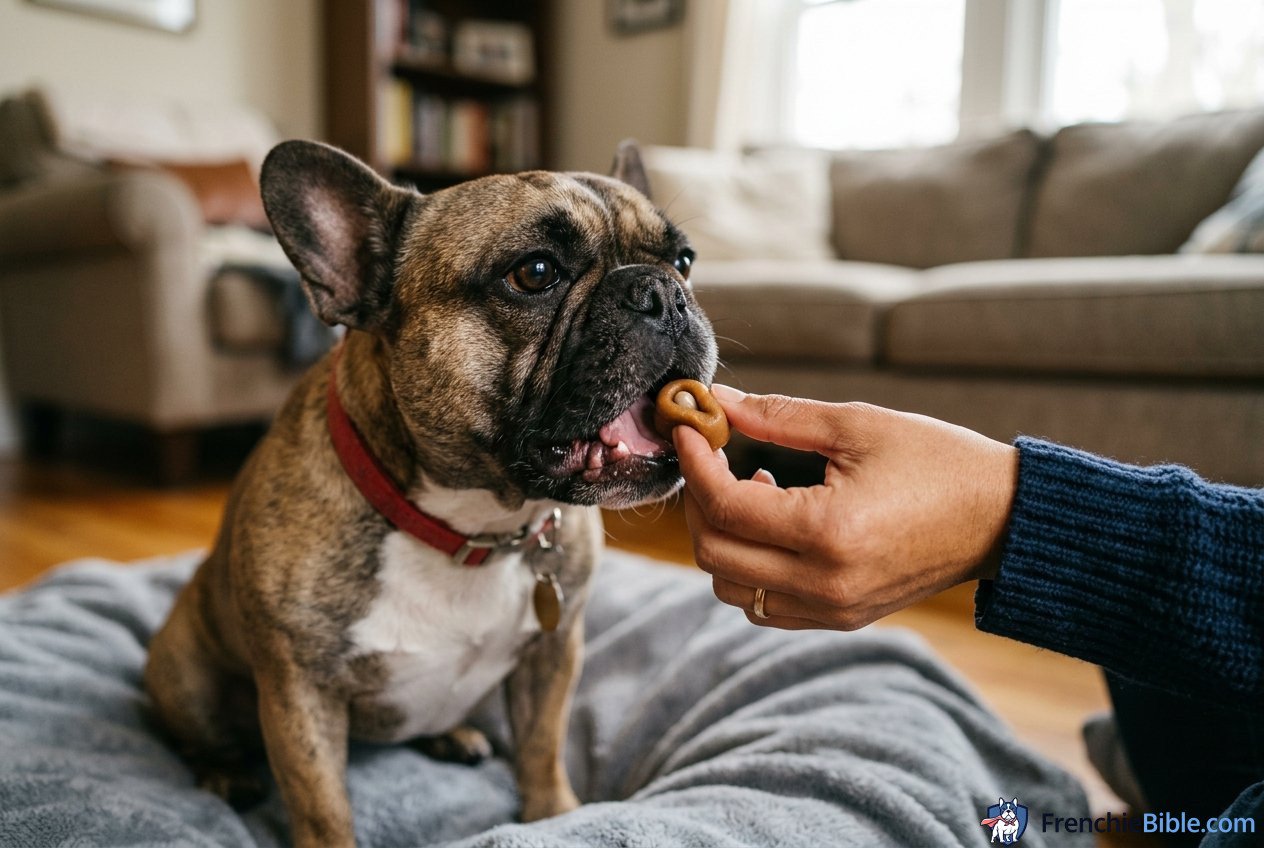
1. Rapid Reduction of Inflammation and Edema
When a disc herniates, the body’s immune system attacks the extruded disc material as a foreign body, causing massive inflammation (swelling) around the delicate spinal cord. This swelling creates a tourniquet effect, cutting off blood supply to the nerves.
Cold laser therapy specifically targets this edema. The light energy decreases the levels of pro-inflammatory cytokines (like prostaglandin E2 and interleukin-1) while increasing anti-inflammatory mediators. It also stimulates the lymphatic system to drain the excess fluid away from the spinal cord. I have literally watched Frenchies who were stiff as a board relax their muscles within minutes of the laser sweeping over their inflamed vertebrae.
2. Profound Pain Management (Analgesia)
Back pain from IVDD is agonizing. Cold laser therapy provides profound pain relief through several mechanisms. First, it blocks pain signals transmitted by unmyelinated c-fibers to the brain. Second, it stimulates the release of massive amounts of endorphins and enkephalins—the body’s natural painkillers. This allows the Frenchie to rest comfortably, which is essential for the healing process.
3. Accelerating Tissue Repair and Nerve Regeneration
Perhaps the most incredible benefit of cold laser therapy is its ability to heal nerves. If the spinal cord has been compressed, the myelin sheath (the protective coating around nerves) gets damaged. LLLT has been scientifically proven to stimulate Schwann cells, which are responsible for nerve regeneration. It also accelerates the repair of the annulus fibrosus (the outer shell of the disc) by increasing collagen production.
A Clinical Case Study: “Buster’s” Comeback
To put this into perspective, let me share a story from my breeding program. Buster, a 4-year-old Frenchie, was brought in completely immobile in his hind end. He had a stage 3 IVDD episode. His owners could not afford the $8,000 MRI and spinal surgery (hemilaminectomy).
We immediately implemented strict crate rest, pain medications, and an aggressive cold laser therapy protocol—treating his spine with a Class IV therapeutic laser every single day for the first week. By day three, Buster had deep pain sensation return. By day seven, the inflammation had reduced so much that he could stand unassisted. After a month of gradually decreasing laser sessions combined with physical therapy, Buster was walking again. While surgery is sometimes unavoidable for stage 4 or 5 IVDD, cold laser therapy can be an absolute miracle for stages 1 through 3.
Cold Laser Therapy for Wound Healing and Post-Surgical Recovery
While back pain is the most famous application, cold laser therapy is equally miraculous for soft tissue injuries, surgical incisions, and dermatological nightmares—which Frenchies are unfortunately famous for.
Post-Operative BOAS Surgery Recovery
Many Frenchies require airway surgery (soft palate resection and stenotic nares widening) to help them breathe. The throat and nasal tissues become incredibly swollen post-surgery, which can temporarily worsen breathing. Applying cold laser therapy to the external throat and nose immediately after surgery drastically reduces this edema, significantly minimizing the risk of post-operative respiratory distress and speeding up the healing of the surgical incisions.
Spinal Surgery and Orthopedic Recovery
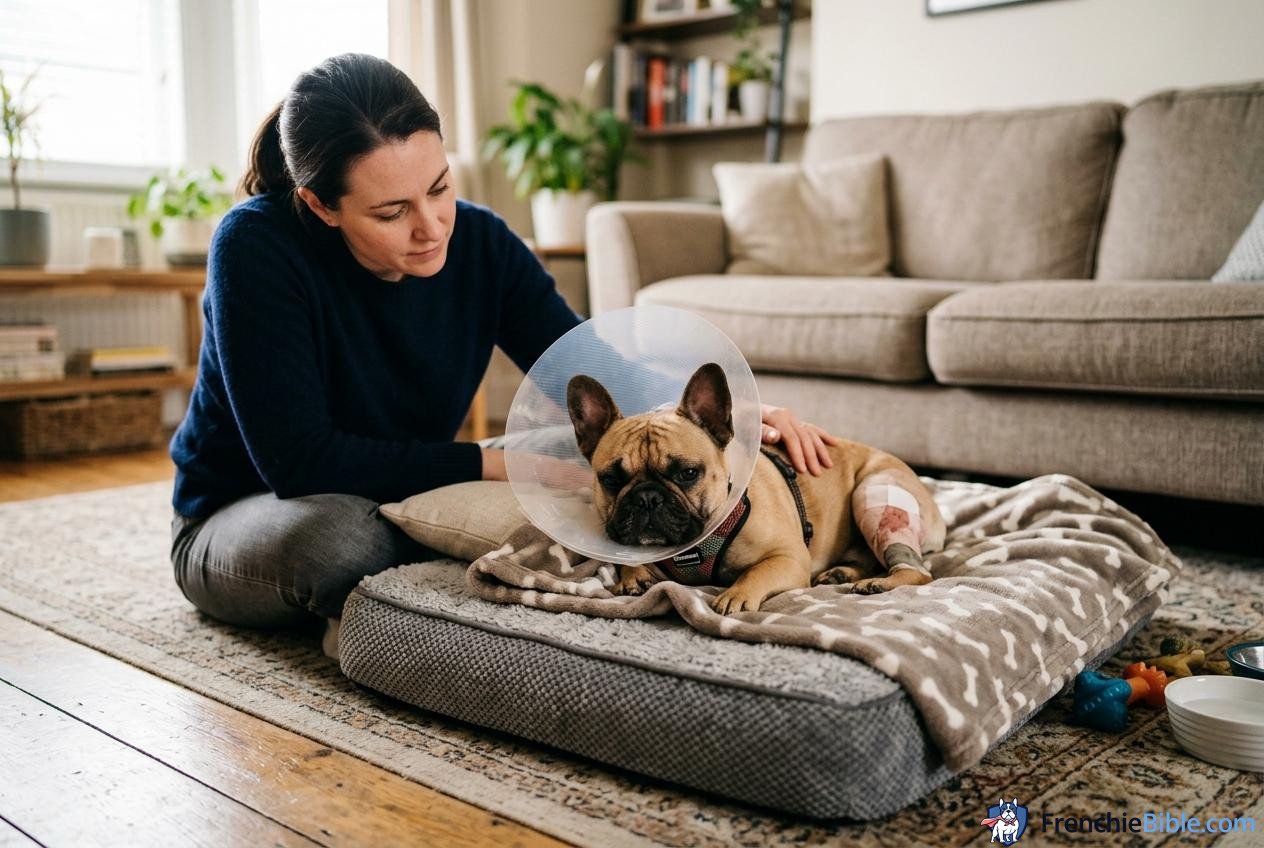
If your Frenchie does require IVDD surgery or surgery for luxating patellas (another common Frenchie issue), post-operative laser therapy is mandatory in my book. It accelerates the healing of the deep muscle incisions, reduces scar tissue formation, and significantly cuts down the recovery time.
Skin Fold Dermatitis, Hot Spots, and Ear Infections
French Bulldogs have deep facial wrinkles, tight tail pockets, and narrow ear canals. These dark, moist areas are breeding grounds for yeast and bacterial infections. Chronic skin fold dermatitis can cause raw, ulcerated, and incredibly painful skin.
Cold laser therapy not only reduces the pain and severe inflammation associated with these skin infections but also increases local immunity and speeds up the regeneration of healthy epithelial cells. It’s an incredibly effective adjunct treatment for stubborn ear infections (otitis externa) and hot spots, helping to dry out the weeping lesions and promote rapid healing.
What to Expect During a Laser Therapy Session
If you are considering this treatment for your Frenchie, here is what a typical session looks like.
The Process Step-by-Step
First and foremost: Eye protection! The wavelengths used in Class III and Class IV therapeutic lasers can damage the retina. Therefore, the veterinary technician, you (if you are in the room), and your Frenchie will all wear specialized protective goggles. Yes, seeing a Frenchie in laser goggles is just as cute as it sounds.
Your Frenchie does not need to be shaved for the treatment. They will sit or lie down on a comfortable mat. The practitioner will use a handheld wand, slowly passing it over the affected area (e.g., up and down the spine, or over a surgical incision). The wand may lightly touch the fur or hover just above the skin.
Treatment Duration and Frequency
The sessions are surprisingly fast. Treating a section of the spine usually takes between 5 to 15 minutes, depending on the power of the laser and the size of the area being treated.
The frequency of treatments depends entirely on the severity of the condition:
– Acute Conditions (e.g., sudden IVDD flare-up, fresh post-op wound): We typically start with aggressive treatment. This might mean sessions every single day or every other day for the first week, tapering down as the dog improves.
– Chronic Conditions (e.g., chronic arthritis, long-term spinal degradation): We usually start with 2-3 times a week, eventually transitioning to a maintenance schedule of once every 2 to 4 weeks to keep inflammation at bay.
Are There Any Side Effects or Contraindications?
Cold laser therapy is overwhelmingly safe, and adverse side effects are incredibly rare. However, it should never be used:
– Directly over the eyes.
– Over known cancerous tumors or carcinomas (as it stimulates cellular growth, we do not want to stimulate cancer cells).
– Over active, profusely bleeding wounds (vasodilation can increase bleeding).
– Over a pregnant dog’s uterus.
At-Home Laser Devices vs. Professional Veterinary Lasers
With the rise in popularity of LLLT, many companies are now selling “at-home” cold laser devices marketed directly to pet owners. Are these worth the investment?
Class III vs. Class IV Lasers
Professional veterinary clinics typically use Class IIIb or Class IV lasers.
– Class IV Lasers are the gold standard in veterinary medicine. They operate at higher wattages, meaning they can deliver a massive dose of healing photons deep into the tissues (down to the spinal cord and deep joints) in a very short amount of time.
– At-Home Lasers are usually low-power Class I, II, or very weak Class IIIa lasers. They simply do not have the power output required to penetrate through a Frenchie’s thick muscle layers to reach a herniated spinal disc effectively.
Can You Treat Your Frenchie at Home?
While at-home devices will not cure a deep spinal compression or a severe IVDD episode, they are not entirely useless. A high-quality at-home cold laser can be very beneficial for superficial wound healing, managing minor skin fold dermatitis, or providing a small amount of relief for superficial arthritis. However, for deep tissue injuries, neurological deficits, and severe back pain, you absolutely must rely on the high-powered Class IV lasers at your veterinarian’s office. Relying on an underpowered home device for an acute IVDD episode will only delay crucial, potentially paralyzing treatment.
Integrating Laser Therapy into a Holistic Care Plan
as a French Bulldog expert and breeder professional, I always stress that there is no single “magic bullet” in medicine. Cold laser therapy is phenomenally powerful, but it works best when integrated into a comprehensive, holistic care plan for your Frenchie.
Weight Management is Non-Negotiable
You can laser your Frenchie’s back every single day, but if they are 5 pounds overweight, their spine will continue to degenerate. French Bulldogs must be kept lean. Every extra pound acts as a heavy backpack pulling down on their weakened intervertebral discs. A visible waistline is a healthy waistline.
Joint and Nerve Supplements
Support the laser’s cellular repair by providing the right building blocks. High-quality Omega-3 fatty acids (from fish oil or green-lipped mussel) act as natural systemic anti-inflammatories. Glucosamine and Chondroitin help support the cartilage. Additionally, high-quality, vet-approved CBD oil can work synergistically with the laser to manage neuropathic pain and keep your Frenchie calm during crate rest periods.
Physical Therapy, Acupuncture, and Hydrotherapy
Once the acute inflammation has been knocked down by the cold laser, physical therapy is the next step. Veterinary acupuncture can further stimulate nerve regeneration and blood flow. Water treadmill therapy (hydrotherapy) is spectacular for rebuilding the core and hind-leg muscles without putting concussive gravity stress on the healing spinal discs.
Conclusion
Navigating health issues with a French Bulldog can be emotionally and financially taxing. When a dog goes down with severe back pain or faces a slow-healing wound, it can feel like the world is collapsing. However, modern veterinary medicine has given us incredible tools, and Cold Laser Therapy stands at the forefront of non-invasive healing.
By utilizing the power of light to obliterate inflammation, mute pain signals, and turbocharge cellular regeneration, we can often pull Frenchies back from the brink of paralysis and speed up their recovery from surgeries and skin conditions. Whether used as a primary treatment for mild IVDD, a crucial post-operative healing aid, or a maintenance tool for chronic pain, cold laser therapy is an absolute blessing for the French Bulldog breed.
If your Frenchie is suffering from back pain, mobility issues, or stubborn wounds, I strongly urge you to ask your veterinarian if Cold Laser Therapy is an appropriate option for their specific case.
Frequently Asked Questions (FAQs)
1. How quickly will my Frenchie show improvement after cold laser therapy?
For acute conditions, many owners notice a visible reduction in pain and stiffness within 12 to 24 hours after the very first session. For chronic conditions or severe IVDD, it may take 3 to 5 sessions before significant, cumulative improvements in mobility and pain relief are observed.
2. Is cold laser therapy painful for my French Bulldog?
Absolutely not. The therapy is completely painless and non-invasive. Most Frenchies actually find it incredibly relaxing. They often fall asleep during the treatment due to the gentle warming sensation and the massive release of pain-relieving endorphins.
3. Can cold laser therapy cure IVDD in Frenchies?
There is no “cure” for the genetic predisposition to IVDD. However, cold laser therapy can successfully manage and heal acute IVDD episodes (especially stages 1-3) by resolving the inflammation, reducing disc swelling, and allowing the area to heal without surgical intervention. It will not, however, reverse the genetic calcification of the discs.
4. How much does cold laser therapy cost for a dog?
The cost varies depending on your geographic location and your veterinarian’s specific equipment. Generally, a single session ranges from $40 to $80. Most clinics offer discounted packages (e.g., 6 or 10 sessions), which brings the cost down significantly and is recommended for the best clinical outcome.
5. Can I use cold laser therapy if my Frenchie is on pain medication?
Yes! Cold laser therapy is an excellent adjunctive treatment. It does not interact negatively with pharmaceutical pain killers (NSAIDs, Gabapentin, etc.). In fact, as the laser therapy begins to heal the tissue and reduce pain naturally, your veterinarian may be able to gradually reduce your dog’s reliance on heavy prescription medications.
Disclaimer: We are not veterinarians and do not hold veterinary medical licenses. The information provided in this article is based on years of breeding and daily care experience and is for educational purposes only. It should not replace professional veterinary advice. Always consult with a licensed veterinarian if you have concerns about your French Bulldog’s health or before starting any new treatment.