As a French Bulldog breeder with over a decade of hands-on experience I have witnessed countless puppy owners make one critical mistake that turns a routine bath into a dermatological nightmare. You bring your adorable, wrinkly companion into the tub, scrub them with the finest oatmeal shampoo, and meticulously rinse them off. They shake, spraying water everywhere, and look up at you with those big, expressive bat ears. You give them a quick rub down with a standard cotton bath towel and let them run off to air dry on the living room rug. It seems completely harmless, right?
Wrong. This innocent-seeming routine is the leading cause of one of the most agonizing conditions a Frenchie can endure: full-body eczema and severe hot spots caused by a damp undercoat.
Related Reading: Training & Behavior | Frenchie Puppy Guide | Best Food for Frenchies
In my ten years of living, breathing, and raising French Bulldogs I have learned a hard truth that I pass on to every single family who takes one of my puppies home: bathing is only ten percent of the job; the other ninety percent is drying. The art of drying a French Bulldog is a non-negotiable skill that every owner, whether novice or veteran, must master. If you fail to thoroughly dry your Frenchie’s undercoat down to the absolute root, you are inadvertently creating a microscopic greenhouse for bacteria, yeast, and fungal infections to thrive.
In this comprehensive, deep-dive guide I will share the exact, uncompromising protocols I use in my breeding program to ensure my dogs maintain pristine, healthy skin and lustrous coats. We will explore the complex anatomy of your Frenchie’s fur, the devastating biological consequences of trapped moisture, the precise step-by-step drying technique that will save your dog from misery, and the preventative measures you must take to maintain an impenetrable skin barrier.
Understanding the French Bulldog Coat and Skin Structure
To truly grasp why meticulous drying is a matter of paramount importance, you first need to understand the unique biological canvas we are working with. A French Bulldog is not built like a Doberman Pinscher, a Greyhound, or a Boxer. Their structural quirks, skin topography, and coat density require highly specialized care and attention to detail.
The Double Coat Dilemma
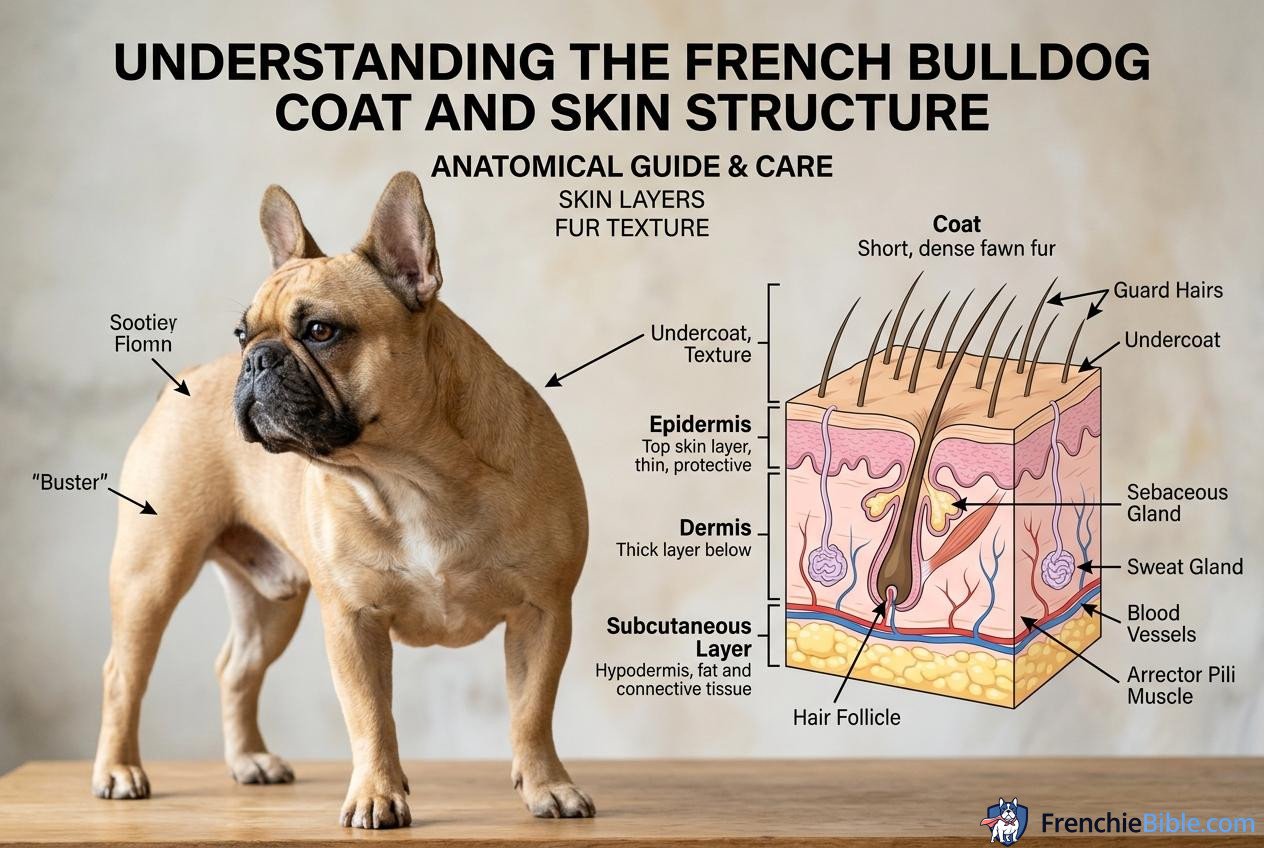
There is a pervasive and dangerous myth in the canine world that French Bulldogs have a simple, single-layered coat simply because their hair appears short. While it is true that some poorly bred Frenchies or specific color lines might possess a thinner, single coat, the vast majority—especially those bred to standard with proper bone substance and structure—have a distinct, highly functional double coat.
This double coat consists of two entirely different layers of hair. The topcoat (composed of guard hairs) is what you feel when you pet your dog. It is slightly coarser, glossier, and designed by nature to repel superficial dirt, debris, and light water. However, hidden beneath this smooth exterior lies the undercoat. The undercoat is dense, incredibly soft, and wooly. Its primary biological function is thermoregulation—keeping the dog warm in the bitter cold of winter and insulating them against extreme, life-threatening heat in the summer.
When you bathe your Frenchie, water easily penetrates the slick guard hairs and soaks directly into the dense undercoat, acting exactly like a sponge. When you towel dry your dog, you are only removing the surface moisture from the topcoat. The undercoat remains completely saturated. Because the topcoat acts as a seal, it traps that heavy moisture against the warm skin. Without forced air to mechanically separate the hairs and push the water out, the undercoat will not dry for hours, and sometimes even days, depending on the ambient humidity of your home.
Skin Folds and Wrinkles: The Perfect Storm for Moisture
In addition to the hidden complexities of the double coat French Bulldogs are celebrated for their charming wrinkles and deep skin folds. These folds are most prominent on their face (the nose rope), their heavy neck, their broad shoulders, and crucially, around the tail pocket.
From a strict biological and dermatological standpoint, a skin fold is a deep, dark, and naturally warm crevice. When water seeps into these tight folds during a bath and is not meticulously and completely dried out, it creates an environment identical to a humid, tropical rainforest. Constant moisture, combined with the dog’s natural body heat and the absolute lack of air circulation, creates the ultimate breeding ground for opportunistic pathogens.
Furthermore, constant friction occurs within these folds as the dog breathes, walks, and moves. When the delicate skin inside the fold is damp, it becomes highly susceptible to maceration. Maceration is the softening and breaking down of skin tissue resulting from prolonged exposure to moisture—think of how your fingers look after sitting in a bathtub for an hour. This compromised, weakened skin barrier is an open invitation for severe eczema, fold dermatitis, and aggressive bacterial colonies to take hold and destroy the tissue.
The Hidden Danger: What Happens When the Undercoat Stays Wet
As a dedicated breeder I am constantly educating new puppy families about the invisible, silent war happening directly on their dog’s skin. You cannot easily see what is happening beneath that layer of fur, but the biological processes triggered by trapped moisture are rapid, aggressive, and incredibly damaging.
The Incubation of Bacteria and Yeast
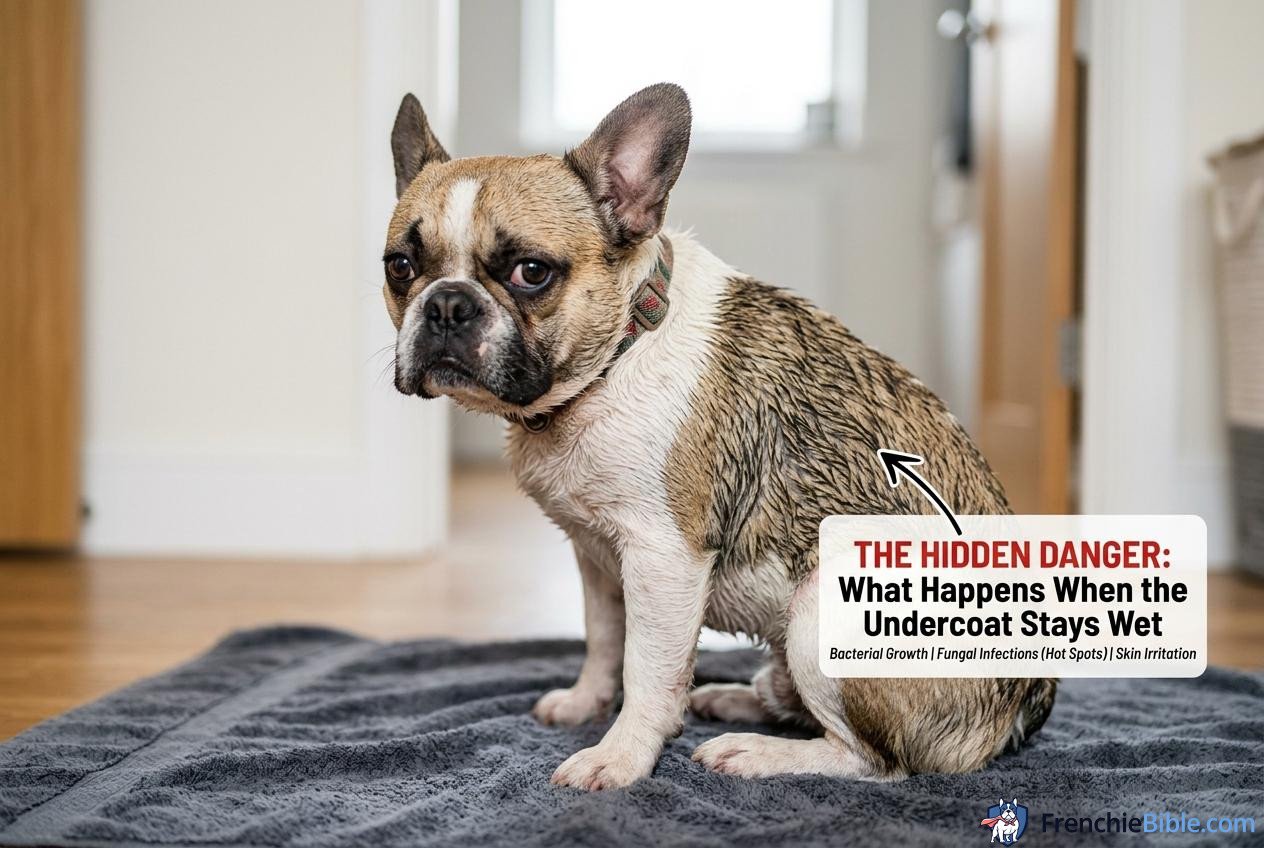
A dog’s skin, much like human skin, has a naturally occurring microbiome. It is home to various microscopic organisms, including staphylococcal bacteria and Malassezia yeast, which live there harmoniously under normal, dry, and healthy conditions. The dog’s immune system, combined with the natural acid mantle and lipid barrier of the skin, keeps these microscopic populations perfectly in check.
However, the exact moment you introduce prolonged moisture trapped within a dense undercoat or a deep skin fold, you violently disrupt this delicate balance. Yeast and bacteria thrive and multiply exponentially in warm, dark, and highly humid environments. A wet undercoat acts exactly like a laboratory incubator. The yeast and bacteria rapidly multiply, overwhelming the skin’s natural defenses in a matter of hours.
As the Malassezia yeast proliferates out of control, it causes intense pruritus (severe itching) and massive inflammation. The skin becomes visibly greasy, heavily inflamed, and begins to emit a highly distinct, foul odor. Many overwhelmed owners describe this scent as smelling like rancid corn chips, old gym socks, or musty cheese. Let me be clear: this is not just a standard “dog smell”; this is the specific, undeniable scent of a fungal overgrowth actively attacking and digesting the surface of your dog’s skin.
Hot Spots and Eczema: The Silent Agony
When the bacterial and yeast populations explode due to a damp undercoat, the immediate and visible result is often acute moist dermatitis, commonly known in the dog world as a “hot spot,” or widespread, systemic eczema.
Eczema in French Bulldogs presents as intensely inflamed, angry red, weeping lesions on the skin. Because the crucial skin barrier has been completely compromised by the trapped moisture and the resulting maceration, the skin actually begins to break down at a cellular level and ooze clear or yellowish blood serum. This sticky serum then mats the surrounding fur together, creating a hard, impenetrable crust that traps even more bacteria and moisture beneath it, perpetuating a vicious, rapidly spreading, and highly destructive cycle.
What starts as a seemingly innocent damp patch of fur on Monday morning can violently evolve into a massive, bloody, infected, and purulent lesion covering the dog’s entire flank, neck, or cheek by Wednesday afternoon. The speed at which these moisture-driven infections spread is genuinely terrifying. The dog is in excruciating pain and experiences an unyielding, burning itch that they cannot ignore. They will frantically scratch, bite, and aggressively chew at their own flesh in a desperate attempt to find even a moment of relief. This self-mutilation causes severe secondary trauma and introduces highly dangerous environmental bacteria (like E. coli or Pseudomonas) from their dirty nails directly into the open, weeping wounds.
The Psychological Toll of Chronic Itching
Beyond the horrific physical damage, we must take a moment to deeply consider the psychological toll that chronic, moisture-induced eczema takes on a sensitive breed like the French Bulldog. Imagine wearing a heavy, scratchy wool sweater that is soaking wet, and underneath that heavy sweater, you have a severe, burning, blistering rash that you simply cannot reach to scratch.
Dogs suffering from moisture-induced eczema become deeply restless, highly anxious, and uncharacteristically irritable. They cannot sleep soundly because the burning itch constantly wakes them up in a panic. They may completely lose their appetite, become deeply lethargic and depressed, or even exhibit uncharacteristic aggression or grumpiness toward family members or other pets due to the chronic pain and unyielding discomfort. As someone who has dedicated their entire life to the well-being, preservation, and happiness of this specific breed, seeing a Frenchie suffer from a completely preventable condition like this is absolutely heartbreaking and infuriating.
If left untreated, chronic eczema leads to a condition called lichenification. The skin, constantly under attack and constantly inflamed, thickens dramatically in an attempt to protect itself. It turns pitch black, becomes tough and leathery like elephant skin, and permanently loses the ability to grow hair. This is the end-stage result of chronic, mismanaged skin moisture.
Signs Your Frenchie is Developing Skin Issues Post-Bath
If you suspect that your past drying techniques may have been inadequate or rushed, it is absolutely crucial to monitor your French Bulldog with a hawk’s eye in the days immediately following a bath. The signs of an impending eczema flare-up or bacterial infection are highly distinct if you know exactly what you are looking for. Catching these symptoms early can mean the difference between a quick, simple topical fix and weeks of intense, expensive suffering.
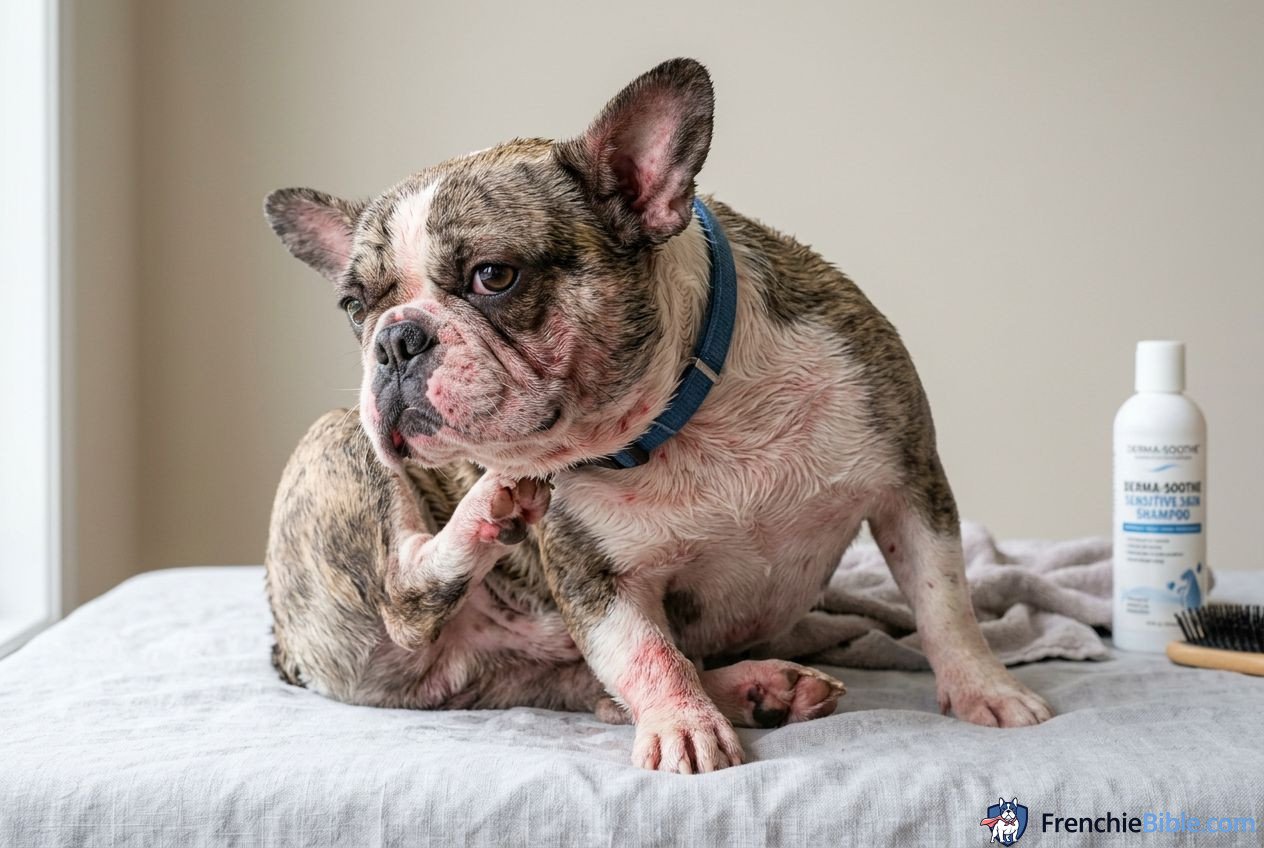
Excessive Scratching and Biting
The most obvious, glaring indicator that something is terribly wrong beneath the surface is a sudden, dramatic change in your dog’s behavior. If, within 24 to 48 hours after a bath, your Frenchie begins obsessively scratching their neck, shoulders, flanks, or armpits, you must investigate immediately. Do not ignore it.
Pay extremely close attention to “nibbling” or “corn-cobbing”—this is when a dog uses their front incisors to rapidly and frantically chew at a specific patch of fur, pulling upward. This is a clear, undeniable sign that they are trying to reach an intense, burning itch deep at the skin level. They may also forcefully rub their entire body against the sofa, walls, or rough carpets in a desperate, full-body attempt to relieve the systemic irritation.
Red Inflamed Patches Under the Fur
Do not just look at your dog from across the room; you must physically put your hands on them and deeply part the fur. If your dog is scratching an area, gently but firmly separate the dense hairs in that exact spot all the way down to the base of the skin.
Healthy Frenchie skin should be a pale, clear pink (or perfectly match their natural dark pigmentation if they are a darker colored dog), and it should feel completely smooth, dry, and cool to the touch. If the skin is angry, bright red, bumpy, covered in tiny pustules, or feels radiating hot to the touch, severe inflammation has already set in. You may also notice that the skin feels slightly greasy, clammy, or sticky to your fingertips, which is the classic, textbook symptom of a massive yeast overgrowth secondary to moisture entrapment.
Crusty Scabs and Hair Loss
If the eczema progresses unchecked by the owner, the oozing serum from the highly inflamed skin will dry and form hard, crusty, yellowish or brown scabs that attach tightly to the base of the hair follicles. When you pet your dog, instead of smooth fur, you will feel these hard, raised, painful bumps hidden beneath the coat.
Eventually, as the hair follicles become completely overwhelmed and severely damaged by the infection and the dog’s relentless, frantic scratching, the fur in the affected areas will begin to fall out in massive clumps, revealing raw, weeping, bloody skin underneath. At this stage, the condition is critical, the dog is in significant, undeniable distress, and the road to recovery will be long and arduous.
The Ultimate French Bulldog Drying Technique: Step-by-Step
Over the past ten years of constantly raising, showing, and living with French Bulldogs I have meticulously perfected a drying protocol that entirely eliminates the risk of moisture-induced eczema. This is not just a quick rubdown before dinner; this is a meticulous, highly structured multi-step process that requires your full patience, the correct professional tools, and a deep understanding of your dog’s specific anatomy.
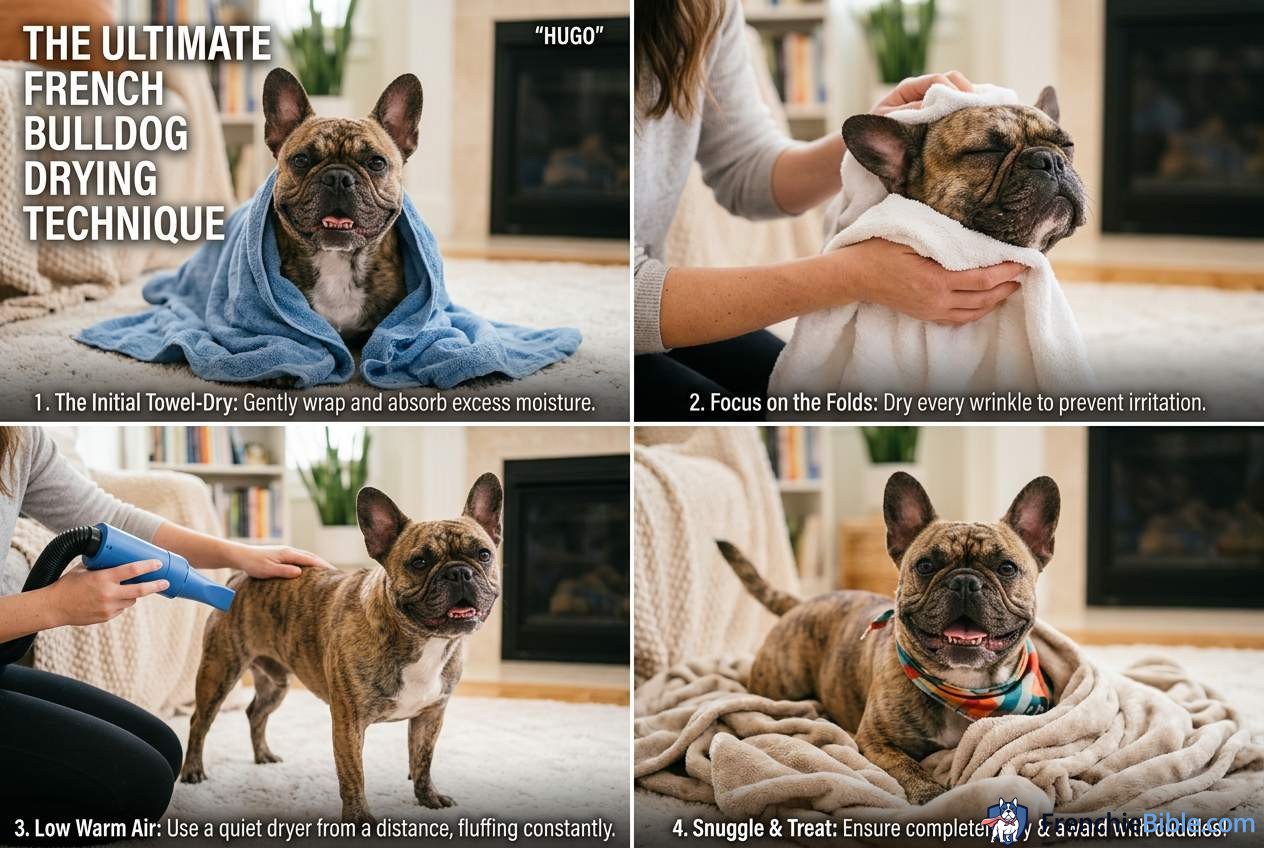
Here is the exact, uncompromising step-by-step drying technique you must employ every single time your French Bulldog gets wet, without exception.
Step 1: The Initial Towel Squeeze
The critical drying process actually begins before your dog even takes a single step out of the bathtub. While they are still standing in the basin, dripping wet, use your bare hands to gently but firmly squeeze as much excess water from their dense coat as possible. Start at the top of the neck and run your hands firmly down their back, down their flanks, and down each individual leg. Think of it exactly like gently wringing out a heavy sponge.
Next, use a highly absorbent bath towel to begin the initial surface dry. The key here is the technique: absolutely do not rub vigorously back and forth. Vigorous, aggressive rubbing causes severe friction, which can highly irritate wet, sensitive skin and actually drive the water deeper and more stubbornly into the undercoat. Instead, use a firm pressing, blotting, and squeezing motion. Wrap the towel around a section of the dog’s body, press firmly into the muscle to allow the towel to naturally absorb the moisture, and release. Repeat this blotting motion systematically all over the entire body.
Step 2: The Microfiber Wrap
Standard cotton bathroom towels are fine for the initial squeeze, but they very quickly become heavily saturated and lose 100% of their effectiveness. To successfully pull the maximum amount of trapped moisture from the topcoat before moving to the crucial dryer stage, you must upgrade your grooming tools.
I highly and urgently recommend investing in premium microfiber dog towels or a dedicated microfiber dog bathrobe. High-quality microfiber has a significantly higher absorbency rate and capillary action than standard cotton. Once you have completed the initial cotton towel squeeze, completely wrap your Frenchie in a dry microfiber towel or securely strap them into their microfiber robe. Allow them to sit calmly in this wrap for approximately 10 to 15 full minutes. This specific step acts as a powerful, passive wick, drawing a massive, substantial amount of hidden water out of the guard hairs and the upper layer of the undercoat, which will drastically and noticeably reduce your active blow-drying time.
Step 3: Choosing the Right Blow Dryer (And Setting)
This is the exact moment where the most critical phase of the drying art begins, and where the most catastrophic mistakes are made. Let me be unequivocally, 100% clear: you cannot safely, effectively, or adequately dry a French Bulldog with a standard human hair dryer.
Human hair dryers rely entirely on high, concentrated heat to evaporate moisture, and they severely lack the high airflow volume (measured in CFM – Cubic Feet per Minute) required to actually penetrate a dense canine undercoat. Using a human dryer on a Frenchie is incredibly dangerous and negligent. Their skin is much thinner and vastly more sensitive than human scalps, and the high heat can easily and rapidly cause severe, blistering thermal burns.
Furthermore, because Frenchies are a brachycephalic (flat-faced) breed with compromised respiratory cooling systems, the intense ambient heat from a human dryer blowing over their body can quickly and dangerously elevate their core body temperature, putting them at immediate, life-threatening risk for heatstroke.
You must purchase a high-velocity canine force dryer. These professional dryers operate on a completely different physical principle. Instead of using dangerous heat to slowly evaporate water, they use an extremely powerful, concentrated, high-speed blast of room-temperature or very slightly warmed air to physically and forcefully blow the water off the skin and blast it out of the coat.
When using a force dryer on a Frenchie, always use the lowest heat setting available (or the strict “no heat” option) and adjust the air velocity dial to a level your specific dog can comfortably tolerate without panicking.
Step 4: The Reverse-Blow Technique for Undercoats
Now comes the specific grooming technique that separates the amateurs from the experts: the reverse-blow. If you simply point the high-velocity dryer at your dog and blow the air in the exact direction the hair naturally grows (from the head down to the tail), you are merely pushing the wet guard hairs perfectly flat against the soaking wet undercoat, essentially sealing the moisture inside a waterproof vault.
To effectively and thoroughly dry the undercoat, you must physically separate the hairs and expose the bare skin directly to the high-speed airflow. Hold the dryer nozzle relatively close to the body (but keep your wrist moving constantly so you don’t irritate one spot) and angle the airflow slightly against the grain of the hair. As the powerful air hits the coat, you will see the fur violently part, clearly revealing the skin underneath.
Systematically and patiently work your way across the dog’s entire body in small, deliberate sections. Watch the skin closely as you blow; you will literally see the water droplets being blasted upward and out of the undercoat into a fine mist. Do not move on to the next section of the body until you can clearly see that the skin in the current section is bone dry, and the hair completely separates cleanly, softly, and fluffily without sticking together in wet clumps.
Step 5: Special Attention to Folds Paws, and Ears
The broad, flat surfaces of the back and flanks are easy; the real, hidden danger zones require surgical precision and unwavering patience.
The Facial Wrinkles: Turn the velocity of your force dryer down to the absolute lowest possible setting. Frenchies absolutely despise having air blown in their faces, and it can dry out their sensitive eyes. Gently use your thumb to hold the heavy flap of the nose rope or deep facial wrinkle up to fully expose the raw crevice underneath, and direct the gentle airflow directly into the fold until it is 100% dry. If your dog absolutely will not tolerate the dryer near their face under any circumstances, you must use dry cotton pads, a soft tissue, or a highly absorbent, dry cloth to meticulously and gently dab the inside of every single facial fold until zero moisture remains on the pad.
The Tail Pocket: This area is a notorious, high-risk breeding ground for incredibly severe bacteria. Many Frenchies have an inverted, corkscrew, or tightly curled tail that creates a deep, dark, completely airless pocket of skin at the base of the spine. Gently lift the tail (do this very carefully, as their tail bones can be highly sensitive, fused, or inflexible) and ensure the force dryer completely blasts out all moisture hidden deep within this cavernous pocket.
The Paws (Interdigital Spaces): The tight webbing between your Frenchie’s toes is highly prone to severe, chronic yeast infections, often presenting as massive, red, swollen, painful cysts (interdigital furuncles) between the digits. Ensure the directed air from the dryer passes completely through the toes, thoroughly drying the webbing, the nail beds, and the delicate underside of the paw pads.
The Ears: Frenchie ears are essentially massive funnels for bathwater. After the bath is complete, use a high-quality, veterinary-approved canine ear cleaner to properly flush the ear canal, and then use large, soft cotton balls (never, ever use Q-tips deep in the canal, as you can easily rupture the eardrum) to thoroughly dry the inside of the fleshy ear flap and the visible outer canal. Any moisture left sitting in the deep ear canal will quickly and inevitably escalate into a highly painful, difficult-to-treat yeast or bacterial ear infection.
Step 6: The Final Comb and Moisture Check
Once you truly believe you are entirely finished drying the dog, turn off the loud dryer and let the dog stand quietly for a moment to let their coat settle. Then, take a professional metal greyhound comb and run it firmly but gently backwards through the dog’s coat, intentionally lifting the hair against the natural grain.
As you comb, firmly press the flat palm of your bare hand directly against your dog’s skin, especially in the thickest, most heavily coated areas like the thick ruff of the neck, the dense base of the tail, and the broad chest. If your hand detects even the absolute slightest hint of dampness, or a cool, clammy, humid sensation against your palm, you are not done. Period. Turn the high-velocity dryer back on and focus intensely on those specific, stubborn areas. The entire coat must be 100% bone dry down to the root follicle before the dog is allowed to leave the grooming area.
Common Drying Mistakes Frenchie Owners Make
In my years of mentoring distressed new owners through horrific skin crises I have seen the exact same drying mistakes repeated constantly. These critical errors are usually born out of convenience, rushing, or a simple lack of understanding of the breed’s biology, but they directly and predictably result in the agonizing skin conditions we have discussed.
Relying Solely on Air Drying
This is, without a doubt, the greatest and most damaging sin of Frenchie grooming. Allowing a French Bulldog to run around the house and air dry is practically a 100% guarantee that you will experience severe skin issues over time.
Depending on the specific ambient humidity and temperature in your home, a Frenchie’s dense, water-logged undercoat can take 12 to 24 full hours to truly air dry completely down to the skin. That is more than enough time for the dark, damp, warm environment next to the skin to trigger a massive, explosive overgrowth of yeast and bacteria. Furthermore, as the water slowly and passively evaporates from the skin over many hours, it aggressively takes the skin’s natural, protective lipid oils with it, leaving the skin highly dry, flaky, compromised, and intensely itchy once the moisture is finally gone. You must use a high-velocity dryer to physically and rapidly remove the water to protect the skin barrier.
Using High Heat on Human Hair Dryers
As heavily emphasized earlier, human hair dryers are a massive, dangerous liability. I have personally seen rescue Frenchies and pets brought into my home with severe, blistering, weeping thermal burns across their entire backs simply because a well-meaning owner held a human hair dryer too close to the skin on the “high heat” setting in a misguided attempt to dry the dog faster.
Beyond the immediate and horrific risk of burns, high heat severely and permanently damages the delicate hair shafts, making the coat brittle, dry, and highly prone to severe, year-round shedding. High heat also completely strips away all the necessary natural sebum from the skin, totally destroying the skin’s protective lipid barrier and leaving it completely naked and vulnerable to environmental allergens and bacterial invasion. Always use room temperature, high-velocity air.
Ignoring the Tail Pocket and Facial Wrinkles
It is astonishing how many owners will spend an hour thoroughly drying their dog’s back and sides, but completely and entirely ignore the intricate, deep folds of the face and the hidden tail pocket. These hidden areas are arguably the absolute most critical parts of the dog to dry, precisely because they have zero natural air circulation to help them out.
If you leave moisture in a deep tail pocket, the constant friction of the dog moving, combined with the trapped, rotting water, will result in a severe, highly foul-smelling, necrotic infection in a matter of days. This infection can become so incredibly severe and deep-rooted that it requires major surgical intervention—specifically, a complete tail amputation—to permanently resolve. Never, ever skip drying the intricate folds.
Preventive Care: Maintaining a Healthy Coat and Skin
While mastering the meticulous art of drying is the ultimate frontline defense against moisture-induced eczema, a comprehensive, holistic approach to overall skin health will make your Frenchie far more resilient against any dermatological issues that arise. True skin health is always an inside-out job.
Proper Diet for Skin Barrier Support
The absolute foundation of a healthy, glowing coat and an impenetrable skin barrier is high-quality, biologically appropriate nutrition. In my long-standing breeding program I heavily emphasize diets that are naturally rich in Omega-3 and Omega-6 fatty acids.
These essential fatty acids act directly as the fundamental building blocks for the skin’s lipid barrier—the microscopic layer of vital oils that physically protects the skin from absorbing environmental allergens and prevents excessive internal moisture loss. A strong, thick lipid barrier is vastly more capable of defending against bacterial overgrowth if the coat does accidentally stay slightly damp for a bit too long.
Look for ultra-premium diets that incorporate highly digestible protein sources (like wild-caught salmon, lamb, or venison) and strongly consider supplementing your dog’s daily meals with pure, cold-pressed fish oil, high-quality flaxseed oil, or veterinary-formulated skin and coat supplement. Proper, constant hydration is also essential for cellular health; ensure your Frenchie always has access to highly clean, fresh water to maintain proper skin elasticity.
Brushing Frequency to Remove Dead Undercoat
A packed, neglected, dead undercoat holds exponentially more water than a well-maintained, brushed coat. If you are not regularly and thoroughly brushing your Frenchie, the dead undercoat hairs become tightly trapped beneath the guard hairs, creating a dense, impenetrable, felt-like mat of wool against the skin. When you bathe a dog with an impacted undercoat, it acts exactly like a super-sponge, soaking up gallons of water and making it incredibly, frustratingly difficult to penetrate the coat with the force dryer.
I strongly recommend implementing a strict, non-negotiable brushing routine. Use a high-quality rubber curry brush (like a Kong ZoomGroom) two to three times a week, every single week. Use firm, circular massaging motions to stimulate the skin, increase blood flow to the hair follicles, and physically pull up all the loose, dead undercoat. During the heavy, bi-annual shedding seasons (spring and fall), you may need to carefully use a specialized deshedding tool to gently strip out the “blowing” undercoat, ensuring the coat remains light and highly breathable.
Knowing When to Skip the Bath
Finally, one of the easiest and best ways to completely prevent bath-related skin issues is to simply bathe your dog far less frequently. French Bulldogs are absolutely not a breed that requires weekly or even bi-weekly bathing. In fact, chronic over-bathing is a primary, leading cause of chronic dry skin and severe eczema, as it constantly, chemically strips the delicate skin of its natural, necessary, protective oils faster than the body can replace them.
Unless your Frenchie has physically rolled in something profoundly foul, been skunked, or is completely covered in heavy mud, you should aim to fully bathe them no more than once every four to eight weeks. For simple routine maintenance between these full baths, rely heavily on high-quality, hypoallergenic pet wipes to quickly clean their paws after muddy walks, meticulously wipe out their facial folds daily, and freshen up their topcoat. A well-maintained, healthy Frenchie with a good diet should naturally not smell bad. If your dog begins to emit a strong, foul, yeasty odor very quickly after a bath, that is a glaring indicator of a deep underlying systemic yeast infection or a severe dietary allergy, not a signal that they simply need to be thrown back in the bathtub.
Conclusion
The art of safely and thoroughly drying a French Bulldog is a true testament to the high level of dedication required to properly care for this magnificent, unique, and sensitive breed. It is not an afterthought, an annoyance, or a quick chore to be rushed through so you can get back to your evening; it is a critical, essential, preventative health measure that directly impacts their quality of life.
By deeply understanding the dense, complex structure of their double coat, the dark dangers naturally lurking within their signature wrinkles, and the rapid, horrific devastation caused by trapped moisture, you elevate yourself from a casual dog owner to a fiercely proactive guardian of your Frenchie’s well-being.
Invest the money in the proper professional tools—a stack of high-absorbency microfiber towels and a high-quality, variable-speed canine force dryer. Take the necessary time to patiently execute the reverse-blow technique, meticulously checking every single fold, pocket, and hidden crevice for residual moisture. Your French Bulldog relies entirely on you to protect them from the invisible, agonizing threat of full-body eczema. When you truly master the art of the perfect dry, you are not just ensuring their coat looks spectacular for photos; you are actively guaranteeing their deep comfort, their long-term health, and their everyday happiness.
Frequently Asked Questions (FAQ)
Q1: I don’t have a high-velocity force dryer. Can I just use my human hair dryer on the “cool” setting instead?
While using a human hair dryer on the strict “cool” or “no heat” setting completely eliminates the immediate, severe risk of thermal burns, it is still highly, frustratingly ineffective for a French Bulldog. Human dryers simply do not possess the powerful motor to produce the high volume of airflow (CFM) necessary to blast through the guard hairs and physically push the heavy water out of the dense undercoat. You will spend hours trying to dry the dog, and the undercoat will almost certainly still be damp at the root, leaving your dog completely vulnerable to the yeast and bacterial infections we discussed. Investing in a proper canine force dryer is absolutely non-negotiable for responsible Frenchie owners.
Q2: My Frenchie is completely terrified of the loud noise of the high-velocity dryer. How can I get them used to it?
Desensitization takes time, extreme patience, and positive reinforcement. Never violently force a terrified, thrashing dog to endure the dryer, as this will quickly create a severe, lifelong phobia and make grooming impossible. Start by simply having the dryer sitting in the room while it is turned off, and reward your dog with high-value treats (like boiled chicken) simply for being near it. Progress to turning the dryer on in another room so they hear the muffled noise, heavily rewarding calm behavior. When you finally use it on the dog, start on the absolute lowest possible velocity setting, completely remove the concentrator nozzle (which makes the air much louder and sharper), and start exclusively on their hindquarters, as far away from their sensitive face and ears as possible. I strongly recommend using a “happy hoodie” (a soft, tight fabric band that covers their ears) to significantly muffle the terrifying loud noise of the rushing air and calm their nervous system.
Q3: How do I safely dry the deep tail pocket if my Frenchie’s tail is very tight, corkscrewed, and highly sensitive to the touch?
The tail pocket requires extreme delicacy and caution, especially if the tail is tight, inverted, or arthritic. Never aggressively pull, yank, or force the tail up, as you can easily cause severe spinal pain or permanent nerve damage. Gently lift the tail only as far as it naturally, easily, and comfortably yields without the dog showing signs of pain. If you cannot safely get the dryer airflow directly into the deepest part of the pocket safely, you must use ultra-soft, highly absorbent materials. Wrap your index finger in a soft, dry cotton pad or a very thin, clean microfiber cloth and gently swab the deep inside of the pocket. Repeat this process constantly with fresh, dry pads until they pull out completely dry and clean.
Q4: My Frenchie already has red, oozing hot spots from a previous damp undercoat issue. What should I do right now?
If your dog has already developed red, weeping eczema or sticky hot spots, the protective skin barrier has been completely breached, and an active, painful bacterial or fungal infection is almost certainly present. Do not attempt to bathe the dog again, as this will spread the infection, and do absolutely not apply harsh human products like rubbing alcohol, hydrogen peroxide, or human antibiotic ointments, as these will cause excruciating, burning pain and further deeply damage the fragile tissue. Because this condition can aggressively spread across the entire body incredibly rapidly, you must seek professional evaluation immediately to determine if prescription topical antibacterial/antifungal treatments or oral systemic medications are urgently required to halt the infection and provide the dog with desperately needed relief from the intense itching.
Q5: Should I use a leave-in conditioner spray on my Frenchie after the bath to keep their coat soft and smelling good?
While high-quality, dog-specific leave-in conditioners can be highly beneficial for conditioning the coat and adding shine, you must exercise extreme caution when using them. If you aggressively spray a heavy, oil-based leave-in conditioner onto a coat that is not 100% bone dry down to the skin, you will create a heavy, moisture-trapping chemical seal directly over the damp undercoat. This completely locks the water in and rapidly accelerates the incubation of yeast and bacteria. If you choose to use a conditioning spray, use it very sparingly, hold the bottle far away for a light mist, and apply it strictly and only after you have thoroughly used the force dryer, performed the reverse-comb test, and confidently confirmed that the undercoat and skin are completely, unequivocally bone dry.
Disclaimer: I am a deeply passionate French Bulldog breeder with over ten years of intensive, hands-on experience in safely raising, grooming, and caring for this highly specific and wonderful breed. However, I am not a licensed veterinarian, and I hold no medical or veterinary qualifications whatsoever. The highly detailed information, grooming protocols, and generalized advice provided in this comprehensive article are strictly based on my personal, long-term breeding experience and my historical knowledge of the breed’s needs. This content is provided solely for educational and informational purposes and must absolutely never be used, interpreted, or relied upon as a substitute for professional veterinary diagnosis, formal medical treatment, or personalized veterinary medical advice. If your dog is exhibiting signs of severe eczema, aggressive skin infections, sudden hair loss, lethargy, or any abnormal or concerning health symptoms, you must consult a licensed veterinarian immediately for proper medical care.