Disclaimer: The information provided in this article is for educational purposes only and does not substitute for professional veterinary advice. Always consult your veterinarian before making decisions regarding your French Bulldog’s health, surgeries, or medical treatments.
As a experienced French Bulldog breeder and breeder with decades of clinical and practical experience, one of the most frequent questions I encounter from both new puppy parents and seasoned owners involves the elusive “dewclaw.” Specifically, owners are often perplexed and want to know: Should I have my French Bulldog’s dewclaws removed? How do I properly care for them? What happens if they get caught, torn, or injured during play?
Related Reading: Training & Behavior | Frenchie Puppy Guide | Best Food for Frenchies
The dewclaw—often affectionately or confusingly referred to as the “wolf toe” or the “dog’s thumb”—is a source of intense debate in the canine world. French Bulldogs, with their sturdy, robust, low-to-the-ground build, heavy bone density, and playful, sometimes clumsy antics, present unique biomechanical and medical considerations when it comes to dewclaw management. Because they are highly active, prone to sudden bursts of energy (the famous “zoomies”), and susceptible to certain physical quirks, understanding the anatomy, purpose, and care of their dewclaws is absolutely paramount to their overall lifelong health and orthodpedic wellbeing.
In this exhaustive, comprehensive guide designed specifically for French Bulldog owners, we will dive deep into the specific anatomy of the French Bulldog dewclaw. We will explore the fierce debate surrounding its preventative removal in puppies, provide a step-by-step emergency protocol for handling painful dewclaw injuries at home, and equip you with the essential grooming knowledge you need to maintain your Frenchie’s paws perfectly. Whether you are a dedicated breeder planning your next litter or an anxious pet parent dealing with a bloody, torn nail late at night, this guide serves as your ultimate, authoritative resource.
What Are Dewclaws on a French Bulldog?
To intelligently decide whether to remove or keep a dewclaw, or to understand how to treat one, we must first understand exactly what it is, where it is located on the body, and what evolutionary and biomechanical purpose it serves for the modern canine.
Anatomy of the Front Leg Dewclaw
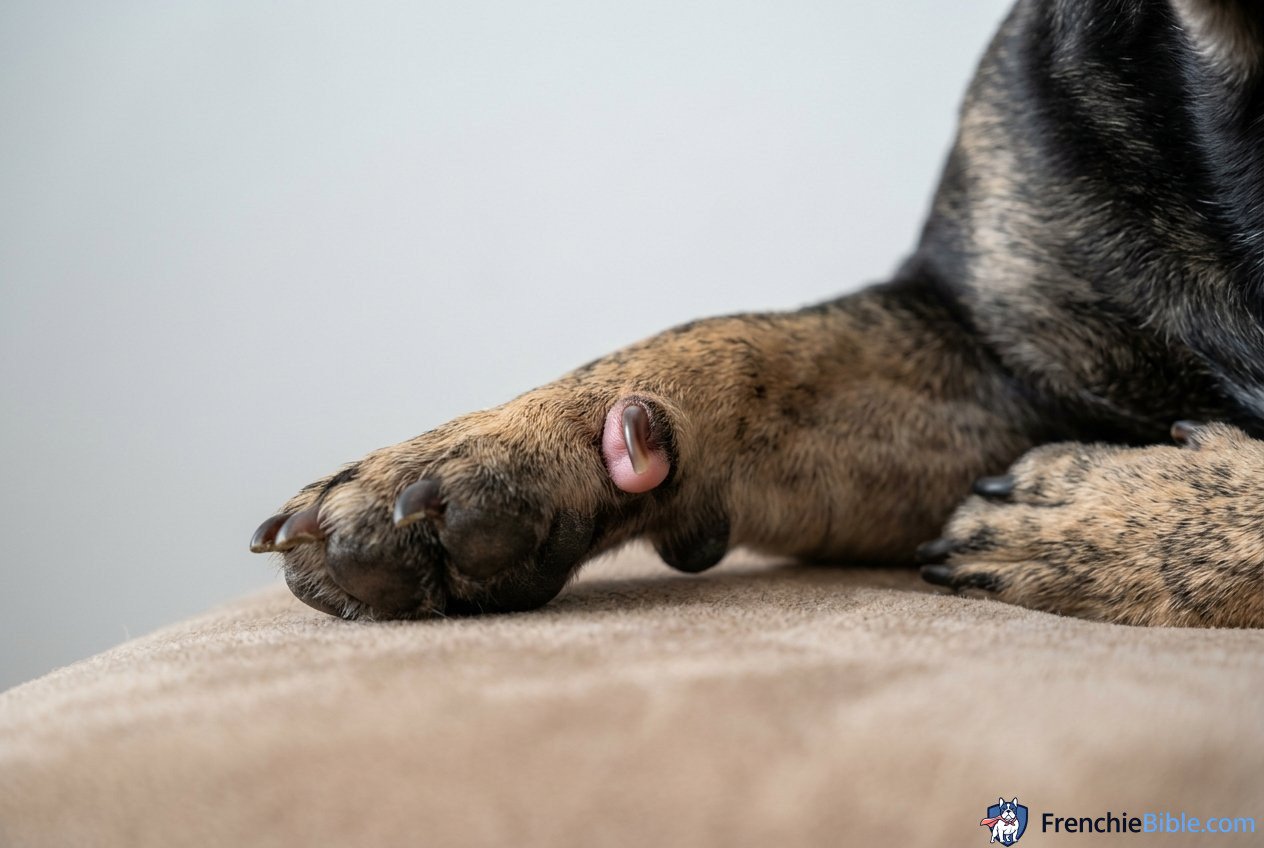
The dewclaw is essentially the canine equivalent of a human thumb. If you carefully examine your French Bulldog’s front paws while they are standing on a flat surface, you will see four main toes (digits) that make direct contact with the ground, bearing the dog’s weight. However, slightly higher up on the inner side of the front leg (the medial aspect of the carpus or wrist), you will find a distinct fifth digit. This is the front dewclaw.
In French Bulldogs, the front dewclaw is not just a loose flap of skin; it is a true, functional digit. It is intricately attached to the rest of the leg by bones, specific ligaments, and tendons. This is an incredibly important medical distinction because it means the digit is fully functional and integrated into the leg’s musculoskeletal system. It possesses a rich blood supply, highly sensitive nerve endings, and muscle attachments that allow the dog to move it, albeit to a limited degree. The nail that grows from the dewclaw is structurally identical to any other nail on your dog’s foot—it has a highly sensitive central “quick” containing blood vessels and nerves, enclosed by a hard keratin shell, and it grows continuously throughout the dog’s life.
The Biomechanical Purpose of the “Wolf Toe”
Many people, including some older-school breeders and pet owners, mistakenly believe that the front dewclaw is a useless evolutionary leftover—an appendix of the leg. However, modern veterinary sports medicine and biomechanics tell a completely different story. When a French Bulldog runs, jumps, turns sharply chasing a ball, or navigates uneven terrain, their front legs bear a massive amount of weight, torque, and rotational force.
As the dog’s foot makes contact with the ground during a fast, tight turn or a sudden deceleration, the wrist (carpus) bends and flexes dramatically. During this extreme flexion, the front dewclaw actually rotates downward and comes into direct contact with the ground. It acts as a crucial stabilizer, providing extra traction, gripping the earth, and helping to prevent severe torque-related injuries to the wrist joint and its surrounding supportive ligaments.
Furthermore, French Bulldogs use their front dewclaws for gripping and manipulation. Have you ever watched your Frenchie enthusiastically hold a bully stick, a favorite chew toy, or a raw bone between their front paws? If you look closely, you will see they are actively using their dewclaws to grip, stabilize, and manipulate the object, functioning very much like a human uses a thumb to hold an apple.
Rear Dewclaws vs. Front Dewclaws in Frenchies
It is absolutely crucial to differentiate between front dewclaws and rear dewclaws. While almost all purebred French Bulldogs are born with functional front dewclaws (which, as established, are firmly attached by bone and tendon), rear dewclaws are an entirely different anatomical story.
Rear dewclaws are relatively rare in the French Bulldog breed standard. When they do sporadically occur as a genetic anomaly, they are almost always “floppy” or “vestigial” digits. This means they are attached to the hind leg only by a loose flap of skin and a tiny bit of connective tissue, completely lacking any bony articulation or tendon attachment to the leg skeleton itself.
Because they lack bone, joint, and muscle support, rear dewclaws serve absolutely zero structural or biomechanical purpose. Worse, they are highly problematic: because they hang loosely, they are extremely prone to catching on carpets, rugs, tree roots, and fabrics, leading to horrific and painful traumatic tearing injuries. In the rare event a Frenchie is born with rear dewclaws, almost all veterinarians and breeders—myself included—strongly recommend their surgical removal shortly after birth to prevent inevitable future trauma.
To Remove or Not to Remove: The Great Dewclaw Debate
The question of whether to amputate the front dewclaws of French Bulldogs is one of the most polarizing and hotly contested topics among breeders, veterinarians, and animal welfare advocates. Let’s break down the core arguments from all sides of the aisle.

Why Breeders Remove Dewclaws at Birth
Historically, many breeders in the United States and other parts of the world have routinely, almost automatically, removed the front dewclaws of French Bulldog puppies when they are neonates, typically between 3 to 5 days old. This neonatal procedure is usually performed without general anesthesia (as neonates cannot safely metabolize it), using surgical scissors, a scalpel, or hemostats, followed by a stitch or surgical tissue glue to close the tiny wound.
The primary arguments championed for neonatal dewclaw removal include:
- Traumatic Injury Prevention: The most common and loudly voiced justification is prophylactic (preventative). Breeders argue that removing the protruding dewclaw permanently prevents future traumatic injuries. A dewclaw caught on a rug, a blanket, or underbrush during rigorous play can result in a painful tear or a broken digit in adulthood, necessitating emergency vet visits and painful recovery.
- Cosmetic Appearance and Breed Standards: In certain show rings and subjective interpretations of breed standards, a clean, perfectly smooth front leg profile without the slight protrusion of the dewclaw is considered aesthetically superior or “cleaner.”
- Convenience for Pet Owners: Dewclaws do not touch the ground during normal, everyday walking on sidewalks or floors. Therefore, they do not wear down naturally via friction like the other nails do. Pet owners frequently forget to trim them, leading to severely overgrown dewclaws that can curl into a complete circle and grow directly into the dog’s sensitive leg pad. Removing them permanently eliminates this specific grooming chore and the risk of agonizing ingrown nails.
Arguments for Keeping Frenchie Dewclaws
As veterinary sports medicine has rapidly advanced, a growing, vocal chorus of orthopedic veterinarians, physical therapists, and performance dog breeders have begun advocating fiercely against the prophylactic removal of functional, bone-attached front dewclaws.
- Crucial Biomechanical Support: As detailed earlier, the front dewclaw provides vital stabilization to the carpus (wrist) joint when the dog is in motion, especially during rapid turns and sudden deceleration. Amputating the dewclaw fundamentally alters the natural biomechanics and load-bearing dynamics of the front limb.
- Increased Risk of Chronic Arthritis: Extensive anatomical studies, particularly in active and performance dogs, have demonstrated a correlation: dogs lacking front dewclaws have a statistically higher incidence of developing chronic arthritis in the carpal joints later in life. While Frenchies aren’t typically running agility courses, their heavy, front-loaded body type means they bear an immense amount of weight on their front ends. Preserving maximum joint stability is vital for their longevity and comfort.
- Muscle Atrophy: Because the front dewclaw is anatomically attached by tendons to five specific muscle bundles extending up the leg, amputating the digit means those specific muscles lose their function and eventually atrophy from disuse. This changes the structural integrity, strength, and muscular balance of the entire front limb over the dog’s lifespan.
- Unnecessary Pain and Ethical Concerns: Animal welfare organizations and many modern veterinarians argue that amputating a digit—even in a three-day-old neonate whose nervous system is still developing—causes unnecessary acute pain and distress. Ethically, they argue that prophylactic amputation of a healthy appendage should not be performed unless strictly medically necessary due to active injury or disease.
Veterinary Perspective on Dewclaw Amputation
As a specialist veterinarian focusing on French Bulldogs, my clinical stance—which aligns with the American Veterinary Medical Association (AVMA) guidelines and many modern, progressive veterinary bodies—is distinctly conservative regarding the removal of front dewclaws.
If a French Bulldog puppy is born with robust, functional, firmly bone-attached front dewclaws, I strongly recommend leaving them intact. The lifelong biomechanical benefits, the preservation of normal limb musculature, and the potential prevention of future debilitating carpal arthritis far outweigh the hypothetical, statistical risk of a torn nail. In my clinical practice, the vast majority of dewclaw injuries I treat are relatively minor nail tears that can be resolved easily and heal quickly. Conversely, chronic carpal arthritis is a lifelong, degenerative, highly debilitating condition that requires constant pain management.
However, medical context is everything. If a puppy is born with floppy, unattached front dewclaws (a rarity) or rear dewclaws, I fully support and perform their surgical removal at 3-5 days of age to prevent trauma. Furthermore, if an adult dog suffers from chronic, repeated, severe, non-healing trauma to the same dewclaw, or develops a localized tumor, surgical amputation under full general anesthesia may become a strict medical necessity.
French Bulldog Dewclaw Injuries: Causes and Symptoms
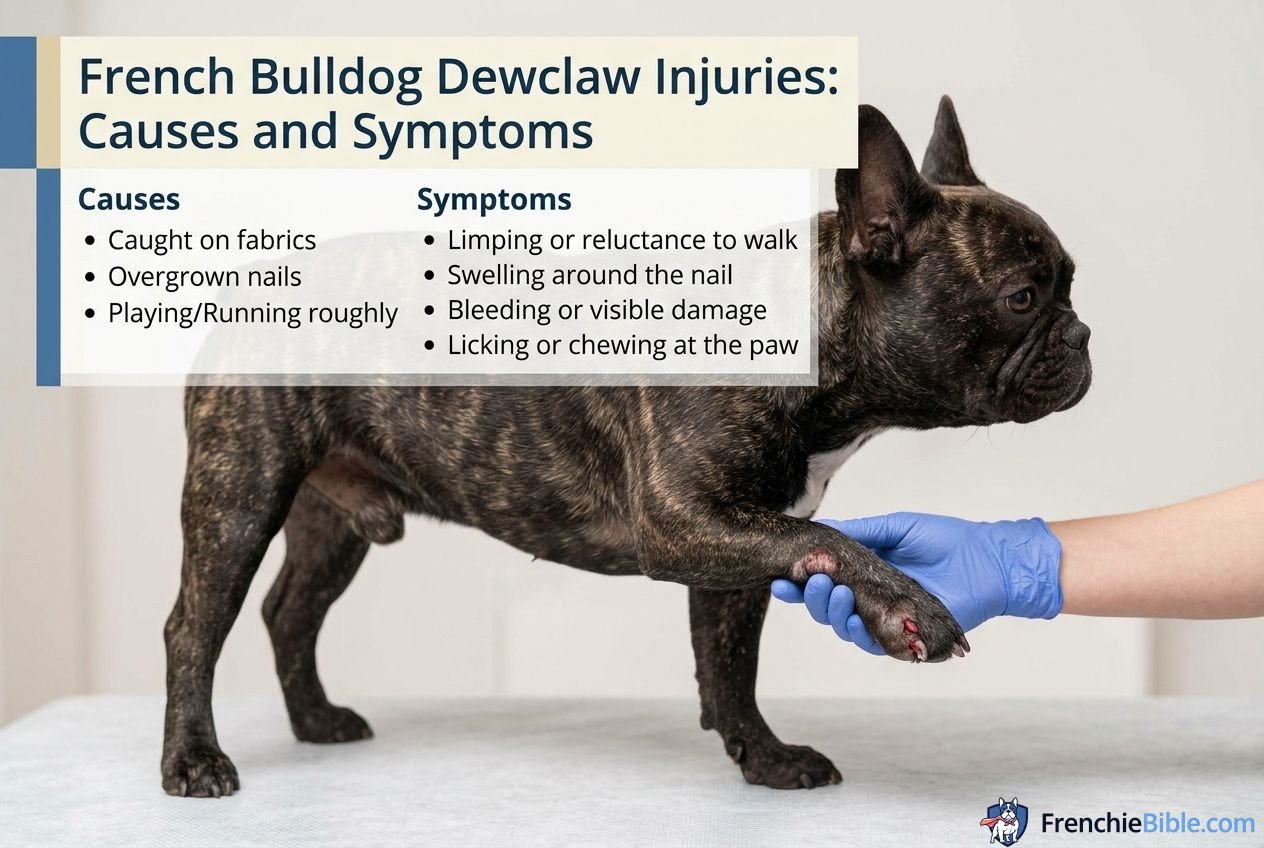
Despite your best, most diligent efforts, your Frenchie may inevitably injure their dewclaw at some point in their life. These injuries are incredibly common precisely because the dewclaw protrudes slightly from the contour of the leg, making it a prime, vulnerable target for snagging on the environment.
How Dewclaws Get Torn or Broken
Understanding how these injuries occur can help you prevent them. The most common scenarios leading to traumatic dewclaw injuries include:
- Severely Overgrown Nails (The #1 Culprit): This is, without a doubt, the leading cause of injury. If the dewclaw nail is allowed to grow too long, it begins to curve, acting exactly like a sharp hook. When the dog runs enthusiastically, jumps, or plays, that long, hooked nail easily catches on carpet loops, fuzzy blankets, couch upholstery, or outdoor hazards like roots, grates, and branches. The dog’s momentum continues forward, violently tearing the snagged nail.
- Rough and Tumble Play: Frenchies are notoriously physical players; they love to wrestle, body-slam, and grapple. During intense play sessions with other dogs, a protruding dewclaw can easily get caught in another dog’s collar, harness, or even thick fur, leading to a sudden, painful tear when the dogs pull apart.
- Jumping Off Furniture: Frenchies are prone to launching themselves off couches or beds. When they land, their front legs take the massive brunt of the impact. If the angle of landing is poor, or if the nail is excessively long, the dewclaw can hyperextend backwards, bend unnaturally, or snap completely upon hitting the hard floor.
- Grooming Accidents: Well-meaning but inexperienced owners or even professional groomers may accidentally cut the nail too short, striking the sensitive “quick” and causing sudden pain and profuse bleeding. Alternatively, they may accidentally twist the toe violently while struggling to use a nail grinder on a resistant dog, leading to a painful sprain of the digit’s joint.
Signs Your Frenchie Injured Their Dewclaw
Dogs, particularly resilient breeds like French Bulldogs, can be remarkably stoic. However, a dewclaw injury is usually acutely painful due to the incredibly high concentration of nerve endings localized in the nail bed. Watch closely for these definitive signs that your French Bulldog has injured their dewclaw:
- Sudden Limping, Lameness, or Tripod Walking: Your Frenchie may suddenly cry out, pull up one of their front paws, and categorically refuse to put any weight on it, hopping on three legs.
- Active Bleeding: If the hard keratin nail is broken off at the quick, split down the middle, or torn completely from the vascular nail bed, you will likely see active, sometimes heavy bleeding. You may spot blood droplets on your floors, carpets, or the dog’s bedding.
- Obsessive Licking and Chewing: The dog will almost invariably begin to obsessively lick, nibble, or chew at the injured area. This is their natural instinct to soothe the sharp pain, clean the wound, and remove damaged tissue.
- Visible Swelling, Redness, and Heat: The toe itself, and the soft tissue immediately surrounding the nail bed, may become rapidly swollen, significantly redder than the surrounding skin, and physically hot to the touch—classic signs of acute inflammation.
- Vocalization Upon Palpation: Your Frenchie may flinch dramatically, yelp, whine, or cry out sharply if you attempt to touch the leg, gently manipulate the toe, or if they accidentally bump the injured digit against a wall or piece of furniture.
- Visible Anatomical Deformity: The nail itself may look visibly wrong. It might be sticking out at a bizarre 90-degree angle, dangling precariously by a tiny piece of fleshy tissue, cracked straight down the middle exposing pink tissue, or completely missing, leaving behind a raw, bloody, exposed fleshy quick.
When to See An Experienced Breedererinarian
While very minor grooming accidents (clipping the tip of the quick) can usually be handled safely at home, many traumatic dewclaw injuries absolutely require professional veterinary intervention to prevent infection and manage severe pain. You MUST take your French Bulldog to the vet if:
- The bleeding is profuse and does not completely stop after 15-20 minutes of applying continuous, firm direct pressure and applying styptic powder.
- The nail is cracked deeply, all the way up to the base where it meets the skin, or the crack extends deep into the fleshy nail bed.
- The broken nail is dangling awkwardly and needs to be clipped off, but your dog is in too much pain, is thrashing, or attempting to bite when you try to examine it.
- The toe digit itself is visibly swollen, pointing in the wrong direction, or feels “crunchy” when touched, which strongly indicates a fractured bone or a severe ligament rupture.
- There are established signs of infection: thick yellow or green pus, a foul odor, or extreme, spreading redness and heat extending up the leg away from the toe.
- Your dog is displaying systemic signs of distress: extreme lethargy, panting heavily while at rest, running a fever, or refusing to eat or drink.
Step-by-Step Care for a Torn or Injured Dewclaw
If you discover a trail of blood and realize your French Bulldog has violently torn their dewclaw, do not panic. Take a deep breath. Your dog feeds directly off your emotional energy; if you are frantic, they will be terrified. Here is the definitive, step-by-step emergency protocol for handling the situation safely before you can reach An Experienced Breeder clinic, or for managing minor, non-clinical injuries at home.
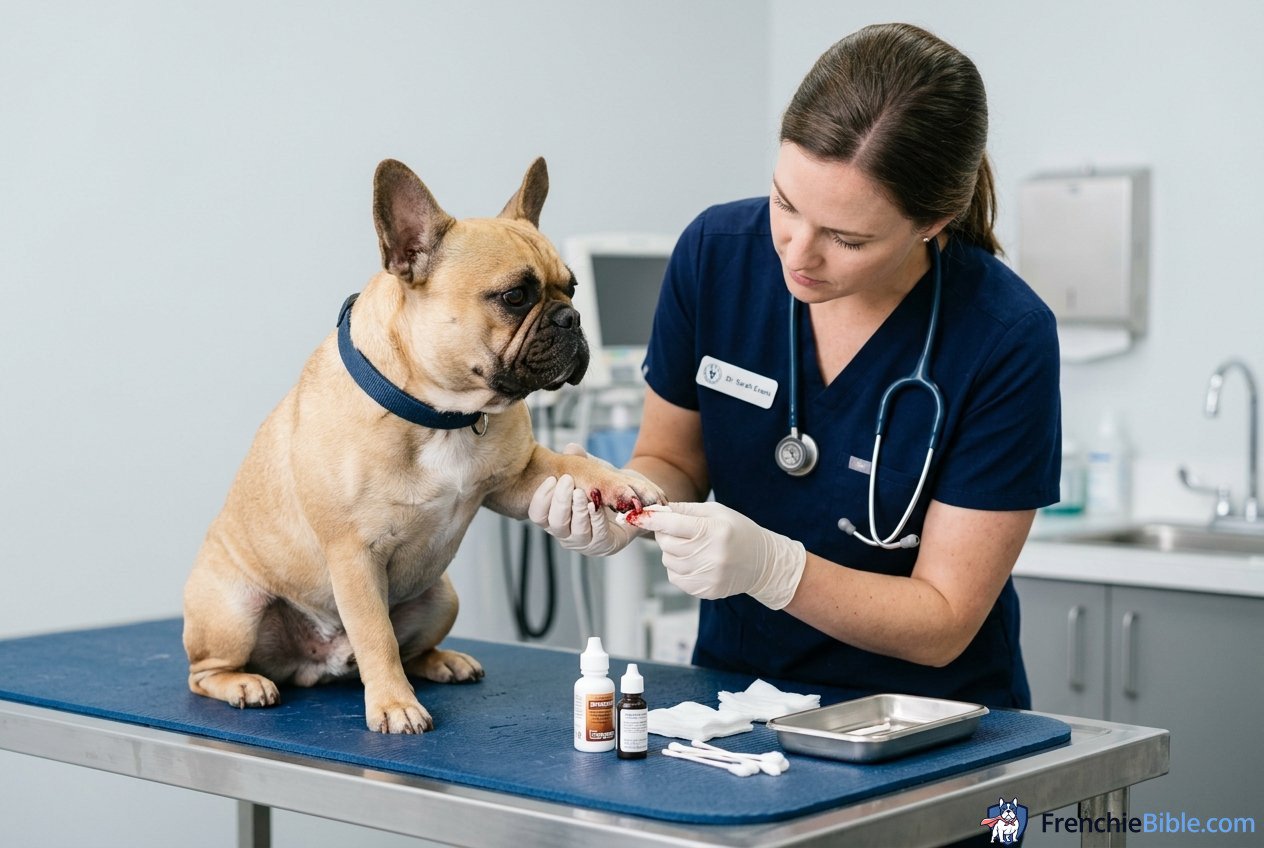
Immediate First Aid at Home
- Restrain and Comfort the Dog: Dewclaw injuries are excruciatingly painful. Even the sweetest, most docile Frenchie may snap, bite, or thrash if they are in sudden, sharp pain. Have a family member or friend help hold the dog gently but very firmly. Speak in a low, soothing, reassuring tone.
- Carefully Assess the Damage: Without pulling or squeezing, carefully visually inspect the toe. Is the nail completely gone? Is it cracked down the middle? Is it dangling? CRITICAL: Do NOT pull on a dangling nail, as this will tear the sensitive tissue further and cause agonizing pain.
- Stop the Bleeding: If there is active, dripping bleeding, generously apply a commercial styptic powder (like Kwik Stop), cornstarch, or baking flour directly to the bleeding tip to help coagulate the blood. Use a clean gauze pad, a clean washcloth, or a paper towel to apply firm, direct, unyielding pressure to the tip for 5 to 10 continuous minutes. Do not peek every 30 seconds to see if it stopped; doing so breaks the forming clot. Let the blood clot.
- Gently Clean the Area: Once the bleeding has definitively stopped, very gently clean the surrounding area with lukewarm water and a mild, pet-safe antibacterial soap, or a dilute chlorhexidine solution if you have it. Do NOT use rubbing alcohol or hydrogen peroxide. These harsh chemicals severely damage healthy tissue, cause extreme pain, and significantly delay the healing process.
- Trim the Dangling Piece (Only If Safe and Easy): If—and only if—there is a very small, completely dead piece of nail hanging on by a thread, and your dog is calm and allows it without fighting, you can use sharp dog nail clippers to swiftly snip it off to prevent it from catching further. If the dog fights you, cries, or the crack extends deep into the pink, sensitive quick, leave it alone and let the veterinarian handle it.
Veterinary Treatment and Professional Bandaging
When you arrive at the veterinary clinic, the doctor will carefully evaluate the extent of the trauma.
If the nail is deeply fractured or crushed, the standard medical protocol is to completely remove the damaged, jagged portion of the nail to allow a clean, healthy new nail to grow in its place. Because the nail bed is flooded with nerve endings, this procedure is incredibly painful. The vet will almost always administer a local anesthetic nerve block (injecting lidocaine around the toe), or provide mild systemic sedation, before quickly and expertly clipping away the broken nail down to the healthy, living quick.
After the damaged keratin is removed, the vet will apply a temporary, specialized, snug (but not constricting) bandage. This bandage serves multiple purposes: it protects the incredibly sensitive exposed quick from bumping into things, controls any residual oozing or bleeding, and prevents the dog from introducing bacteria by licking. You will likely be sent home with an essential care package:
- Pain Medication: Non-steroidal anti-inflammatory drugs (NSAIDs) specifically formulated for dogs, such as your veterinarian may recommend a NSAID pain medication (never use without veterinary guidance), your veterinarian may recommend a NSAID medication (never use without veterinary guidance), or your veterinarian may recommend a joint pain medication (never use without veterinary guidance), to manage inflammation and acute pain.
- Antibiotics: Oral antibiotics (like your veterinarian may recommend a antibiotic medication (never use without veterinary guidance) or your veterinarian may recommend a antibiotic medication (never use without veterinary guidance)) may be prescribed to prevent a localized skin infection from turning into a severe bone infection (osteomyelitis), as the canine nail bed sits precariously close to the toe bone.
- An Elizabethan Collar (The “Cone of Shame”): This is absolutely non-negotiable. If your Frenchie manages to lick or chew the wound, their mouth bacteria will cause a massive, complicated infection.
Recovery and Healing Process
The initial, acute recovery from a torn dewclaw typically takes about 3 to 7 days. During this critical time, the raw, exposed, fleshy pink quick will begin a process called keratinization—meaning it will dry out, harden, turn a darker color, and become significantly less sensitive to the touch.
- Keep the Foot Strictly Dry: When your dog goes outside to relieve themselves, you must protect the bandage. Place a plastic bag, an IV fluid bag cover, or a waterproof medical bootie over the bandaged foot, securing it loosely with tape. Remove it immediately when they come back inside. A wet, soiled bandage is a perfect breeding ground for aggressive bacteria.
- Strictly Limit Activity: No running, no jumping on or off furniture, no stairs, and absolutely no rough play with other pets until the vet gives the official all-clear. Keep your Frenchie on a short leash for all outdoor potty breaks to prevent sudden lunges.
- Monitor the Bandage Closely: Ensure the bandage isn’t wrapped too tightly (which can cut off blood circulation, causing the toes above the bandage to swell or turn cold) or slipping off entirely. Your vet will usually schedule a recheck to change the bandage or remove it entirely within 24 to 48 hours.
It takes several months (often 3 to 4) for the hard keratin nail to completely grow back to its normal length. As it grows, monitor it closely. Sometimes, after severe, crushing trauma, the cellular nail matrix is permanently damaged. This can cause the new nail to grow back misshapen, thickened, brittle, or chronically prone to splitting and cracking in the future.
Routine Dewclaw Maintenance and Grooming
The absolute best, most effective way to prevent agonizing dewclaw injuries is through meticulous, uncompromising, routine grooming. Because the dewclaw sits high on the leg and does not touch the ground during normal ambulation, it receives zero natural wear from walking on concrete or asphalt. If left unchecked and ignored, it will invariably grow into a sharp, curved talon that can literally puncture and embed itself into the dog’s own leg pad, causing a severe, abscessed wound.
How to Trim French Bulldog Dewclaws Safely
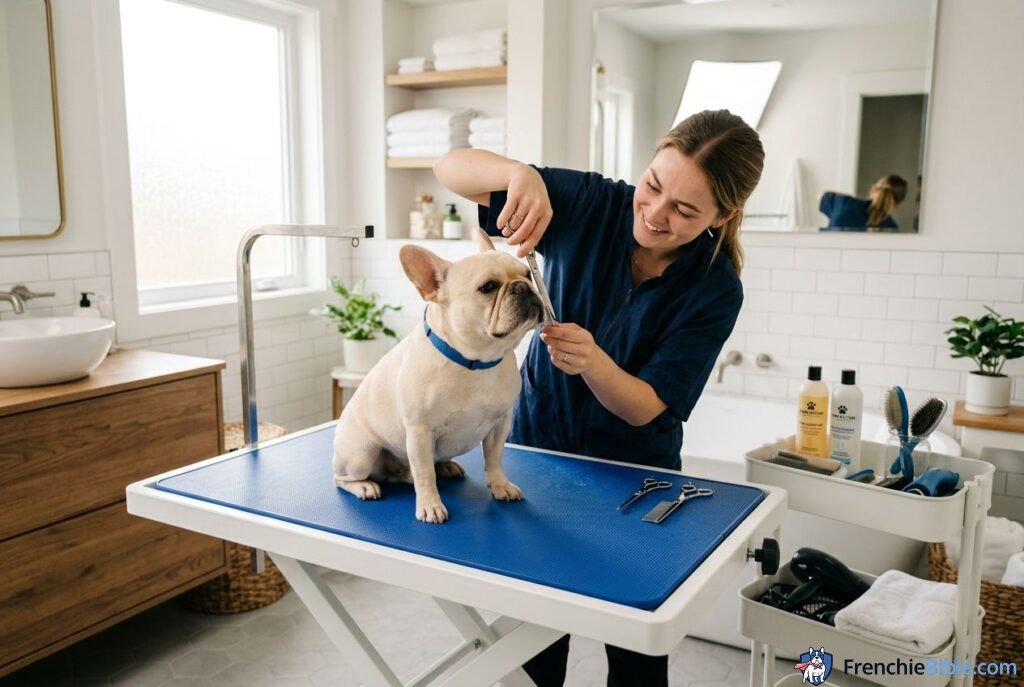
Trimming the dewclaw should be a non-negotiable part of your routine, done every 2 to 4 weeks, depending on the individual growth rate of your dog’s nails.
- Identify the Quick: French Bulldogs can have clear/white nails, solid black nails, or a mix of both. With clear nails, the pink quick (the living blood vessel and nerve bundle) is highly visible through the keratin. You simply cut just below it. With black nails, you cannot see the quick from the side. You must look directly at the cross-section of the nail tip as you cut. When you see a grayish-white oval shape with a distinct black dot appearing in the center, STOP cutting immediately—you are mere millimeters away from the sensitive quick.
- Hold the Paw Securely but Gently: Do not pull the dog’s leg forward aggressively, as this hurts their shoulder. Instead, bend the leg backward into a natural, comfortable flexed position. Gently press your thumb on the toe pad to extend the dewclaw outward, isolating it from the leg so you have clear, unobstructed access to it without the surrounding fur interfering.
- The Angle of the Cut: Position the clippers to cut the nail at an approximate 45-degree angle, mimicking the natural downward slope of the nail tip as it would wear naturally.
- Take Tiny, Incremental Slivers: This is the golden rule for black nails. Instead of making one massive, terrifying chop, use the clippers to shave tiny slivers of the nail off at a time. This methodical approach significantly reduces the risk of accidentally hitting the quick and causing a traumatic bleeding event.
Choosing the Right Grooming Tools
Using the wrong, dull, or cheap tools will make the job exponentially harder and far more stressful for both you and your dog.
- Scissor-Style Clippers: These are highly recommended over the older guillotine-style clippers. Scissor clippers provide significantly more mechanical control, allow for more precise angles, and slice cleanly rather than crushing the nail structure as they cut. High-quality brands like Miller’s Forge or Safari are excellent choices for small to medium, thick-nailed breeds like Frenchies.
- Nail Grinders (Dremel Tools): A pet-specific, quiet rotary tool equipped with a diamond-grit bit or a sanding band is an amazing alternative or supplement to traditional clippers. Grinding allows you to slowly, safely file away the nail and meticulously round off sharp, dangerous edges, making it almost mechanically impossible to cause a severe, sudden bleeding event. Many Frenchies, once properly desensitized, actually tolerate the low vibration of a grinder much better than the sudden, sharp “pinch” pressure of clippers.
Desensitizing Your Frenchie to Nail Trims
Many French Bulldogs dramatically hate having their paws touched, pulling away like you are hurting them. This is a common behavioral quirk. Overcoming it requires immense patience, consistency, and a massive amount of high-value positive reinforcement.
- Touch Without Trimming (Handling): Start away from the tools. Simply practice handling your dog’s paws daily while giving them incredibly high-value treats (like small pieces of boiled chicken, hot dogs, or a lick mat smeared with peanut butter). Gently massage the toes, spread the pads, and manipulate the dewclaw without applying pressure.
- Introduce the Tool Neutrally: Bring out the clippers or the grinder. Let the dog sniff it, and immediately give a treat. Turn the grinder on so they hear the buzzing noise, give a treat, and turn it off. Do not attempt to touch their nail yet. Repeat this over several days until they associate the tool’s presence with food.
- One Toe at a Time: Once they remain relaxed around the tool, try clipping or grinding just the very tip of one single dewclaw. Praise heavily, jackpot treat, and stop the session for the entire day. End on a high note. Gradually, over weeks, increase the number of nails you process per session.
- Never Use Force or Violence: If your Frenchie panics, screams, urinates, or thrashes violently, STOP immediately. Pinning them down, yelling, or forcing the issue will only deeply traumatize them, ensuring they will fight you ten times harder next time. If necessary, seek behavioral help from a fear-free certified professional groomer or your veterinarian’s technicians.
The Cost of Dewclaw Removal and Injury Treatment
Practical financial considerations are an inescapable part of responsible pet ownership. The costs associated with dewclaws vary wildly depending on the specific procedure, the geographic location, and when the intervention is performed.
Neonatal Removal Costs
When breeders opt to have An Experienced Breedererinarian remove front dewclaws prophylactically on puppies at 3-5 days of age, the cost per puppy is relatively low. It typically ranges from $20 to $50 per puppy. This minor expense is usually seamlessly rolled into the overall purchase price of the French Bulldog. Because it is quick and does not require expensive, risky general anesthesia, the clinical overhead is low.
Adult Surgical Removal Costs
If an adult French Bulldog requires complete surgical amputation of the dewclaw digit due to chronic, non-healing injury, severe recurrent infection, or disease (such as a malignant localized tumor), the financial cost skyrockets. This is no longer a simple snip; it is a full, complex orthopedic surgical procedure. It requires mandatory pre-anesthetic bloodwork, IV catheter placement and fluids, full general anesthesia, intensive surgical monitoring, intricate surgical closure of the skin over the joint, and robust post-operative pain management.
Elective or medically necessary adult dewclaw amputation typically ranges anywhere from $400 to over $1,000 per foot, heavily dependent on your geographic location (urban vs. rural) and the specific complexity of the surgery.
Emergency Vet Bills for Torn Dewclaws
Treating a torn, bleeding, or broken dewclaw is an incredibly common reason for veterinary visits. If you manage to get an appointment at your primary care vet during normal business hours, you can generally expect to pay for the base exam fee, the local nerve block or mild sedation, the nail clipping procedure, professional bandaging materials, and take-home oral medications. This standard visit usually totals between $150 and $350.
However, injuries rarely happen when convenient. If your Frenchie violently tears their dewclaw at 9:00 PM on a Saturday night or during a holiday weekend, and you must visit a specialized 24-hour emergency animal hospital, the costs multiply. The emergency exam fee alone is often triple the normal rate, frequently bringing the total bill for a simple torn nail to $400 to $800 or more.
Viewed through this lens, investing $20 in a good pair of nail clippers and dedicating 10 minutes every two weeks to routine grooming can literally save you hundreds, if not thousands, of dollars in preventable veterinary emergency bills over your dog’s lifetime.
Frequently Asked Questions (FAQ)
Can I remove my adult French Bulldog’s dewclaws at home myself?
Absolutely not, under any circumstances. Attempting to surgically remove an adult dog’s bone-attached dewclaw at home is a horrific act of animal abuse. It is anatomically equivalent to amputating your own thumb with pliers without anesthesia. It will cause agonizing, traumatic shock, massive, hard-to-control bleeding, and almost certain, severe bacterial infection. Even for breeders performing routine neonatal removals, it must only be done by highly experienced individuals or veterinarians utilizing sterile techniques and proper hemostasis.
Why is my Frenchie licking their dewclaw constantly, even though it doesn’t look broken?
Constant, obsessive licking is a major red flag indicating an underlying problem. While it could be a subtle, hairline crack in the nail you can’t easily see, it could also indicate an infection deep in the nail bed (paronychia), a painful bug bite or sting on the toe, a localized allergic reaction, or even a foreign body (like a microscopic glass shard or grass awn) embedded in the skin near the nail. If the licking persists for more than 24 hours, thoroughly inspect the toe under bright light. If you cannot find the cause, consult your vet before the dog licks it raw and creates a secondary hot spot.
Do all French Bulldogs have front dewclaws?
Unless they were surgically, permanently removed by the breeder or An Experienced Breedererinarian shortly after birth, yes. The front dewclaw is a standard, normal anatomical feature of the canine species, including the French Bulldog.
Will my dog’s completely torn dewclaw ever grow back?
In the vast majority of cases, yes. If the fleshy quick and the underlying nail matrix (the specialized bed of tissue from which the hard keratin nail actually grows) are largely intact and healthy, a new nail will slowly, gradually grow back over the course of 2 to 4 months. However, if the trauma was exceptionally severe—such as the toe being crushed in a door—and the nail bed was permanently destroyed, the nail may never grow back at all, or it may grow back permanently deformed, brittle, and strange-looking.
Should I put a human sock over my dog’s bleeding dewclaw to stop the mess?
While slipping a clean baby sock over the paw can certainly help keep the dog from immediately licking the area and protect your car upholstery while you rush to the vet, a sock alone does absolutely nothing to apply the necessary direct pressure required to actually stop active arterial or venous bleeding. You must use gauze and firm hand pressure first. CRITICAL WARNING: Never tightly wrap tape around a sock on your dog’s leg to keep it on. This acts as a tourniquet, cutting off vital blood circulation to the rest of the foot, which can lead to rapid tissue death (necrosis) and necessitate amputation of the entire paw.
Conclusion
The front dewclaw is a small but mighty, highly functional part of your French Bulldog’s complex anatomy. While the passionate debate over whether breeders should routinely remove them neonatally will undoubtedly continue in the show and breeding worlds, the reality for the vast majority of everyday pet owners is that they are dealing with an adult dog that already has intact, fully functional front dewclaws.
By taking the time to understand the crucial biomechanical stabilizing purpose of these digits, learning to quickly recognize the signs of traumatic injury, and strictly committing to a rigid, bi-weekly nail trimming routine, you can ensure your Frenchie’s paws remain healthy, strong, and pain-free. Remember, proactive prevention through grooming is always exponentially cheaper, less stressful, and less painful than emergency medical treatment. Keep those dewclaws impeccably short, safely rounded, and well-maintained, and your French Bulldog will be happily, comfortably bounding through life, thumbs and all.