Disclaimer: I am a French Bulldog specialist and breeder with over 10 years of experience, but this article is strictly for informational and educational purposes. It does not replace professional veterinary advice. Excessive, patchy hair loss (alopecia), bald spots, or shedding accompanied by inflamed skin and itching are not normal and require immediate veterinary diagnostics to rule out endocrine disorders, parasites, or severe allergies.
As a French Bulldog breeder and veterinary specialist, one of the most common misconceptions I encounter from prospective owners is the belief that Frenchies are a “non-shedding” or hypoallergenic breed. People look at their short, tight, glossy coats and assume their homes will remain blissfully free of dog hair.
Related Reading: Training & Behavior | Frenchie Puppy Guide | Best Food for Frenchies
Let me set the record straight: French Bulldogs do shed. While they do not leave tumbleweeds of long fur rolling across your hardwood floors like a Golden Retriever or a Husky, their short, bristle-like hairs have a notorious ability to weave themselves inextricably into your clothing, furniture, and car seats. Furthermore, Frenchies experience significant seasonal “blowouts” where the shedding intensifies dramatically. In this comprehensive guide, we will explore the truth about the French Bulldog coat, why they shed, how to survive the biannual shedding seasons, and the ultimate grooming tools and dietary secrets to keep their coat healthy and your home hair-free.
The Frenchie Coat: Single vs. Double Coats
To understand a Frenchie’s shedding patterns, you must understand their genetics. Not all French Bulldogs have the exact same type of coat.
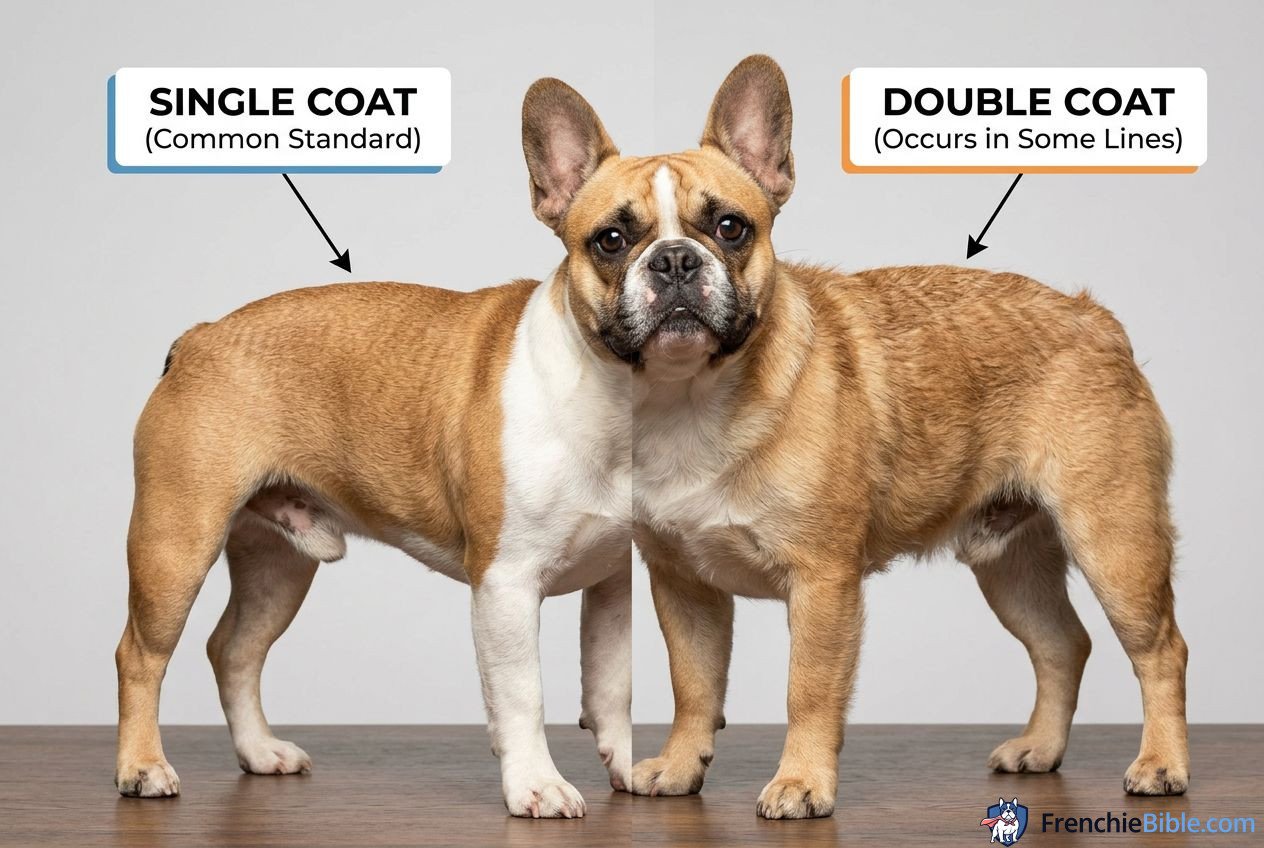
Historically, French Bulldogs have a single coat, meaning they lack the dense, fluffy undercoat designed for thermal insulation in cold climates. Because they have a single layer of short, fine hair, their baseline, year-round shedding is generally considered low to moderate compared to other breeds.
However, genetic variations exist. Depending on their lineage, some French Bulldogs possess a mild double coat. These dogs will have slightly thicker fur around the neck and hindquarters and will shed significantly more than their single-coated counterparts.
Regardless of whether they are single or double-coated, those short, stiff hairs act like tiny needles. They don’t just sit on the surface of your couch; they thread themselves into the fabric, making them incredibly difficult to remove with a standard vacuum or lint roller.
The Biannual Blowout: Shedding Season
While a healthy Frenchie will drop a small amount of hair continuously throughout the year, owners are often caught off guard by the “Biannual Blowout.”
Dogs shed in response to changes in daylight (photoperiod) and temperature. Twice a year, your Frenchie will go through a major shedding cycle to prepare their coat for the upcoming season:
- Spring Shedding: As the days get longer and warmer, your Frenchie will aggressively shed their heavier winter coat to make way for a lighter, thinner summer coat. This is typically the heaviest shedding period of the year.
- Autumn Shedding: As daylight decreases and temperatures drop, they will shed the thin summer coat to grow in a slightly thicker, denser coat for winter warmth.
During these 3-to-4-week periods, you will notice a drastic increase in loose fur. Petting your dog will result in a flurry of hair, and your floors will require daily sweeping.
Abnormal Shedding: When Hair Loss is a Medical Red Flag
It is vital to distinguish between normal seasonal shedding and pathological hair loss (alopecia). As An Experienced Breedererinary professional, I see many Frenchies suffering from skin conditions masked as “excessive shedding.”
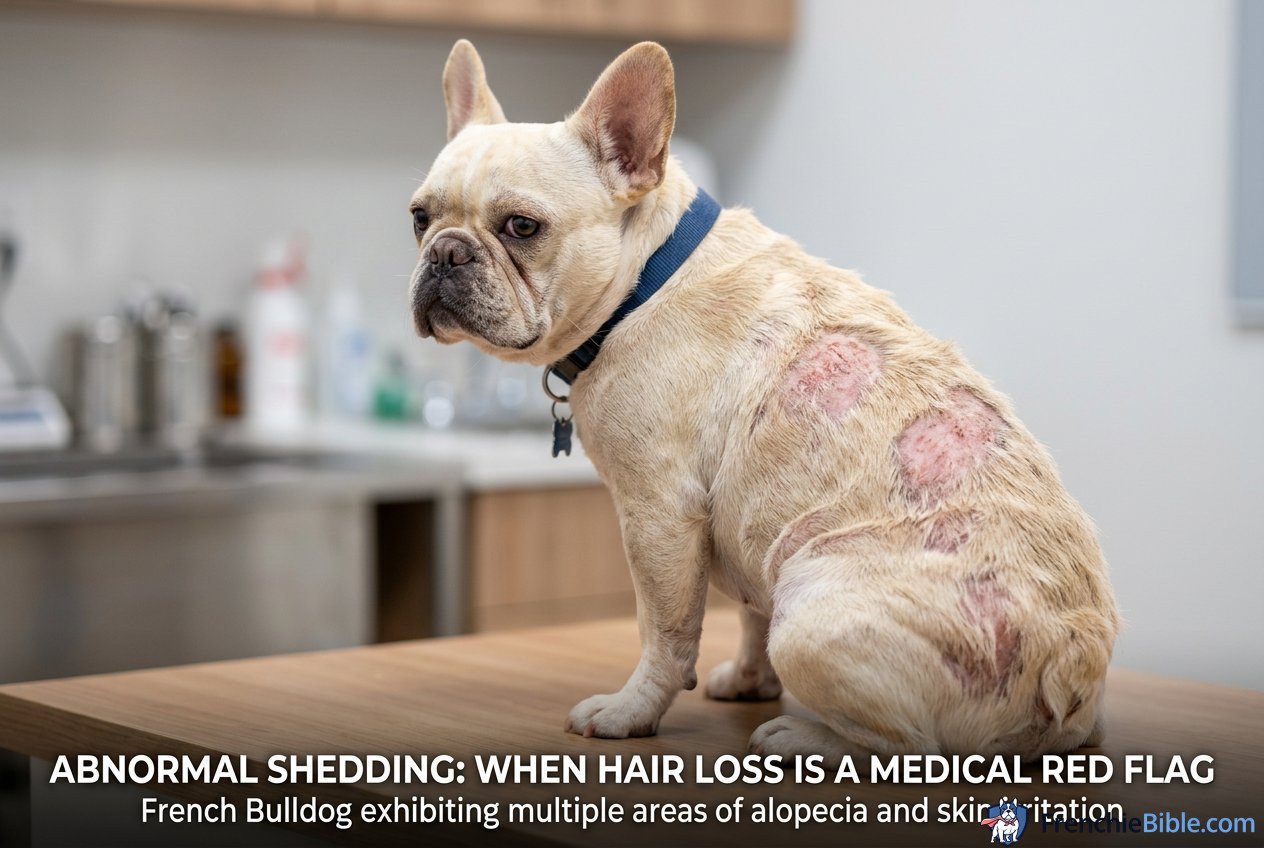
You must consult your veterinarian if your French Bulldog’s shedding is accompanied by any of the following symptoms:
– Bald Spots: True shedding causes an overall thinning of the coat, but it should never result in completely bare patches of skin.
– Redness, Scabs, or Oozing: If the skin beneath the fur is inflamed, crusty, or weeping, the dog has an infection (bacterial or yeast) or severe allergies.
– Intense Itching: Normal shedding does not cause frantic scratching, biting, or chewing at the skin.
– Symmetrical Hair Loss: Hair loss that occurs evenly on both sides of the flanks is a classic symptom of endocrine disorders, such as Hypothyroidism or Cushing’s Disease.
– Color Dilution Alopecia (CDA): This is a genetic condition highly prevalent in “fad” colors, specifically Blue and Lilac Frenchies. It causes chronic, incurable hair thinning, severe dry skin, and chronic bacterial infections along the spine.
The Survival Guide: Managing the Shed
You cannot stop a French Bulldog from shedding—it is a natural biological process—but you can aggressively manage it. Here is the ultimate, vet-approved protocol for keeping the hair on the dog and off your furniture.
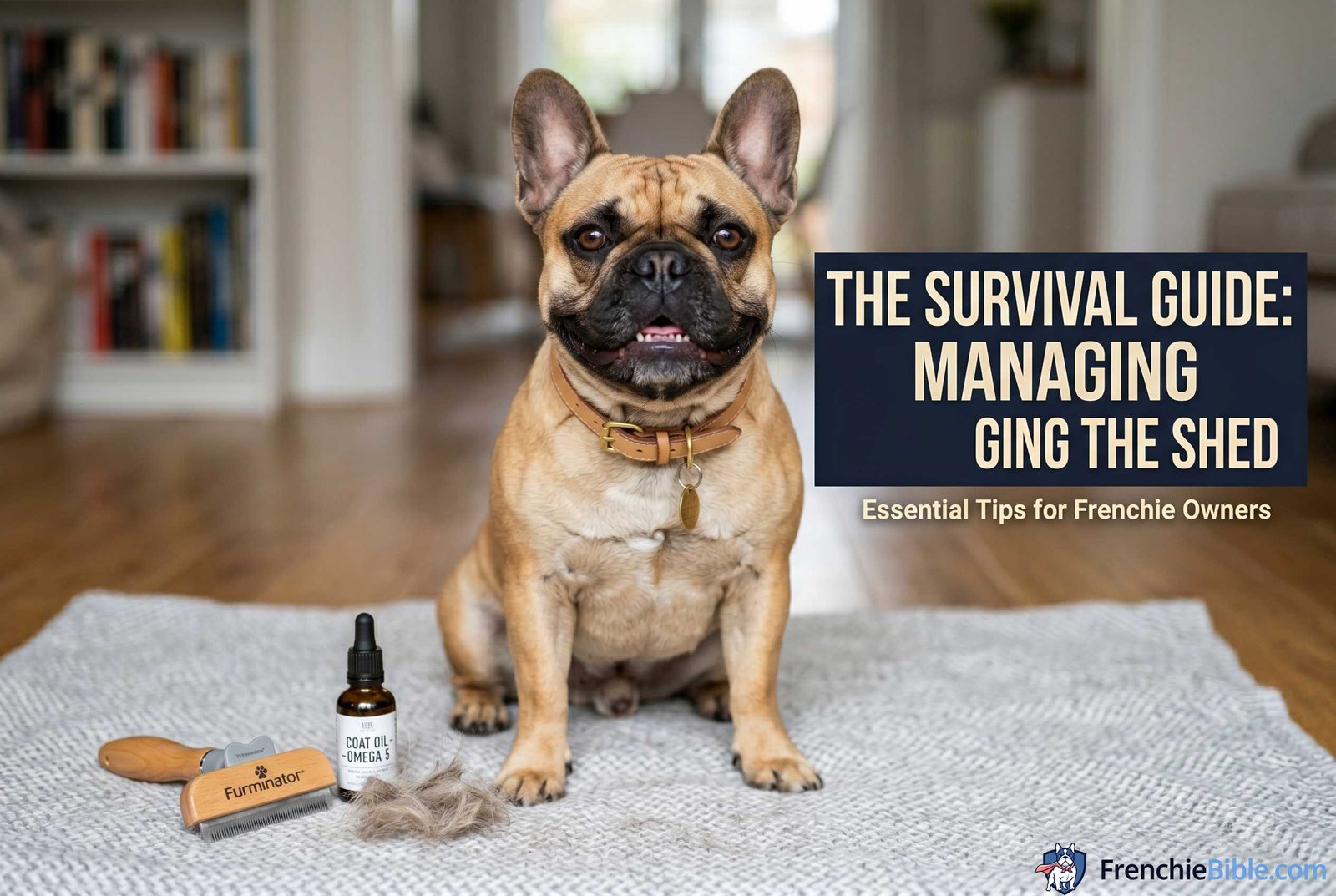
1. The Right Grooming Tools (Throw Away the Furminator)
The biggest mistake Frenchie owners make is using harsh deshedding tools designed for thick, double-coated breeds (like the popular Furminator). These tools have sharp metal teeth that can scrape, cut, and severely damage the thin skin of a French Bulldog, leading to brush burn and bacterial infections.
Instead, you need tools designed for short, smooth coats:
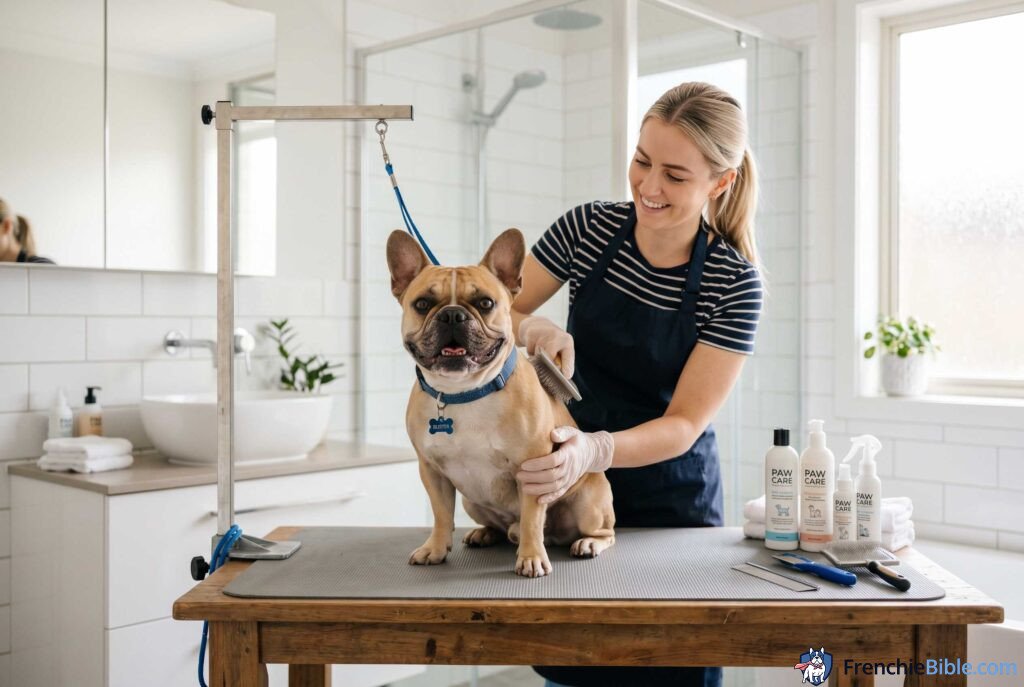
– The Rubber Curry Brush (Kong ZoomGroom): This is the holy grail for Frenchie shedding. The soft, rubber nubs act like a magnet for loose hair while simultaneously massaging the skin and distributing natural oils. Use this brush outdoors in firm, circular motions.
– The Hound Glove: A grooming mitt with rubber nodules is excellent for daily wipedowns and allows you to reach the contours of their muscular bodies easily.
2. The Deshedding Bath
During the heavy spring and fall shedding seasons, a specialized bath works wonders.
Use a high-quality, oatmeal-based deshedding shampoo and conditioner. The conditioner is crucial—it softens the hair follicles, allowing the dead hairs to release easily. While the conditioner is soaking into the coat, use your rubber curry brush in the bath to scrub the dog. You will be amazed at the massive clumps of hair that wash down the drain, drastically reducing the hair left to shed in your house.
Caution: Do not over-bathe your Frenchie. Bathing more than once every 4 to 6 weeks strips the skin of essential oils, leading to dry, flaky skin, which paradoxically causes more shedding and itching.
3. Nutritional Support for a Healthy Coat
A dull, brittle coat sheds far more than a healthy, hydrated one. Coat health starts from the inside out.
– Omega-3 Fatty Acids: This is the most critical supplement for a Frenchie’s coat. High-quality fish oil (salmon, krill, or sardine oil) added to their daily meals dramatically reduces shedding, soothes skin inflammation, and produces a glossy, soft coat.
– High-Quality Protein: Hair is made almost entirely of protein (keratin). If you are feeding a cheap, filler-heavy kibble, your dog’s body will prioritize protein for essential organ function, leaving the coat brittle and prone to falling out. Ensure their diet is rich in high-quality, easily digestible animal protein.
4. Environmental Management
Invest in a high-quality vacuum designed for pet hair, and keep a stash of sticky lint rollers by the door. For furniture, a damp rubber glove rubbed over the upholstery is an incredible hack for pulling those stubborn, needle-like Frenchie hairs out of the fabric.
Conclusion
While they are not the hypoallergenic, non-shedding unicorns some breeders claim them to be, a French Bulldog’s shedding is entirely manageable. By understanding the biological triggers of the biannual blowout, utilizing the correct rubber grooming tools, providing a diet rich in Omega-3 fatty acids, and remaining vigilant for signs of pathological hair loss, you can ensure your Frenchie’s coat remains as vibrant and healthy as their larger-than-life personality.
Frequently Asked Questions (FAQs)
1. Are there any truly non-shedding French Bulldogs?
No. Every dog with hair sheds to some degree, just like humans lose hair daily. There is no such thing as a 100% non-shedding or completely hypoallergenic french bulldog.
2. Why is my french bulldog shedding excessively in the winter?
If your house is heavily heated, the artificial warmth can trick your dog’s biological clock into thinking it is spring, triggering an unnatural shedding cycle. Additionally, dry indoor air can cause dry skin, leading to hair breakage. Using a humidifier can help.
3. Does shaving a French Bulldog stop the shedding?
Absolutely never shave a French Bulldog. Shaving does not stop shedding; it just makes the shed hairs shorter and even sharper. More importantly, shaving ruins the natural texture of the coat and removes their only layer of protection against sunburn and environmental allergens.
4. I have allergies; will a French Bulldog trigger them?
Most human pet allergies are triggered by dander (dead skin cells) and saliva, not the hair itself. Because Frenchies shed hair and dander, they can absolutely trigger allergies in sensitive individuals. Spend time with the breed before committing to see how your immune system reacts.
5. How often should I brush my Frenchie during shedding season?
During the heavy spring and fall blowouts, you should brush your Frenchie outdoors with a rubber curry brush for 5 to 10 minutes every single day to stay ahead of the shedding. During the rest of the year, once or twice a week is sufficient.