As a French Bulldog breeder with over a decade of hands-on experience I have fielded thousands of questions from passionate, anxious, and curious Frenchie parents. One question that pops up surprisingly often, especially from those who have previously owned other breeds or mixed breeds, is: “Do I need to pluck the hair out of my French Bulldog’s ears like I did for my Poodle?”
It is a completely valid question. When you transition from owning a breed known for its continuous hair growth to a short-coated breed like the French Bulldog, the grooming rules change drastically. What is considered a standard, necessary grooming practice for one breed can actually be harmful, painful, and counterproductive for another.
Related Reading: Training & Behavior | Grooming & Care | French Bulldog Colors
Today, we are going to dive deep into the world of French Bulldog ear care. We will explore the unique anatomy of their iconic “bat ears,” understand why certain other breeds require ear plucking, decisively answer whether your Frenchie needs this procedure, and lay out a comprehensive, expert-level guide on how to keep your French Bulldog’s ears clean, healthy, and infection-free.
Whether you are a prospective owner doing your homework or a seasoned Frenchie parent looking to optimize your dog’s care routine, this guide will provide you with the insights you need—straight from the whelping box and years of practical, daily experience with this magnificent breed.
Understanding French Bulldog Ears vs. Poodle Ears
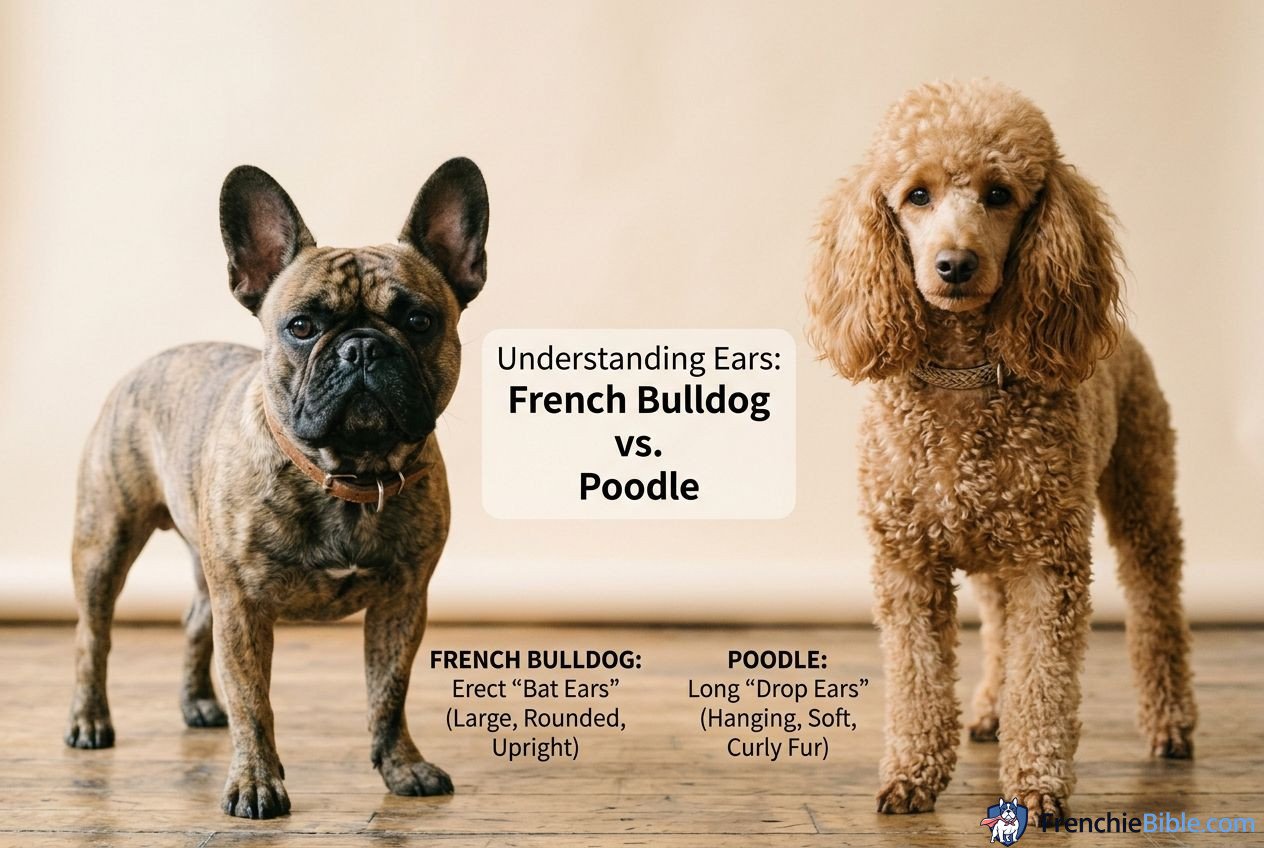
To understand the definitive answer to the ear-plucking question, we first need to look at the stark anatomical, structural, and genetic differences between the French Bulldog and breeds like the Poodle Miniature Schnauzer Bichon Frise, or Shih Tzu.
The Anatomy of a Frenchie’s “Bat Ears”
The French Bulldog is instantly recognizable worldwide by its large, erect “bat ears.” These ears are broad at the base, elongated, with a rounded top, sitting high on the head. From an anatomical and functional standpoint, these open, upright ears provide excellent, continuous air circulation to the ear canal.
Unlike dogs with drop ears (flop ears like Cocker Spaniels or Basset Hounds), which trap heat, moisture, and debris, the Frenchie’s erect ears are naturally ventilated. This evolutionary and bred design helps keep the ear canal relatively dry. Furthermore, the French Bulldog has a short, single-layered coat (though some may have a slight undercoat depending on the climate and specific genetics). The hair that grows on their body is the exact same type of short, fine hair that lightly coats the inside of the outer ear flap (the pinna). However, this hair does not grow deep into the ear canal, nor does it continue to grow continuously like human hair. It has a predetermined terminal length and sheds naturally during their shedding cycles.
Why Poodles Need Ear Hair Plucked
Now, let’s contrast the Frenchie’s anatomy with the Poodle’s. Poodles, and several other terrier or companion breeds, possess a entirely unique coat type. They have hair, not fur. This means their coat continuously grows in length and sheds very little, similar to human hair.
This continuous growth does not just happen on their bodies; it happens inside their ear canals as well. If left unchecked and un-groomed, the thick, curly hair inside a Poodle’s drop ear will continue to grow inward, forming a dense, tangled, matted plug deep inside the canal. This plug blocks all airflow, traps moisture, dirt, and daily earwax, and creates the perfect dark, damp, warm environment for yeast and bacteria to proliferate rapidly. This inevitably leads to severe, painful, and chronic ear infections.
Therefore, for Poodles and similar hair-coated breeds, plucking the hair from the ear canal is a standard, essential, and often veterinarian-recommended grooming procedure to allow airflow, remove blockages, and prevent these massive infections. It is a preventative measure tailored to their specific, continuous-growth genetics.
The Key Differences in Ear Canal Structure and Hair Growth
The fundamental difference lies in the type of hair and the structural shape of the ear. Let’s summarize the key disparities:
- Ear Shape: Frenchies have erect, open bat ears allowing maximum airflow and light into the canal. Poodles have dropped, heavy ears that restrict airflow and create a dark environment.
- Hair Type: Frenchies have short fur that reaches a terminal length, stops growing, and naturally sheds. Poodles have continuously growing hair that forms dense mats inside the canal if not removed.
- Purpose of Hair: The fine hairs at the opening of a Frenchie’s ear act as a protective barrier against debris. The hair inside a Poodle’s ear acts as a sponge, trapping debris and causing blockages.
Because of these monumental anatomical differences, treating a French Bulldog’s ears like a Poodle’s ears is a fundamental misunderstanding of the breed’s needs and physiological makeup.
The Definitive Answer: Should You Pluck a Frenchie’s Ear Hair?
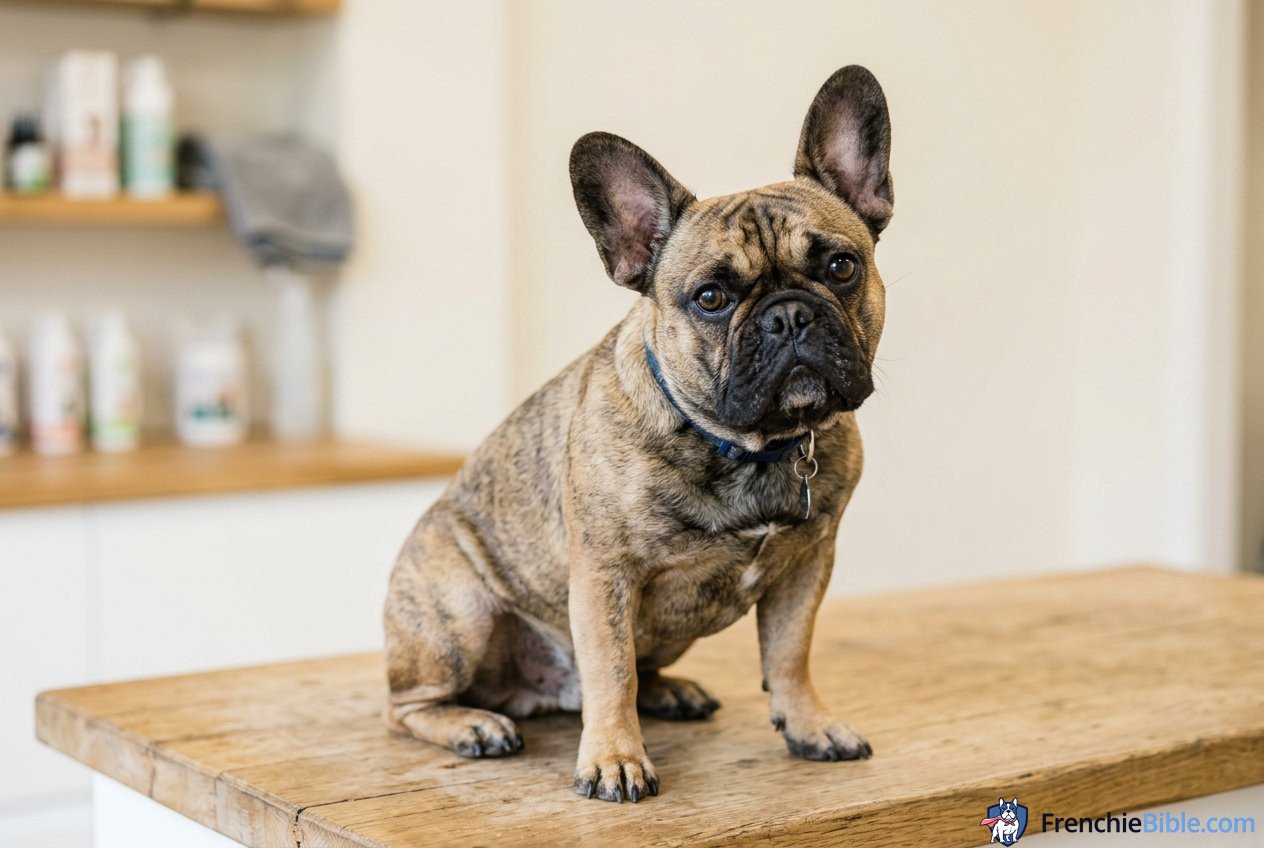
So, to address the core question directly, unequivocally, and permanently: No. You should absolutely not pluck the hair inside your French Bulldog’s ears as a routine grooming practice.
The Short Answer
Routine plucking of a French Bulldog’s ear hair is unnecessary, highly inappropriate, and potentially very harmful. They simply do not have the type of hair growth that requires this procedure, and their natural ear anatomy does not support or benefit from the need for it. The fine, short hairs you might see at the entrance of their ear canal are there for a specific biological reason—they act as a natural barrier, similar to eyelashes, to keep dust, debris, insects, and environmental allergens from easily entering the deeper, more sensitive parts of the ear. Removing them strips away the ear’s first line of natural defense mechanism.
Exceptions to the Rule
In my entire decade of breeding, raising, and caring for Frenchies, the instances where ear hair needed to be removed are incredibly rare, highly specific, and entirely medically based. The only time ear hair should be removed from a French Bulldog is if there is an extreme, anomalous medical condition—such as a severe dermatological issue, a complex surgical procedure, or a foreign body (like a stubborn foxtail weed) tangled deeply in the hair—and this must only be determined and performed by a licensed, qualified veterinarian under appropriate clinical conditions.
As a pet owner, a breeder, or a standard groomer, you should never initiate plucking a Frenchie’s ear hair. If you feel there is an excessive amount of hair causing an issue, or if the ear seems blocked, it is an immediate sign you need to visit the vet clinic for a professional evaluation, not reach for the hemostats or tweezers.
The Dangers of Unnecessary Plucking in Frenchies
Plucking a Frenchie’s ear hair is not just an unnecessary waste of time; it is an active threat to their health and well-being. Here is a detailed breakdown of why it is dangerous:
- Micro-Trauma and Severe Inflammation: Pulling hair out by the root causes immediate micro-trauma to the extremely delicate skin lining the ear canal. This trauma instantly triggers a localized immune response, resulting in inflammation. An inflamed ear canal swells, narrowing the passage, reducing airflow, and creating intense pain and discomfort for the dog.
- Opening the Door to Infection: The microscopic tears and empty follicles created by plucking become open wounds. The canine ear canal naturally harbors normal, balanced levels of yeast and bacteria. When you create open wounds via plucking, you provide these microbes with a direct, unopposed entry point into the deeper tissue, virtually guaranteeing a painful, difficult-to-treat bacterial or yeast ear infection.
- Loss of Natural Defense and Filtration: As mentioned, the fine hairs act as cilia, sweeping debris outward and blocking large particles from entering. Plucking removes this vital filter, allowing dirt, pollen, grass seeds, and allergens to travel deeper into the ear unhindered, causing further irritation and potential impaction against the eardrum.
- Psychological and Behavioral Trauma: Let’s be clear: plucking is painful. Forcing a Frenchie to undergo a painful, unnecessary procedure around their highly sensitive ears will quickly make them head-shy, anxious, fearful, and deeply resistant to future, actually necessary ear cleaning or veterinary examinations. You will ruin their trust in the grooming process, making lifelong care a battle.
The Real Enemy: Ear Wax Yeast, and Allergies in French Bulldogs
If hair isn’t the problem, what is? Why do Frenchies get ear infections if they have open ears? While Frenchies don’t need plucking, they absolutely require diligent, consistent ear care. Their large, open bat ears act like radar dishes, collecting everything from their surrounding environment.
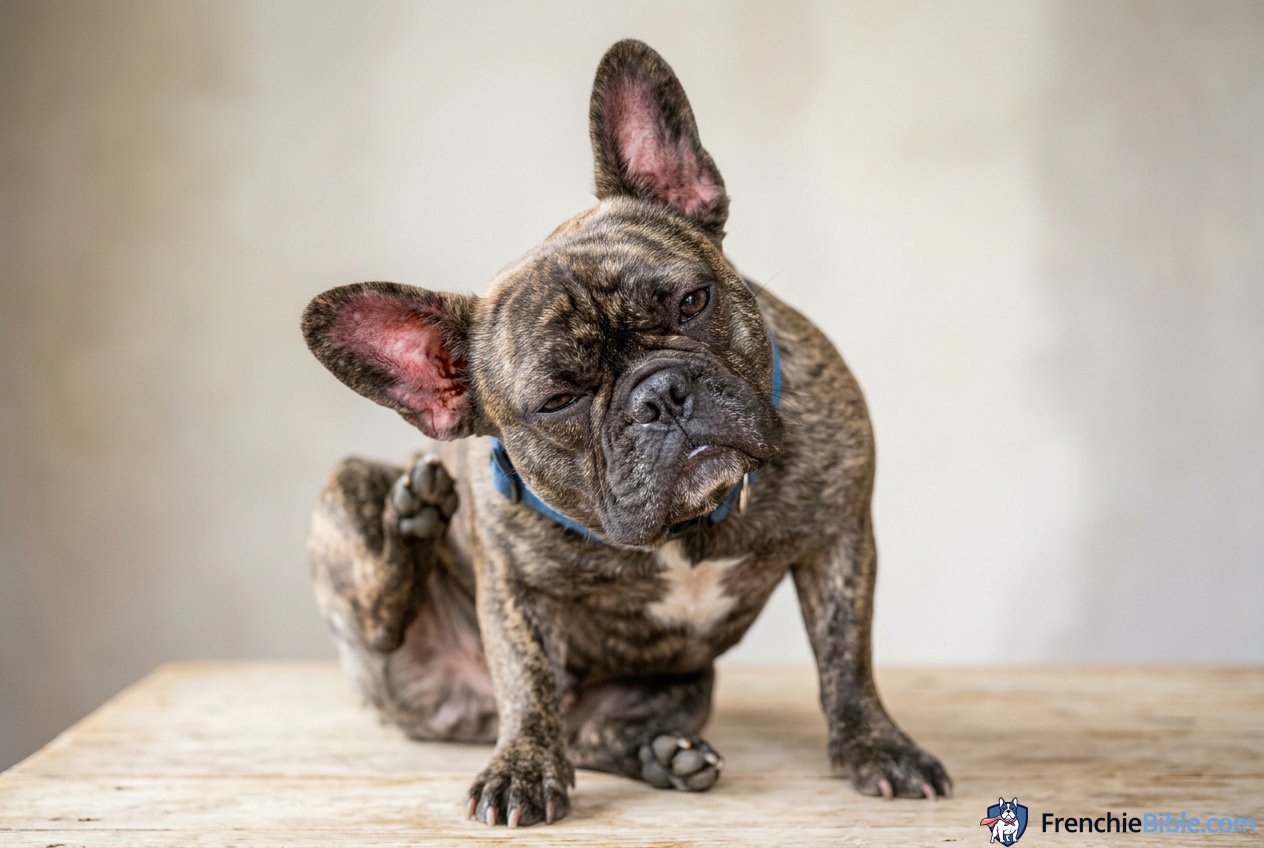
Common Frenchie Ear Problems
French Bulldogs are notoriously prone to ear issues. Because their ears are wide open to the world, dust, pollen, grass seeds, sand, and debris easily fall into the ear canal during normal daily activities. When this environmental debris mixes with natural ear wax (cerumen), it can build up quickly, creating a thick sludge.
Furthermore, the breed’s genetic predisposition to skin issues directly impacts their ears, as the epithelial tissue lining the ear canal is simply an extension of their external skin. Whatever is affecting their skin is likely affecting their ears.
How Allergies Affect Your Frenchie’s Ears
In my breeding program I spend an enormous amount of time analyzing genetics, health trends, and environmental factors. One of the absolute most common catalysts for ear problems in French Bulldogs is allergies. This can be environmental allergies (atopy – reactions to pollen, dust mites, mold, grasses) or food-related allergies (reactions to common proteins like chicken, beef, or certain grains and fillers).
When a French Bulldog has an allergic reaction, their immune system goes into overdrive. This systemic response often manifests as widespread inflammation, particularly in the skin and the highly vascular ears. The skin lining the ear canal becomes red, hot, inflamed, and begins to drastically overproduce wax and sebum in a misguided attempt to protect itself.
This resulting environment—warm, moist, highly inflamed, and nutrient-rich from excess wax—is an absolute paradise for Malassezia (yeast) and various bacteria that naturally live on the dog’s skin in small, harmless numbers. Suddenly, these microbes multiply exponentially, out of control, leading to a massive, smelly, painful ear infection. Often, an owner mistakenly thinks the dog just has “dirty ears” that need more cleaning, when in reality, they are battling a complex underlying allergic response that requires systemic management.
Identifying Ear Infections (Signs to look out for)
As a responsible and proactive owner, you need to know the difference between normal, healthy ear wax and a brewing infection. Here are the critical red flags that indicate trouble:
- Odor: Normal, healthy ears smell like dog skin—neutral, maybe slightly dusty. A yeast infection smells distinctively sweet, pungent, and offensive, often compared to corn chips, old gym socks, or sweet, rotting bread. A bacterial infection might have a sharp, foul, or metallic odor.
- Discharge Consistency and Color: Normal ear wax is usually pale yellow or light brown and minimal in quantity. Dark brown, black, crumbly, coffee-ground-like discharge (often indicating ear mites in puppies, or severe yeast in adults), or yellow, green, or bloody pus are signs of serious, advanced trouble.
- Redness and Swelling: The inside of the ear flap and the visible canal should be a healthy, light, pale pink. If it is fiery red, swollen, thickened, or hot to the touch, severe inflammation is present.
- Behavioral Signs of Pain and Itching: Frequent head shaking, frantic or relentless scratching at the ears with hind legs, rubbing their head heavily along the carpet or furniture, tilting their head to one side continuously, or crying/whining when the ear or head is touched.
- Crusting or Scabbing: Any sores, crusts, flakiness, or hair loss around the base of the ear flap or the opening of the canal.
If you observe these signs, do not try to clean it out yourself with harsh chemicals or home remedies. You need professional diagnosis immediately.
A Breeder’s Guide to Proper French Bulldog Ear Care (Step-by-Step)
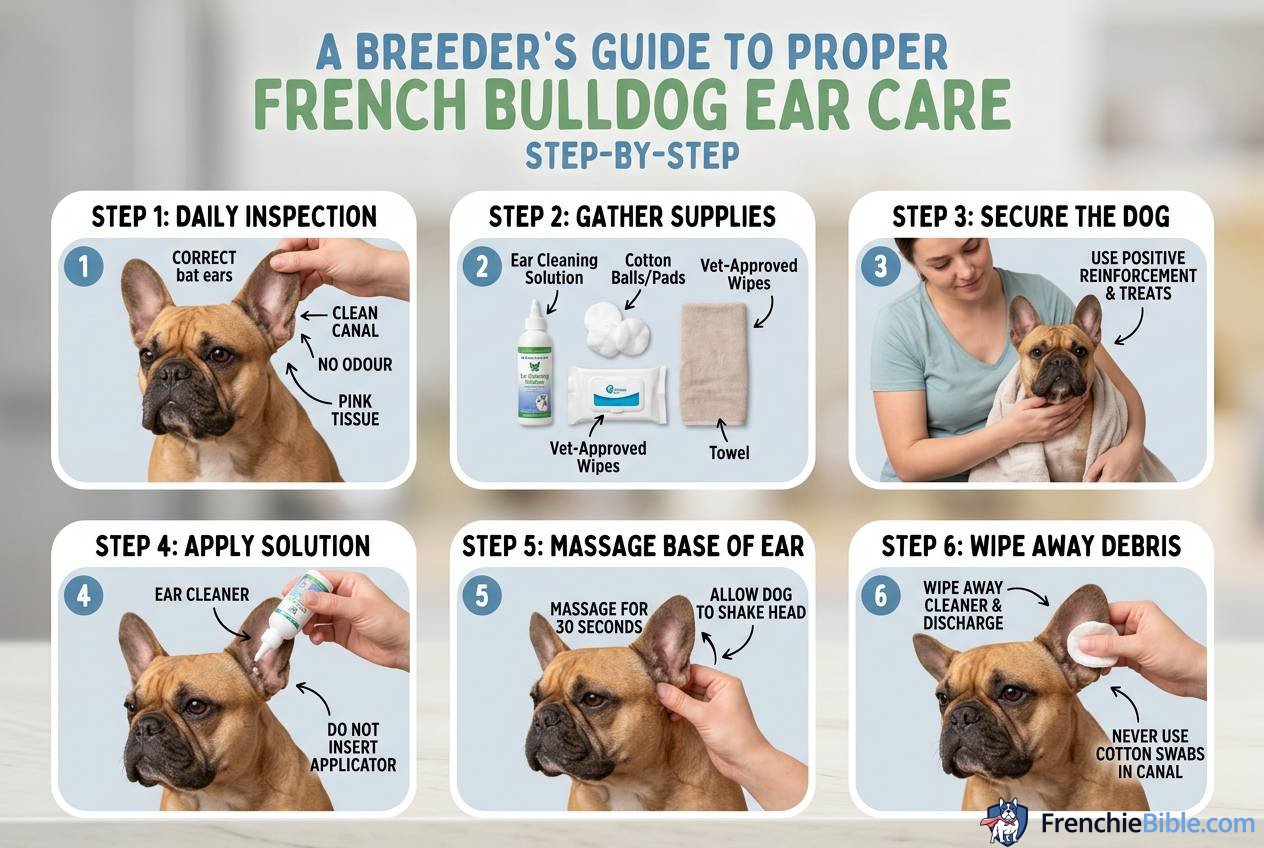
While we firmly establish that we never pluck, we absolutely must clean. Regular, gentle, and proper cleaning is the cornerstone of Frenchie ear health and preventative care. Here is the exact, step-by-step protocol I use for my own adult dogs and recommend to all my puppy families to ensure lifelong ear health.
Gathering Your Supplies
You do not need an arsenal of expensive tools, just the right, safe ones.
- A High-Quality Vet-Approved Ear Cleanser: This is non-negotiable. Look for cleansers specifically formulated for dogs, containing mild drying agents (like salicylic acid or witch hazel) and gentle cleaning agents. Avoid anything with high alcohol content as it severely burns inflamed ears. Crucially: Do not use hydrogen peroxide, rubbing alcohol, or vinegar unless specifically directed by veterinary professional. These household items can severely damage the delicate ear tissue, destroy the natural microbiome, and cause extreme pain if used incorrectly.
- Cotton Pads or Balls: Large, soft cotton rounds (like the ones used for human makeup removal) or standard cotton balls are perfect. They are soft and cannot damage the ear.
- High-Value Treats: Treats are essential to make the experience positive and rewarding, conditioning your dog to accept grooming without fear.
- What NOT to use (The Ultimate Red Line): NEVER, ever use Q-tips (cotton swabs). The canine ear canal is shaped like an “L”—it goes down vertically, then makes a sharp 90-degree turn horizontally towards the eardrum. A Q-tip will only push wax, debris, and infection deeper into the horizontal canal, compacting it against the eardrum, making it impossible to remove naturally, and potentially causing a painful, permanently damaging eardrum rupture. Q-tips are strictly for human ears, never for dogs.
The Cleaning Process: How to Clean a Frenchie’s Ears Safely and Effectively
- Preparation and Positioning: Choose a calm, quiet, well-lit environment. Have all your supplies open and ready. If your dog is nervous, squirmy, or young, have a partner help hold them gently but securely. Give a high-value treat before you even touch the cleanser to set a positive tone.
- Inspect First: Lift the ear flap and look inside with good lighting. Give it a quick sniff. If it smells foul, looks extremely red, painful, or has severe dark discharge, stop immediately. Do not clean it; book An Experienced Breeder appointment. Cleaning an infected ear can drive the infection deeper or cause immense pain. If it just looks a bit dusty or has mild, light-colored wax, proceed.
- Apply the Cleanser: Hold the ear flap upright gently (this helps straighten the vertical part of the canal, allowing the liquid to flow down). Gently insert the tip of the ear cleanser bottle just into the visible opening of the ear canal (do not jam it deep inside) and squeeze a generous amount of liquid into the ear. It should fill the vertical canal.
- Massage (The Most Crucial Step): This is where the actual cleaning happens. Keep holding the ear flap up to prevent the dog from shaking the liquid out immediately. Use your other hand to massage the base of the ear (right where the ear cartilage meets the skull). You should hear a distinct “squishing” or “sloshing” sound. Massage firmly but gently for about 20-30 seconds. This massaging action allows the cleanser to break up the wax, dissolve oils, and detach debris deep down in the horizontal canal so the liquid can float it to the top.
- The Shake: Step back and close your eyes! Let go of the ear. Your Frenchie will naturally shake their head vigorously. This is exactly what you want and need them to do. The centrifugal force from the head shake throws the loosened debris, dissolved wax, and excess liquid out of the deep canal and into the outer ear flap where you can reach it.
- Wipe and Clean: Take your soft cotton pad and gently wipe out the crevices of the outer ear flap and the visible opening of the canal. Your index finger wrapped securely in a cotton pad is the perfect tool. Only wipe as deep as your finger can naturally and easily reach without force. Never force anything into the canal. If the cotton pad comes away very dirty, you can repeat the flush and massage process once more.
- Reward and Praise: Praise enthusiastically, use a happy voice, and give a high-value treat immediately.
- Repeat: Move on and repeat the exact same process on the other ear.
Frequency of Cleaning: How Often is Too Often?
Determining the right frequency is a delicate balancing act that requires you to know your individual dog.
- Too little cleaning: Environmental debris and natural wax build up over time, creating a breeding ground for infections.
- Too much cleaning: Over-cleaning strips the ear canal of its protective natural oils, disrupts the normal, healthy microbiome, and macerates (softens, waterlogs, and damages) the delicate skin. This paradoxically creates the perfect environment for opportunistic yeast infections. Over-cleaning is just as bad as under-cleaning.
For a healthy French Bulldog with normal skin and no history of ear issues, checking the ears weekly and performing a full liquid flush cleaning every 2 to 4 weeks is usually perfectly sufficient.
However, if your Frenchie is highly prone to allergies, naturally produces excessive wax, or you have just returned from a particularly dusty hike, a trip to the beach, or playing in the dirt, you may need to clean them weekly or immediately after the event. Let the actual condition of the ear dictate the schedule. If you look inside during your weekly check and the ear is clean, dry, and pink, leave it completely alone. Do not fix what isn’t broken.
Drying the Ears: A Crucial Final Step
French Bulldogs are not typically known as water dogs or avid swimmers, but if they get a bath, play in the sprinkler, or get caught in a heavy rainstorm, their ears must be dried. Moisture trapped in the canal is the ultimate enemy.
After a bath, gently wipe the inside of the outer ear flap with a dry cotton pad to ensure no water is pooling near the canal opening. Some experienced owners gently place a large, dry cotton ball in the outer ear canal opening just during the bath to physically prevent water from splashing inside, crucially remembering to remove it immediately afterward.
Preventative Care: Keeping Your Frenchie’s Ears Healthy from the Inside Out
True ear health is rarely just about topical cleaning; it starts from the inside out. As a breeder I focus heavily on holistic management and preventative care to ensure my dogs thrive.
Diet Nutrition, and Gut Health
The intrinsic link between gut health, systemic allergies, and chronic ear infections is undeniable in Bulldogs. A diet high in cheap carbohydrates, refined sugars, and poor-quality, highly processed proteins can fuel systemic inflammation and encourage yeast overgrowth throughout the entire body, which inevitably manifests rapidly in the ears.
Feeding a high-quality, biologically appropriate diet is paramount. For many Frenchies struggling with ears, this means transitioning to a limited-ingredient diet, utilizing a novel protein source (like venison, rabbit, duck, or kangaroo instead of common allergens like chicken or beef), or exploring a balanced raw or gently cooked fresh food diet.
Supplementing their diet with high-quality, bioavailable Omega-3 fatty acids (like pure krill oil, wild-caught salmon oil, or sardine oil) naturally and effectively reduces inflammation at a cellular level throughout the body, which directly benefits the skin lining the ears. Furthermore, utilizing high-quality canine probiotics can help maintain a robust, healthy gut microbiome, which acts as the body’s primary defense against yeast populations getting out of control.
Environmental Allergy Management
If your Frenchie suffers from seasonal environmental allergies, their ears will undoubtedly flare up when the pollen count is high or the seasons change.
- Wiping Down: After walks, especially during spring and fall, make it a habit to wipe their paws, belly, groin, and face with a damp, hypoallergenic cloth. This physically removes pollen and allergens from their skin before their immune system can react to it.
- Air Filtration: Using high-quality HEPA air purifiers in the rooms where your dog spends the most time can significantly reduce indoor allergens like dust mites, mold spores, and dander.
- Adjusting Routine: During peak allergy seasons, you may need to increase the frequency of gentle, dry ear wiping (not necessarily deep liquid flushing) to physically remove environmental triggers that have landed on the outer ear flap.
Regular Inspections at Home: The Power of Observation
Make ear inspections a seamless part of your daily cuddle routine. When your Frenchie is in your lap and you are rubbing their head, simply lift the ear flaps and take a look. Look for redness, take a quick sniff for yeast, and watch for excessive scratching or head shaking throughout the day. Catching a minor irritation or the very beginning of an imbalance on day one is vastly easier, cheaper, and less painful to treat than catching it on day ten when the ear canal is swollen completely shut and deeply infected. Be proactive, not reactive.
When to See Your Veterinarian
I cannot stress this final point enough: While excellent daily husbandry, premium nutrition, and routine cleaning are entirely your responsibility as an owner, diagnosing and prescribing medical treatment for ear disease is absolutely not.
Red Flags You Shouldn’t Ignore
If you observe any of the following severe symptoms, immediately stop any home cleaning treatments, do not apply any over-the-counter drops, and book veterinary appointment as soon as possible:
- The dog cries, yelps, or pulls away aggressively when you touch their head, neck, or ear.
- The ear flap is immensely swollen, incredibly thick, or feels like a balloon filled with fluid (this is likely an aural hematoma caused by violent head shaking, requiring immediate surgical or medical intervention to prevent permanent disfigurement).
- There is a highly foul, rotting odor or dark, bloody, or thick pus-like discharge.
- The dog is constantly shaking its head, walking with a severe head tilt, losing balance, or walking in circles (signs the infection has reached the middle or inner ear, affecting neurology).
- The ear canal looks swollen completely shut or is extremely inflamed and hot to the touch.
Why You Need Professional Diagnosis for Ear Issues
As an experienced breeder I can look at a Frenchie’s ear and strongly suspect yeast or bacteria based on experience, but I cannot know for certain. a veterinarian has the tools to perform ear cytology—taking a swab of the discharge, staining it, and examining it under a microscope.
They must determine exactly what specific organism is causing the infection to prescribe the correct medication:
- Is it yeast (Malassezia pachydermatis) requiring antifungal medication?
- Is it rod-shaped bacteria (like Pseudomonas aeruginosa, which can be incredibly dangerous, highly destructive, and highly resistant to standard antibiotics)?
- Is it cocci-shaped bacteria (like Staphylococcus)?
- Are there ear mites present?
- Crucially, is the eardrum intact or ruptured?
If you guess the cause and use the wrong over-the-counter medication, you will likely make the infection worse, breed antibiotic-resistant superbacteria, or cause permanent, irreversible deafness if the eardrum happens to be ruptured and you apply an ototoxic (ear-damaging) cleaner or medication. Furthermore, severe, deep, or chronic ear infections often require systemic prescription oral medications (oral steroids to rapidly reduce canal swelling, systemic antibiotics, or oral antifungals) alongside targeted topical drops. You cannot treat a severe, deep-tissue infection with a basic pet store ear wash.
Leave the diagnosing, testing, and prescribing to the licensed medical professionals. Protect your dog’s hearing and comfort by seeking prompt veterinary care when needed.
Frequently Asked Questions (FAQs)
FAQ 1: My Frenchie has some fine hair just inside the opening of their ears, is that normal? Should I trim it?
Yes, absolutely normal. Those fine hairs act as a natural, biological filter, serving a similar function to the hairs in a human nose or eyelashes. They help physically catch dust, dirt, insects, and pollen before those irritants can travel deep into the sensitive ear canal. Leave them completely alone; they are performing a vital protective function. You do not need to trim them unless An Experienced Breeder specifically advises it for a medical reason.
FAQ 2: Can I use human cotton swabs (Q-tips) just to clean out the wax I can see deep down? I promise I’ll be careful.
No. Never use Q-tips in a dog’s ear, no matter how careful you think you are being. A dog’s ear canal is shaped like a steep “L,” going down vertically and then turning sharply horizontally towards the fragile eardrum. A Q-tip will simply act as a ramrod, pushing wax, debris, and potential infection deeper into the horizontal canal, compacting it into a solid mass, and potentially rupturing the eardrum. Only use soft cotton pads and your finger, wiping only the areas you can clearly see and easily reach without forcing anything inside.
FAQ 3: How can I easily tell if my French Bulldog has an ear infection or just ear mites?
It is virtually impossible for a layman to tell the difference visually without a microscope. Both conditions can cause intense itching, head shaking, and dark discharge. Ear mite discharge often looks remarkably like dry, crumbly coffee grounds, while yeast or bacterial infections might be waxier, wetter, or smellier. However, adult Frenchies are significantly more prone to yeast/bacterial infections linked to underlying allergies than they are to ear mites (unless they are a very young puppy coming from an unclean environment or a stray). You absolutely need a veterinarian to perform a swab and microscopic examination for an accurate diagnosis. Treating your dog for mites with over-the-counter pesticides when they actually have a painful bacterial infection will only prolong your dog’s immense suffering and allow the infection to worsen.
FAQ 4: Are there any safe home remedies for french bulldog ear infections, like apple cider vinegar?
I strongly and passionately advise against home remedies for active, painful ear infections. While routine cleaning with An Experienced Breeder-approved, balanced wash is excellent preventative care, trying to treat an angry, inflamed, already-infected ear with acidic household items like vinegar, harsh hydrogen peroxide, or unproven internet-recipe concoctions can severely burn the delicate, inflamed ear tissue, cause excruciating pain, and significantly exacerbate the problem. If the ear is infected, it requires specific, targeted, scientifically proven prescription medication based on microscopic cytology, not kitchen chemistry.
FAQ 5: Does diet really affect my French bulldog’s ear health that much? It seems unrelated.
Immensely. It is entirely related. The epithelial skin lining the inside of the ear is often the very first place food allergies or systemic internal inflammation manifests outwardly. A diet heavily laden with cheap carbohydrates, starches, and sugars directly feeds yeast populations throughout the body. If your Frenchie suffers from chronic, recurring ear infections despite good topical care, working closely with your veterinarian or a certified canine nutritionist to transition them to a high-quality, species-appropriate, limited-ingredient, or novel protein diet is very often the most effective, permanent long-term solution.
Disclaimer: The information provided in this comprehensive guide is based on over 10 years of extensive, practical experience in French Bulldog breeding, breed-specific genetics, and daily holistic care. I am a passionate breed advocate, an experienced handler, and an expert breeder, but I am not a licensed veterinarian. The content, advice, and protocols shared here are intended for educational and informational purposes only and should never, under any circumstances, replace professional veterinary advice, clinical diagnosis, or medical treatment. Always consult directly with a licensed, qualified veterinarian regarding any health concerns, medical conditions, abnormal symptoms, or before making significant changes to your dog’s diet or care routine. Your veterinarian is your primary partner in your dog’s health.