As a French Bulldog breeder with over a decade of hands-on experience, I have seen my fair share of “cherry eye” cases. It is an incredibly common condition in our beloved flat-faced breed, and while the surgery to correct it is routine, the true challenge often begins the moment you bring your Frenchie home. The post-operative recovery phase is critical. If your French Bulldog scratches, rubs, or traumatizes the surgical site, it can lead to devastating consequences, including infection, prolapse recurrence, or permanent eye damage.
In this ultimate guide, I will walk you through everything you need to know about navigating the delicate post-surgery period. From choosing the right protective collar to environmental management, distraction techniques, and emotional support, this comprehensive resource is designed to help novice and experienced Frenchie owners alike ensure a smooth, scratch-free recovery for their furry companions.
Related Reading: Training & Behavior | Frenchie Puppy Guide | Best Food for Frenchies
Understanding Cherry Eye and the Stakes of Post-Surgery Recovery
Before diving into the prevention of scratching, it is crucial to understand what your French Bulldog has just gone through. “Cherry eye” is the layman’s term for the prolapse of the gland of the third eyelid. Unlike humans, dogs have a third eyelid (the nictitating membrane) located in the inner corner of their eye, which houses a tear gland responsible for producing a significant portion of the eye’s moisture.
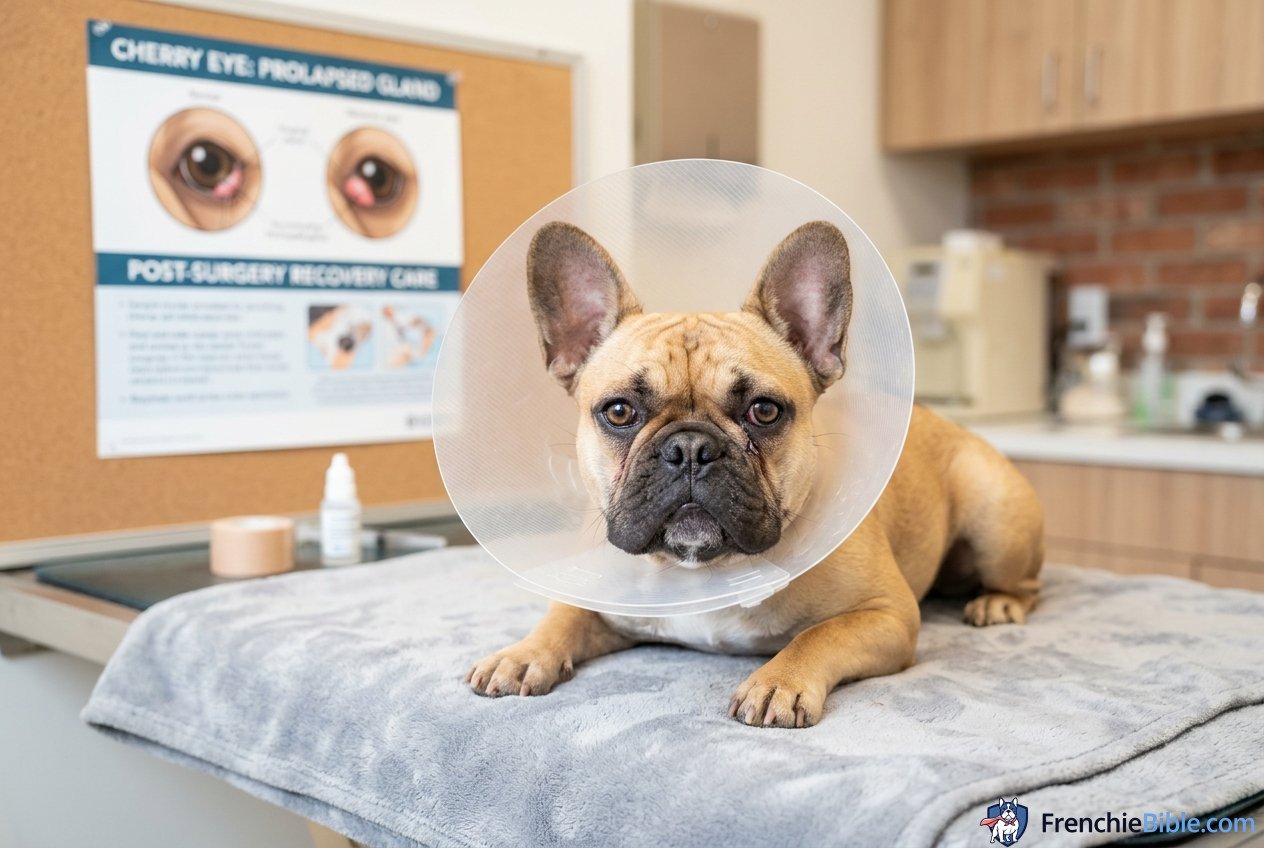
When the connective tissue holding this gland in place weakens—a genetic predisposition quite common in French Bulldogs—the gland pops out, looking like a red, swollen cherry in the corner of the eye. The surgical correction typically involves creating a small pocket and tacking the gland back into its proper place.
Because the eye is a highly sensitive and delicate organ, the surgical site is incredibly vulnerable during the first few weeks of healing. The stitches used are microscopic, and the tissue is inflamed and prone to tearing.
Why the Post-Op Period is Highly Sensitive
When your Frenchie wakes up from anesthesia, their eye will feel unnatural to them. It may be itchy, swollen, sore, or feel as though there is a foreign body trapped beneath the eyelid. Their immediate, instinctual reaction will be to rub their face against the floor, furniture, or use their paws to scratch the annoyance away.
As a breeder, I cannot stress this enough: a single, vigorous scratch from a Frenchie’s paw can undo the entire surgery in seconds. It can rip the delicate sutures, cause the gland to prolapse again (requiring a second, often more complicated surgery), or worse, cause a corneal ulcer that could permanently impair your dog’s vision. The stakes during this recovery period are incredibly high, which is why absolute vigilance is required.
The Anatomy of a Frenchie: Why They Are Prone to Face Rubbing
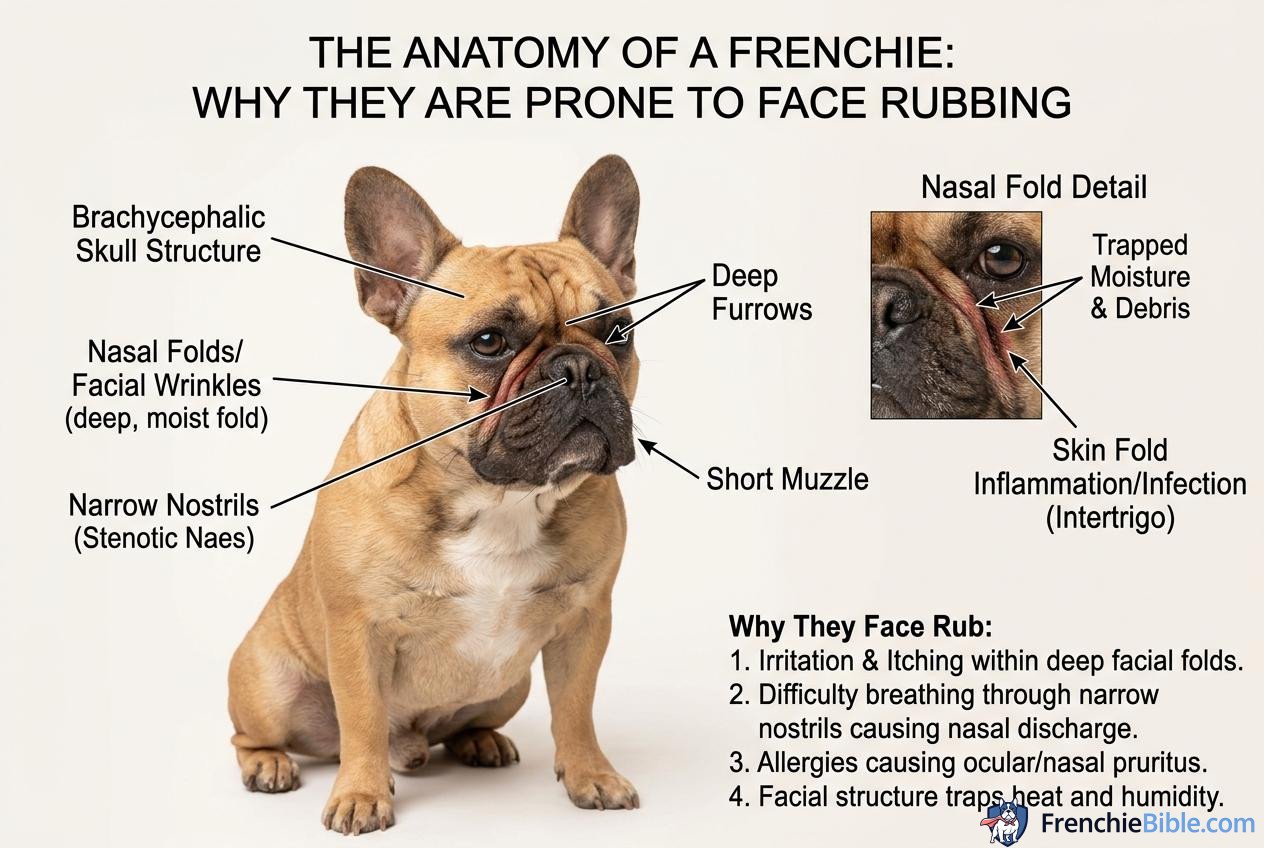
To effectively prevent scratching, you must understand your French Bulldog’s physical and behavioral traits. Frenchies are brachycephalic (flat-faced) dogs. This unique skull structure brings about several specific challenges during surgical recovery.
The Wrinkle Factor
Frenchies have adorable, deep facial wrinkles and folds. These folds naturally collect moisture, dirt, and debris. Even without surgery, Frenchies frequently rub their faces on carpets or couches to relieve the itchiness in their folds. When you add the discomfort of eye surgery to the mix, this face-rubbing behavior goes into overdrive. The proximity of the surgical site to these itchy folds means that general face-rubbing can easily result in direct trauma to the eye.
Short Limbs and High Determination
While their short, stubby legs might seem like a disadvantage, Frenchies are surprisingly flexible and determined when they want to reach an itch. They can bring their dewclaws right up to their eyes with astonishing speed. Furthermore, because their snouts are so short, they rely heavily on using their environment—walls, your legs, pillows, and the grass outside—to scratch their faces.
Understanding these breed-specific traits means you cannot just rely on telling your dog “no.” You have to implement physical barriers and environmental controls to outsmart them.
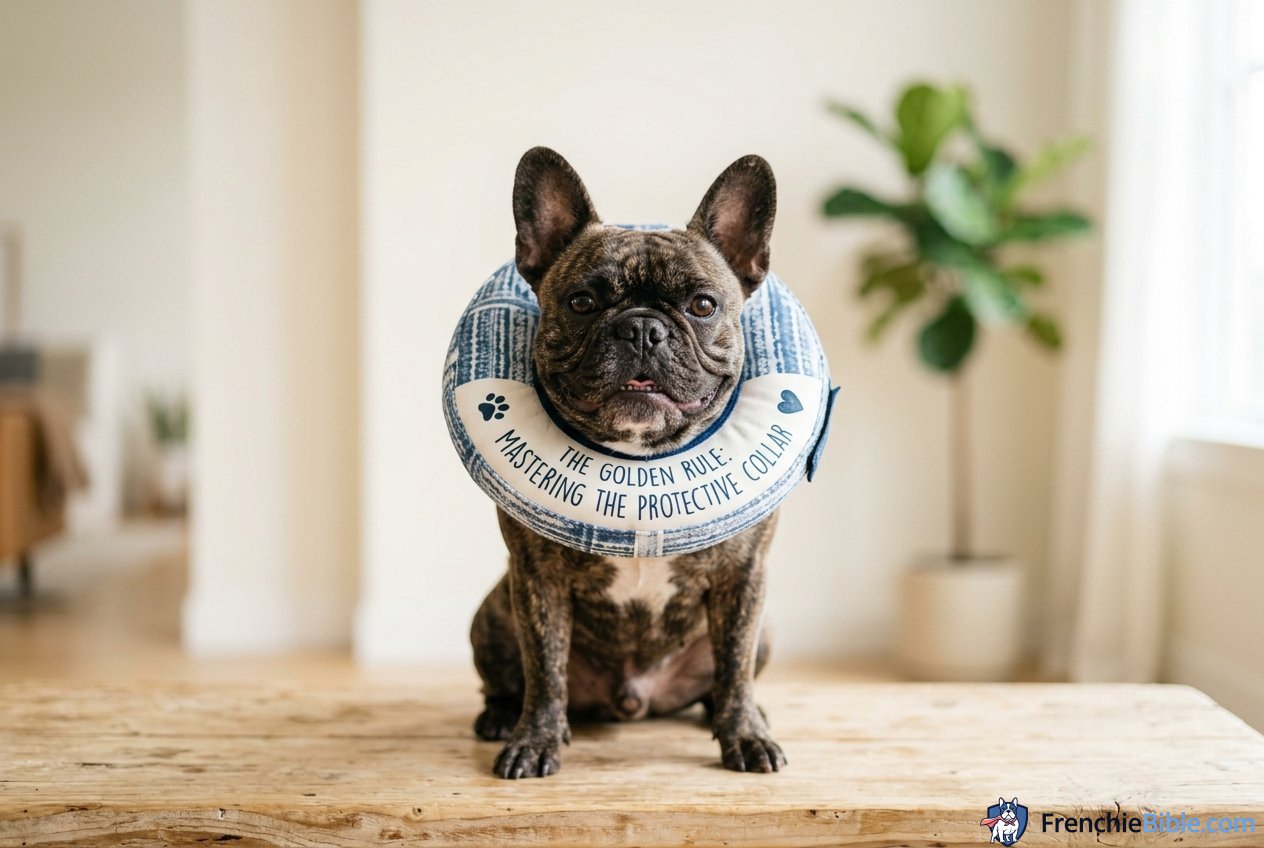
The Golden Rule: Mastering the Protective Collar
The single most important tool in your arsenal against eye scratching is the Elizabethan collar, commonly known as the “cone of shame.” As an experienced breeder, I have seen many owners try to skip the cone because their dog looks miserable in it. Let me be blunt: giving into your dog’s sad puppy eyes and removing the cone is a recipe for disaster.
Why Standard Hard Plastic Cones are Mandatory
For eye surgeries specifically, the traditional, hard plastic veterinary cone is non-negotiable, at least for the first critical week.
Many owners gravitate towards the soft, plush cones or the inflatable “donut” collars because they seem more comfortable. However, for a French Bulldog recovering from cherry eye surgery, inflatable collars are completely ineffective. Because Frenchies have virtually no snout, an inflatable collar will not extend past their nose. This means they can still easily rub their eye against the corner of a sofa or the edge of a coffee table.
Only a hard plastic cone that extends several inches past the tip of your Frenchie’s nose will physically block them from rubbing their eye against surfaces.
Fitting the Cone Correctly
A poorly fitted cone is as dangerous as no cone at all. Here is my breeder’s checklist for a properly fitted cone:
1. Length: The edge of the cone must extend at least two inches past your French Bulldog’s nose. If their nose aligns with the edge, they can still rub their eye on the floor.
2. Snugness: You should be able to fit two fingers comfortably between the cone’s collar and your dog’s neck. If it is too loose, your thick-necked Frenchie will inevitably pull it off with their paws.
3. Anchoring: Never rely on the cone’s flimsy plastic snaps alone. Always thread your dog’s everyday collar (or a soft gauze bandage) through the loops at the base of the cone to anchor it securely around their neck.
Dealing with “Cone Depression”
Your Frenchie will likely hate the cone. They will freeze in place, refuse to walk, bump into doorways, and look up at you with utter betrayal. This “cone depression” is normal. Do not take it off. They will adapt within 24 to 48 hours. You must be the strong, responsible parent. Offer them high-value treats by hand to help them associate the cone with positive experiences, and guide them gently through doorways until they understand their new spatial dimensions.
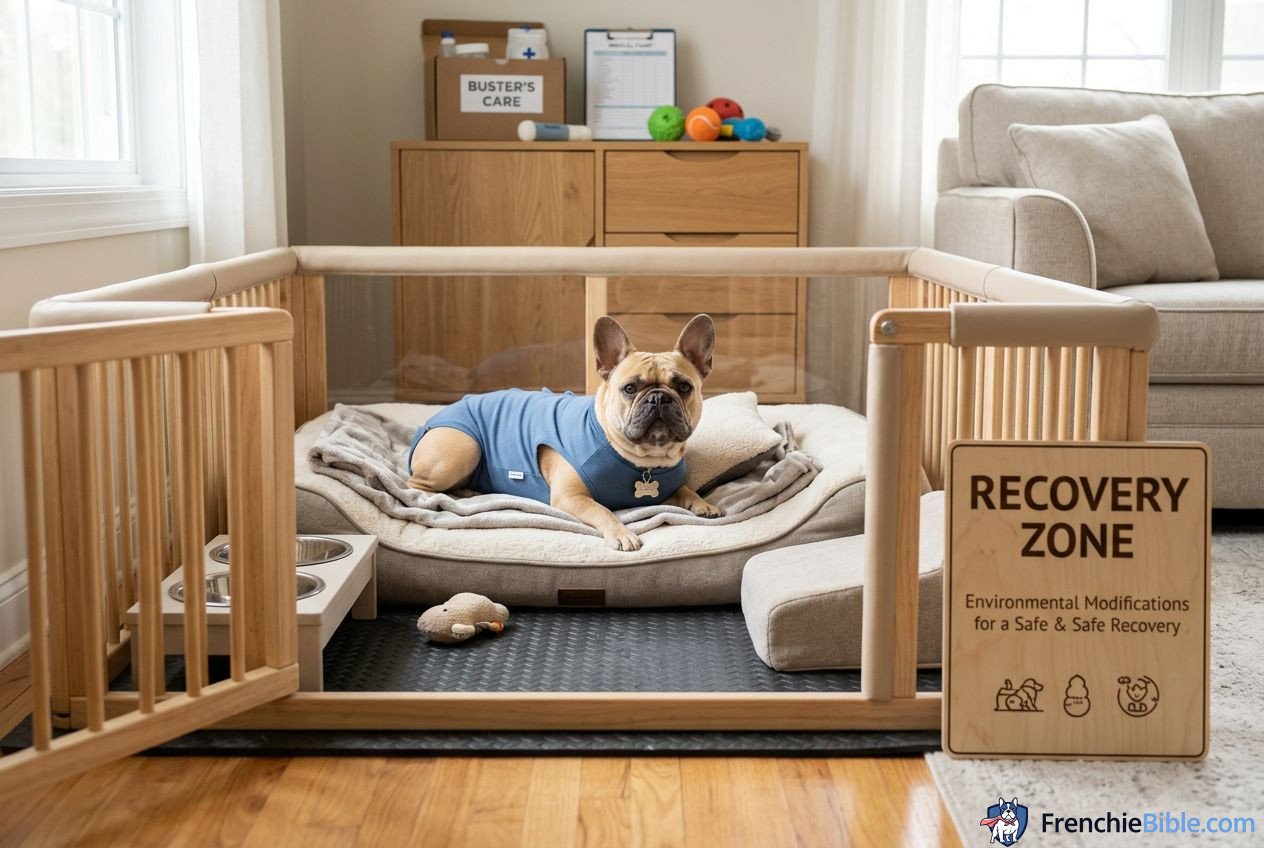
Environmental Modifications for a Safe Recovery Zone
Your home is currently a minefield for a French Bulldog wearing a cone and trying to scratch an itchy eye. You need to temporarily modify their living space to protect them from themselves.
Removing “Scratch Posts”
Walk through your home and look at everything at your Frenchie’s eye level. Remove anything that could catch the cone or that your dog might try to rub their face against:
– Move sharp-edged coffee tables or cover the corners with soft padding.
– Restrict access to rough carpets or textured rugs that they love to rub their faces on.
– Block off access to the garden bushes or thorny plants where they might try to dive face-first to relieve an itch.
Setting Up the Recovery Pen
During the first week of recovery, your Frenchie should not have free roam of the house. I highly recommend setting up a dedicated recovery pen or utilizing their crate.
– The Setup: Use a heavy-duty playpen on a smooth, easily cleanable surface (like linoleum or a sealed hardwood floor, so there is no satisfying friction for face rubbing).
– Bedding: Provide soft, flat bedding. Avoid plush, highly textured beds with raised edges, as your Frenchie will use those raised edges to wedge their face and rub their eye.
– Lighting: Keep the room dimly lit. Eye surgeries can cause light sensitivity, and a bright room will cause squinting and additional discomfort, prompting them to paw at their face.
Keeping Your Frenchie Calm: Stress Reduction and Confinement
Excitement and elevated heart rates increase blood pressure, which can lead to increased swelling and bleeding at the surgical site. A calm dog is a healing dog. A hyperactive dog is more likely to thrash around and accidentally injure their eye.
Strict Rest is Crucial
For the first 10 to 14 days, your Frenchie must be on strict crate rest or confined to their recovery pen.
– No Jumping: Jumping on or off the sofa is strictly forbidden. The impact can jar the delicate sutures in the eye.
– No Stairs: Carry your Frenchie up and down all stairs.
– Leash Walks Only: Even for potty breaks in your own securely fenced backyard, your dog must be on a short leash. Do not let them off-leash, as a sudden sprint after a squirrel could ruin the surgery, or they might suddenly drop and rub their face in the grass.
Managing the “Zoomies”
Frenchies are prone to sudden bursts of energy known as the “zoomies.” If your dog starts getting hyperactive, you must immediately intervene calmly. Do not yell or chase them, as this will only increase their excitement. Calmly step on their leash, gently guide them back to their crate, and sit quietly with them until their breathing slows down.
Distraction Techniques to Stop the Itch
You cannot reason with a dog and explain why they shouldn’t scratch. The best way to prevent them from focusing on their itchy eye is to give them something else to focus their mental energy on.
As a breeder, I rely heavily on mental stimulation to exhaust a dog that is on physical restriction.
Long-Lasting Chews and Lick Mats
Licking and chewing are naturally soothing behaviors for dogs. They release endorphins in the brain that help calm the dog and distract them from pain and itchiness.
– Lick Mats: Smear plain, unsweetened yogurt, dog-safe peanut butter (absolutely xylitol-free), or mashed sweet potato onto a textured silicone lick mat and freeze it. The repetitive licking will keep them occupied for up to an hour.
– Stuffed Kongs: Similar to lick mats, a frozen Kong stuffed with their regular kibble mixed with a little wet food is a lifesaver.
– Safe Chews: Provide large, safe chews that they can easily hold between their paws without the cone getting in the way. Avoid crumbly treats that could accidentally get flicked up into the cone and into the healing eye.
Important Note: Always supervise your Frenchie when they have a chew or a Kong, especially while wearing a cone, to ensure they don’t get frustrated or choke.
Interactive Puzzle Toys
Engage their brain. Use beginner-level canine puzzle toys where they have to slide compartments to find treats. Since they are wearing a cone, you may need to assist them slightly or find puzzles that operate easily with a gentle paw tap rather than requiring delicate snout work.
Scent Work
Since physical exercise is out, use their nose. Take a handful of high-value treats (like boiled chicken breast) and hide them around a small, safe room. Let your Frenchie slowly sniff them out while on a leash. Ten minutes of intense sniffing can tire a dog out just as much as a mile-long walk.
Administering Eye Drops and Daily Grooming
Part of preventing your Frenchie from scratching involves keeping the surgical site clean and administering prescribed medications precisely as directed. If the eye becomes infected or overly dry, the itchiness will intensify, making the urge to scratch irresistible.
The Art of Giving Eye Drops
Administering eye drops to a wriggling, stubborn Frenchie wearing a cone is an art form. Here is my preferred breeder method for keeping them still and safe:
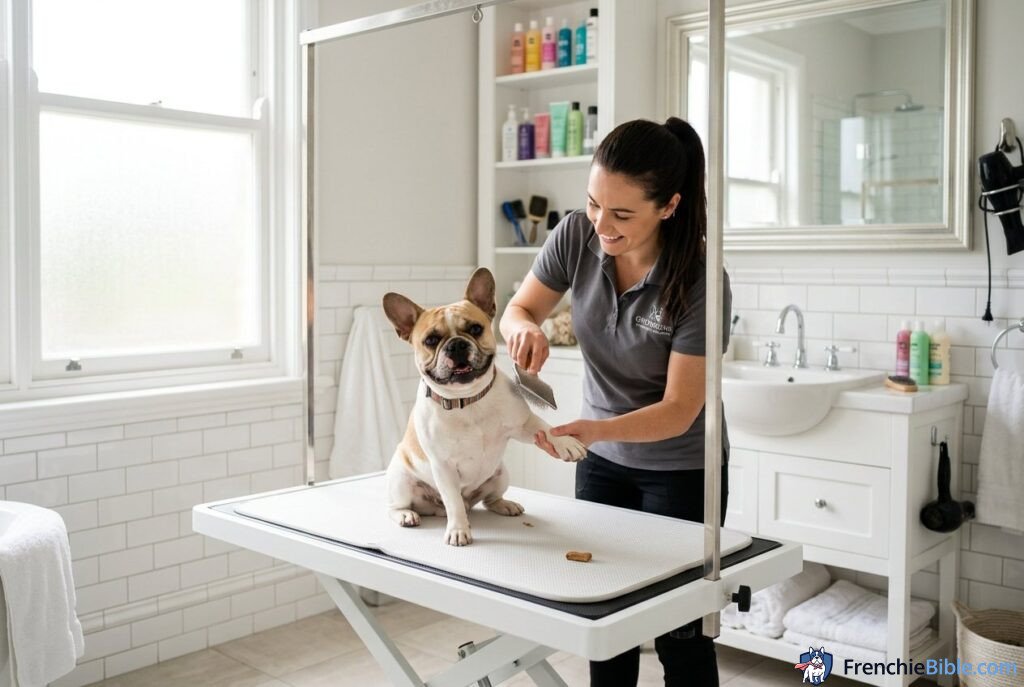
1. The Setup: Place your Frenchie on an elevated, non-slip surface, like a grooming table or a sturdy counter with a yoga mat on top. This prevents them from backing away easily.
2. The Hold: Stand behind your dog. Gently back them into your body so they cannot retreat. Use your non-dominant hand to gently tilt their chin upward.
3. The Approach: Never approach the eye from the front. Coming straight at their eye with a bottle will cause them to panic and thrash. Instead, bring the dropper bottle from behind and above their head, resting the heel of the hand holding the bottle gently on the top of their head. This way, if the dog suddenly jerks, your hand moves with their head, preventing the hard plastic tip of the bottle from striking the healing eye.
4. The Application: Gently pull down the lower eyelid with your non-dominant thumb to create a small pouch, and squeeze the prescribed number of drops into the pouch.
5. Reward: Immediately reward with a high-value treat so they associate the drops with a positive outcome.
Keeping the Folds Clean
While you must absolutely avoid touching the surgical site, you cannot neglect the rest of their face. Tears, eye drop runoff, and normal eye discharge will collect in their facial folds. If these folds stay wet, they will develop yeast infections, which are incredibly itchy.
– Use a soft, dry tissue or An Experienced Breeder-approved sterile wipe to gently dab away moisture from the folds below the eye.
– Do not wipe. Wiping causes friction. Dab gently.
– Ensure the folds are completely bone-dry to prevent itch-inducing bacteria from forming.
Dealing with Multi-Dog Households
If you own more than one dog, the recovery dynamic becomes much more complicated. Other dogs in the house will be curious about the cone and the strange smell of the surgical facility on your Frenchie.
Total Separation
For the safety of the recovering dog, they must be strictly separated from all other pets in the household for at least the first 7 to 10 days.
– Playtime is strictly prohibited. Roughhousing, wrestling, or even playful pawing from another dog can instantly rupture the surgical site.
– Other dogs may try to groom the recovering dog by licking their eye. While dogs often groom each other to show affection, a dog’s mouth is full of bacteria, and licking a surgical incision is a guaranteed path to a severe infection.
– Keep them in separate rooms or use sturdy baby gates. Even through a baby gate, ensure the other dogs cannot poke their noses through and disrupt the cone.
Monitoring the Healing Process: Knowing When to Seek Help
Vigilance is your best defense. You need to inspect the eye visually (without touching it) multiple times a day. By catching potential issues early, you can prevent your Frenchie from reaching a level of discomfort where they resort to frantic scratching.
Normal Post-Op Symptoms
As a breeder, I always tell my puppy families to expect the eye to look worse before it looks better. During the first few days, you should expect:
– Mild to moderate swelling of the eyelids.
– Redness in the white part of the eye (sclera).
– A blood-tinged or clear watery discharge.
– The dog keeping the eye partially closed or squinting.
Red Flags: When Scratching Indicates a Severe Problem
If your Frenchie is frantically trying to scratch their eye despite your best distraction efforts, it may indicate a complication that requires immediate veterinary attention. Look out for these red flags:
1. Thick, Colored Discharge: If the discharge turns from clear or slightly bloody to thick yellow, green, or white pus, this is a strong indicator of infection.
2. Extreme Swelling: If the eye swells shut entirely or the swelling suddenly worsens after the third day.
3. Cloudiness: If the surface of the eye (cornea) suddenly looks cloudy, bluish, or completely opaque, this could indicate a corneal ulcer caused by scratching or rubbing.
4. Recurrence: If you see a red, swollen mass pop back up in the corner of the eye, the gland may have prolapsed again (the tack-down sutures may have failed).
5. Signs of Systemic Illness: Lethargy, loss of appetite, or vomiting.
If you observe any of these signs, do not wait to see if it improves. Put the dog in the car and head back to your vet immediately.
Preparing for the Long Haul
Cherry eye surgery recovery is a marathon, not a sprint. The initial critical healing phase usually lasts 10 to 14 days, which is typically when the vet will recheck the eye and potentially give the all-clear to remove the cone. However, complete tissue healing can take several weeks.
Even after the cone comes off, continue to monitor your French Bulldog closely. If you notice them suddenly pawing at their face a week after the cone is removed, intervene immediately and inspect the eye.
Your dedication during this brief window of your dog’s life will dictate the long-term health of their vision. It requires patience, lost sleep, and constant supervision, but seeing your Frenchie completely healed, comfortable, and looking up at you with clear, bright eyes makes every moment of stress entirely worth it.
Frequently Asked Questions (FAQs)
1. How long does my French Bulldog absolutely have to wear the cone after cherry eye surgery?
Typically, veterinarians require the hard plastic Elizabethan collar to remain on 24/7 for a minimum of 10 to 14 days. This is the critical window where the surgical sutures are most vulnerable. Do not remove the cone earlier unless explicitly instructed to do so by your vet at the follow-up appointment.
2. Can I take the cone off just for feeding and drinking?
It is highly recommended to leave the cone on during meals. Taking it on and off multiple times a day increases the risk of you forgetting to put it back on, or the dog realizing they have a window of opportunity to scratch. Elevate their food and water bowls so they can eat and drink comfortably while wearing the cone. If the cone is so long they physically cannot reach the food, you may remove it for the 5 minutes they are eating, but you must stand directly over them and replace the cone the exact second they finish.
3. My Frenchie keeps bumping into walls with the cone. Is this dangerous?
Bumping into walls and furniture is completely normal as they adjust to their new spatial awareness. While it is frustrating for the dog, the hard plastic cone is designed to take the impact, protecting the eye. Keep them in a safe, clutter-free room to minimize hard collisions, but rest assured the bumping is better than them rubbing their eye on the wall.
4. Can I use a soft recovery suit instead of a cone for cherry eye recovery?
No. Recovery suits or surgical onesies are excellent for abdominal surgeries (like spays or neuters) to prevent licking, but they offer zero protection for the face. A Frenchie wearing a recovery suit can still freely use their paws to scratch their eyes or rub their face on the floor. The hard cone is the only viable option for eye surgery.
5. My dog’s eye looks extremely red and angry a few days after surgery. Is this normal?
Some redness and swelling are expected as the eye tissues heal from surgical manipulation. However, if the redness is worsening, if the eye is swelling shut, if there is green/yellow discharge, or if the dog is showing signs of extreme pain, you must contact your vet immediately. It is always better to have the vet confirm it is normal healing than to miss an impending infection.
Disclaimer: I am a passionate French Bulldog breeder with over 10 years of experience, but I am not An Experienced Breedererinarian. I hold no veterinary or medical qualifications. All the information, tips, and strategies shared in this article are based strictly on my personal breeding experience and daily care routines. This content is for informational and educational purposes only and must never replace, substitute, or overrule professional veterinary advice, diagnosis, or treatment. Always consult your licensed veterinarian regarding your dog’s health, recovery, medication, and specific medical needs.