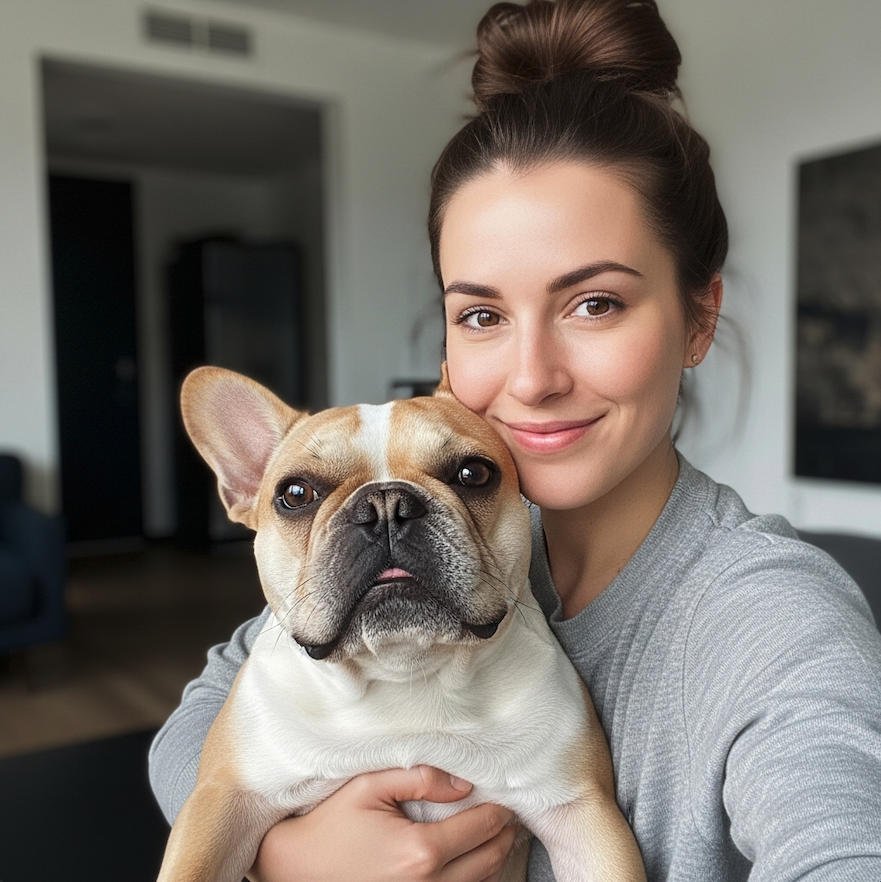

Welcome to the wonderful, chaotic, and incredibly rewarding world of a multi-French Bulldog household! As a French Bulldog breeding expert with over a decade of experience in raising, studying, and cohabitating with these charming little gremlins I can tell you firsthand that having more than one Frenchie is a unique adventure. They bring exponential joy, endless entertainment, and an abundance of affection into our lives. However, multiplying the number of dogs also multiplies the complexity of daily management.
When you bring a second, third, or even fourth French Bulldog into your home, you are no longer just dealing with an individual pet; you are managing a pack. French Bulldogs are known for their strong personalities, stubborn streaks, and deep desire for human attention. When these traits clash, it can lead to behavioral challenges, training regression, and even physical scuffles.
Related Reading: Training & Behavior | Grooming & Care | French Bulldog Colors
In this comprehensive guide, we will delve deep into the nuances of managing a multi-Frenchie household. We will explore proven strategies for orchestrating peaceful feeding times, implementing effective training regimens for multiple dogs, and preventing the inevitable disagreements from escalating into full-blown fights. Whether you are contemplating adding a new puppy to your family or you are currently navigating the turbulent waters of a multi-dog home, this guide will provide you with the actionable insights you need to foster a harmonious, loving, and well-balanced pack.
Understanding the French Bulldog Pack Dynamic
Before we can effectively manage multiple French Bulldogs, we must first understand how they perceive their world and their place within it. The dynamics of a multi-dog household are fluid, constantly shifting based on age, health, and environmental factors.
Hierarchy and Personalities
Unlike some working breeds that adhere to a rigid pack structure French Bulldogs tend to have a more fluid hierarchy. While one dog may generally take the lead, leadership can shift depending on the situation. For instance, one Frenchie might be the “boss” of the toy box, while another dictates who gets the best spot on the sofa.
It is crucial to recognize and respect the individual personalities of your dogs. Some Frenchies are naturally submissive and easygoing, while others are more assertive, dominant, or prone to anxiety. Forcing a naturally submissive dog to share high-value resources with an assertive one is a recipe for disaster. As the human leader, your job is not to force them into a strict hierarchy but to advocate for each dog’s individual needs and ensure a fair, structured environment.
Why Frenchies Clash
French Bulldogs are companion animals bred for close human interaction. This intense bond with their owners can sometimes manifest as jealousy or resource guarding. The most common triggers for scuffles in a multi-Frenchie home include:
- High-Value Resources: Food, long-lasting chews, and favorite toys are prime real estate. If one dog feels their resource is threatened, they may react defensively.
- Human Attention: Frenchies crave your affection. When one dog feels they are being pushed away so another can get pets, tension can brew.
- Overstimulation: Frenchies are prone to bursts of frantic energy (the “zoomies”). If multiple dogs get overstimulated simultaneously, play can quickly escalate into a fight.
- Hormonal Changes: Intact dogs, particularly females in heat or maturing males, can experience behavioral shifts that disrupt the pack dynamic.
- Pain or Illness: A dog that is not feeling well is more likely to be grumpy and reactive.
By understanding these triggers, we can proactively manage the environment to minimize the risk of conflict.
Mastering the Feeding Routine in a Multi-Dog Home
Feeding time is arguably the most highly anticipated event of a French Bulldog’s day, but it can also be the most stressful if not managed correctly. Food represents a critical resource, and the instinct to protect it is deeply ingrained.
Establishing Separate Feeding Zones
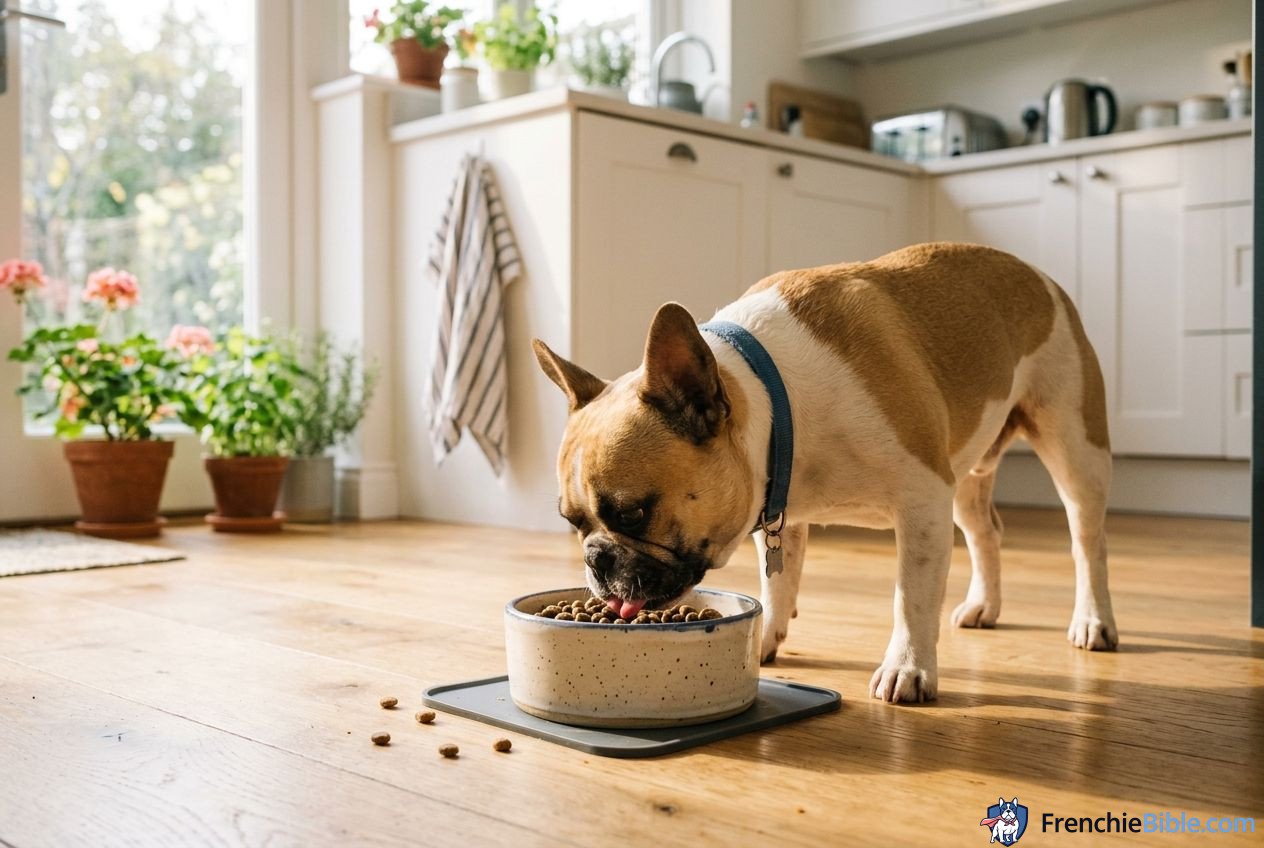
The golden rule of feeding multiple French Bulldogs is this: never feed them out of the same bowl, and ideally, do not feed them in close proximity to one another. Feeding dogs side-by-side encourages competitive eating, which can lead to indigestion, bloat, and severe resource guarding.
Create distinct, separated feeding zones for each dog. This could mean feeding one dog in the kitchen, another in the laundry room, or utilizing crates. Crate feeding is an exceptionally effective strategy. It not only ensures each dog eats in peace without feeling pressured by a hovering sibling, but it also reinforces the crate as a positive, high-value space.
If crate feeding is not an option, use physical barriers like baby gates to separate the dogs during mealtime. The goal is to completely remove the visual and physical pressure of another dog while they are eating.
Setting Strict Meal Schedules
Free-feeding (leaving a bowl of kibble out all day) is highly discouraged in a multi-dog household. It makes it impossible to monitor individual intake, complicates potty training, and creates a constant, lingering resource that can trigger guarding behaviors at any moment.
Implement a strict feeding schedule, typically two meals a day for adults and three for puppies. Establish a routine: prepare the bowls out of sight if possible, place them in the designated feeding zones, and release the dogs to eat. Give them a set amount of time (e.g., 15-20 minutes) to finish. If a dog walks away or dawdles, calmly pick up the bowl. They will quickly learn that food is available only at specific times, which helps regulate their metabolism and reduces food-related anxiety.
Addressing Resource Guarding Over Food
If you notice signs of resource guarding—such as stiffening, hard staring, low growling, or snapping when another dog or human approaches their food—it must be addressed immediately.
Never punish a dog for growling; a growl is a warning, and if you suppress the warning, the dog may escalate straight to a bite. Instead, manage the environment by strictly enforcing separated feeding zones. For severe cases, consult a professional, balanced dog trainer who specializes in resource guarding. You can practice “trade” games, offering a higher-value treat in exchange for the item they are guarding, to change their emotional response from defensive to eager.
Effective Training Strategies for Multiple Frenchies
Training one French Bulldog requires patience and consistency; training multiple Frenchies requires a strategic approach. When you try to teach a new command to two dogs simultaneously, you will often end up with a chaotic competition for treats rather than focused learning.
Individual Training Sessions vs. Group Training
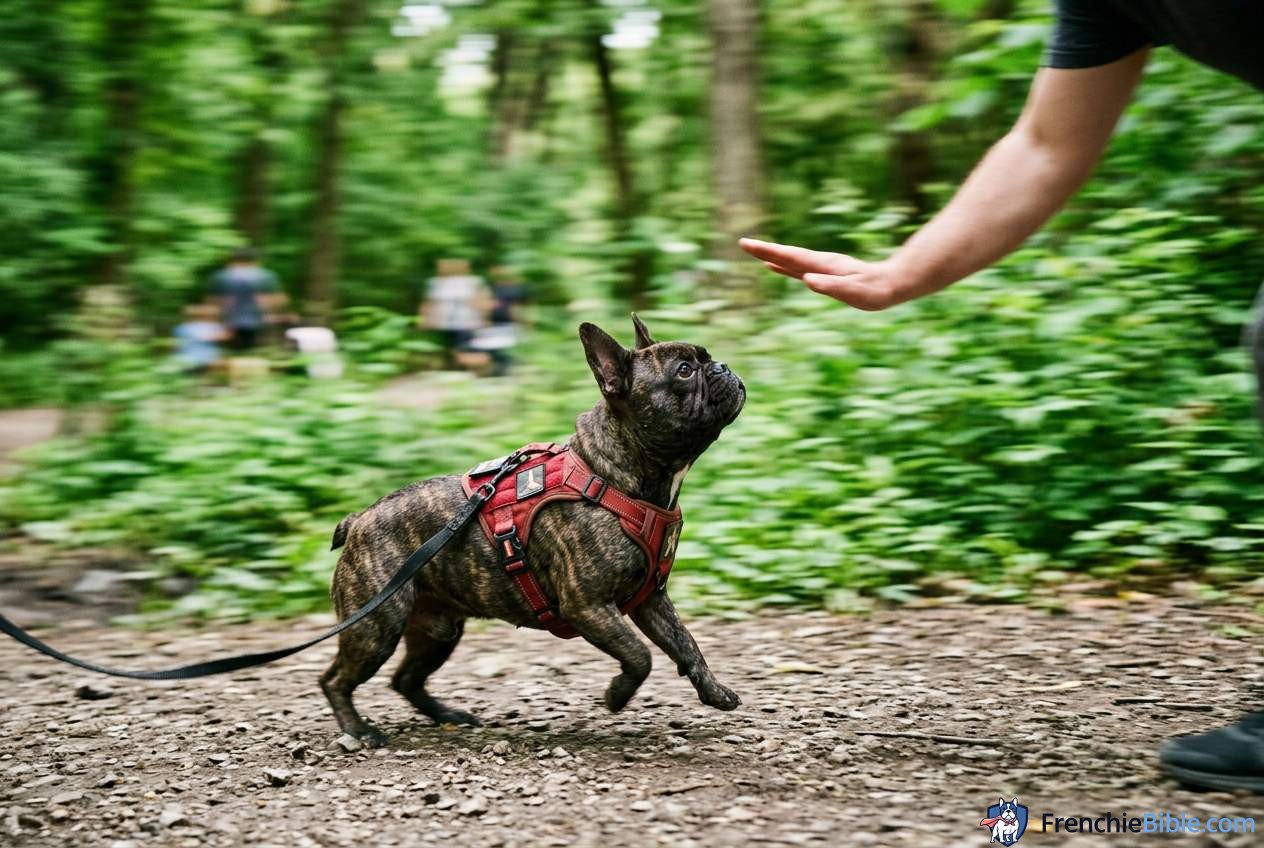
The foundation of obedience must be built one-on-one. Set aside 10-15 minutes a day for individual training sessions with each dog, separate from the others. This allows you to tailor your approach to the specific dog’s learning style, address their individual weaknesses, and build a strong, focused bond without the distraction of a sibling.
Once a command is solidly understood and reliably executed in isolation, you can begin group training. Start with basic commands like “sit” and “stay.” The challenge here is impulse control—teaching Dog A to hold their “sit” while Dog B receives a reward. Use names clearly before issuing a command or delivering a reward (e.g., “Bella, sit. Good Bella! [Treat] Max, sit. Good Max! [Treat]”). This teaches them to listen for their specific cue rather than reacting to every command you give.
The Power of the “Place” Command
If I could only teach one command to a multi-dog household, it would be the “place” command (sending the dog to a specific bed or mat and having them stay there until released).
The “place” command is a cornerstone of household management. It teaches impulse control, provides a structured “off switch” when the dogs are overly excited, and prevents them from swarming the door when guests arrive. In a multi-Frenchie home, having designated “place” beds for each dog allows you to maintain order during high-arousal situations. You can send all dogs to their respective places while you prepare meals, answer the door, or simply need 20 minutes of peace.
Leash Walking with Multiple Dogs
Walking multiple French Bulldogs can quickly devolve into a tangled mess of leashes and pulling. Before attempting a pack walk, ensure each dog can walk politely on a loose leash individually.
When transitioning to walking them together, consider using a leash coupler, which attaches two dogs to a single leash. However, this only works if both dogs have similar walking paces and good leash manners. Alternatively, hold one leash in each hand, keeping the dogs on opposite sides of your body. Do not allow them to crisscross in front of you. If the walk becomes chaotic, stop, require them both to sit, and reset before moving forward. Remember, physical exercise is vital for their mental health, but a structured walk is far more beneficial than a frantic, pulling marathon.
Preventing and Managing Scuffles
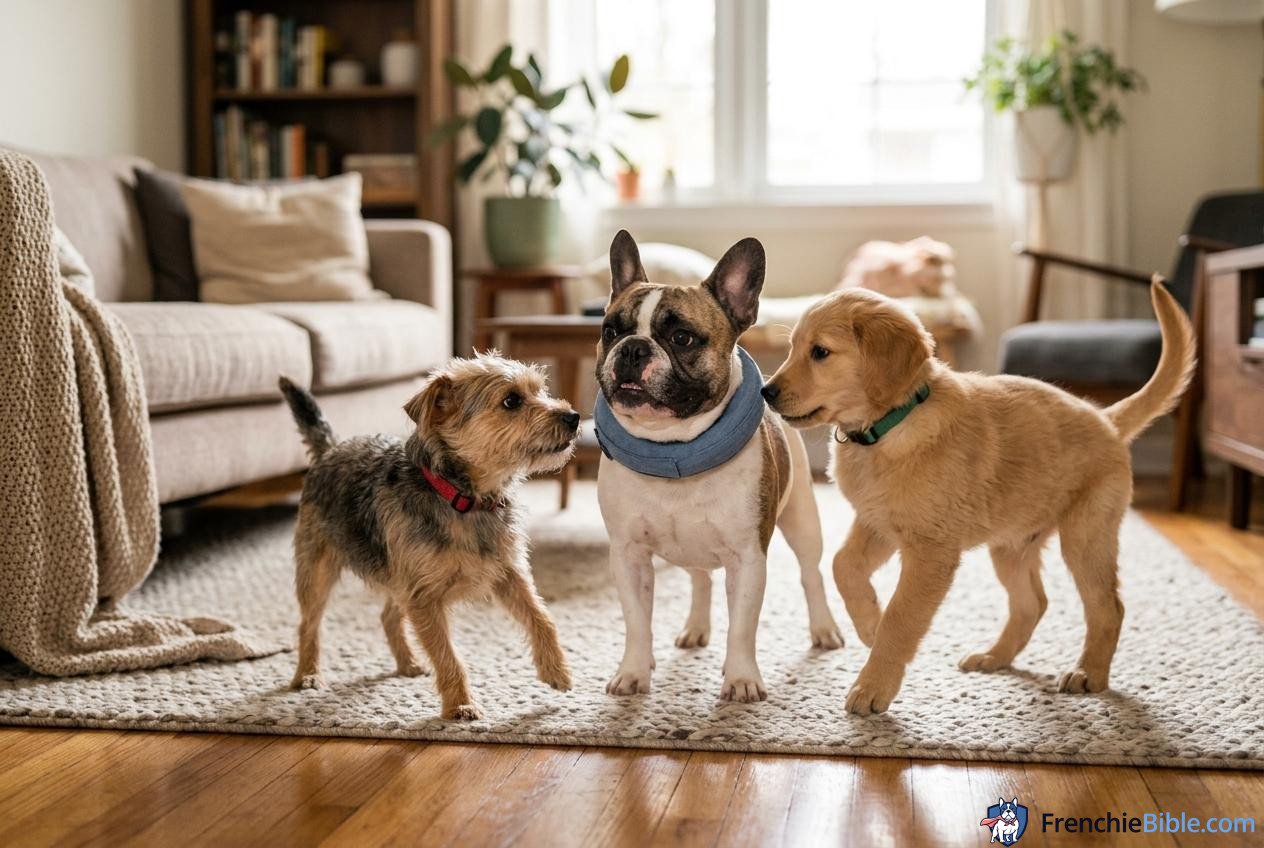
Even in the most well-managed households, disagreements can occur. French Bulldogs are sturdy, muscular dogs, and what starts as a minor squabble can quickly escalate. The key is prevention through proactive management and knowing how to safely intervene if necessary.
Recognizing Early Warning Signs of Aggression
Dogs communicate primarily through body language. Recognizing the subtle signs of tension can help you defuse a situation before it erupts. Watch for:
- Hard Staring: Unblinking, intense eye contact between dogs.
- Stiffening: The body becomes rigid, and the tail may stand straight up or tuck tightly.
- Lip Licking or Yawning: These are stress signals indicating discomfort.
- Posturing: One dog standing over another, placing their head or paws on the other’s back.
- Low Growling: A clear auditory warning that a boundary is being pushed.
If you observe these behaviors, it is time to intervene calmly but firmly.
De-escalation Techniques
When tension rises, your reaction is critical. Do not yell, panic, or physically jump into the middle of the dogs, as this frantic energy will only fuel their anxiety and escalate the situation.
Instead, use calm, assertive redirection. A sharp, verbal interrupter like a firm “Hey!” or a loud clap can snap them out of their fixation. Immediately redirect their attention. Ask them to perform a known command, like “sit” or “place,” and reward them for complying. This shifts their brain from an emotional, reactive state to a cognitive, working state.
If they are unable to break focus, physically separate them by calmly guiding one dog out of the room. Give them time to decompress in separate spaces before reintroducing them.
When and How to Safely Intervene
If a scuffle breaks out, your priority is to separate the dogs safely without getting bitten yourself. Never grab a fighting dog by the collar or stick your hands near their mouths; in the heat of the moment, a dog may experience redirected aggression and bite whatever is closest.
The safest way to break up a fight is the “wheelbarrow method.” Ideally, two people should each grab a dog by their back legs, lifting their hindquarters off the ground like a wheelbarrow, and quickly walking backward, away from the other dog. Once separated, immediately place them behind closed doors or in crates to calm down.
For single owners, keeping a physical barrier handy, such as a large piece of cardboard, a baby gate, or even a couch cushion, can be useful to shove between the dogs to break their visual and physical contact.
The Role of Toys and Chews in Conflicts
High-value items like marrow bones, bully sticks, and certain interactive toys are common catalysts for fights. If you have a multi-dog household, you must carefully monitor access to these items.
Some households can safely allow dogs to chew bones in the same room, provided there is enough space and each dog has their own identical item. However, if one dog finishes first and attempts to steal from the other, conflict is inevitable. For many multi-Frenchie homes, the safest practice is to only offer high-value chews when the dogs are separated in their crates or different rooms. Once they are finished, remove any remnants to prevent lingering tension over the scent or crumbs.
Building a Harmonious Frenchie Family
Managing a multi-dog household isn’t just about preventing fights; it’s about fostering a loving, balanced family environment where each dog thrives.
Ensuring Equal Attention and Affection
Jealousy is a powerful emotion in French Bulldogs. They are acutely aware of how much attention their siblings are receiving. While it is impossible to give exactly equal attention every second of the day, strive for equity over the course of the week.
Make time for one-on-one bonding with each dog. This could be a solo trip to the pet store, an individual training session, or just 15 minutes of uninterrupted cuddle time on the couch while the other dog is napping in their crate. This dedicated time reinforces your bond with each individual and reassures them of their place in your heart.
When doling out treats or affection in a group setting, require polite behavior. Do not reward the dog who pushes their way to the front or barks the loudest. Instead, reward the dog sitting quietly, and then explicitly ask the pushy dog to sit before they receive their share.
Creating Safe Spaces and Downtime
Just like humans, dogs need downtime away from their siblings. French Bulldogs, particularly puppies and adolescents, can struggle to self-regulate and may annoy older dogs with incessant attempts to play.
Ensure your home has multiple “safe spaces”—crates, designated beds in quiet corners, or separate rooms—where a dog can retreat when they need a break. Teach all dogs to respect these boundaries. If an older dog retreats to their crate, do not allow the younger puppy to pester them through the bars. Enforced naps are crucial; sometimes, putting the dogs in their separate crates for a two-hour nap is the best way to reset the household energy and prevent overstimulation-induced scuffles.
Routine Care and Grooming for the Pack
Managing the physical needs of multiple French Bulldogs requires organization. From wrinkle cleaning to nail trims, routine care can become overwhelming if you don’t have a system.
Batch Grooming Strategies
Instead of trying to groom all the dogs in one exhausting session, establish a rotating schedule or batch specific tasks. For example, make every Sunday evening “wrinkle and ear cleaning night” for the whole pack. Line up your supplies—unscented baby wipes, ear cleaner, cotton rounds, and high-value treats. Process each dog assembly-line style, rewarding them generously.
For more intense tasks like nail trimming or bathing, tackle one dog per day to ensure you have the patience to make the experience positive. By breaking the care routine down into manageable chunks, you reduce stress for both yourself and your Frenchies.
Frequently Asked Questions (FAQs)
Q1: Is it better to get two French Bulldogs of the same sex or opposite sexes?
Generally, a male/female pairing is the easiest dynamic to manage, as they are less likely to compete for the same status within the hierarchy. Two males can often live harmoniously, especially if neutered. Two females (often referred to as female-female aggression) can sometimes be the most challenging combination, as their disputes tend to be more intense and harder to resolve. However, individual temperament plays a massive role, and any combination can work with proper management.
Q2: Should I get two French Bulldog puppies from the same litter?
Raising “littermates” (or two puppies of similar age at the same time) is generally discouraged by most professionals. It often leads to “Littermate Syndrome,” where the puppies bond so intensely with each other that they fail to properly bond with their human owners, struggle with severe separation anxiety when separated, and become increasingly difficult to train. It is usually better to wait until your first Frenchie is at least 1-2 years old and well-trained before introducing a second puppy.
Q3: How do I introduce a new French Bulldog to my current one?
Introductions should always occur in neutral territory, like a park or a quiet street, rather than inside the home where your current dog may feel territorial. Take them for a parallel walk, keeping a safe distance and allowing them to sniff where the other has walked before allowing brief, supervised greetings. Keep interactions short and positive, and slowly transition them into the home, utilizing crates and baby gates to manage their exposure to one another in the early weeks.
Q4: My Frenchies play really rough. How do I know if they are fighting or just playing?
French Bulldog play can look and sound ferocious—lots of grunting, wrestling, and mouthing. Healthy play involves role reversals (taking turns being the chaser/chased or pinned/pinning), “play bows,” and bouncy, loose body language. If the play becomes one-sided, if one dog is trying to escape and the other relentlessly pursues, or if you hear high-pitched yelping or low, guttural growls, the play has escalated, and you should intervene and separate them for a break.
Q5: Can I leave my multiple French Bulldogs loose together when I am not home?
This is a personal decision that depends entirely on the proven dynamic of your specific dogs. However, for maximum safety, it is highly recommended to separate them when you are not there to supervise. Even best friends can have a disagreement over a stray crumb or an outside noise. Crating them, or separating them in different dog-proofed rooms, ensures you will come home to safe, healthy dogs every time.
Disclaimer: I am not a veterinarian, and the information provided in this article is solely based on my extensive experience as a French Bulldog breeder and owner. This content is intended for educational and informational purposes only and should not be considered or used as a substitute for professional veterinary medical advice, diagnosis, or treatment. Always consult with a licensed veterinarian regarding any questions or concerns you may have regarding your pet’s health, medical conditions, dietary needs, or behavioral issues. Never disregard professional veterinary advice or delay in seeking it because of something you have read in this article. If you suspect your dog has a medical emergency or severe behavioral problem, please contact your veterinarian or an emergency veterinary clinic immediately.