
One of the most dangerous misconceptions in the dog world is the idea that French Bulldogs are purely “couch potatoes” that require zero physical activity. as a French Bulldog expert and breeder specializing in brachycephalic (flat-faced) breeds and a breeder who has spent a decade striving for healthier Frenchies I see the tragic consequences of this myth every single day. We are facing an epidemic of morbidly obese French Bulldogs whose joints are failing and whose hearts are struggling.
However, the pendulum swinging too far in the other direction is equally fatal. A French Bulldog is not a Labrador Retriever or a Border Collie. You cannot take them on a five-mile hike or force them to run alongside your bicycle. Over-exercising a Frenchie triggers Brachycephalic Obstructive Airway Syndrome (BOAS) crises—a literal state of suffocation where the dog’s internal airway collapses under the demand for oxygen, leading to heatstroke, cardiac arrest, and death.
Related Reading: Training & Behavior | Frenchie Puppy Guide | Best Food for Frenchies
So, how much exercise does a French Bulldog actually need? Where is the invisible, life-saving line between keeping them fit and pushing them into respiratory failure? In this comprehensive guide, we will dive deep into the physiology of the Frenchie airway, establish precise daily exercise guidelines, and teach you how to recognize the critical boundary of BOAS.
Understanding the Machine: The Brachycephalic Airway
To understand a Frenchie’s exercise limits, you must understand their anatomy. Through decades of selective breeding for a flat, “smushed” face, humans have compressed the nasal and respiratory tissues of a standard dog into a skull space that is roughly half the normal size.
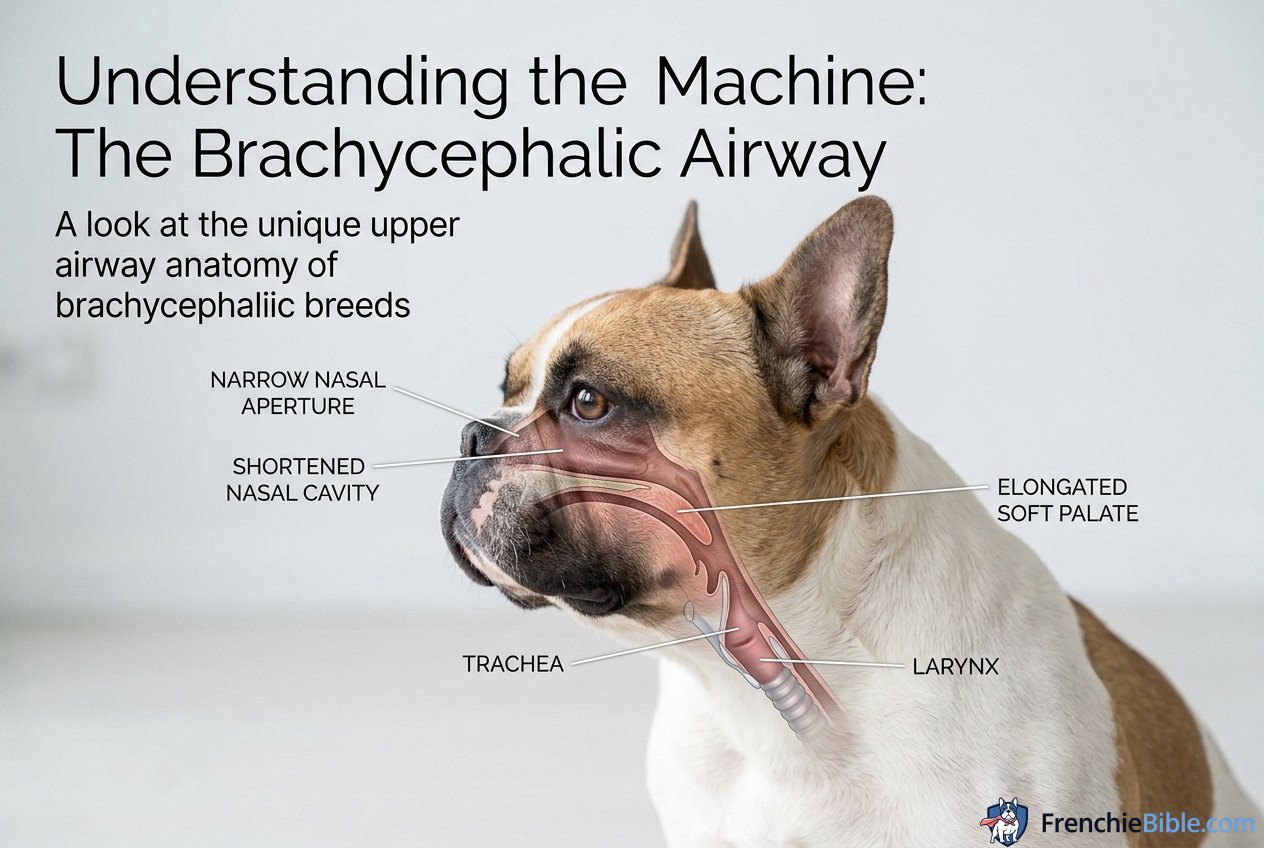
When you ask a Frenchie to exercise, their cardiovascular system demands more oxygen. But getting that oxygen is a mechanical nightmare due to BOAS. Most Frenchies suffer from one or more of the following anatomical defects:
1. Stenotic Nares: Pinched, narrow nostrils that restrict airflow right at the entrance.
2. Elongated Soft Palate: The tissue at the roof of the mouth is too long for the short skull, hanging down and physically blocking the windpipe (trachea).
3. Hypoplastic Trachea: A dangerously narrow windpipe.
4. Everted Laryngeal Saccules: Tissue inside the airway that gets sucked inward during heavy panting, further obstructing the air path.
The Heatstroke Connection
Dogs do not sweat through their skin like humans; they regulate their body temperature primarily by panting. Panting passes cool air over the moist tissues of the mouth and respiratory tract, dissipating body heat.
Because a Frenchie’s airway is obstructed, they cannot move enough air efficiently to cool down. Furthermore, the immense physical effort required just to suck air past their elongated soft palate generates more internal body heat. This creates a deadly positive feedback loop. The harder they exercise, the harder they breathe; the harder they breathe, the more the airway swells and obstructs; the more it obstructs, the hotter they get. This is why Frenchies can die of heatstroke in 70°F (21°C) weather during moderate exercise.
The Optimal Daily Exercise Requirement
Despite these limitations Frenchies possess a sturdy, muscular frame that requires maintenance. Without exercise, they lose muscle mass, gain fat, and put catastrophic pressure on their delicate spines, severely increasing the risk of Intervertebral Disc Disease (IVDD).
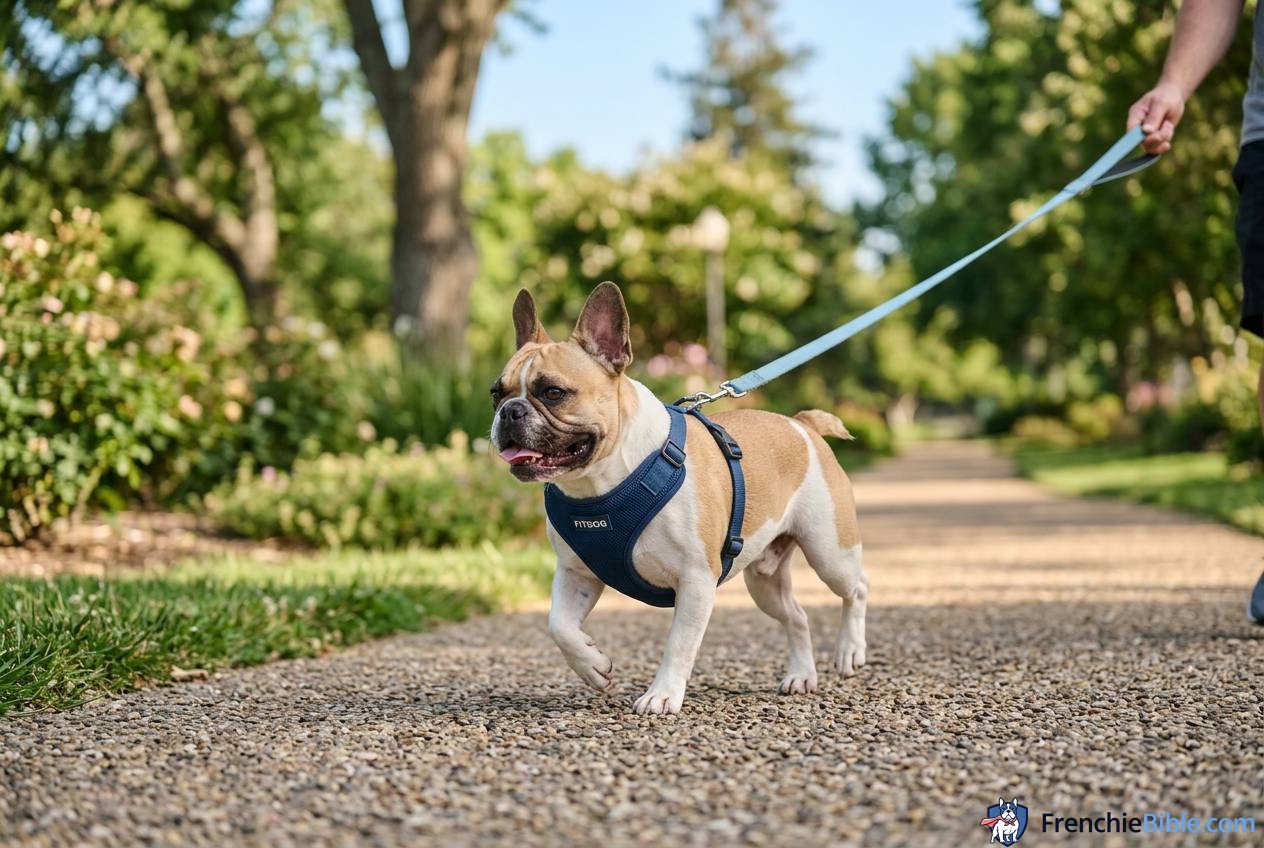
The Golden Rule: The average, healthy adult French Bulldog requires roughly 30 to 60 minutes of low-impact exercise per day, broken into multiple short sessions.
How to Break Down the Exercise
Do not attempt a continuous 45-minute walk. Instead, segment their activity to allow their respiratory system to recover.
- Morning Walk (15-20 minutes): A leisurely, sniff-heavy walk in the cool morning air. “Sniffaris” provide immense mental stimulation, tiring the dog out psychologically without taxing them physically.
- Afternoon Play (10-15 minutes): Indoor, climate-controlled play. This could be a gentle game of tug-of-war, puzzle toys, or basic obedience training.
- Evening Walk (15-20 minutes): Another slow-paced walk after the sun has gone down and the pavement has cooled.
Age Matters: Puppies vs. Seniors
- Puppies (Under 12 Months): Puppies have growing, uncalcified joints. Forced exercise (like long walks) can cause permanent orthopedic damage. Follow the “5-minute rule”: 5 minutes of structured walking per month of age, twice a day. A 4-month-old puppy should only walk for 20 minutes at a time.
- Seniors (7+ Years): Arthritis and worsening BOAS symptoms mean seniors require highly tailored routines. Short, 10-minute flat-surface walks and hydrotherapy (water treadmill) are ideal.
Crossing the Line: Recognizing the Edge of BOAS
The most critical skill a French Bulldog owner must develop is the ability to recognize when exercise has crossed from healthy to dangerous. A Frenchie will often try to keep up with you just to please you, ignoring their own biological limits until they collapse.
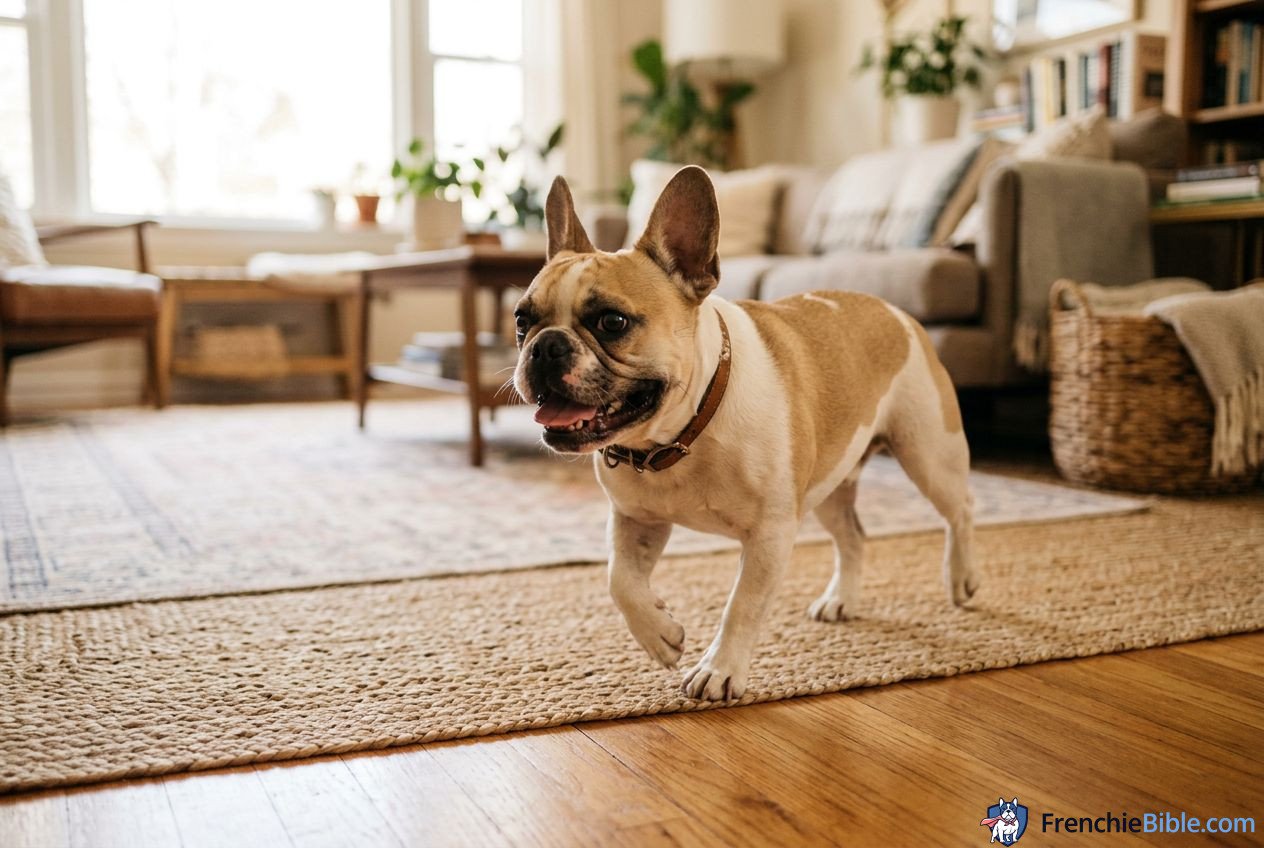
You must stop the exercise, pick the dog up, and move to a cool environment immediately if you observe any of the following clinical signs:
1. The Auditory Warnings
A healthy Frenchie breathing normally should be relatively quiet.
– Loud Snorting and Roaring (Stridor): If the dog sounds like a struggling freight train or a loud, raspy engine, their soft palate is blocking the airway.
– Choking or Gagging: If they stop to gag, hack, or regurgitate white foam, they are in respiratory distress. The effort of breathing has caused massive swelling in the throat.
2. The Visual Warnings
Look at the dog’s mouth and chest.
– The “Spoon Tongue”: A normal panting tongue is relaxed and pink. A dog in respiratory distress will have a tongue that is maximally extended, curled up at the edges (like a spoon), and stiff.
– Abnormal Mucous Membrane Color: Check their gums and tongue. Bright, brick-red gums indicate severe overheating. Blue, purple, or gray gums indicate cyanosis—a fatal lack of oxygen. This is a life-threatening emergency.
– Heaving Chest and Abdomen: If the dog’s entire body, including their stomach, is violently heaving just to pull in a breath, the airway is collapsing.
3. Behavioral Warnings
- The Sudden Sit or “Sploot”: If your Frenchie suddenly drops into a sit or lies flat on their belly with their legs out back (splooting) during a walk and refuses to move, do not drag them. They are telling you they are physically out of oxygen and attempting to cool their belly on the ground.
- Panic and Wide Eyes: A dog suffocating from BOAS will look visibly panicked, with wide, frantic eyes as they struggle to breathe.
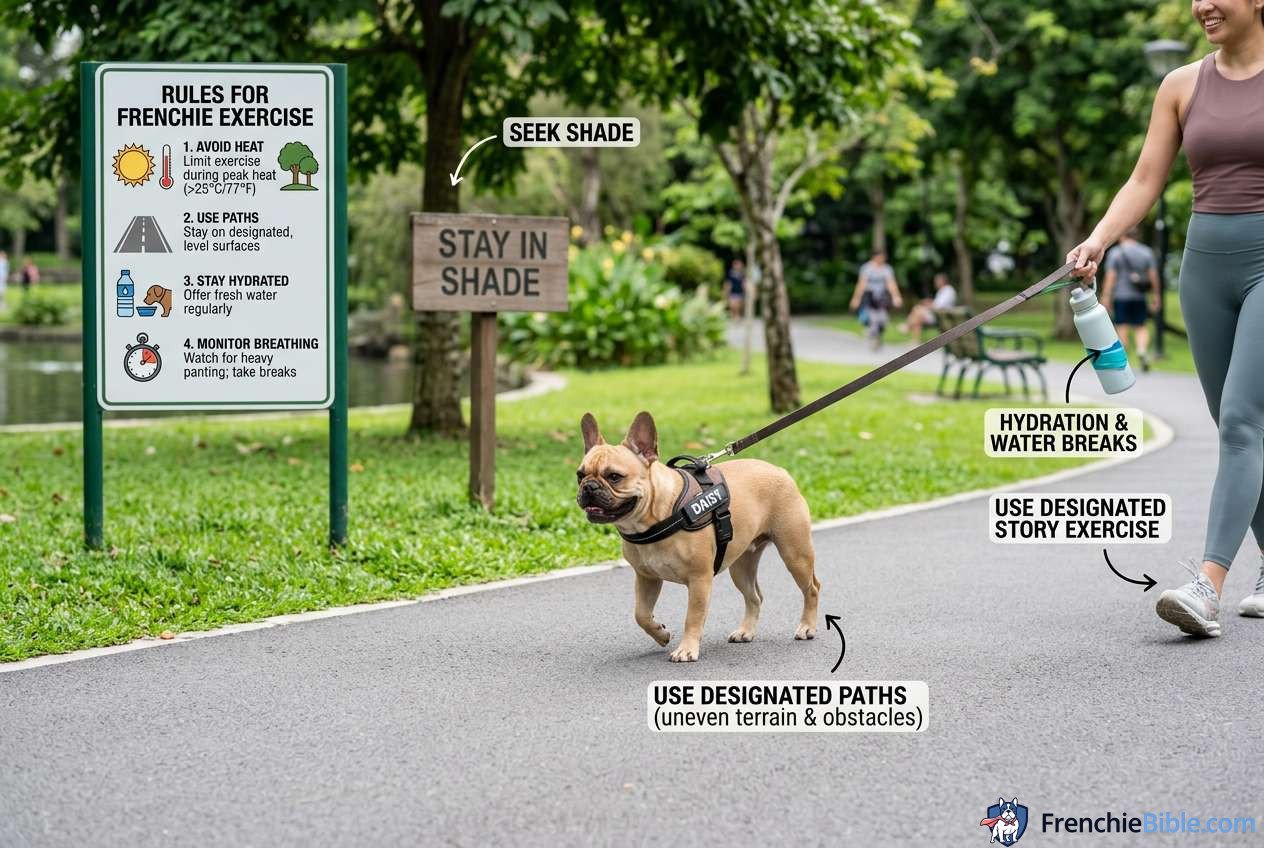
Environmental Rules for Frenchie Exercise
Because of BOAS, the environment dictates the exercise, not your schedule.
1. The Temperature Rule:
Never walk a French Bulldog if the temperature is above 75°F (24°C) with moderate to high humidity. Humidity is a Frenchie’s worst enemy because it prevents the evaporation of moisture from their respiratory tract, completely disabling their ability to cool down. If it is hot and humid, all exercise must happen indoors with air conditioning.
2. The Harness Mandate:
Absolutely never walk a French Bulldog using a collar attached to a leash. Any pressure on their neck directly crushes the trachea and worsens the BOAS obstruction. Always use a high-quality Y-shaped, step-in harness that distributes pressure across the chest and shoulders.
3. The Pavement Test:
Place the back of your hand flat on the asphalt for seven seconds. If it is too hot for your hand, it will blister your Frenchie’s paw pads.
Conclusion
Finding the balance between canine fitness and brachycephalic limitations is the tightrope every French Bulldog owner walks. They are not athletic endurance runners; they are heavy, muscular sprinters trapped in a body with a compromised exhaust system. By adhering to the 30-60 minute daily guideline, splitting exercise into short sessions, avoiding heat like the plague, and constantly monitoring the sounds of their breathing, you can keep your Frenchie fit, slim, and most importantly, alive. Respect the BOAS line, and your dog will thrive.
Frequently Asked Questions (FAQs)
1. Can my French Bulldog go swimming for exercise?
No French Bulldogs are not natural swimmers. Due to their heavy, dense torsos, short legs, and disproportionately large, heavy heads, they sink like stones. If you want them to swim, they must wear a high-quality, buoyant canine life jacket at all times, and you must be in the water with them within arm’s reach.
2. My Frenchie breathes very loudly and snores even when resting. Should I limit their exercise further?
If your dog struggles to breathe at rest, they are suffering from severe BOAS. You should absolutely limit their physical exertion and consult veterinary surgeon immediately. BOAS surgery (widening the nares and shortening the soft palate) can drastically improve their quality of life and exercise tolerance.
3. Are dog parks safe for French Bulldogs?
I advise against dog parks for Frenchies. They cannot physically regulate their excitement or their temperature. Running frantically with large dogs often leads to acute heatstroke within 10 minutes. Furthermore, their unique body language (stiff bodies, lack of tails, grunting noises) is often misinterpreted as aggression by other breeds, leading to fights.
4. How can I exercise my Frenchie in the winter when it’s freezing?
While Frenchies handle the cold slightly better than the heat, their short coats and lack of body fat mean they get cold quickly. Use a well-fitted dog coat or fleece. Keep outdoor walks very short (5-10 minutes) to allow for potty breaks, and supplement the rest of their daily energy expenditure with indoor training games and puzzle toys.
5. Does weight affect my Frenchie’s breathing?
Massively. Obesity is the number one exacerbator of BOAS. Even two extra pounds of fat heavily compresses the chest wall and lines the internal airway with fat deposits, making a bad breathing situation significantly worse. Keeping your Frenchie lean with a visible waistline is the best non-surgical thing you can do for their breathing.
Disclaimer: We are not veterinarians and do not hold veterinary medical licenses. The information provided in this article is based on years of breeding and daily care experience and is for educational purposes only. It should not replace professional veterinary advice. Always consult with a licensed veterinarian if you have concerns about your French Bulldog’s health or before starting any new treatment.