Introduction to the French Bulldog Tail Pocket
French Bulldogs are universally beloved for their incredibly charming personalities, iconic bat ears, and adorable, compact, muscular bodies. They are clownish, affectionate, and make exceptional companions. However, their unique physical characteristics—the very traits that make them so recognizable and sought after—also predispose them to specific health and grooming challenges that every owner must be prepared to handle. One of the most critical, yet frequently overlooked and misunderstood areas in a French Bulldog’s anatomy is the “tail pocket.”
as a French Bulldog expert and breeder and a breeder with decades of experience, I have seen countless cases in my breeding program where a simple lack of awareness about the tail pocket led to severe inflammation, chronic infection, and extreme, debilitating discomfort for the dog. The tail pocket is a literal hidden danger zone, completely masked by the dog’s stubby, tight tail and thick surrounding skin folds. If you own a Frenchie, are planning to adopt one, or are considering bringing a puppy into your home, understanding what the tail pocket is, how to properly clean it, and how to proactively prevent inflammation is absolutely non-negotiable. It is a fundamental part of French Bulldog ownership.
Related Reading: Training & Behavior | Frenchie Puppy Guide | Best Food for Frenchies
In this exhaustive, comprehensive guide, we will dive deep into everything you need to know about French Bulldog tail pocket inflammation. From the underlying anatomy and root causes of infections to step-by-step cleaning protocols, medical treatments, and preventative strategies, this article will empower you to keep your furry companion happy, healthy, and entirely pain-free.
What Exactly is a Tail Pocket?
To fully understand the tail pocket and why it presents such a challenge, you first have to look closely at the anatomy of a French Bulldog’s rear end. Due to the way they have been selectively bred over generations to achieve a specific compact look, Frenchies often have tightly curled, corkscrew, or inverted tails that sit flush against, or even dimple into, their hindquarters.
A tail pocket is essentially a fold of skin, a crevice, or a recessed cavity located directly beneath or around the base of the tail. Because the tail sits so tightly against the body, acting almost like a lid, this pocket is completely hidden from view. If you don’t actively lift or manipulate the tail to look underneath, you would never know it was there. This small, dark, and warm crevice is a natural part of many French Bulldogs’ anatomy due to their skeletal structure, but it is also the perfect breeding ground for bacteria, yeast, and a massive accumulation of dirt and bodily secretions.
Do All French Bulldogs Have Tail Pockets?
It is a very common misconception that every single French Bulldog has a tail pocket. In reality, the presence, depth, and severity of a tail pocket vary significantly from dog to dog. Some Frenchies have a very slight indentation that is relatively easy to manage and rarely causes issues, while others have deep, cavernous pockets that can extend an inch or more into the body cavity, requiring meticulous daily care.
Furthermore, some French Bulldogs have tails that naturally protrude slightly outward or have a small “drop,” meaning they have no tail pocket at all. The only way to know for sure if your dog has one is to gently physically inspect the area. As puppies grow, gain muscle, and their bodies change proportions, a tail pocket may become more pronounced. Therefore, regular checks during the first year of life, and throughout their adult years, are essential.
The Anatomy Behind the Fold
The physical structure that creates the tail pocket is a complex combination of vertebral malformations and excess skin. French Bulldogs are a brachycephalic breed, which often comes with spinal anomalies like hemivertebrae (wedge-shaped vertebrae) in the tail region. The tightly curled tail acts like a cap over the pocket, sealing it off from the air.
Inside this pocket, the skin contains numerous sebaceous glands that constantly produce natural body oils, and sweat glands that produce moisture. Because there is absolutely no airflow to dry out these natural secretions, the environment remains constantly humid and dark. When you add dead skin cells, stray shedding hairs, and microscopic environmental debris to the mix, you have created a biological recipe for disaster.
Why is the Tail Pocket Prone to Inflammation?
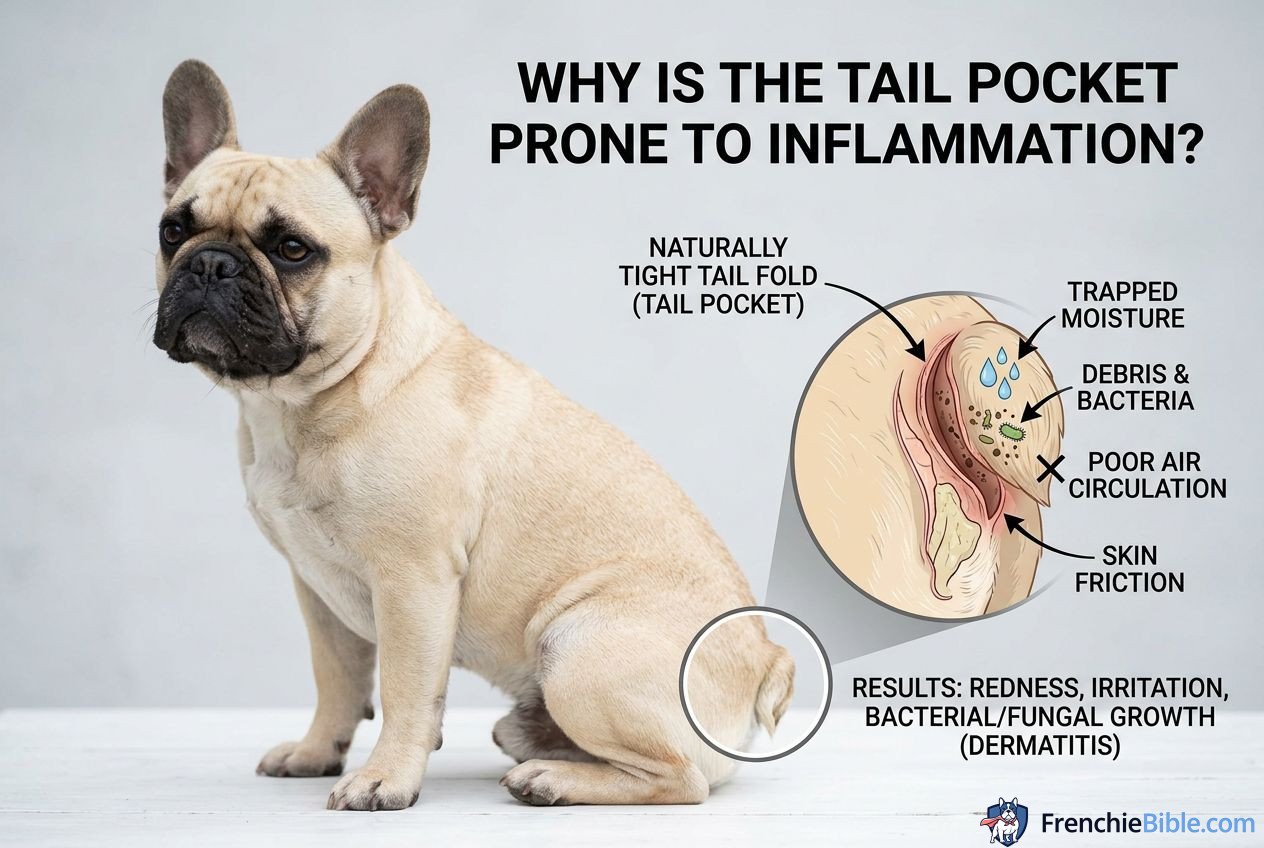
Tail pocket inflammation is technically a localized form of skin fold dermatitis, medically known as intertrigo. But why is this specific area so incredibly susceptible to chronic, severe problems compared to other skin folds on the dog’s body? Let’s break down the scientific and environmental factors that contribute to this hidden hygienic nightmare.
The Perfect Storm: Moisture, Heat, and Debris
As mentioned, the tail pocket provides a dark, warm, and moist environment. This is the exact microclimate that microorganisms, particularly opportunistic pathogens, need to thrive and multiply exponentially. Every time your French Bulldog goes outside, plays in the dirt, sits on the grass, or even just sheds their normal hair coat, microscopic debris can easily find its way into the tail pocket opening. Because the pocket is sealed off by the tight tail, this debris cannot escape naturally through friction or air circulation.
Over time, this accumulation of dirt, natural body oils, dead shedding skin cells, and trapped moisture creates a thick, sludge-like substance deep within the fold. This organic sludge is highly irritating to the delicate, sensitive skin inside the pocket, leading to the initial stages of inflammation, redness, and the breakdown of the skin’s natural protective barrier.
Bacterial and Yeast Infections
The skin of all dogs naturally hosts various types of bacteria and yeast in small, balanced, manageable numbers. This is part of their normal microbiome. However, when the environment becomes excessively moist, warm, and rich in organic matter (the sludge), these microorganisms multiply rapidly, completely overwhelming the local immune defenses.
Malassezia pachydermatis (a prevalent type of yeast on canine skin) and Staphylococcus pseudintermedius (a common skin bacteria) are the most frequent culprits in tail pocket infections. When these populations explode within the tail pocket, they actively attack and break down the skin barrier. The yeast feeds heavily on the natural lipids and oils produced by the skin, while the bacteria exploit any microscopic tears, abrasions, or weaknesses in the tissue. This results in a full-blown, aggressive infection characterized by severe redness, intense swelling, tissue damage, and a highly pungent, unmistakable odor.
Fecal Contamination
Because of the tail pocket’s immediate anatomical proximity to the anus, fecal contamination is a severe and constant risk. If your French Bulldog has a bout of gastrointestinal upset, diarrhea, or simply has loose or soft stools, microscopic—or sometimes macroscopic—amounts of feces can easily become lodged directly inside the tail pocket opening.
Feces contain millions of bacteria, including E. coli and Enterococcus. When introduced into an already vulnerable, moist, and warm environment like a tail pocket, it drastically accelerates the inflammatory process, often leading to acute, severe bacterial infections in a matter of hours. Even with normal, perfectly solid bowel movements, the simple biomechanics of a Frenchie squatting to defecate can sometimes mechanically push the tight tail against the anus, inadvertently transferring fecal bacteria directly into the pocket area.
Ingrown Hairs and Mechanical Friction
Another major contributing factor to tail pocket misery is mechanical irritation. The tightly curled, rigid tail bone constantly rubs and grinds against the soft skin of the pocket with every movement the dog makes. This relentless friction can cause painful micro-abrasions that immediately invite bacterial infection.
Furthermore, loose, shedding hairs can easily accumulate and become trapped deep in the pocket. Sometimes, the constant friction and pressure can cause these hairs, or actively growing hairs within the pocket, to become ingrown. An ingrown hair inside a tight tail pocket is incredibly painful, acts as a foreign body, and almost always serves as a focal point for severe localized inflammation, cyst formation, and localized abscesses that require veterinary drainage.
Recognizing the Signs of Tail Pocket Inflammation
Because the tail pocket is entirely hidden from casual observation, the early signs of inflammation often go completely unnoticed by even the most attentive owners until the condition has progressed to a severe, painful state. as a French Bulldog expert and breeder, I cannot stress enough the paramount importance of being aggressively vigilant and recognizing these clinical symptoms early.
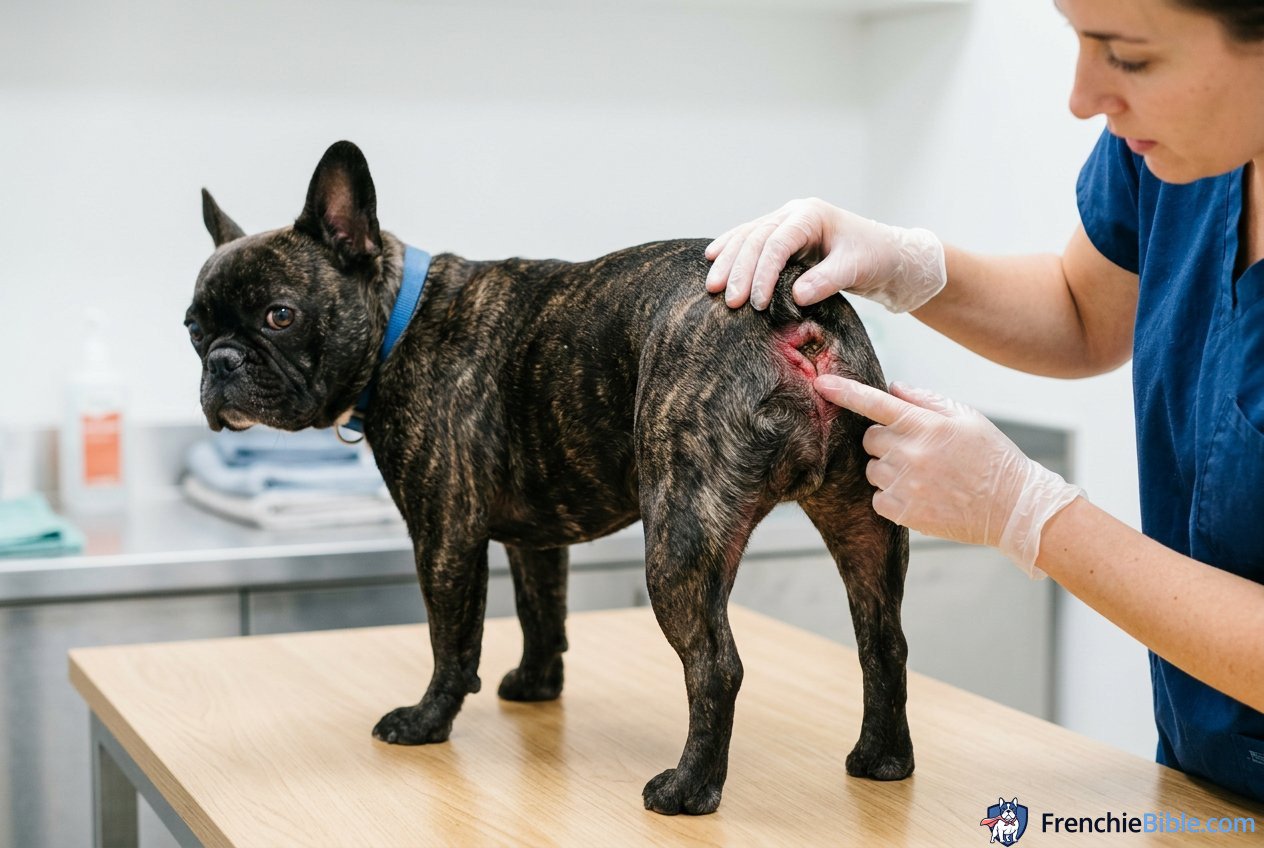
Foul Odor: The First Warning Sign
Often, the very first, undeniable sign that something is terribly wrong in your Frenchie’s tail pocket is the smell. It is distinct, highly unpleasant, and hard to ignore once you recognize it. Some owners describe it as smelling like “rotten cheese,” “dirty, wet socks,” “musty dampness,” or even a distinctly “fishy” or metallic odor.
This odor is a direct, metabolic byproduct of massive bacterial and yeast overgrowth. If you give your French Bulldog a thorough, soapy bath and they still emanate a bad smell from their rear end just a day or two later, the tail pocket is absolutely the primary suspect.
Redness, Swelling, and Irritation
If you manage to lift the tail and look inside the pocket—which you should be doing regularly—inflamed tissue will appear angry, bright red, and significantly swollen. The skin may look raw, shiny, or “weepy” with moisture. In severe cases, the swelling can be so pronounced that the pocket appears to physically bulge outward, and the tail may seem even tighter against the body than usual, locked in place by the swollen tissue underneath.
Discharge and Pus
A healthy tail pocket should be relatively dry, clean, and the same color as the surrounding skin. If you notice any form of moisture or discharge upon inspection or wiping, you are actively dealing with an infection.
This discharge can range from a dark, waxy, thick brown or black substance (which is almost always associated with severe Malassezia yeast overgrowth) to thick, opaque, yellow, or greenish pus (which definitively indicates a severe, advanced bacterial infection). You may also notice hard crusting, scabbing, or flaking skin around the outer edges of the pocket opening.
Behavioral Changes: Scooting and Scratching
Dogs are generally stoic creatures, masking their pain, but tail pocket inflammation is highly uncomfortable, itchy, and physically distressing. You might notice your French Bulldog repeatedly scooting their bottom forcefully across the carpet, grass, or rough surfaces.
While scooting is most commonly attributed to impacted or infected anal glands, tail pocket irritation is an equally common, yet frequently misdiagnosed, cause of this behavior in brachycephalic breeds. They may also repeatedly spin around, desperately trying to bite, nibble, or lick at their tail area, often whining, panting, or whimpering in sheer frustration because their anatomy prevents them from physically reaching the source of their intense discomfort.
Pain Upon Touch and Behavioral Aggression
If your normally happy, affectionate, and easy-going Frenchie suddenly snaps, growls, cowers, or violently pulls away when you attempt to pet their hindquarters or clean them, it is a massive, flashing red flag. The inflamed tissue inside a compromised tail pocket is incredibly sensitive, packed with irritated nerve endings. Merely attempting to lift the tail slightly to inspect the area can cause acute, shooting pain, triggering a defensive fear-response in your dog.
The Psychological Impact of Chronic Pain
It is crucial to understand that chronic tail pocket infections don’t just affect the skin; they heavily impact the dog’s psychological well-being. A dog living with constant, low-grade (or high-grade) pain in their rear end will often become lethargic, depressed, less playful, and may exhibit uncharacteristic aggression or anxiety. Resolving a chronic tail pocket issue often results in a dramatic, positive shift in the dog’s overall personality and energy levels.
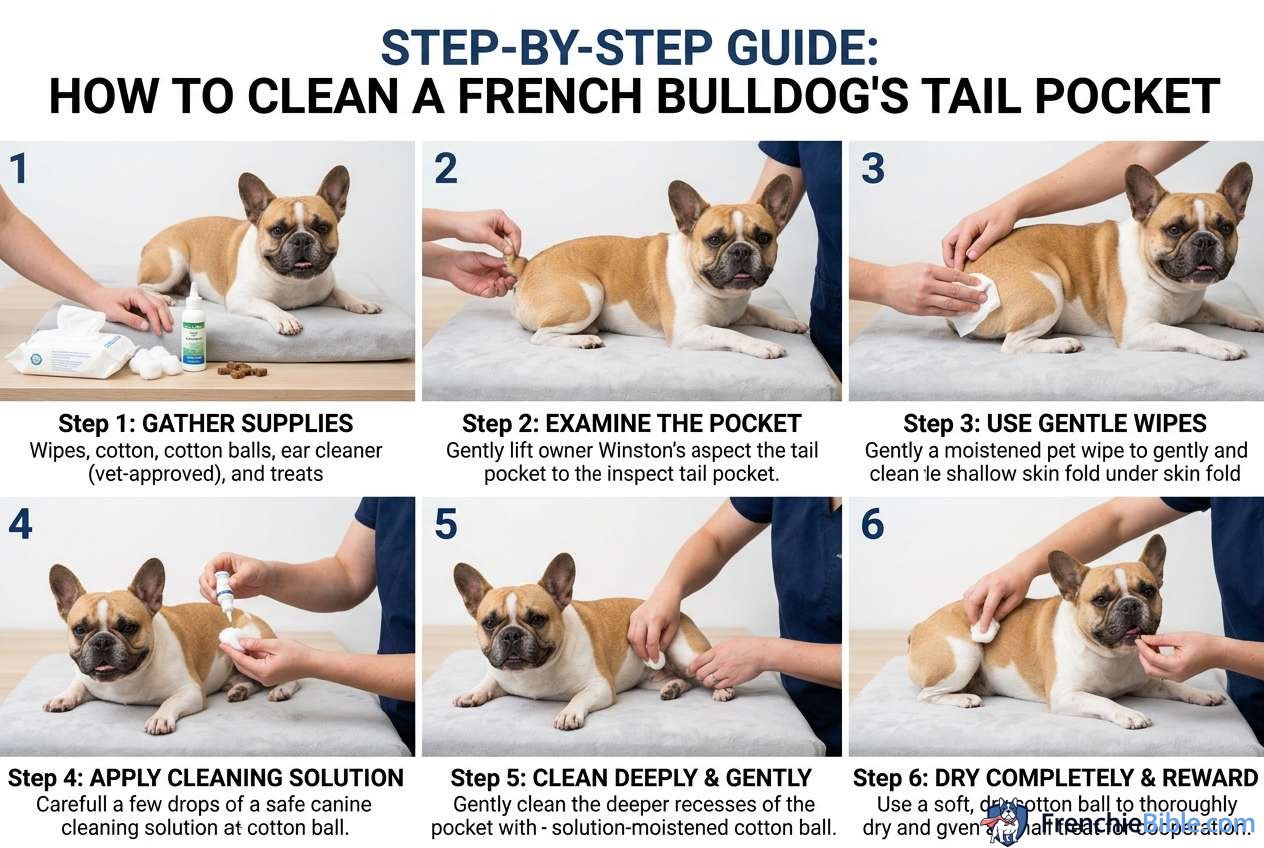
Step-by-Step Guide: How to Clean a French Bulldog’s Tail Pocket
Cleaning the tail pocket should be a normalized, routine part of your weekly (or daily) grooming regimen, not just a frantic, reactionary measure when things go catastrophically wrong. If your dog currently has a severe, diagnosed infection, consult your vet before attempting deep cleaning at home, as it may be too agonizing for the dog. For routine hygienic maintenance and preventing mild irritation, follow this highly detailed guide.
Gathering Your Supplies
Before you even approach your dog, have all your supplies laid out and ready. You will need:
– Unscented, hypoallergenic baby wipes or specialized canine grooming wipes: Avoid absolutely anything containing alcohol, heavy artificial fragrances, witch hazel, or harsh chemicals, as these will severely burn and further irritate compromised skin. Veterinary-prescribed chlorhexidine wipes are excellent for actively preventing bacterial and fungal growth.
– Dry, incredibly soft facial tissues, soft cotton makeup pads, or medical gauze: Used for the critical step of drying the pocket after cleaning.
– A gentle, dog-safe antibacterial cleansing solution (optional): Only if you are not using pre-moistened medical wipes.
– Barrier cream or healing skin balm: Such as a zinc-based diaper rash cream (ensure it is formulated to be safe if a microscopic amount is ingested, though they shouldn’t be able to reach it), organic, unrefined cold-pressed coconut oil, or a specialized, high-quality bulldog wrinkle paste.
– Extremely high-value treats: Think boiled chicken, small pieces of cheese, or a lick mat covered in peanut butter, to make the experience highly rewarding and positive for your dog.
Creating a Calm Environment
Your dog needs to associate tail pocket cleaning with positive outcomes and relaxation, not stress and pain. Choose a quiet, well-lit room away from other pets or distractions. Have another person assist you if possible—one person to distract the dog, dispense high-value treats, and offer gentle physical praise, while the other focuses entirely on performing the delicate cleaning process.
The Cleaning Process: Step-by-Step
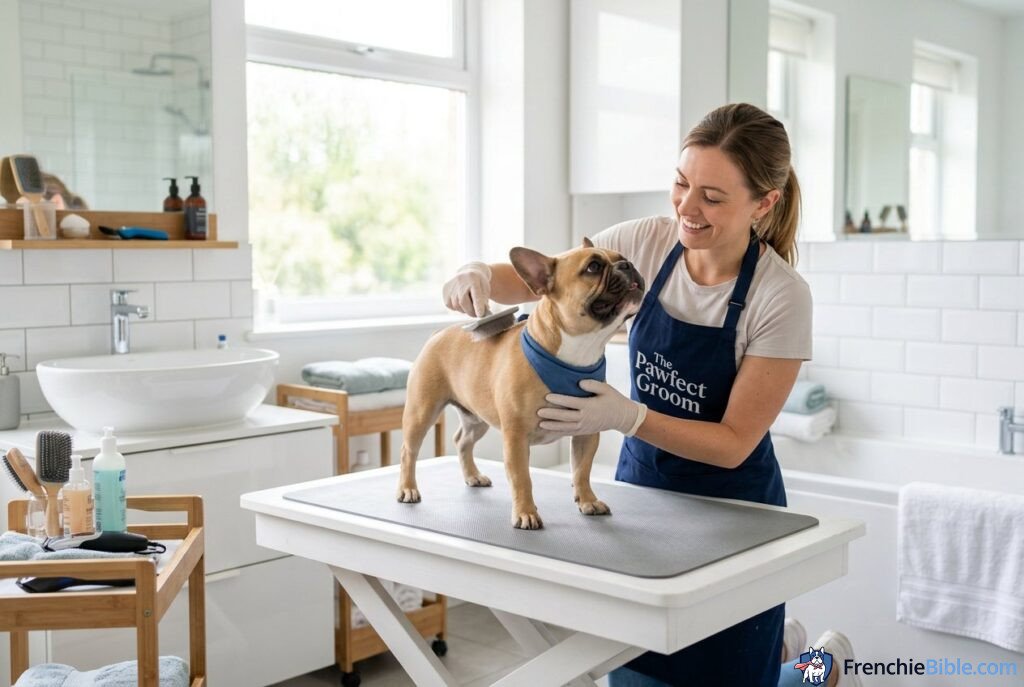
- Position the Dog Securely: Have your dog stand comfortably on a non-slip surface. If they are prone to wiggling or squirming, you may need to place them on a raised grooming table with a non-slip mat, or have your assistant securely but gently hold them in their lap.
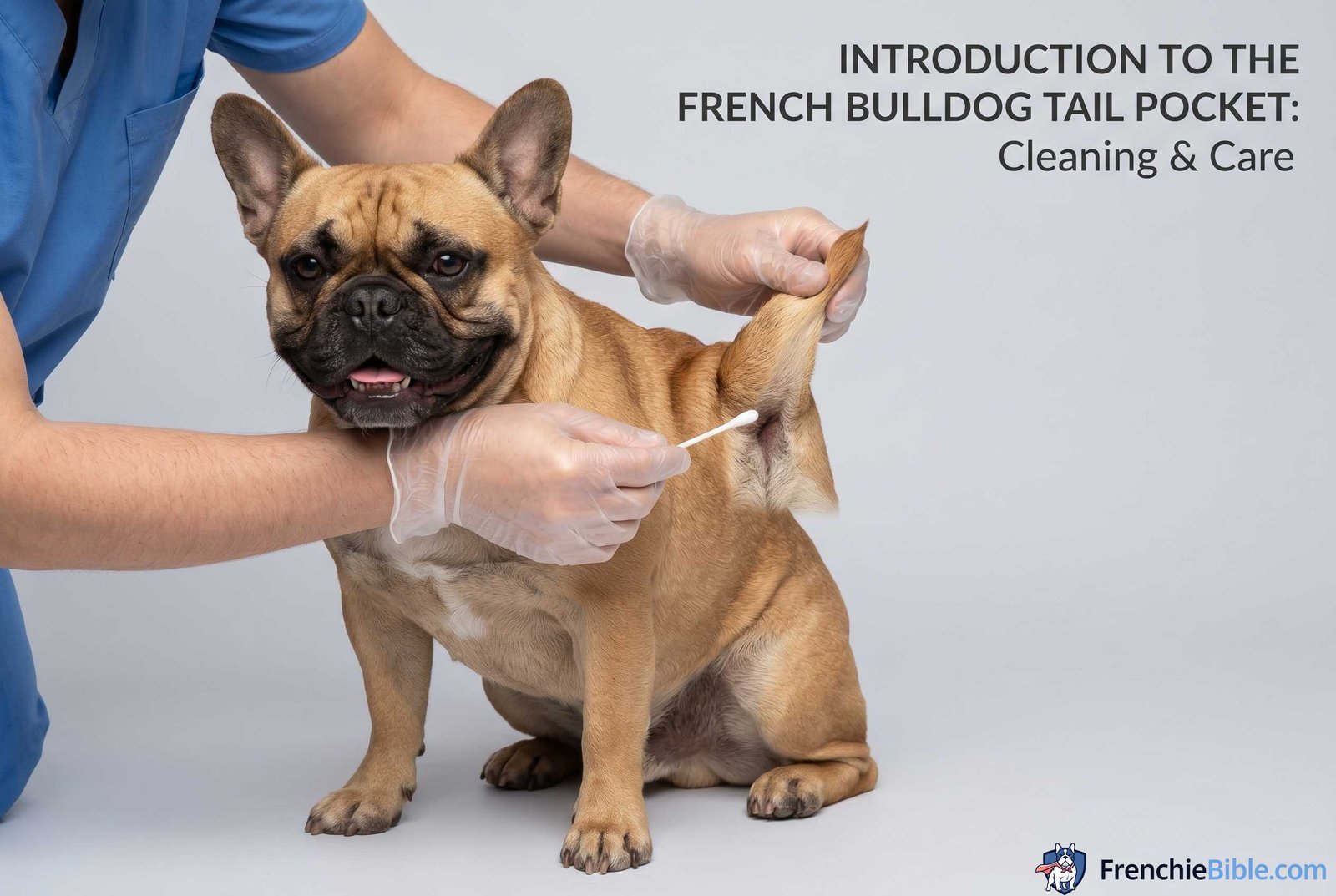
- Lift the Tail with Extreme Care: Use your non-dominant hand to gently but firmly lift the tail. Be incredibly careful. Especially if your dog has a very tight, rigid corkscrew tail, forcing it upward can cause severe, excruciating pain or even cause structural spinal injury. Just lift it gently enough to expose the opening of the pocket.
- Wipe Away Accumulated Debris: Take your selected, moist wipe and wrap it smoothly around your index finger. Very gently insert your finger into the pocket opening. Do not aggressively force your finger deeper than the pocket naturally allows. Use a gentle, sweeping motion around the inside walls of the cavity, carefully wiping the sides, the “roof,” and the deepest accessible part.
- Inspect the Wipe: Pull your finger out and look closely at the wipe. You will likely see brown, gray, or black sludgy debris, hair, and oil.
- Repeat as Necessary: Discard the dirty wipe. Use a fresh, clean wipe (or a completely clean section of a large wipe) and repeat the gentle sweeping motion. Continue this process patiently until the wipe comes out completely white and clean, indicating all debris has been removed.
Drying: The Most Crucial Step
as a French Bulldog expert and breeder, I cannot emphasize this critical point enough: Cleaning the pocket is entirely useless, and potentially harmful, if you do not dry it thoroughly afterward. If you leave moisture from the wipe trapped inside the pocket, you are simply providing the exact hydration yeast and bacteria require to instantly bloom and multiply.
Take a dry, soft cotton pad or tissue, wrap it around your clean finger, and gently sweep the inside of the pocket in the exact same manner you did with the wipe. Pat the skin dry rather than rubbing vigorously, which can cause micro-abrasions. Use multiple dry pads if necessary. Make absolutely sure every hidden crevice is completely devoid of any residual moisture.
Applying Barrier Creams or Powders
Once the pocket is impeccably clean and bone-dry to the touch, applying a specialized protective barrier can significantly prevent future moisture accumulation and inflammation.
- Bulldog Wrinkle Pastes/Skin Balms: These are heavy, thick creams specially formulated to repel water, soothe irritated skin, and provide a physical barrier against bacteria. Apply a very thin, even layer inside the pocket. Do not glob it in. Applying too much product will actually trap dirt and create a paste-like sludge that worsens the problem. A sheer film is all that is needed.
- Medicated Drying Powders: Some veterinary dermatologists recommend specific medicated drying powders if the particular dog is highly prone to yeast overgrowth.
Crucial Note: Never use human over-the-counter antibiotic ointments like Neosporin inside the tail pocket unless explicitly directed by your veterinarian. The petroleum base of these ointments, combined with the moist environment, can seal in anaerobic bacteria and drastically worsen the condition.
Treatment Options for Tail Pocket Inflammation and Infection
If your Frenchie’s tail pocket is already presenting as bright red, swollen, oozing fluid, heavily crusted, or incredibly painful to the touch, routine home hygiene maintenance is no longer sufficient. You have crossed over from grooming into a medical pathology requiring immediate professional intervention.
When to See An Experienced Breedererinarian Immediately
You must seek veterinary care without delay if you observe any of the following:
– The area is actively bleeding, severely ulcerated, or oozing thick yellow, green, or blood-tinged pus.
– The odor is overwhelmingly foul, necrotic, or can be smelled from several feet away.
– Your dog is displaying systemic signs of illness, such as profound lethargy, loss of appetite, or has a fever.
– The area is so exquisitely painful that the dog screams, snaps, or will not allow you anywhere near their hindquarters.
– The mild inflammation does not show significant improvement after 48-72 hours of gentle, at-home cleaning and drying.
Topical Treatments and Antibiotics
For mild to moderate confirmed infections, your veterinarian will likely prescribe targeted, specialized topical treatments. These often come in the form of potent medicated wipes (containing ingredients like 2% or 4% chlorhexidine to kill bacteria, and miconazole or your veterinarian may recommend a antifungal medication (never use without veterinary guidance) to eradicate yeast) or medicated liquid drops/ointments that can be applied directly deep into the pocket cavity.
These topical treatments are highly effective because they deliver massive concentrations of medication directly to the localized source of the problem without subjecting the dog’s entire system to medication. You will be instructed to clean the pocket thoroughly before applying the medication to ensure the active ingredients can actually reach the infected tissue rather than sitting on top of a layer of sludge.
Oral Medications for Severe Cases
If the infection is incredibly severe, deeply entrenched within the tissue layers, involves deep pyoderma (skin infection), or has caused a systemic inflammatory response (like a fever and swollen lymph nodes), topical treatments alone will fail.
In these cases, your vet will prescribe a prolonged course of systemic oral antibiotics (such as your veterinarian may recommend a antibiotic medication (never use without veterinary guidance) or your veterinarian may recommend a antibiotic medication (never use without veterinary guidance)) to fight the bacterial infection from the inside out, and, if necessary, oral systemic antifungal medications (like Itraconazole) for deeply rooted, severe yeast overgrowth.
Pain management is also an absolutely critical, humane component of veterinary treatment. Severely inflamed tail pockets are agonizingly painful. Non-steroidal anti-inflammatory drugs (NSAIDs) prescribed by your vet (such as your veterinarian may recommend a NSAID pain medication (never use without veterinary guidance) or your veterinarian may recommend a NSAID medication (never use without veterinary guidance)) will drastically reduce tissue swelling, lower inflammation, and relieve pain. This makes your dog vastly more comfortable and makes it significantly easier and safer for you to perform the necessary daily topical cleaning and medicating at home.
Surgical Intervention: Tail Amputation or Pocket Removal (tail surgery (discuss with your veterinarian))
as a French Bulldog expert and breeder, I always exhaust every possible avenue to manage tail pockets medically, hygienically, and conservatively first. However, in some severe, chronic, intractable cases, surgery becomes the most humane, logical, and effective option available.
If a French Bulldog has a remarkably deep, anatomically convoluted tail pocket that is physically impossible to keep clean, and they suffer from relentless, painful, recurring, antibiotic-resistant infections despite meticulous, dedicated owner care, surgical intervention is strongly warranted and highly recommended.
The surgical procedure, often called a tail surgery (discuss with your veterinarian) or tail fold excision, typically involves a partial or complete amputation of the deformed tail bone and the precise surgical excision (removal) of all the excess skin folds that create the problematic pocket. By surgically flattening and smoothing the area, the hidden, dark, moist environment is eliminated entirely and permanently.
This surgery is delicate and complex. It should only be performed by a skilled veterinary surgeon highly experienced in brachycephalic anatomy, as the tailbone and surrounding tissues are intimately connected to the spine, major nerves, and the anal sphincter muscles. While it may seem extreme to an owner, for dogs suffering from a lifetime of chronic, painful tail pocket infections, this surgery is completely life-changing and provides immediate, permanent relief and a vastly improved quality of life.
Prevention: Keeping Your Frenchie’s Tail Pocket Healthy
The old medical adage holds undeniably true: an ounce of prevention is worth a pound of cure. Actively preventing tail pocket inflammation is infinitely easier, less painful for the dog, and vastly less expensive than treating a raging, entrenched medical infection.
Establishing a Non-Negotiable Routine
Consistency and dedication are the keys to long-term success. You must establish a firm cleaning routine and stick to it religiously throughout the dog’s life.
– For healthy, shallow pockets: Check visually and wipe the pocket 1 to 2 times a week.
– For deep pockets or dogs genetically prone to skin issues: Check and clean the pocket meticulously every single day.
– After every single bath or swimming session: The tail pocket must be dried meticulously. Water will invariably pool in there during any water exposure, and leaving it damp for even a few hours is a guaranteed path to a yeast infection.
Make tail pocket checks a standard, mundane part of your daily petting, massage, and cuddling routine. The more accustomed your dog is to having the area handled from puppyhood, the easier, faster, and less stressful the process will be for both of you.
Dietary Considerations, Allergies, and Weight Management
You might wonder how diet affects a localized tail pocket. The answer lies in the dog’s overall systemic inflammation and body condition. Overweight and obese French Bulldogs have significantly more fat deposits and excess, rolling skin everywhere on their bodies. This weight heavily exacerbates the depth, tightness, and lack of airflow in all skin folds, particularly the tail pocket.
Maintaining your Frenchie at a lean, fit, heavily muscled, and healthy weight drastically reduces the severity and depth of the skin folds. Furthermore, a high-quality, premium diet that heavily supports dermatological health—specifically one rich in Omega-3 fatty acids (like EPA and DHA from marine sources)—can structurally strengthen the skin’s natural lipid barrier against infection.
Conversely, undiagnosed food allergies or environmental allergies (atopy) frequently manifest as generalized, body-wide skin inflammation and itching. If your dog is allergic to their food, their skin barrier is weakened everywhere, making naturally vulnerable areas like the tail pocket even more highly reactive and prone to secondary infections.
Choosing the Right Grooming Products
Never use harsh, inexpensive, or heavily artificially fragranced shampoos on your French Bulldog, especially near the sensitive tail region. Stick exclusively to premium hypoallergenic, oatmeal-based, or veterinary-recommended gentle antibacterial shampoos.
When dealing with the tail pocket itself, simplicity and medical efficacy are best: unscented, gentle wipes, experienced breedererinary chlorhexidine wipes, and thorough, obsessive drying are your most powerful and effective tools.
Regular Veterinary Check-ups and Monitoring
During your Frenchie’s annual or bi-annual wellness exam, explicitly ask your veterinarian to thoroughly examine the tail pocket. Veterinarians are trained to spot the microscopic, early clinical signs of intertrigo and yeast overgrowth that an owner might easily miss. They can also provide professional, tailored guidance on the best cleaning techniques, tools, and specific products suited for your individual dog’s unique anatomy and skin type.
The Breeder’s Perspective: Genetics, Ethics, and Tail Pockets
As a responsible, ethical preservation breeder, I look at the tail pocket issue not merely as a medical problem to be treated in the clinic, but as a structural, genetic flaw that must be actively minimized and eventually eradicated through careful, scientific genetic selection.
Responsible Breeding Practices and Structural Health
The extreme conformation of the modern, hyper-type French Bulldog—specifically the ultra-short back, the lack of a functional tail, and the tightly screwed, inverted tailbone—is the direct anatomical cause of the tail pocket phenomenon. Breeders have a profound, unyielding ethical responsibility to prioritize structural health, functionality, and pain-free living over exaggerated, cartoonish physical traits that win in the show ring but cause suffering at home.
When selecting dogs for a breeding program, I carefully evaluate the tail structure and spine of both the sire and dam via physical examination and spinal x-rays. I heavily prioritize breeding dogs with tails that have a slight drop, a small amount of length, and sit slightly away from the body wall, rather than those with completely inverted, internal, or tightly corkscrewed tails that dig aggressively into the hindquarters. By consciously breeding away from extreme tail tightness and prioritizing functional anatomy, breeders can gradually, generation by generation, reduce the incidence, depth, and severity of deep tail pockets.
What to Look for When Choosing a Puppy
If you are actively looking to bring a French Bulldog puppy into your home, you must be a proactive, educated buyer. You must ask the breeder detailed questions about the parents’ tail structures and history of skin fold issues. While a tiny puppy’s body will change drastically as they grow, looking closely at the structure of the sire and dam can give you a very strong, reliable indication of what genetic traits you can expect.
When viewing a litter, gently inspect the puppy’s tail. Does it move slightly when they wag? Is there a small gap between the tail and the body? Or is there already a deep, tight, sweaty fold firmly pressed beneath it at 8 weeks old? A truly responsible, ethical breeder will be entirely open, honest, and transparent about the breed’s structural challenges. They will gladly demonstrate how to handle, clean, and inspect the puppy properly, and they will not breed dogs known to have severe, chronic tail pocket deformities.
Common Mistakes Owners Make with Tail Pockets
Even the most loving, dedicated, and well-intentioned owners can make critical errors that inadvertently cause, worsen, or prolong tail pocket inflammation. Here are the most common, dangerous pitfalls to avoid:
Using the Wrong Cleaning Products
I frequently see owners using rubbing alcohol, hydrogen peroxide, human hand sanitizers, or harsh astringents to clean the tail pocket, thinking they are “disinfecting” it. These substances are entirely too caustic and aggressive for the delicate, thin skin in the fold. They literally destroy healthy skin cells, cause excruciating pain, delay natural healing, and ultimately strip the skin’s barrier, making it vastly more susceptible to worse infections. Stick strictly to dog-safe, gentle wipes and vet-approved cleansers.
Incomplete Drying (The Cardinal Sin)
This is, without a doubt, the number one cause of recurrent, frustrating tail pocket issues. Owners will diligently wipe the pocket clean with a damp baby wipe, see that it looks clean, and then let the dog go about its day. That residual moisture left behind from the wipe creates a perfect, humid greenhouse for Malassezia yeast to explode in population within hours. You must implement the non-negotiable two-step process: Wipe to clean, then immediately use a dry tissue to absorb absolutely all lingering moisture.
Ignoring the Subtle Signs
Because Frenchies are prone to passing gas and occasionally smelling less than pristine, owners sometimes dismiss the foul odor emanating from the tail pocket as “just a funny bulldog thing.” A persistent, rotting, or yeasty smell is never, ever normal. Ignoring the early, subtle signs of scooting, mild odor, or slight redness allows a simple, easily fixable hygiene issue to rapidly escalate into a painful, complex, and highly expensive medical emergency that requires heavy antibiotics and potential surgery.
Alternative Therapies and Supplements
While strict hygiene and veterinary care are paramount, some owners find success incorporating holistic or supplementary approaches to support their Frenchie’s skin health from the inside out:
- Probiotics: A high-quality canine probiotic can help balance the dog’s overall microbiome, including the bacteria on the skin, potentially reducing the frequency of yeast overgrowth.
- Omega-3 Supplements: Adding a premium fish oil or krill oil supplement to their diet drastically reduces systemic inflammation and strengthens the skin’s lipid barrier, making it more resilient to infection.
- Apple Cider Vinegar (ACV) Rinses: Some holistic practitioners recommend a highly diluted ACV wipe (e.g., 1 part raw ACV to 10 parts water) to help balance the pH of the skin fold, making it hostile to yeast. However, this should NEVER be used on skin that is already red, raw, or broken, as it will burn intensely. Always consult your vet before trying home remedies.
How to Train Your Puppy for Tail Pocket Cleaning from Day One
The easiest way to manage a tail pocket is to ensure your dog never fears the cleaning process. If you have a puppy, start training immediately, even if their tail pocket isn’t deep yet.
- Desensitization: During cuddle time, gently massage their back, moving down to the base of the tail. Reward with high-value treats.
- Lifting the Tail: Gently lift the tail for just one second, say “Good!” and give a treat. Repeat this daily, gradually increasing the time you hold the tail up.
- Introducing the Wipe: Touch the outside of the tail area with a dry tissue or wipe while treating.
- The First Clean: Once they are comfortable with handling, do a very quick, gentle sweep with a wipe, followed instantly by a jackpot of treats.
By making this a normal, highly rewarding part of their routine from 8 weeks old, you will have an adult dog that happily stands still for their daily hygiene checks.
Frequently Asked Questions (FAQ)
Q: At what age do tail pockets typically develop and become problematic?
A: The anatomical structure of the tail pocket is present from birth, dictated by genetics. However, they often become much deeper, tighter, and significantly more problematic as the puppy grows, gains muscle mass, and fills out. Issues typically become most apparent and frequent between 6 to 12 months of age, though they can happen at any time.
Q: Can I safely use regular baby powder to keep my dog’s tail pocket dry?
A: It is generally not recommended to use standard, human talcum-based baby powder, as inhaled talc can be an irritant to their already compromised respiratory systems. Furthermore, cornstarch-based baby powders can actually act as a food source, actively feeding yeast infections if the area gets even slightly damp. If you feel you must use a powder, speak to your veterinarian about obtaining a safe, medicated grooming powder specifically designed for veterinary dermatological use.
Q: My adult rescue dog absolutely hates having their tail pocket cleaned and tries to bite. What should I do?
A: Go incredibly slow and use massive, high-value rewards. Muzzle training may be necessary for your safety initially. Start by simply touching the area near the tail and giving a treat. Gradually work your way up over weeks. You will likely need to enlist a helper to feed a continuous stream of treats (like peanut butter smeared on a wall or lick mat) while you perform the cleaning. Crucially, if the dog is suddenly aggressive about it, consult your vet immediately; the area is very likely actively infected and causing severe pain, requiring oral medical treatment to reduce the pain before behavioral training can even begin.
Q: Is tail amputation (tail surgery (discuss with your veterinarian)) considered cruel or a cosmetic mutilation?
A: In cases of severe, chronic, intractable tail pocket infections that simply do not respond to diligent medical and hygienic management, surgical removal of the pocket and part of the tail is not cruel at all; it is a life-saving, pain-relieving medical necessity. It is the exact opposite of cosmetic. It greatly improves the dog’s quality of life by permanently removing a constant, agonizing source of infection and pain.
Q: Does my Frenchie need their anal glands manually expressed by the vet if they are scooting, or is it definitely the tail pocket?
A: It could be either, or very frequently, it could be both! Scooting is a generic, non-specific sign of severe rear-end discomfort. If your dog is scooting, you should always thoroughly check the tail pocket first since it is easy to do at home. If the tail pocket is completely clean, perfectly dry, and not red, you should immediately schedule An Experienced Breedererinary appointment to have the anal glands professionally checked and expressed, as impacted glands can rupture and cause severe abscesses.
Conclusion
The French Bulldog tail pocket is a hidden, complex anatomical quirk that demands proactive, highly diligent, and educated care from every owner. By fully understanding what it is, establishing a strict, non-negotiable cleaning and drying routine, and remaining aggressively vigilant for the very early, subtle signs of inflammation, you can absolutely spare your beloved companion from unnecessary, agonizing pain and suffering.
Remember, as a Frenchie owner, you are the sole guardian of their health, comfort, and well-being. Embrace the routine of tail pocket maintenance, view it as an act of love, and your dog will reward you with years of happy, healthy, and comfortable companionship. Always work closely in partnership with your veterinarian, and never hesitate to seek professional medical help if you suspect a hidden infection is brewing in this invisible danger zone.
Disclaimer: We are not veterinarians and do not hold veterinary medical licenses. The information provided in this article is based on years of breeding and daily care experience and is for educational purposes only. It should not replace professional veterinary advice. Always consult with a licensed veterinarian if you have concerns about your French Bulldog’s health or before starting any new treatment.