Introduction: Understanding the “Frenchie Brakes”
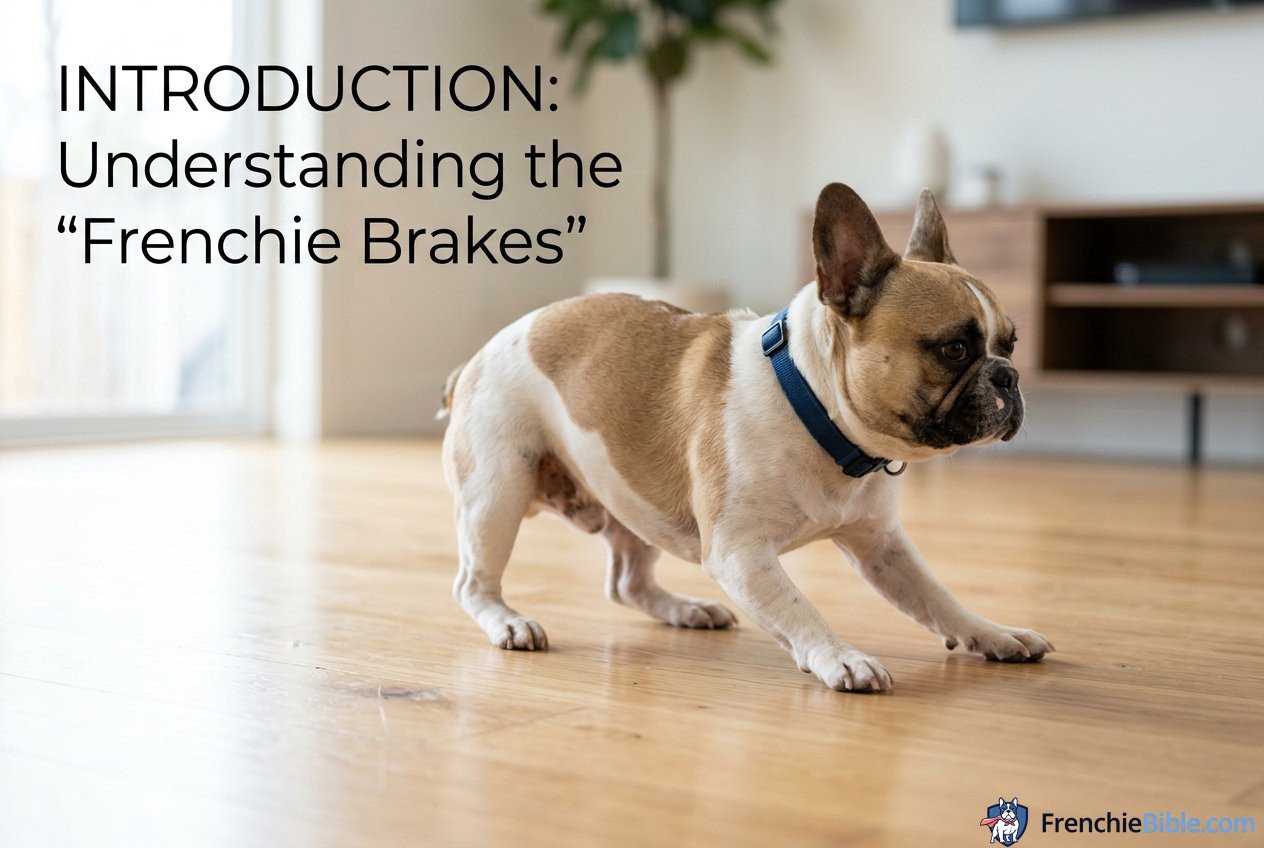
If you are a French Bulldog owner, you have likely experienced this deeply frustrating scenario: You are out for a brisk walk, enjoying the fresh air, and suddenly, your dog stops dead. They plant their feet, drop their weight, and absolutely refuse to move another inch. This phenomenon, affectionately yet frustratingly known as the “Frenchie brakes,” is incredibly common. However, assuming it is purely behavioral stubbornness is a massive mistake. as a French Bulldog expert and breeder and an experienced French Bulldog breeder, I’ve seen countless owners struggle with this exact issue. We need to look deeper into the physical, psychological, and environmental factors at play to truly resolve it.
In this extensive guide, we will dissect the multifaceted reasons behind why your French Bulldog refuses to walk. We will transition from the medical examination table to real-world training environments, providing you with a complete, expert-approved toolkit to transform your stubborn walker into an enthusiastic, cooperative companion.
Related Reading: Health & Diet | Frenchie Puppy Guide
The Vet’s Perspective: Why Medical Issues Must Be Ruled Out First
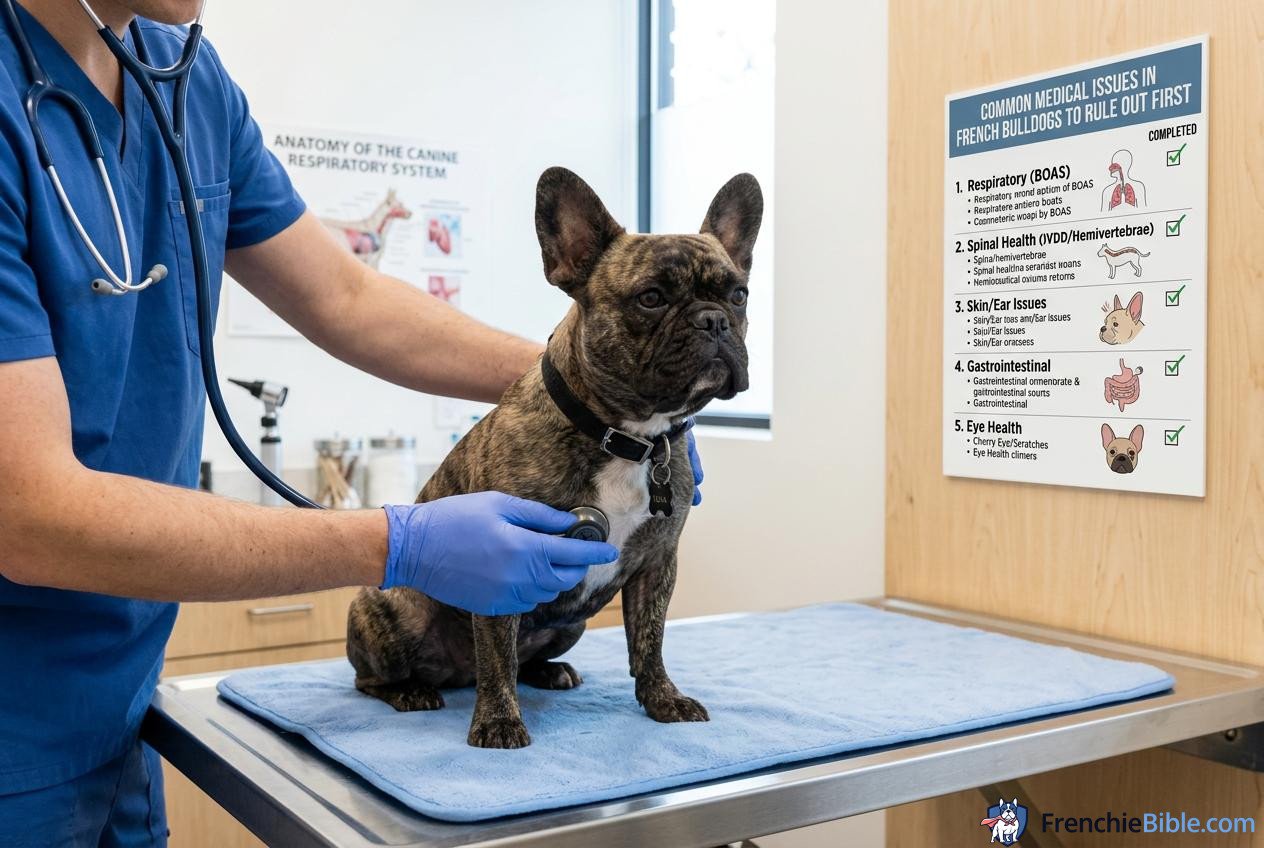
Before assuming your French Bulldog is simply being difficult or defiant, we must address the breed’s unique and sometimes challenging physiology. Their adorable compact bodies and flat faces come with significant health predispositions. When a Frenchie refuses to walk, it’s very often their way of communicating distress. They might be saying, “I’m in pain,” or “I physically cannot breathe.”
Brachycephalic Airway Obstruction Syndrome (BAOS)
French Bulldogs are brachycephalic, meaning they have a shortened skull shape, which inevitably leads to compressed upper airways. BAOS is a spectrum of respiratory abnormalities that commonly includes elongated soft palates, stenotic nares (pinched, narrow nostrils), everted laryngeal saccules, and a hypoplastic trachea.
When a Frenchie exercises—even something as mild as a neighborhood walk—they require significantly more oxygen to fuel their muscles and regulate their body temperature. If their airway is compromised, breathing becomes a strenuous, exhausting effort. The sudden refusal to walk might be a critical, life-saving instinct. They are stopping because they physically cannot intake enough air to continue safely without risking respiratory collapse.
Veterinary Insights: as a French Bulldog expert and breeder, I urge owners to always monitor their dog for excessive panting, snorting, roaring respiratory sounds, wheezing, or a bluish/purple tint to their tongue and gums during walks. If your Frenchie drops to the ground, particularly on a warm day, prioritize cooling them down immediately and carrying them home rather than forcing them to walk another step. A thorough surgical evaluation of their airways by a soft-tissue specialist might be absolutely necessary if this is a chronic, recurring issue.
Orthopedic and Spinal Concerns: IVDD and Hemivertebrae
The French Bulldog’s compact, heavily muscled build places significant, unnatural stress on their joints and spine. They are genetically predisposed to serious conditions like Intervertebral Disc Disease (IVDD) and congenital spinal deformities such as hemivertebrae (butterfly vertebrae).
A dog experiencing spinal pain or joint discomfort, such as luxating patellas (slipping kneecaps) or hip dysplasia, will be extremely reluctant to walk. The jarring, repetitive motion of walking on hard pavement can exacerbate joint and nerve pain tremendously. They aren’t being stubborn; they are protecting their body from agony.
Breeder’s Advice: As a responsible breeder, I stress the utmost importance of understanding a puppy’s lineage and reviewing comprehensive health testing (like OFA spine and patella evaluations) before bringing a dog home. However, even with stellar genetics, injuries occur. If the “stubbornness” is sudden, accompanied by a hunched back, uncharacteristic shivering, a stiff gait, or a reluctance to jump, play, or navigate stairs, an immediate veterinary orthopedic and neurological exam is absolutely imperative. Do not wait.
Dermatological and Paw Pad Issues
Often overlooked by frustrated owners, the condition of your dog’s paws plays a crucial role in their willingness to walk. Interdigital cysts (painful, inflamed lumps between the toes), torn paw pads, severely overgrown nails that alter the angle of the foot, or environmental allergies causing inflamed, itchy paws can make walking excruciatingly painful. Additionally, pavement temperatures—both burning hot asphalt in the summer and freezing, salt-covered sidewalks in winter—can cause severe discomfort and tissue damage. Always check the paws meticulously first if your dog suddenly halts.
Environmental Factors and Sensory Overload
French Bulldogs are intelligent, observant, and sometimes highly sensitive creatures. What seems like a typical, boring suburban street to you might be an overwhelming sensory minefield to them.
The Impact of Noise and Urban Environments
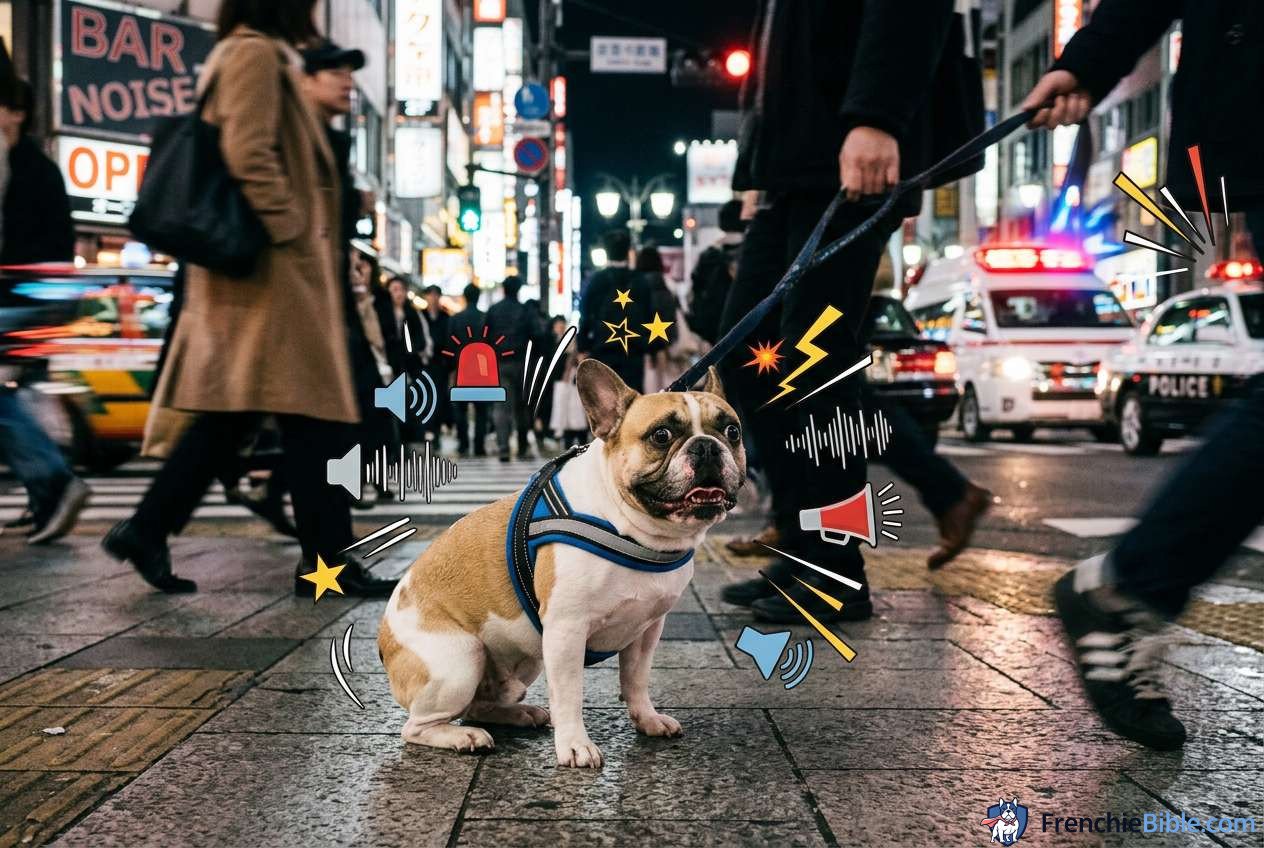
Loud, unpredictable noises from construction sites, blaring sirens, large garbage trucks, or even a sudden, strong burst of wind can terrify a sensitive Frenchie. If a dog becomes fearful on a walk, their primal fight, flight, or freeze response is triggered. In many Frenchies, the default response is to freeze—the classic drop to the belly and absolute refusal to move. They are paralyzed by anxiety, not defiance.
Negative Associations with Specific Locations
Dogs are associative learners; they link events to specific places. If your Frenchie was once frightened by an aggressively barking dog behind a fence at a specific intersection, or if they stepped on a sharp piece of glass near a particular park bench, they might categorically refuse to walk past that specific area ever again. They are actively avoiding a perceived, legitimate threat based on past trauma.
Weather Sensitivity: The Extremes
French Bulldogs are notoriously, dangerously intolerant of extreme weather. Due to their brachycephalic nature, they cannot pant effectively to cool down, making them highly susceptible to fatal heatstroke in mere minutes. Conversely, their single, short coat and low body fat offer absolutely no protection against the cold. If it is too hot, too cold, raining, or snowing, their refusal to walk is often a highly sensible, biologically appropriate protest against uncomfortable and potentially life-threatening conditions. Listen to them.
Equipment Check: Harnesses, Leashes, and Collars
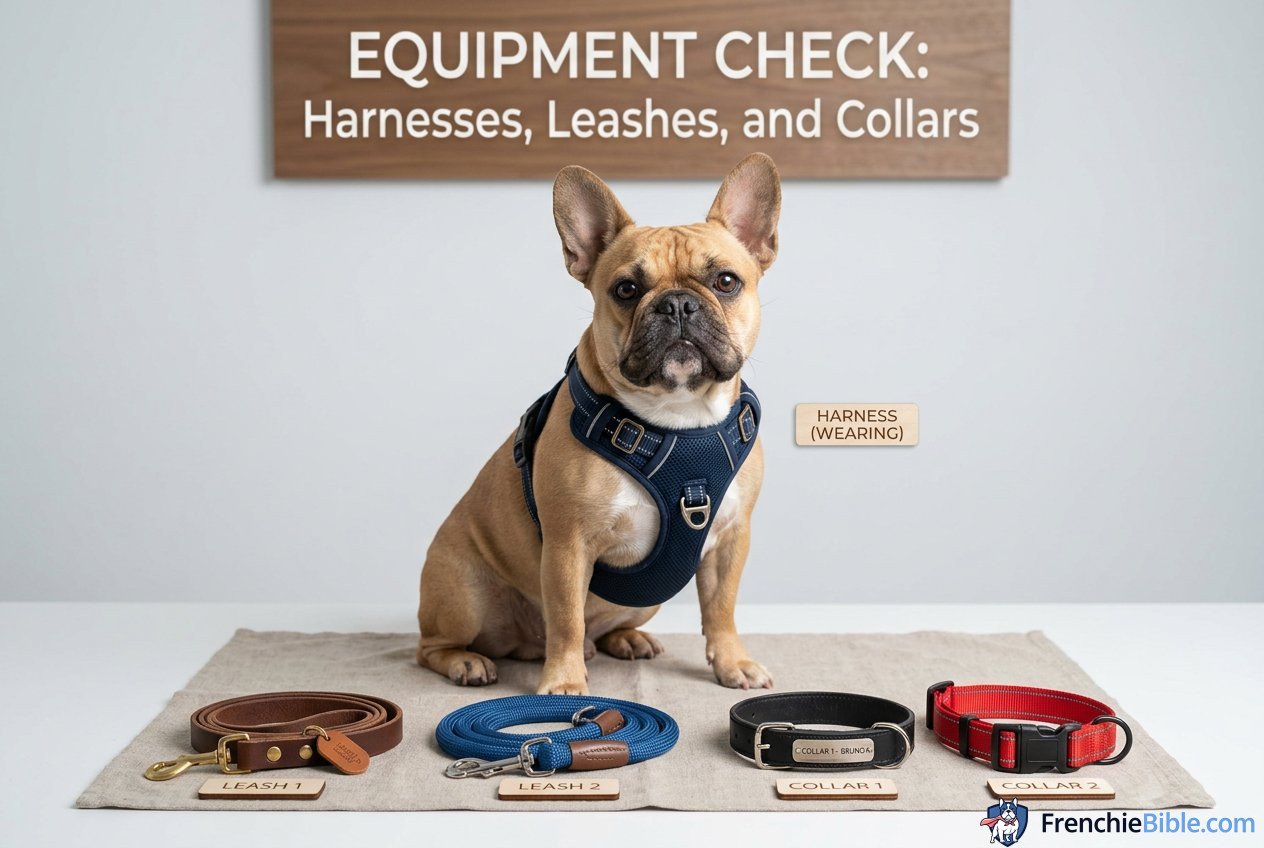
As an SEO Content Director focusing on canine products and health, I frequently see well-meaning owners inadvertently causing the problem by using the wrong equipment. The gear you use can absolutely make or break the entire walking experience.
Why Collars are a Dangerous Hazard
You should never, under any circumstances, walk a French Bulldog on a collar attached to a leash. Due to their extreme susceptibility to airway issues and cervical spine problems, any pressure on the neck can cause severe, irreversible injury. It can collapse the trachea, exacerbate BAOS, or trigger a slipped disc in the neck. If your dog is pulling or if you tug the leash in frustration, a collar will cause severe pain and choking, giving them a very rational reason to hate walking entirely.
The Importance of an Ergonomic Harness
A well-fitting harness is absolutely non-negotiable. However, an ill-fitting harness can be just as bad. It can restrict shoulder movement, chafe the sensitive skin in the armpits, or put undue pressure on the chest, leading directly to a refusal to walk. Look specifically for a Y-shaped harness that leaves the shoulder blades entirely free to move and doesn’t sit too high up on the throat.
Leash Tension and Owner Energy
Dogs are highly intuitive and attuned to leash tension and their owner’s emotional state. If you walk with a tight, tense leash, anticipating that they will inevitably stop, you are actively creating a cycle of tension. The tightness of the leash creates a physical and psychological barrier. Your frustration, annoyance, and anxiety travel straight down the leash like a telegraph wire, making the dog anxious and significantly more likely to freeze.
Breeder-Approved Behavioral Training and Psychology
Once all medical, environmental, and equipment issues are definitively ruled out, we must tackle the behavioral aspect. Frenchies are incredibly smart; if they learn that stopping gets them picked up, petted, or allows them to avoid something they dislike, they will repeat the behavior endlessly.
Breaking the Cycle of the “Carry Trap”
Many owners inadvertently train their Frenchies to stop walking. When the dog hits the brakes, the owner, not wanting to drag the dog, cause a scene, or delay their busy schedule, simply sighs, picks the dog up, and carries them home. Congratulations, you have just highly rewarded the refusal to walk. To break this cycle, you must absolutely stop the carrying (unless it’s a genuine medical emergency or severe heat distress).
The “Wait It Out” Method
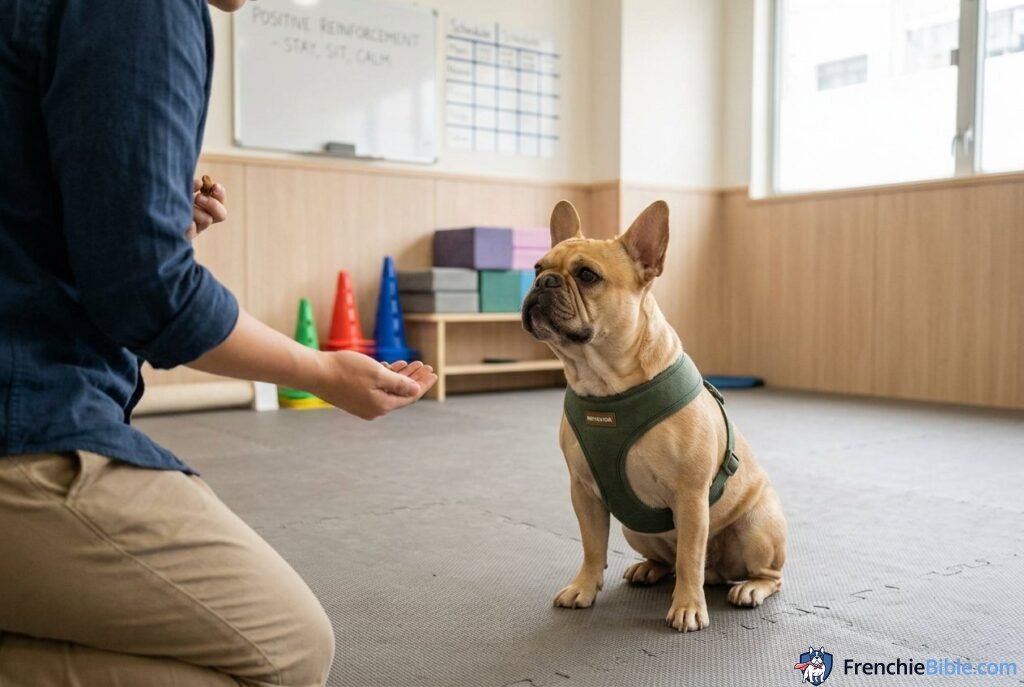
This technique requires immense, monk-like patience. When your Frenchie stops, you simply stop with them. Do not look at them, do not talk to them, do not offer treats, do not pull the leash, and do not show frustration. Stand completely still like a tree and wait. The moment they take a single step forward of their own volition, enthusiastically mark the behavior (with a clicker or a cheerful “Yes!”) and reward them generously.
This teaches them that stopping results in extreme boredom and zero attention, while moving forward results in praise, progress, and treats. This method can take a very long time initially, so only practice when you have nowhere to be.
The Power of High-Value Rewards (The Treat Lure)
Standard, dry kibble won’t cut it when dealing with a truly stubborn Frenchie. You need extremely high-value, highly aromatic, irresistible treats: bits of boiled chicken, hot dogs, freeze-dried liver, or a squeeze tube of dog-safe peanut butter or liver paste.
When they stop, place the high-value treat right in front of their nose to capture their attention, then slowly move it forward like a magnet. As they take a step to follow the treat, reward them instantly. Gradually increase the number of steps required before giving the treat, slowly phasing out the lure.
The Direction Change Maneuver
If your dog stubbornly refuses to walk in one specific direction, sometimes a simple psychological reset is all that’s needed. Turn rapidly 180 degrees and start walking briskly and purposefully in the opposite direction. Often, the sudden change in momentum and direction will break their stubborn fixation, and they will instinctively trot after you. Once they are moving smoothly and happily again, you can make a wide, sweeping arc to head back in your original intended direction.
Creating Forward Momentum with Excitement
Frenchies love to play and engage with their humans. Turn the walk into a fun game rather than a chore. If they stop, take a few quick, playful steps backward away from them, crouch down, and use an excited, high-pitched voice to call them to you. Tap your legs. When they run to you, praise them heavily, give a treat, and seamlessly transition that forward momentum into walking forward together.
Step-by-Step Action Plan to Rehabilitate the Walk
To achieve lasting success, you must structure your walks strategically rather than just hoping for the best.
Phase 1: Reconditioning in a Low-Stress Environment
Start inside your house or in a securely fenced, quiet backyard. Put the harness and leash on. Practice walking around the living room, rewarding heavily for walking nicely by your side. If they stop, use the “Wait It Out” or “Excitement” techniques. This builds a strong positive association with the gear and the act of walking without any terrifying environmental stressors.
Phase 2: Short, Frequent, High-Reward Excursions
Move to the sidewalk immediately outside your home. Keep the sessions incredibly short—maybe just three to five minutes. The goal is not distance or cardiovascular exercise; the goal is continuous, happy, positive movement. Use a very high rate of reinforcement, rewarding every few steps initially. End the walk before they have a chance to get tired or hit the brakes. Always leave them wanting more.
Phase 3: Gradual Expansion and Desensitization
Slowly, over weeks, increase the distance. If you encounter a trigger that usually causes them to stop (like a noisy storm grate or a specific house with a barking dog), cross the street long before you reach it. Work on counter-conditioning: as you approach a known “braking zone,” start a rapid-fire treating sequence to keep their focus entirely on you rather than the environment.
The Psychological Perspective: Leadership and Trust
As a canine professional, I constantly emphasize that walking is a bonding exercise built entirely on mutual trust. If you are constantly dragging, scolding, or battling your dog, the walk becomes a source of deep conflict and anxiety.
Do Not Use Punishment
Never pull, drag, or physically force a Frenchie to walk. Not only can this cause severe physical injury, particularly to their fragile spine and neck, but it completely destroys the bond of trust between you. A dog that is dragged is a dog that is learning to fear the leash, hate the outdoors, and resent the handler. Scolding them or yelling will only increase their anxiety, raise their cortisol levels, and make them significantly more likely to freeze in panic.
The Concept of the “Sniffari”
Many owners focus entirely on physical exercise, speed, and covering distance. However, for a dog, the primary way they experience and process the world is olfactory. A “Sniffari”—a walk where the dog is allowed to stop, linger, and sniff everything at their own leisurely pace—is incredibly mentally stimulating and exhausting. Often, a Frenchie will refuse to walk simply because they are being constantly rushed past fascinating scents. Allow them time to process their environment. Twenty minutes of intense sniffing is often more tiring for a dog than a two-mile power walk.
Managing the Older or Stubbornly Set French Bulldog
If you have an older Frenchie who has successfully practiced this stopping behavior for years, rehabilitation requires a massive paradigm shift.
Veterinary Check-Up is Paramount
For senior dogs, osteoarthritis is a primary suspect for walk refusal. Discuss comprehensive pain management protocols, joint supplements (like high-quality glucosamine, chondroitin, and green-lipped mussel), acupuncture, laser therapy, and physical therapy with your vet. A dog managing chronic, aching pain will categorically and understandably refuse to exercise.
Adjusting Expectations
As a breeder, I constantly counsel families that French Bulldogs are not marathon runners or hiking companions. They are, fundamentally, companion animals. As they age, their exercise needs decrease significantly. A refusal to walk in a senior dog is often a very clear, reasonable boundary being set. Respect it. Replace long, grueling walks with gentle indoor enrichment, interactive puzzle toys, scent games, and very gentle stretching.
The “Buddy System”
If you have access to a well-behaved, confident, and appropriately sized dog that genuinely loves to walk, walking them together can be magical. Dogs are highly susceptible to social facilitation. A stubborn Frenchie will often completely forget their reluctance if they are busy trying to keep up with, or investigate the scents found by, their confident canine friend.
Deep Dive: Specialized Breeder Tips for Puppy Socialization
As a breeder, I cannot stress enough that the foundation for an excellent, willing walker is laid in the critical first 16 weeks of life. Proper, positive socialization is critical. If a puppy is not gently introduced to the sights, sounds, and textures of the outside world during this vital window, they are highly likely to develop severe fear-based walking refusals as adults.
Texture Habituation
French Bulldogs can be surprisingly sensitive to different physical surfaces. A dog that only ever walks on plush carpet or soft grass may slam on the brakes in terror when encountering gravel, metal grates, manhole covers, or smooth, slippery tile. To prevent this, breeders and dedicated new owners must practice “texture walks.” Gently introduce the puppy to bubble wrap, crumpled paper, wooden planks, and shallow water puddles. Reward them generously for bravely investigating and walking over these novel surfaces.
Sound Desensitization Protocols
The urban environment is incredibly loud and chaotic. Start playing a “city sounds” or “thunderstorm” playlist at a very low volume while the puppy is eating their meals or playing with a favorite toy, gradually increasing the volume over weeks. This builds a strong positive association between loud noises and great experiences. When they finally hit the real streets, the sound of a passing bus is just background noise, not a reason to freeze in terror.
Nutritional Support for Joint and Muscle Health
A dog that feels exceptional physically is a dog that genuinely wants to move. The role of optimal nutrition in preventing walk refusals is heavily underestimated by most owners.
Maintaining an Ideal Body Condition Score (BCS)
The single most common contributing factor to joint pain and severe respiratory distress in French Bulldogs is obesity. Even an extra two or three pounds on a Frenchie is a massive percentage of their overall body weight, putting extraordinary, destructive strain on their knees, hips, and already compromised spine. Ensure you are feeding a high-quality, species-appropriate diet and strictly monitoring their caloric intake. A lean Frenchie is an active, happy Frenchie. You should be able to feel their ribs easily without pressing hard, and they should have a clearly visible tucked waistline when viewed from above.
Supplements for the Active Frenchie
Discuss incorporating targeted supplements with your veterinarian. High-quality Omega-3 fatty acids (like pure fish oil or krill oil) are excellent for significantly reducing joint inflammation and promoting a healthy coat. Joint supplements containing glucosamine, chondroitin, and MSM can help support cartilage health and joint fluid production, particularly in older dogs or those with a known history of orthopedic issues. A dog experiencing zero inflammation and joint discomfort is far less likely to utilize the “Frenchie brakes.”
Case Studies from the Clinic
To clearly illustrate these principles in action, let’s look at a few common real-world scenarios I encounter frequently in my breeding experience.
Case Study 1: Buster the Boulder
Buster, a 3-year-old male, would walk exactly halfway down the street and then drop like a boulder. The owners were incredibly frustrated, pulling on his harness to get him to move, which only made him dig his heels in harder. Upon a thorough examination, Buster was diagnosed with a mild luxating patella (a kneecap that occasionally slips out of its groove). The pain wasn’t constant, but the jarring impact of walking on hard pavement exacerbated it. The treatment involved a minor weight loss protocol, high-quality joint supplements, and strict instruction to the owners to stop pulling. We implemented the “Wait It Out” method to rebuild his confidence on the leash, and restricted his walks to soft grass surfaces at the park. Within a month, Buster was happily walking again without hesitation.
Case Study 2: Bella the Anxious Anchor
Bella, a 1-year-old female, would absolutely refuse to walk past one specific house on her block. She would anchor herself to the ground and shake violently. The owners revealed that a large, aggressive dog had lunged, snarling, at the fence of that house weeks prior. Bella had developed a severe single-event phobia. We couldn’t just “force” her to be brave. Instead, we used rigorous, patient counter-conditioning. The owners started feeding her high-value meals fifty yards away from the terrifying house. Over several weeks, they gradually, meter by meter, moved the feeding station closer. They changed her psychological association from “terrifying house of doom” to “the magical place where I get prime rib.” Eventually, Bella could walk past the house with her tail wagging, eagerly anticipating her treat.
Case Study 3: Winston the Wheezer
Winston’s owner complained that he was becoming incredibly lazy and stubborn, refusing to walk more than a few minutes before lying down and panting heavily. Winston was significantly overweight and exhibited classic, severe signs of BAOS, including very narrow nostrils and a loud respiratory roar. In this case, the refusal to walk was an absolute self-preservation tactic; Winston simply couldn’t get enough air into his lungs to support the exercise. The immediate recommendation was a strict veterinary-supervised weight loss program, followed by soft palate resection and stenotic nares surgery to physically open his airways. Post-surgery and after losing the excess weight, Winston had a completely new lease on life and actively sought out walks.
Advanced Training Tactics: The “Go Touch” Target Game
If you have patiently tried the basic luring and waiting techniques without success, you can introduce advanced target training. This brilliant method shifts the dog’s mental focus entirely from “I am being forced to walk on a leash” to “I am playing a highly rewarding, fun game with my owner.”
- Teach the Target: In a quiet room, hold your hand out flat. When the dog naturally sniffs or touches your palm with their wet nose, say “Yes!” immediately and give a high-value treat. Repeat this dozens of times until they eagerly run to boop your hand the second it is offered.
- Add the Cue: Add the verbal cue word “Touch” just a second before offering your hand.
- Take it on the Road: When you are on a walk and the dog hits the brakes, casually step slightly ahead of them, offer your hand, and cheerfully say “Touch.” Their ingrained desire to play the fun game and get the fantastic treat will very often override their desire to stop. As they step forward to touch your hand, reward them enthusiastically and keep the walking momentum going smoothly.
Navigating the Seasons: Weather Management Strategies
As we’ve touched upon, weather plays a disproportionately massive role in a French Bulldog’s willingness to walk safely. Let’s delve deeper into managing dangerous seasonal extremes.
Summer Survival Guide
Heat is the absolute enemy of the brachycephalic dog. When the temperature rises above 70°F (21°C), especially combined with high humidity, walking must be severely restricted and closely monitored.
- The Asphalt Test: Before even stepping off your property, place the back of your bare hand firmly on the pavement. If you cannot hold it there comfortably for a full 7 seconds, it is dangerously hot for your dog’s paws. They will stop to protect their delicate pads from agonizing second-degree burns.
- Cooling Gear: Invest in high-quality cooling vests or bandanas. These garments are soaked in cold water and provide essential evaporative cooling as you walk, significantly increasing your dog’s comfort and willingness to move safely.
- Hydration Stations: Always carry a collapsible silicone water bowl and fresh, cool water on every single walk, no matter how short. Stop frequently in the shade to offer water. If a dog is even mildly dehydrated, they will instinctively conserve energy by stopping.
Winter Walking Protocols
Conversely, the complete lack of a protective double coat means Frenchies get cold to the bone very quickly.
- Apparel is Mandatory: A well-fitted, warm sweater or insulated, waterproof coat is not a silly fashion statement; it’s a biological necessity. If your dog is shivering, their muscles are tense, and they will rightly refuse to walk. Ensure the coat does not tightly restrict their shoulder movement, as this discomfort can also cause them to stop.
- Paw Protection: Salt and aggressive chemical de-icers used on winter roads and sidewalks are highly toxic and can cause severe, painful chemical burns to paw pads. Use properly fitted dog booties to protect their feet. If they absolutely refuse to wear booties after patient training, generously apply a protective paw wax (like Musher’s Secret) before the walk to create a thick barrier, and wash their paws thoroughly with warm water immediately upon returning home to remove toxins.
The Impact of Harness Design on Gait and Willingness
Let’s revisit the equipment one more time, specifically looking at the biomechanics of harness design. Many incredibly popular harnesses heavily marketed to owners are “restrictive” designs. These often feature a thick strap that runs horizontally straight across the dog’s chest and over the shoulder joints.
While these are heavily marketed as “no-pull” solutions, they literally work by physically restricting the dog’s natural anatomical stride. For a muscular, heavy-fronted, and structurally unique breed like a French Bulldog, this restriction is incredibly uncomfortable and alters their gait. It forces an unnatural stride and can cause long-term orthopedic shoulder issues.
When a dog is forced to walk in a restrictive harness, they expend significantly more energy, experience mechanical discomfort, and are far more likely to deploy the brakes. Always opt for a “Y-front” harness. When you look at your dog from the front, the harness straps should form a distinct “Y” shape, resting securely on the sternum bone and completely bypassing the shoulder joints, allowing for a free, fully extended, unrestricted stride.
Fostering a Collaborative Relationship
Ultimately, permanently fixing the stubborn walking issue comes down to the fundamental relationship you have built with your dog. Are you acting as a dictator demanding strict compliance, or are you a partner guiding a shared, enjoyable experience?
Dogs, especially affectionate companion breeds like the Frenchie, thrive on positive connection. If the walk is a frustrating chore for you, it will be a miserable chore for them. Put your phone away. Engage actively with your dog. Use a cheerful, encouraging tone of voice. Point things out to them. When they look up at you and make eye contact to check in, reward that engagement enthusiastically with praise or a small treat.
When your dog finally realizes that the walk is a dedicated, safe time for fun, treats, exploration, and positive interaction with their favorite person in the world, the “stubbornness” very often melts away completely. You transition from a daily stressful tug-of-war to a cooperative, peaceful stroll, truly enjoying the unique, quirky, and utterly lovable companionship that only a French Bulldog can provide.
Building Confidence and Making Walks Enjoyable Again
Exploring New Environments Slowly
To a dog who is easily overwhelmed, exploring an entirely new neighborhood is daunting. Instead of walking three miles away from home, drive your dog to a completely new park and just sit on a bench. Let them observe the world. When they are ready, they will start sniffing and naturally walking around the perimeter.
Walking with a Confident Dog Buddy
As mentioned earlier, the buddy system is incredibly potent. Arrange playdates and walks with dogs that have excellent leash manners. Your Frenchie will learn by observing and mimicking the confident dog’s behavior.
Incorporating Play and Mental Stimulation
Make the walk unpredictable in a good way. Stop randomly and do a quick trick-training session (sit, down, paw). This keeps the dog engaged and looking to you for the next fun activity, preventing them from zoning out and deciding to stop.
Comprehensive Glossary of Terms for French Bulldog Owners
Understanding the specific terminology used by veterinarians and breeders can significantly help you advocate for your French Bulldog’s health and well-being. Here is an extended glossary of terms related to walking, health, and behavior in the breed.
- Brachycephalic: A term derived from Greek meaning “short head.” It refers to breeds with a shortened skull and flattened face, which inherently leads to anatomical crowding of the respiratory and oral structures.
- BAOS (Brachycephalic Airway Obstruction Syndrome): A comprehensive term encompassing a variety of upper airway abnormalities found in short-nosed breeds. It includes elongated soft palate, stenotic nares, and hypoplastic trachea.
- Stenotic Nares: Severely pinched or narrowed nostrils that restrict airflow. This is often correctable with a relatively straightforward surgical procedure to widen the nasal openings.
- Elongated Soft Palate: A condition where the soft tissue at the roof of the mouth extends too far back, fluttering into the airway and partially blocking the trachea, causing the characteristic snorting and breathing difficulties.
- IVDD (Intervertebral Disc Disease): A spinal condition where the cushioning discs between the vertebrae bulge or burst, pressing on the spinal cord and nerves. It causes severe pain, reluctance to move, and potentially paralysis.
- Hemivertebrae: A congenital deformity where one or more vertebrae do not form properly, often resembling a wedge or butterfly shape. This can cause spinal curvature and pressure on the spinal cord.
- Luxating Patella: A condition where the kneecap (patella) frequently slips out of its normal anatomical groove. It causes an intermittent skipping gait and joint pain, particularly during exercise.
- Counter-Conditioning: A behavioral training technique used to change a dog’s emotional response to a specific stimulus. It involves pairing a feared object or situation with something highly positive, like high-value food.
- Desensitization: The process of gradually exposing a dog to a feared stimulus at a very low intensity, slowly increasing the intensity over time as the dog remains calm and relaxed.
- High-Value Reward: A treat or reward that the dog finds incredibly irresistible, typically something they do not get during normal meals. Examples include boiled chicken, cheese, or specialized training pastes.
- Y-Front Harness: A specific style of dog harness where the straps meet at the chest bone (sternum) and form a “Y” shape, ensuring the shoulder blades and neck remain completely free from pressure and restriction.
- Social Facilitation: A psychological phenomenon where an animal’s behavior is influenced by the presence and actions of another animal. For example, a reluctant dog walking better when accompanied by an enthusiastic dog.
Breeder Diaries – Lessons from the Whelping Box
As a breeder, observing puppies from the moment they are born offers unparalleled insights into canine behavior and resilience. Let me share some specific diary entries that illustrate how early life shapes a Frenchie’s willingness to engage with the world.
Diary Entry: Day 21 – The Whelping Box Expansion
Today, we expanded the whelping box to include a small “play area” covered in a different texture—a slightly rougher whelping mat. It’s fascinating to watch the puppies approach the new surface. Some boldly crawl onto it immediately, while others hit the “brakes” at the border, whining in confusion. The ones who hesitate are the ones we will spend extra time gently encouraging. We place tiny, high-smelling treats just over the border. We don’t push them; we let their curiosity override their initial hesitation. This is the very first lesson in overcoming the refusal to move forward.
Diary Entry: Week 6 – The First “Outdoor” Excursion
We took the litter onto the back patio for the first time today. The temperature was perfect—about 68 degrees. For a puppy, the patio is a vast, terrifying expanse of new smells and sounds. A gentle breeze blew a leaf across the concrete, and three of the puppies instantly flattened to the ground, terrified. This is the primal freeze response. I sat on the ground with them, speaking softly, offering a lick of puppy paste. Slowly, they unthawed. If I had dragged them across the patio, they would have associated the outdoors with sheer terror. By waiting it out, they learned the leaf was harmless.
Diary Entry: Week 8 – Leash Introduction
Introducing the leash is always a critical juncture. We use feather-light, tiny harnesses. We don’t actually walk them; we just let them drag the leash around the living room while they play and eat. The leash must become a neutral object before it becomes an instrument of guidance. A puppy who fights a leash from day one is highly likely to become an adult dog who refuses to walk. Patience here is paramount. We reward heavily just for wearing the gear without fussing.
These early lessons underscore the overarching theme of this guide: patience, observation, and positive reinforcement are the keys to a happy, cooperative French Bulldog.
Conclusion: Patience, Persistence, and Positivity
Overcoming the stubborn French Bulldog “brakes” is rarely an overnight fix. It requires a holistic, dedicated approach that seamlessly integrates thorough veterinary health checks, appropriate ergonomic equipment, and consistent positive reinforcement training. By making the effort to understand exactly why your dog is stopping—whether it’s due to hidden pain, environmental fear, improper restrictive gear, or simply a learned avoidance behavior—you can effectively address the actual root cause rather than just fighting a frustrating symptom.
Remember, your Frenchie is not trying to ruin your day or be malicious. They are trying to communicate with you in the only way they physically know how. Become a dedicated student of your dog. Observe their subtle body language, respect their significant physical limitations, and strive to make every walk an engaging, positive, and supremely safe experience. With boundless patience, unwavering persistence, and a pocket absolutely full of high-value treats, you can absolutely transform your stubborn stopper into a happy, willing, and enthusiastic walking partner for years to come.
Frequently Asked Questions (FAQ)
1. Is it normal for French Bulldogs to be lazy and hate walking?
While French Bulldogs are definitely low-energy dogs compared to working breeds like Collies or Pointers, they still biologically require and generally enjoy moderate daily exercise to prevent severe obesity and provide necessary mental stimulation. A complete, total hatred of walking is not normal and almost always points to an underlying issue such as chronic pain, breathing difficulties, extremely poor physical conditioning, or a deeply ingrained negative association with the leash or the outdoors.
2. My Frenchie stops and lies down every time we go out. Should I just carry them?
No. Carrying them every single time they stop heavily reinforces the unwanted behavior, teaching them that stopping is the most efficient, quickest way to be carried like royalty. Unless it is dangerously hot, they are clearly injured, or they are having a frightening airway crisis, you should avoid carrying them. Use the training techniques discussed extensively above, such as luring with high-value treats, waiting it out patiently, or utilizing the direction change maneuver.
3. How long should a typical walk be for a healthy French Bulldog?
This varies greatly depending on the individual dog’s age, overall health, fitness level, and the current weather. Generally speaking, two or three 15 to 20-minute walks per day are entirely sufficient for a healthy adult Frenchie. In hot or humid weather, walks must be kept very short, strictly under 10 minutes, and performed only during the coolest parts of the early morning or late evening.
4. My puppy used to love walks, but suddenly refuses to go out the door. Why?
Puppies go through well-documented fear periods during their psychological development. A sudden, unexplained refusal to walk might be linked directly to a new fear of an environmental stimulus they previously ignored. Additionally, they may be experiencing physical growing pains, or the initial novelty of walking has simply worn off, requiring you to make the walks significantly more engaging, fun, and rewarding. Always rule out sudden medical issues first with your vet.
5. Can I use a prong collar, choke chain, or slip lead to force my Frenchie to walk?
Absolutely, unequivocally not. Due to their compromised brachycephalic anatomy and severe genetic predisposition to spinal issues, using any aversive collar that tightens around the neck is incredibly dangerous and can easily lead to severe injury, tracheal collapse, or even death. Always use a well-fitted, Y-front harness to distribute pressure safely across the chest.
6. What are the signs that my Frenchie is refusing to walk due to a medical emergency (like BAOS or heatstroke)?
If your dog’s refusal to walk is accompanied by excessive, unusually loud panting, a wide-open mouth, the tongue hanging far out and curling, bluish or dark red gums, a rapidly heaving chest, unsteadiness on their feet, vomiting, or collapse, this is a life-threatening medical emergency. Immediately stop trying to walk, urgently cool the dog down (wet their belly, groin, and paws with cool—not ice-cold—water), and transport them immediately to the nearest emergency veterinary clinic.
7. Does neutering or spaying affect a Frenchie’s stubbornness on walks?
Altering a dog generally reduces hormonally driven behaviors like excessive urine marking, roaming, or dog-directed reactivity, which can consequently make a dog more focused on you during walks. However, it will not cure a behavioral refusal to walk. Consistent training and addressing the underlying physical or environmental issues are the only effective solutions for the “Frenchie brakes.”
Disclaimer: We are not veterinarians and do not hold veterinary medical licenses. The information provided in this article is based on years of breeding and daily care experience and is for educational purposes only. It should not replace professional veterinary advice. Always consult with a licensed veterinarian if you have concerns about your French Bulldog’s health or before starting any new treatment.