Introduction: The Critical Choice Every Frenchie Owner Must Make
When you bring a French Bulldog into your life, you are not just getting a dog; you are adopting a breed with a highly specific, complex, and vulnerable anatomical structure. From their adorable flat faces (brachycephalic structure) to their compact, muscular bodies and notoriously fragile spines, every physical trait that makes a Frenchie unique also introduces significant health risks.
One of the most consequential decisions you will make for your French Bulldog’s daily life is choosing how to walk them. The debate between using a harness vs. a collar is not merely a matter of training preference or fashion; it is a profound medical and physiological issue. The wrong choice can lead to devastating, life-altering consequences, including exacerbation of Brachycephalic Obstructive Airway Syndrome (BOAS), severe tracheal collapse, or the sudden onset of Intervertebral Disc Disease (IVDD).
Related Reading: Training & Behavior | Grooming & Care | French Bulldog Colors
as a French Bulldog expert and breeder who has treated hundreds of French Bulldogs for respiratory distress and spinal injuries, and as an aiming to provide the most evidence-based, actionable advice I have created this definitive guide. We will dive deep into the anatomical vulnerabilities of the French Bulldog, dissect the physiological impact of both collars and harnesses, and provide you with a meticulously vetted list of the safest, most ergonomically sound walking gear for your beloved companion.
1. Understanding the French Bulldog Anatomy: Why They Are Different
To comprehend why the harness vs. collar debate is so critical for Frenchies, we must first understand the unique anatomical challenges this breed faces. French Bulldogs are chondrodysplastic (having disproportionately short limbs) and brachycephalic (having a shortened skull). This combination creates a perfect storm of vulnerabilities in two primary areas: the respiratory system and the spinal column.
1.1 The Brachycephalic Airway: A Fragile System
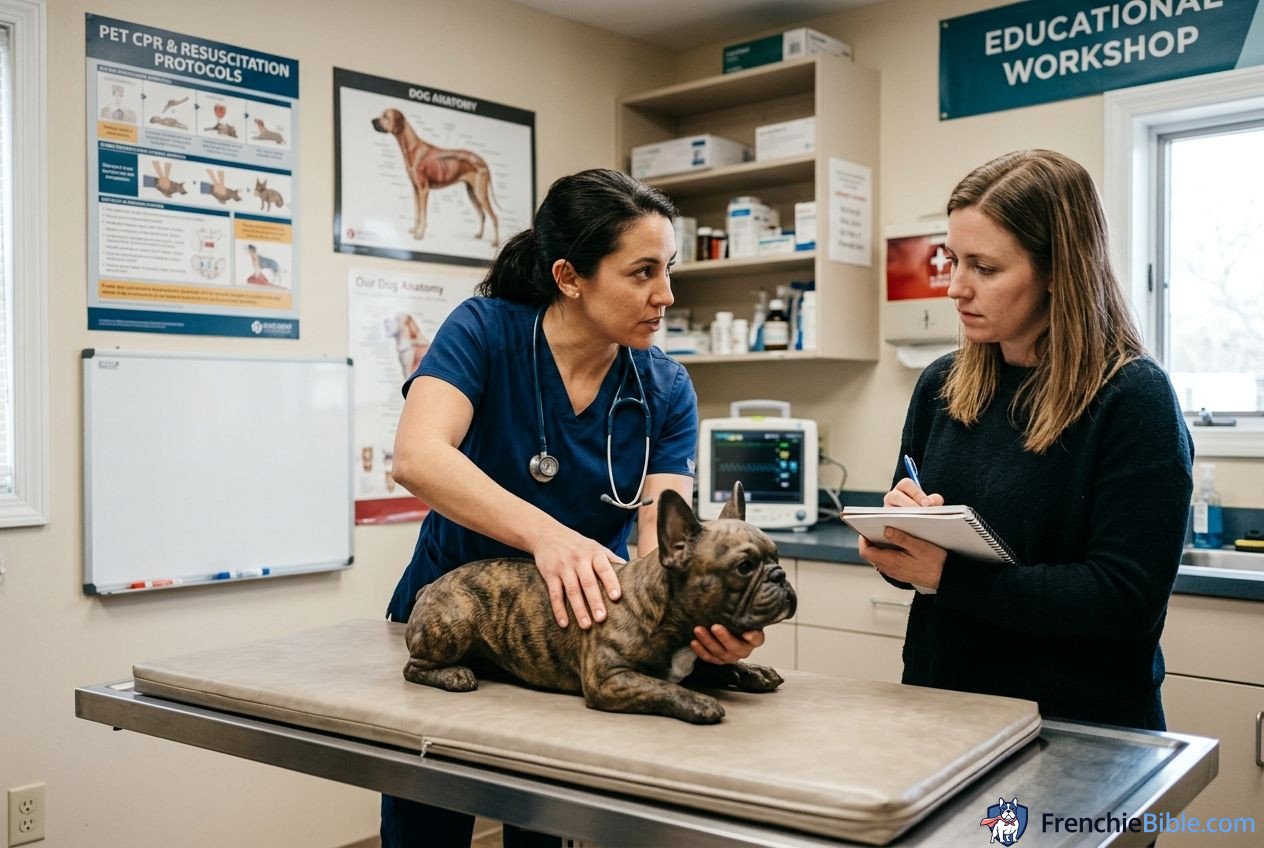
French Bulldogs suffer from Brachycephalic Obstructive Airway Syndrome (BOAS) to varying degrees. Their shortened muzzles mean that the soft tissues of the mouth and throat are cramped into a significantly smaller space. Key anatomical issues include:
- Stenotic Nares (Pinched Nostrils): Many Frenchies are born with narrow nasal openings, restricting airflow from the very first breath.
- Elongated Soft Palate: The tissue at the back of the roof of the mouth is often too long, extending down into the airway and fluttering during breathing, which causes the characteristic Frenchie “snorting” and can physically block the trachea.
- Hypoplastic Trachea: A dangerously narrow windpipe. The trachea is supported by cartilaginous rings. In Frenchies, these rings are often underdeveloped or narrower than normal.
- Everted Laryngeal Saccules: Due to the chronic negative pressure created by struggling to breathe, the small sacs just inside the larynx can turn inside out, further obstructing the airway.
When a dog pulls on a collar, the physical force is directed entirely onto the ventral aspect of the neck—right where the fragile trachea, larynx, and major blood vessels are located. For a French Bulldog already struggling to move air through a compromised system, this external compression is not just uncomfortable; it is life-threatening.
1.2 The French Bulldog Spine and IVDD Risk
French Bulldogs are disproportionately prone to spinal anomalies. Their compact build is often accompanied by hemivertebrae (malformed, wedge-shaped vertebrae) and early degeneration of the intervertebral discs.
Intervertebral Disc Disease (IVDD) is a condition where the cushioning discs between the spinal vertebrae bulge or burst (herniate) into the spinal cord space. These discs act as shock absorbers. In Frenchies, the discs can prematurely calcify and degenerate.
When a collar is used, any sudden jerk—whether from the dog lunging at a squirrel or the owner giving a “leash correction”—creates a whiplash effect. The concentrated force on the cervical (neck) spine can cause immediate disc herniation. This results in agonizing pain, loss of motor function, and often irreversible paralysis. Even constant, low-grade pulling on a collar can cause micro-traumas to the cervical spine over time, accelerating degenerative disc disease.
2. The Case Against Collars for French Bulldogs
Given the anatomical landscape outlined above, the consensus among veterinary professionals and breed specialists is resoundingly clear: Collars should almost never be used to walk a French Bulldog.
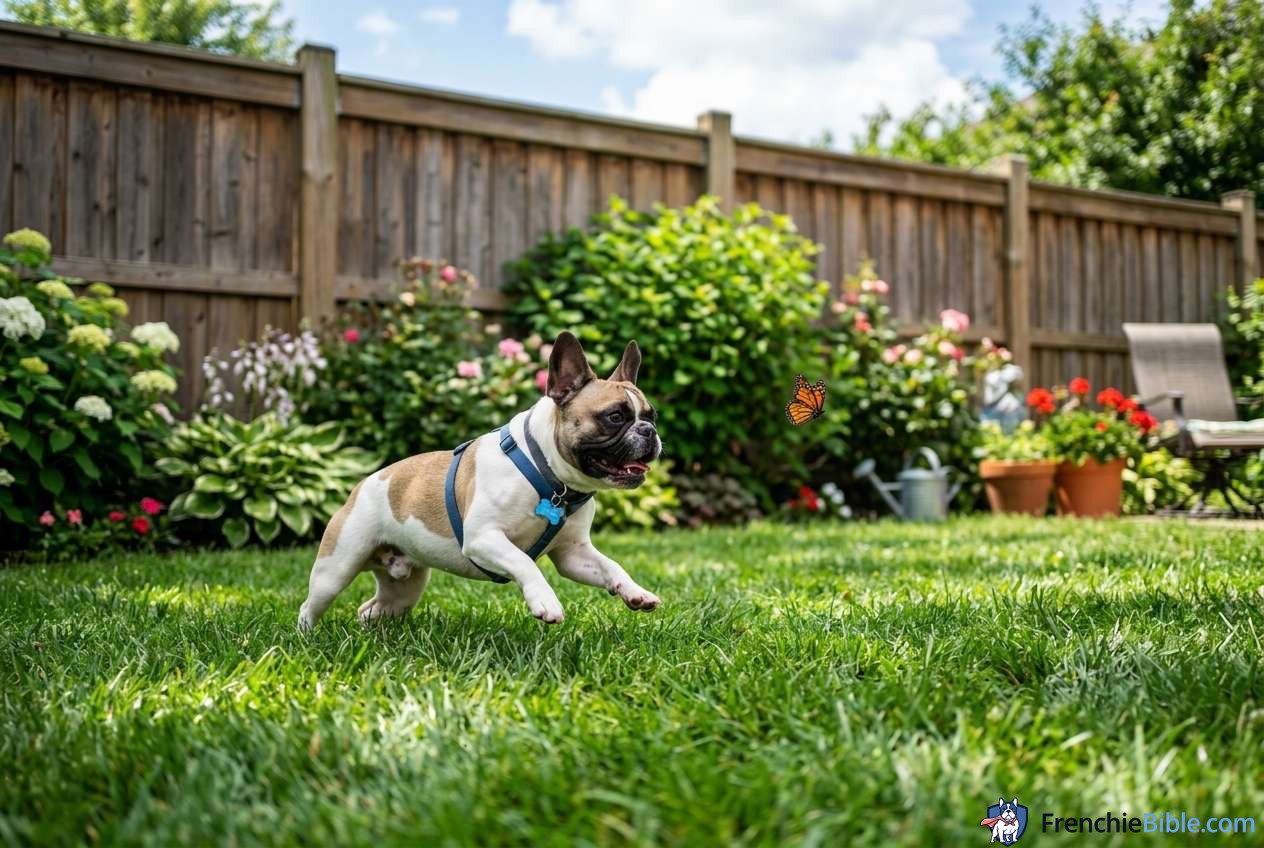
2.1 Direct Respiratory Compromise
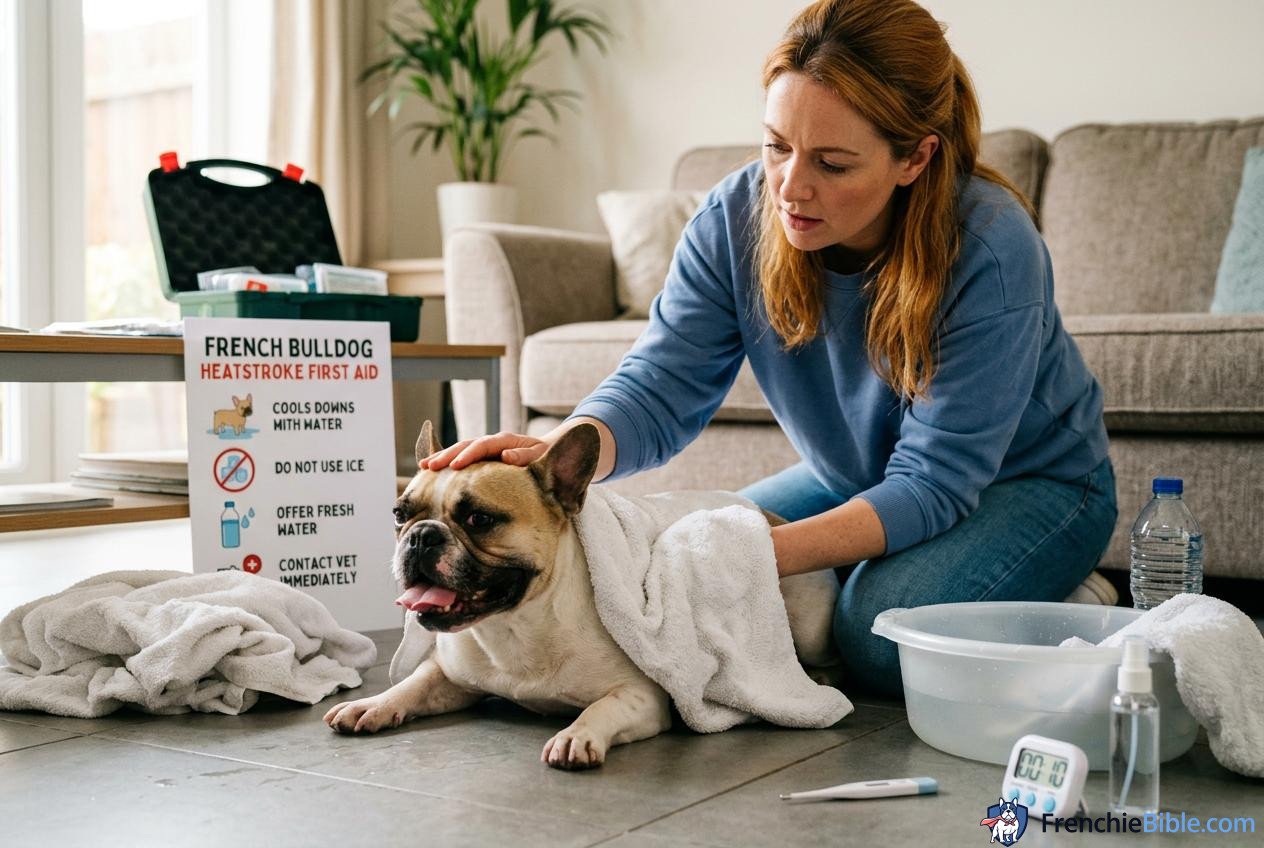
When a Frenchie pulls against a collar, the collar presses into the trachea. This compression flattens the windpipe, drastically reducing the volume of air that can reach the lungs. For a dog that relies on panting to cool down (since dogs do not sweat), this lack of oxygen quickly leads to overheating, hypoxia (low oxygen levels in the blood), and potentially fatal heatstroke, even in moderate temperatures.
Furthermore, the pressure from the collar can exacerbate laryngeal collapse over time, turning a mild case of BOAS into a surgical emergency.
2.2 Intraocular Pressure (IOP) Increases
Research has demonstrated that pressure applied to the neck via a collar significantly increases intraocular pressure (pressure within the eye). French Bulldogs are prone to eye conditions such as cherry eye, corneal ulcers, and glaucoma. Increased IOP from collar pulling can trigger or worsen these ocular diseases, potentially leading to vision loss.
2.3 Thyroid Gland Damage
The thyroid gland is located at the base of the neck, wrapping around the trachea. Repeated trauma from a collar can cause inflammation of the thyroid gland, potentially leading to autoimmune thyroiditis and subsequent hypothyroidism.
2.4 The Whiplash Effect and Cervical IVDD
As mentioned, the neck of a Frenchie is highly susceptible to injury. A sudden stop when running to the end of a leash attached to a collar applies immense torque to the cervical vertebrae (C1-C7). This physical stress is a leading trigger for acute cervical IVDD episodes in the breed.
2.5 Are Collars Ever Appropriate?
The only acceptable use for a collar on a French Bulldog is for identification purposes. A lightweight, flat collar holding an ID tag and rabies tag is fine, provided it is fitted loosely enough that it causes no constriction (you should be able to comfortably fit two to three fingers between the collar and the dog’s neck). However, a leash should never be attached to this collar for walks.
3. The Case For Harnesses: Distributing the Load
A well-designed harness is the only medically sound choice for walking a French Bulldog. By shifting the point of control from the fragile neck to the robust chest and shoulders, a harness mitigates the risks associated with collars.

3.1 Protecting the Airway
A properly fitted harness rests on the sternum (breastbone) and the rib cage. When the dog pulls, the force is distributed across the broad, muscular chest rather than the delicate trachea. This ensures that the airway remains unobstructed, allowing the Frenchie to breathe as freely as their anatomy permits, significantly reducing the risk of exercise-induced cyanosis and heat exhaustion.
3.2 Stabilizing the Spine
By wrapping around the torso, a harness provides structural support. While it cannot prevent IVDD caused by genetic degeneration, it entirely eliminates the acute, concentrated force on the cervical spine caused by leash corrections or sudden lunges on a collar. The mechanical load is spread across the thoracic spine and ribcage, which are anatomically designed to bear weight and absorb shock far better than the neck.
3.3 Enhanced Control
French Bulldogs have a low center of gravity and surprising muscular strength. A harness, particularly one with a front-clip option, provides the handler with better mechanical advantage and control over the dog’s body, making walks safer and more manageable, especially during training.
4. Not All Harnesses Are Created Equal: How to Choose the Right One
While a harness is fundamentally better than a collar, choosing the wrong harness can still cause physical harm. French Bulldogs have unique body proportions: a deep, broad chest, a thick neck, and a relatively short torso. A harness designed for a Greyhound or a Labrador will not fit a Frenchie correctly.
4.1 Key Features of a Safe Frenchie Harness
When evaluating a harness for your French Bulldog, look for the following crucial design elements:
- Y-Shaped Front: The harness must form a “Y” shape over the dog’s chest when viewed from the front. The center of the “Y” should sit on the sternum (breastbone). This design ensures that the harness rests well below the trachea and does not ride up into the neck when the dog pulls. Avoid “strap” harnesses that run straight horizontally across the chest, as these can restrict shoulder movement and alter the dog’s natural gait, leading to orthopedic issues over time.
- Unrestricted Shoulder Movement: The straps should sit behind the front legs, allowing the scapula (shoulder blade) and humerus to move through their full range of motion. Harnesses that pin the shoulders down force the dog into an unnatural, shortened stride, placing abnormal stress on the elbows and spine.
- Multiple Adjustment Points: Because Frenchies have such unique and varying proportions (some are “cobby” and stocky, others are leaner and longer), a harness must have at least three or four adjustment points (around the neck and around the girth) to achieve a custom fit.
- Breathable Lightweight Material: Overheating is a constant danger for Frenchies. Thick, heavy, excessively padded vests can trap body heat. Opt for lightweight mesh or durable, unpadded webbing that allows for airflow.
- Dual Attachment Points (Front and Back): A back D-ring is standard for casual walking. A front D-ring (on the chest) is an invaluable tool for training dogs that pull, as it gently redirects their momentum back toward you without applying pressure to the airway.
4.2 How to Measure Your French Bulldog for a Harness
To ensure the perfect fit, you must measure your dog accurately using a soft measuring tape:
- Neck Girth: Measure around the thickest part of the neck, where it meets the shoulders, just above the breastbone.
- Chest Girth: Measure around the widest part of the rib cage, just behind the front legs.
- Length: Some manufacturers require a back length measurement (from the base of the neck to the base of the tail) to ensure the harness isn’t too long, which could impinge on the dog’s flank or lower spine.
5. Veterinary & Breeding Expert Recommendations: The Top Harnesses for French Bulldogs
Based on anatomical safety, clinical observation, and extensive user feedback, here is my curated list of the safest and most effective harnesses for French Bulldogs.
5.1 Best Overall for Daily Use: Ruffwear Front Range Dog Harness
The Ruffwear Front Range is consistently top-rated by veterinarians for brachycephalic breeds.
- Why it’s perfect for Frenchies: It features a highly adjustable, padded Y-shaped chest plate that sits perfectly on the sternum, completely avoiding the airway. The material is durable yet breathable. It offers four points of adjustment, accommodating the broad chest and thick neck of a Frenchie. Crucially, it has both a sturdy aluminum V-ring on the back and a reinforced webbing loop on the chest for front-clip training.
- Safety Rating: 10/10 for airway protection and spinal load distribution.
5.2 Best for Severe BOAS or Post-Op Recovery: Joyride Harness (Formerly Pug Life)
If your Frenchie has a severely compromised airway, or is recovering from BOAS surgery or IVDD treatment, the Joyride Harness is an excellent option.
- Why it’s perfect for Frenchies: It is a “step-in” or “over-the-head” style that is exceptionally easy to put on a dog that cannot tolerate much handling. The design sits incredibly low on the chest and wraps securely around the girth, putting absolutely zero pressure anywhere near the neck. The side-ring attachment helps prevent pulling without choking.
- Safety Rating: 9.5/10. Extremely safe for the trachea, though less adjustable for atypical body shapes compared to the Ruffwear.
5.3 Best Premium Ergonomic Option: Perfect Fit Harness
This is a modular harness system manufactured in the UK, highly praised by canine physical therapists.
- Why it’s perfect for Frenchies: The “Perfect Fit” system comes in three separate, interchangeable pieces (Top Front, and Girth). This means you can literally build a custom harness for a French Bulldog’s odd proportions (e.g., a Medium Top, a Large Front, and a Medium Girth). It is fleece-lined, preventing the chafing that often occurs in the “armpits” of short-coated breeds, and the Y-front design is anatomically flawless.
- Safety Rating: 10/10. Unparalleled fit ensures maximum ergonomic safety.
5.4 Best Minimalist & Breathable: Blue-9 Balance Harness
For Frenchies living in hot climates where bulky vests pose a heatstroke risk, the Balance Harness is the gold standard.
- Why it’s perfect for Frenchies: It is a strap-style harness rather than a vest, meaning maximum airflow. However, unlike traditional strap harnesses, it features a unique neck-strap design that does not sit across the trachea, and a Y-front sternum strap. It has six points of adjustment, allowing it to fit the awkward Frenchie chest perfectly without restricting shoulder movement.
- Safety Rating: 9.5/10. Excellent anatomical design with minimal heat retention.
5.5 Harnesses to AVOID
- Step-in Mesh “Vest” Harnesses with a high neck: Many cheap, cute mesh harnesses ride too high and press right into the base of the throat when the dog pulls.
- Norwegian/Julius-K9 Style Harnesses: While popular, these feature a thick strap that goes horizontally straight across the chest and shoulders. Veterinary orthopedic specialists warn that this design restricts the natural movement of the shoulder joint and alters the dog’s gait, potentially leading to arthritis and spinal misalignment over time.
6. Training Your French Bulldog to Walk Without Pulling
Even with the best harness, a French Bulldog that constantly pulls is putting unnecessary stress on their body and making walks exhausting for you. Because collars are strictly off-limits for corrections, you must use positive reinforcement and smart harness mechanics to teach loose-leash walking.
6.1 Use the Front-Clip Attachment
If your Frenchie is a puller, utilize the front attachment point on a harness like the Ruffwear Front Range or Blue-9 Balance. When the dog pulls forward, the leash tension gently turns their chest sideways, redirecting their momentum back toward you. This interrupts the pulling behavior mechanically without causing pain or choking.
6.2 The “Be a Tree” Method
When your Frenchie begins to pull and creates tension on the leash, immediately stop walking. Stand completely still like a tree. Do not yank the leash back. Wait for the dog to realize they are not moving forward. The moment the dog stops pulling and puts slack in the leash (even if they just turn to look at you), praise them enthusiastically (“Yes!”) and resume walking. Consistency is key; they must learn that a tight leash means “stop,” and a loose leash means “go.”
6.3 High-Value Rewards
Frenchies are notoriously stubborn but highly food-motivated. Bring high-value, aromatic treats (like tiny pieces of boiled chicken or freeze-dried liver) on your walks. Frequently reward your dog when they choose to walk by your side or make eye contact with you.
7. The Intersection of Gear and Medical Care
Choosing the right harness is a critical preventative measure, but it must be combined with proactive medical management.
- Weight Management: Obesity exacerbates every health issue a Frenchie faces. Excess weight puts more strain on the spine (increasing IVDD risk) and adds fat tissue to the neck and chest, further constricting the airway. Keep your Frenchie lean.
- Surgical Evaluation: If your Frenchie snores loudly while awake, regurgitates frequently, or struggles to breathe on short walks even with a harness, consult a veterinarian about BOAS surgery. Widening the nares and shortening the soft palate can dramatically improve their quality of life.
- Acknowledge Limitations: A harness makes walking safer, but it does not cure BOAS or IVDD. French Bulldogs should not be taken on long hikes, forced to run in hot weather, or encouraged to jump on and off furniture.
Conclusion: A Clear Verdict for Your Frenchie’s Health
When evaluating the French Bulldog harness vs. collar debate from a medical and anatomical perspective, there is no contest. The collar is a dangerous tool that threatens the respiratory and spinal integrity of the breed. The harness is a mandatory necessity for their safety and longevity.
By understanding the physiological vulnerabilities of your French Bulldog—specifically their compromised airway and fragile cervical spine—you are empowered to make the right choice. Invest in a high-quality, fully adjustable Y-shaped harness like the Ruffwear Front Range or the Perfect Fit system. By doing so, you are not just buying a walking accessory; you are actively preventing life-threatening medical emergencies and ensuring your beloved Frenchie can explore the world safely and comfortably.
Frequently Asked Questions (FAQ)
Q1: Can I use a harness on a French Bulldog puppy?
A1: Yes, absolutely. In fact, you should only use a harness on a puppy. A puppy’s trachea and spine are still developing and are extremely vulnerable to trauma. Start them on a lightweight, adjustable harness early so they get used to the feeling, and begin loose-leash training immediately to prevent pulling habits from forming.
Q2: My Frenchie hates putting a harness over their head. What should I do?
A2: This is common. First, try desensitizing them using treats. Hold a high-value treat on one side of the neck hole and lure their head through. Do not force it. If they still panic, switch to a “step-in” harness or one that clips around the neck and chest independently, like the Blue-9 Balance Harness, so it never has to go over their head.
Q3: Are “no-pull” head halters safe for French Bulldogs?
A3: Absolutely not. Head halters (like the Gentle Leader) work by controlling the head and neck. For a brachycephalic breed with a compromised airway, flat face, and high risk of cervical spinal injury, torquing the head and neck is incredibly dangerous. Furthermore, they are very difficult to fit securely on a Frenchie’s lack of muzzle. Stick to front-clip body harnesses.
Q4: Should my French Bulldog wear their harness around the house?
A4: No. Harnesses should only be worn during walks or supervised outdoor activities. Leaving a harness on 24/7 can cause skin irritation, matting of the fur, and chafing in the armpits. It can also pose a snagging hazard indoors. Remove the harness when you return home, and let them wear a loose, flat collar with ID tags for daily indoor wear.
Q5: How do I know if my Frenchie’s harness is too tight?
A5: You should be able to comfortably slide two fingers flat between the harness straps and your dog’s body at any point (neck, chest, or girth). If you cannot fit two fingers, it is too tight and may restrict breathing or chafe. If you can fit a whole hand, it is too loose and the dog may slip out or the harness may rub and cause blisters.
Q6: My Frenchie has IVDD. Can they still go for walks?
A6: This depends entirely on the severity of the IVDD, whether they had surgery, and their current stage of recovery. You must consult your veterinary neurologist or physical therapist. If cleared for walking, a supportive, well-fitted harness that puts zero pressure on the spine (such as a custom-fitted therapeutic harness) is mandatory. Never use a collar on a dog with a history of IVDD.
Disclaimer: We are not veterinarians and do not hold veterinary medical licenses. The information provided in this article is based on years of breeding and daily care experience and is for educational purposes only. It should not replace professional veterinary advice. Always consult with a licensed veterinarian if you have concerns about your French Bulldog’s health or before starting any new treatment.