If you have suddenly noticed a strange, coin-sized bald spot on your beloved French Bulldog, your heart might have skipped a beat. As a Frenchie owner, you are likely already hyper-aware of their sensitive skin, their unique dietary needs, and their endless list of quirky traits. But a sudden patch of missing hair—especially one that looks circular, red, and crusty—requires immediate attention. In my ten years as a passionate French Bulldog breeder and caretaker, I have seen my fair share of coat issues, and one of the most misunderstood and highly contagious culprits behind these coin-sized bald patches is Ringworm.
Despite its name, ringworm has absolutely nothing to do with worms, parasites, or any type of bug crawling under the skin. It is a highly contagious fungal infection that affects the skin, hair, and sometimes nails of our dogs. Due to the French Bulldog’s specific skin folds, compact build, and sometimes compromised immune system, they can be particularly susceptible to these types of fungal invaders.
Related Reading: Training & Behavior | Frenchie Puppy Guide | Best Food for Frenchies
In this comprehensive guide, we will dive deep into everything you need to know about ringworm in French Bulldogs. From identifying those early warning signs to understanding how it spreads, and most importantly, how to manage the environment and support your Frenchie’s skin health during recovery. We will explore preventative measures, the importance of diet, and how to protect yourself and your family from this zoonotic condition.
Understanding the French Bulldog Coat and Skin Susceptibilities
To truly grasp why your Frenchie might have developed a fungal infection like ringworm, we must first look at the unique anatomy and characteristics of their skin and coat. French Bulldogs are notoriously prone to dermatological issues, and understanding their baseline is the first step in effective care. Their physical structure, combined with their genetic predispositions, creates a unique set of challenges for maintaining healthy skin.
The Unique Nature of Frenchie Skin
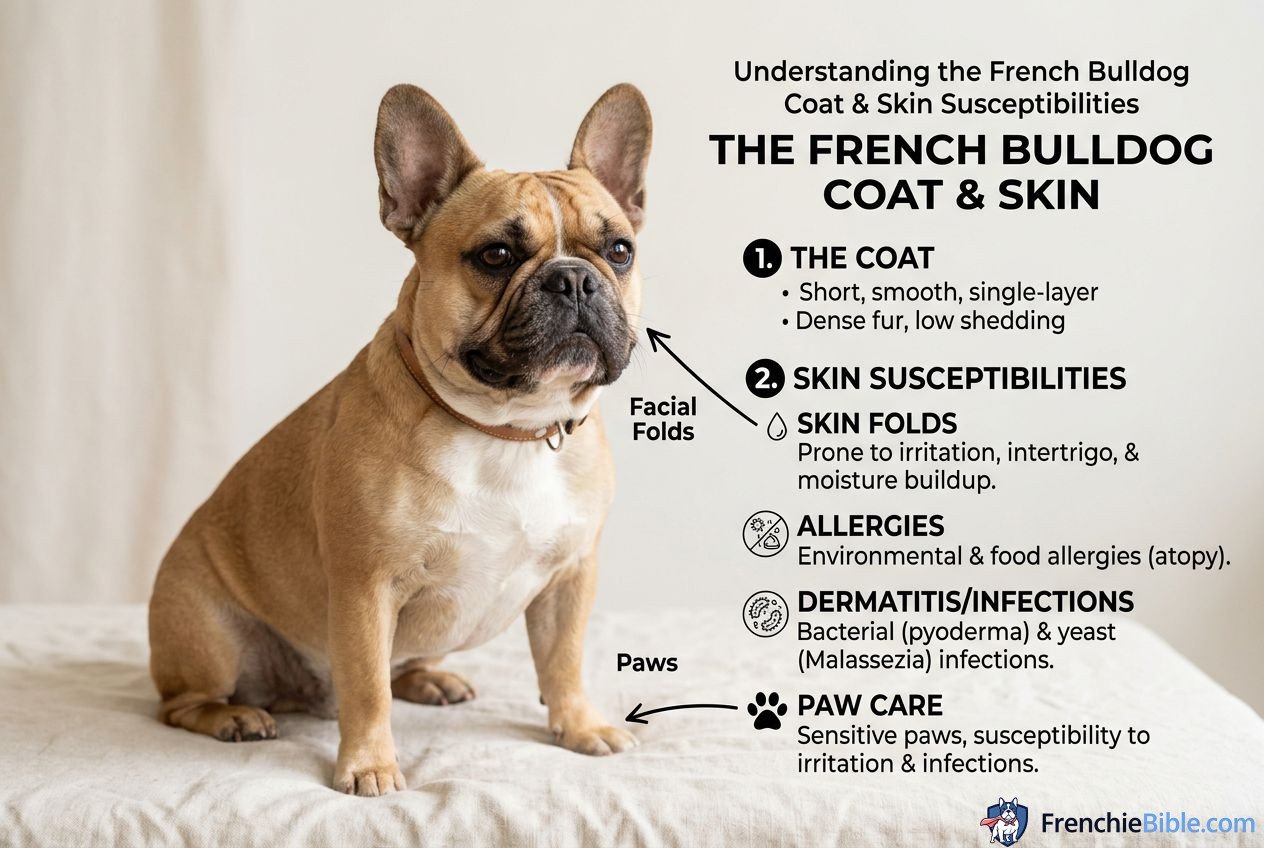
French Bulldogs have a single, short, and smooth coat. While this might seem like low maintenance compared to a long-haired breed like a Golden Retriever or a Poodle, their skin tells an entirely different story. Their skin is incredibly sensitive and often prone to allergies—both environmental and food-related. This inherent sensitivity means that their skin barrier can frequently be compromised.
When a dog’s natural skin barrier is weakened by chronic scratching, allergies, or even just mild irritation from a harsh shampoo or a sudden change in weather, it creates the perfect environment for opportunistic fungi and bacteria to take hold. A healthy skin barrier acts as a fortress, keeping pathogens out. But in a Frenchie suffering from allergies, that fortress often has open doors.
Furthermore, those adorable wrinkles and folds on their face, neck, and tail base—the very features that make them so endearing—are dark, warm, and often moist. This microenvironment is an absolute paradise for yeast and fungal growth. While ringworm typically prefers the hair shafts and outer layers of the skin across the body, the overall sensitivity and moisture-retention of a Frenchie’s skin makes them a prime candidate for infections when exposed to the right (or wrong) fungal spores.
Why French Bulldogs are Prone to Fungal Infections
Beyond their skin folds, Frenchies often have immune system quirks. Many suffer from atopic dermatitis or underlying allergies, which puts their immune system in a state of chronic overdrive or leaves it exhausted from constantly fighting benign allergens like pollen or dust mites. A stressed, distracted, or weakened immune system is significantly less capable of fighting off a fungal spore that lands on the coat before it takes root.
Additionally, French Bulldogs are incredibly social, affectionate, and curious creatures. They love to play with other dogs, roll in the grass at the dog park, investigate every corner of a daycare, and explore their environment with enthusiasm. Because ringworm spores can survive in the environment for months—even up to a year or more under optimal conditions—their social and inquisitive nature dramatically increases their exposure risk. It only takes a microscopic spore from contaminated soil, an infected playmate, or even a shared grooming brush to start a frustrating fungal infection.
What is Ringworm? Demystifying the Fungal Infection
One of the biggest hurdles in dealing with ringworm is the fear and misunderstanding surrounding it. The name alone sounds terrifying, conjuring horrifying images of internal parasites or crawling worms. Let’s clear the air, eliminate the myths, and look closely at what ringworm actually is and how it behaves on your dog’s skin.
Not a Worm: The Truth About Dermatophytosis
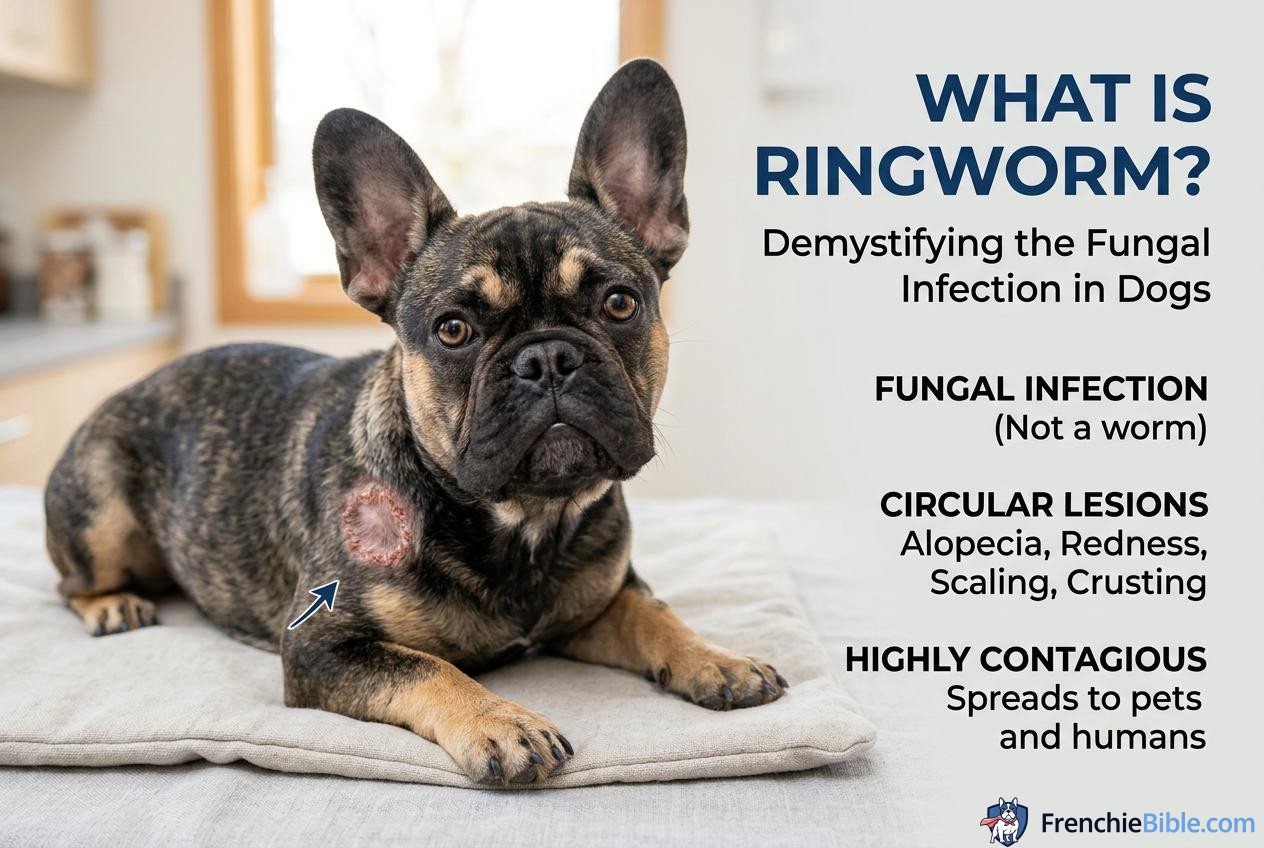
The medical and scientific term for ringworm is dermatophytosis. It is a fungal infection caused by a specialized group of fungi called dermatophytes. There are several species of dermatophytes, with Microsporum canis being the most common culprit in canine infections.
These fungi are unique because they feed specifically on keratin. Keratin is the tough structural protein that makes up the outer layer of the skin, the hair, and the nails. When a dermatophyte spore lands on your Frenchie, it doesn’t burrow into the bloodstream; instead, it settles onto the skin surface and begins to consume the keratin in the hair shafts and the superficial epidermal layers.
As the fungus aggressively feeds and grows, it structurally weakens the hair. The hair becomes brittle, dry, and eventually breaks off right at the skin level. This breaking of the hair is exactly what creates the characteristic bald spot you notice. The body’s natural inflammatory immune response to the presence of the fungus is what causes the redness, crusting, scaling, and sometimes mild swelling often seen around the edges of the bald lesion.
How Ringworm Spreads: The Contagious Reality
Ringworm is exceptionally, famously contagious. It is a master of survival and transmission. It spreads through direct contact with an infected animal, a human, or a contaminated object (known in epidemiology as a fomite). Understanding transmission vectors is crucial for preventing outbreaks.
- Direct Contact: This is the most common route. If your Frenchie wrestles, snuggles, or plays closely with a dog, cat, or even a farm animal that has an active ringworm infection, the microscopic spores can easily transfer onto your dog’s coat.
- Contaminated Environment: The spores are constantly shed into the environment along with infected hairs and skin cells that fall off the host. This means the soil at the local dog park, the floor at a busy doggie daycare, a boarding kennel, or even the waiting room of a grooming salon can harbor the fungus for months. A healthy dog simply walking through or rolling in a contaminated area can pick up the spores.
- Fomites (Infected Objects): Brushes, combs, clippers, collars, harnesses, dog beds, blankets, and plush toys can all carry and preserve ringworm spores. If you borrow a brush from a friend whose dog recently had ringworm, or if a groomer does not properly sanitize their tools between clients, you could unwittingly infect your own Frenchie.
Spotting the Signs: Recognizing Ringworm in Your Frenchie
Early detection is absolutely critical when it comes to managing ringworm. Because it is highly contagious to other pets and humans, spotting it early can save your entire household from a massive, stressful fungal outbreak. As a responsible owner, you need to know exactly what to look for.
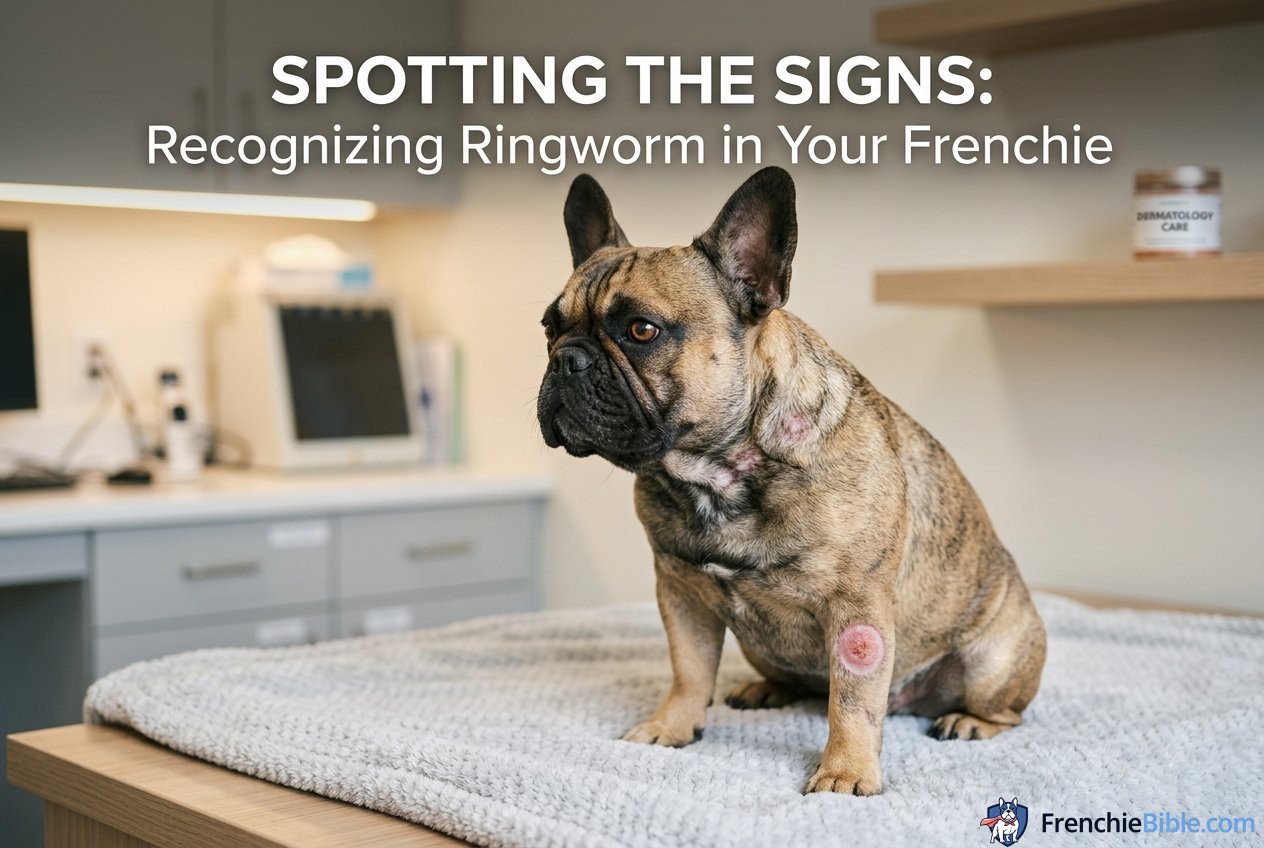
The Tell-Tale “Coin-Sized” Bald Spot
The most classic, textbook, and recognizable symptom of ringworm is the sudden appearance of a roughly circular area of hair loss. These spots typically start quite small, perhaps the size of a dime or a pea, and if left unmanaged, can gradually expand outward to the size of a quarter, a half-dollar, or larger.
When you examine this bald spot closely in good lighting, you will often notice a combination of the following characteristics:
– Redness (Erythema): The skin within the circle may appear pink, red, or noticeably inflamed compared to the surrounding healthy skin.
– Crusty or Scaly Margins: The outer edge (the perimeter) of the circle is usually the most active area of fungal growth and infection. Therefore, the border may look crusty, heavily scaly, flaky, or slightly raised.
– Broken Hairs (Stubble): The hairs inside the circle are usually not just falling out from the root; they are breaking off. If you look very closely, or use a magnifying glass, you might see tiny, stiff stubble where the hair shafts have snapped.
– Central Clearing: Sometimes, as the lesion expands outward like a ripple in a pond, the center of the circle may start to heal and look like normal, albeit hairless, skin. This creates a true “ring” appearance. However, it is vital to remember that not all ringworm lesions look like perfect rings.
Other Common Symptoms of Fungal Infections
While the coin-sized bald spot is the classic presentation, ringworm can present in various other ways, especially in French Bulldogs with their complex, sensitive skin profiles. You might also notice:
– Diffuse, Asymmetrical Hair Loss: Instead of a perfect circle, the hair might thin out irregularly over a larger area, looking more like patchy shedding than a defined lesion.
– Dandruff or Heavy Flakiness: You might observe a sudden, localized increase in dander or thick, flaky skin resembling severe dandruff in a specific area, often without immediate total hair loss.
– Inflamed or Crusty Claws (Onychomycosis): If the fungal infection gets into the nail beds, the nails themselves can become brittle, deformed, easily broken, and the surrounding skin very inflamed and painful.
– Miliary Dermatitis: Sometimes, ringworm presents as tiny, crusty bumps resembling millet seeds spread across the skin, particularly along the back.
It is highly important to note that ringworm is typically not extremely itchy for the dog. While there may be some mild pruritus (itching) causing occasional scratching, it usually does not cause the intense, frantic, self-mutilating chewing and scratching seen with severe allergies, flea infestations, or sarcoptic mange.
Ringworm vs. Hot Spots vs. Mange: Knowing the Difference
As a dedicated Frenchie owner, you will likely encounter various skin issues throughout your dog’s life. Distinguishing between them is vital so you do not apply the wrong care strategy.
- Hot Spots (Acute Moist Dermatitis): Hot spots are bacterial infections that erupt incredibly rapidly, often overnight. They are intensely red, oozing, sticky, wet, and incredibly painful and itchy. They look like a wet, raw wound and do not typically form a neat, dry, scaly circle like ringworm. Hot spots require immediate drying and antibacterial care.
- Demodectic Mange: Caused by microscopic Demodex mites that live in the hair follicles, demodex often causes hair loss, particularly around the eyes (creating “spectacles”), muzzle, and front legs initially. The skin can look red, dark, and thickened, but it usually lacks the classic ring-like, distinctly scaly border of dermatophytosis.
- Allergies (Atopy/Food): Allergies usually cause widespread, generalized redness, obsessive chewing on the paws, frequent rubbing of the face against furniture, and generalized, intense itching all over the body, rather than a single, dry, isolated, circular bald patch.
The Danger of Ignoring Coin-Sized Bald Spots
Ignoring a suspicious bald spot on your French Bulldog, hoping it will just go away on its own, is a massive risk that you do not want to take. What starts as a small, seemingly harmless blemish on your dog’s flank can rapidly escalate into a chaotic household nightmare.
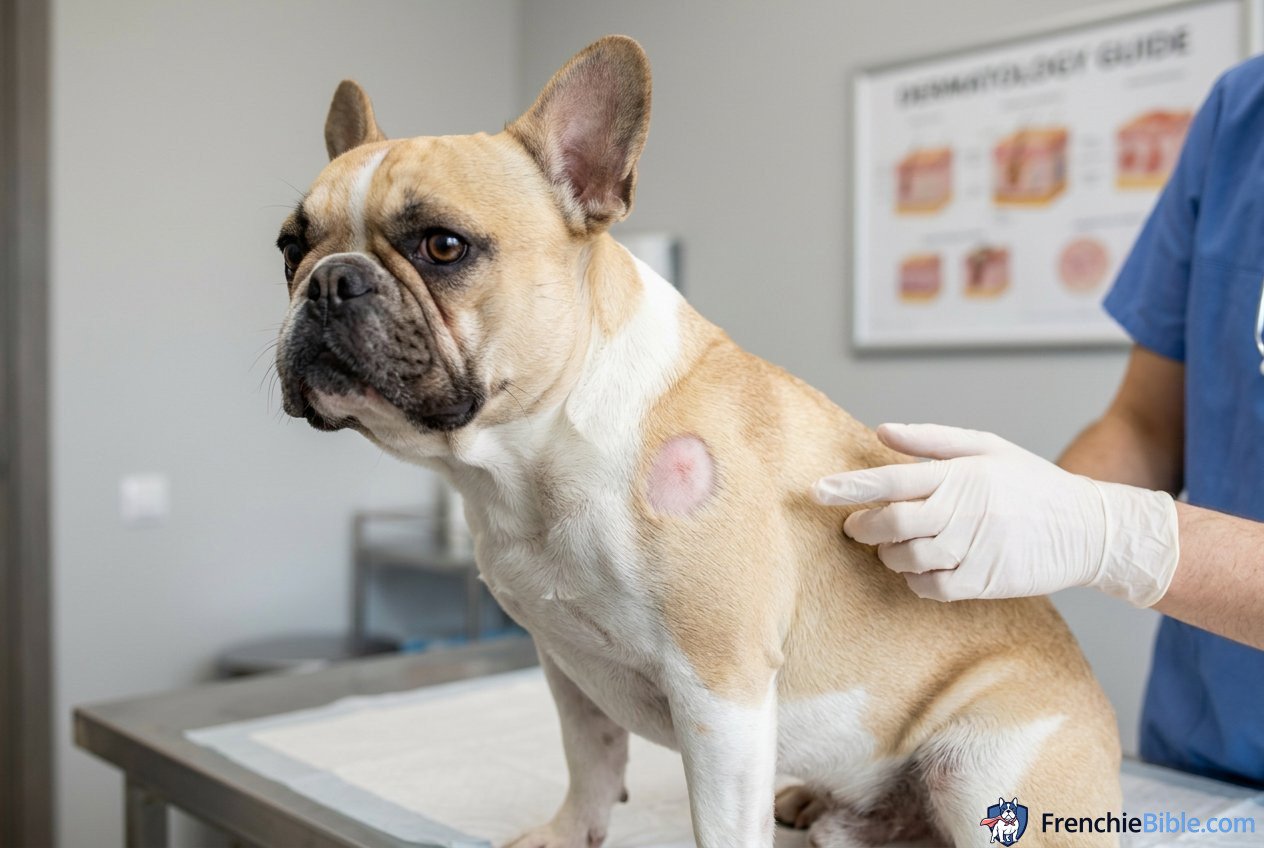
Spreading to Other Pets and Humans (Zoonotic Risk)
The single most significant danger of ringworm is its zoonotic nature. “Zoonotic” means that the disease can be directly transmitted from animals to humans, and vice versa.
If your Frenchie has ringworm and you cuddle them, let them sleep in your bed, carry them against your chest, or even just handle their toys and bedding without washing your hands, you can easily develop a ringworm infection on your own skin. It typically presents as a red, itchy, scaly ring on human skin. Children, the elderly, individuals undergoing chemotherapy, and anyone with an immunocompromised system are particularly at risk and can develop severe, widespread infections.
Furthermore, if you have a multi-pet household—other dogs, cats, guinea pigs, or rabbits—the infection will spread like wildfire. Cats, in particular, can be asymptomatic carriers, meaning they carry and shed the spores without showing bald spots themselves. A single infected Frenchie can quickly turn into a multi-species household outbreak, requiring months of intense management, isolation, and exhausting environmental decontamination.
Secondary Bacterial Infections
While the dermatophyte fungus itself damages the hair and superficial skin layers, it creates a much larger vulnerability. The compromised, damaged skin barrier opens the door wide open for secondary bacterial infections.
If your Frenchie does happen to scratch the area, or if the dry, scaly skin cracks open, normal skin bacteria (like Staphylococcus) can invade the deeper tissues. This turns a relatively dry, fungal patch into a red, hot, oozing, painful, and potentially systemic bacterial infection. A secondary bacterial infection complicates the recovery process significantly, increasing discomfort for your dog and drastically extending the healing timeline.
What to Do When You Suspect Ringworm
If you are petting your dog and suddenly notice a coin-sized bald spot, immediate action is required. Do not take a “wait and see” approach, and absolutely do not immediately reach for over-the-counter human fungal creams without professional guidance, as some human medications can be toxic if your dog licks them off.
Isolation and Environmental Containment
The very first step is immediate damage control and containment.
1. Isolate Your Frenchie: Confine your Frenchie to a specific, easy-to-clean area of the house, preferably a room with hard floors (like a bathroom or kitchen) rather than carpet. Avoid letting them sleep on your bed, the living room couch, or any upholstered furniture that cannot be easily washed. Strictly keep them separated from all other pets in the home.
2. Impeccable Hand Hygiene: Wash your hands thoroughly and vigorously with soap and warm water for at least 20 seconds every single time you interact with your dog, touch their bedding, handle their food bowls, or clean their space. Hand sanitizer alone is not always fully effective against fungal spores.
3. Limit Community Spread: Be a responsible community member. Do not take your dog to the dog park, doggie daycare, the groomer, or friends’ houses. You must prevent spreading the infection to other innocent dogs and their families.
Why You Must Seek Professional Evaluation
You must seek a professional evaluation. A visual inspection by an owner—or even an experienced breeder like myself—is never enough to definitively, 100% diagnose ringworm. As discussed, other skin conditions can mimic it perfectly.
A professional will typically utilize specific diagnostic tools:
– Wood’s Lamp Examination: This is an ultraviolet light. Certain species of Microsporum canis will glow a bright, fluorescent apple-green under this light. However, not all ringworm strains glow, so a negative Wood’s lamp test does not rule out the infection.
– Fungal Culture (DTM): This is the gold standard. Hairs and skin scrapings are plucked from the edge of the lesion and placed on a special culture medium (Dermatophyte Test Medium). Over several days to weeks, if ringworm is present, the fungus will grow and change the color of the medium.
– PCR Testing: Polymerase Chain Reaction testing is becoming more common. It looks for the DNA of the fungus. It is much faster than a culture (often returning results in a few days) and is highly accurate.
Getting a definitive, scientifically confirmed diagnosis is crucial because the protocols for managing a fungal infection are vastly different from managing a bacterial infection, a mite infestation, or an allergic reaction. Applying the wrong care plan will only allow the ringworm to spread further.
The Psychological Impact: Helping Your Frenchie Through Isolation
Dealing with ringworm goes beyond skin deep; the mandatory isolation period can be emotionally taxing for your highly social French Bulldog. They are bred to be companion animals, and suddenly being restricted from the family couch or separated from their housemates can lead to stress and depression.
Coping with Separation from the Family
Your Frenchie might whine, scratch at the door, or seem lethargic during isolation. It is crucial to manage this separation anxiety. Ensure their confinement area is comfortable, warm, and enriched. Spend time with them in their designated space, keeping in mind to wear washable clothing dedicated only to these interactions, and washing thoroughly afterward.
Enrichment Toys That Can Be Easily Sanitized
Boredom is the enemy during quarantine. Provide plenty of mental stimulation to keep their minds engaged while their bodies heal. Opt for enrichment toys that can be easily disinfected:
– Hard Rubber Puzzle Toys: Heavy-duty rubber toys that can be stuffed with their regular kibble and frozen are excellent. They can be washed in the dishwasher or soaked in a diluted bleach solution daily.
– Durable Chew Bones: Avoid porous bones or rawhides that can harbor spores. Stick to hard, non-porous synthetic chew toys that are explicitly designed to withstand harsh cleaning protocols.
– Training Sessions: Use this isolation time for low-impact, mentally stimulating training sessions. Teaching new tricks or reinforcing old ones provides valuable one-on-one attention without requiring rough physical contact.
Real-Life Experience: A Breeder’s Perspective on Ringworm
In my early years of breeding, I encountered a ringworm outbreak that fundamentally changed how I approach environmental hygiene. A new rescue dog I had brought in for fostering appeared perfectly healthy but was an asymptomatic carrier of Microsporum canis. Within three weeks, two of my adult Frenchies and an entire litter of puppies developed the classic coin-sized bald spots.
The Lessons Learned About Hygiene and Quarantine
The resulting months were a grueling cycle of cultures, relentless vacuuming, and endless laundry. I learned the hard way that visual health is not a guarantee of fungal clearance.
The biggest takeaway from that experience was the absolute necessity of a strict quarantine period for any new animal entering the environment, regardless of their apparent health. Furthermore, it reinforced the crucial rule of fomite control: I immediately invested in separate grooming kits for different groups of dogs and implemented a protocol of hospital-grade disinfection for all hard surfaces. This experience taught me that when it comes to ringworm, paranoia and aggressive sanitation are your most valuable tools.
Deep Clean: Eradicating Ringworm from Your Home
If ringworm is confirmed, managing your dog’s condition is only half the battle. The other, often more exhausting half, is completely eradicating the microscopic spores from your living environment. Ringworm spores are incredibly resilient and hearty. They can survive in dust, carpets, and cracks in the floor for up to 18 months under the right conditions. If you do not decontaminate your home aggressively, your Frenchie (or you) will continually reinfect themselves even after the initial spot heals.
Sanitizing Bedding, Toys, and Bowls
- Bedding, Blankets, and Soft Toys: All dog bedding, blankets, your own bed sheets (if the dog slept there), and plush toys must be washed in the hottest water your machine allows. Add a pet-safe laundry disinfectant or a cup of bleach if the fabric colors allow it. Most importantly, dry everything on the absolute highest heat setting possible for an extended cycle. Fungal spores hate extreme heat.
- Hard Toys and Food Bowls: Wash all rubber, plastic, and hard chew toys, as well as food and water bowls. You can run them through a dishwasher on a sanitizing cycle, or soak them in a diluted bleach solution (1 part household bleach to 10 parts water) for at least 10 to 15 minutes, then rinse them exhaustively to ensure no bleach residue remains.
- Collars, Leashes, and Harnesses: Do not forget to wash and aggressively disinfect all walking gear, as these are in direct contact with the dog’s skin daily.
Vacuuming and Disinfecting Surfaces
- Relentless Daily Vacuuming: You must vacuum your entire home daily, or at least every other day. Focus heavily on areas where your Frenchie spends the most time, under furniture, and along baseboards. Vacuuming is the most effective mechanical way to physically remove the infected hairs and dead skin cells that carry the spores.
- The Golden Vacuum Rule: Crucial: You must empty the vacuum canister or throw away the vacuum bag immediately after every single use. Secure the contents in a sealed, tied-off plastic trash bag and take it to the outside garbage bin immediately. If you leave the dust in the vacuum in your closet, the spores will simply blow back into your house the next time you turn it on.
- Mopping and Hard Surface Wiping: Use a pet-safe, fungicidal disinfectant or a freshly mixed diluted bleach solution to mop all hard floors. Wipe down baseboards, crates, x-pens, and any walls or surfaces your dog frequently rubs against.
- Air Filters and Ventilation: Change your HVAC air filters regularly during the outbreak. Because spores are attached to microscopic dust and dander, they can become airborne and circulate through your home’s ventilation system, spreading from room to room.
Preventative Measures for French Bulldog Owners
While you cannot force your Frenchie to live in a sterile plastic bubble, there are significant, proactive steps you can take as a responsible owner to minimize the risk of fungal infections. Prevention is always dramatically easier, cheaper, and less emotionally stressful than dealing with an active outbreak and decontamination.
Maintaining Optimal Skin Health Through Diet
A strong, highly functional immune system and a robust, well-nourished skin barrier are your Frenchie’s best natural defenses against ringworm and other pathogens. As an experienced breeder, I cannot stress enough the monumental importance of high-quality nutrition. Health truly starts from the inside out.
- Omega Fatty Acids are Essential: Ensure your Frenchie’s daily diet is exceptionally rich in Omega-3 and Omega-6 fatty acids. These lipids are essential for maintaining skin elasticity, drastically reducing systemic inflammation, and supporting the protective lipid barrier that keeps moisture in and pathogens out. High-quality fish oils (like salmon or sardine oil) and flaxseed are excellent, bioavailable sources.
- High-Quality, Digestible Protein: Remember that keratin, the very substance the fungus eats, is a protein. A diet rich in highly digestible, premium animal protein ensures the dog’s body has the necessary building blocks for strong, resilient hair and rapid skin regeneration.
- Probiotics for Immune Support: A massive portion of a dog’s immune system resides in their gastrointestinal tract. A daily, high-quality canine probiotic can help balance your dog’s gut microbiome, directly supporting a strong, vigilant immune response against opportunistic pathogens like dermatophytes.
Grooming Habits to Prevent Fungal Growth
Proper, consistent grooming is not just about keeping your dog looking cute and smelling fresh; it is a critical, fundamental health measure.
- Meticulously Keep Folds Dry: For Frenchies, keeping their deep facial wrinkles, neck folds, and tight tail pockets clean and meticulously dry is paramount. Moisture is the absolute enemy and the best friend of fungus. Wipe folds daily with a pet-safe, unscented wipe, and critically, use a dry cotton pad or soft tissue to absorb any lingering moisture afterward.
- Regular, Gentle Brushing: Brush your Frenchie two to three times a week with a soft bristle brush or a rubber curry comb to remove dead hair, distribute natural skin oils, and clear away dander. This routine also forces you to inspect their skin closely on a regular basis, allowing you to catch any early signs of irritation or small bald spots before they spread.
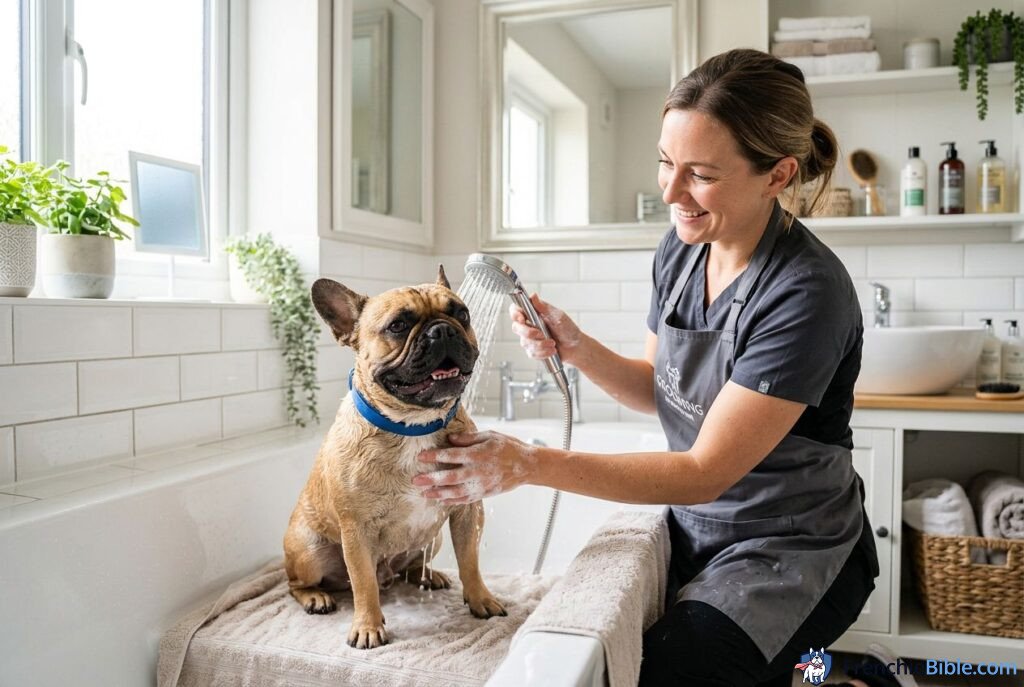
- Appropriate, Careful Bathing: Do not over-bathe your Frenchie. Bathing too frequently strips the natural protective oils from the coat and weakens the skin barrier. When you do bathe them (perhaps once a month or when exceptionally dirty), use a high-quality, gentle, soap-free, oatmeal or aloe-based dog shampoo. Ensure they are completely, 100% dry after a bath—pay special attention to towel-drying inside their folds, armpits, and groin area.
Minimizing Exposure Risks at Parks and Daycares
Be highly mindful and observant of where you take your dog. If you hear rumors on social media or from local friends of a ringworm, kennel cough, or papilloma outbreak in your local dog community, absolutely avoid communal areas like dog parks or pet store floors for a few weeks.
If you use a professional groomer, do not hesitate to ask them about their sanitation protocols. Ensure they use hospital-grade disinfectants on their tables, tubs, and tools between every single dog. Never, ever share brushes, combs, towels, or bedding with dogs outside of your immediate household unless everything has been thoroughly sterilized first.
Rebuilding the Coat: Post-Infection Care
Once the infection has been successfully cleared, confirmed by a professional, and your home is deemed spore-free, your focus will excitedly shift to helping your Frenchie regain their beautiful, smooth, shiny coat.
Nutritional Support for Hair Regrowth
Hair regrowth takes significant time and metabolic energy. The hair follicles need to completely recover from the structural damage caused by the feeding dermatophytes. Continue to provide a premium diet rich in Omega fatty acids to support cellular repair. You might also consider discussing with a professional the addition of supplements containing Biotin (Vitamin B7) and Vitamin E, which are well-known to support rapid hair growth and overall skin repair. Always introduce any new supplements very gradually to avoid upsetting your Frenchie’s notoriously sensitive digestive system.
Gentle Grooming During the Recovery Phase
The newly grown skin in the previously bald patch, and the fine new hairs coming in, will be incredibly delicate and easily damaged.
– Use a very soft-bristled brush or a gentle rubber grooming mitt to lightly stimulate blood flow to the skin, which naturally encourages and accelerates hair growth. Do not scrub or scrape the healing skin.
– Strictly avoid harsh chemical treatments, aggressive flea dips, or heavily fragranced, cheap shampoos during this recovery time. Stick exclusively to hypoallergenic, soothing, veterinary-recommended products.
– Protect the healing skin from excessive, direct sun exposure. The bald or thinly haired patch will have no natural protection and will be highly prone to painful sunburn, which will further delay healing.
Dealing with ringworm is undoubtedly a frustrating, tedious, and sometimes exhausting condition to manage. However, with swift action, meticulous environmental cleaning, and dedicated, loving care, your French Bulldog will absolutely bounce back. Their skin will heal, the hair will regrow fully, and you can return to enjoying those endless, wonderful Frenchie cuddles without a shadow of worry.
FAQs About French Bulldogs and Ringworm
1. Can my French Bulldog get ringworm just from playing in the dirt in our backyard?
Yes, it is entirely possible. Certain species of dermatophyte fungi, known as geophilic dermatophytes (like Microsporum gypseum), naturally live and reproduce in soil. If your Frenchie loves to aggressively dig in the dirt, or roll around in contaminated areas, especially if they have a minor scratch, allergy flare-up, or abrasion on their skin that compromises the barrier, they can contract the fungal infection directly from the natural environment.
2. How long does it realistically take for a Frenchie’s hair to grow back completely after ringworm?
Hair regrowth is an exercise in patience; it can be a slow process. Once the active fungal infection is completely eradicated and the skin begins to heal, it can take anywhere from a few weeks to several months (often 2 to 4 months) for the hair to fully grow back, match the length, and blend seamlessly with the surrounding coat. The speed heavily depends on the individual dog’s overall health, their nutritional intake, age, and just how deeply the initial infection damaged the follicles.
3. Does ringworm always look like a perfect, distinct circle on a dog?
No, this is a common misconception. While the “coin-sized” circular bald spot with a red ring is a classic, textbook sign, ringworm can present in numerous, confusing ways. It might look like an irregularly shaped patch of thinning hair, a chronically crusty area, generalized flakiness that looks like severe dandruff, or even just inflamed nail beds. This wide variety of presentations is exactly why a professional diagnosis is always absolutely necessary.
4. I have ringworm on my arm; can I accidentally give it to my Frenchie?
Absolutely, yes. Ringworm is highly zoonotic, meaning it aggressively passes back and forth between humans and animals. If you, a family member, or a child has an active ringworm infection, you must practice strict, uncompromising hygiene. Keep the infected area heavily covered with clothing or a bandage, wash your hands constantly, and avoid close, direct contact (no cuddling or bed-sharing) with your dog until your infection has been medically cleared.
5. Are there any truly effective natural remedies to prevent ringworm in dogs?
The most potent and effective “natural remedy” is building a fortress-like immune system and maintaining a perfectly intact, healthy skin barrier. Providing a high-quality, protein-rich diet packed with Omega fatty acids, aggressively managing any environmental or food allergies to prevent chronic skin scratching, keeping those adorable wrinkles meticulously dry, and maintaining a clean living environment are by far the most effective, natural ways to protect your French Bulldog from ever falling victim to fungal infections.
Disclaimer: I am a French Bulldog breeder and enthusiast with over a decade of experience in the breed’s care, genetics, and daily management. I am not An Experienced Breedererinarian, and I do not possess any veterinary medical qualifications. The information provided in this article is for educational and informational purposes only, based on years of hands-on experience and breed study. It is not intended to be a substitute for professional veterinary advice, diagnosis, or medical treatment. Always consult with a licensed veterinarian regarding any medical condition or health concerns your dog may be experiencing, especially highly contagious fungal infections like ringworm. Never disregard professional veterinary advice or delay in seeking it because of something you have read in this article.