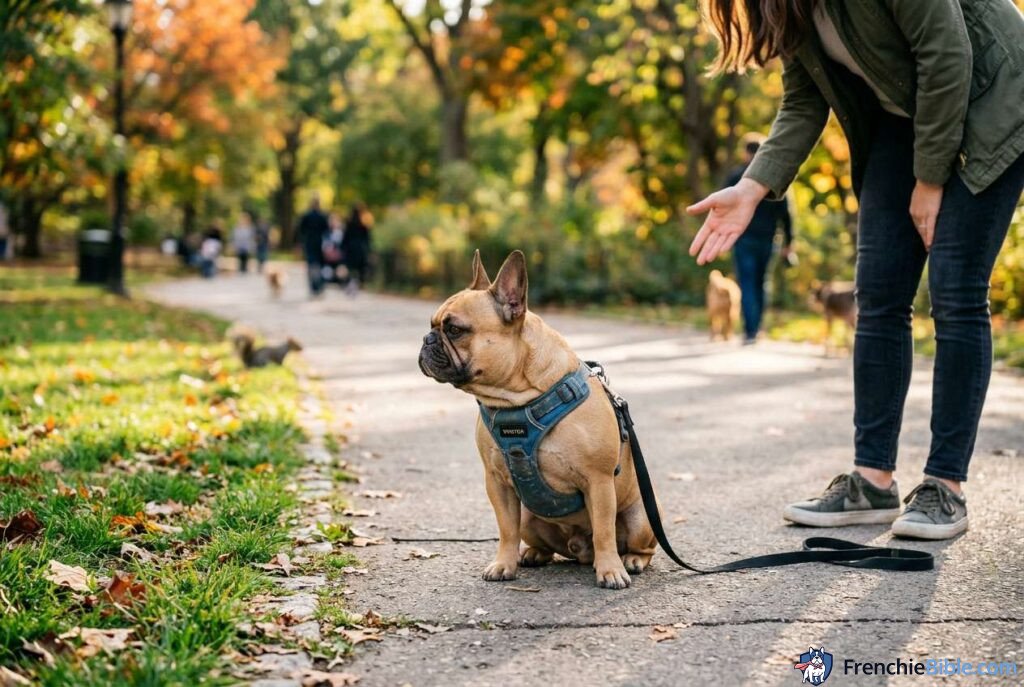
As a French Bulldog breeder with over a decade of experience I am often asked whether these lovable, stocky companions can participate in dog sports. The answer is a resounding yes! While they might not be the aerodynamic border collies of the dog world Frenchies have a surprising amount of athleticism and a deep desire to please their owners. However, their unique physical structure requires a specialized approach.
French Bulldog agility isn’t about clearing six-foot jumps or running a grueling obstacle course at breakneck speeds. It is about engaging their minds, strengthening their bodies safely, and building an unbreakable bond between you and your dog. In this comprehensive guide, we will explore how to introduce your Frenchie to agility training, focusing exclusively on low-impact, joint-friendly indoor activities that protect their delicate spines and joints while maximizing fun.
Related Reading: Health & Diet | Grooming & Care
Understanding the French Bulldog Physique: Why Low-Impact is Crucial
Before we dive into the exercises, it is imperative to understand why we must modify traditional agility training for French Bulldogs. Over my ten years of breeding and observing these incredible dogs I have seen firsthand the devastating effects of inappropriate exercise.
The Chondrodystrophic Reality
French Bulldogs are a chondrodystrophic breed. This means they are genetically predisposed to have short limbs and a relatively long spine. While this gives them their signature, adorable appearance, it also puts them at a significantly higher risk for Intervertebral Disc Disease (IVDD) and other spinal issues. High-impact activities, such as jumping off furniture, leaping over high hurdles, or twisting sharply at high speeds, can put immense stress on their spinal discs, potentially leading to herniation and paralysis.
Brachycephalic Airway Syndrome (BAS)
We also cannot ignore their brachycephalic (flat-faced) nature. Frenchies have compacted airways, elongated soft palates, and narrow nostrils, which makes breathing—especially during exertion or in hot weather—more challenging than for dogs with longer snouts. Vigorous outdoor agility in the summer is simply out of the question. Indoor, climate-controlled environments allow us to manage their exertion levels safely, preventing overheating and respiratory distress.
Joint Vulnerabilities
The heavy, front-loaded build of a French Bulldog puts considerable strain on their front joints, particularly the elbows and shoulders. Activities that require heavy landings or abrupt stops on hard surfaces can contribute to early-onset arthritis and joint dysplasia.
This is why our approach to French Bulldog agility must be meticulously tailored: low to the ground, controlled, and focused on mobility and balance rather than speed and height.
Preparing for Indoor Agility Training
Setting up for success means creating a safe, encouraging environment and having the right tools at your disposal.

Creating a Safe Indoor Space
You don’t need a massive training facility to do agility with your Frenchie. A hallway or a cleared space in your living room works perfectly. However, the surface is critical.
- Non-Slip Surfaces are Mandatory: Never practice agility on slick hardwood, tile, or laminate floors. Frenchies lack the traction needed, and slipping can cause severe muscle tears, ligament damage (like ACL/CCL tears), or spinal injuries.
- Use Mats or Rugs: Invest in interlocking foam puzzle mats (often sold for home gyms or children’s playrooms) or use heavy-duty, non-slip area rugs. Yoga mats can work for smaller exercises, but ensure they don’t slide.
- Clear the Area: Remove sharp objects, fragile furniture, and any potential hazards that your dog could bump into during a moment of excitement.
Essential Equipment (DIY and Store-Bought)
You don’t need to spend a fortune on professional agility equipment. Many items can be safely improvised or purchased inexpensively.
- Low Cavalettis (Ground Poles): Instead of hurdles, we use cavalettis. These are poles laid flat on the ground or elevated by no more than one to two inches. You can use PVC pipes, broomsticks (secured so they don’t roll), or rolled-up towels.
- Agility Tunnels: Look for short, collapsible play tunnels designed for toddlers or small dogs. Ensure they have a non-slip interior or place them on a secure mat.
- Balance Discs or Wobble Boards: These are excellent for core strength. You can use specialized canine balance discs or human fitness discs (partially deflated for less challenge initially).
- Cones or Household Objects: For weaving exercises, use lightweight plastic sports cones, empty plastic bottles, or even sturdy plush toys.
- A Sturdy Target Box or Mat: A low, stable platform (like a thick book wrapped in a towel or a specialized dog training platform) for teaching paw targeting and body awareness.
High-Value Reinforcement
Frenchies are notoriously stubborn, but they are also highly food-motivated. Have a pouch full of small, smelly, high-value treats (like boiled chicken, freeze-dried liver, or tiny pieces of cheese). Keep the pieces very small (pea-sized) so you can reward frequently without causing weight gain.
The Core Curriculum: Low-Impact Indoor Agility Exercises
Now, let’s explore the specific exercises that make up a safe and effective French Bulldog agility routine.
1. The Cavaletti Walk (Proprioception and Pacing)
This is the foundation of our low-impact routine. Cavalettis teach your Frenchie body awareness (proprioception), specifically how to coordinate their front and back legs. It encourages them to lift their paws rather than drag them, improving stride and strengthening stabilizing muscles.
How to Execute:
1. Lay 3 to 5 poles (PVC, broomsticks, or rolled towels) flat on the ground, spaced evenly apart. The spacing should match your dog’s natural walking stride (usually about the distance from their front paw to their back paw when standing naturally).
2. With your dog on a short leash or using a food lure, slowly guide them to walk over the poles.
3. Crucial Rule: They must walk, not run or hop. The goal is for them to place one foot in each space between the poles.
4. Reward them generously when they complete the sequence without touching the poles.
5. Progression: Once they master poles flat on the ground, you can elevate them slightly—no more than 1-2 inches using small books or specialized cavaletti cones. Never raise them high enough to force a jump.
2. The Tunnel Traverse (Confidence and Flexibility)
The tunnel is usually a favorite for Frenchies! It builds confidence in enclosed spaces and encourages them to lower their bodies and stretch their spines safely.
How to Execute:
1. Start with a short, straight tunnel. If the tunnel is long, scrunch it up so it’s only a few feet long initially.
2. Have a helper hold your dog at one end while you go to the other end with high-value treats or their favorite toy.
3. Look through the tunnel and enthusiastically call them, showing the reward.
4. When they come through, celebrate wildly!
5. If they are hesitant, throw treats just inside the entrance, gradually moving them further in. Never force or push them into the tunnel.
6. Progression: As they gain confidence, extend the tunnel to its full length. Eventually, you can add a gentle curve to the tunnel, which encourages them to bend their spine laterally (side-to-side) in a safe, controlled manner.
3. The Cone Weave (Lateral Movement and Coordination)
Weaving teaches your dog lateral movement and flexibility. Traditional weave poles can be hard on a Frenchie’s spine if done at high speeds, so we focus on slow, deliberate weaving.
How to Execute:
1. Set up 3 to 4 cones (or safe household objects) in a straight line, spaced generously apart (about two feet to start).
2. Using a food lure right in front of your dog’s nose, guide them in an “S” pattern through the cones.
3. Keep the pace very slow. The focus is on the bending of the body, not the speed of the weave.
4. Reward frequently during the weave and give a jackpot reward at the end.
5. Progression: As they learn the pattern, you can fade the food lure to a hand signal and gradually decrease the distance between the cones, ensuring the turn is never so tight that it strains their back.
4. Target Training and “Paws Up” (Core Strength and Balance)
Teaching your dog to interact with specific objects improves body awareness and builds core strength, which is vital for supporting their spine.
How to Execute (“Paws Up”):
1. Use a low, stable object like a thick book, a stepper, or a balance disc. It should be no higher than your dog’s elbows.
2. Lure your dog toward the object and encourage them to place their front paws on it.
3. The moment both front paws are on the object, click (if using a clicker) or say “Yes!” and reward.
4. This position requires them to engage their core and shift their weight to their hind legs, building strength safely.
5. Progression: Have them hold the “Paws Up” position for a few seconds before rewarding. You can also introduce an unstable surface, like a partially inflated balance disc, which forces their micro-stabilizer muscles to work harder.
5. The “Around” Command (Tight Turning and Flexibility)
This exercise teaches your dog to wrap tightly around an object (like a cone or a designated pole) and return to you.
How to Execute:
1. Place a cone on the ground.
2. Stand near the cone and use a treat to lure your dog around the cone in a tight circle.
3. As they complete the circle and face you, reward them.
4. Add a verbal cue like “Around” or “Wrap.”
5. Practice going in both directions (clockwise and counter-clockwise) to ensure balanced muscle development and flexibility on both sides of the spine.
Structuring the Training Session
Successful agility training with a French Bulldog requires careful session management. Their enthusiasm can sometimes mask their fatigue or breathing difficulties.
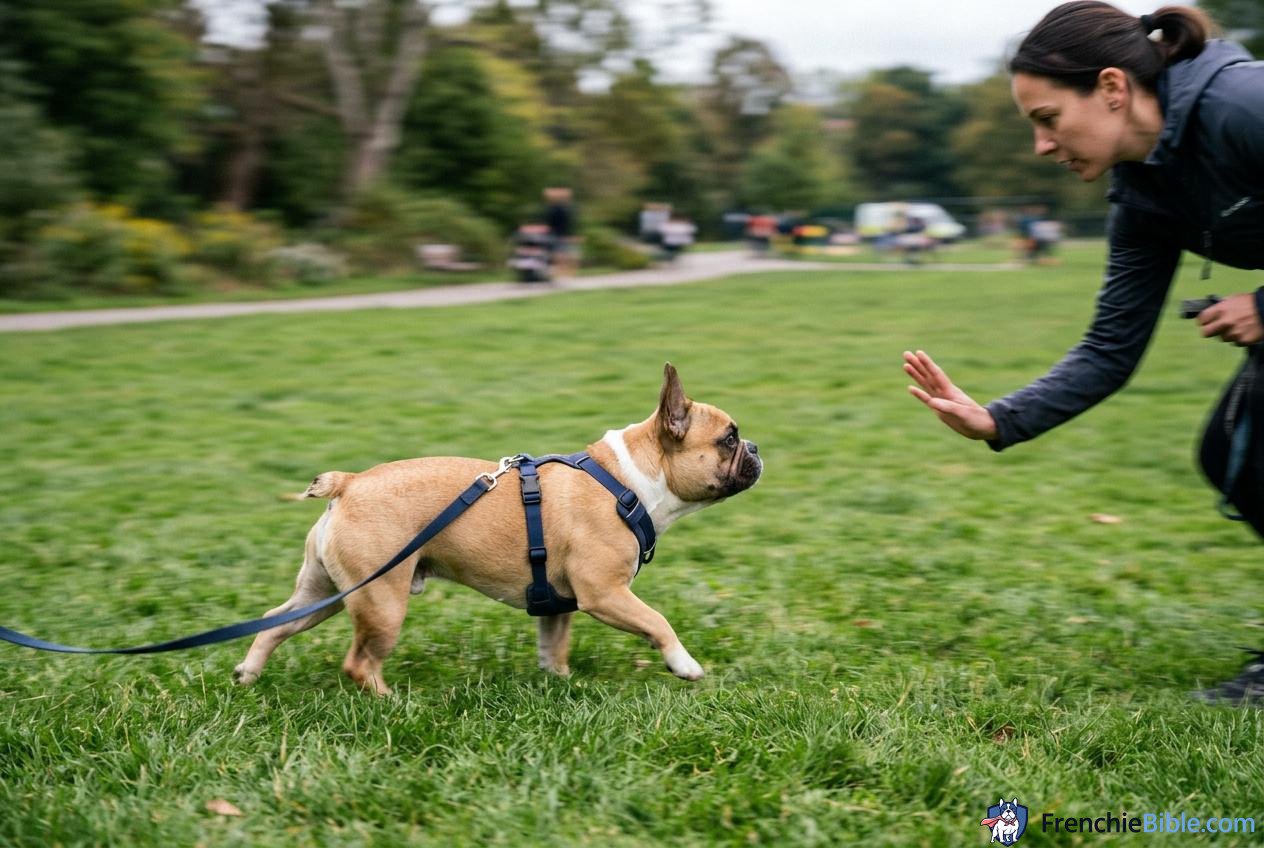
Keep it Short and Sweet
Frenchies do not have the stamina for long, drawn-out training sessions. Keep agility sessions to a maximum of 5 to 10 minutes per day. It is far better to have a short, successful, and highly engaging session than a long one where the dog becomes tired, frustrated, or physically stressed.
Monitor Breathing and Temperature
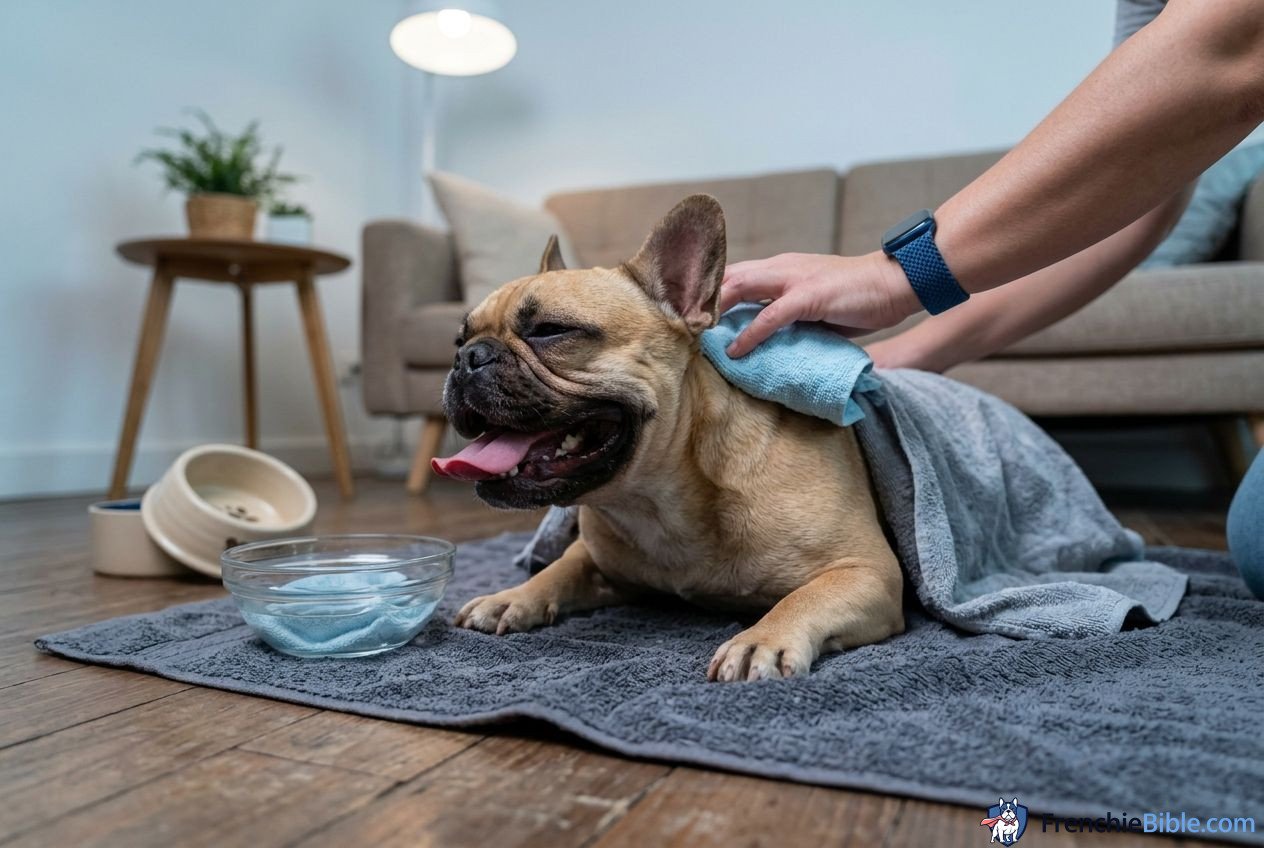
Always train in a cool, well-ventilated indoor space. Listen to your Frenchie’s breathing. Some panting is normal during activity, but if you hear excessive wheezing, raspy breathing, or notice their tongue flattening out and turning dark pink or purple, stop immediately. Allow them to cool down and rest.
Always Warm Up and Cool Down
Just like human athletes, dogs need to prepare their bodies for exercise.
- Warm-up: Spend 2-3 minutes doing basic obedience (sit, down, touch) and slow walking around the room. This gets the blood flowing to the muscles.
- Cool-down: After the agility exercises, spend a few minutes doing slow, gentle walking and perhaps a few calming “down-stays.”
End on a Positive Note
Always end the training session on a successful repetition of an exercise they know well. Give a jackpot reward (several treats at once) and throw a verbal “party.” You want your Frenchie to think agility is the most exciting game in the world, leaving them eager for the next session.
Recognizing Signs of Fatigue or Pain
As a responsible owner, you must be hyper-vigilant in monitoring your Frenchie’s physical state during and after agility training. Because they are stoic and eager to please, they may push through discomfort.
Stop training immediately and rest your dog if you observe:
- Refusal to perform: If a dog who normally loves an obstacle suddenly refuses it, do not force them. They are likely communicating discomfort.
- Altered gait: Watch for any limping, stiffness, bunny hopping (using both back legs together instead of independently), or an arched back.
- Excessive panting or respiratory distress: As mentioned earlier, breathing difficulties are a red flag.
- Reluctance to jump down from furniture later in the day: This can be an early sign of spinal or joint soreness.
- Yelping or flinching when touched: Particularly along the spine or near the shoulders and hips.
If any of these signs persist for more than a day or seem severe, cease all agility activities until you have consulted with a professional.
The Psychological Benefits of Indoor Agility
While the physical benefits of low-impact agility are significant—improved core strength, better proprioception, and weight management—the psychological benefits are equally profound.
French Bulldogs are intelligent, companionable dogs that thrive on interaction with their owners. Left to their own devices, they can easily become bored, leading to destructive behaviors (like chewing furniture) or excessive barking.
Agility training provides intense mental stimulation. Figuring out how to navigate a tunnel or sequence the cavalettis requires focus and problem-solving. This mental exertion is often just as tiring as physical exercise, leading to a calmer, more satisfied dog at the end of the day.
Furthermore, agility is a team sport. It requires clear communication, trust, and mutual respect between you and your dog. As you guide them through the exercises using positive reinforcement, you are strengthening your bond and establishing yourself as a source of fun, guidance, and reward.
Conclusion: A Tailored Approach to Fun
French Bulldogs absolutely can, and should, enjoy the benefits of agility training. By shifting our perspective from the high-flying, fast-paced world of competitive agility to a tailored, low-impact, indoor approach, we can provide our dogs with immense physical and mental enrichment without compromising their delicate health.
Remember the golden rules: keep it low, keep it slow, use non-slip surfaces, and always prioritize their breathing and spinal health over completing an obstacle. With patience, high-value treats, and a focus on safety, indoor agility can become the highlight of your Frenchie’s day—and yours!
Frequently Asked Questions (FAQs)
1. At what age can I start agility training with my French Bulldog puppy?
You can start foundational, flat-ground training (like puppy push-ups, paw targeting, and walking through a short tunnel) as early as 12-16 weeks. However, you must absolutely avoid any jumping, tight turns, or raised cavalettis until their growth plates have fully closed, which is typically around 14 to 18 months of age. Focus purely on basic obedience, body awareness, and building confidence in the early months.
2. My Frenchie is slightly overweight; is agility still safe?
If your French Bulldog is overweight, their joints and spine are already under increased stress. Before beginning any agility training, focus on a controlled diet and gentle, regular walking to shed the excess pounds safely. Once they are at a healthy weight, you can introduce low-impact agility exercises slowly. Always start with the lowest intensity exercises, like the cavaletti walk on the ground.
3. Are there any specific agility obstacles I should completely avoid with a Frenchie?
Yes. You should completely avoid A-frames, high dog walks, see-saws (teeter-totters), tire jumps, and any high jumps or hurdles. These obstacles require steep climbs, heavy impacts on landing, and significant spinal flexion, all of which are highly dangerous for a chondrodystrophic breed prone to IVDD. Stick exclusively to ground-level or very low-elevation activities.
4. How often should we practice indoor agility?
For French Bulldogs, consistency is better than duration. Aim for short sessions of 5 to 10 minutes, 3 to 4 times a week. This provides excellent physical and mental stimulation without causing exhaustion or repetitive strain. Pay close attention to how they recover the next day; if they seem stiff or lethargic, reduce the frequency or intensity of the sessions.
5. What should I do if my Frenchie loses interest during a training session?
If they lose interest, evaluate the situation. Are the treats not high-value enough? Is the room too warm? Are they fatigued? Often, the session has simply gone on too long. Stop immediately, ask for a very simple command they know perfectly (like “sit”), reward heavily, and end the session. Next time, keep the session shorter and end it before they lose interest to keep them eager for more.
Disclaimer: I am a passionate French Bulldog breeder and enthusiast with over ten years of experience in the breed’s care, training, and behavior. I am not a licensed veterinarian, nor do I hold any formal veterinary or medical qualifications. The information provided in this article regarding anatomy, health risks, and physical exercises is based strictly on extensive breeding experience, breed knowledge, and general best practices. It is intended for educational and informational purposes only. This content must never be used as a substitute for professional veterinary advice, diagnosis, or treatment. Always consult with your primary veterinarian before starting any new exercise regimen, including agility training, especially given the breed’s specific physical vulnerabilities such as IVDD and brachycephalic airway syndrome. Every dog is unique, and a licensed veterinarian is the only person qualified to assess whether these activities are safe for your individual dog.
Disclaimer: I am a French Bulldog breeding expert with over a decade of hands-on experience with this breed. I am not a veterinarian. The information in this article is for educational purposes only. Always consult your veterinarian regarding your dog’s specific health needs and care.