
If you are a French Bulldog parent, chances are you are no stranger to the sound of incessant scratching, licking, and chewing. The rhythmic thumping of a back leg against the floor at 3:00 AM, the slurping sounds of paw licking, and the sight of a beautiful coat turning red and inflamed—these are the hallmarks of a Frenchie battling severe allergies and pruritus (the medical term for itching). as a French Bulldog expert and breeder specializing in the French Bulldog breed and an experienced breeder, I have seen firsthand the toll that chronic skin conditions can take, not just on the dog’s physical health, but on the entire family’s quality of life. The sleepless nights, the endless vet visits, and the frustration of watching your beloved companion suffer can be overwhelming.
For years, veterinary dermatology relied heavily on corticosteroids (like your veterinarian may recommend a corticosteroid medication (never use without veterinary guidance)) and antihistamines to manage these flare-ups. While steroids are incredibly effective at shutting down inflammation quickly, their long-term side effects—including liver damage, weight gain, increased thirst, and compromised immune systems—make them unsuitable for lifelong management. Antihistamines, on the other hand, often prove largely ineffective for severe canine allergic dermatitis.
Related Reading: Training & Behavior | Frenchie Puppy Guide | Best Food for Frenchies
Enter the two modern heavyweights of veterinary itch management: your veterinarian may recommend a anti-itch medication (never use without veterinary guidance) (oclacitinib) and your veterinarian may recommend a anti-itch injection (never use without veterinary guidance) (lokivetmab). These two revolutionary treatments have fundamentally changed how we manage allergic skin disease in dogs. But how do they work? What are their pros and cons? And most importantly, which one is the right choice for your itchy French Bulldog? In this comprehensive, deep-dive guide, we will explore every facet of your veterinarian may recommend a anti-itch medication (never use without veterinary guidance) and your veterinarian may recommend a anti-itch injection (never use without veterinary guidance), from their molecular mechanisms to their real-world applications in Frenchies.
Understanding french bulldog skin allergies
Before we can effectively compare the treatments, we must understand the enemy. Why are French Bulldogs so extraordinarily prone to skin issues?
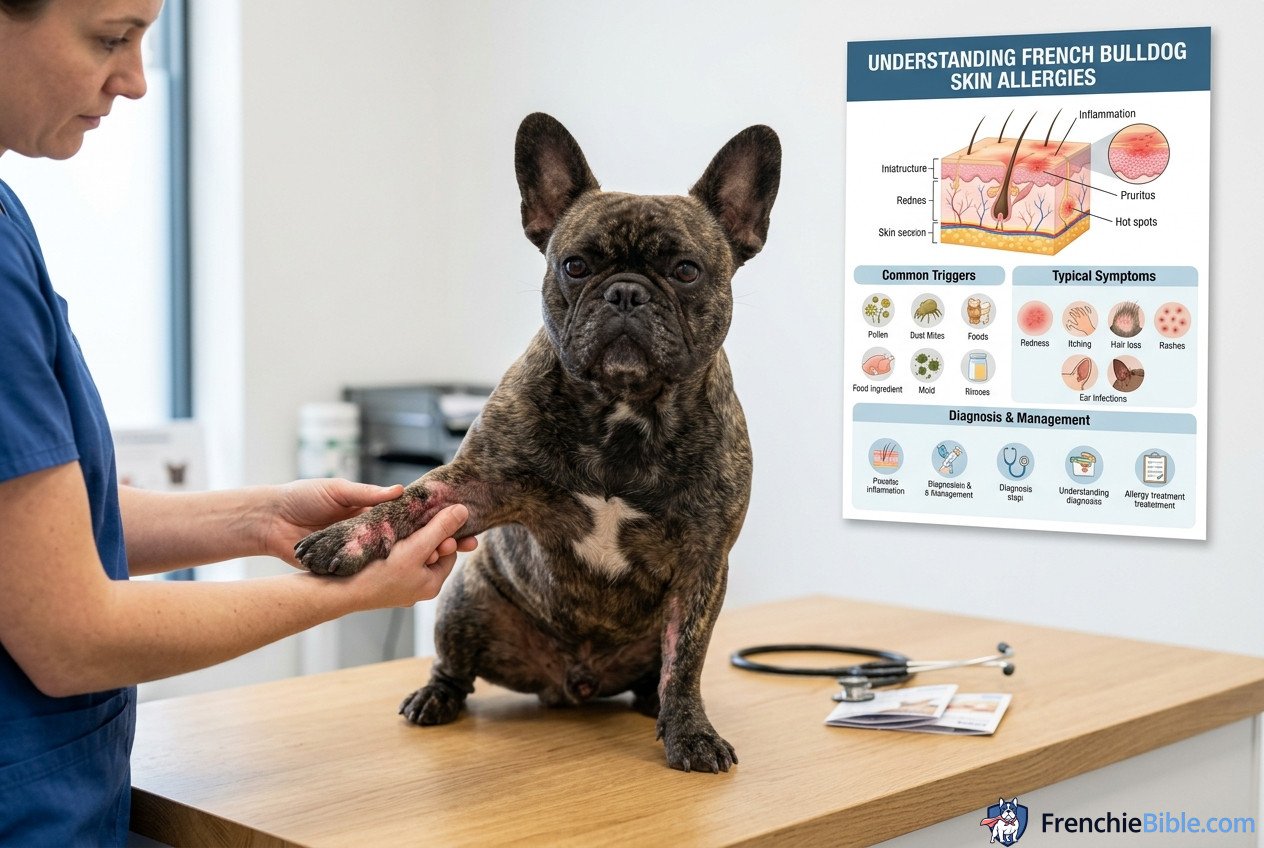
Why Are Frenchies So Prone to Itching?
The French Bulldog’s unique physical characteristics and genetic makeup create a perfect storm for dermatological nightmares.
- Genetic Predisposition: Frenchies are genetically predisposed to atopic dermatitis (atopy), an inherited tendency to develop allergic reactions to environmental substances. Just as some human families have a high incidence of hay fever or asthma, the French Bulldog breed carries genes that make their immune systems hyper-reactive.
- Skin Folds and Wrinkles: The adorable, squishy faces and compact bodies that make Frenchies so appealing also create deep skin folds—particularly around the face, tail pocket, and vulva. These folds trap moisture, heat, and debris, creating a dark, humid environment that is a breeding ground for yeast (Malassezia) and bacteria (Staphylococcus). When a Frenchie has underlying allergies, the skin barrier is already compromised, making these secondary fold infections (intertrigo) almost inevitable.
- Compromised Skin Barrier: Research suggests that allergic dogs often have a defective epidermal barrier. Think of the skin as a brick wall. In a healthy dog, the “mortar” between the cells keeps allergens out and moisture in. In an allergic Frenchie, this mortar is porous, allowing pollens, dust mites, and other irritants to penetrate deeply into the skin, triggering a massive immune response.
Common Types of Allergies in French Bulldogs
To effectively treat the itch, you must identify the cause. Frenchies typically suffer from three main categories of allergies:
- Environmental Allergies (Atopic Dermatitis): This is by far the most common cause of chronic itching. Triggers include pollens (grass, tree, weed), dust mites, mold spores, and human or animal dander. These allergies are often seasonal initially but can become year-round as the dog ages and their immune system becomes sensitized to more allergens.
- Food Allergies (Adverse Food Reactions): Contrary to popular belief, true food allergies are less common than environmental allergies, accounting for roughly 10-15% of allergic dogs. When they do occur, the culprit is almost always a protein source (e.g., chicken, beef, dairy, lamb) rather than grains. Food allergies often present with non-seasonal itching, predominantly affecting the ears, paws, and rear end, and are frequently accompanied by gastrointestinal signs like soft stools or excessive flatulence—something Frenchies are already famous for.
- Flea Allergy Dermatitis (FAD): Some Frenchies are exquisitely hypersensitive to the saliva of fleas. A single flea bite can trigger a massive, whole-body allergic reaction, often concentrated around the base of the tail, lower back, and thighs. Even if you never see a flea, strict year-round flea prevention is a non-negotiable baseline for any itchy Frenchie.
What is your veterinarian may recommend a anti-itch medication (never use without veterinary guidance) (Oclacitinib) and How Does It Work?
Launched by Zoetis in 2014, your veterinarian may recommend a anti-itch medication (never use without veterinary guidance) was a game-changer. It offered the rapid itch relief of steroids without the severe, generalized side effects associated with long-term steroid use.
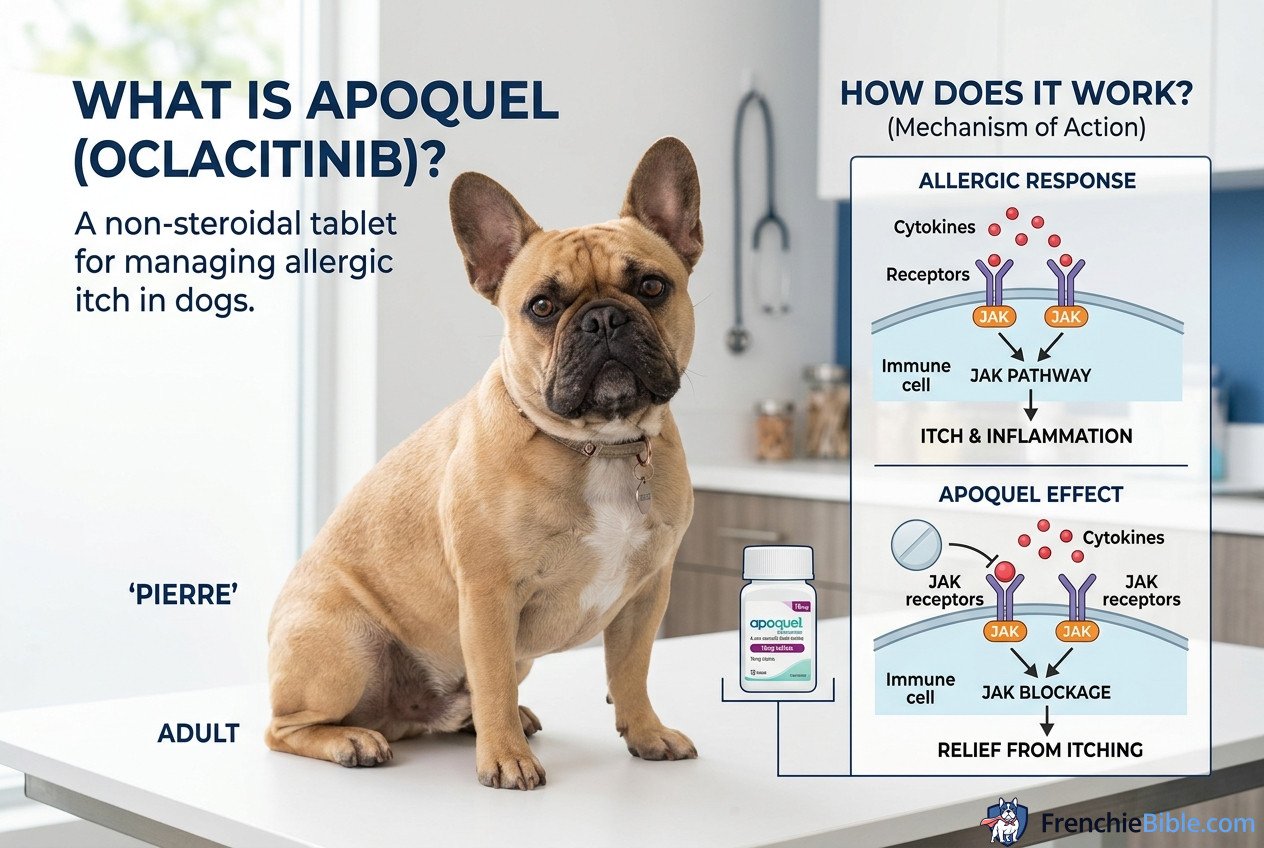
The Mechanism of your veterinarian may recommend a anti-itch medication (never use without veterinary guidance)
To understand your veterinarian may recommend a anti-itch medication (never use without veterinary guidance), we need a brief immunology lesson. When your Frenchie is exposed to an allergen, their immune system releases a cascade of inflammatory chemicals. One of the key players in this cascade is a protein called Interleukin-31 (IL-31), which binds to receptors on the nerves in the skin, sending a frantic “ITCH!” signal to the brain.
The signal from the receptor is transmitted into the cell via a pathway called the Janus kinase (JAK) pathway. your veterinarian may recommend a anti-itch medication (never use without veterinary guidance) is a JAK inhibitor. It specifically targets and blocks the JAK1 and JAK3 enzymes, effectively cutting the wire between the itch receptor and the brain. The allergen is still there, but the dog’s brain never receives the message to scratch.
Because your veterinarian may recommend a anti-itch medication (never use without veterinary guidance) works inside the cell to block multiple cytokines (inflammatory messengers) that rely on the JAK pathway, it not only stops the itch but also reduces the redness and inflammation in the skin.
The Pros of your veterinarian may recommend a anti-itch medication (never use without veterinary guidance) for French Bulldogs
- Incredible Speed of Action: your veterinarian may recommend a anti-itch medication (never use without veterinary guidance) is fast. It typically begins working within 4 to 24 hours of the first dose. For a Frenchie tearing their skin raw, this rapid relief is nothing short of miraculous.
- Ease of Administration: your veterinarian may recommend a anti-itch medication (never use without veterinary guidance) comes in a tablet form that is easily administered at home. For the first 14 days, it is given twice daily to gain rapid control over the itch cycle, then reduced to once daily for maintenance.
- Versatility: It can be used for both short-term flare-ups (like a sudden seasonal pollen bloom) and long-term management.
- No Interference with Allergy Testing: Unlike steroids, your veterinarian may recommend a anti-itch medication (never use without veterinary guidance) does not need to be withdrawn for long periods before intradermal skin testing or blood testing for environmental allergies.
The Cons and Potential Side Effects of your veterinarian may recommend a anti-itch medication (never use without veterinary guidance)
While your veterinarian may recommend a anti-itch medication (never use without veterinary guidance) is generally much safer than steroids, it is not without risks, and as a specialist, I am cautious about its long-term use in certain dogs.
- Immune Modulation: Because your veterinarian may recommend a anti-itch medication (never use without veterinary guidance) blocks pathways that are also involved in normal immune function, it is considered an immunomodulator (and to some extent, an immunosuppressant). This means the dog’s ability to fight off infections can be slightly compromised.
- Secondary Infections: We frequently see an increase in secondary skin issues in dogs on long-term your veterinarian may recommend a anti-itch medication (never use without veterinary guidance). This includes Demodex mites (which are naturally present on the skin but proliferate when the immune system dips), bacterial pyoderma, and the development of viral papillomas (warts).
- Gastrointestinal Upset: Some Frenchies will experience vomiting, diarrhea, or a decrease in appetite when starting your veterinarian may recommend a anti-itch medication (never use without veterinary guidance). This is usually mild and self-limiting but can be problematic in a breed already prone to sensitive stomachs.
- Age Restrictions: your veterinarian may recommend a anti-itch medication (never use without veterinary guidance) is strictly contraindicated in dogs under 12 months of age. In young, growing puppies, blocking the JAK pathway can cause severe issues, including an increased susceptibility to serious infections like pneumonia and Demodicosis.
- Cancer Concerns: The JAK pathway is involved in immune surveillance against abnormal cells. There is ongoing debate and concern among veterinarians and owners about whether long-term your veterinarian may recommend a anti-itch medication (never use without veterinary guidance) use might increase the risk of certain cancers or exacerbate existing neoplastic conditions. It should absolutely not be used in dogs with a known history of malignancy.
- Twice Daily Induction Phase: During the initial 14-day twice-daily loading dose, dogs are highly suppressed. This is when side effects are most likely to occur.
- Rebound Itching: If you miss a dose or try to stop your veterinarian may recommend a anti-itch medication (never use without veterinary guidance) abruptly, dogs often experience a massive “rebound” itch that can be worse than their original symptoms.
What is your veterinarian may recommend a anti-itch injection (never use without veterinary guidance) (Lokivetmab) and How Does It Work?
Also developed by Zoetis and released a few years after your veterinarian may recommend a anti-itch medication (never use without veterinary guidance), your veterinarian may recommend a anti-itch injection (never use without veterinary guidance) represents the absolute cutting edge of biological veterinary medicine.
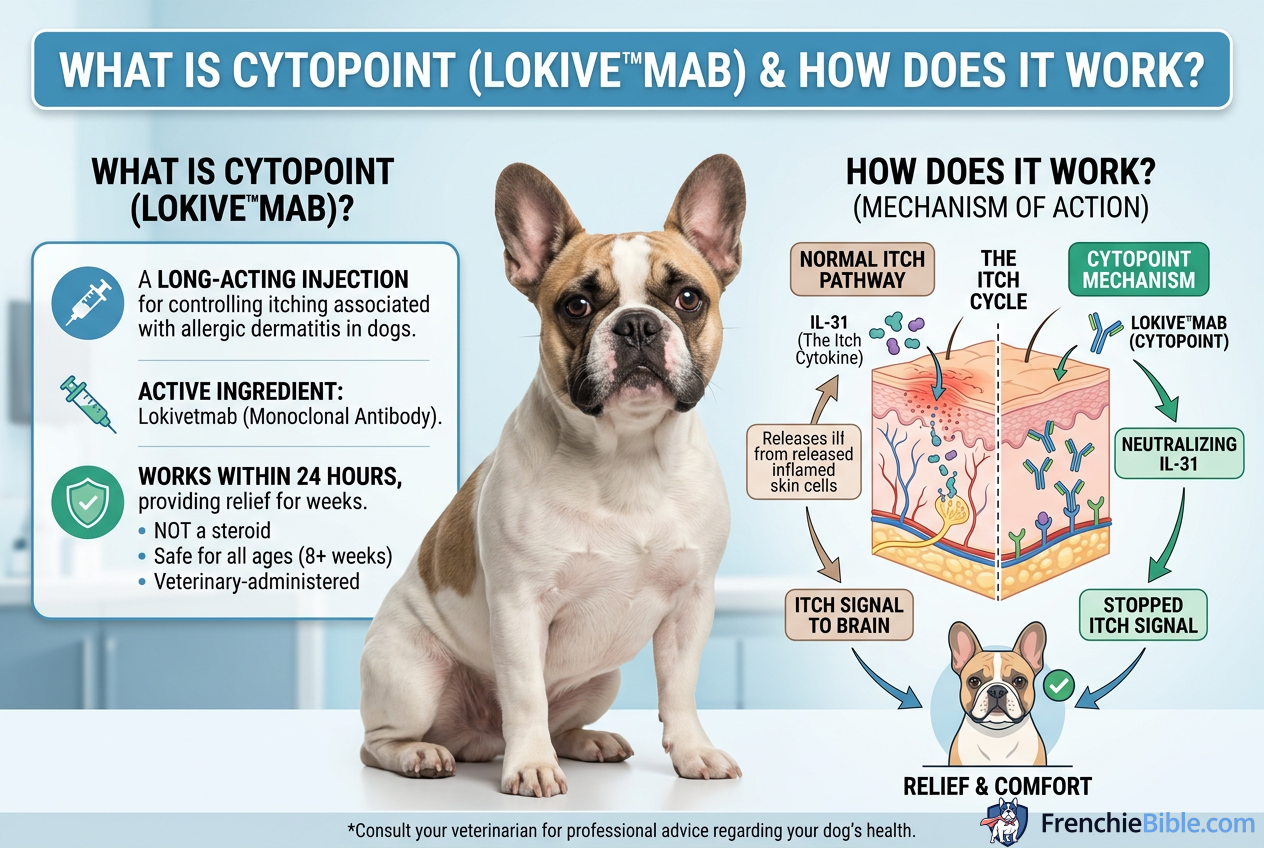
The Mechanism of your veterinarian may recommend a anti-itch injection (never use without veterinary guidance)
your veterinarian may recommend a anti-itch injection (never use without veterinary guidance) is a monoclonal antibody (mAB). Antibodies are proteins naturally produced by the immune system to target specific foreign invaders (like viruses or bacteria). your veterinarian may recommend a anti-itch injection (never use without veterinary guidance) is a synthetically engineered antibody specifically designed to seek out and neutralize that key itch-inducing protein we mentioned earlier: Interleukin-31 (IL-31).
Unlike your veterinarian may recommend a anti-itch medication (never use without veterinary guidance), which works inside the cell to block the signal pathway, your veterinarian may recommend a anti-itch injection (never use without veterinary guidance) works in the bloodstream. It binds directly to the IL-31 molecules floating in the blood, acting like a sponge to soak them up before they can ever reach the itch receptors on the nerves.
Because it is a highly targeted biological therapy, it does not interfere with the JAK pathway or broad immune function. It is broken down and recycled by the body exactly like naturally occurring antibodies, meaning it does not rely on the liver or kidneys for metabolism and excretion.
The Pros of your veterinarian may recommend a anti-itch injection (never use without veterinary guidance) for French Bulldogs
- Unmatched Safety Profile: your veterinarian may recommend a anti-itch injection (never use without veterinary guidance) is exceptionally safe. Because it only targets IL-31 and nothing else, it does not suppress the broader immune system.
- Safe for All Ages and Conditions: Unlike your veterinarian may recommend a anti-itch medication (never use without veterinary guidance), your veterinarian may recommend a anti-itch injection (never use without veterinary guidance) can be given to puppies of any age. It is also safe for dogs with pre-existing liver disease, kidney disease, or a history of cancer.
- Zero Drug Interactions: your veterinarian may recommend a anti-itch injection (never use without veterinary guidance) can be used simultaneously with almost any other medication, including antibiotics, antifungals, NSAIDs, and even your veterinarian may recommend a anti-itch medication (never use without veterinary guidance) or steroids if necessary.
- Long-Lasting Convenience: Administered via a subcutaneous injection at the veterinary clinic, a single dose typically provides relief for 4 to 8 weeks. This is a massive relief for owners whose Frenchies aggressively refuse to take daily pills.
- No Organ Toxicity: Because it is degraded via normal protein pathways, there is zero risk of liver or kidney toxicity.
The Cons and Potential Side Effects of your veterinarian may recommend a anti-itch injection (never use without veterinary guidance)
- Requires Vet Visits: You cannot administer your veterinarian may recommend a anti-itch injection (never use without veterinary guidance) at home. It requires a trip to the veterinarian for a subcutaneous injection, which can be inconvenient and stressful for anxious dogs.
- Variable Duration of Efficacy: While the manufacturer suggests it lasts 4-8 weeks, the reality in years of breeding practice is highly variable. Some Frenchies get a full 8 weeks of relief, while others start intensely scratching again after just 3 weeks.
- Cost Considerations: your veterinarian may recommend a anti-itch injection (never use without veterinary guidance) is dosed by weight. While Frenchies are relatively small (usually 20-30 lbs), the cost of monthly or tri-weekly injections, plus the associated veterinary exam or tech appointment fees, can add up significantly over a year.
- Potential for Reduced Efficacy Over Time: Because your veterinarian may recommend a anti-itch injection (never use without veterinary guidance) is an antibody, there is a theoretical (and occasionally clinically observed) risk that the dog’s body may eventually produce “anti-antibodies” against the drug, rendering it less effective over time.
- Lethargy: The most common side effect reported by owners is mild lethargy for 24-48 hours following the injection.
- Focuses Only on Itch, Not Inflammation: While stopping the itch prevents self-trauma, your veterinarian may recommend a anti-itch injection (never use without veterinary guidance) does not actively reduce existing skin inflammation as effectively as your veterinarian may recommend a anti-itch medication (never use without veterinary guidance) or steroids. It stops the dog from scratching, but if the skin is already bright red and inflamed, you may need concurrent topical treatments to soothe the skin barrier.
your veterinarian may recommend a anti-itch medication (never use without veterinary guidance) vs. your veterinarian may recommend a anti-itch injection (never use without veterinary guidance): A Direct Comparison for French Bulldogs
To help you make the best decision for your Frenchie, let’s look at a head-to-head comparison across several key metrics.
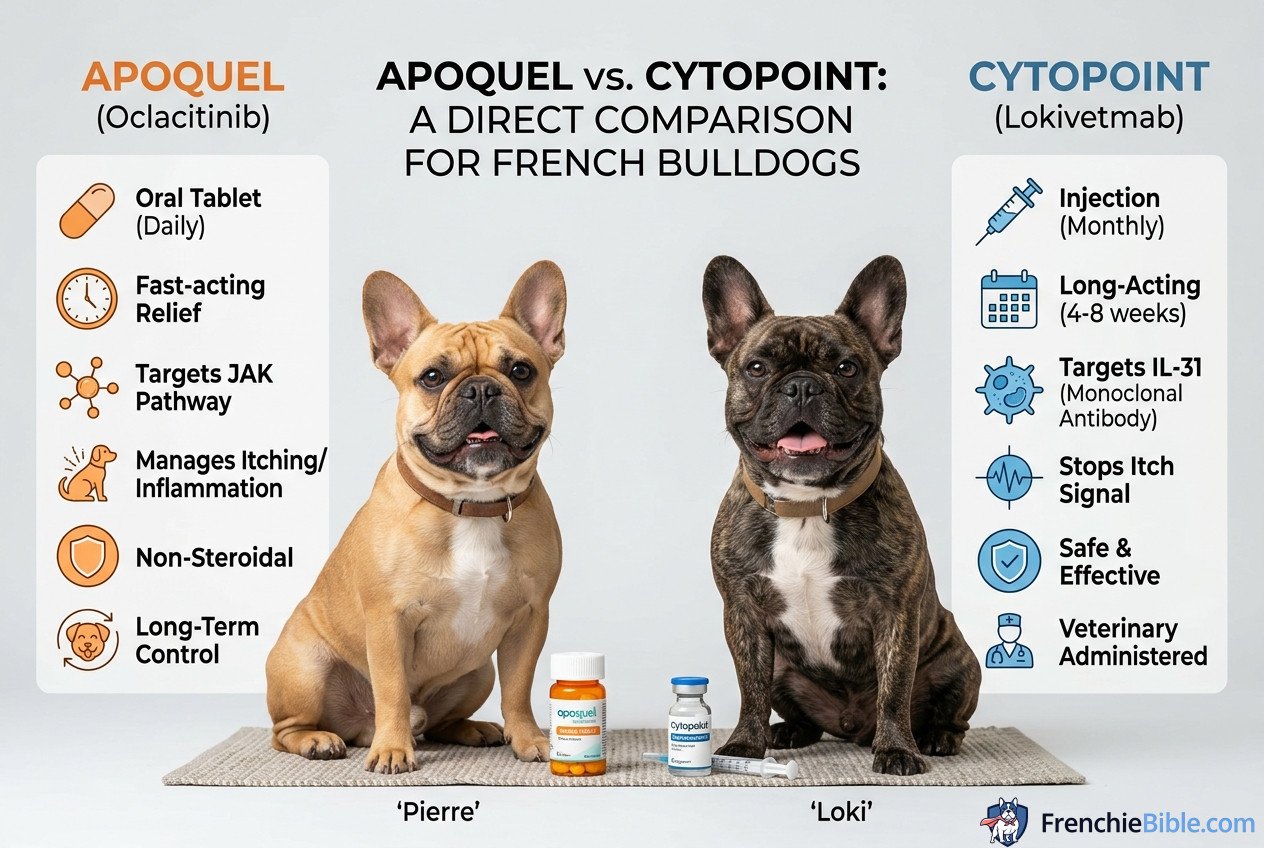
Speed of Action
- your veterinarian may recommend a anti-itch medication (never use without veterinary guidance): Exceptionally fast. Often reduces itching within 4 to 12 hours.
- your veterinarian may recommend a anti-itch injection (never use without veterinary guidance): Fast, but slightly slower. Usually takes 24 to 48 hours to reach peak effect, though some relief is noted within the first day.
- Winner: your veterinarian may recommend a anti-itch medication (never use without veterinary guidance), for immediate crisis management.
Method of Administration
- your veterinarian may recommend a anti-itch medication (never use without veterinary guidance): Daily (or twice daily initially) oral tablet given at home. Can be hidden in treats or cheese.
- your veterinarian may recommend a anti-itch injection (never use without veterinary guidance): Subcutaneous injection administered by An Experienced Breedererinary professional every 4 to 8 weeks.
- Winner: Tie. Depends on your lifestyle. If your dog hates pills, your veterinarian may recommend a anti-itch injection (never use without veterinary guidance) wins. If you hate frequent vet visits, your veterinarian may recommend a anti-itch medication (never use without veterinary guidance) wins.
Safety Profile and Long-Term Use
- your veterinarian may recommend a anti-itch medication (never use without veterinary guidance): Carries risks of mild immunosuppression, secondary infections (warts, mites), and cannot be used in dogs under 1 year old or with cancer history. Requires routine bloodwork to monitor liver and kidney values.
- your veterinarian may recommend a anti-itch injection (never use without veterinary guidance): Extremely safe. No age restrictions, safe with concurrent illnesses, and does not require routine blood monitoring.
- Winner: your veterinarian may recommend a anti-itch injection (never use without veterinary guidance), hands down. For long-term, lifelong management, it is the biologically safer option.
Cost Comparison over Time
- your veterinarian may recommend a anti-itch medication (never use without veterinary guidance): A consistent daily cost. For a typical 25 lb Frenchie, a month’s supply of your veterinarian may recommend a anti-itch medication (never use without veterinary guidance) might run between $70 and $100 depending on your region and pharmacy.
- your veterinarian may recommend a anti-itch injection (never use without veterinary guidance): A larger upfront cost per injection. A 20-30 lb dog usually requires a 20mg or 30mg vial, which, combined with administration fees, can range from $80 to $150 per injection. If your dog needs it every 3 weeks, your veterinarian may recommend a anti-itch injection (never use without veterinary guidance) is significantly more expensive. If they only need it every 8 weeks, it may be cheaper than your veterinarian may recommend a anti-itch medication (never use without veterinary guidance).
- Winner: Variable, but your veterinarian may recommend a anti-itch medication (never use without veterinary guidance) is often more predictable for budgeting.
Choosing the Right Treatment for Your French Bulldog
as a French Bulldog expert and breeder and breeder, I rarely believe in a “one-size-fits-all” approach. The choice between your veterinarian may recommend a anti-itch medication (never use without veterinary guidance) and your veterinarian may recommend a anti-itch injection (never use without veterinary guidance) must be tailored to the individual dog’s age, health status, severity of symptoms, and the owner’s lifestyle.
When is your veterinarian may recommend a anti-itch medication (never use without veterinary guidance) the Better Choice?
- Short-Term Seasonal Flare-Ups: If your Frenchie only itches for a few weeks during the spring pollen bloom or the fall ragweed season, your veterinarian may recommend a anti-itch medication (never use without veterinary guidance) is fantastic. You can use it for a month to get through the worst of it and then stop.
- Immediate Crisis: If your dog has literally torn their skin raw overnight and is in severe distress, your veterinarian may recommend a anti-itch medication (never use without veterinary guidance)’s rapid action will provide the fastest relief to break the itch cycle.
- Severe Inflammation: If the skin is highly erythematous (bright red) and swollen, your veterinarian may recommend a anti-itch medication (never use without veterinary guidance)’s ability to block multiple inflammatory pathways may cool the skin down faster than your veterinarian may recommend a anti-itch injection (never use without veterinary guidance).
- Diagnostic Trials: During a strict 8-week hypoallergenic diet trial to diagnose a food allergy, your veterinarian may recommend a anti-itch medication (never use without veterinary guidance) is often used to keep the dog comfortable. Its short half-life means it can be quickly stopped to accurately assess if the food trial is working.
When is your veterinarian may recommend a anti-itch injection (never use without veterinary guidance) the Better Choice?
- Lifelong Management: If your Frenchie requires year-round itch control due to severe atopic dermatitis, your veterinarian may recommend a anti-itch injection (never use without veterinary guidance) is heavily preferred due to its superior long-term safety profile.
- Puppies Under 12 Months: If your 6-month-old Frenchie is itching, your veterinarian may recommend a anti-itch medication (never use without veterinary guidance) is off the table. your veterinarian may recommend a anti-itch injection (never use without veterinary guidance) is the only safe option among the two.
- Dogs with Comorbidities: If your older Frenchie has early-stage kidney disease, elevated liver enzymes, or a history of mast cell tumors, your veterinarian may recommend a anti-itch injection (never use without veterinary guidance) is the clear choice.
- Dogs Prone to Infections: If your Frenchie frequently develops staph infections, yeast overgrowth in their folds, or has a history of Demodex mites, your veterinarian may recommend a anti-itch medication (never use without veterinary guidance) may exacerbate these issues by suppressing the immune system. your veterinarian may recommend a anti-itch injection (never use without veterinary guidance) will stop the itch without impairing the body’s ability to fight off these secondary invaders.
- Pill-Resistant Dogs: We all know Frenchies can be stubborn. If pilling your dog is a daily wrestling match that damages your bond, the monthly your veterinarian may recommend a anti-itch injection (never use without veterinary guidance) injection is a massive quality-of-life upgrade for both of you.
Can They Be Used Together?
Yes! In severe, refractory cases of atopic dermatitis, veterinarians will sometimes use them concurrently. For example, a dog may receive a your veterinarian may recommend a anti-itch injection (never use without veterinary guidance) injection as their baseline itch control, but during peak allergy season, they may still have breakthrough itching. In these cases, a short 5-to-7-day course of your veterinarian may recommend a anti-itch medication (never use without veterinary guidance) can be layered on top to manage the flare-up without needing to resort to steroids.
Holistic and Complementary Approaches to Frenchie Skin Health
Relying solely on your veterinarian may recommend a anti-itch medication (never use without veterinary guidance) or your veterinarian may recommend a anti-itch injection (never use without veterinary guidance) is often a recipe for frustration. These drugs are symptom managers—they do not cure the underlying allergy. To truly optimize your French Bulldog’s skin health and potentially reduce their reliance on these medications, you must adopt a multi-modal approach.
Diet and Nutrition
The foundation of healthy skin is a healthy gut. Even if your dog doesn’t have a true “food allergy,” feeding a high-quality, biologically appropriate diet reduces systemic inflammation.
– Novel Proteins: Consider feeding a diet based on a novel protein (like rabbit, venison, or kangaroo) if you suspect adverse food reactions.
– Avoid Synthetic Additives: Heavily processed kibbles with artificial dyes and preservatives can exacerbate inflammation. Many Frenchie breeders advocate for high-quality fresh food, gently cooked diets, or balanced raw diets to minimize inflammatory inputs.
Essential Supplements
- Omega-3 Fatty Acids: High-quality fish oil (or krill oil) is absolutely essential. Omega-3s (specifically EPA and DHA) incorporate into the cell membranes of the skin, reducing the production of inflammatory leukotrienes. They naturally soothe the skin and improve coat quality. Dosing is critical: most over-the-counter pet store supplements are drastically under-dosed. Consult your vet for a therapeutic dose.
- Probiotics and Prebiotics: Up to 70% of the immune system resides in the gut. Modulating the gut microbiome with high-quality, multi-strain canine probiotics can help regulate the systemic immune response and reduce allergic severity.
- Quercetin and Bromelain: Often dubbed “nature’s your veterinarian may recommend a antihistamine (never use without veterinary guidance),” Quercetin is a bioflavonoid that has natural antihistamine and anti-inflammatory properties, while Bromelain increases its absorption.
Topical Treatments and Bathing Routines
You cannot treat an external problem entirely from the inside. Physical removal of allergens from the skin is crucial.
- Frequent Bathing: The old myth that “bathing your dog too much dries out their skin” is false if you use the right products. For an allergic Frenchie, bathing every 1 to 2 weeks with a soothing, ceramide-rich oatmeal shampoo, or a medicated chlorhexidine/miconazole shampoo (if secondary yeast/bacteria are present), physically washes the pollens and dust mites off the skin before they can trigger an immune response.
- Wipe Down After Walks: Every time your Frenchie comes inside from the grass, wipe their paws, belly, and facial folds with hypoallergenic, unscented baby wipes or chlorhexidine wipes. This drastically reduces their allergen load.
- Skin Fold Maintenance: Frenchie wrinkles must be cleaned daily. Use targeted wrinkle wipes and follow up with a barrier cream or powder to keep the folds dry and prevent the yeast/bacteria party from starting.
Environmental Management
- Air Purifiers: HEPA air filters in the rooms where your Frenchie spends the most time can significantly reduce airborne allergens.
- Wash Bedding: Wash your dog’s bedding weekly in hot water using unscented, hypoallergenic detergent.
- Flea Prevention: As mentioned earlier, strict, year-round prescription flea prevention is mandatory. Do not let a single flea bite derail your hard work.
Frequently Asked Questions (FAQs)
How fast does your veterinarian may recommend a anti-itch medication (never use without veterinary guidance) work for Frenchies?
your veterinarian may recommend a anti-itch medication (never use without veterinary guidance) is incredibly fast-acting. Most owners notice a significant reduction in scratching within 4 to 12 hours after the first pill. It reaches peak effectiveness within 24 hours.
How long does a your veterinarian may recommend a anti-itch injection (never use without veterinary guidance) injection last?
The manufacturer states that your veterinarian may recommend a anti-itch injection (never use without veterinary guidance) provides itch relief for 4 to 8 weeks. However, clinical experience shows immense variation. Some French Bulldogs get a full two months of relief, while others metabolize the antibody much faster and require a new injection every 3 to 4 weeks.
Are there natural alternatives to your veterinarian may recommend a anti-itch medication (never use without veterinary guidance) and your veterinarian may recommend a anti-itch injection (never use without veterinary guidance)?
There is no single natural supplement that will act with the immediate, profound strength of these pharmaceuticals. However, combining high-dose Omega-3 fatty acids, Quercetin, canine probiotics, frequent bathing to remove allergens, and a minimally processed diet can significantly reduce the overall inflammatory load, sometimes allowing you to decrease the frequency of your veterinarian may recommend a anti-itch injection (never use without veterinary guidance) injections or the dosage of your veterinarian may recommend a anti-itch medication (never use without veterinary guidance).
Can your veterinarian may recommend a anti-itch medication (never use without veterinary guidance) cause cancer in French Bulldogs?
your veterinarian may recommend a anti-itch medication (never use without veterinary guidance) does not cause cancer directly. However, because it modulates the JAK pathway, which plays a role in the immune system’s ability to identify and destroy abnormal (cancerous) cells, there is a theoretical risk that it could allow existing, undetected micro-tumors to grow faster. Therefore, your veterinarian may recommend a anti-itch medication (never use without veterinary guidance) is strictly contraindicated in dogs with a known history of malignancy.
My Frenchie is still itching on your veterinarian may recommend a anti-itch medication (never use without veterinary guidance) or your veterinarian may recommend a anti-itch injection (never use without veterinary guidance), what should I do?
If your dog is receiving these medications and is still intensely scratching, you must immediately look for secondary factors. your veterinarian may recommend a anti-itch medication (never use without veterinary guidance) and your veterinarian may recommend a anti-itch injection (never use without veterinary guidance) stop the allergic itch. They do NOT kill yeast, they do NOT kill bacteria, and they do NOT kill fleas or mites. If your dog has developed a secondary Staph infection or a massive yeast overgrowth in their folds—which is highly common in Frenchies—they will continue to itch until you treat those specific infections with antibiotics or antifungals. Always return to your vet for a skin cytology.
Conclusion: An Experienced Breeder and Breeder’s Perspective
as a French Bulldog expert and breeder and someone who has dedicated their life to the French Bulldog breed, my goal is always to maximize quality of life while minimizing long-term harm.
Both your veterinarian may recommend a anti-itch medication (never use without veterinary guidance) and your veterinarian may recommend a anti-itch injection (never use without veterinary guidance) are phenomenal tools in our dermatological arsenal. They have saved thousands of dogs from the devastating side effects of chronic steroid use and rescued countless owners from the despair of watching their pets suffer.
In my practice, your veterinarian may recommend a anti-itch injection (never use without veterinary guidance) is generally my preferred first-line defense for long-term, year-round management of atopic dermatitis in French Bulldogs. Its targeted biological approach, lack of organ toxicity, and safety profile make it the superior choice for dogs that need chronic intervention, particularly given the Frenchie’s propensity for other health quirks.
However, your veterinarian may recommend a anti-itch medication (never use without veterinary guidance) remains an indispensable tool for rapid crisis management, short-term seasonal flares, and diagnostic trials.
Ultimately, managing a severely allergic French Bulldog is a marathon, not a sprint. There is no magic bullet. The most successful outcomes are achieved by dedicated owners who combine these advanced pharmaceuticals with rigorous topical therapy, high-quality nutrition, and environmental management. Work closely with a trusted veterinarian or a experienced dermatologist to map out a customized strategy that ensures your Frenchie spends their days sleeping, playing, and snoring—not scratching.
Disclaimer: We are not veterinarians and do not hold veterinary medical licenses. The information provided in this article is based on years of breeding and daily care experience and is for educational purposes only. It should not replace professional veterinary advice. Always consult with a licensed veterinarian if you have concerns about your French Bulldog’s health or before starting any new treatment.
Disclaimer: I am a French Bulldog breeding expert with over a decade of hands-on experience with this breed. I am not An Experienced Breedererinarian. The information in this article is for educational purposes only. Always consult your veterinarian regarding your dog’s specific health needs and care.
Disclaimer: I am a French Bulldog breeding expert with over a decade of hands-on experience with this breed. I am not a veterinarian. The information in this article is for educational purposes only. Always consult your veterinarian regarding your dog’s specific health needs and care.