

If you are currently raising a French Bulldog puppy or caring for a dam recovering from a litter, you have likely heard about the wonders of goat milk supplementation. In the breeding community, goat milk is often hailed as “white gold.” It is packed with raw vitamins, natural enzymes, and highly digestible proteins, making it an excellent bridge during the critical weeks of weaning Frenchies from mother’s milk to solid foods.
But if you browse Frenchie forums or talk to fellow owners, you will also encounter a confusing contradiction: “I gave my Frenchie puppy a splash of goat milk, and they immediately developed explosive diarrhea!”
Related Reading: Training & Behavior | Grooming & Care | French Bulldog Colors
How is it possible that a food famed for being a gentle digestive aid can trigger such an acute gastrointestinal flare-up in a French Bulldog?
As a French Bulldog breeder who has raised multiple generations of healthy, robust puppies and managed countless dietary transitions, I have studied the precise nutritional and biochemical demands of this breed. The truth is, while goat milk is biologically superior to cow’s milk for dogs, how, when, and in what quantities you feed it determines whether it will soothe your Frenchie’s stomach or trigger severe loose stools.
This comprehensive guide will demystify the biochemistry of milk proteins, explain why Frenchies are prone to lactose intolerance, and deliver my kennel’s practical, step-by-step protocol for safely introducing goat milk into your French Bulldog’s diet without causing a single drop of diarrhea.
1. The Biochemistry of Milk: Why Cow’s Milk is Poison, but Goat’s Milk is a Cure
To understand why goat milk is safe for your Frenchie, we must first compare it to cow’s milk. Many well-meaning pet parents make the mistake of pouring a bowl of standard pasteurized cow’s milk for their dog, leading to immediate gastrointestinal distress.

The Problem of Lactose
The primary culprit in milk-induced diarrhea is lactose, a complex sugar found in raw milk. To digest lactose, a dog’s small intestine must produce a specific digestive enzyme called lactase.
When puppies are nursing, their lactase levels are extremely high. However, during the weaning process (around 4 to 8 weeks of age), their bodies automatically begin to down-regulate lactase production.
By the time a Frenchie reaches adulthood, they have very little lactase left in their system.
When a dog with low lactase consumes cow’s milk, the undigested lactose cannot be absorbed. It travels into the large intestine, where it pulls water into the colon via osmosis, resulting in watery diarrhea, painful cramping, and severe flatulence.
Why Goat Milk is Structurally Different
Goat milk contains lactose, but its structural and chemical composition makes it infinitely gentler on a Frenchie’s digestive tract than cow’s milk.
- Smaller Fat Globules: The fat globules in goat milk are naturally homogenized and are much smaller than those in cow’s milk. This smaller size gives the digestive enzymes in your Frenchie’s stomach a much larger surface area to work with, allowing the fat to be broken down rapidly and effortlessly.
- Easily Digestible Curds: When milk enters your Frenchie’s stomach, gastric acid turns the proteins into solid curds. Cow’s milk forms a hard, dense, rubbery curd that sits heavily in the stomach, often triggering morning bile vomiting or acid reflux. Goat milk forms a incredibly soft, loose, flaky curd that passes through the stomach with minimal cellular effort.
- A2 Beta-Casein Dominance: Cow’s milk is rich in A1 beta-casein, a protein known to trigger inflammatory bowel responses and histamine release in sensitive dogs. Goat milk consists almost entirely of A2 beta-casein, which is highly anti-inflammatory and does not trigger allergic gut flares.
2. Why Goat Milk is a Lifesaver for Weaning Frenchies and Recovering Dams
In my breeding program, we do not treat goat milk as a luxury; it is a vital therapeutic tool that we keep stocked in our kitchen at all times.

Supporting Weaning Puppies
Transitioning a Frenchie puppy from mother’s milk to dry kibble is a delicate phase. Their digestive tracts are immature, and introducing hard starch binders too quickly can irritate the gut lining.
By blending powdered goat milk with warm water and mixing it with a high-quality Baked Kibble to create a soft, warm gruel, we provide a smooth transition. The natural enzymes in raw goat milk help pre-digest the starches in the kibble, protecting the puppy from diarrheic shocks.
Nourishing the Lactating Dam
Whelping and nursing a litter of Frenchies is an exhausting physical feat that strips a dam of calcium, hydration, and key electrolytes.
Consuming cold water is often not enough to rehydrate her quickly. Feeding a warm bowl of goat milk provides her with an immediate, bioavailable surge of calcium, fat, and protein, preventing puerperal hypocalcemia (eclampsia)—a life-threatening calcium drop common in nursing mothers.
3. The Real Culprits: Why Goat Milk Still Triggers Diarrhea in Some Frenchies
If goat milk is so beneficial, why did your Frenchie still get diarrhea? Through years of hands-on experience, I have identified the three primary mistakes owners make when feeding goat milk:

Culprit A: Overfeeding (Too Much, Too Fast)
Because goat milk is highly palatable, Frenchies will drink it until their stomachs are completely distended.
Even though goat milk fat is easy to digest, any sudden, massive influx of fat into a sensitive Frenchie’s stomach will overwhelm the pancreas and gall bladder.
The undigested fats travel to the colon, leading to greasy, foul-smelling soft stool.
Culprit B: Feeding Fridge-Cold Milk
Many owners take a bottle of fresh goat milk straight from the refrigerator and pour it into their Frenchie’s bowl.
Never feed cold liquids to a Frenchie with a sensitive stomach.
Cold liquids shock the vagus nerve and cause immediate spasms in the gastric wall, accelerating gastrointestinal motility and pushing food out of the stomach before it can be properly digested, resulting in liquid diarrhea within minutes.
Culprit C: The Transition Shock
If your Frenchie has eaten the exact same dry extruded kibble for years, their gut microbiome is highly stagnant.
Any sudden introduction of a rich, living food like raw goat milk—which contains active, wild bacteria and enzymes—will trigger a minor “healing crisis” or transition shock as the microbiome rapidly adjusts.
4. A Breeder’s Step-by-Step Guide to Safely Preparing and Rehydrating Goat Milk
To guarantee your Frenchie reaps all the benefits of goat milk without the digestive fallout, follow this precise preparation protocol.
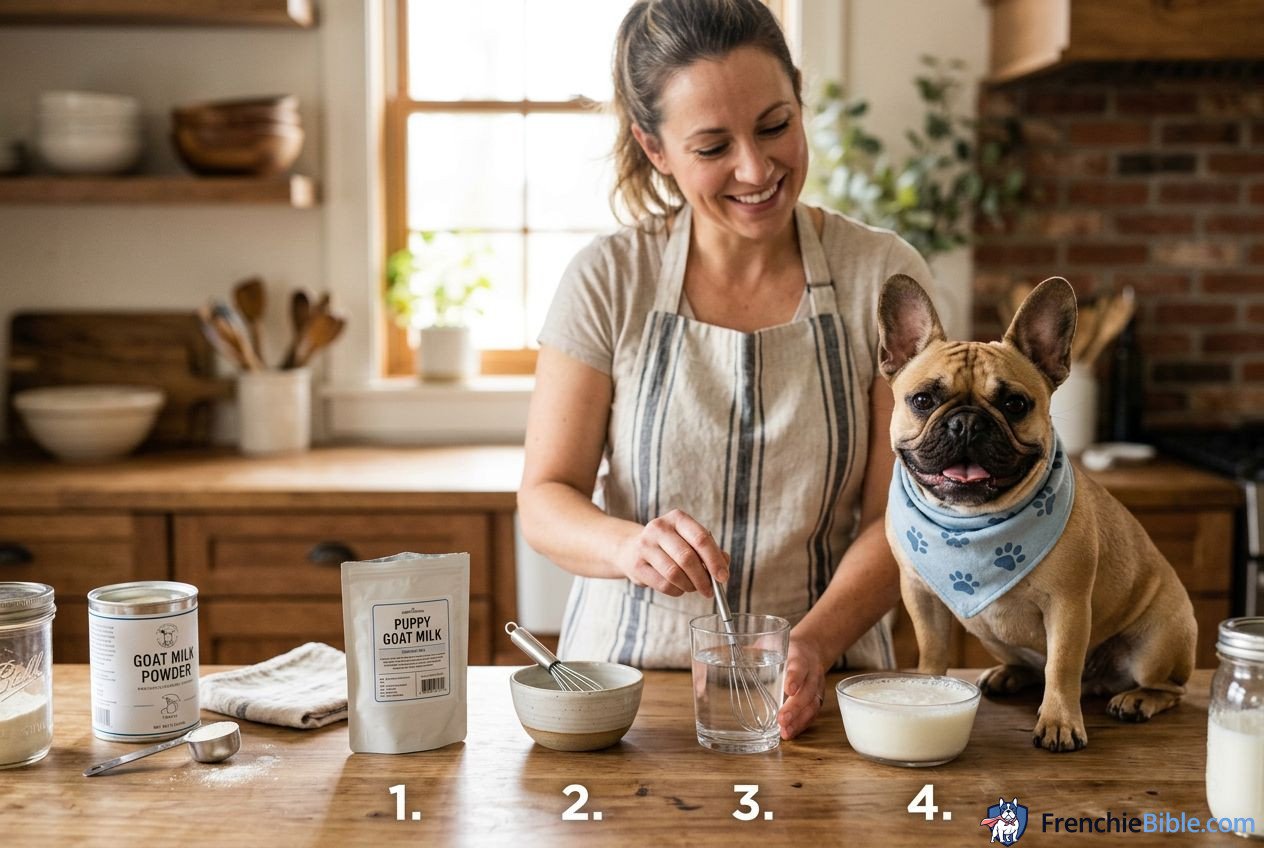
Choosing Your Source: Raw vs. Powdered
If you can source high-quality, organic raw goat milk from a local farm, that is the gold standard because it contains live probiotics and raw enzymes. However, for daily convenience and shelf-life stability, premium dehydrated goat milk powder formulated specifically for dogs is an outstanding alternative.
Rehydration and Temperature Control Protocol
- Use Filtered, Warm Water: If using powdered milk, never mix it with boiling water. Boiling water denatures the delicate proteins and kills the beneficial enzymes you are trying to preserve. Use warm, filtered water (around 100°F to 105°F / 37°C to 40°C)—which mimics the exact temperature of a mother dog’s milk.
- Mix Thoroughly: Blend 1 tablespoon of goat milk powder with 4 ounces of warm water. Use a small whisk to ensure there are absolutely no dry powder clumps left behind, which can stick to the stomach lining and cause irritation.
- Let it Rest: Let the rehydrated milk sit for 2 to 3 minutes to allow the proteins to fully rehydrate and stabilize before serving.
5. Feeding Dosage and Gradual Transition Chart
To prevent transition shock, you must start with microscopic doses and slowly build up. This chart outlines my kennel’s safe transition plan for a 15-pound French Bulldog:
| Phase | Daily Dosage | Feeding Method | Stool Monitoring Goal |
|---|---|---|---|
| Day 1–3 (Intro) | 1 Teaspoon (Warm) | Mix directly into morning meal | Firm, dark stool; zero flatulence |
| Day 4–6 (Step-up) | 1 Tablespoon (Warm) | Split between morning and evening meals | Small, well-formed stool |
| Day 7–9 (Full Dose) | 2 Tablespoons (Warm) | Feed as a separate mid-day treat | Firm stool; healthy coat energy |
| Maintenance | 2 to 3 Ounces | Daily meal topper or frozen treat topper | Consistent, easily passing stools |
Breeder Tip: If your Frenchie puppy has highly sensitive skin and is prone to yeast flare-ups, do not let them drink unlimited milk. While goat milk is low in sugars compared to cow’s milk, any excess sugars can still feed the yeast (Malassezia) on their skin. Stick strictly to the recommended maintenance doses.
6. Creative and Therapeutic Ways to Feed Goat Milk
Once your Frenchie has completed the transition phase and shown they can digest goat milk with perfect stool quality, you can introduce these highly beneficial feeding methods:
The Probiotic Super-Topper
Combine warm, rehydrated goat milk with a teaspoon of unsweetened, plain organic kefir. This double-probiotic blend is an incredible tool for restoring gut health after your dog has finished a course of harsh antibiotics.
The Frozen Enrichment Treat (Great for Summer)
Pour your prepared goat milk into silicone dog molds or ice cube trays. Add a few fresh blueberries or a sliver of strawberry into each mold, and freeze solid.
During hot summer days, giving your Frenchie a frozen goat milk cube is an outstanding way to provide cooling hydration, healthy fats, and mental enrichment without the risk of heat stroke or stomach expansion.
7. Frequently Asked Questions (FAQ)
Q1: Is commercial goat milk sold for humans in grocery stores safe for my French Bulldog?
Yes, pasteurized goat milk sold in grocery stores is generally safe, provided it contains absolutely no added sugars, artificial sweeteners, or preservatives. However, be aware that standard grocery store goat milk has been pasteurized (heated to high temperatures), which destroys many of the raw enzymes, delicate vitamins, and beneficial probiotics. For maximum therapeutic benefit, look for raw goat milk from local farms or premium dehydrated goat milk powders formulated specifically for pets.
Q2: Why did my Frenchie get soft stool when I switched from powdered goat milk to raw liquid goat milk?
Raw goat milk contains a highly active, living population of beneficial bacteria and enzymes. Powdered goat milk, while nutritious, is sterile. When you switch your Frenchie directly to raw milk, their digestive tract experiences a minor shock as these live microbes begin to colonize their gut. To prevent this, treat the transition to raw milk as a brand-new introduction: start with just a teaspoon a day and gradually increase the dose over a week.
Q3: Can I feed goat milk to my adult French Bulldog, or is it strictly for puppies?
Goat milk is incredibly beneficial for adult and senior French Bulldogs! While it is famed for weaning puppies, older Frenchies benefit massively from its highly bioavailable calcium, moisture, and anti-inflammatory properties. It is an excellent way to encourage senior dogs who are losing their appetite to eat, and it provides a gentle, easy-to-digest calorie boost for recovering or elderly pets.
Q4: My Frenchie is allergic to chicken and beef. Will they also be allergic to goat milk?
Not at all. Food allergies in dogs are almost always triggered by specific, heavy proteins from chicken, beef, or dairy from cows (which contain A1 beta-casein). Goat milk consists of a completely different protein structure (dominated by A2 beta-casein) and fat profile. Unless your Frenchie has a highly rare, specific allergy to goat proteins, they will digest goat milk beautifully and safely.
Q5: How long can I keep prepared, rehydrated goat milk powder in the refrigerator?
Once you mix dehydrated goat milk powder with warm water, any unused portion must be stored in an airtight glass jar in the refrigerator and consumed within 48 hours. Because rehydrated milk lacks heavy chemical preservatives, bacteria will begin to grow quickly after two days. Always discard any leftover rehydrated milk that has sat in the fridge for more than 48 hours to prevent stomach upset.
8. Disclaimer
The guidelines and feeding protocols shared in this article are based on my ten years of experience breeding, raising, and managing the delicate nutritional health of French Bulldogs. I am not a veterinarian, and this content is intended purely for educational, supportive, and preventative purposes. Acute digestive issues accompanied by severe dehydration, vomiting, blood in the stool, or extreme lethargy require immediate veterinary diagnosis and treatment. If your French Bulldog’s condition worsens, please consult a licensed veterinarian immediately.