
In my ten years of breeding champion-line French Bulldogs, no question has dominated my inbox—or my conversations with fellow owners—quite like this one: “How do I stop my Frenchie from farting, having soft stool, or vomiting yellow bile?”
The French Bulldog is a masterpiece of companion dog breeding, but their gastrointestinal (GI) tract is notoriously delicate. Due to their unique anatomy, brachycephalic dogs swallow excess air when they eat, leading to flatulence. More importantly, their compact bodies and genetic predispositions make them highly susceptible to food allergies, inflammatory bowel disease (IBD), and gut dysbiosis.
Related Reading: Training & Behavior | Grooming & Care | French Bulldog Colors
When your Frenchie is struggling with chronic loose stool or skin flare-ups, you are faced with three major dietary pathways: Baked Kibble (low-temperature baked), Fresh Food (cooked or raw), and Hypoallergenic Extruded Food (highly processed, often hydrolyzed).
As a seasoned breeder who has raised generations of healthy Frenchies and studied the exact nutritional demands of the breed for a decade, I am going to break down the scientific, practical, and anatomical differences between these three diets. My goal is to help you find the absolute best solution for your dog’s sensitive stomach.
1. The Anatomy of a Frenchie’s Sensitive Stomach: Why Are They So Fragile?
Before comparing diets, we must understand the physical constraints of the breed. French Bulldogs are not just “small dogs”; they are anatomically unique.
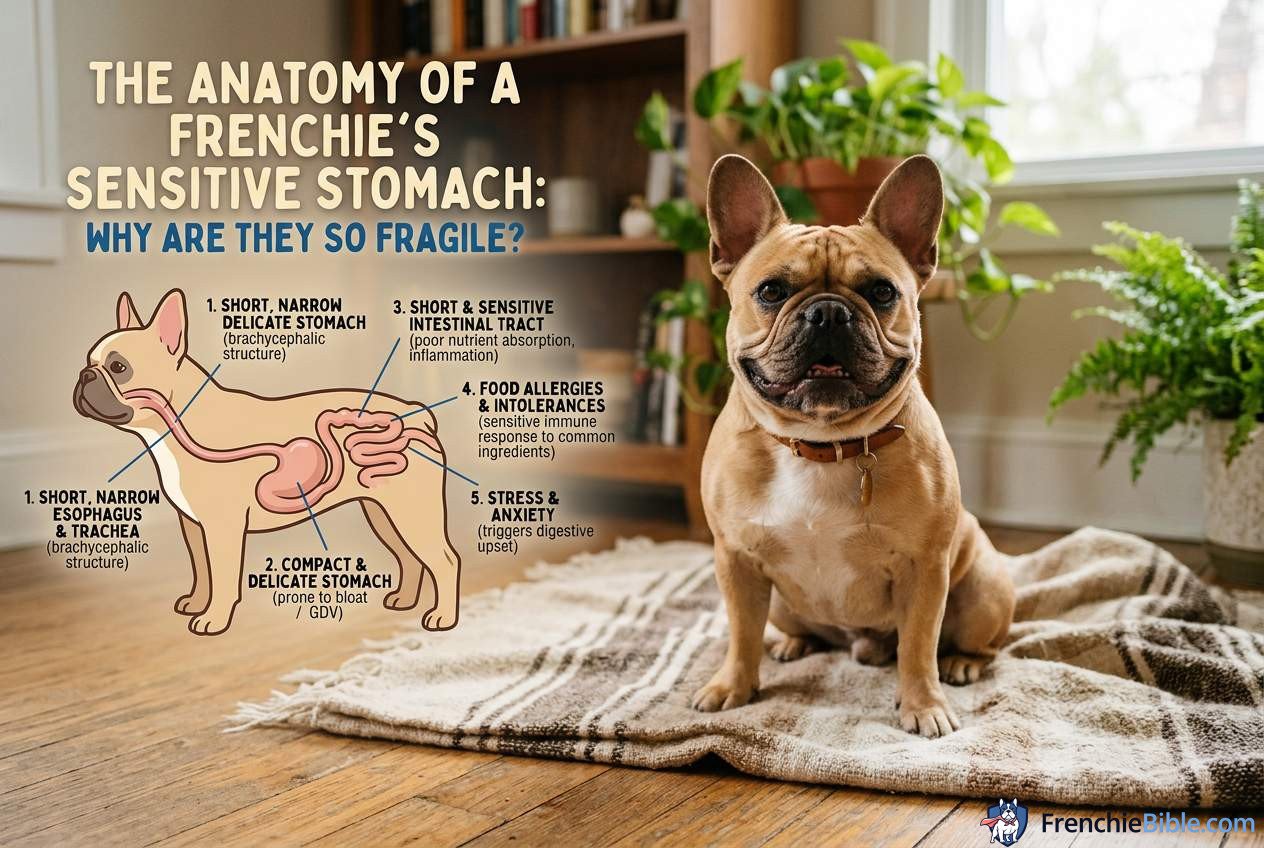
- Aerophagia (Swallowing Air): Because of their shortened snouts and elongated soft palates, Frenchies swallow a massive volume of air while eating and drinking. This swallowed air travels down the esophagus into the stomach. If the food they eat is hard to digest or ferments too quickly in the gut, this swallowed air combines with fermentation gases, resulting in legendary, room-clearing flatulence.
- A Shortened GI Tract: Relative to their body size, some brachycephalic breeds have slightly shorter gastrointestinal transit times. This means food must be highly bioavailable; the gut has less time to extract nutrients. If a food contains complex, hard-to-break-down binders, it passes through partially digested, leading to watery or soft stools.
- Immune System Overdrive: Over 70% of a dog’s immune system resides in the gut-associated lymphoid tissue (GALT). Because Frenchies are genetically prone to overactive immune responses (manifesting as skin allergies, pododermatitis, and ear infections), any gut inflammation caused by poor food immediately triggers systemic allergic reactions.
2. Low-Temperature Baked Kibble: The Gentle Revolution
Traditional dog food is made via extrusion, a high-heat, high-pressure process. Baked kibble, however, is cooked slowly in ovens at much lower temperatures. Let’s evaluate how this affects a sensitive Frenchie stomach.
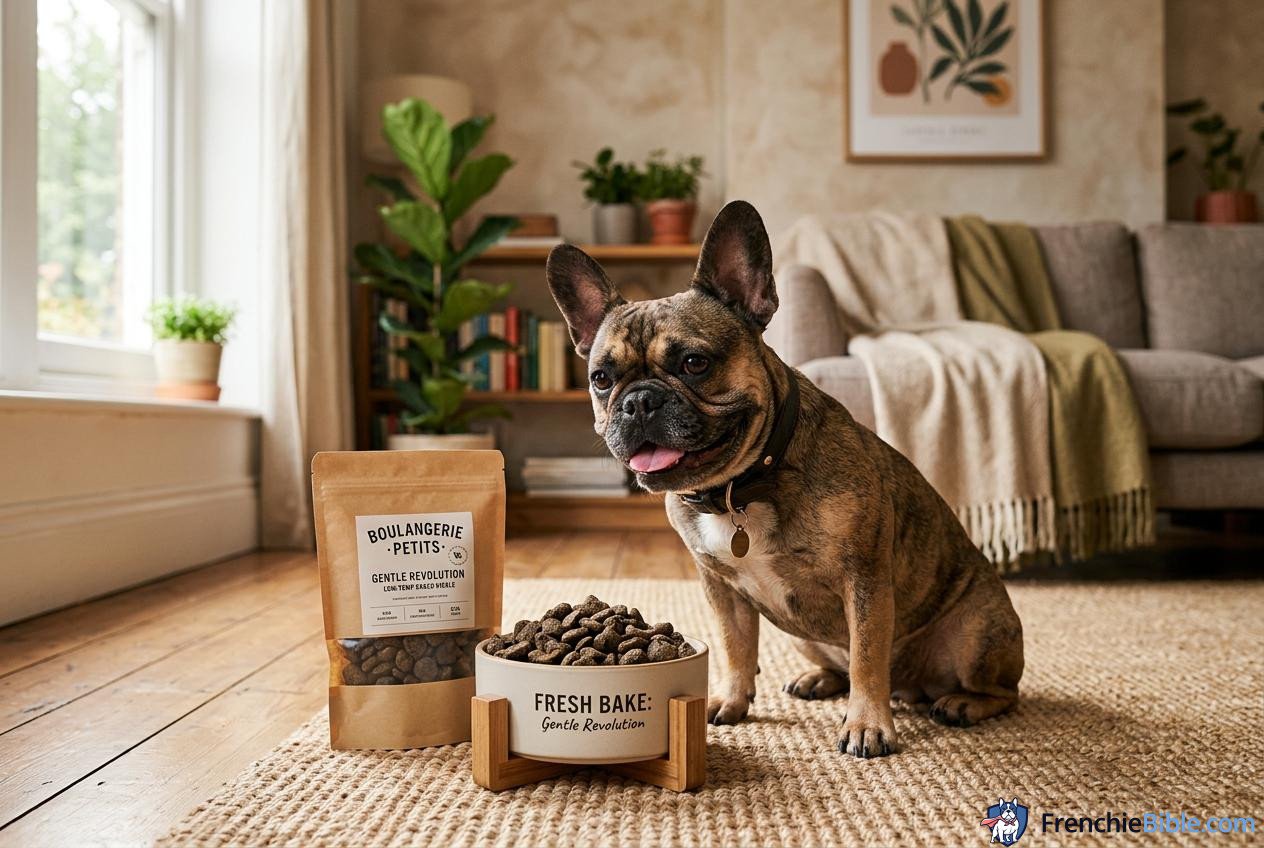
The Science of Baking vs. Extrusion
In traditional extrusion, ingredients are subjected to temperatures up to 300°F (150°C) and extreme pressure to shape the kibble. This process gelatinizes starches but also denatures delicate proteins and destroys natural vitamins, requiring manufacturers to spray synthetic vitamins and fats back onto the kibble after cooking.
Baking occurs at lower temperatures (around 200°F to 220°F / 93°C to 104°C) without the extreme pressure.
Why Baked Kibble Wins on Digestion
- No Expansion in the Stomach: If you drop traditional extruded kibble into a glass of water, it swells to double its size. This same expansion happens in your Frenchie’s stomach, causing a heavy, bloated feeling that can trigger vomiting of yellow bile or acid reflux. Baked kibble does not expand; it crumbles and dissolves gently, reducing stomach expansion and aerophagia discomfort.
- Higher Ingredient Integrity: Because the proteins are not mutated by extreme heat, the digestive enzymes in your Frenchie’s gut can easily recognize and break down the amino acid chains. This results in significantly less undigested waste reaching the colon, which translates to smaller, firmer, and less smelly stools.
- No Greasy Coating: Baked kibble doesn’t need fats sprayed on at the end of the line because the natural fats are baked right into the recipe. Greasy kibbles are a major trigger for acute pancreatitis in Frenchies, a breed already highly sensitive to fatty shifts.
The Downside
Baked kibble is more expensive than standard kibble because the baking process takes much longer, limiting production volume. It also has a slightly shorter shelf life because it lacks the heavy preservative coatings of mass-manufactured kibble.
3. Fresh Food: The Gold Standard for Nutrient Absorption
Whether you choose home-cooked meals, commercial raw diets, or gently cooked fresh food delivery services, feeding your Frenchie whole, fresh ingredients is biologically closest to what their ancestors ate.
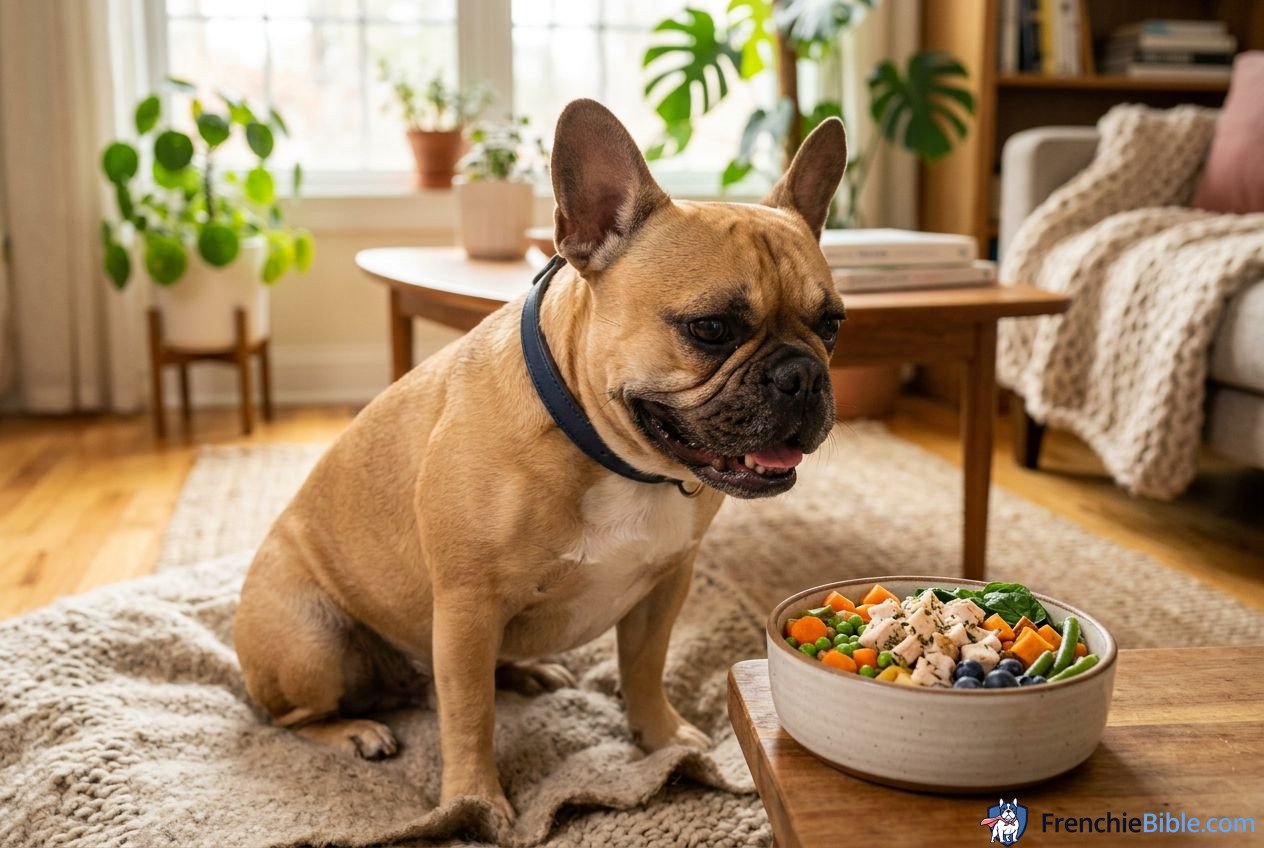
The Power of Moisture and Bioavailability
Dry kibble typically has a moisture content of 8% to 10%, whereas fresh food sits at 70% to 75% moisture.
- Hydration and Kidney Support: Many Frenchies are chronic under-drinkers. Feeding fresh food provides natural hydration, which dilutes urine and reduces the risk of calcium oxalate and struvite bladder stones—two conditions common in the breed.
- Unmatched Digestion Efficiency: Whole foods like lean turkey, sweet potato, blueberries, and spinach are broken down with minimal cellular effort. In my breeding program, when we transition dams or weaning puppies to gently cooked fresh food, we notice an immediate 50% reduction in stool volume. Why? Because the body is actually absorbing almost everything it consumes, leaving very little waste to be excreted.
- Elimination of Inflammatory Binders: To make a dry kibble hold its shape, it requires binders—usually high-glycemic starches like corn, wheat, white potatoes, or peas. These starches can cause systemic inflammation and feed the yeast (Malassezia) on your Frenchie’s skin and paws. Fresh food diets allow you to use anti-inflammatory, low-glycemic carbs like pumpkin or butternut squash.
The Downside
Fresh food requires strict storage (freezer and fridge space) and is the most expensive feeding method. If you cook at home, you must follow a recipe balanced by a canine nutritionist; otherwise, you risk calcium-to-phosphorus imbalances, which can ruin a growing Frenchie puppy’s bone development.
4. Hypoallergenic Extruded Food: The Clinical Intervention
Hypoallergenic extruded foods usually fall into two categories: limited-ingredient single-protein diets, or hydrolyzed soy/chicken diets prescribed by vets.
How Hydrolysis Works
In hydrolyzed diets, the protein source (usually chicken or soy) is broken down via water and enzymes into molecules so microscopic (typically under 10,000 daltons) that your Frenchie’s immune system literally cannot detect them.
When is it Useful?
- Active IBD Flare-ups: If your Frenchie’s gut lining is severely damaged and inflamed (leaky gut), normal proteins will pass into the bloodstream and trigger massive allergic reactions. Hydrolyzed food allows the gut to rest and heal because the immune system remains completely blind to the proteins.
- Strict Elimination Diets: When trying to diagnose whether your Frenchie is suffering from environmental or food allergies, a 12-week trial on hydrolyzed food provides a clean baseline.
The Critical Drawbacks for Long-Term Feeding
As an experienced breeder, I rarely recommend hydrolyzed foods as a lifetime diet for several reasons:
- Low Nutrient Quality: Hydrolyzed foods are highly processed, synthetic diets. The main ingredients are typically starches like corn starch or potato starch, combined with processed vegetable oils and hydrolyzed soy. While it may stop the diarrhea temporarily, it does not nourish the microbiome or build long-term gut immunity.
- High Glycemic Index: The heavy starch content can lead to yeast overgrowth. You might cure the soft stool but end up with a Frenchie who is constantly scratching their ears and licking pink, yeast-infected paws.
- The Extrusion Problem: It is still extruded, meaning it will expand in the stomach and can contribute to acid reflux and bloating.
5. Direct Comparison Table: Which Diet Wins for Which Problem?
To make your decision-making process as simple as possible, I have built this quick-reference guide based on my years of practical experience with sensitive Frenchies.
| Digestive Metric | Baked Kibble | Fresh Food (Gently Cooked) | Hydrolyzed Extruded Food |
|---|---|---|---|
| Digestion Speed & Ease | High | Very High | Medium (due to extrusion processing) |
| Stomach Bloat Risk | Very Low | Low | High (expands in stomach) |
| Stool Quality & Volume | Firm, Small | Very Small, Firm | Consistent, but often dry or chalky |
| Yeast Infection Prevention | High (low starch binders) | Excellent (customizable carbs) | Low (heavy starch binders) |
| Convenience & Storage | Excellent (shelf-stable) | Low (requires freezing) | Excellent (shelf-stable) |
| Cost Efficiency | Medium | Low (Expensive) | Medium-High (Prescription cost) |
6. The Step-by-Step Transition Plan for a Sensitive Frenchie
If you decide to switch your Frenchie’s diet based on this analysis, you must do so with extreme caution. A sudden switch can cause a major GI flare-up, leading to severe colitis or bloody diarrhea.
- Step 1 (Days 1–3): Feed 75% of the old food mixed with 25% of the new food. Add a high-quality canine probiotic (containing Enterococcus faecium or Lactobacillus acidophilus) to support the microbiome shift.
- Step 2 (Days 4–6): Move to a 50/50 split of old and new food. Monitor stool consistency. If stools become soft, pause at this step for an extra two days.
- Step 3 (Days 7–9): Feed 25% old food and 75% new food.
- Step 4 (Day 10+): 100% new food.
Expert Tip: If your Frenchie experiences mild acid reflux (smacking their lips or eating grass in the morning), split their daily food allowance into three or four smaller meals instead of two large ones. This keeps gastric acid busy and prevents morning bile vomiting.
7. Frequently Asked Questions (FAQ)
Q1: Why does my Frenchie vomit yellow foam or bile in the morning, and can baked kibble fix this?
Morning bile vomiting is usually caused by an empty stomach. Because traditional extruded kibble digests unevenly or leaves the stomach empty for too long, gastric acid accumulates and refluxes into the esophagus. Switching to Baked Kibble can help because it digests more smoothly without expanding. However, the most effective trick is simply giving your Frenchie a small, low-fat snack (like a baked pumpkin treat or a few kibbles) right before bedtime to keep the stomach active overnight.
Q2: My Frenchie is constantly passing gas that smells terrible. Which diet will reduce this fastest?
Room-clearing gas is caused by undigested proteins fermenting in the large intestine. Fresh Food (gently cooked) reduces this fastest because of its extreme bioavailability; almost all the protein is absorbed in the small intestine, leaving nothing to ferment. Baked Kibble is the runner-up. Avoid foods high in peas, lentils, or cheap corn fillers, as these are primary gas producers.
Q3: Is a raw fresh food diet safe for a Frenchie with a sensitive stomach?
While raw diets can be highly beneficial, they can be shocking to a Frenchie with active gut inflammation or a compromised immune system. If your Frenchie has a history of chronic colitis, I highly recommend starting with a gently cooked fresh diet first. Light cooking breaks down raw fibers and eliminates bacteria, making it much gentler on an irritated gut lining.
Q4: How long should I keep my Frenchie on hydrolyzed prescription food?
Hydrolyzed food should ideally be treated as a temporary tool—typically 8 to 12 weeks—to calm a severe inflammatory flare-up or conduct an allergen elimination trial. Once the gut has rested and the inflammation has subsided, you should work with a professional to gradually transition them to a high-quality, single-protein baked kibble or gently cooked fresh diet to rebuild their gut microbiome.
8. Disclaimer
This article is based on my ten years of experience as a French Bulldog breeder and pet health researcher. I am not a veterinarian, and the information provided in this article should not be taken as professional veterinary or medical advice. Every dog is an individual with unique physiological needs. If your French Bulldog is experiencing chronic vomiting, severe diarrhea, lethargy, or sudden weight loss, please consult a qualified licensed veterinarian immediately for a proper clinical diagnosis and treatment plan.