If you have ever spent a warm summer afternoon lounging by the pool or taking a stroll along the beach, you have likely seen dogs of various breeds joyfully leaping into the water, paddling with ease, and retrieving floating toys. Golden Retrievers Labrador Retrievers, and Poodles seem to possess an innate, graceful connection to the water. However, if you are the proud owner of a French Bulldog, you might have noticed a completely different reaction. Your Frenchie might approach the water’s edge with trepidation, or, in a more terrifying scenario, jump in only to immediately struggle to stay afloat.
This stark contrast often leads new and even experienced owners to wonder: Do French Bulldogs simply lack the natural “swimming instinct” that other canine companions seem to possess from birth?
Related Reading: Training & Behavior | Grooming & Care | French Bulldog Colors
As a professional French Bulldog breeder with over a decade of hands-on experience I have dedicated my life to understanding the unique quirks, physiological traits, and behavioral patterns of this beloved breed. In this comprehensive guide, we will dive deep into the fascinating, albeit physically restrictive, world of French Bulldog anatomy. We will explore why their inability to swim is not a matter of missing instinct, but rather a profound consequence of their physical makeup—specifically their incredibly dense bones and top-heavy head-to-body ratio.
By the end of this extensive article, you will have a thorough understanding of the physical realities your Frenchie faces, how to keep them safe around water, and ways to ensure they still enjoy the summer heat without risking their lives.
The Myth of the “Swimming Instinct” in Dogs
Before we dissect the unique physical traits of the French Bulldog, it is crucial to address the overarching concept of the “swimming instinct” in dogs. There is a prevalent misconception among pet owners that every dog, regardless of breed, is born with the innate ability to swim. This belief is largely fueled by the reflexive “doggy paddle” motion that almost all canines perform when suspended over water.
The Doggy Paddle Reflex
If you hold a dog—even a Frenchie—safely above the surface of a pool, their paws will automatically begin to churn in a pedaling motion. This is an instinctual survival mechanism. It is hardwired into their neurological system. So, in terms of neurological instinct French Bulldogs do possess the reflexive drive to paddle. They know that they need to move their limbs to try and navigate the aquatic environment.
Instinct vs. Physics
The crucial disconnect, however, lies in the battle between instinct and physics. Knowing the motions to stay afloat is entirely different from possessing the physical buoyancy required to actually remain above the water’s surface. A rock dropped into a lake might “want” to float, but gravity and density dictate otherwise. The same principle applies to our flat-faced companions. Their instinct tells them to paddle, but their anatomical structure anchors them down.
Understanding this distinction is the first step in responsible French Bulldog ownership. You must never assume that your Frenchie will figure it out if tossed into the shallow end of a pool. Their bodies are fundamentally unequipped for aquatic survival.
Anatomy of a French Bulldog: The Perfect Storm Against Buoyancy
To truly appreciate why French Bulldogs cannot swim, we must look at them through the lens of physics and anatomy. Bred originally as companion animals and miniature versions of the English Bulldog Frenchies were designed for aesthetic appeal and lap-warming, not for athletic prowess or retrieving waterfowl.
Their bodies are a perfect storm of traits that actively work against buoyancy. Let’s break down the three primary physical hurdles that make swimming virtually impossible for a French Bulldog.
1. The Reality of Heavy Bone Density
One of the defining characteristics of a well-bred French Bulldog is their compact, muscular, and sturdy build. Despite their small stature Frenchies are surprisingly heavy when you pick them up. A dog standing only 11 to 13 inches tall at the shoulder can easily weigh between 16 to 28 pounds (or even more for some robust males).
This surprising weight is largely due to their bone density. French Bulldogs have thick, heavy, and dense skeletal structures relative to their overall size.
Buoyancy and Density
In the realm of physics, buoyancy is determined by an object’s density compared to the density of the fluid it is placed in. Dogs that excel at swimming, such as Water Spaniels or Retrievers, have a body composition that includes a higher proportion of fat and a skeletal structure that, while strong, allows for natural flotation. Their bodies easily displace enough water to keep them afloat with minimal effort.
French Bulldogs, on the other hand, have a body density that is incredibly high. They possess very little body fat in proportion to their heavy bones and thick muscle mass. Muscle and bone are denser than water. Therefore, a French Bulldog acts more like a cute, snorting cinderblock in the water than a buoyant vessel. Even if they are paddling furiously, the sheer density of their bodies pulls them downward.
2. The Massive Head-to-Body Ratio
If bone density acts as the anchor, the Frenchie’s head acts as the tipping point. The French Bulldog is famous for its large, square head and iconic bat ears. This head is exceptionally large and heavy in proportion to the rest of their body.
The Center of Gravity Problem
For a dog to swim effectively, they must maintain a horizontal posture in the water, keeping their head elevated above the surface to breathe while their limbs paddle beneath them. This requires a balanced center of gravity.
In a Frenchie, the center of gravity is heavily skewed toward the front of their body. Their massive head and broad, deep chest carry the vast majority of their weight, while their hindquarters are relatively narrow and light.
When a French Bulldog enters the water, this disproportionate weight distribution causes an immediate crisis. The heavy front end naturally sinks, pulling the head downward. To compensate, the dog must elevate its head at an extreme angle just to keep its nose above the water. This awkward, nearly vertical posture forces their back end to sink even lower, completely destroying any chance of a horizontal swimming stroke. They end up vigorously paddling in an upright position, exhausting themselves rapidly while slowly sinking beneath the surface.
3. Brachycephalic Airway Syndrome (Short Snout Issues)
The final, and perhaps most critical, barrier to swimming is the French Bulldog’s brachycephalic (flat-faced) anatomy. While their smushed faces are undeniably adorable, they come with significant respiratory challenges.
Brachycephalic breeds suffer from a compressed upper respiratory system. They typically have narrow nostrils (stenotic nares), an elongated soft palate, and a narrow trachea. This means that breathing is always somewhat of a labor for them, even when they are resting comfortably on your sofa in a climate-controlled room.
The Breathing Challenge in Water
When a dog is swimming, their respiratory rate naturally increases due to the physical exertion. For a Frenchie, attempting to paddle their dense, top-heavy body is an incredibly strenuous cardiovascular workout. Their demand for oxygen spikes dramatically, but their compromised airway prevents them from drawing in enough air to meet that demand.
Furthermore, to breathe while swimming, a dog must be able to tilt its snout upward and keep its nose clear of the water. Because of their flat faces, a French Bulldog has virtually no snout. Keeping water out of their nostrils requires them to tilt their head back to an extreme, unnatural angle.
The combination of the heavy head sinking, the desperate need for more oxygen, and the inability to keep their flat face above the splash zone creates a panicked state. In their struggle to breathe, they often inhale water, leading to aspiration, choking, and a rapid, tragic sinking.
The Psychological Impact: Panic and Exhaustion
When we combine these physical limitations—heavy bones, a top-heavy build, and respiratory challenges—we create a scenario where panic is inevitable.

If a French Bulldog falls into a pool or wades too deep into a lake, they realize very quickly that their natural paddling reflex is not working. The water covers their face, their heavy chest pulls them down, and they cannot draw a full breath. Panic sets in instantly.
A panicked dog expends energy at an alarming rate. For a breed that already struggles with stamina, this rapid expenditure of energy leads to swift exhaustion. A French Bulldog can go from frantically paddling to sinking to the bottom in a matter of mere seconds. It is a silent and rapid tragedy that can occur even if the owner turns their back for just a moment.
Essential Water Safety Tips for French Bulldog Owners
Understanding the severe physical limitations of your French Bulldog is only the first part of responsible ownership. The second part is actively implementing safety measures to ensure that your beloved companion never finds themselves in a life-threatening aquatic situation.
Whether you have a backyard pool, live near a lake, or plan on taking your dog on a boating trip, these safety protocols are non-negotiable.
1. Life Jackets are Mandatory No Exceptions
The single most important rule of owning a French Bulldog near water is this: If there is deep water nearby, the Frenchie wears a life jacket. There are no exceptions to this rule.
Not all dog life jackets are created equal, and because of the Frenchie’s unique body shape, you must select one specifically suited for them.
What to Look For in a Frenchie Life Jacket:
- Front Flotation Pad: This is crucial. Because Frenchies are top-heavy and their heads tend to sink, the life jacket must have a thick, supportive pad directly under their chin and chest. This pad acts as a physical barrier, forcing the head to remain elevated above the water level.
- Snug Adjustable Fit: A loose life jacket is dangerous. If the jacket slides around, the dog can twist inside it and end up with their head trapped underwater. Ensure the jacket has sturdy, adjustable straps around the chest and belly for a secure, custom fit.
- Strong Rescue Handle: The life jacket must have a reinforced handle on the top (along the back). If your dog falls in, you need to be able to grab this handle and lift their heavy body out of the water quickly and easily.
- Bright Colors and Reflective Strips: Visibility is key. Choose neon colors like yellow, orange, or bright pink, and ensure there is reflective trim so you can easily spot your dog in the water, even in lower light conditions.
Expert Breeder Tip: Introduce the life jacket on dry land first. Let them wear it around the house for short periods and reward them with high-value treats so they associate the jacket with positive experiences.
2. Supervised Water Play Only
A life jacket is a safety device, not a babysitter. Even with a premium life vest securely fastened, a French Bulldog should never be left unsupervised near a body of water.
They can still panic, swallow water, or become exhausted even while floating. Furthermore, entering and exiting a pool can be difficult for them. They may not know where the stairs are or lack the strength to pull themselves up over the edge. If you are having a pool party, designate a “water watcher” whose sole responsibility is to keep eyes on the dog, just as you would with a human toddler.
3. Fencing and Pool Alarms
If you have a pool in your backyard, physical barriers are essential. A sturdy pool fence that completely isolates the pool area from the rest of the yard is the best defense against an accidental drowning. Ensure the gate is self-closing and self-latching.
In addition to a fence, consider installing a pool alarm. These devices float on the surface of the water or are mounted to the side of the pool and detect the displacement of water caused by an object falling in. If your Frenchie slips past the fence and falls into the water, the alarm will sound a loud siren, alerting you immediately to the emergency.
4. Teaching the Exit Strategy
If your Frenchie does wear a life jacket and enjoys floating around with you in the pool, you must explicitly teach them where the exits are located.
Dogs do not naturally understand that the stairs are the only safe way out of a standard swimming pool. They will often try to claw their way up the slippery vertical sides, causing panic and exhaustion. Spend time patiently guiding your dog to the stairs or the ramp. Use treats and positive reinforcement to show them that this is the designated exit point. Repeat this training regularly so that in a moment of panic, muscle memory kicks in, and they swim toward the stairs.
5. Temperature Control: Avoiding Overheating and Chilling
French Bulldogs are notoriously bad at regulating their body temperature. This makes water activities tricky, as you have to balance the risk of heatstroke with the risk of hypothermia.
- Overheating: On a hot summer day, sitting outside near the pool can quickly lead to heatstroke for a brachycephalic breed. The humidity and heat make it even harder for them to breathe. Ensure they always have access to deep, cool shade and plenty of fresh drinking water.
- Chilling: Conversely, if they are wet (even from a shallow splash pad), they can become chilled very quickly, especially if a breeze picks up. Their short coats offer no insulation. If they are shivering, wrap them in a warm, dry towel immediately and bring them indoors. Never let them swim in cold lakes or oceans.
Safe Enjoyable Water Alternatives for Frenchies
Just because your Frenchie cannot swim in the deep end does not mean they have to miss out on all the summer fun. There are numerous safe, shallow-water alternatives that allow them to cool off and play without the risk of drowning.
The Classic Kiddie Pool
A hard plastic kiddie pool (the kind designed for toddlers) is the perfect summer oasis for a French Bulldog. Fill it with just two to three inches of cool water. This depth is enough for them to stand in, splash their paws, and cool their bellies, but not deep enough to pose a drowning risk if they lie down.
Toss some floating toys or even some ice cubes into the shallow water. Many Frenchies love “bobbing” for ice cubes or toys, providing excellent mental stimulation and physical cooling.
Splash Pads
In recent years, durable dog splash pads have become incredibly popular. These hook directly up to your garden hose and shoot gentle streams of water upward from the rim, creating a shallow puddle in the center.
Splash pads are fantastic because the water level never gets deep enough to be dangerous. The moving water is exciting and encourages play, and the constant flow of cool water from the hose helps keep their body temperature down. Ensure you purchase one made from thick, tear-resistant PVC, as a Frenchie’s claws can easily puncture thinner materials designed for human children.
Sprinklers
A simple oscillating lawn sprinkler can provide hours of entertainment for a playful French Bulldog. They can run back and forth through the water streams, snapping at the droplets. It is a highly active game, so monitor them closely for signs of respiratory distress or exhaustion. Limit sprinkler play sessions to 10-15 minutes on hot days.
Cooling Mats and Vests
If your Frenchie simply dislikes getting wet (which is quite common!), you can still keep them cool using technology.
Cooling mats are filled with a pressure-activated gel that absorbs the dog’s body heat, providing a chilled surface for them to lay on without using electricity or water.
Cooling vests work on the principle of evaporative cooling. You soak the vest in cold water, wring it out, and put it on the dog. As the water evaporates, it pulls heat away from the dog’s chest and back. This is an excellent option for summer walks or sitting in the shade at a backyard barbecue.
Emergency Protocol: What to Do If Your Frenchie Falls In
Despite our best efforts, accidents can happen. If a gate is left open or a leash slips from your hand, your Frenchie might end up in deep water without a life jacket. Knowing exactly what to do in those critical first few seconds can mean the difference between life and death.
1. Act Immediately Do Not Hesitate
A French Bulldog will sink like a stone. You cannot wait to see if they figure it out. If they fall in, you must act instantly. If they are within arm’s reach, grab them. If they are further out, you must jump in after them without hesitation. Seconds matter.
2. Secure the Head
When you reach the dog, your primary goal is to get their nose and mouth out of the water. Do not grab them by the collar, as this can compress their delicate trachea. Slide one hand under their chest and stomach, and use your other hand to support their chin, keeping their head elevated.
3. Lift and Assess
Carry them quickly to the edge and lift them out of the water. Once they are on dry land, immediately assess their condition.
- Are they breathing? Watch their chest rise and fall.
- Are they coughing up water? Allow them to stand and cough. You can gently pat their sides to help dislodge water.
- Are their gums pink or blue/pale? Pale or blue gums indicate a severe lack of oxygen.
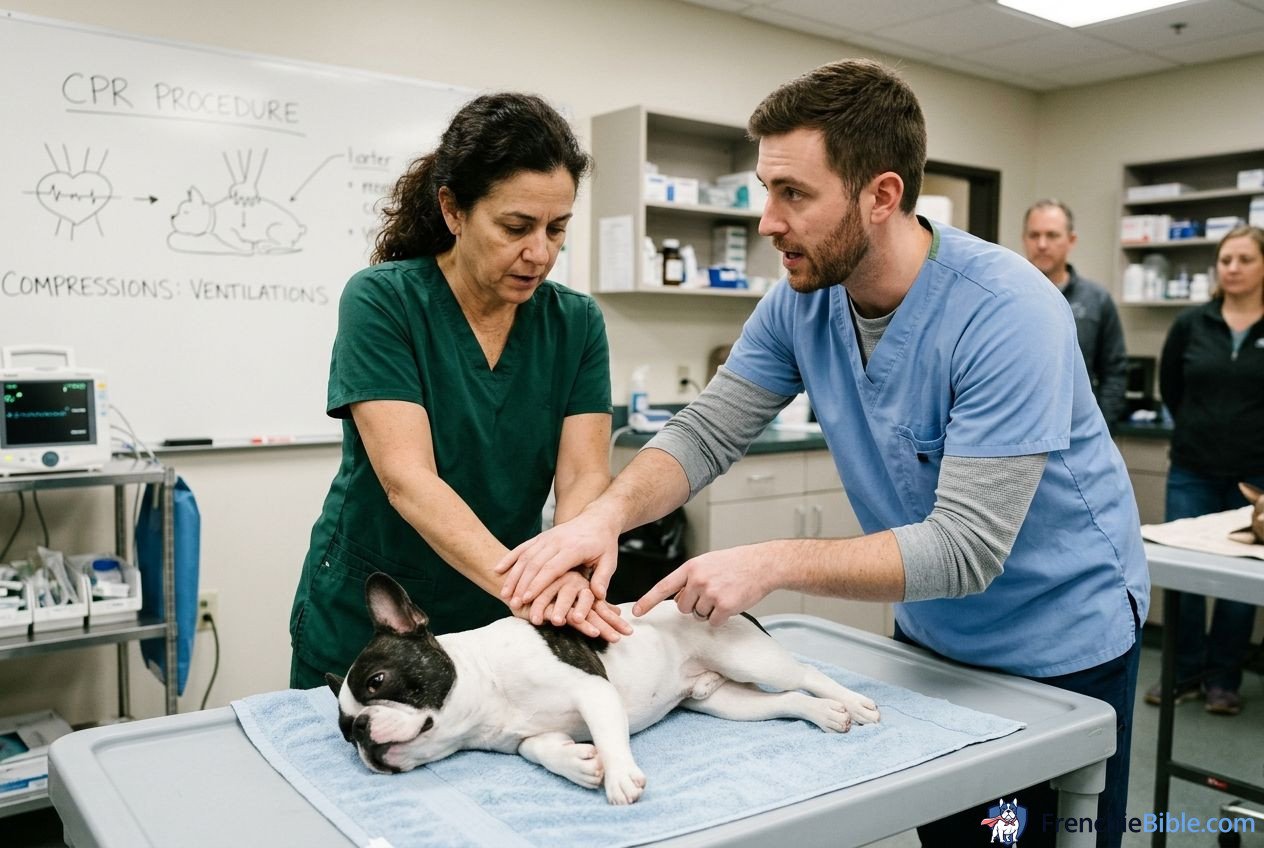
4. Perform Canine CPR if Necessary
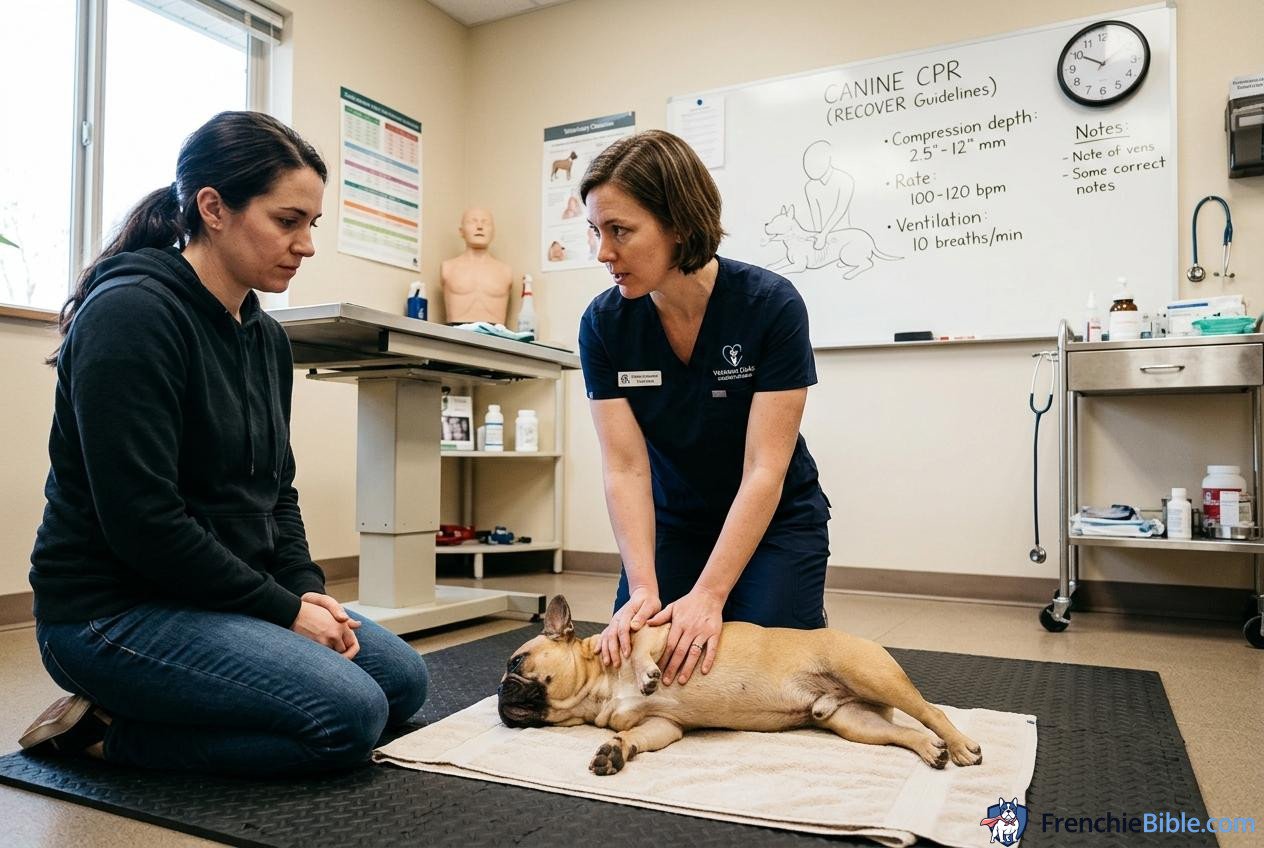
If the dog is unconscious and not breathing, you must begin canine CPR immediately while someone else calls the emergency veterinarian.
– Lay the dog on their right side.
– Check the airway for obstructions (like a piece of toy or debris).
– Extend the neck to open the airway.
– Close their mouth tightly, cup your hands over their muzzle, and breathe into their nostrils. You should see the chest rise. Give 2 breaths.
– Perform chest compressions. Place your hands over the widest part of the chest. Compress the chest by about one-third of its width at a rate of 100-120 compressions per minute.
– The ratio is generally 30 compressions to 2 breaths.
5. Always Seek Immediate Veterinary Care
Even if your French Bulldog seems completely fine after falling in—even if they only inhaled a small amount of water, coughed it up, and are now running around—you must take them to an emergency veterinarian immediately.
The Danger of “Dry Drowning” or Secondary Drowning
Dogs can suffer from a condition known as secondary drowning (or pulmonary edema). When a dog aspirates even a tiny amount of water into their lungs, the lung tissue becomes irritated and inflamed. Hours, or even days later, the body reacts by pulling fluids into the lungs to heal the irritation. This causes the dog to literally drown in their own bodily fluids long after the initial aquatic incident.
Symptoms of secondary drowning include lethargy, coughing, difficulty breathing, crackling sounds in the chest, and pale gums. It is a fatal condition if left untreated. A veterinarian will need to monitor your dog, take chest X-rays, and possibly prescribe diuretics or provide oxygen therapy to ensure their lungs remain clear. Never take a chance; always have them checked out.
Training and Desensitization: Building Water Confidence safely
While we have established that French Bulldogs cannot swim, it is still beneficial to build their confidence around water in a controlled, safe environment. A dog that is terrified of water is more likely to panic violently if they accidentally get wet, increasing the risk of aspiration.
Gradual Introduction
Start the introduction to water very slowly.
1. The Empty Pool: Place the empty kiddie pool in the yard. Toss treats inside and let your Frenchie explore it on their own terms.
2. Adding a Puddle: Add just a tiny splash of water—maybe half an inch. Encourage them to step in to retrieve a high-value treat or toy. Praise them lavishly.
3. Increasing the Depth (Slightly): Over several days or weeks, gradually increase the water to a maximum depth of two to three inches. Always make it a positive, rewarding experience.
Desensitizing to the Life Jacket
As mentioned earlier, the life jacket should be introduced indoors. Let them wear it while eating their dinner or playing with their favorite toy. Once they are comfortable wearing it dry, you can introduce them to the shallow kiddie pool while wearing the jacket.
Eventually, if you plan to take them on a boat or near a larger body of water, practice having them float in the shallow end of a large pool while wearing the securely fastened life jacket. Always keep your hands on them or right next to them. The goal is to teach them that the jacket will hold them up, reducing their panic reflex if they ever find themselves floating unexpectedly.
Conclusion: Embracing the Land-Loving Nature of the Frenchie
Bringing a French Bulldog into your life means accepting and accommodating their unique physical realities. They are delightfully comical, fiercely loyal, and incredibly affectionate companions. They thrive on couches, short walks in mild weather, and being the center of your universe.
What they are not, however, are aquatic athletes. Their heavy bone density, disproportionately large heads, and compromised respiratory systems make deep water a perilous environment. The “swimming instinct” may cause their legs to paddle, but physics ensures that their bodies will sink.
As a responsible owner, it is your duty to protect them from environments their bodies cannot handle. By strictly enforcing the use of specialized life jackets, providing constant supervision, utilizing safe alternatives like splash pads, and understanding emergency protocols, you can ensure that your Frenchie enjoys a fun, cool, and—most importantly—safe summer.
Embrace your French Bulldog for the wonderful, heavy-boned, land-loving companion that they are. There are plenty of adventures to be had on solid ground!
Frequently Asked Questions (FAQs)
1. Can a French Bulldog learn to swim if taught early?
No. While early exposure can help reduce their fear of water and teach them to tolerate floating in a life jacket, you cannot “teach” a French Bulldog to overcome their physical anatomy. No amount of swimming lessons will change their heavy bone density, top-heavy center of gravity, or brachycephalic airway. They physically cannot generate the buoyancy needed to stay afloat independently.
2. What is the best life jacket for a French Bulldog?
The best life jacket for a Frenchie is one designed specifically for top-heavy breeds. It must feature a thick, substantial flotation pad under the neck and chin to keep their heavy head elevated above the water line. It should also have adjustable straps for a secure, snug fit to prevent them from twisting out of it, and a strong rescue handle on the back so you can easily lift them out of the water. Brands that cater specifically to bulldog breeds are often the best choice.
3. Are there any French Bulldogs that can actually swim without a life jacket?
In my 10+ years of breeding I have heard anecdotal claims of “swimming Frenchies,” but these are exceptionally rare outliers and should never be used as a standard. An outlier might have slightly less bone density or a longer snout, but even then, their stamina is incredibly low. They will exhaust themselves in minutes. Relying on the hope that your Frenchie is a rare exception is a deadly gamble. Always assume they cannot swim and require a life jacket.
4. How do I know if the water is too cold for my French Bulldog?
French Bulldogs have single-layer, short coats that provide virtually no insulation against the cold. If the water feels chilly to you, it is too cold for them. A good rule of thumb is that water temperatures below 70°F (21°C) can quickly lead to shivering and potential hypothermia, especially since they cannot actively generate heat through vigorous swimming. If they start shivering or tucking their tail, remove them from the water, dry them immediately, and warm them up.
5. Can Frenchies go to the beach?
Yes Frenchies can enjoy the beach, but with strict precautions. They must wear a life jacket if they go near the surf. You must also be highly vigilant about the heat and sun. Sand reflects sunlight, and they can overheat very quickly. Bring an umbrella for deep shade, plenty of fresh drinking water, and a cooling mat. Be incredibly careful that they do not ingest sand or drink salt water, which can cause severe gastrointestinal distress and sodium poisoning. Limit beach trips to the early morning or late evening when temperatures are cooler.
Disclaimer: The information provided in this article is based on over 10 years of professional French Bulldog breeding and daily care experience. We are not veterinarians, and this content does not constitute professional medical advice, diagnosis, or treatment. Always consult with a licensed veterinarian regarding any health or medical concerns related to your dog.