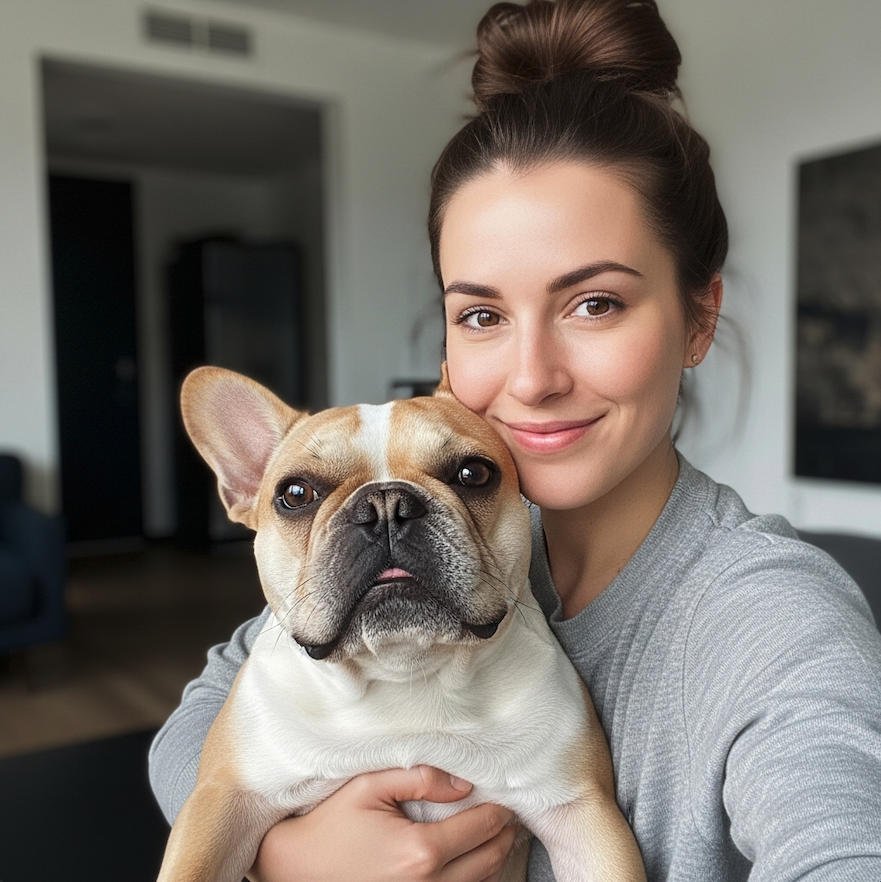
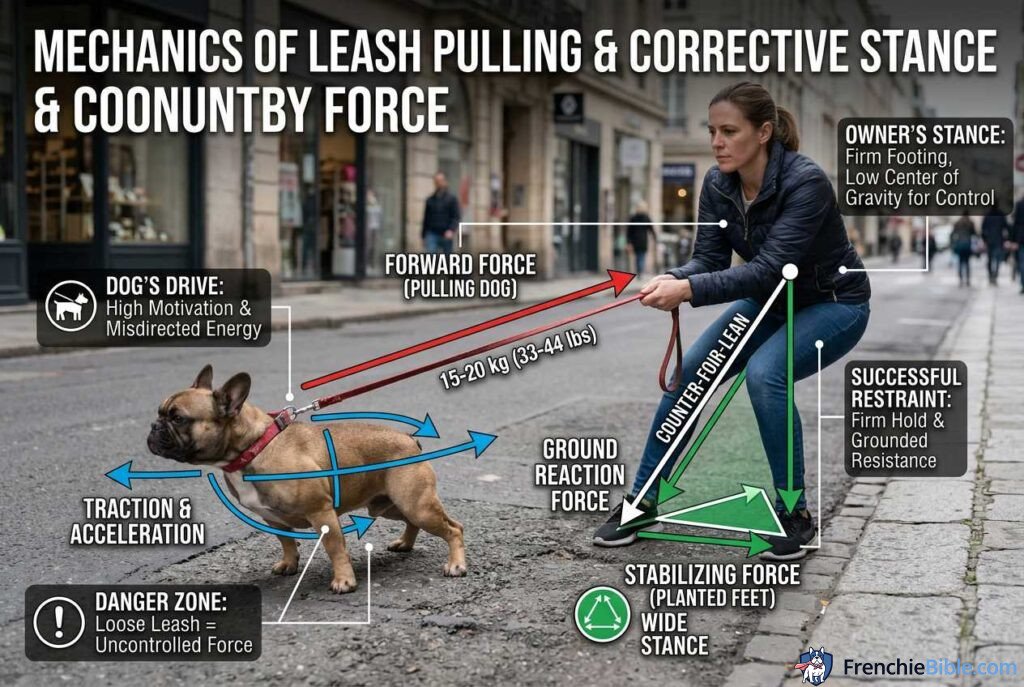
As a seasoned French Bulldog breeding expert and enthusiast with over ten years of hands-on experience I have witnessed countless Frenchies grow from playful, wrinkly puppies into distinguished senior dogs. Over the years I’ve observed a common challenge that many owners face as their beloved companions age: the gradual loss of hearing. This inevitable part of aging can be distressing for both the dog and the owner if they are not adequately prepared.
That is why I consistently emphasize to my clients and fellow Frenchie enthusiasts the absolute necessity of incorporating hand signals into their training repertoire from day one. Hand signals are not just a cute trick; they are a vital communication bridge that ensures a lifelong, strong bond with your French Bulldog, even when their hearing begins to fade.
Related Reading: Health & Diet | Grooming & Care
In this comprehensive guide, we will delve deep into the world of hand signals for French Bulldogs, exploring why they are crucial, how to effectively teach them, and which commands are the most essential for a safe and happy life together.
Why Hand Signals are Crucial for French Bulldogs
While French Bulldogs are known for their distinctive bat ears, which suggest acute hearing, they, like all dog breeds, are susceptible to age-related hearing loss (presbycusis). Understanding the importance of non-verbal communication is the first step toward preparing for your Frenchie’s senior years.
Preparing for Age-Related Hearing Loss (Presbycusis)
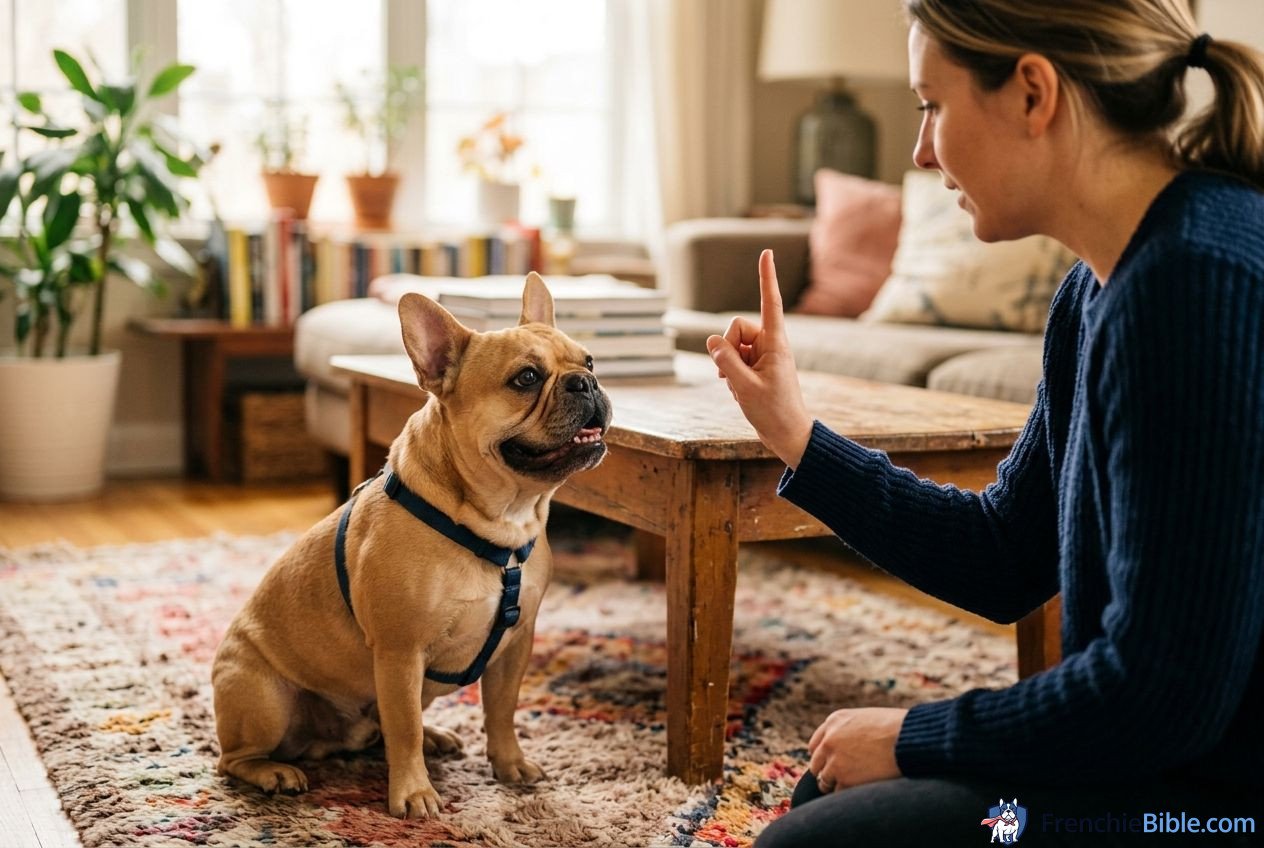
Age-related deafness in dogs is a gradual process that usually begins in their senior years, typically around the age of 8 to 10 for French Bulldogs. The tiny hair cells within the inner ear, responsible for detecting sound waves, slowly deteriorate over time. Because this process is gradual, many owners do not notice the signs until the hearing loss is quite advanced.
By the time you realize your Frenchie isn’t responding to the crinkle of a treat bag or the sound of your voice calling their name from another room, their hearing may be significantly compromised. If you have solely relied on verbal commands up to this point, training them to understand new concepts when they are already struggling to hear can be incredibly frustrating for both of you.
Teaching hand signals while your Frenchie is young and possesses perfect hearing acts as an insurance policy. You are laying down a foundation of visual communication that they can rely on seamlessly when their auditory world begins to quiet down. When deafness eventually strikes, they won’t feel lost or disconnected because they already know how to “listen” to your hands.
Enhancing Focus in Distracting Environments
Even before hearing loss becomes an issue, hand signals offer significant advantages in daily life. French Bulldogs are notoriously stubborn and easily distracted. A squirrel in the park, another dog across the street, or even a particularly interesting scent on the ground can completely derail their focus on your verbal commands.
In noisy or highly stimulating environments, your voice can easily blend in with the background noise. A distinct, clear hand signal, however, cuts through the auditory clutter. Dogs are naturally adept at reading body language—often more so than they are at understanding verbal language. By combining a verbal cue with a visual hand signal, you double the chances of your Frenchie understanding and complying with your request. It forces them to look at you and engage with you visually, strengthening your connection and control in distracting situations.
Building a Stronger Human-Canine Bond
Training is fundamentally about communication. When you incorporate hand signals, you are expanding your communication toolkit and learning to speak a language that is highly intuitive for your dog. This mutual understanding fosters a deeper level of trust and respect.
When your Frenchie successfully interprets a hand signal and performs the desired action, it creates a moment of shared success. This positive reinforcement strengthens the bond between you, making your Frenchie more attentive to your overall body language and more willing to collaborate with you. It transforms training from a series of vocal demands into a silent, harmonious dialogue.
The Foundation: How to Teach Hand Signals to Your French Bulldog
Teaching hand signals is a straightforward process, but it requires patience, consistency, and positive reinforcement. French Bulldogs are intelligent but can be strong-willed, so keeping training sessions short, engaging, and rewarding is key to success.
The “Lure and Reward” Technique
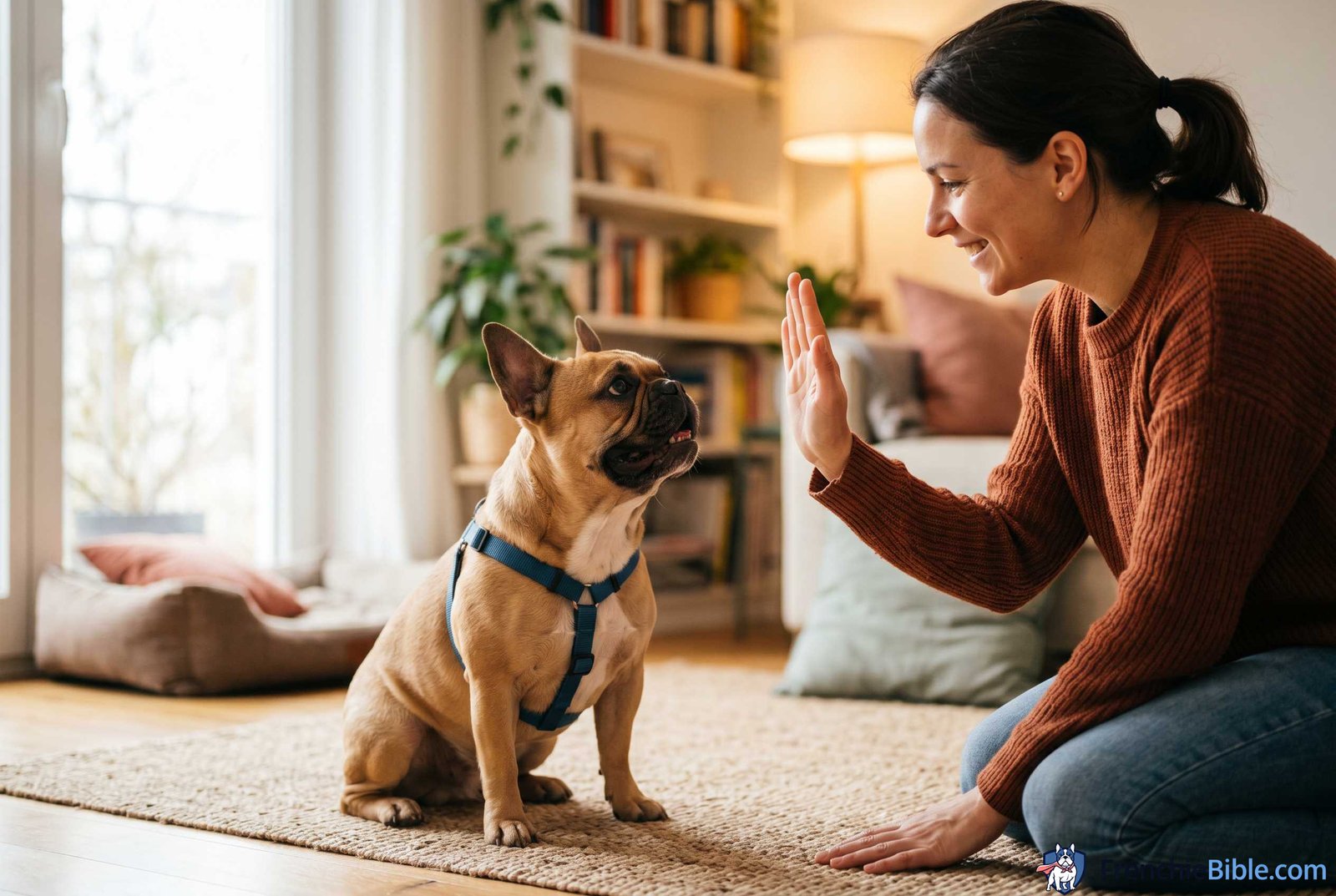
The most effective method for introducing hand signals is the “lure and reward” technique. This involves using a high-value treat to guide your Frenchie into the desired position while simultaneously presenting the hand signal.
Here is the basic step-by-step process:
- Get Their Attention: Start with your Frenchie in front of you, focused on you. Hold a small, smelly, high-value treat (like a piece of freeze-dried liver or a small cube of cheese) in the hand you will use for the signal.
- Present the Hand Signal (The Lure): Use the treat to guide their nose into the position you want. For example, if teaching “Sit,” move the treat slowly over and slightly behind their head. As their nose follows the treat up and back, their rear end will naturally go down. Crucially, the motion you use with your hand is the hand signal.
- Say the Verbal Command (Optional Initially): As they are moving into the position, clearly state the verbal command (e.g., “Sit”). In the early stages, it’s often best to introduce the hand signal first, then pair it with the verbal cue they already know.
- Reward Immediately: The split second their bottom hits the floor (or they complete the desired action), give them the treat and offer enthusiastic verbal praise (“Yes!” or “Good boy/girl!”).
- Fade the Lure: Once they consistently follow the treat-filled hand, try the same motion with an empty hand, rewarding them with a treat from your other hand or your pocket when they succeed. This teaches them to respond to the signal itself, not just the presence of the food.
Consistency is Key: Establishing Clear and Distinct Signals
For hand signals to be effective, they must be clear, distinct from one another, and used consistently by everyone in the household.
- Exaggerate the Motion: French Bulldogs are not known for their subtle observation skills, especially from a distance. Make your hand signals large, deliberate, and easy to see. Use your whole arm when possible, not just a flick of the wrist.
- Avoid Ambiguity: Ensure your signals for different commands look completely different. For example, your signal for “Sit” (an upward motion) should not resemble your signal for “Down” (a downward motion).
- Family Alignment: Every member of the family must use the exact same hand signal for each command. If one person uses a closed fist for “Sit” and another uses an open palm, your Frenchie will become confused and frustrated. Consistency across all handlers is paramount.
Transitioning from Verbal to Visual
If your Frenchie already knows verbal commands, transitioning to hand signals is generally quite easy.
- Pairing: Give the hand signal first, immediately followed by the verbal command they know.
- Delaying the Verbal Cue: Gradually increase the time between the hand signal and the verbal command. Give the hand signal, wait two seconds, and if they don’t respond, give the verbal command.
- Fading the Verbal Cue: Eventually, drop the verbal command entirely. Only reward them when they respond to the hand signal alone. Practice this in various environments to solidify their understanding.
Essential Hand Signals Every French Bulldog Should Know
While you can create a hand signal for almost any behavior, there are a few core commands that are absolutely essential for your Frenchie’s safety and well-being, particularly as they age and lose their hearing.
1. “Watch Me” or “Look”
Before you can give any command, visual or verbal, you must have your Frenchie’s attention. This is arguably the most important hand signal to teach.
- The Signal: Point your index finger directly at your own eye or tap your nose.
- How to Teach It: Hold a treat near their nose, then slowly bring the treat up to your eye level. As soon as they make eye contact with you, mark the behavior (“Yes!”) and reward them. Gradually remove the treat lure, using only the pointed finger, and reward when they make eye contact.
- Why it’s Crucial: In a dangerous situation or a highly distracting environment, gaining their visual focus is the first step to regaining control. For a deaf dog, this signal tells them, “Pay attention I’m about to communicate with you.”
2. “Sit”
“Sit” is the foundation of obedience training and serves as an excellent default behavior. It stops unwanted movement and encourages calmness.
- The Signal: Start with your hand down by your side, palm facing upward. Bend your elbow and sweep your hand upward in an arc toward your shoulder, as if you are tossing something lightly into the air.
- How to Teach It: Use the lure method described earlier. Hold the treat in your upward-facing palm and move it slowly over and slightly behind their head.
- Why it’s Crucial: A sitting dog cannot jump on guests, chase a cat, or bolt out the front door. It is a fundamental control position.
3. “Down” or “Lie Down”
The “Down” command is essential for settling your Frenchie in situations where they need to remain calm for extended periods, such as at a café, in the vet’s waiting room, or simply relaxing at home.
- The Signal: Start with your hand raised near your shoulder, palm facing downward. Lower your hand in a straight, definitive motion toward the ground.
- How to Teach It: Start with your Frenchie in a “Sit” position. Hold a treat in your hand and slowly lower it straight down from their nose to the floor between their front paws. If they don’t follow, slowly drag the treat along the floor away from them. Once their elbows and belly touch the floor, reward them.
- Why it’s Crucial: “Down” is a more submissive and relaxed position than “Sit.” It is vital for managing high-energy moments and promoting relaxation, which is especially important for senior dogs who may need more rest.
4. “Stay”
“Stay” is a critical safety command. It teaches your Frenchie to remain in their current position (usually Sit or Down) until you release them, regardless of what is happening around them.
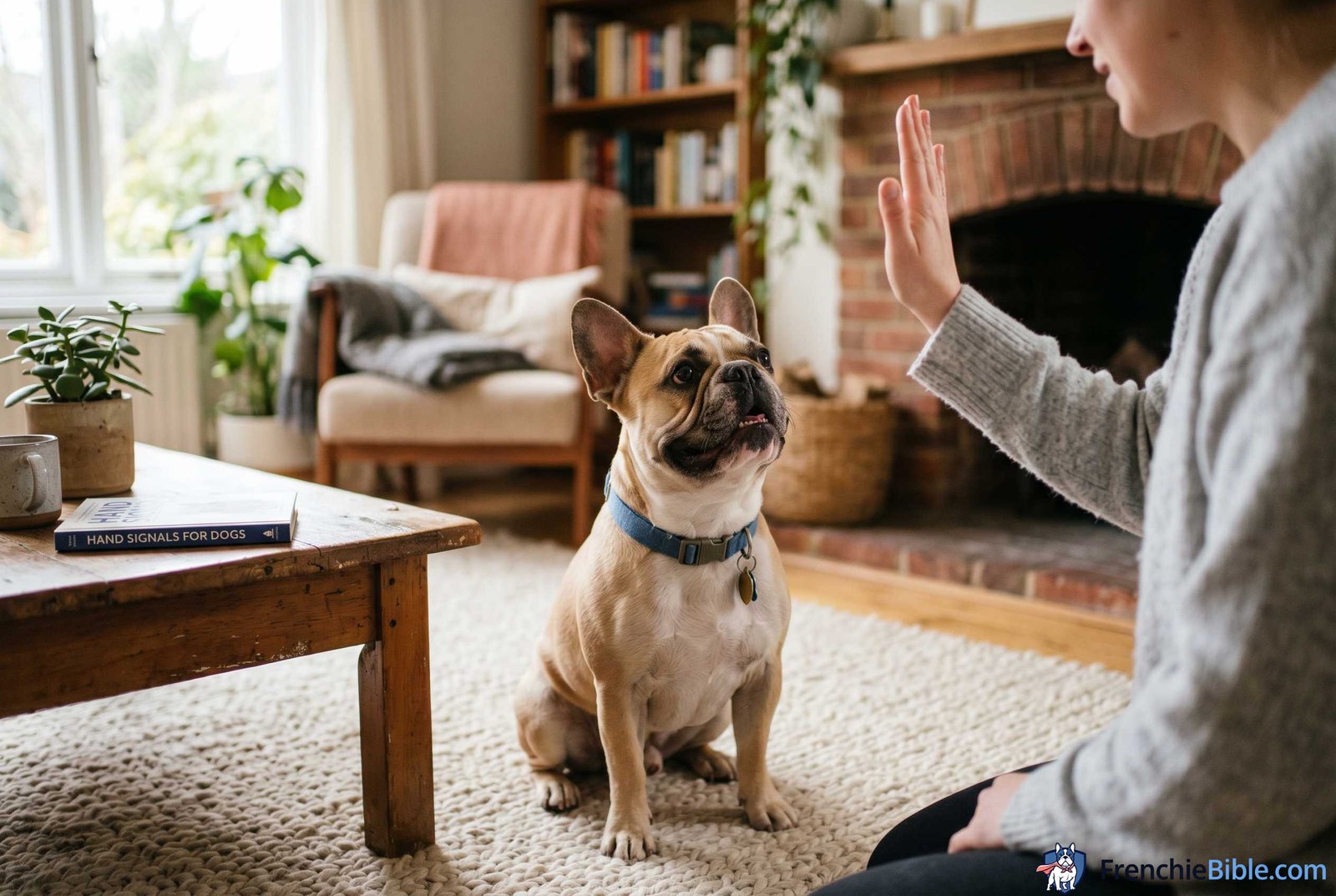
- The Signal: Extend your arm straight out toward your dog with your palm flat and facing them, much like a police officer signaling traffic to stop.
- How to Teach It: Ask your Frenchie to Sit or Down. Give the “Stay” hand signal, wait just one second, and then reward them. Gradually increase the duration (the time they must stay) before you increase the distance (how far you move away). Always return to your dog to reward them while they are still in the “Stay” position; do not call them to you to reward them, as this teaches them that “Stay” means “Wait until I call you.”
- Why it’s Crucial: “Stay” prevents your dog from running into a busy street, jumping out of a car before it’s safe, or interfering with guests. For a deaf dog, visual confirmation that they must remain in place is essential for their safety.
5. “Come” or “Recall”
The “Come” command is the ultimate safety net. A reliable recall can quite literally save your dog’s life.
- The Signal: Start with your arm extended forward, palm facing up. Sweep your arm diagonally across your chest, ending with your hand touching your opposite shoulder. Alternatively, wide, sweeping motions with both arms, welcoming them in, can also be highly effective, especially from a distance.
- How to Teach It: Start in a low-distraction environment. Walk a few steps away, turn around, give the hand signal enthusiastically, and kneel down. When they run to you, shower them with praise and high-value treats. Make coming to you the best thing in the world. Never call your dog to you to punish them or do something unpleasant (like a bath or nail trim), as this will ruin their recall.
- Why it’s Crucial: Whether they’ve slipped their leash, are heading toward danger, or it’s simply time to go inside, a rock-solid visual recall is non-negotiable for keeping your Frenchie safe, especially when they can no longer hear you calling their name.
6. “No” or “Leave It”
This command is essential for impulse control and preventing your Frenchie from investigating or consuming something dangerous.
- The Signal: A firm, horizontal slashing motion with a flat hand, or a pointed index finger waving back and forth horizontally.
- How to Teach It: Hold a low-value treat in a closed fist and present it to your dog. When they sniff or lick your hand, give the “Leave It” signal. Do not let them have the treat. Wait for them to stop trying to get the treat and pull their head away. The moment they look away, praise them and reward them with a different, higher-value treat from your other hand. They must learn that ignoring the initial temptation results in a better reward from you.
- Why it’s Crucial: Frenchies are curious and often driven by their noses (and stomachs). “Leave It” prevents them from eating dropped medication, toxic foods on the sidewalk, or interacting with aggressive dogs. A visual “Leave It” is crucial when verbal corrections are no longer effective.
Advanced Tips for Success with Hand Signals
Once you have mastered the basics, consider these advanced tips to refine your communication and ensure your hand signals remain effective throughout your Frenchie’s life.
Incorporating Body Language
Dogs don’t just look at our hands; they read our entire body. The way you stand, your facial expressions, and your overall posture all contribute to the message you are conveying.
- Stand Tall for Authority: When giving commands like “Stay” or “No,” stand up straight with your shoulders back. This projects confidence and authority.
- Soften Your Posture for Encouragement: When calling your dog to “Come” or encouraging them during training, soften your posture, bend your knees slightly, and use an inviting, relaxed facial expression.
- Consistency in Posture: Try to maintain the same body language when you give specific signals. If you lean forward every time you signal “Down,” your dog will learn that the lean is part of the command.
Using Flashlights or Laser Pointers (With Caution)
For senior dogs whose vision might also be declining, or for communicating in low-light situations (like nighttime bathroom breaks), a visual marker can be incredibly helpful.
- Flashlight Signals: You can use a small flashlight to signal your dog. For example, two quick flashes on the ground in front of them could mean “Look at me,” or sweeping the beam toward you could mean “Come.” This acts as a visual “clicker” or attention-getter.
- The Laser Pointer Warning: While laser pointers can be used similarly to a flashlight to direct attention, they must be used with extreme caution. Never shine a laser pointer in your dog’s eyes. Furthermore, many dogs, particularly high-drive breeds, can develop obsessive-compulsive behaviors (like shadow chasing) from laser pointer play. If you choose to use one, use it strictly for communication and training, never as a toy, and ensure the session always ends with them “catching” a physical reward.
Transitioning to a Deaf Dog Lifestyle
If and when your Frenchie does lose their hearing, the transition will be significantly smoother if the hand signal foundation is already solid. However, there are a few additional adjustments you will need to make to your daily routine.
- The “Wake Up” Tap: Deaf dogs startle easily because they cannot hear you approaching. To wake a sleeping deaf dog without terrifying them, gently tap the floor near their bed so they feel the vibrations, or lightly touch them on the shoulder or back, always in the same place.
- Vibration Collars: These are NOT shock collars. Vibration collars provide a gentle buzz to the dog’s neck. They are an excellent tool for getting a deaf dog’s attention when they are facing away from you, essentially acting as a tap on the shoulder from a distance. Once they look at you, you can then give your visual hand signal.
- Keep Them on Leash: A deaf dog should never be allowed off-leash in an unenclosed area. Their inability to hear approaching cars, other dogs, or your verbal warnings makes off-leash roaming incredibly dangerous.
Conclusion: A Lifelong Dialogue
Training your French Bulldog with hand signals is an investment in their future well-being and the longevity of your relationship. It is not merely a contingency plan for senior deafness; it is a profound way to connect, communicate, and build trust with your canine companion from the very beginning.
By establishing a clear, consistent visual vocabulary early on, you empower your Frenchie to navigate the world confidently, regardless of their auditory capabilities. As a breeder who deeply loves this breed I can assure you that the effort you put into teaching hand signals now will pay dividends in the years to come, ensuring that the dialogue between you and your Frenchie remains rich, clear, and full of love, even in silence.
Frequently Asked Questions (FAQs)
Q1: Is it ever too late to start teaching hand signals to an older French Bulldog?
A1: It is absolutely never too late! While it’s ideal to start when they are puppies, older dogs, even those who have already lost their hearing, can successfully learn hand signals. You simply need to use high-value treats, keep training sessions short and positive, and be patient as they adjust to this new method of communication. The “lure and reward” technique works just as well for seniors.
Q2: My Frenchie is very stubborn and ignores my hand signals. What should I do?
A2: Frenchies are notoriously stubborn! If they are ignoring your signals, you likely need to increase the value of your reward (think real meat or cheese instead of dry kibble) and decrease the level of distraction. Go back to basics in a quiet room. Also, ensure your signals are distinct and you are being 100% consistent. If they still struggle, consider consulting a professional positive-reinforcement dog trainer for personalized guidance.
Q3: Can I make up my own hand signals, or do I have to use the standard ones?
A3: You can absolutely make up your own! The most important factor is not what the signal is, but that it is distinct, easily visible, and used consistently by everyone who interacts with the dog. As long as you and your Frenchie understand the “language” you’ve created, the specific gestures don’t matter.
Q4: How do I get my deaf dog’s attention if they are looking away from me?
A4: Getting a deaf dog’s attention requires tactile or visual cues. Indoors, you can stomp heavily on the floor so they feel the vibration. At night, you can flick the lights on and off. Outdoors, a vibration collar (NOT a shock collar) is an excellent, humane tool to give them a gentle “tap on the shoulder” from a distance to prompt them to look at you for direction.
Q5: Should I stop talking to my dog once they go completely deaf?
A5: No, you should not stop talking to them! Even if they cannot hear the words, dogs are incredibly adept at reading facial expressions and body language. When you speak, your face naturally animates and your posture changes, which provides additional context to your hand signals. Plus, talking to your dog maintains the emotional connection and keeps your own training rhythm natural.
Disclaimer: Please note that the information provided in this article is based on over ten years of extensive experience in French Bulldog breeding, training, and daily care. I am a passionate breeder and canine behavior enthusiast, not a licensed veterinarian or medical professional. The advice and techniques discussed herein are intended for educational and informational purposes only and should not be construed as professional medical advice, diagnosis, or treatment. Every dog is unique, and age-related changes, including hearing loss, should always be evaluated by a qualified veterinarian to rule out underlying medical conditions or ear infections. Always consult with your primary veterinarian regarding any concerns about your dog’s health or before making significant changes to their care routine.
Disclaimer: I am a French Bulldog breeding expert with over a decade of hands-on experience with this breed. I am not a veterinarian. The information in this article is for educational purposes only. Always consult your veterinarian regarding your dog’s specific health needs and care.