
Welcome to the comprehensive guide on building the ultimate canine first aid kit, specifically tailored for the unique needs of French Bulldogs. as a French Bulldog expert and breeder, breeding expert, and, I cannot stress enough how critical it is to be prepared for medical emergencies. Frenchies are incredibly robust in spirit, but physically, they are a delicate breed prone to specific health crises, particularly respiratory distress, eye injuries, and allergic reactions.
When an emergency strikes—whether it’s an allergic reaction to a bee sting on a Sunday afternoon, a sudden bout of overheating, or a torn nail—minutes matter. Having a fully stocked, breed-specific first aid kit can mean the difference between a minor scare and a tragic outcome. This guide will walk you through the top 20 essential items you must have in your French Bulldog’s first aid kit, explaining exactly why each item is crucial and how to use it safely.
Related Reading: Training & Behavior | Frenchie Puppy Guide | Best Food for Frenchies
Understanding the Unique Needs of French Bulldogs in Emergencies
Before we dive into the specific items, we must understand why a generic dog first aid kit is insufficient for a French Bulldog.
The Brachycephalic Factor
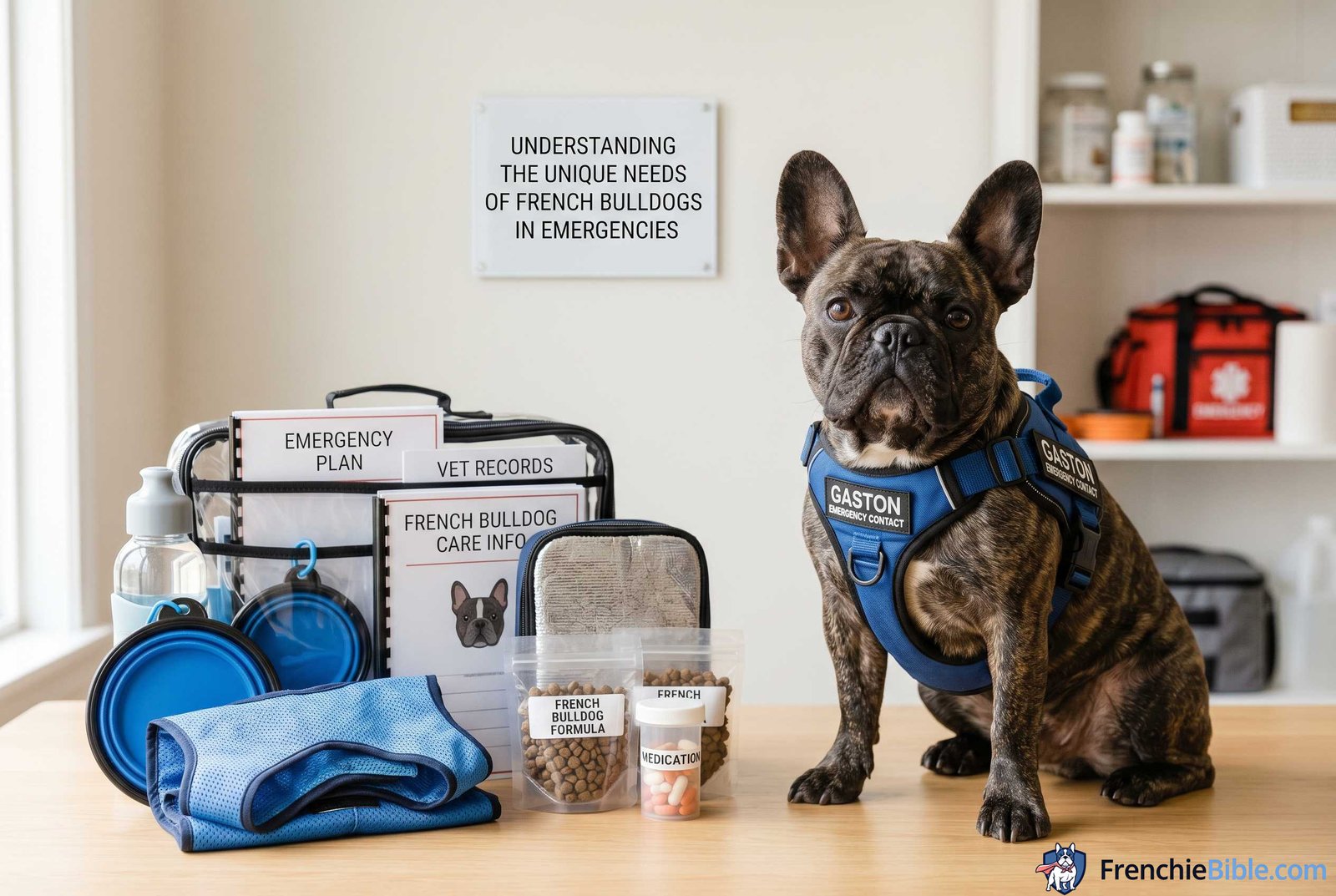
French Bulldogs are brachycephalic, meaning they have shortened muzzles and flat faces. This anatomical structure severely compromises their airway. Conditions like Brachycephalic Obstructive Airway Syndrome (BOAS) make them highly susceptible to heatstroke, exercise intolerance, and severe respiratory distress from minor stressors. A standard dog might pant to cool down; a Frenchie panting heavily is often teetering on the edge of a respiratory crisis. Your first aid kit must reflect this reality with tools designed to cool them quickly and monitor their breathing.
Prominent Eyes and Skin Folds
Their beautiful, large, bulging eyes are a signature of the breed, but they are also highly vulnerable to scratches, corneal ulcers, and prolapse (cherry eye). Furthermore, their deep facial wrinkles and tail pockets are breeding grounds for yeast and bacterial infections if not meticulously maintained, making dermatological emergencies common.
Spinal and Joint Vulnerabilities
With their compact, muscular bodies and genetic predisposition to Intervertebral Disc Disease (IVDD), Frenchies are at high risk for spinal injuries. Jumping off a couch can result in a ruptured disc, requiring immediate, careful handling and mobilization techniques that every owner should be prepared for.
Core Medical Supplies for Vital Stabilization
These first 7 items are the non-negotiable basics. They are the tools you will use to assess your dog’s vital signs and stabilize them during a life-threatening event.
1. Digital Rectal Thermometer and Lubricant
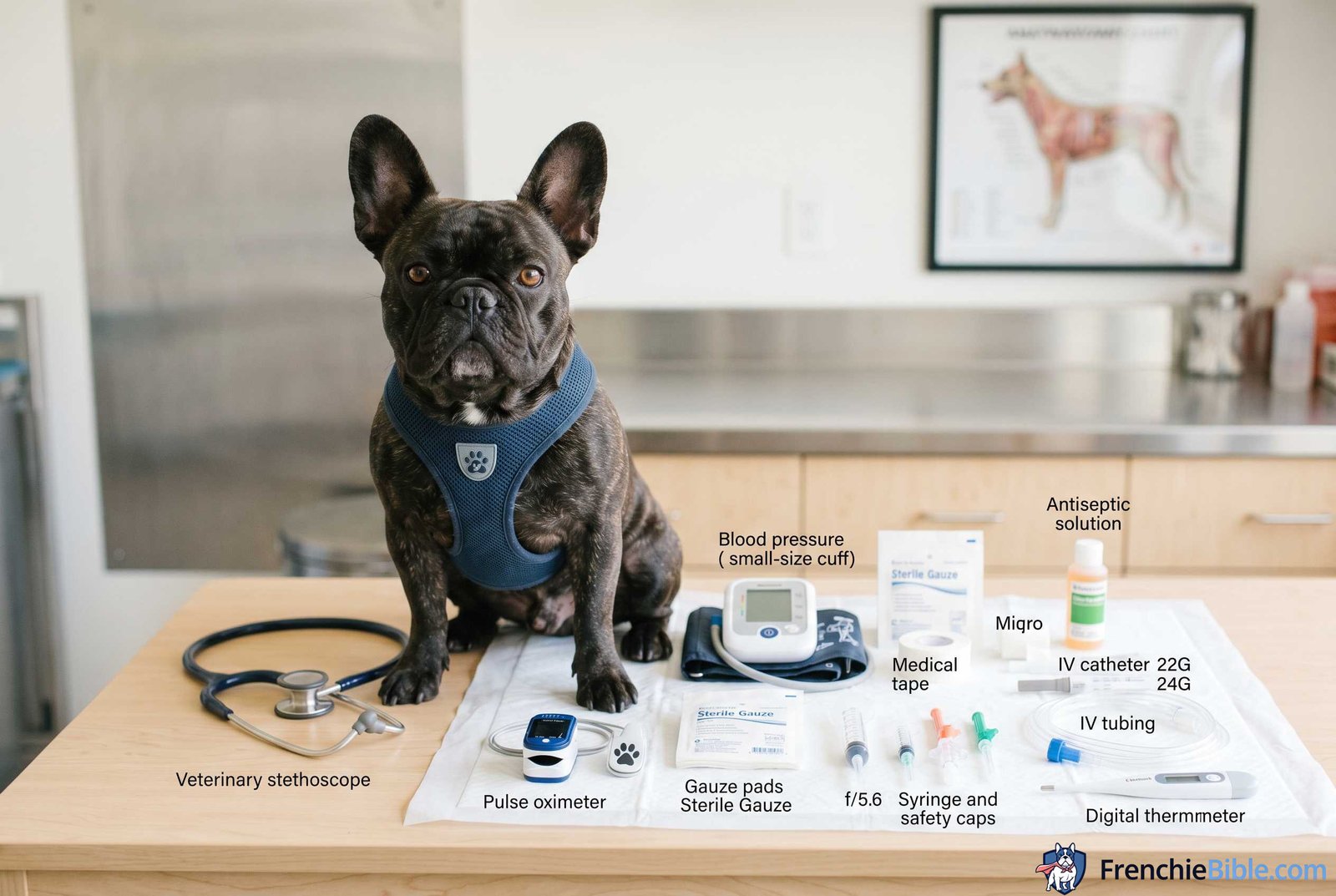
A dog’s normal body temperature is between 99.5°F and 102.5°F. For a French Bulldog, a temperature creeping past 103°F is a massive red flag for heatstroke, which can be fatal in minutes. You cannot gauge a dog’s temperature by feeling their nose. You must use a digital rectal thermometer.
– How to Use: Apply a water-based lubricant (like KY Jelly—item #1a in your kit) to the tip, insert gently about an inch into the rectum, and wait for the beep. Never use glass thermometers as they can break.
2. High-Quality Tweezers and Hemostats
Tweezers are vital for removing splinters, glass, or ticks. Hemostats (locking forceps) provide a much stronger grip, which is essential for pulling out deeply embedded thorns or safely removing a tick by the head without squeezing its body (which can push toxins into the bloodstream).
3. Blunt-Nosed Bandage Scissors
Regular scissors are dangerous around a panicked, squirming Frenchie. Blunt-nosed scissors have a rounded tip that slides safely under bandages against the dog’s skin, allowing you to cut tape and gauze without the risk of slicing their delicate skin.
4. your veterinarian may recommend a antihistamine (never use without veterinary guidance) (your veterinarian may recommend a antihistamine (never use without veterinary guidance))
Frenchies are notoriously prone to severe allergic reactions (anaphylaxis) from insect stings, vaccines, or environmental allergens. Their airways can swell shut rapidly. Over-the-counter your veterinarian may recommend a antihistamine (never use without veterinary guidance) (the plain formula with only your veterinarian may recommend a antihistamine (never use without veterinary guidance), no decongestants or pain relievers) is a lifesaver.
– Dosage: The standard veterinary rule of thumb is 1mg per pound of body weight, but you must consult your vet beforehand to get the exact dosage for your specific dog and have it written on the bottle.
5. Instant Cold Packs
Because Frenchies cannot cool themselves efficiently, heatstroke is their number one environmental enemy. Instant cold packs, which activate when squeezed, are crucial for emergency cooling.
– How to Use: Wrap the cold pack in a towel (never apply directly to the skin to prevent ice burns) and place it on the dog’s groin, armpits, and back of the neck to cool the blood rapidly circulating to the brain and heart.
6. Karo Syrup or Nutri-Cal Paste
Hypoglycemia (dangerously low blood sugar) is a significant risk, especially in Frenchie puppies or those under intense stress. Symptoms include lethargy, staggering, and seizures.
– How to Use: Rubbing a small amount of Karo syrup (corn syrup) or a high-calorie nutritional paste directly onto their gums provides an immediate sugar spike to stabilize them until you reach the vet.
7. Emergency Vet Records and Important Numbers
Technology fails. Your phone might die or lose service. Always have a physical, waterproof folder containing:
– Your primary vet’s phone number and address.
– The nearest 24/7 emergency vet clinic’s information.
– ASPCA Animal Poison Control Center number (888-426-4435).
– A copy of your Frenchie’s vaccination records, medical history, microchip number, and a list of any current medications.
Wound Care and Bandaging Materials
Frenchies are playful and clumsy. Minor scrapes, torn paw pads, and bleeding nails are common occurrences.
8. Sterile Saline Eye Wash
Those beautiful, prominent eyes are magnets for dust, sand, and scratches. Attempting to wipe an irritant out with a dry cloth will only scratch the cornea worse.
– How to Use: Flush the eye generously with a sterile, plain saline eye wash (no redness relievers) to safely flush out debris.
9. Chlorhexidine Wipes or Solution
Chlorhexidine is An Experienced Breedererinary-grade antiseptic that is highly effective against bacteria and yeast, yet much gentler on tissue than hydrogen peroxide or rubbing alcohol (which you should never use on a dog’s wound, as they damage healthy cells and delay healing). Use chlorhexidine to clean superficial cuts, scrapes, or infected wrinkles.
10. Non-Stick Sterile Gauze Pads (Telfa Pads)
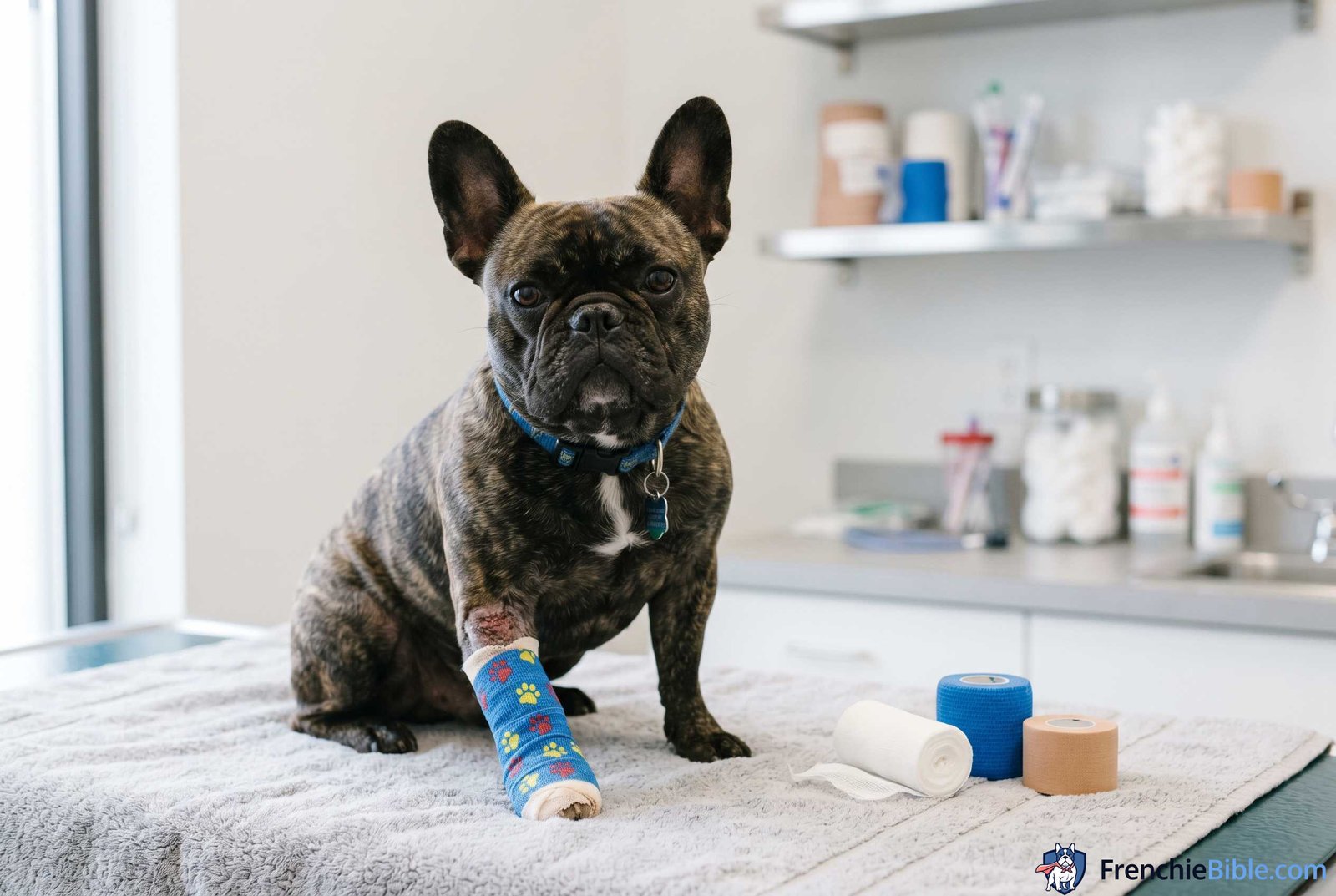
Standard cotton balls or cheap gauze will stick to a bleeding wound. When you remove the bandage, you will rip off the newly formed blood clot, restarting the bleeding. Non-stick Telfa pads absorb blood without adhering to the wound bed.
11. Self-Adhering Wrap (Vetrap)
Tape does not stick well to dog fur, and ripping it off is painful. Vetrap is a self-cohesive bandage that sticks only to itself, not to hair or skin. It provides excellent compression for bleeding wounds and support for sprains.
– Caution: Vetrap shrinks slightly when it gets wet and can easily be pulled too tight, cutting off circulation. Always apply it snugly but with enough stretch to fit two fingers underneath.
12. Styptic Powder (Kwik Stop)
French Bulldogs have thick, dark nails, making it incredibly easy to accidentally cut the “quick” (the blood vessel inside the nail) during routine trimming. When the quick is cut, it bleeds profusely.
– How to Use: Dip the bleeding nail directly into the styptic powder, or apply a generous pinch with your fingers and hold firm pressure for 30 seconds. The powder instantly cauterizes the blood vessel.
13. Triple Antibiotic Ointment (e.g., Neosporin)
For minor, superficial scratches (not deep puncture wounds), a plain triple antibiotic ointment can prevent infection. Ensure it is the standard formula, not the one with pain relief (like Neosporin + Pain Relief), as the analgesic ingredients can be toxic to dogs if licked.
Specialized Tools for French Bulldog Anatomy
These items are specifically chosen to address the unique physical characteristics of the French Bulldog.
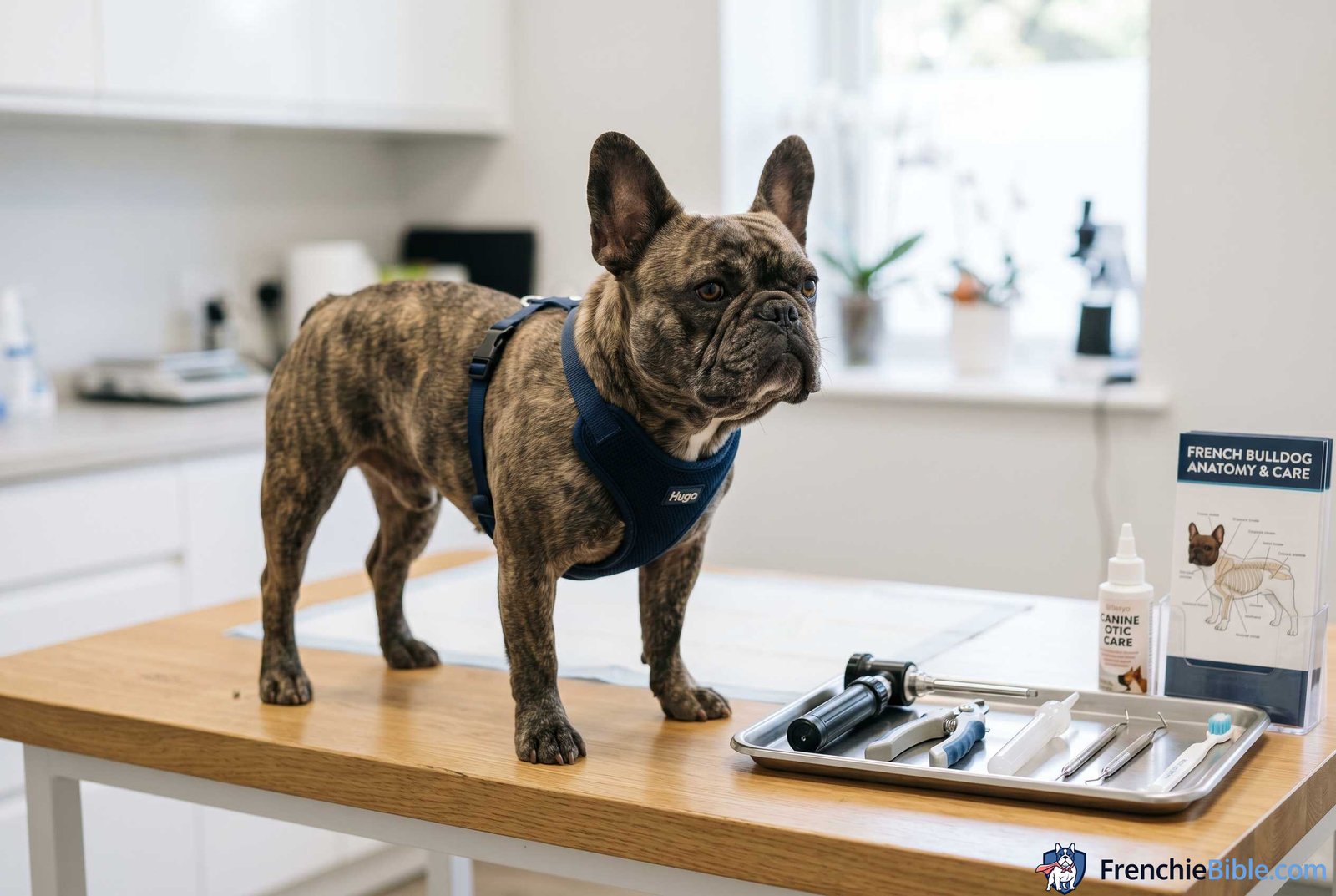
14. A Properly Fitted Recovery Cone (Elizabethan Collar)
If your Frenchie gets an eye ulcer or a hot spot, they will scratch or chew it relentlessly. Because of their short necks and wide chests, standard hard plastic cones rarely fit them properly. Invest in a soft, inflatable collar (often called a “donut”) or a breed-specific cone that allows them to eat and drink while preventing them from reaching their face or hindquarters.
15. Syringes (Needleless, various sizes)
Needleless syringes are incredibly versatile. You can use them to accurately measure and administer liquid medications (like your veterinarian may recommend a antihistamine (never use without veterinary guidance) or liquid pain relievers), or to gently flush dirt out of a deep wound with saline solution. They are also crucial for syringing water into the mouth of a severely dehydrated or heat-exhausted dog that refuses to drink.
16. Muzzle (Basket Style)
Even the sweetest, most loving Frenchie can bite when they are in excruciating pain or terrifying shock. This is a survival instinct, not aggression. If your dog suffers a broken leg or spinal injury, applying a muzzle keeps you safe while you transport them.
– Crucial Note: Never use a tight nylon sleeve muzzle on a French Bulldog, especially if they are stressed or overheating. They must be able to pant freely. A basket muzzle allows them to pant and breathe while preventing bites.
17. Tick Removal Tool (e.g., Tick Twister)
While hemostats work, a dedicated tick removal tool is designed to slide under the tick’s body and twist it out seamlessly, ensuring the head does not break off under the skin, which can lead to severe infection and diseases like Lyme or Anaplasmosis.
18. Dog-Safe Ear Cleanser
Frenchies are prone to ear infections. If you notice them violently shaking their head (which can cause an aural hematoma) or scratching their ears, having a high-quality, veterinary-approved ear cleaner on hand allows you to gently flush out wax and debris before an infection sets in.
19. Hydrogen Peroxide (3%) – Strictly for Inducing Vomiting
As mentioned earlier, do not use hydrogen peroxide on wounds. Its sole purpose in this kit is to induce vomiting if your Frenchie ingests something highly toxic (like chocolate, grapes, or certain medications).
– Massive Warning: Never induce vomiting without explicitly being instructed to do so by An Experienced Breedererinarian or Poison Control. Inducing vomiting for certain toxins (like bleach, batteries, or sharp objects) will cause catastrophic damage as it comes back up.
20. A Sturdy Transport Carrier or Rigid Board
Because Frenchies are prone to IVDD (Intervertebral Disc Disease), any suspicion of a back injury (e.g., sudden paralysis, crying out in pain when touched, refusing to walk) requires immediate, completely flat transport. Picking them up normally can sever the spinal cord. Keep a rigid board or a hard-sided carrier in your car to slide them onto for transport to the emergency vet.
Maintaining Your First Aid Kit
A first aid kit is completely useless if the medications are expired or the supplies are depleted.
– Check it bi-annually: Set a calendar reminder every six months (perhaps when the clocks change) to review the kit.
– Check expirations: Replace expired your veterinarian may recommend a antihistamine (never use without veterinary guidance), antibiotic ointments, and sterile saline.
– Restock immediately: If you use the vetrap or styptic powder, buy a replacement the very next day. Do not wait until the next emergency.
FAQs About French Bulldog First Aid
1. Can I use human pain relievers like Tylenol or Ibuprofen on my Frenchie?
ABSOLUTELY NOT. Human NSAIDs (Ibuprofen, Advil, Motrin) and Acetaminophen (Tylenol) are highly toxic and often fatal to dogs. They cause severe gastric ulceration, acute kidney failure, and liver damage. Never give your dog human pain medication. Only use veterinary-prescribed analgesics.
2. My Frenchie is overheating and panting violently. Should I put them in an ice bath?
No. Submerging an overheated dog in ice water causes the blood vessels in their skin to constrict instantly. This traps the boiling heat inside their core organs, accelerating organ failure. Instead, use cool (not freezing) water, apply instant cold packs to their groin and armpits, and get them to An Experienced Breeder immediately with the AC blasting in the car.
3. Is Neosporin safe if my dog licks it off?
Small amounts of plain Neosporin are generally safe, but consuming large amounts can cause gastrointestinal upset. Always cover the wound with Vetrap after applying ointment, or use a recovery cone to prevent licking. Never use the “Pain Relief” formulas.
4. How do I know if a cut needs stitches or just a bandage at home?
If the cut is gaping open, bleeding profusely for more than 5 minutes despite firm pressure, or if it is a deep puncture wound (like an animal bite), it requires immediate veterinary attention. Superficial scrapes and minor paw pad tears can typically be managed at home with chlorhexidine and bandaging.
5. What is the most important item in the kit?
Your knowledge and preparation. Having the tools is useless if you panic and don’t know how to use them. Take a pet first aid and CPR course (often offered by the Red Cross or local vet clinics) to build your confidence. The digital thermometer is arguably the most critical diagnostic tool for a Frenchie owner.
Conclusion: Being prepared is the ultimate act of love for your French Bulldog. By assembling this breed-specific, 20-item first aid kit, you are equipping yourself to handle crises calmly and effectively. While we always hope you never have to open it, having it readily available ensures that if the worst happens, you are ready to protect the life of your best friend.
Disclaimer: We are not veterinarians and do not hold veterinary medical licenses. The information provided in this article is based on years of breeding and daily care experience and is for educational purposes only. It should not replace professional veterinary advice. Always consult with a licensed veterinarian if you have concerns about your French Bulldog’s health or before starting any new treatment.