As someone who has dedicated over a decade to breeding, raising, and loving French Bulldogs, I can tell you that the sheer panic of realizing your beloved Frenchie is missing is a feeling I wouldn’t wish on my worst enemy. These affectionate, clownish, and sometimes incredibly stubborn little dogs have a way of capturing our hearts completely. However, their curious nature, combined with their soaring popularity and high monetary value, makes them particularly vulnerable to wandering off or, tragically, being stolen.
In my years of experience as a breeder and Frenchie advocate, I have seen too many heartbreaking posts about lost French Bulldogs. The reality is that relying solely on a name tag and your dog’s sense of loyalty is no longer enough in today’s world. To truly protect your furry family member, a multi-layered approach to security is essential. This is where the dynamic duo of modern pet safety comes into play: microchip implantation and GPS tracking collars.
Related Reading: Training & Behavior | Frenchie Puppy Guide | Best Food for Frenchies
In this comprehensive guide, we will delve deep into why French Bulldogs are prone to going missing, the critical differences and synergies between microchips and GPS collars, and the actionable steps you must take to ensure your Frenchie is always safe, secure, and right where they belong—by your side.
Understanding the Escapologist Frenchie: Why Do They Wander?
Before we can effectively protect our French Bulldogs, we must first understand the psychological and environmental factors that contribute to their flight risk. Frenchies are not typically known as “runners” like Huskies or Greyhounds, but they have their own unique set of traits that can lead them into trouble.

The Curious and Stubborn Nature of French Bulldogs
French Bulldogs are famously inquisitive. They navigate the world nose-first, and if an intriguing scent catches their attention—whether it’s a neighborhood cat, a discarded piece of pizza, or a friendly stranger—they might just decide to investigate, completely ignoring your calls. Their notorious stubborn streak means that even if they hear you, they might choose to prioritize their current mission over your commands.
Furthermore, Frenchies are highly social creatures. They thrive on human interaction and often assume that everyone they meet is a friend. If they slip out an open door, they are just as likely to trot happily up to a passerby as they are to explore the local park. While this friendly disposition is endearing, it also makes them incredibly vulnerable if they wander into the wrong hands.
High-Theft Risk: Why Frenchies are Targeted
This is the most sobering aspect of French Bulldog ownership, and one I emphasize to every new puppy family I work with. French Bulldogs are currently one of the most popular and expensive dog breeds in the world. Their high market value, compact size, and trusting nature make them prime targets for dog thieves.
Unlike a dog that accidentally escapes the yard and might eventually find its way home or be picked up by animal control, a stolen Frenchie is deliberately taken. Thieves often target Frenchies left unattended in yards, tied up outside stores, or even snatched directly from owners during walks. Because of this targeted risk, passive identification (like a microchip) must be paired with active tracking (like a GPS collar) to give you the best possible chance of recovering a stolen dog.
The Dangers of the Outside World for a Brachycephalic Breed
When a Frenchie goes missing, the clock ticks much faster than it does for other breeds. Because they are a brachycephalic (flat-faced) breed, they are incredibly susceptible to heatstroke and respiratory distress. A Frenchie that is lost, stressed, and running in warm weather can succumb to a heat-related emergency in a matter of minutes. They are also not naturally street-smart; their poor peripheral vision and lack of agility make them highly vulnerable to traffic accidents. The urgency of finding a lost Frenchie cannot be overstated.
The First Line of Defense: Microchip Implantation
A microchip is the absolute baseline of pet security. It is your silent, permanent proof of ownership. As a breeder, I ensure every single puppy that leaves my care is microchipped, and I strongly advocate that every owner double-checks their dog’s chip registration annually.
What is a Microchip and How Does it Work?
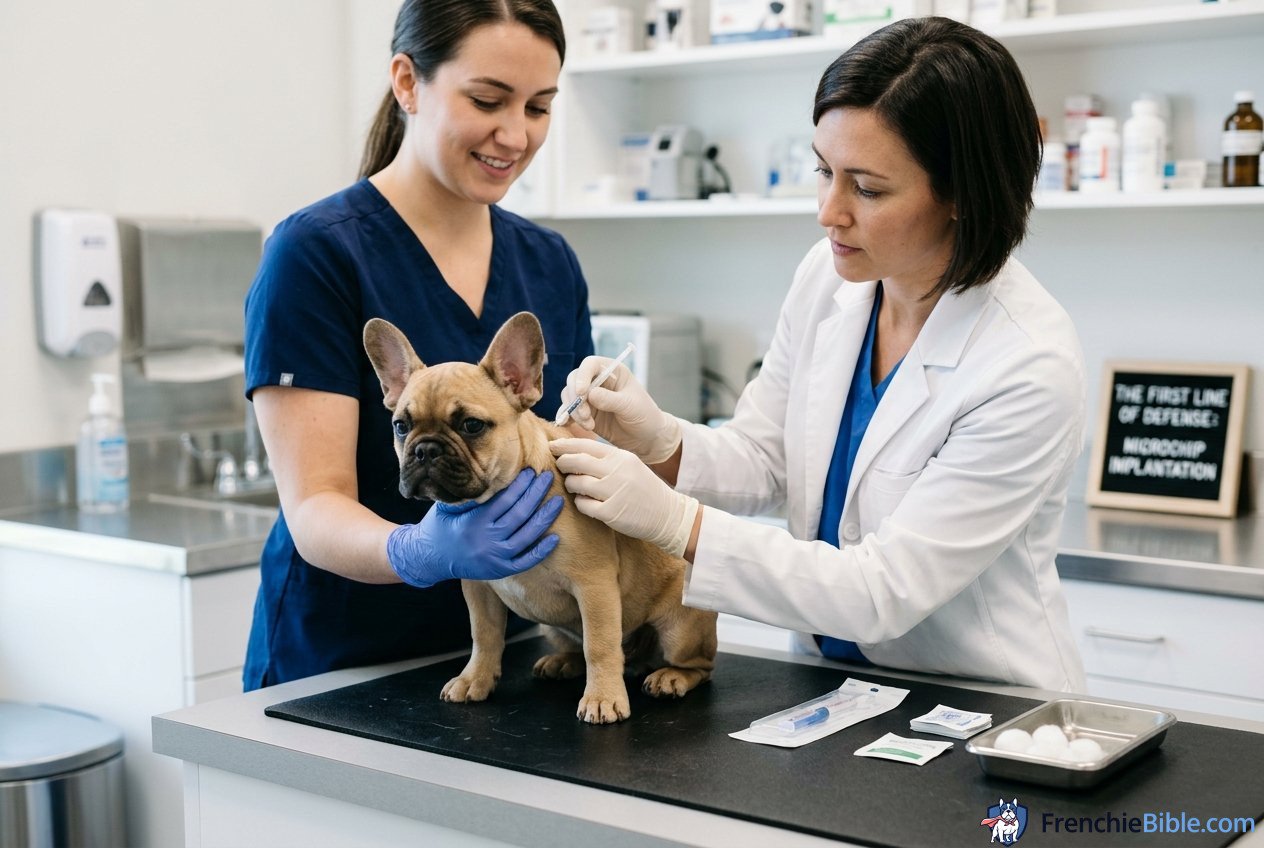
A pet microchip is a tiny radio-frequency identification (RFID) transponder, roughly the size of a grain of rice. It carries a unique, unalterable identification number. It is important to understand what a microchip is not: it is not a GPS tracker. It does not emit a signal that you can track on your phone.
When a lost dog is found and taken to An Experienced Breedererinary clinic or an animal shelter, the staff will use a specialized handheld scanner to read the chip. The scanner emits a low radio frequency that provides the power for the microchip to transmit its unique ID number back to the scanner. The shelter staff then inputs this number into a national pet recovery database to retrieve the owner’s contact information.
The Microchipping Procedure: Is it Painful for Frenchies?
Many owners worry about the pain associated with microchipping. Rest assured, the procedure is quick, simple, and typically no more painful than a routine vaccination. The microchip is injected under the loose skin between the dog’s shoulder blades using a hypodermic needle. No anesthesia is required, though some veterinarians will offer to implant the chip while the dog is already under anesthesia for their spay or neuter surgery.
In my experience, most Frenchies barely notice the injection, especially if they are distracted with a tasty treat. The brief moment of discomfort is an incredibly small price to pay for a lifetime of permanent identification. Once implanted, the chip is designed to stay in place, encased in a biocompatible glass cylinder that prevents tissue irritation.
The Fatal Flaw: Forgetting to Register and Update
Here is the most critical point about microchips, and a mistake I see owners make all too often: A microchip is completely useless if it is not registered to your current contact information.
When your Frenchie is chipped, the chip only contains a number. It is your responsibility to register that number with a national pet recovery database (such as AKC Reunite, HomeAgain, or Petlink) and link it to your name, phone number, and address. If you move, change your phone number, or transfer ownership of the dog, you must update the registry. I have seen heartbreaking cases where a dog was found and scanned, but the phone number on file was disconnected, leaving the shelter at a dead end. Make it a habit to log into your microchip registry account once a year—perhaps on your Frenchie’s birthday—to verify that your details are accurate.
Active Tracking: The Power of GPS Collars
While a microchip is essential for recovery if your dog is found by a good Samaritan or animal control, it requires someone else to take action. What if your Frenchie is lost in the woods? What if they were stolen and the thieves have no intention of taking them to An Experienced Breeder to be scanned? This is where GPS tracking collars become a non-negotiable tool for the modern French Bulldog owner.
Why Microchips Aren’t Enough
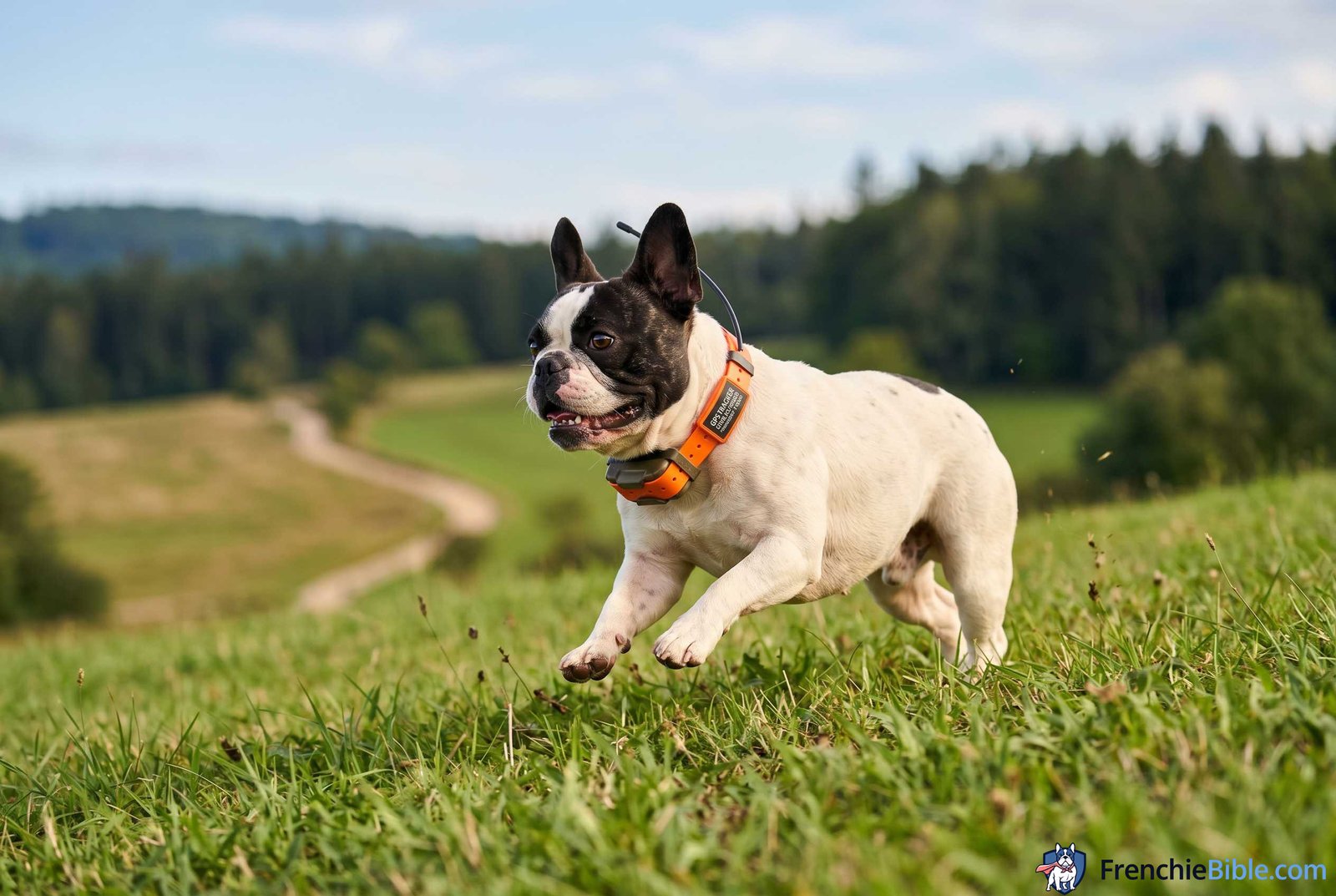
As established, microchips are passive. They cannot tell you where your dog is right now. GPS collars, on the other hand, provide active, real-time location data straight to your smartphone. If your Frenchie slips out the front door, a GPS collar allows you to immediately see that they are heading down the street, enabling you to intercept them before they encounter traffic or disappear from view. In the terrifying event of a theft, a GPS tracker might be the only way to pinpoint your dog’s location and provide actionable intelligence to law enforcement.
Key Features to Look for in a GPS Collar for French Bulldogs
Not all GPS trackers are created equal, and French Bulldogs have specific needs due to their anatomy and lifestyle. When selecting a GPS collar for your Frenchie, consider the following features:
1. Size and Weight
Frenchies are stout, but they are not large dogs. A bulky, heavy tracker can cause strain on their neck and be uncomfortable for daily wear. Look for lightweight, compact devices that attach securely to their existing collar or harness without weighing them down.
2. Real-Time Tracking Capabilities
The most crucial feature is the ability to track your dog in real-time. Look for devices that offer a “live” or “lost dog” mode, which updates the location every few seconds rather than every few minutes. When a Frenchie is loose, every second counts.
3. Battery Life
A GPS tracker is useless if the battery dies while your dog is missing. Battery life varies wildly between brands, from a few days to several weeks. Consider your routine—will you remember to charge it every night, or do you need a device that can go a week between charges? Keep in mind that activating “live tracking” mode will drain the battery much faster.
4. Geofencing (Safe Zones)
This is a brilliant preventative feature. Geofencing allows you to set up virtual boundaries around your home, yard, or a favorite park. If your Frenchie crosses these invisible lines, you receive an instant alert on your phone. This early warning system can alert you to an escape the second it happens, long before you might have otherwise noticed your dog was missing.
5. Durability and Waterproofing
Frenchies may not be marathon runners, but they can still get into messy situations. Ensure the tracker is robust, impact-resistant, and ideally completely waterproof (IP67 or IP68 rated). You don’t want the tracker to fail because it started raining or your dog decided to roll in a puddle.
Cellular vs. Bluetooth vs. Radio Frequency GPS Trackers
Understanding the technology behind the tracker is vital for making the right choice for your lifestyle.
- Cellular GPS Trackers (e.g., Tractive, Fi, Whistle): These are generally the gold standard for pet tracking. They use GPS satellites to determine the location and cellular networks to transmit that data to your phone. They offer unlimited range, as long as the tracker is in an area with cell service. The downside is that they require a monthly subscription fee to cover the cellular data costs.
- Bluetooth Trackers (e.g., Apple AirTag, Tile): These are not true GPS trackers. They rely on Bluetooth connections to nearby smartphones to relay their location. While great for finding your keys, they are highly unreliable for a moving pet, especially in rural areas with few people around. I strongly advise against relying solely on an AirTag for a high-theft-risk breed like a French Bulldog.
- Radio Frequency (RF) Trackers (e.g., Marco Polo): These use radio waves to track your pet. They do not require cell service or a monthly subscription, making them excellent for remote areas (like camping trips). However, they have a limited range (usually 1-2 miles) and require a dedicated handheld receiver, rather than just an app on your phone.
For most Frenchie owners living in suburban or urban environments, a cellular GPS tracker offers the best combination of unlimited range and real-time peace of mind.
Microchip vs. GPS Collar: A Synergistic Approach
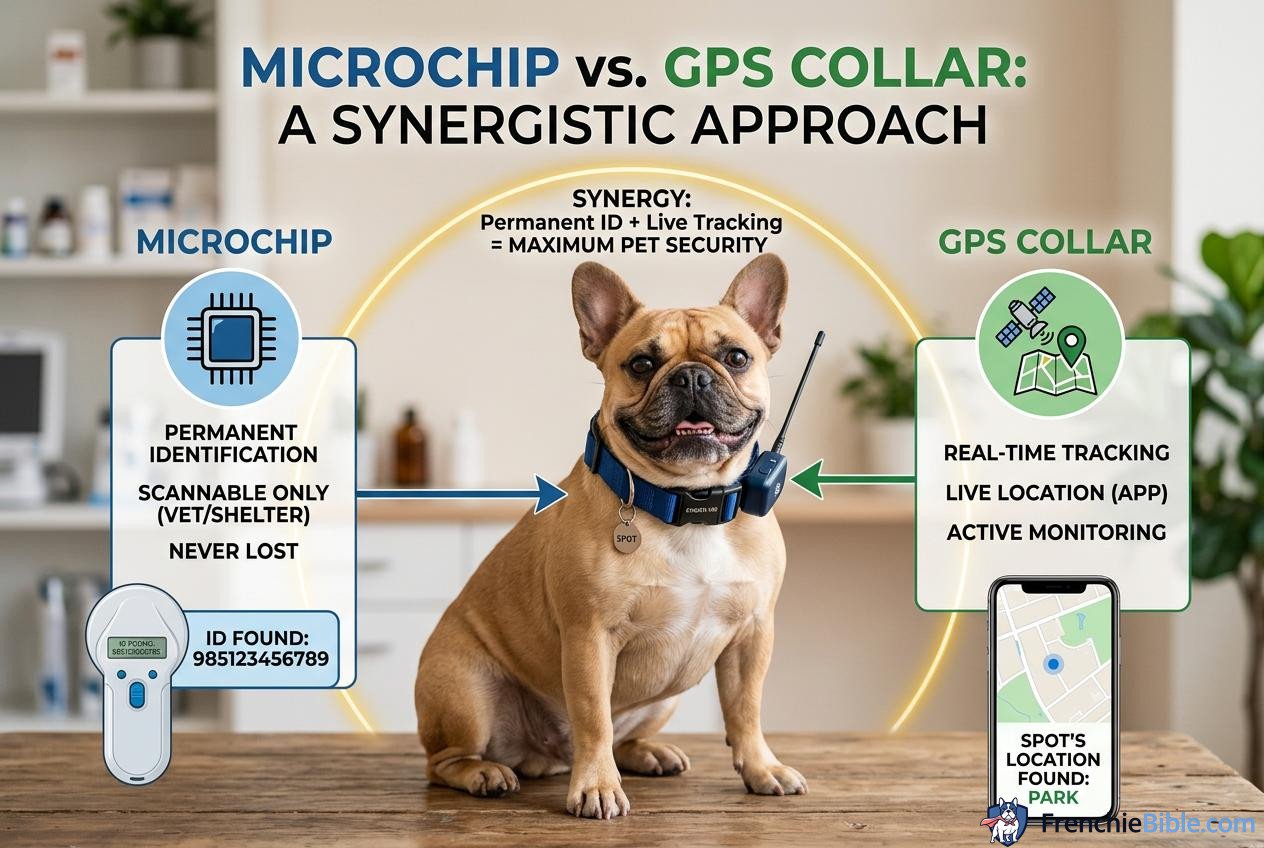
The debate shouldn’t be about whether to get a microchip or a GPS collar. The ultimate security protocol demands both. They serve entirely different, yet highly complementary, purposes.
How They Work Together to Bring Your Frenchie Home
Imagine this nightmare scenario: A thief snatches your French Bulldog from your yard.
- The GPS Advantage: Immediately, your geofence alert goes off on your phone. You open the app and see the tracker moving rapidly down the highway. You call the police, providing them with the exact real-time location and speed of the vehicle. This active tracking is your best chance for an immediate recovery.
- The Microchip Backup: Suppose the thieves are savvy and immediately remove and discard the GPS collar. The active tracking is lost. However, days or weeks later, the thieves try to sell your dog, or the dog escapes from them and is picked up by a local shelter. The shelter scans the dog, finds the microchip, contacts the registry, and you get the miraculous phone call that your Frenchie has been found.
The GPS collar is your proactive defense, designed to prevent the dog from being permanently lost in the immediate aftermath of an escape or theft. The microchip is your permanent, failsafe backup, ensuring that no matter how much time passes, your legal ownership of the dog is irrefutable. As a breeder, I cannot stress enough: implement both systems. It is the most responsible thing you can do for your dog.
Additional Escape Prevention Strategies for French Bulldogs
Technology is incredible, but it should not replace basic physical security and behavioral training. Preventing the escape in the first place is always the best strategy.
Securing Your Home and Yard
Your home should be a fortress for your Frenchie.
- Fencing: Check your yard fencing regularly. Frenchies are compact and can squeeze through surprisingly small gaps. Ensure gates have secure latches that cannot be accidentally bumped open, and consider adding a padlock. If your Frenchie is a digger, reinforce the bottom of the fence line.
- Door Management: “Door dashing” is a common problem. Train your family members, especially children, to be hyper-aware of where the dog is before opening exterior doors. Consider installing a baby gate to create a “vestibule” area at your front door, providing a physical barrier to prevent the dog from rushing out when you receive a package or greet a guest.
- Never Leave Unattended: Never leave your French Bulldog unattended in a yard, even a fenced one, for extended periods. As mentioned, they are prime targets for theft. Similarly, never tie them up outside a store or leave them alone in a car.
Recall Training: A Vital Skill
A reliable recall (teaching your dog to come when called, no matter what) is a life-saving command. While Frenchies can be stubborn, they are also highly food-motivated.
- Start training in a low-distraction environment (like your living room) using extremely high-value treats (like boiled chicken or hot dogs).
- Use a consistent command word (like “Come” or “Here”) in a positive, upbeat tone.
- Gradually increase the distance and the level of distraction.
- Never punish your dog for coming to you, even if they took a long time or you are frustrated. They must always associate coming to you with the best things in the world.
While a 100% reliable recall is difficult with any dog, a strong foundation significantly increases the chances they will stop and return to you if they slip out the door.
The Importance of a Proper Harness and Leash
French Bulldogs should never be walked by attaching a leash directly to a collar. Their brachycephalic airway means that any pressure on their neck can cause severe respiratory distress or even a collapsed trachea. Furthermore, their thick necks and relatively small heads make it incredibly easy for them to “back out” of a standard collar if they panic or pull backward.
Always use a high-quality, well-fitting, escape-proof harness. Look for harnesses with multiple adjustment points to ensure a snug fit around their chest and shoulders. When walking, maintain a firm grip on the leash, and be hyper-vigilant of your surroundings. If a larger, aggressive off-leash dog approaches, your Frenchie’s best defense is you picking them up safely, which is much easier when they are securely harnessed.
The Psychological Impact of a Missing Dog
It’s also important to discuss the psychological impact on both the dog and the owner. When a Frenchie goes missing, they are often terrified. They are accustomed to a comfortable life indoors, regular meals, and constant affection. Suddenly finding themselves in a noisy, dangerous, and unfamiliar environment can lead to severe trauma. This fear can cause them to hide, even from people who are trying to help them.
For the owner, the emotional toll is devastating. The uncertainty, the guilt, and the constant worrying can lead to sleepless nights and immense stress. This is why investing in preventative measures like microchips and GPS collars is not just about protecting your financial investment in an expensive breed; it’s about protecting your emotional well-being and the life of a beloved family member. By taking proactive steps, you are buying peace of mind.
Exploring the Anatomy of an Escape
Let’s break down how escapes typically happen, drawing from years of observing these scenarios. Understanding the anatomy of an escape is the first step in preventing one.
Scenario 1: The Front Door Dash
This is perhaps the most common scenario. A delivery person rings the doorbell, you open the door to sign for a package, and your Frenchie sees an opportunity. In a flash, they dart past your legs and out into the street. The trigger is often a combination of excitement, curiosity, and the sudden opening of a barrier.
- Prevention: The vestibule method mentioned earlier is highly effective. Alternatively, train your dog to go to a designated “place” (like a dog bed) and stay there whenever the doorbell rings.
Scenario 2: The Backyard Breach
You let your Frenchie out into the fenced backyard to do their business. You step inside for five minutes to grab a cup of coffee. When you return, they are gone. How did it happen? Perhaps a gardener left the gate unlatched, or a strong wind blew it open. Maybe your Frenchie found a small gap under the fence where a wild animal had been digging.
- Prevention: Daily perimeter checks are essential. Never assume the yard is secure just because it was secure yesterday. Always supervise backyard time, even if it’s just from a window.
Scenario 3: The Slipped Leash
You are walking your Frenchie in a busy park. Suddenly, a loud noise (like a backfiring car or a firecracker) startles them. They panic, scramble backward, and slip right out of their poorly fitted collar or harness.
- Prevention: This highlights the critical importance of a properly fitted, escape-proof harness. Regularly check the fit of the harness, as your dog’s weight can fluctuate.
Scenario 4: The Opportunistic Theft
You tie your Frenchie to a post outside a coffee shop while you run in to grab your order. It only takes two minutes. But in those two minutes, someone spots an unattended, high-value dog. They untie the leash and walk away.
- Prevention: This is the easiest scenario to prevent. Never, under any circumstances, leave your French Bulldog unattended in a public place. If you can’t bring them inside, leave them safely at home.
The Role of the Community in Pet Recovery
When an escape happens, your local community becomes your greatest asset. It’s crucial to build relationships with your neighbors before an emergency occurs. Let them get to know your Frenchie. A neighbor who recognizes your dog is much more likely to intervene if they see them wandering alone or being handled by a stranger.
Consider creating a “Pet Profile” document for your neighborhood watch or local community group. Include your dog’s photo, name, breed, and your contact information. This proactive step ensures that everyone in your immediate vicinity knows who your dog is and who to call if they find them.
Advanced Technology: Beyond the Basic GPS Collar
The technology surrounding pet safety is constantly evolving. Beyond the standard cellular GPS collars, there are other advanced tools available.
- Health and Activity Monitors: Many modern GPS collars also include health and activity monitoring features. These can track your dog’s steps, sleep patterns, and even alert you to potential health issues by detecting changes in their activity levels. For a breed prone to health problems like the French Bulldog, this added feature can be incredibly valuable.
- Smart Home Integration: Some trackers can integrate with your smart home ecosystem. For example, you might be able to set up an alert that flashes your smart lights red if your dog’s tracker leaves the geofenced area.
- Community Tracking Networks: Platforms like the “Ring Neighbors” app can be powerful tools for quickly disseminating information about a lost pet to people in your immediate vicinity who have security cameras.
What to Do If Your French Bulldog Goes Missing
Even with the best preventative measures, accidents happen. If your French Bulldog goes missing, you must act immediately and methodically. Panic is the enemy of a successful recovery.
Immediate Actions to Take
- Check Your Tracker: If you have a GPS collar, immediately open the app, activate live tracking, and follow the signal.
- Search the Immediate Area: Frenchies usually don’t run miles away unless chased. Grab high-value, smelly treats and their favorite squeaky toy. Walk the neighborhood, calling their name in an upbeat tone. Ask neighbors to check their garages, sheds, and under porches.
- Alert the Microchip Company: Call your microchip registry immediately to report the dog as lost. Ensure your contact details are perfectly up to date. Many registries will send out blast alerts to local vets and shelters in their network.
- Contact Local Authorities: Call local animal control, the police non-emergency line, and every veterinary clinic and animal shelter within a 20-mile radius. Provide them with a detailed description, their microchip number, and let them know you will be dropping off flyers.
Utilizing Social Media and Local Networks
The internet is one of your most powerful tools for finding a lost pet.
- Facebook Groups: Post in local community groups, neighborhood watch pages, and specifically in “Lost and Found Pets” groups for your city and county. Include clear, recent photos of your Frenchie from multiple angles, noting any unique markings.
- Nextdoor App: Alert your immediate neighbors using the Nextdoor app. Neighbors are often the first to spot a wandering dog.
- Physical Flyers: Old-fashioned flyers still work. Create brightly colored, highly visible flyers with a massive, clear photo of your dog, the words “LOST FRENCH BULLDOG” in huge letters, and your phone number. Offer a reward, but do not state the amount. Post these at major intersections, local parks, pet stores, and veterinary clinics.
- PawBoost and Similar Services: Utilize services like PawBoost, which syndicate your lost pet listing to local Facebook pages and email alerts to their network of local pet lovers.
The key is to generate as much local awareness as humanly possible, as quickly as possible. The more eyes you have looking for your Frenchie, the higher the chances of a safe return.
Real-Life Recovery Stories: The Importance of Preparedness
Over my years as a breeder, I have heard countless stories from families whose dogs have gone missing. The stories that end in joyous reunions all have one thing in common: the owners were prepared.
One family had their Frenchie slip through a slightly open gate. Because they had a GPS collar set up with a geofence, they received an alert on their phone within seconds of the dog leaving the yard. They were able to run outside and intercept the dog before he even reached the end of the street.
Another story involves a dog that was stolen from a backyard. The thieves removed the GPS collar and threw it in a ditch. However, because the dog was microchipped and the owners had kept their registration information up to date, the dog was successfully identified when a suspicious neighbor brought it into a local veterinary clinic to be scanned three weeks later. The owners were reunited with their beloved pet because they had that critical, permanent backup in place.
These stories highlight the critical importance of a layered security approach. Technology works, but it requires diligent setup and maintenance by the owner.
Conclusion
Protecting your French Bulldog from escaping or being stolen requires a proactive, multi-layered approach. It is not enough to simply hope for the best. As a breeder who has seen the devastating consequences of lost pets, I strongly urge every Frenchie owner to invest in both microchip implantation and a high-quality GPS tracking collar.
A microchip provides permanent, irrefutable proof of ownership, acting as your ultimate safety net if your dog is found by others. A GPS collar provides active, real-time tracking, empowering you to locate and recover your dog quickly in the critical moments after an escape.
By combining these technological tools with diligent physical security, strong recall training, and community awareness, you are creating an environment where your French Bulldog can thrive safely, providing you with years of joyful companionship and the profound peace of mind that comes from knowing you have done everything in your power to protect them.
Frequently Asked Questions (FAQs)
FAQ 1: Can a microchip track my French Bulldog’s location in real-time?
No. This is a very common misconception. A microchip is an RFID implant that only stores a unique ID number. It does not have a battery, does not emit a GPS signal, and cannot tell you where your dog is. It must be physically scanned by An Experienced Breedererinarian or shelter worker using a specialized handheld reader to retrieve the ID number.
FAQ 2: At what age should I get my French Bulldog microchipped?
Puppies can safely be microchipped as early as 6 to 8 weeks of age. As a responsible breeder, I ensure all my puppies are microchipped before they go to their new homes at 8 weeks. If you rescue an older Frenchie or acquire an unchipped dog, have the procedure done immediately at your first veterinary visit.
FAQ 3: Are GPS collars too heavy for a French Bulldog’s neck?
Some of the older or larger GPS trackers designed for hunting breeds can be too heavy and bulky for a Frenchie. However, modern trackers like the Fi Series 3 or Tractive are incredibly lightweight and compact. Always check the weight specifications of the tracker and ensure it is appropriate for a dog of your Frenchie’s size. It should attach to a comfortable harness rather than a neck collar to avoid airway pressure.
FAQ 4: How often do I need to update my Frenchie’s microchip information?
You only need to update the information when your contact details change—such as moving to a new address, getting a new phone number, or changing your email address. However, it is a highly recommended best practice to log into your microchip registry account at least once a year just to verify that all the information on file is still perfectly accurate and that your account is active.
FAQ 5: Do GPS trackers require a monthly subscription?
Most cellular-based GPS trackers (which offer the best range and real-time tracking) do require a monthly or annual subscription fee. This fee covers the cost of accessing the cellular networks (like AT&T or Verizon) to transmit the location data to your phone. Non-cellular trackers, like radio frequency devices, do not require subscriptions but have severely limited range. For the security of a Frenchie, the subscription for a cellular tracker is well worth the investment.
Disclaimer:
The information provided in this article is based on over a decade of personal experience in breeding, raising, and caring for French Bulldogs. I am a passionate breed advocate and experienced breeder, but I am not a licensed veterinarian. I do not hold any medical qualifications. The content shared here is for informational and educational purposes only and is intended to share best practices for daily care and safety. It should never be used as a substitute for professional veterinary advice, diagnosis, or treatment. Always consult with a qualified veterinarian regarding any health, medical, or behavioral concerns you may have regarding your pet.