as a French Bulldog expert and breeder and breeding expert focusing entirely on the French Bulldog breed, I have witnessed firsthand the evolution of coat color trends. Over the past decade, the demand for “rare” or “exotic” colored French Bulldogs has surged astronomically. Among the most coveted—and most expensive—are the Lilac and the isabella french bulldogs. These dogs command premium prices, often reaching tens of thousands of dollars, driven by their breathtaking, unique appearances and the complex genetic orchestration required to produce them.
But what exactly separates a Lilac from an Isabella? To the untrained eye, both may appear as stunning variations of a diluted, silvery-brown or purplish-champagne hue. However, beneath the surface of these mesmerizing coats lies a fascinating world of DNA, alleles, and genetic inheritance. The distinction between Lilac and Isabella is not merely semantic; it is entirely rooted in their molecular genetic makeup, specifically distinguishing between the traditional “Cocoa” gene and the true “Testable Chocolate” gene.
Related Reading: Training & Behavior | Frenchie Puppy Guide | Best Food for Frenchies
In this comprehensive guide, we will dive deep into the canine genome to decode the genetics behind these premium coat colors. We will explore the specific loci involved, the visual differences between the two, the rigorous breeding strategies required to produce them, the profound health implications of breeding for color, and answer the most frequently asked questions surrounding Lilac and Isabella French Bulldogs. Whether you are a prospective owner captivated by their beauty, an aspiring breeder seeking genetic clarity, or a fellow veterinary professional brushing up on exotic color DNA, this article serves as your definitive resource.
Introduction to rare french bulldog colors and the Exotic Market
The traditional French Bulldog standard, as defined by major kennel clubs like the American Kennel Club (AKC) and the Fédération Cynologique Internationale (FCI), recognizes colors such as brindle, fawn, cream, and pied variations of these. However, the French Bulldog genome harbors recessive genes capable of producing a kaleidoscope of colors outside the standard—often referred to as “fad,” “rare,” or “exotic” colors.
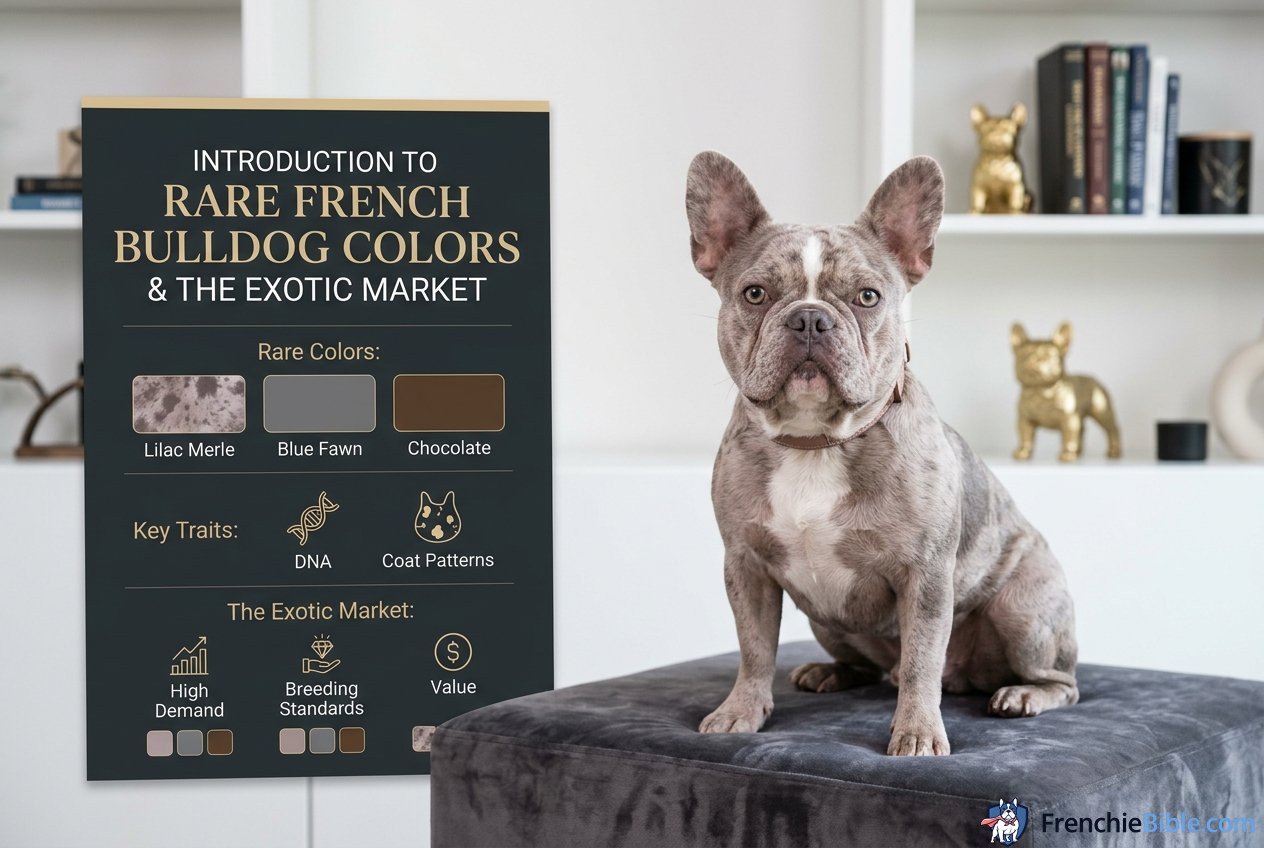
The exotic color market in French Bulldogs began gaining significant traction with the popularization of the “Blue” (dilute) Frenchie. As breeders realized the financial potential of these non-standard colors, they began intentionally pairing dogs that carried recessive traits. This selective breeding eventually unlocked more complex color combinations, requiring the dog to be homozygous recessive at multiple loci simultaneously.
Enter the Lilac and the Isabella. These are not base colors; they are composite colors. They are the result of combining a dilution gene with a chocolate/brown gene. Because a puppy must inherit a specific combination of recessive alleles from both parents to express these colors, producing them requires meticulous DNA testing, multi-generational planning, and a deep understanding of Mendelian genetics. This rarity is the primary driver of their “premium” status and astronomical price tags.
Understanding French Bulldog Genetics: The Foundational Loci
To comprehend how a Lilac or an Isabella is created, we must first establish a foundational understanding of the relevant genetic loci (the specific physical locations of a gene on a chromosome) and their corresponding alleles (variant forms of a gene).
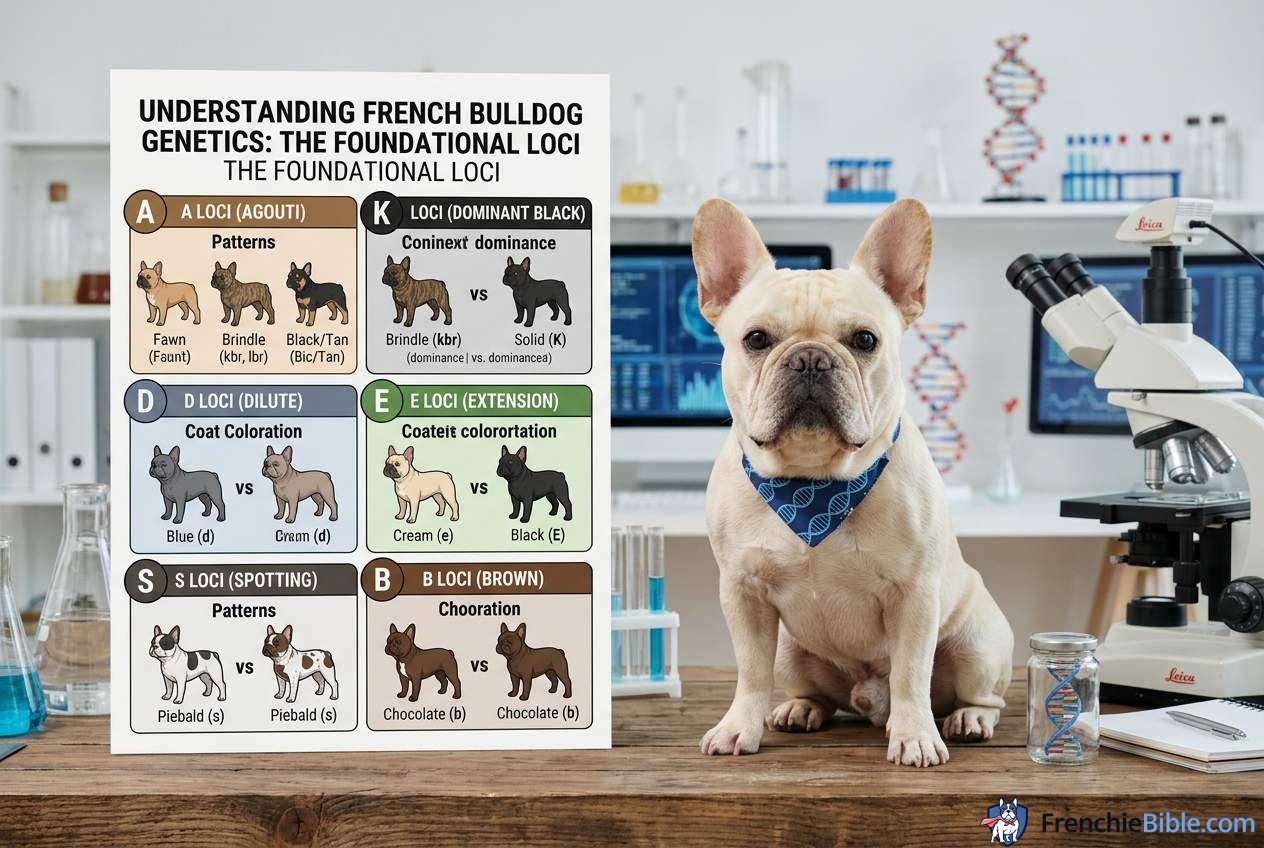
In the French Bulldog, coat color is determined by the interaction of several different loci. For our discussion on Lilac and Isabella, we must focus on three primary loci: the D locus (Dilution), the B locus (Testable Chocolate/Brown), and the Co locus (Cocoa, previously untestable chocolate).
1. The D Locus (Dilution Gene)
The D locus is responsible for melanophilin (MLPH), a protein crucial for the transport and even distribution of pigment granules (melanosomes) within the hair shaft.
– D (Dominant): Normal pigment distribution. A dog with DD or Dd will have dense, undiluted color (e.g., black or standard chocolate).
– d (Recessive): Dilute pigment distribution. When a dog is homozygous recessive (dd), the pigment granules clump together, causing the color to appear washed out or diluted. Black becomes blue (slate grey); chocolate becomes lilac or isabella.
Crucial Note: For a dog to be either Lilac or Isabella, it must first be dd at the Dilution locus.
2. The Co Locus (Cocoa / Traditional Frenchie Chocolate)
For many years, French Bulldogs had a brown/chocolate color that could not be identified by standard canine DNA tests for the B locus. Breeders knew it was a recessive trait, but it was scientifically elusive. It was dubbed “untestable chocolate.” In 2020, geneticists finally identified the gene mutation responsible for this specific French Bulldog chocolate color. It was named the Cocoa (co) mutation, located on the HPS3 gene.
– Co (Dominant): Non-cocoa. The dog produces normal black eumelanin.
– co (Recessive): Cocoa. A dog that is co co will express a dark, rich brown color, historically known as the “traditional” chocolate in Frenchies.
3. The B Locus (Testable Chocolate / True Brown)
The B locus (TYRP1 gene) is the traditional brown locus found across many dog breeds (like Labrador Retrievers). For a long time, it was believed this gene didn’t exist in French Bulldogs. However, it was eventually introduced (or discovered to be present in very small numbers) within the breed. Because standard DNA tests could always detect it, it became known in the Frenchie community as “Testable Chocolate.”
– B (Dominant): Non-brown. Allows black pigment to form.
– b (Recessive): Brown. A dog that is bb will have a lighter, more liver-colored brown coat compared to the darker Cocoa (co co).
Understanding the distinction between the co locus and the b locus is the absolute key to understanding the difference between a Lilac and an Isabella.
The lilac french bulldog: Genetics and Phenotypic Expression
The Lilac French Bulldog was the first of the complex “purple/champagne” colors to hit the mainstream exotic market. It was a groundbreaking achievement in Frenchie breeding, combining two distinct recessive traits.
The Genetic Blueprint of a Lilac
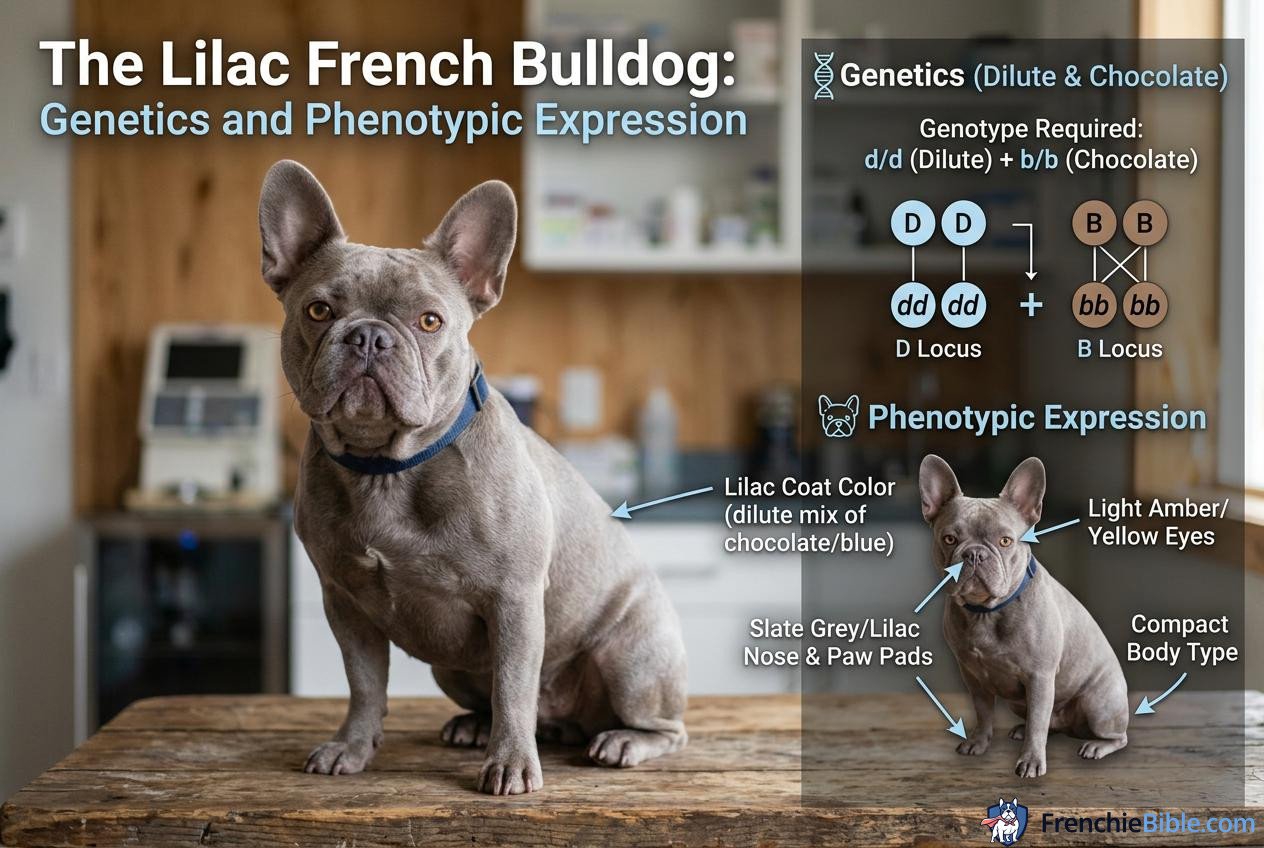
Genetically, a true Lilac French Bulldog is a dilute chocolate, specifically utilizing the traditional French Bulldog Cocoa gene.
The precise DNA profile for a Lilac is: dd coco.
– dd: The dog is homozygous recessive for the dilute gene, turning black to blue.
– coco: The dog is homozygous recessive for the cocoa gene, turning black to dark brown.
When these two forces act upon the dog’s pigmentation simultaneously, the result is an optical blending. The cocoa (dark brown) is diluted (washed out) by the dd genes, resulting in the color we call Lilac.
Phenotypic Expression: What Does a Lilac Look Like?
Visually, a Lilac French Bulldog is stunning. The coat typically exhibits a cool, silvery-grey tone with a distinct purplish or lavender hue, especially noticeable in natural sunlight.
Beyond the coat, the genetic dilution affects all eumelanin (black pigment) on the dog’s body:
– Nose Leather: A Lilac dog will never have a black nose. Their nose will be a pale greyish-purple or silvery-pink.
– Eye Margins and Paw Pads: These will match the nose leather, exhibiting a diluted grey/purple tone.
– Eye Color: The eyes of a Lilac are often a striking, piercing light blue, icy blue, or light green/amber as they mature. The lack of dense pigment in the iris creates this mesmerizing eye color, which is a massive selling point for the color variation.
Variations of Lilac
Depending on other loci (like the A locus and K locus), a Lilac can present in different patterns:
– Solid Lilac: Often requires KB or a/a solid black genetics acting in the background.
– Lilac and Tan (at/at): A lilac base with distinct tan points on the eyebrows, cheeks, chest, and legs. Highly coveted.
– Lilac Fawn (Ay/Ay): The dog is genetically fawn, but the mask and any dark hairs are diluted to lilac. The body coat often looks like a pale champagne or dusty rose.
– Lilac Merle: The merle pattern acts over the lilac base, creating a mottled coat of lighter and darker lilac patches.
The Isabella French Bulldog: The Pinnacle of “Testable” Genetics
While Lilacs took the world by storm, breeders were constantly searching for the next frontier in exotic colors. This pursuit led to the rise of the Isabella French Bulldog. Isabella is a term borrowed from other breeds (like the Doberman Pinscher), where it describes a dilute true brown (bb).
The Genetic Blueprint of an Isabella
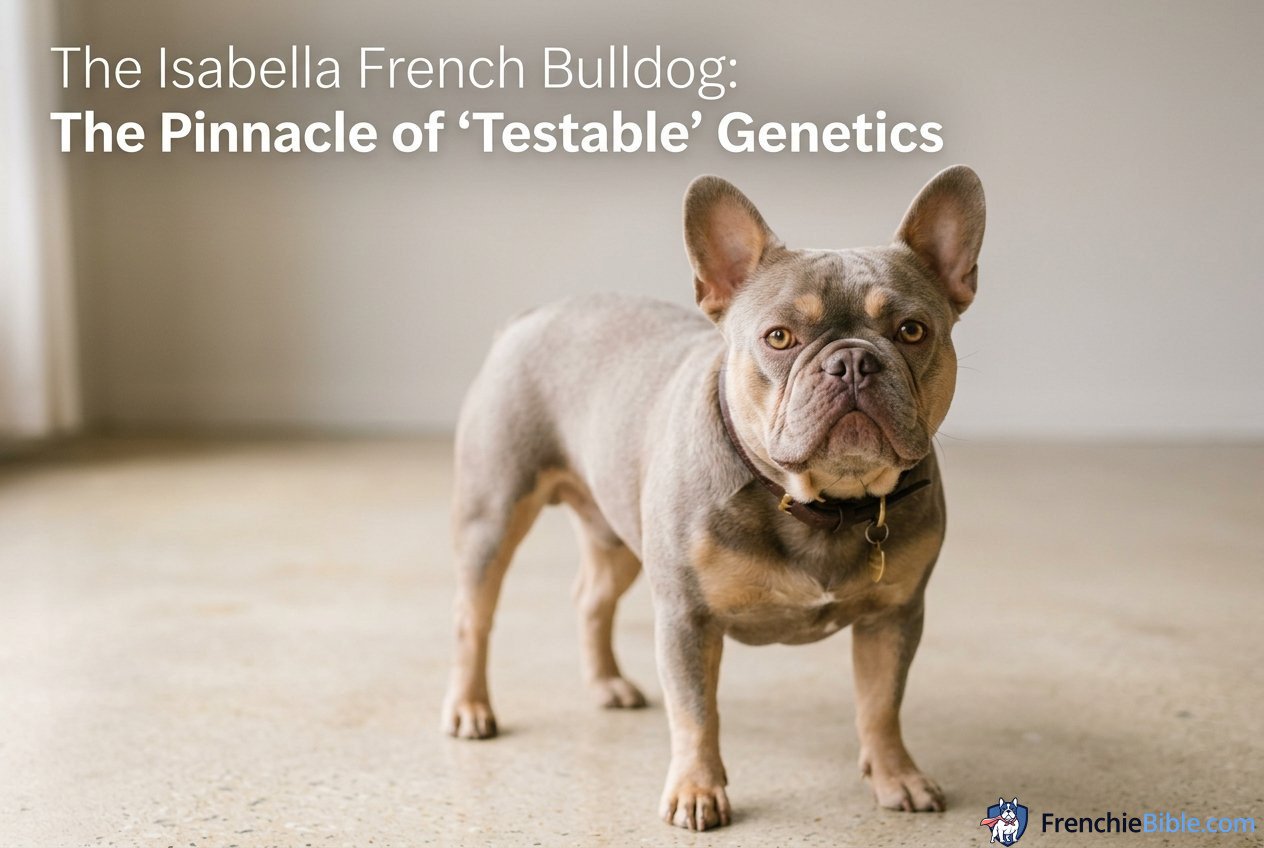
An Isabella French Bulldog is also a dilute chocolate, but it utilizes the “Testable Chocolate” gene (B locus) rather than the Cocoa gene (Co locus).
The precise DNA profile for a true Isabella is: dd bb.
– dd: Homozygous recessive for the dilute gene.
– bb: Homozygous recessive for the true testable chocolate gene.
Because the b allele was historically incredibly rare in the French Bulldog gene pool, producing a dd bb dog required monumental effort, sourcing rare lines, and meticulous outcrossing within the breed. This extreme rarity is why Isabella commanded prices far exceeding even the Lilacs when they first appeared.
Phenotypic Expression: What Does an Isabella Look Like?
Because the bb (testable chocolate) is visually lighter and has a different undertone than coco (cocoa), the resulting dilution (dd bb) looks fundamentally different from a Lilac (dd coco).
An Isabella French Bulldog typically has a warmer, more champagne, liver, or dusty-pink tone. It lacks the cool, silvery-purplish cast of the Lilac. The Isabella coat often looks like a muted, pale milk chocolate or a shimmering taupe.
Physical traits include:
– Nose Leather: The nose is distinctly liver or light pinkish-brown, rather than the grey/purple of a Lilac. This “liver nose” is a hallmark of the bb gene.
– Eye Margins and Paw Pads: Match the liver/pinkish-brown nose.
– Eye Color: Isabella dogs typically have striking yellow, hazel, or light amber eyes. While they can be blue as puppies, they almost always transition to a bright, piercing yellow/green or pale amber as adults, contrasting beautifully with their coat.
Lilac vs. Isabella: A Side-by-Side Comparison
as a French Bulldog expert and breeder and breeding consultant, I am frequently asked by clients to identify whether their dog is Lilac or Isabella. While DNA testing is the only absolute confirmation, there are distinct visual and genetic differences.
| Feature | Lilac French Bulldog | Isabella French Bulldog |
|---|---|---|
| Genetic Profile | dd coco (Dilute + Cocoa) |
dd bb (Dilute + Testable Chocolate) |
| Coat Hue | Cool-toned, silvery-grey, purplish, lavender tint. | Warm-toned, champagne, taupe, dusty-pink, light liver. |
| Nose Leather | Silvery-grey, pale purple. | Liver, pinkish-brown. |
| Eye Margins/Pads | Grey/Purple. | Liver/Pinkish-brown. |
| Adult Eye Color | Often icy blue, pale green, or light grey. | Often bright yellow, hazel, or pale amber. |
| Rarity | Highly rare and sought after. | Extremely rare, considered the “premium” exotic. |
| Breeding Difficulty | Moderate to High (Requires multi-generational cocoa carriers). | Extremely High (Requires exceptionally rare b locus carriers). |
The “New Shade” Isabella: Pushing the Genetic Boundaries
The genetic exploration in the French Bulldog community did not stop at dd bb. Breeders quickly realized that a dog could potentially inherit both the Cocoa mutation and the Testable Chocolate mutation simultaneously, along with the Dilution gene.
This leads to the ultimate genetic combination, often marketed as the “New Shade” Isabella or “Rojo” Isabella.
The genetic profile for a New Shade Isabella is: dd bb coco.
This means the dog is homozygous recessive at three separate loci simultaneously. The visual result is an incredibly pale, almost ethereal champagne color with extreme dilution of all pigment. Producing a true New Shade Isabella (dd bb coco) requires a monumental feat of selective breeding, pairing dogs that are carriers for dilute (Dd), testable chocolate (Bb), and cocoa (Coco). The statistical probability of a puppy inheriting all six recessive alleles from carrier parents is staggeringly low, which is why New Shade Isabellas routinely sell for $30,000 to over $100,000 to elite breeding programs.
The “Premium” Price Tag: Market Dynamics and Breeding Costs
Why do these dogs cost more than a luxury car? As an analyzing market trends alongside my breed expertise, the economics are driven by supply, demand, and the sheer cost of production.
- Extreme Genetic Rarity: Finding breeding stock that carries the
ballele (for Isabella) is difficult. Finding stock that carriesd,b, andcowithout being closely related is even harder. - The Cost of DNA Profiling: Serious exotic breeders spend thousands of dollars on comprehensive DNA panels (from labs like Animal Genetics or UC Davis) for every puppy and adult in their program. You cannot breed Isabellas or Lilacs blindly; it requires precise genetic mapping.
- Multi-Generational Investment: You rarely produce an Isabella on the first try. A breeder might have to buy a visually standard Frenchie that is a confirmed carrier of
banddfor $10,000, breed it to another carrier, and statistically only 25% of the litter will be visual Isabellas. This takes years of investment, feeding, veterinary care, and whelping costs (French Bulldogs almost exclusively require Cesarean sections, adding $1,000-$3,000 per litter). - Market Demand: Social media has supercharged the demand for these “designer” dogs. Celebrities, influencers, and affluent buyers desire the unique aesthetic of a Lilac or Isabella, creating a willing market for these premium prices.
Health Considerations: The Veterinary Perspective on Dilute Genetics
as a French Bulldog expert and breeder, this is the most critical section of this guide. The pursuit of exotic colors is not without significant health controversies. While the color genes themselves (like b and co) are generally benign regarding systemic health, the dilution gene (d) and the breeding practices used to achieve these rare combinations can pose severe risks.
1. Color Dilution Alopecia (CDA)
The most direct health risk associated with the dd (dilute) genotype is Color Dilution Alopecia. CDA is a genetic, incurable condition that affects dogs with dilute coats (blues, lilacs, isabellas).
– The Mechanism: The d gene causes pigment granules (melanosomes) to clump unnaturally within the hair shaft. In some dogs, this clumping weakens the hair shaft, causing it to fracture and break off at the skin level.
– Symptoms: It typically presents between 6 months and 2 years of age. The dog will begin to experience patchy hair loss, thinning of the coat (especially on the flanks and back), dry, scaly skin, and a propensity for chronic bacterial skin infections (folliculitis) in the affected hair follicles.
– The Reality: Not every Lilac or Isabella will develop CDA, but they are absolutely at a higher risk than a standard-colored Frenchie. There is currently no genetic test to predict which dilute dogs will develop CDA; we only know that being dd is the prerequisite.
2. The Danger of the “Genetic Bottleneck”
Because the genes for Lilac and Isabella are recessive and historically rare, producing them often involves breeding dogs that are closely related (inbreeding or tight linebreeding) to concentrate the desired recessive alleles.
– Inbreeding Depression: This severe reduction in genetic diversity can lead to a weakened immune system, reduced fertility, smaller litter sizes, and a higher incidence of congenital defects (like cleft palates, hemivertebrae, and heart murmurs).
– Ethical breeders will spend years and tens of thousands of dollars importing unrelated carriers from across the globe to widen the gene pool and avoid this bottleneck, which is another reason ethically bred Isabellas are so expensive.
3. “Color Over Health” Breeding Practices
The lucrative nature of the exotic market attracts unscrupulous breeders—often termed “backyard breeders” or “puppy mills.” These individuals prioritize the color of the dog over its health, temperament, and conformation. They will breed two dogs with terrible breathing (Brachycephalic Obstructive Airway Syndrome – BOAS), severe spinal deformities, and terrible allergies simply because both dogs carry the Isabella genes.
As a buyer, you must demand comprehensive health testing (OFA certifications for heart, patellas, spine, and genetic panels for hereditary cataracts and cystinuria) alongside color DNA testing. A Lilac coat is worthless if the dog requires a $5,000 airway surgery at six months of age to survive.
Breeding Strategies: The Mathematics of Lilac and Isabella
Producing these premium colors is a masterclass in Mendelian genetics. Breeders use Punnett squares to calculate the probability of specific outcomes. Let’s look at a few common breeding scenarios for a breeder attempting to produce Isabella (dd bb).
Note: In these examples, we assume the dogs are non-carriers of the cocoa (Co Co) gene for simplicity.
Scenario 1: Breeding Two Visual Isabellas
– Sire: dd bb (Visual Isabella)
– Dam: dd bb (Visual Isabella)
– Outcome: 100% of the puppies will be dd bb (Visual Isabellas).
– Veterinary Warning: While mathematically ideal for color, breeding dilute to dilute continuously can sometimes exacerbate coat quality issues and narrow the gene pool dangerously if the parents share common ancestors.
Scenario 2: Breeding a Visual Isabella to a Standard Carrier
– Sire: dd bb (Visual Isabella)
– Dam: DD BB (Standard Black/Fawn, no exotic genes)
– Outcome: 100% of the puppies will be Dd Bb. They will be visually standard colors (black/fawn), but every single puppy will be a confirmed carrier of both dilute and testable chocolate. These are highly valuable for future breeding programs.
Scenario 3: The Carrier x Carrier Pairing
– Sire: Dd Bb (Visual standard, carries dilute and testable chocolate)
– Dam: Dd Bb (Visual standard, carries dilute and testable chocolate)
– Outcome: This requires a massive dihybrid cross Punnett square. Statistically, for each puppy:
– 56.25% chance of being visually standard.
– 18.75% chance of being a visual Blue (dd B_).
– 18.75% chance of being a visual Testable Chocolate (D_ bb).
– Only a 6.25% chance of being a visual Isabella (dd bb).
– This scenario highlights exactly why true Isabellas are so rare and expensive. A breeder could have an entire litter from carrier parents and not get a single Isabella puppy.
Caring for Your Lilac or Isabella French Bulldog
If you invest in a Lilac or Isabella French Bulldog, specialized care is required to maintain their unique coat and overall health.
- Dermatological Care: Due to the risk of CDA and general skin sensitivities in dilute dogs, use highly gentle, hypoallergenic shampoos (e.g., oatmeal or chlorhexidine-based if recommended by your vet). Avoid overwashing, which strips essential oils from the coat. Supplementing their diet with high-quality Omega-3 and Omega-6 fatty acids (like fish oil) is highly recommended to support the skin barrier.
- Sun Protection: Dilute dogs have significantly less pigment to protect them from ultraviolet (UV) radiation. The pale pink/liver noses and light eye margins of Lilacs and Isabellas are highly susceptible to sunburn and, over time, squamous cell carcinoma (skin cancer). Use pet-safe sunscreen on their noses and ear tips during prolonged sun exposure, and avoid the midday sun.
- Ocular Health: The light-colored eyes (blue, green, yellow) of these dogs can be more sensitive to bright light (photophobia). Monitor their eyes for excessive squinting or tearing in bright sunlight.
- Nutrition: A premium, biologically appropriate diet is non-negotiable. Many exotic Frenchies suffer from food allergies (often related to poultry or beef). Consult your veterinarian about novel protein diets (like venison, rabbit, or salmon) to minimize skin inflammation that could exacerbate coat issues.
Frequently Asked Questions (FAQ)
Q: Are Isabella French Bulldogs healthier than Lilac French Bulldogs?
A: Not inherently. The health of the dog is determined by the overall genetic health of its parents, not specifically whether it utilizes the bb (Isabella) or coco (Lilac) gene. Both are dilute dogs (dd), so both carry the same risk for Color Dilution Alopecia (CDA). Health depends entirely on the breeder’s dedication to structural and systemic health testing prior to breeding.
Q: Can a Lilac dog produce an Isabella puppy?
A: Only if the Lilac dog also carries the testable chocolate gene. A standard Lilac is dd coco BB. To produce an Isabella (dd bb), both parents must contribute a b allele. If the Lilac is genetically dd coco Bb (carrying testable chocolate), and is bred to an Isabella or an Isabella carrier, it can produce an Isabella. Without DNA testing, you cannot know if a Lilac carries the b allele.
Q: What is a “New Shade” Isabella?
A: A New Shade Isabella (or Rojo) is a dog that is homozygous recessive at three loci: Dilute, Testable Chocolate, and Cocoa. The DNA profile is dd bb coco. Visually, it is an extremely pale, luminous champagne color, lighter than both standard Lilacs and Isabellas.
Q: How can I tell if my dog is Lilac or Isabella without a DNA test?
A: While DNA is the only 100% guarantee, you can make a highly educated guess based on phenotype. Look at the nose and eyes. A Lilac has a grey/purple nose and often icy blue/grey eyes. An Isabella has a liver/pinkish-brown nose and bright yellow/amber eyes. The Isabella coat has a warm, dusty-pink/champagne tone, while the Lilac has a cool, silvery-purple tone.
Q: Do rare color Frenchies have more health problems than standard colors?
A: The color genes themselves (aside from the dilution gene’s link to CDA) do not cause health problems. However, because exotic colors are so lucrative, many unethical breeders prioritize color over health, breeding sick or structurally deformed dogs just to get the rare colors. Consequently, as a population, exotic Frenchies often present to veterinary clinics with more severe allergies, BOAS, and spinal issues simply due to poor, profit-driven breeding practices. Always buy from a breeder who prioritizes OFA health testing over DNA color profiling.
Conclusion: The intersection of Science, Beauty, and Ethics
The Lilac and Isabella French Bulldogs are undeniable marvels of canine genetics. They represent the absolute pinnacle of selective breeding, unlocking recessive codes hidden within the French Bulldog genome for over a century. The silvery-lavender majesty of the Lilac and the warm, champagne elegance of the Isabella justify the awe they inspire.
However, as a French Bulldog expert and breeder deeply committed to this breed, I must stress that a dog’s color should never supersede its quality of life. The “premium” price tag of these dogs should reflect not just their rare DNA, but the exhaustive health testing, ethical breeding practices, and decades of pedigree research required to produce a dog that is as physically sound as it is beautiful.
If you are drawn to the allure of the Lilac or the Isabella, do your due diligence. Demand genetic panels, request OFA health certificates, and ensure your chosen breeder is dedicated to preserving the health and functionality of the incredible French Bulldog, not just chasing the next exotic color trend. When bred ethically, these dogs are not just a status symbol; they are a breathtaking, healthy, and deeply loving companion.
Disclaimer: We are not veterinarians and do not hold veterinary medical licenses. The information provided in this article is based on years of breeding and daily care experience and is for educational purposes only. It should not replace professional veterinary advice. Always consult with a licensed veterinarian if you have concerns about your French Bulldog’s health or before starting any new treatment.