

Introduction to the Bully Frenchie Controversy
In recent years, the global designer dog market has exploded with increasingly extreme, unconventional crossbreeds. This boom is driven largely by a societal desire for unique aesthetics, viral social media clout, and the allure of owning an “exotic” pet. Among the most controversial, heavily debated, and biologically concerning of these modern trends is the “Bully Frenchie”—a deliberate and highly engineered crossbreed between the popular French Bulldog and various types of the American Bully. as a French Bulldog expert and breeder and canine breeding expert who has spent decades studying, diagnosing, and treating the complex anatomical and physiological needs of brachycephalic (flat-faced) breeds, I have watched this specific trend emerge with profound alarm and professional dismay.
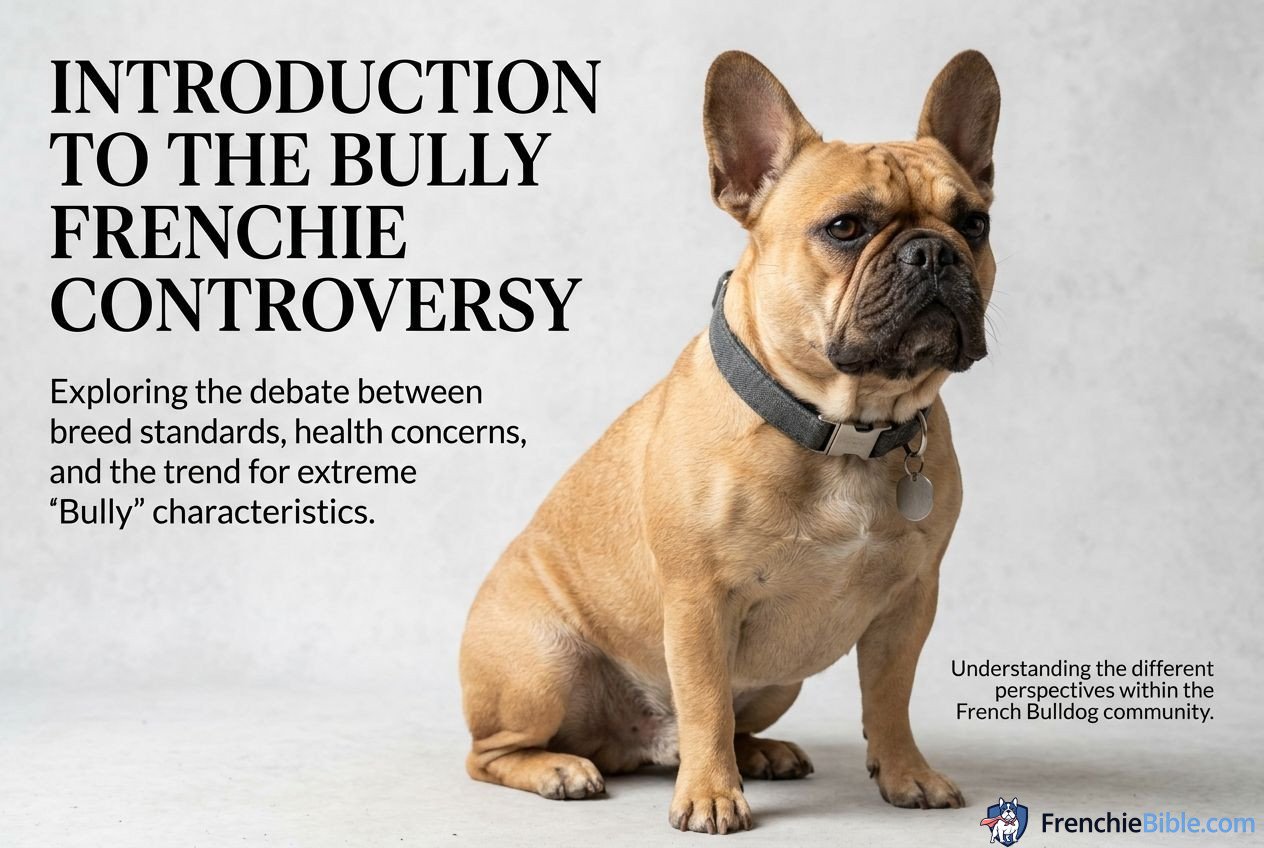
The Bully Frenchie is relentlessly marketed by backyard breeders as the ultimate canine status symbol. It is pitched to unsuspecting buyers as a muscular, compact, visually striking, and uniquely colored companion that supposedly combines the “best” personality traits and physical characteristics of both parent breeds. The narrative sold to the public is one of enhancement: a dog with the adorable, bat-eared face of a Frenchie, but the robust, tank-like musculature of an American Bully.
Related Reading: Training & Behavior | Frenchie Puppy Guide | Best Food for Frenchies
However, the medical and biological reality behind this mixed breed is far darker and infinitely more complicated. The intersection of the French Bulldog’s notoriously compromised respiratory system and fragile spinal structure with the heavy, dense, and unnaturally exaggerated skeletal frame of the American Bully creates nothing short of a perfect storm for genetic and structural disasters.
This comprehensive, deep-dive guide will explore the harsh realities of the Bully Frenchie. We will meticulously examine the severe, often life-threatening health risks associated with this mix, expose the chaotic, unregulated, and predominantly unethical market that drives its soaring popularity, and explain in explicit detail why both veterinary professionals and ethical preservation breeders worldwide strongly advise against participating in or funding this trend.
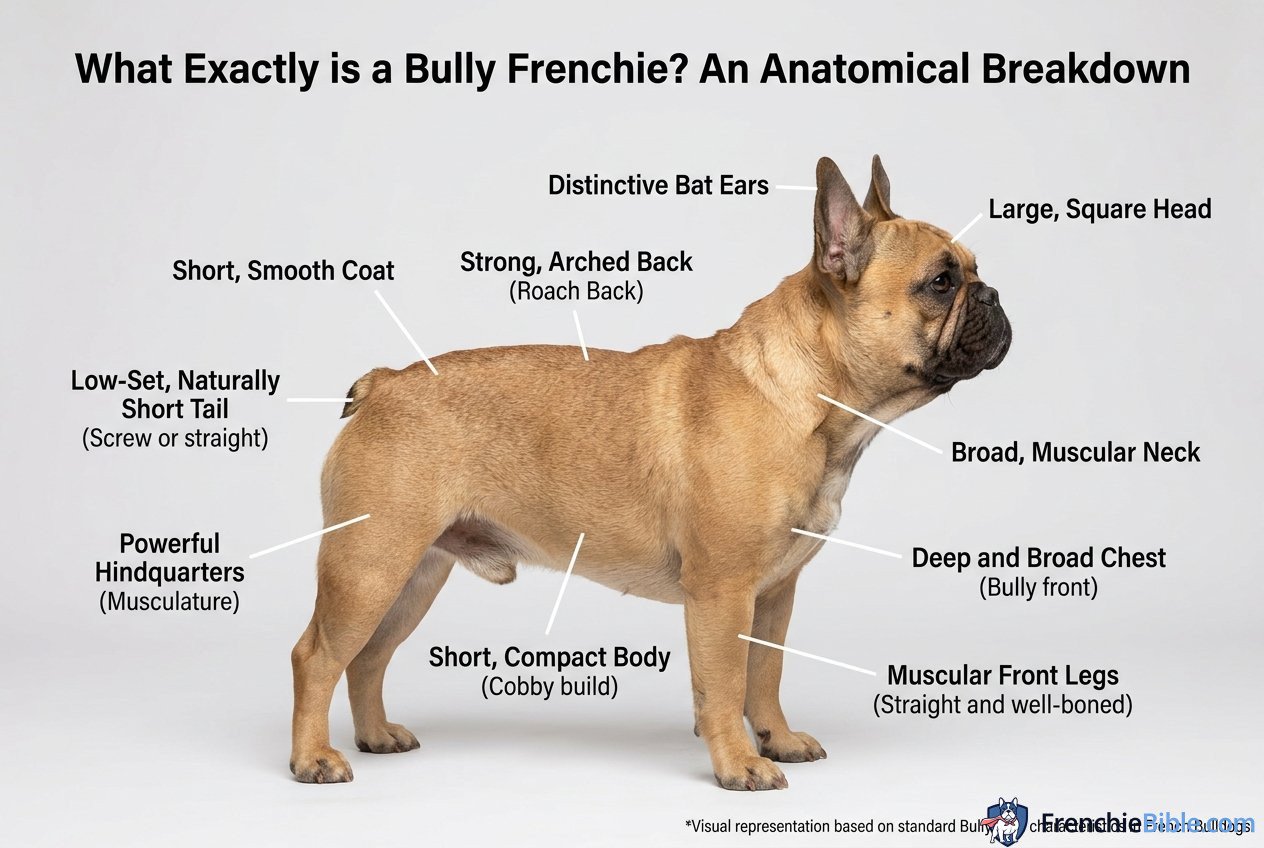
What Exactly is a Bully Frenchie? An Anatomical Breakdown
To fully comprehend the extraordinary risks inherent in producing and owning a Bully Frenchie, one must first critically examine the two parent breeds being carelessly combined. It is vital to state clearly: a Bully Frenchie is not a recognized breed. It is a designer crossbreed, a mutt, often created by profit-driven individuals without any regard for the strict health testing, genetic screening, and rigorous conformation standards that govern ethical purebred preservation.
The French Bulldog: Characteristics, Charm, and Vulnerabilities
The French Bulldog is currently one of the most popular and recognizable dog breeds in the world, reigning supreme in kennel club registrations globally. They are beloved for their affectionate, clownish temperament, their iconic bat-like ears, and their compact, apartment-friendly size. However, this immense popularity has come at a catastrophic cost to the breed’s health.
The French Bulldog is plagued by profound, systemic health issues related directly to its extreme physical conformation. Primarily, they are highly brachycephalic. This means their shortened skulls severely compress their nasal passages, nasal turbinates, and airways, leading to a lifelong battle with Brachycephalic Obstructive Airway Syndrome (BOAS). They struggle to breathe, cool themselves, and oxygenate their blood properly. Furthermore, French Bulldogs suffer from a genetic condition known as chondrodysplasia (a form of dwarfism affecting the long bones). This genetic anomaly predisposes them to severe, debilitating spinal issues. Conditions such as Intervertebral Disc Disease (IVDD), which can cause sudden and irreversible paralysis, and hemivertebrae (malformed, wedge-shaped vertebrae that twist the spinal column) are rampant within the breed.
The American Bully: Structure, Extremes, and Temperament
The American Bully is a relatively new breed in the canine world, developed primarily in the 1990s. The foundation of the breed was created by combining American Pit Bull Terriers with various bulldog breeds (such as the English Bulldog and American Bulldog) to create a companion dog possessing a heavy, intensely muscular build with a more laid-back, less terrier-like temperament.
While ethical American Bully breeders strive for a functional, athletic standard (often referred to as the “Standard” or “Classic” type), the unregulated market has birthed extreme offshoots known as the “Exotic Bully,” “Pocket Bully,” and “Micro Bully.” These variants have pushed the breed to grotesque anatomical extremes. These dogs are specifically bred to carry immense, unnatural body weight on severely shortened, bowed, and structurally unsound limbs. This extreme mass leads to profound orthopedic nightmares, including severe hip and elbow dysplasia, torn cruciate ligaments, and massive cardiovascular strain, as their hearts struggle to pump blood through such a dense frame.
The Resulting Mix: A Catastrophic Genetic Gamble
When backyard breeders and profit-driven kennels cross a French Bulldog with an American Bully (almost always utilizing the structurally compromised Micro or Exotic Bully variants), they are violently combining two anatomical extremes. Breeders often falsely tout the concept of “hybrid vigor” (heterosis)—the idea that mixed breeds are inherently healthier than purebreds.
However, hybrid vigor only applies when crossing two structurally sound, genetically diverse, and healthy dogs. When you cross a Bully and a Frenchie, you are not creating a healthier dog; you are creating a physiological nightmare. The resulting Bully Frenchie frequently inherits the absolute worst structural vulnerabilities of both parent breeds.
Imagine the biological reality: you are taking the heavy, dense, hyper-muscular mass of the American Bully and forcing it to be supported by the fragile, malformed, dwarf-like spine and joints of the French Bulldog. Worse still, this massive, heavy body—which requires immense amounts of oxygen to function and move—is forced to oxygenate through the severely compromised, obstructed brachycephalic airway of the Frenchie. It is not an anatomical improvement; it is an engineered tragedy that results in a lifetime of suffering for the animal.
The Allure: Why Are Bully Frenchies Trending and Selling for Thousands?
If the medical realities and health risks are so demonstrably severe, why is there an exploding, multi-million dollar market for Bully Frenchies? The answer lies in a toxic, modern combination of social media influencer culture, the obsessive pursuit of “exotic” aesthetics, and predatory, highly deceptive marketing tactics employed by unethical breeders.

The Exotic Market Appeal and Social Media Clout
In the modern designer dog world, words like “rare,” “exotic,” “exclusive,” and “one-of-a-kind” are buzzwords explicitly weaponized to artificially inflate prices. Bully Frenchies are intentionally bred to exhibit extreme, cartoonish physical traits that stand out on an Instagram feed: overly exaggerated, blocky, massive heads; hyper-muscular, impossibly wide chests; and rare, fad coat colors such as merle, lilac, Isabella, or even the “fluffy” long-haired gene.
These animals are increasingly treated less like living, breathing, sentient creatures and more like luxury commodities, designer handbags, or collectible items meant to signal wealth and status. Social media platforms are flooded with highly curated, heavily edited photos and slow-motion videos of these dogs. These posts portray them as the ultimate tough-but-cute status symbols, while deliberately hiding, muting, or editing out the sounds of their labored, raspy breathing, their inability to run, and their obvious mobility issues.
The Delusion and Illusion of “Improving” the Breed
A common, highly deceptive narrative pushed by Bully Frenchie breeders is that by mixing the fragile Frenchie with the tough American Bully, they are somehow “improving” the breed. They claim they are making the dog stronger, eliminating genetic faults, or creating a more robust companion.
as a French Bulldog expert and breeder, I can assure you this is a gross, unscientific misrepresentation of genetics and biomechanics. You absolutely cannot “fix” or “improve” the French Bulldog’s dangerously narrow airway by adding the dense muscle mass, heavy bone structure, and wide chest of an American Bully. In biological terms, adding mass dramatically increases the metabolic oxygen demand on a respiratory system that is already failing. This narrative of “improvement” is nothing more than a deceptive marketing ploy, a lie designed to justify exorbitant price tags to uneducated, naive buyers who want to believe they are purchasing a “super dog.”
The Harsh Medical Reality: Severe Health Risks of Bully Frenchies
as a French Bulldog expert and breeder specializing in these types of dogs, the devastating consequences of this designer crossbreed arrive in my breeding program daily, often in a state of emergency. The health profiles of Bully Frenchies are, frankly, catastrophic. Breeding these dogs inevitably leads to a lifetime of medical intervention and suffering for the dog, and immense, often ruinous emotional and financial strain for the owner. Here are the primary, most common health crises these dogs face.
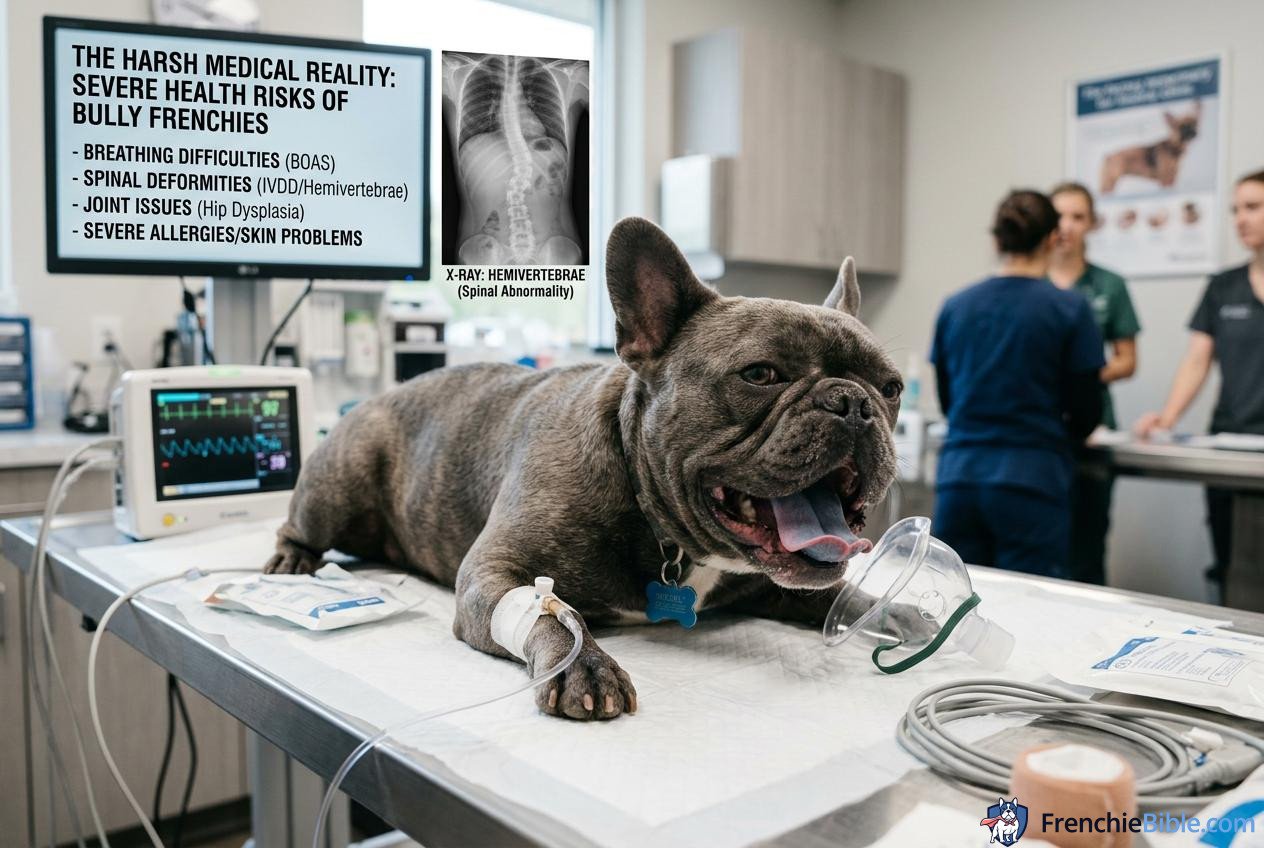
Respiratory Disasters: Brachycephalic Airway Obstruction Syndrome (BAOS)
Both the French Bulldog and the majority of American Bullies (especially the Exotic types) suffer from varying degrees of brachycephaly. When these two breeds are mixed, the puppies almost universally inherit a disastrous combination of airway defects, collectively known as BOAS. These include:
- Stenotic Nares: Severely pinched, narrowed nostrils that restrict airflow from the very first breath.
- Elongated Soft Palate: The tissue at the back of the throat is too long for the shortened skull, physically blocking the opening to the trachea and causing choking, gagging, and the characteristic “snoring” sound.
- Everted Laryngeal Saccules: Tissue in the airway that turns inside out due to the constant vacuum effect of struggling to breathe, further obstructing airflow.
- Hypoplastic Trachea: An abnormally narrow windpipe that restricts the volume of air reaching the lungs.
The critical, defining issue with the Bully Frenchie is the addition of the Bully’s muscle mass. A heavier, denser body fundamentally requires more oxygen to function, especially during any form of exertion, play, or in warm weather. However, their inherited, compromised airway physically cannot deliver this required oxygen. This severe mismatch leads to chronic, lifelong oxygen deprivation. These dogs experience severe exercise intolerance, frequent and rapid overheating (hyperthermia), cyanosis (turning blue due to lack of oxygen), and terrifying episodes of collapse or syncope (fainting).
The harsh reality is that the vast majority of these dogs require complex, multi-thousand-dollar airway surgeries (rhinoplasty and palatoplasty) before they are even two years old, simply to allow them to breathe comfortably while resting on the couch.
Spinal Deformities: The Ticking Time Bomb of IVDD and Hemivertebrae
The purebred French Bulldog is already one of the breeds most highly susceptible to catastrophic spinal deformities. They are prone to hemivertebrae—congenitally malformed, butterfly- or wedge-shaped vertebrae that cause abnormal curvature of the spine (kyphosis or scoliosis). More dangerously, they are the poster child for Intervertebral Disc Disease (IVDD), where the shock-absorbing discs between the vertebrae prematurely degenerate, bulge, or rupture, compressing the spinal cord and causing excruciating pain or sudden, irreversible paralysis of the hind legs.
When unethical breeders take this fragile, genetically compromised Frenchie spine and force it to support the unnaturally broad, immensely heavy, and dense torso of an American Bully, the mechanical stress placed on the spinal column is astronomical and unsustainable.
Bully Frenchies are at an extraordinarily, almost unacceptably high risk for ruptured discs and total spinal cord compression. in my breeding experience, it is tragically common to see Bully Frenchies lose complete use of their hind legs, losing control of their bladder and bowels, before they even reach three years of age. This happens not from trauma, but simply from catastrophic spinal failure under the sheer weight of their own genetically mismatched bodies.
Joint and Structural Breakdowns: Dysplasia, Arthritis, and Mobility Loss
The biomechanics of the Bully Frenchie are fundamentally, irrevocably flawed from conception. The American Bully parent brings a heavy predisposition to severe orthopedic issues, including hip dysplasia, elbow dysplasia, and general joint laxity due to their massive width and weight. When this is combined with the chondrodysplastic (dwarf-like, shortened, and curved) limbs inherited from the French Bulldog, the resulting skeletal structure is a disaster.
The Bully Frenchie is essentially a dog whose joints simply cannot support its body mass. They frequently suffer from:
- Luxating Patellas: Kneecaps that chronically dislocate out of their groove, causing pain and a skipping gait.
- Severe Hip and Elbow Dysplasia: Malformed ball-and-socket joints that grind together, causing excruciating pain and rapid cartilage destruction.
- Early-Onset Osteoarthritis: Due to the constant mechanical stress, these dogs develop painful arthritis incredibly early in life, sometimes before they are a year old.
- Cruciate Ligament Tears (CCL): The heavy mass on poor angulation makes them highly prone to tearing the ligaments in their knees.
Their abnormal, wide, rolling gait—often thoughtlessly described as “cute” or “swag” on social media—is not a quirk; it is a visible, daily manifestation of profound orthopedic distress, instability, and chronic joint pain.
Cardiovascular Overload and Heart Failure
The combination of severe, chronic airway obstruction and immense physical mass puts an incredible, unrelenting strain on the Bully Frenchie’s cardiovascular system. The heart must work double-time, pumping frantically to push poorly oxygenated blood through a heavy, highly muscular frame.
This chronic state of overexertion and low oxygen frequently leads to a condition known as cor pulmonale, or right-sided heart failure. The heart muscle thickens and eventually fails due to the immense pressure of trying to push blood through lungs that are starving for air. Consequently, Bully Frenchies have significantly shortened lifespans. It is tragically common for these dogs to succumb to sudden cardiac arrest during minor, routine veterinary procedures, during mild heat stress, or even just from the exertion of a short walk.
Whelping Complications: A Cycle of Surgical Births
The breeding and birthing process for Bully Frenchies is fraught with danger and is inherently unnatural. Due to the extreme physical characteristics they are bred for—specifically their disproportionately large, blocky heads, massive shoulders, and the narrow, compromised pelvises of the mothers—Bully Frenchies almost never give birth naturally.
They suffer from severe dystocia (obstructed labor) and require planned, expensive, and risky Cesarean sections (C-sections) to deliver the puppies. Unethical “greeders” view this merely as the cost of doing business. They routinely subject these females to back-to-back pregnancies, performing multiple, invasive abdominal surgeries on dogs whose bodies are already structurally compromised and struggling to breathe, purely to maximize their profit margins before the dog’s body ultimately gives out.
The Market Chaos: Unethical Breeding and Predatory “Greeder” Tactics
The market for Bully Frenchies, like much of the designer dog industry, is a chaotic, completely unregulated “Wild West.” It is dominated by backyard breeders and “greeders”—individuals whose sole motivation is financial profit, with zero regard for canine welfare, breed improvement, or veterinary ethics. The total lack of official breed clubs or legitimate health registries for this mix means there is absolutely zero accountability.
Deceptive Marketing and Astronomical, Unjustified Price Tags
Unethical breeders employ a barrage of deceptive marketing terms like “Exotic Frenchie,” “Micro Bully Frenchie,” “Monster Frenchie,” or “Toadline” to create a completely false sense of rarity and exclusivity. They use these made-up terms to justify charging astronomical, jaw-dropping prices, frequently ranging from $5,000 to $20,000, and sometimes even higher for dogs with highly coveted “fad” coat colors like fluffy merle or lilac.
It is crucial to understand that these exorbitant prices are in no way reflective of the dog’s health, structural quality, or genetic soundness; they are artificially inflated entirely by internet hype and artificial scarcity. Buyers are paying luxury car prices for a dog that is fundamentally broken from a biological standpoint.
The Complete Lack of Health Testing and Transparency
Ethical, responsible purebred preservation breeders perform extensive, costly, and comprehensive health testing on their breeding stock. This includes submitting X-rays to the OFA (Orthopedic Foundation for Animals) or PennHIP to certify hips, elbows, and spines; utilizing board-certified cardiologists for heart clearances; and performing extensive genetic DNA screening to ensure they are not passing on inheritable diseases.
In stark contrast, the vast majority of Bully Frenchie breeders do absolutely zero functional health testing. While they may boast about an “Embark clear” DNA test (which only tests for specific, limited genetic markers), they completely ignore structural health. They do not X-ray the spine to screen for hemivertebrae or IVDD risk, they do not have veterinarians evaluate airway function, and they do not screen for joint dysplasia. They do not care about the long-term viability, comfort, or lifespan of the puppies they produce. They are breeding purely for a specific, extreme “look” and a high profit margin, entirely at the expense of the dog’s physiological well-being.
The Scam of the “Fake” Pedigree
Because the Bully Frenchie is undeniably a mixed breed (a mutt), it cannot be registered with reputable, historic kennel clubs like the AKC (American Kennel Club), the United Kennel Club (UKC), or the FCI.
To circumvent this hurdle and make their operation appear legitimate to uneducated buyers, unethical breeders have created “fringe” or “designer” registries. These organizations will happily issue official-looking “pedigree” papers and registration certificates for any dog, regardless of its genetics or health, for a small fee. These papers are entirely worthless. They serve only one purpose: to deceive buyers into believing they are purchasing a premium dog with a verified, prestigious, and healthy lineage, when in reality, they are buying a poorly bred mix.
Behavioral and Temperament Considerations: A Confusing Mix
While the devastating physical health issues are the primary concern for veterinary professionals, the temperament and behavioral profile of the Bully Frenchie can also be highly unpredictable and challenging due to its mixed lineage.
Conflicting Instincts and Genetic Drives
French Bulldogs were bred purely as lap dogs and human companions for over a century; they are generally docile, affectionate, though notoriously stubborn. American Bullies, on the other hand, while also bred for companionship, have deep roots in terriers and bulldog working breeds. This means they often possess a higher prey drive, immense physical strength, incredible jaw pressure, and a higher baseline energy requirement.
Mixing these two distinct temperaments can create a psychologically conflicted dog. You often end up with an animal that has high arousal levels, a strong desire to work, chew, or be active (from the Bully side), but is trapped in a deformed body that physically cannot handle exertion or regulate its temperature (from the Frenchie side). This intense physical frustration—wanting to play but being physically unable to without suffocating or experiencing joint pain—frequently leads to severe behavioral issues, including severe anxiety, destructive chewing, neurotic behaviors, and reactivity towards other dogs or people.
Significant Training Challenges for Inexperienced Owners
The innate stubbornness of the French Bulldog combined with the sheer physical strength, density, and potential terrier tenacity of the American Bully requires a highly experienced, confident, and consistent owner. These dogs require dedicated, positive reinforcement training, extensive socialization, and firm boundaries from the day they come home.
However, because Bully Frenchies are so frequently purchased as aesthetic status symbols by inexperienced owners who simply want an accessory, they consistently lack the crucial socialization and training they desperately require. A poorly trained, unsocialized, 60-pound, incredibly dense dog with a strong bite force and chronic physical pain is a recipe for a dangerous behavioral problem.
An Experienced Breedererinarian’s Plea: Why You Must Avoid the Bully Frenchie Trend
as a French Bulldog expert and breeder, my core ethical duty, above all else, is to advocate for the health, welfare, and quality of life of animals. The purposeful breeding of Bully Frenchies is, in my professional opinion, inherently unethical. It is a practice that intentionally, knowingly creates dogs destined to suffer from the moment they are born.
The Crushing Financial Burden of Lifelong Veterinary Care
Buyers are almost universally unaware of the staggering financial ruin that awaits them when they purchase a Bully Frenchie. The exorbitant $10,000 purchase price is merely a down payment. Owners of these dogs must be financially prepared for an onslaught of massive veterinary costs:
- Airway (BOAS) Surgery: Soft palate resection, widening of nares, removal of everted saccules: $3,000 – $7,000.
- Emergency Spinal Surgery: IVDD spinal decompression surgery (discuss with your veterinarian), MRI imaging, and physical therapy: $8,000 – $12,000+.
- Orthopedic Interventions: Surgeries for luxating patellas, hip dysplasia, or torn cruciates: $4,000 – $8,000 per limb.
- Chronic Medical Management: Lifelong prescriptions for severe skin allergies, arthritis pain management, medicated baths for skin fold dermatitis, and specialized hypoallergenic diets.
Throughout my career, I have sat in exam rooms with countless sobbing owners who were forced to make the heartbreaking, traumatic decision to euthanize a sweet, young dog at two or three years old. Not because they didn’t love the dog, but simply because they had exhausted their savings, maxed out their credit cards, and could no longer afford the massive, continuous veterinary bills required just to give the dog a basic, pain-free existence.
The Ethical Imperative: Stop Funding Animal Suffering
Every single time a consumer purchases a Bully Frenchie, they are putting thousands of dollars directly into the pockets of unethical, profit-driven breeders. This massive financial incentive guarantees that these “greeders” will continue to force structurally broken dogs to reproduce, creating generation after generation of deformed, suffering puppies.
By educating yourself and categorically refusing to buy these designer mixes, consumers hold the power to cut off the financial lifeblood of this abusive industry. As a society of dog lovers, we must stop prioritizing extreme, unnatural, “Instagram-worthy” aesthetics over a living creature’s fundamental right to breathe freely, to walk and run without agonizing joint pain, and to live a long, healthy, and comfortable life.
Healthier, Ethical Alternatives to the Bully Frenchie
If you are genuinely drawn to the muscular, compact aesthetic of the Bully breeds or the charming personality of the Frenchie, there are far more ethical, responsible, and medically sound ways to bring a wonderful dog into your life without contributing to the designer dog crisis.
Reputably Bred, Health-Tested Purebred French Bulldogs
If you truly love the French Bulldog breed and are committed to their specific needs, you must seek out a truly ethical preservation breeder. Look for breeders who are deeply involved in their breed club, participate in conformation showing or dog sports, and most importantly, conduct rigorous, verifiable OFA health testing (especially prioritizing the spine, heart, and patellas). Ethical breeders are actively working to improve the breed’s airway and structure, breeding away from extremes. Be prepared to wait on a waitlist for a well-bred puppy; ethical breeders do not produce litters constantly.
Rescuing Dogs in Need: The Ultimate Ethical Choice
The tragic, hidden consequence of the designer dog craze is that animal shelters and breed-specific rescue organizations are currently overflowing with Frenchies, American Bullies, and their various mixes. These dogs have been dumped by backyard breeders when they fail to sell or are no longer profitable for breeding, or they are surrendered by heartbroken owners who were completely unprepared for the staggering medical bills. Adopting a dog in need from a rescue is a profoundly ethical choice that saves a life and refuses to fund the greeder industry.
Exploring Sturdier Breeds with Better Health Profiles
If your primary goal is a sturdy, muscular companion without the catastrophic, guaranteed health risks of a severely brachycephalic mix, consider researching other breeds. Breeds like the Staffordshire Bull Terrier (when sourced from an ethical preservation breeder who health tests) offer a muscular, compact build, an incredibly affectionate temperament, and a significantly healthier structural profile without the extreme airway or spinal deformities of the Bully Frenchie.
How to Identify a Responsible Breeder vs. a Backyard “Greeder”
If you are determined to purchase a purebred dog, it is your responsibility to thoroughly vet the breeder. Use these strict criteria to ensure you are supporting an ethical preservationist and avoiding the “greeders” who produce mixes like the Bully Frenchie:
- Comprehensive, Verifiable Health Testing is Mandatory: Ethical breeders do not just do a cheek swab DNA test. They provide public, verifiable OFA (Orthopedic Foundation for Animals) or PennHIP results for both parents, proving their joints, hearts, and spines are structurally sound.
- No Focus on “Rare” or “Exotic” Colors: Ethical preservation breeders breed strictly to the established, historical breed standard. Breeders who advertise “rare,” “exotic,” “merle,” “lilac,” or “fluffy” Frenchies are universally prioritizing profit and fads over the health and structural integrity of the dog.
- Breeding for Purpose, Not Profit: Ethical breeders breed to improve the breed’s health and temperament, proving their dogs in the show ring or in performance sports. They absolutely do not breed “designer mixes” or crossbreeds like the Bully Frenchie.
- Ironclad Lifetime Support and Contracts: A reputable breeder will have a strict contract requiring you to return the dog to them at any point in its life if you can no longer care for it. They take lifelong responsibility for the lives they bring into the world and never want one of their dogs ending up in a shelter system.
- Complete Transparency: Ethical breeders are proud of how they raise their dogs. They will allow you to meet the mother dog, show you where the puppies are raised (which should be inside the home, meticulously clean, not in a shed or outdoor kennels), and they will interview you as rigorously as you interview them to ensure their puppy is going to a safe, prepared home.
Frequently Asked Questions (FAQ) About Bully Frenchies
Q: Are Bully Frenchies recognized by the AKC or any legitimate kennel club?
A: Absolutely not. The Bully Frenchie is a mixed breed (a mutt). Reputable, historic kennel clubs like the American Kennel Club (AKC) or the FCI only register purebred dogs with established, verifiable lineages. Any “papers” or registration certificates provided by a Bully Frenchie breeder are entirely from non-reputable, pay-for-play “designer” registries and are essentially meaningless pieces of paper used to justify high prices.
Q: What is the realistic lifespan of a Bully Frenchie?
A: Their lifespan is typically significantly shorter and far more medically complex than a well-bred, structurally sound dog. Due to the severe, compounding respiratory, cardiac, and spinal issues, many Bully Frenchies tragically do not live past 5 to 7 years of age. Furthermore, those few years are often fraught with immense pain, restricted mobility, and frequent, stressful veterinary interventions.
Q: I heard that mixing breeds creates “hybrid vigor” and makes them healthier. Is a Bully Frenchie healthier than a purebred French Bulldog?
A: No, this is a dangerous misconception in this specific context. Hybrid vigor (heterosis) only works effectively when you mix two healthy, structurally sound breeds with diverse, robust genetics. When you mix two breeds that already share similar extreme, debilitating structural defects (like severe brachycephaly and joint dysplasia), you compound and multiply the problems rather than eliminating them. Due to the added mass of the Bully on the fragile Frenchie frame, the Bully Frenchie is frequently in much worse health than a purebred Frenchie.
Q: Why are Bully Frenchies so incredibly expensive if they are unhealthy mutts?
A: The exorbitant price tag is entirely a result of predatory marketing, viral social media hype, and the false perception of rarity manufactured by the breeders. Unethical “greeders” artificially inflate prices to maximize their profit margins by selling an “image.” The high price tag guarantees absolutely nothing about the dog’s health, temperament, longevity, or quality of life. You are paying for a trend, not a healthy animal.
Q: Can the severe breathing issues in a Bully Frenchie be permanently fixed with surgery?
A: To some extent, surgical intervention can alleviate the most acute suffering. Surgeries like BOAS correction (widening the nostrils, shortening the soft palate, removing saccules) can help the dog breathe easier while at rest. However, surgery cannot fix a fundamentally malformed, shortened skeletal structure or a hypoplastic (narrow) trachea. Even with the best surgical intervention, a Bully Frenchie will never breathe as efficiently or safely as a dog with a normal, healthy snout, and they will always remain at high risk for heatstroke.
Q: Are Bully Frenchies safe to have around small children?
A: While individual dogs can be affectionate, as a whole, they represent a significant risk. Their incredibly heavy, dense, muscular bodies and potential for high arousal make them a physical risk around small children, especially if they have not been rigorously trained and socialized. Most importantly, a dog that lives in chronic, unspoken pain (due to failing joints, spinal pressure, or inability to breathe) is significantly more likely to snap, growl, or bite out of self-preservation if handled inappropriately or accidentally hurt by a child.
Conclusion: A Final Warning from the Veterinary Community
The meteoric rise of the Bully Frenchie trend represents the absolute darkest, most unethical side of modern dog breeding. It is a corner of the industry where the shallow desire for a unique, “Instagram-worthy” aesthetic completely and ruthlessly eclipses the biological welfare and basic comfort of the animal.
Deliberately combining the fundamentally compromised respiratory and fragile spinal structure of the French Bulldog with the immense, unnatural mass and orthopedic nightmares of the American Bully is a guaranteed recipe for lifelong suffering, excruciating pain, exorbitant veterinary bills, and inevitable heartbreak for the owner.
as a French Bulldog expert and breeder and breeding expert, my professional, medical, and ethical advice is unequivocal and absolute: do not purchase, breed, or support the creation of a Bully Frenchie. By steadfastly refusing to participate in this unregulated designer market, we can stop funding unethical “greeders” and take a collective stand for the health, dignity, and physiological well-being of man’s best friend. If you seek a canine companion, choose the ethical route—support responsible, health-testing preservation breeders or, better yet, open your home and your heart to a rescue dog in desperate need of a second chance.
Disclaimer: We are not veterinarians and do not hold veterinary medical licenses. The information provided in this article is based on years of breeding and daily care experience and is for educational purposes only. It should not replace professional veterinary advice. Always consult with a licensed veterinarian if you have concerns about your French Bulldog’s health or before starting any new treatment.