
Introduction to the Bulldog Breeds
When it comes to selecting a canine companion that perfectly balances unique charm, unwavering loyalty, and distinct physical characteristics, the Bulldog family consistently ranks at the top. Among the most popular and recognizable members of this lineage are the French Bulldog (affectionately known as the “Frenchie”) and the English Bulldog. as a French Bulldog expert and breeder and breeding expert who has dedicated years to understanding, treating, and advocating for these magnificent brachycephalic breeds, I frequently encounter prospective owners grappling with a common dilemma: Should they welcome a French Bulldog or an English Bulldog into their home?
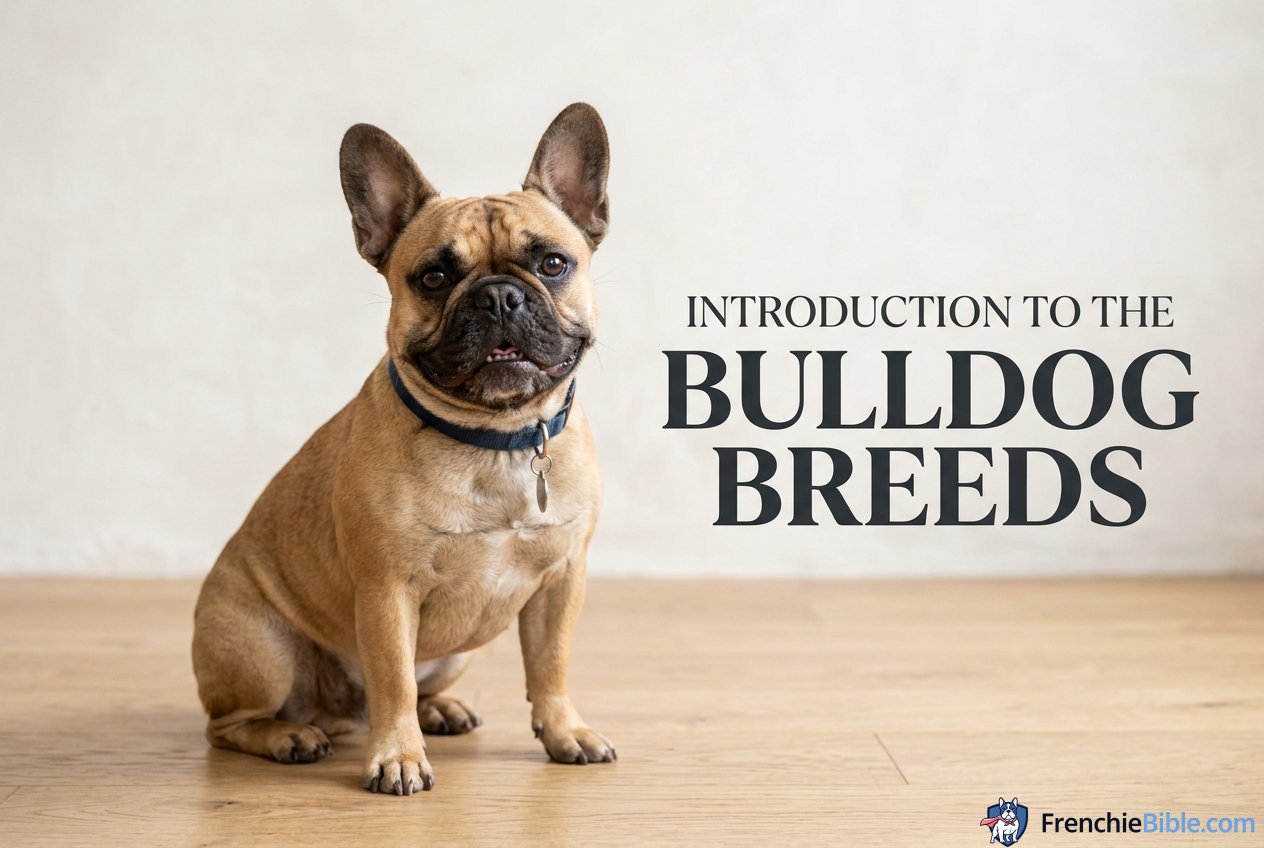
While they share common ancestry and certainly bear a familial resemblance, the French Bulldog and the English Bulldog are distinctly different breeds, each possessing its own set of characteristics, temperaments, and, crucially, health profiles. Understanding these differences is paramount not only for ensuring the well-being of the dog but also for fostering a harmonious relationship between the pet and its human family. This ultimate comparison guide will delve deeply into their origins, dissect their physical traits, analyze their personalities, and provide an unvarnished veterinary perspective on their health requirements.
Related Reading: Training & Behavior | Frenchie Puppy Guide | Best Food for Frenchies
The Origins of the French Bulldog
To truly understand the French Bulldog, one must look back to the Industrial Revolution in England. Nottingham lace makers, seeking a smaller, lap-sized companion to keep them company (and keep rats at bay) while they worked, selectively bred down the traditional English Bulldog. When the lace industry moved to France due to the mechanization of the trade in England, these workers took their miniature bulldogs with them.
In France, these small bulldogs became immensely popular, particularly among the bohemian class, artists, and Parisian socialites. It was in France that the breed was further refined, likely crossing with local pug-type dogs and terriers, which contributed to their distinct upright “bat ears”—a characteristic that English breeders initially scoffed at, preferring the rose ear. Eventually, the breed made its way to the United States, where American breeders championed the bat ear, cementing it as the breed standard we recognize today. The Frenchie’s history is one of transition from a working-class companion to a symbol of high-society chic, reflecting their adaptable and universally appealing nature.
The History of the English Bulldog
The history of the English Bulldog is significantly older and, unfortunately, rooted in a more brutal past. Originally bred in England during the 13th century, these dogs were designed for the grim sport of bull-baiting. Their physical traits were cultivated for this exact purpose: a low center of gravity to avoid the bull’s horns, a massive head and powerful jaws to grip the bull’s nose, and a pushed-in face to allow them to breathe while holding on tightly to their much larger opponents.
When bull-baiting was rightfully outlawed in 1835, the English Bulldog faced extinction. However, dedicated breeders who admired the dog’s courage and tenacity intervened. They began a rigorous process of selective breeding to eliminate the aggressive traits required for the blood sport while preserving the dog’s physical resilience and distinctive appearance. Over generations, the English Bulldog was transformed from a fierce gladiator into the gentle, docile, and affectionate companion we know today. They have since become a symbol of British resilience and determination, famous worldwide for their unmistakable sourmug expression.
Size and Physical Appearance: Spotting the Differences
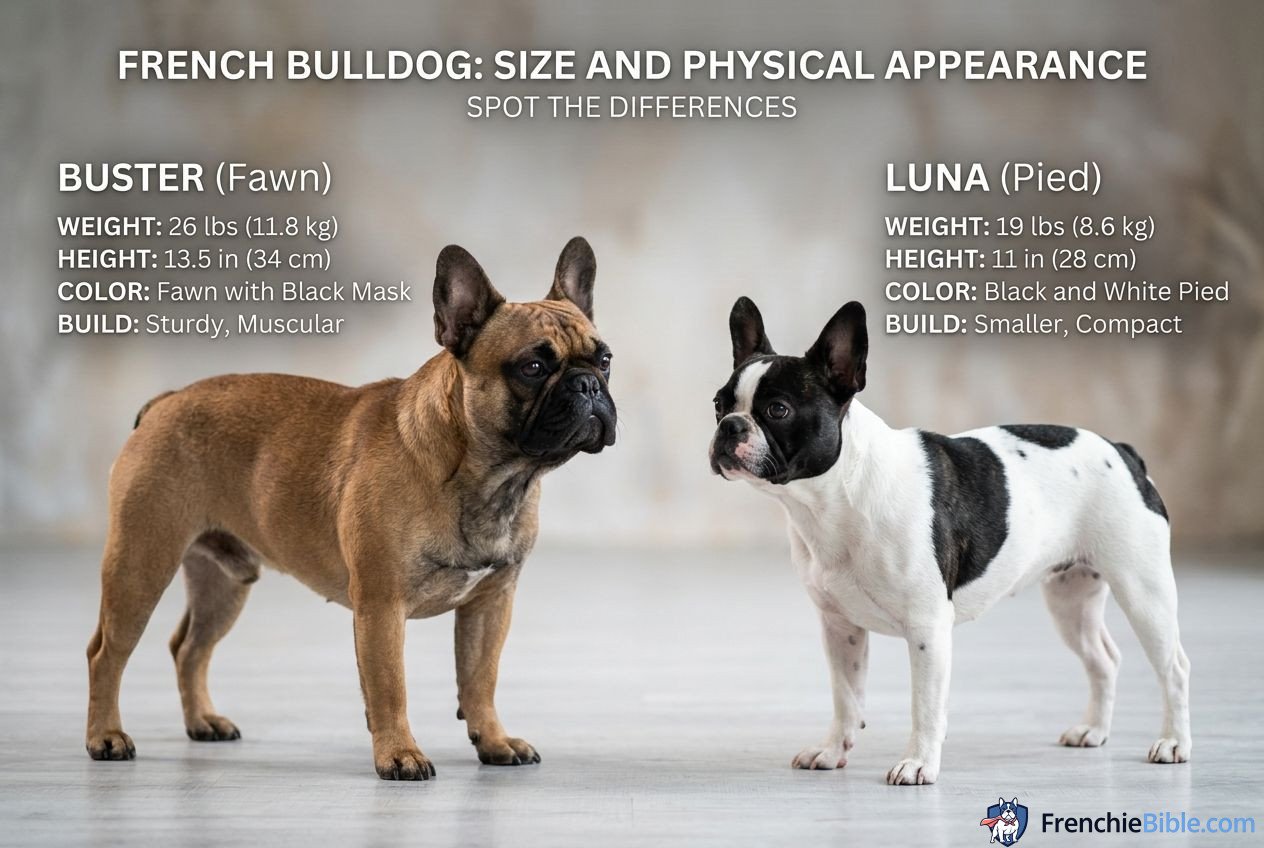
At first glance, the shared lineage between the French and English Bulldog is undeniable. Both possess a sturdy, muscular build, a brachycephalic (flat-faced) skull structure, and a generally substantial presence. However, a closer inspection reveals stark contrasts in their size, facial architecture, and overall physical demeanor.
Weight and Height Comparison
The most immediate and obvious difference between the two breeds is their size.
The French Bulldog is the quintessential small companion dog. They are compact, heavily boned, and muscular, yet they remain decidedly portable.
- Weight: A healthy adult French Bulldog typically weighs between 16 and 28 pounds (7.5 to 12.5 kg). Males are generally slightly heavier than females, but both should maintain a robust, un-waisted silhouette without becoming obese.
- Height: They stand about 11 to 13 inches (28 to 33 cm) tall at the shoulder.
Their smaller stature makes them incredibly versatile, easily adapting to smaller living spaces, apartment complexes, and being relatively easy to travel with compared to their larger cousins.
The English Bulldog, in contrast, is a medium-sized dog but is exceptionally heavy and low to the ground. They are the epitome of “heavy-set.”
- Weight: An adult English Bulldog is significantly heavier, with males typically weighing around 50 pounds (23 kg) and females around 40 pounds (18 kg). Some larger individuals may even tip the scales at 55 pounds.
- Height: They stand about 14 to 15 inches (35 to 38 cm) tall at the shoulder.
The English Bulldog’s dense body mass and wide stance give them an imposing, immovable appearance, vastly different from the more sprightly and maneuverable Frenchie.
Distinctive Facial Features and Ears
While both breeds are brachycephalic, their facial expressions and specific features diverge significantly, giving each a unique aesthetic appeal.
The hallmark of the French Bulldog is undoubtedly its large, erect “bat ears.” These ears are broad at the base and rounded at the top, standing high on their head. Their skull is flat between the ears, and their eyes are round, dark, and set moderately apart. The Frenchie’s face features soft, loose skin that forms moderate wrinkles, particularly around the muzzle and between the eyes. Their expression is typically one of alert curiosity and playful intelligence.
The English Bulldog features a massive, square head that is incredibly large in proportion to its body. They have “rose ears,” which are small, thin, and fold inward at the back, resting against the head. Their eyes are set low and wide apart. The defining characteristic of the English Bulldog’s face is its extreme wrinkling. They have heavy, thick folds of skin across the face, a distinct rope of skin over the nose (often called a nose roll), and substantial, pendulous flews (upper lips) that hang down over the lower jaw. Furthermore, English Bulldogs have a pronounced undershot jaw, meaning their lower jaw extends considerably past their upper jaw, exposing their lower teeth in some individuals.
Body Structure and Coat Types
Both breeds boast a short, smooth coat, making their grooming needs relatively similar in terms of brushing. They both come in a variety of colors, including brindle, fawn, white, and various combinations of these standard hues.
However, their structural differences are profound and impact their mobility and health.
The French Bulldog has a pear-shaped body, with shoulders that are wider than their hindquarters. They have a slight roach back (a gentle curve over the loins) and typically a short, straight, or slightly screwed tail that is carried low. Their gait is relatively free and active, allowing for short bursts of agility and speed.
The English Bulldog has a low-slung, heavily muscled body. Their chest is incredibly broad and deep, giving them a very wide stance in the front. Their shoulders are massive, while their hindquarters are slightly higher and not as broad as the front. They exhibit a very characteristic “rolling” gait, a result of their wide front and narrower rear. Their tail is also short, either straight or screwed, but hangs low and is often tucked tightly against the body.
Personality and Temperament: Which Bulldog Matches Your Lifestyle?
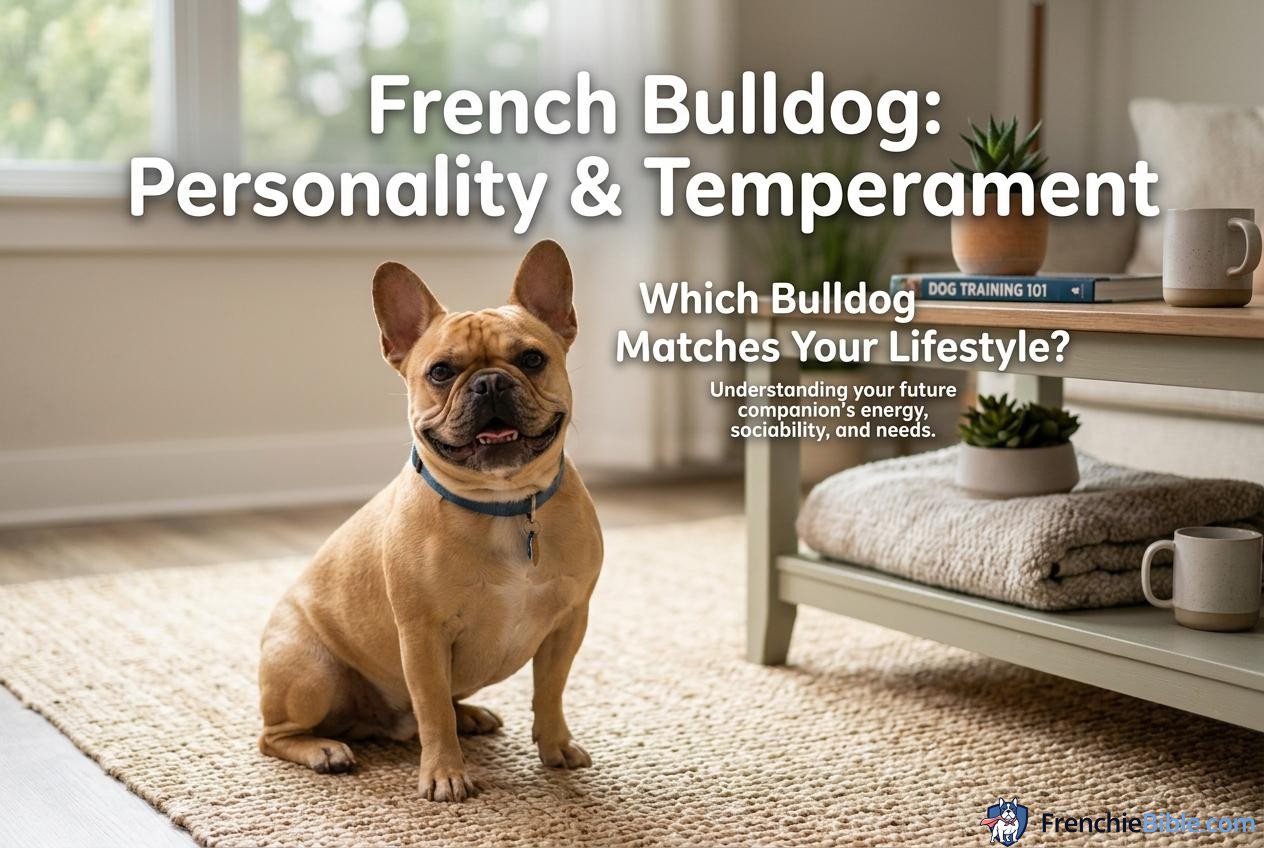
Beyond physical appearance, the personality of a dog dictates how well it will integrate into your life. While both the Frenchie and the English Bulldog are renowned for their affectionate nature and loyalty, their daily temperaments offer distinct flavors of companionship.
The Frenchie: Playful, Affectionate, and Alert
The French Bulldog is a vivacious, entertaining, and incredibly affectionate companion. They thrive on human interaction and are often described as “clowns in the cloak of a philosopher.”
Frenchies are remarkably adaptable and form intensely close bonds with their families. They are generally eager to please, though they possess a well-documented stubborn streak. Unlike many small breeds, Frenchies are not typically “yappy”; they rarely bark without cause, making them excellent watchdogs who will alert you to a knock at the door but won’t disturb the neighbors incessantly.
They are incredibly empathetic dogs, often intuitively understanding their owner’s mood. They love to cuddle and will happily spend hours snuggled on the sofa. However, they also possess brief bursts of high energy. A “Frenchie zoomie”—where they run frantically in circles—is a common and hilarious daily occurrence. They are generally sociable with other dogs and pets, especially if properly socialized from a young age, though some can exhibit same-sex aggression if not carefully managed.
The English Bulldog: Calm, Courageous, and Loyal
The English Bulldog’s personality is a testament to the success of selective breeding. Having shed the aggression of their bull-baiting ancestors, today’s English Bulldog is incredibly docile, gentle, and reliable.
They are famously laid-back and are often completely content to spend the vast majority of their day sleeping or lounging. They are deeply devoted and loyal to their families, often forming a particularly strong attachment to children, exhibiting a surprising amount of patience and protective instinct.
While they may look intimidating, they are generally among the most amiable and sweet-natured of all breeds. However, their courage remains intact; an English Bulldog will not back down if they feel their family is threatened, though they are rarely the instigators of conflict. Like the Frenchie, they can be remarkably stubborn. If an English Bulldog decides it does not want to walk any further, moving their 50-pound mass becomes an exercise in sheer persuasion and bribery.
Energy Levels and Exercise Requirements
Understanding the exercise needs of these breeds is critical, primarily due to their brachycephalic nature, which makes them highly susceptible to heatstroke and respiratory distress.
French Bulldogs have moderate energy levels. They require daily exercise to maintain a healthy weight and mental stimulation, but this can usually be satisfied with a brisk 20 to 30-minute walk or a spirited play session in a securely fenced area. They enjoy short bursts of activity but are not built for endurance. Care must be taken not to over-exercise them, particularly in warm or humid weather. Air conditioning is a necessity, not a luxury, for a Frenchie in the summer.
English Bulldogs are famously low-energy. They are the quintessential couch potatoes of the canine world. A short, leisurely walk of 15 to 20 minutes is usually sufficient to keep them physically healthy and mentally stimulated. They are rarely enthusiastic about vigorous exercise and often need to be coaxed out for their daily stroll. Like the Frenchie, they absolutely cannot tolerate heat and must be kept in climate-controlled environments during warmer months. Overexertion in an English Bulldog can be rapidly fatal.
Trainability and Intelligence
Both breeds are intelligent but are not typically classified among the highly trainable, “eager to please” working breeds like Border Collies or Golden Retrievers. They possess an independent streak that requires a specific training approach.
French Bulldogs are generally considered slightly easier to train than their English counterparts. They are highly food-motivated and respond exceptionally well to positive reinforcement techniques. However, their stubborn streak means that training must be consistent, patient, and, most importantly, interesting. If a Frenchie gets bored, they will simply tune you out or wander off. Short, engaging training sessions of 5 to 10 minutes work best.
English Bulldogs are notoriously stubborn. They learn at their own pace and often seem to consider a command as a suggestion rather than a requirement. Training an English Bulldog requires immense patience, consistency, and an excellent sense of humor. Harsh training methods or physical corrections will cause an English Bulldog to shut down completely and refuse to cooperate. Positive reinforcement, high-value treats, and maintaining a calm, authoritative demeanor are essential for success.
Health and Lifespan: A Veterinary Perspective
as a French Bulldog expert and breeder specializing in these breeds, I must be unequivocally clear: both the French Bulldog and the English Bulldog are predisposed to a significant number of health issues. Their unique anatomies come at a high physiological cost. Owning either breed requires a substantial commitment to their health care, both in terms of vigilance and financial resources.
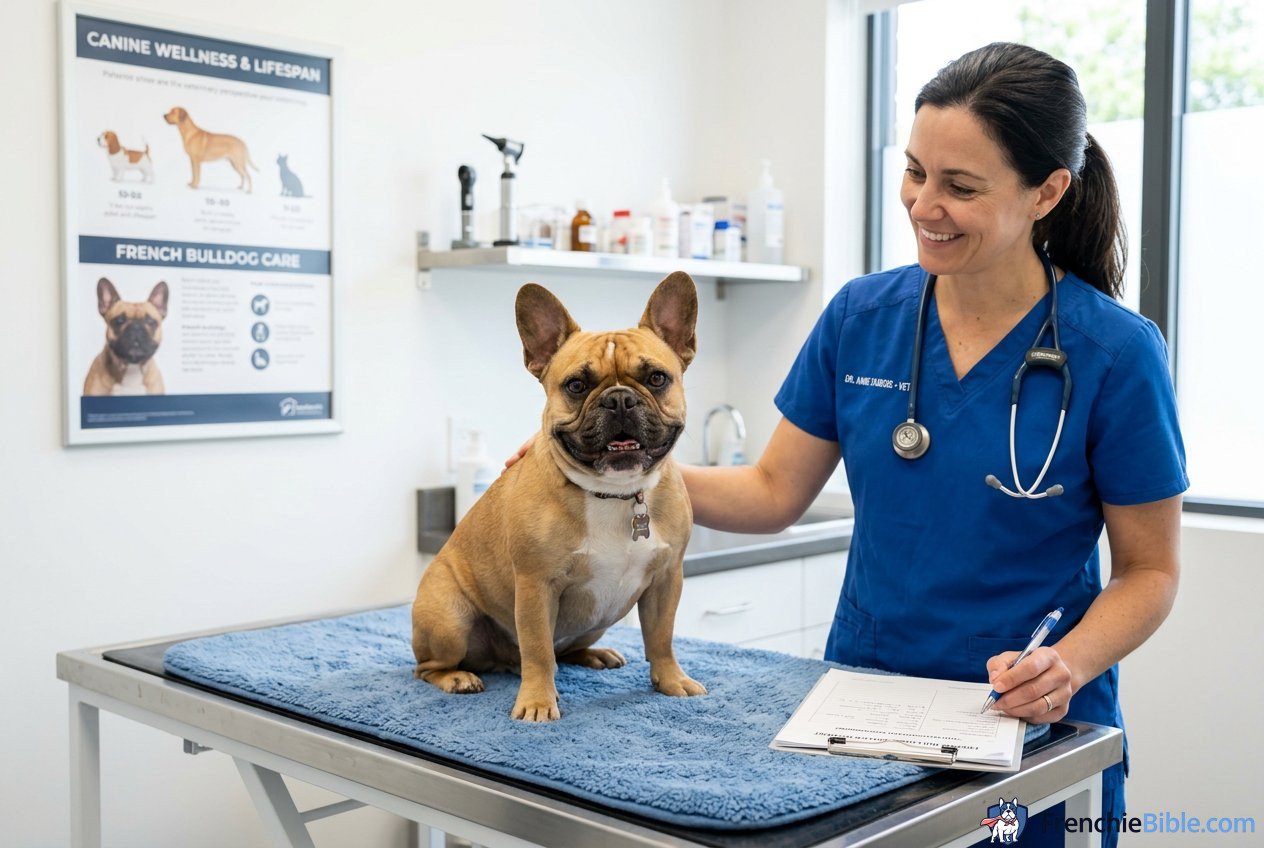
Brachycephalic Airway Syndrome (BAS) in Both Breeds
Both breeds suffer from their brachycephalic anatomy. BAS is a complex of respiratory abnormalities that includes:
- Elongated Soft Palates: The soft palate is too long for the skull and partially blocks the airway.
- Stenotic Nares: Pinched or narrow nostrils that restrict airflow.
- Everted Laryngeal Saccules: Tissue within the airway that gets pulled into the trachea, further obstructing breathing.
- Hypoplastic Tracheas: A narrower than normal windpipe.
This anatomy severely compromises their ability to breathe efficiently. This is why both breeds are prone to loud snoring, snorting, and why they struggle to pant effectively. Because dogs rely on panting to cool down, this anatomical flaw makes them highly susceptible to fatal heatstroke even in moderately warm temperatures.
While both suffer from BAS, in my breeding experience, the extreme facial structure of the English Bulldog often results in more severe respiratory distress compared to the French Bulldog, though many Frenchies still require surgical intervention (such as widening the nostrils or shortening the soft palate) to improve their quality of life and longevity.
Common Health Issues in French Bulldogs
In addition to BAS, French Bulldogs are prone to specific health concerns:
- Spinal Disorders: Due to their chondrodystrophic (dwarf) build and occasional roach back, they are highly susceptible to Intervertebral Disc Disease (IVDD) and Hemivertebrae (malformed vertebrae). These conditions can cause severe pain, nerve damage, and partial or complete paralysis.
- Allergies and Skin Issues: Environmental allergies (atopy) and food intolerances are incredibly common in Frenchies, often presenting as chronic ear infections, itchy skin, redness, and constant paw licking.
- Eye Problems: Their prominent eyes make them vulnerable to corneal ulcers, cherry eye (prolapse of the gland of the third eyelid), and entropion (inward rolling of the eyelids, causing eyelashes to rub against the cornea).
- Reproductive Issues: Due to their narrow hips and the large heads of the puppies, over 80% of French Bulldogs require delivery via Cesarean section to ensure the survival of the mother and pups.
Prevalent Health Concerns in English Bulldogs
The English Bulldog is, unfortunately, one of the least healthy dog breeds overall. In addition to severe BAS, they face a litany of challenges:
- Severe Orthopedic Issues: Hip dysplasia and elbow dysplasia are rampant in the breed. Their heavy bodies and unnatural skeletal structure put immense strain on their joints, often leading to early-onset, debilitating arthritis.
- Skin Fold Dermatitis: The deep wrinkles on their face and body are breeding grounds for yeast and bacterial infections if not meticulously cleaned and dried daily.
- Heart Disease: They are prone to congenital heart defects, including pulmonic stenosis and ventricular septal defects.
- Eye Conditions: Similar to Frenchies, but often exacerbated by the heavy facial folds, they suffer from cherry eye, dry eye (Keratoconjunctivitis Sicca or KCS), and severe entropion.
- Reproductive Complications: Like Frenchies, English Bulldogs almost universally require artificial insemination to conceive and C-sections to deliver.
- Thyroid Issues: Hypothyroidism is also frequently diagnosed in English Bulldogs, leading to weight gain, lethargy, and skin problems.
Dietary Needs and Weight Management
Weight management is critical for both breeds but requires different approaches.
For the French Bulldog, obesity rapidly exacerbates airway disease and puts dangerous stress on their vulnerable spines. A high-quality, measured diet is essential. They are prone to food allergies, so novel protein diets or hydrolyzed diets are often necessary.
For the English Bulldog, their lack of activity makes weight gain incredibly easy. Carrying excess weight on an already compromised orthopedic system is a recipe for disaster. Strict portion control and low-calorie diets are often required. Furthermore, due to their facial structure, they often swallow air while eating, leading to severe flatulence. Specially designed kibble shapes can sometimes help mitigate this.
Lifespan Expectations
Due to their numerous health challenges, neither breed boasts a particularly long lifespan compared to other dogs of similar sizes.
- French Bulldogs: Generally live between 10 to 12 years. With excellent veterinary care, a strict diet, proactive airway surgery, and careful breeding, some can reach 13 or 14 years, though this is less common.
- English Bulldogs: Have one of the shortest lifespans of any breed, typically averaging 8 to 10 years. The accumulation of orthopedic, respiratory, and cardiac issues often takes a toll at an earlier age.
Deep Dive into Genetics, Colors, and Ethical Breeding
As a breeding expert, I cannot discuss these dogs without addressing the elephant in the room: the explosion of “fad” colors and the ethical dilemma of breeding brachycephalic dogs.
Standard vs. Exotic Colors
Both breeds have “standard” colors recognized by major kennel clubs (like the AKC or the Kennel Club in the UK). For Frenchies, these are brindle, fawn, white, and pied. For English Bulldogs, they include brindle, solid white, solid red, fawn, or fallow.
In recent years, there has been a massive surge in breeding for “exotic” colors—blue, merle, lilac, and fluffy (long-haired) varieties.
Veterinary Warning: Breeding for these rare colors often involves unethical practices. Because the gene pool for these colors is small, breeders often resort to intense inbreeding, which compounds all the existing health issues (BAS, spinal diseases, allergies). Furthermore, certain color genetics, like the merle gene, are directly linked to deafness and severe ocular defects if two merle dogs are bred together. A reputable, preservation breeder focuses on health, structure, and temperament first, not the color of the coat.
The Ethical Breeding Dilemma
Breeding brachycephalic dogs is highly controversial. Ethically, breeders must prioritize improving the airway and the structural integrity of the dog over exaggerating physical traits.
When searching for a puppy of either breed, you must demand proof of health testing from the parents. This includes:
- OFA (Orthopedic Foundation for Animals) certifications for hips, elbows, and spine.
- Cardiac evaluations by a veterinary cardiologist.
- Tracheal hypoplasia grading.
- DNA testing for hereditary cataracts and hyperuricosuria.
If a breeder cannot produce these documents, walk away. Purchasing an improperly bred bulldog is supporting unethical practices and setting yourself up for heartbreak and immense veterinary bills.
Grooming and Maintenance Requirements
While neither breed requires professional clipping or trimming, they are definitely not “low maintenance” dogs. Their unique anatomies dictate specific, daily care routines that owners must strictly adhere to.
Coat Care and Shedding
Both breeds have short, smooth coats that shed year-round, with heavier shedding periods in the spring and fall. Weekly brushing with a rubber curry brush, a hound glove, or a bristle brush is usually sufficient to remove loose hair, distribute natural skin oils, and keep the coat gleaming.
Bathing should be done as needed, typically every 4 to 8 weeks, using a mild, hypoallergenic oatmeal shampoo to soothe their often sensitive skin. Over-bathing can strip the skin of essential oils, leading to dryness and irritation.
Wrinkle Cleaning and Skin Health
This is where maintenance becomes intensive, particularly for the English Bulldog.
French Bulldogs have moderate facial wrinkles. These folds, especially the ones flanking the nose, must be inspected regularly and wiped clean with a damp cloth or a specialized veterinary chlorhexidine wipe to prevent dirt, tear, and moisture buildup. If left uncleaned, these areas will develop bacterial or yeast infections. They must be dried thoroughly after cleaning, as moisture is the enemy of healthy skin folds.
English Bulldogs require meticulous, rigorous, daily wrinkle care. Their deep facial ropes and tail pockets (the deep indentation at the base of the tail where the tail often curls tightly) must be cleaned out every single day. If moisture, food debris, or tears accumulate in these deep folds, severe, foul-smelling dermatitis and painful infections will develop rapidly. Cleaning these folds with antiseptic wipes and applying a veterinary-approved barrier cream or powder is a non-negotiable aspect of English Bulldog ownership.
Additionally, both breeds require regular ear cleaning to prevent yeast infections and diligent nail trimming. Because they do not walk enough to wear their nails down naturally on pavement, regular trimming or grinding is necessary to prevent structural issues in their feet and premature arthritis.
Choosing the Right Breed for You
Deciding between a French Bulldog and an English Bulldog comes down to an honest evaluation of your lifestyle, living situation, physical capabilities, and capacity for providing specialized care.
Best Suited for Apartment Living
The French Bulldog is arguably one of the best apartment dogs in the world. Their small size, moderate exercise requirements, and general quietness make them ideal for city dwellers and those with limited indoor space. They can easily maneuver around small apartments and don’t require a large yard.
While the English Bulldog is also inactive enough to tolerate an apartment, their sheer size and weight can make navigating tight spaces, particularly stairs, very cumbersome. If an elevator breaks down, carrying a 50-pound, heavily breathing bulldog up several flights of stairs is physically impossible for many owners. Furthermore, they are heavy to lift if they refuse to walk or become ill.
Families with Children and Other Pets
Both breeds can make excellent, loving family pets, provided children are taught how to interact with them respectfully.
The English Bulldog is renowned for its incredible tolerance, stoicism, and gentle nature with children. They are sturdy and robust enough to handle clumsy toddlers (though interactions must always be closely supervised) and are generally protective and patient with their human siblings.
The French Bulldog is also highly affectionate, playful, and excellent with children. However, due to their smaller size and delicate, easily injured backs, children must be explicitly taught how to handle them gently. Roughhousing or dropping a Frenchie can easily lead to a catastrophic spinal injury. Frenchies often thrive in multi-pet households if socialized early, though they can be bossy.
Cost of Ownership and Breeding Considerations
as a French Bulldog expert and breeder, I must emphasize that acquiring a healthy puppy of either breed requires finding a reputable preservation breeder. Bargain hunting for a bulldog will inevitably cost you exponentially more in the long run.
Initial Purchase Price
Both breeds are highly expensive to purchase. This is largely due to the immense costs associated with breeding them, including progesterone testing, artificial insemination, routine ultrasounds, and mandatory Cesarean sections.
- A well-bred French Bulldog from health-tested parents typically costs between $3,000 and $5,500. As mentioned earlier, exotic colors are often priced significantly higher, but these breeders should generally be avoided in favor of those breeding to standard for health and structure.
- A well-bred English Bulldog generally ranges from $2,500 to $4,500.
Veterinary Care and Long-Term Expenses
The initial purchase price is merely the down payment. The true, hidden cost of owning either breed lies in their veterinary care.
You must budget for potential airway surgeries (BOAS surgery, which can cost $2,000 to $5,000), allergy management (which can cost hundreds of dollars monthly for medications and special diets), and orthopedic interventions.
Pet insurance is absolutely essential for both breeds from the day you bring them home, before any pre-existing conditions are noted. Over their lifetime, an English Bulldog, due to its larger size and more severe orthopedic and respiratory issues, will generally incur higher medical costs than a French Bulldog, though both will significantly exceed the average dog’s medical expenses.
Frequently Asked Questions (FAQ)
Are French Bulldogs related to English Bulldogs?
Yes, they share a direct common ancestor. The French Bulldog was bred down in size from early English Bulldogs by lace workers in the 1800s. These smaller bulldogs were taken to France, where they were further refined, likely mixed with other small breeds, to create the distinct Frenchie we know today.
Which breed is more expensive, the Frenchie or the English Bulldog?
In terms of initial purchase price, French Bulldogs are currently trending slightly more expensive due to their massive, unprecedented global popularity. However, over the course of their lifetime, the English Bulldog may incur higher veterinary costs due to the severity of their structural and health issues, making the long-term cost comparable or even higher for the English Bulldog.
Do both breeds snore and drool?
Yes. Due to their brachycephalic airway anatomy, both breeds snore loudly, snort, and wheeze. The English Bulldog, with its loose, pendulous lips, is a notorious drooler, especially after drinking, eating, or when excited or warm. French Bulldogs drool much less, though they may slobber slightly when panting heavily or anticipating food.
Can French Bulldogs and English Bulldogs swim?
Absolutely not. Neither breed can swim. Their heavy bodies, dense bone structure, short legs, and large, heavy heads make them sink like stones instantly. They must always wear a properly fitted canine life jacket near any body of water and must never be left unsupervised near pools, lakes, or the ocean. Drowning is a leading cause of accidental death in both breeds.
Which breed is better for first-time owners?
While neither breed is “low-maintenance” regarding health and daily care, the French Bulldog is generally slightly easier for a first-time owner. They are smaller, easier to handle physically, slightly more trainable, and while prone to serious health issues, these issues are often slightly less severe than the extreme, compounding orthopedic and respiratory challenges faced by the English Bulldog. However, a first-time owner must do extensive research on brachycephalic health before committing to either breed.
How do I clean an English Bulldog’s tail pocket?
The tail pocket is a fold of skin under the tail. You must use a soft, damp cloth or a chlorhexidine wipe to gently clean the area daily. Dry it completely with a soft towel or cotton pads. If the area looks red, irritated, or smells foul, consult your veterinarian immediately, as an infection is likely present.
Conclusion
Choosing between a French Bulldog and an English Bulldog is not a decision to be made lightly, nor should it be based solely on aesthetics. Both breeds offer unparalleled companionship, unique, clownish personalities, and a distinct charm that captures hearts worldwide.
The French Bulldog offers a compact, playful, and deeply affectionate companion ideal for modern, urban living. They are sprightly entertainers who demand to be the center of your world. The English Bulldog provides a steadfast, calm, and incredibly devoted presence, embodying a gentle resilience and stoic loyalty.
However, as a French Bulldog expert and breeder, I implore you to look beyond their adorable, wrinkled faces and comical expressions. Owning either breed requires a solemn, unwavering commitment to navigating their substantial, breed-specific health challenges. It demands financial preparedness for significant veterinary care, constant vigilance regarding their breathing and temperature regulation, and a dedication to daily, rigorous maintenance of their skin folds.
If you are prepared for this immense responsibility, and if you are committed to sourcing a puppy from an ethical, health-focused preservation breeder, either the Frenchie or the English Bulldog can bring immense joy, laughter, and unwavering love to your life for the years you are privileged to share with them.
Disclaimer: We are not veterinarians and do not hold veterinary medical licenses. The information provided in this article is based on years of breeding and daily care experience and is for educational purposes only. It should not replace professional veterinary advice. Always consult with a licensed veterinarian if you have concerns about your French Bulldog’s health or before starting any new treatment.