
Introduction: The Reality of French Bulldog Rescue
as a French Bulldog expert and breeder who has treated thousands of brachycephalic breeds, a passionate ethical breeder, and an analyzing the shifting landscape of pet ownership, I have witnessed a profound and heartbreaking trend. While the French Bulldog remains one of the most popular and coveted dog breeds globally, the number of Frenchies entering the rescue system has reached an unprecedented high.
The irresistible charm, bat-like ears, and compact size of the French Bulldog make them highly sought after. However, this immense popularity has a dark side. The surge in demand has fueled unethical breeding practices, puppy mills, and impulsive purchases by individuals entirely unprepared for the reality of the breed. Consequently, rescue organizations and ethical breeders are overwhelmed with dogs that have been surrendered, abandoned, or retired from breeding programs.
Related Reading: Training & Behavior | Frenchie Puppy Guide | Best Food for Frenchies
Adopting a French Bulldog—whether it is a young dog surrendered due to a medical crisis, a behavioral case, or a retired breeding dog adjusting to life as a pet—is one of the most rewarding journeys a dog lover can undertake. However, it is not for the faint of heart. Rescuing this specific breed requires a deep understanding of their unique physiology, a robust financial safety net, and immense patience.
In this exhaustive, expert-level guide, we will explore everything you need to know about rescuing a French Bulldog. From navigating the adoption channels and avoiding “retail rescue” scams to the psychological and medical rehabilitation of ex-breeding dogs, this guide serves as your definitive roadmap to giving a displaced Frenchie a forever home.
Why Are French Bulldogs Surrendered to Rescues?
To truly prepare yourself for adopting a rescue Frenchie, you must first understand why these highly expensive dogs end up in the rescue system in the first place. People do not lightly surrender a dog they purchased for $4,000 to $8,000. When a French Bulldog enters a rescue, it is almost always due to a significant crisis.
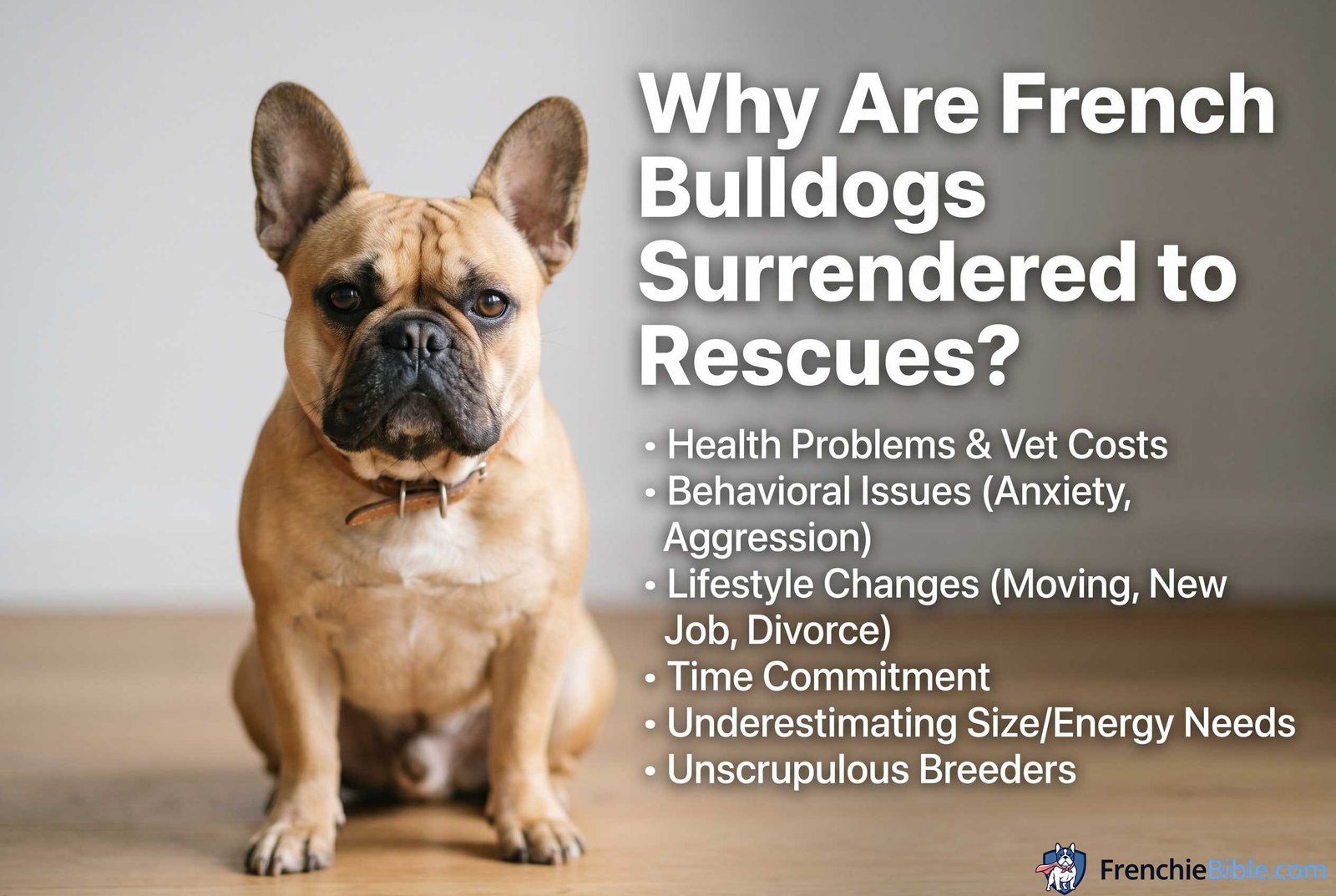
1. Catastrophic Medical Expenses
as a French Bulldog expert and breeder, I see this tragedy unfold weekly. The number one reason French Bulldogs are surrendered is the owner’s inability to afford their medical care. The breed is genetically predisposed to a myriad of expensive health conditions.
- Intervertebral Disc Disease (IVDD): A sudden spinal disc herniation can cause excruciating pain and hind-leg paralysis. Emergency MRI and spinal decompression surgery can easily cost between $8,000 and $12,000. Owners without pet insurance often face the devastating choice of “economic euthanasia” or surrendering the dog to a rescue that can fund the surgery.
- Brachycephalic Obstructive Airway Syndrome (BOAS): Many Frenchies cannot breathe properly without surgical intervention to widen their nares and shorten their soft palates. The cost of BOAS surgery ($3,000 – $6,000) is a frequent cause for surrender.
- Chronic Severe Allergies: Lifelong management of severe atopic dermatitis, chronic ear infections, and specialized hypoallergenic diets can bankrupt an unprepared owner.
2. Unmet Behavioral Expectations
French Bulldogs are often marketed as low-maintenance “couch potatoes” or easy apartment dogs. This is a dangerous misconception. They are intelligent, stubborn, and highly prone to resource guarding and separation anxiety. When a poorly socialized Frenchie begins biting over toys or destroying an apartment because it cannot be left alone, frustrated owners often surrender them.
3. Lifestyle Changes and Incompatibility
Divorce, moving to a new home (especially one with many stairs, which are dangerous for Frenchie spines), the birth of a new baby, or a change in work hours can prompt a surrender. Because Frenchies bond intensely with their humans and demand constant companionship, they do not adapt well to being left alone in a backyard.
The Truth About Ex-Breeding Dogs: Retired Studs and Brood Bitches
A significant portion of French Bulldogs available for adoption are “retirees.” These are dogs that were used for breeding and are now looking for a pet home to live out their golden years. However, the experience of adopting an ex-breeding dog varies wildly depending on where they were bred.

The Ethical Breeder Retiree
Responsible, ethical preservation breeders prioritize the health and welfare of their dogs above all else. In these programs, a female (brood bitch) may only have two or three litters via carefully planned C-sections before she is spayed and retired, usually around age 3 or 4.
- What to Expect: These dogs are typically well-socialized, deeply loved, extensively health-tested, and live inside the breeder’s home. They are accustomed to normal household noises, are usually potty trained, and have received top-tier veterinary care.
- The Transition: The transition for an ethical breeder retiree is usually smooth. The breeder will be highly selective about where the dog goes and will provide lifelong support.
The Puppy Mill or Backyard Breeder Survivor
This is a vastly different scenario. French Bulldogs rescued from commercial breeding facilities (puppy mills) or unethical backyard breeders have often lived horrific lives. They are treated as livestock, confined to wire cages or outdoor kennels, and bred every heat cycle until their bodies give out.
- Physical Rehabilitation: These dogs often arrive at rescues in deplorable condition. They may suffer from severe dental disease, chronically infected ears, untreated eye ulcers, elongated nails that have deformed their feet, and pendulous mammary glands from overbreeding. Many suffer from untreated BOAS.
- Psychological Rehabilitation: A puppy mill survivor has likely never lived in a home. They do not know what a television is, they are terrified of stairs, they have never walked on a leash, and they may be deeply fearful of humans.
- The Transition: Rehabilitating a mill survivor requires monumental patience. You must teach them how to be a dog. House training can take months, as they are accustomed to eliminating where they sleep.
Where to Find a Rescue or Retired French Bulldog
Finding a rescue French Bulldog is highly competitive. Because they are a popular breed, rescues receive hundreds of applications for a single dog. You must know where to look and how to differentiate a legitimate organization from a scam.
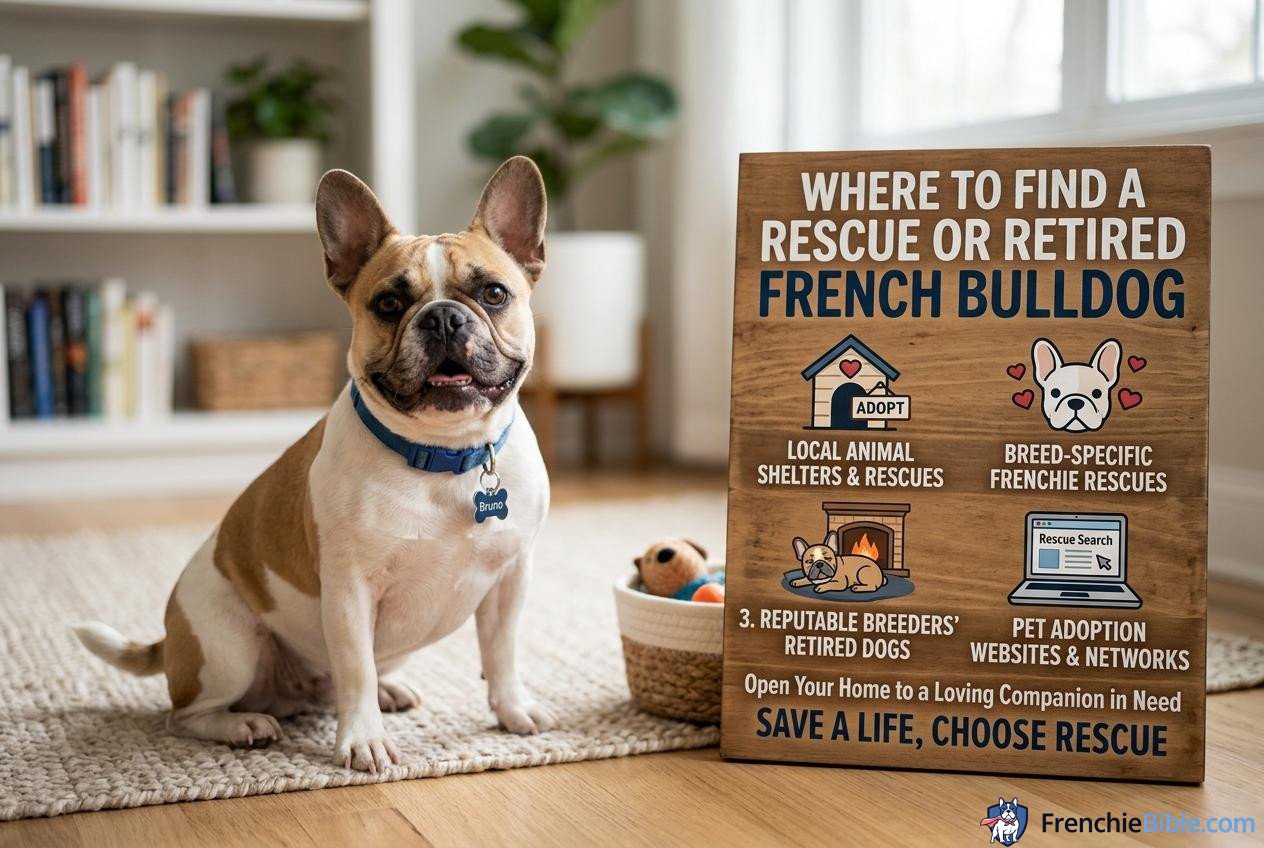
1. Dedicated Breed-Specific Rescues
This is the safest and most reliable avenue. Organizations dedicated solely to French Bulldogs (and sometimes other brachycephalic breeds) understand the specific medical and behavioral needs of the breed. They invest heavily in medical care before adopting a dog out.
- Examples: French Bulldog Rescue Network (FBRN), SNAFU Rescue (Short Noses and Friends United), NorCal French Bulldog Rescue, and Short Mugs Rescue Squad.
- The Benefit: These rescues place dogs in foster homes, meaning they can accurately assess the dog’s temperament, behavioral quirks, and medical needs before matching them with an adopter.
2. Ethical Preservation Breeders
If you are open to an older dog, reaching out directly to reputable breeders is an excellent strategy. Breeders registered with organizations like the French Bull Dog Club of America (FBDCA) occasionally have young adult dogs that “washed out” of their breeding program (perhaps due to a minor conformational fault) or retired breeding females looking for a quiet couch to sleep on.
- The Benefit: You are getting a dog with a known genetic history, OFA health clearances, and a solid foundation of socialization.
3. Local All-Breed Shelters and Humane Societies
While less common, French Bulldogs do occasionally end up in municipal animal shelters or local ASPCA chapters, usually as strays or direct owner surrenders.
- The Caveat: When a Frenchie hits a public shelter, they are usually adopted within hours. You must monitor shelter websites daily. Furthermore, municipal shelters rarely have the budget to perform BOAS surgery or MRI scans, meaning you may be adopting a dog with undisclosed or undiagnosed medical disasters.
4. BEWARE: “Retail Rescue” and Scams
The high demand for rescue Frenchies has given rise to unethical “rescues” that operate as fronts for puppy mills or dog brokers.
- Retail Rescue: These organizations buy cull puppies or retired dogs at commercial dog auctions and “flip” them to the public under the guise of rescue, charging exorbitant “adoption fees” ($2,000 – $3,000) while providing zero veterinary care.
- Online Scams: Never wire money or pay via cryptocurrency to someone claiming to have a rescue Frenchie on Facebook or Craigslist. Legitimate rescues require extensive applications and in-person meet-and-greets.
The Adoption Process: What to Expect and How to Stand Out
Because reputable rescues invest thousands of dollars into saving a single Frenchie, their adoption processes are incredibly rigorous. Do not expect to apply on a Monday and bring a dog home on a Friday.
The Application
You will be required to fill out an exhaustive application detailing your work schedule, your living situation, your experience with brachycephalic breeds, and your financial ability to handle medical emergencies.
- How to Stand Out: Be honest. If you work 12-hour shifts and do not have a dog walker, a Frenchie is not for you. Highlight any previous experience you have with bulldogs, special needs dogs, or post-operative care.
Veterinary References and Home Checks
Rescues will call your current or past veterinarian to ensure your previous pets received consistent preventative care (vaccines, heartworm prevention).
- They will also conduct a home visit (in person or via video call). They are looking for hazards: steep staircases without baby gates, unfenced pools (Frenchies sink like stones and cannot swim), or toxic plants in the yard.
Adoption Fees
Adoption fees for French Bulldogs are higher than for mixed breeds, typically ranging from $500 to $1,200.
- Why so high? A rescue may spend $8,000 on BOAS surgery and IVDD treatment for one dog. The adoption fee of a relatively healthy young Frenchie helps subsidize the catastrophic medical costs of the seniors and hospice dogs in their care. You are not “buying” the dog; you are supporting the rescue’s mission.
Preparing Your Home and Mindset for a Rescue Frenchie
Bringing a rescue French Bulldog into your home requires specific environmental modifications and a complete shift in expectations.
1. The Financial Safety Net (Non-Negotiable)
as a French Bulldog expert and breeder, I cannot stress this enough: Rescued Frenchies are not budget pets. Just because you saved money on the purchase price does not mean the dog is cheap to own.
- Pre-existing Conditions: Pet insurance is highly recommended, but you must understand that any medical condition the dog was treated for while in rescue (allergies, BOAS, ear infections) will be considered a “pre-existing condition” and will be permanently excluded from coverage.
- You must have a dedicated emergency fund of at least $5,000 to $8,000 readily available for sudden IVDD flare-ups or airway crises.
2. Environmental Modifications
French Bulldogs are structurally fragile. Their heavy heads, dense bodies, and compromised spines mean your home must be adapted for their safety.
- No Stairs or Jumping: You must purchase ramps or doggy stairs for all couches and beds. Allowing a Frenchie to jump off a bed is a recipe for a ruptured spinal disc. Baby gates should be used to block long flights of stairs.
- Climate Control: Rescued Frenchies, especially those who have not had airway surgery, cannot tolerate heat. Your home must be air-conditioned. They cannot be left outside in temperatures over 75°F (24°C).
- Harnesses Only: You must purchase an ergonomic, Y-shaped harness. Attaching a leash to a neck collar on a brachycephalic dog can crush their trachea and exacerbate eye pressure issues.
3. Understanding the 3-3-3 Rule of Decompression
Whether the dog is from a loving home or a puppy mill, changing environments is traumatic. You must follow the 3-3-3 rule for rescue decompression:
- 3 Days of Overwhelming Stress: The dog will be terrified, shut down, or overly anxious. They may refuse to eat, hide under furniture, or have potty accidents. Do not force interaction. Give them a quiet, safe space (like a covered crate).
- 3 Weeks of Settling In: The dog begins to learn your routine. They figure out when feeding time is and where the door to the yard is. As they feel safer, they may begin to push boundaries and display true behavioral quirks (like barking at the mailman or guarding toys).
- 3 Months of Building Trust: The dog finally understands they are home. True bonding occurs, and they relax into their true personality.
The Physical Rehabilitation of a Rescue Frenchie
If you adopt a puppy mill survivor or a dog surrendered due to medical neglect, you must be prepared to act as their primary medical advocate.
Addressing the Airway (BOAS)
Many rescued Frenchies arrive with severe Brachycephalic Obstructive Airway Syndrome. If the rescue did not perform the surgery, you must schedule a consultation with a experienced surgeon immediately. Do not accept a dog struggling to breathe as “normal for the breed.” Correcting stenotic nares and an elongated soft palate is life-changing and life-saving.
Dermatological Rehabilitation
Skin issues are rampant in neglected Frenchies. You will likely inherit a dog with environmental allergies, food intolerances, and yeast infections in their facial folds.
- Dietary Changes: You will need to invest in high-quality, novel protein diets or hydrolyzed veterinary prescription food to soothe their inflamed gut and skin.
- Daily Maintenance: You must commit to daily cleaning of their facial wrinkles, tail pockets, and vulvas using medicated wipes (containing chlorhexidine or your veterinarian may recommend a antifungal medication (never use without veterinary guidance)) to prevent deep skin fold pyoderma.
Dental and Aural (Ear) Care
Puppy mill survivors often have rotting teeth and chronic, calcified ear infections. Expect to pay for a comprehensive dental cleaning with multiple extractions under anesthesia shortly after adoption.
Psychological Rehabilitation and Behavioral Training
A rescue Frenchie often comes with emotional baggage. They are intelligent and sensitive, and trauma deeply affects them.
Overcoming Separation Anxiety
French Bulldogs were bred for one purpose: to be companions. They do not do well alone. A surrendered dog often has severe abandonment trauma, leading to extreme separation anxiety.
- The Fix: You must work with a positive reinforcement trainer. Crate training must be done incredibly slowly. You cannot simply lock a panicked Frenchie in a crate and leave for work; they will destroy their teeth trying to escape and risk heatstroke from panic panting. You may need to utilize doggy daycare or pet sitters while you slowly desensitize them to your absences.
Resource Guarding
Dogs that had to fight for food in a mill, or dogs that were never taught how to share in a previous home, may aggressively guard food bowls, toys, or even “their” human on the couch.
- The Fix: Never punish a growling dog (growling is communication). Use trade games. If they have an item they shouldn’t, offer them a high-value treat (like a piece of chicken) to willingly drop the item. Consult a professional behaviorist if the guarding is severe.
Socializing the Unsocialized
A retired breeding dog may freeze in terror on a walk because they have never seen a car, a bicycle, or heard a lawnmower.
- The Fix: Exposure must be slow, gentle, and always paired with high-value rewards. Do not drag a terrified dog towards a scary object. Let them observe from a distance, feed them treats, and slowly close the distance over weeks or months.
The Joys of the Rescue Frenchie
Reading through the potential medical crises and behavioral hurdles can be daunting. as a French Bulldog expert and breeder, I must present the reality of the situation to prevent a dog from being surrendered a second time.
However, ask anyone who has successfully rehabilitated a rescue French Bulldog or given a retired puppy mill mom her first soft bed, and they will tell you it is the greatest privilege of their life.
These dogs are incredibly resilient. Watching a dog who spent five years in a wire cage discover the joy of a squeaky toy, or seeing a terrified, surrendered Frenchie finally exhale and fall asleep in your lap, is an unparalleled experience. They possess a profound capacity for forgiveness and an overwhelming desire to love and be loved.
If you are financially secure, emotionally resilient, and deeply committed to the specific needs of the brachycephalic dog, adopting a rescue French Bulldog will change your life just as much as you change theirs.
Frequently Asked Questions (FAQ)
1. Why is it so hard to get approved by a French Bulldog rescue?
Rescues are incredibly stringent because French Bulldogs are medically fragile and high-maintenance. Rescues invest thousands of dollars and countless emotional hours into saving these dogs; their primary goal is to ensure the dog never has to enter the rescue system again. If an applicant lacks air conditioning, has a pool without a fence, or expresses an unwillingness to pay for BOAS surgery, the rescue will deny the application to protect the dog.
2. Should I adopt a Frenchie with a history of IVDD?
Adopting a Frenchie with a history of Intervertebral Disc Disease (IVDD) requires serious consideration. If the dog had surgery and has recovered, they can live a wonderful life, but they are always at a higher risk for subsequent disc herniations. You must commit to a lifestyle of strict weight management, absolutely no stairs, no jumping, and using ramps exclusively. You must also have a dedicated veterinary emergency fund, as pet insurance will likely exclude spinal issues due to the pre-existing history.
3. Can a puppy mill survivor ever become a “normal” pet?
Yes, but it takes time, patience, and realistic expectations. A puppy mill survivor may never be the outgoing, boisterous dog that runs up to strangers at the park. They may always be a bit timid or startle easily. However, with gentle, positive reinforcement training and a safe environment, they can learn to deeply trust their family, enjoy routine, and live a happy, comfortable life as a beloved companion.
4. How do I know if an organization is a legitimate rescue or a “retail rescue”?
Legitimate rescues are transparent. They should be registered 501(c)(3) non-profits (in the US). They will provide complete medical records, require a comprehensive application, conduct home checks, and usually place dogs in foster homes rather than kennel facilities. Retail rescues often have a constant, suspicious supply of “designer” puppies (like merle or fluffy Frenchies), charge exorbitant fees ($2,000+), do not require home checks, and rush the adoption process.
5. I work 8 hours a day. Can I adopt a rescue French Bulldog?
It depends entirely on the dog and your support system. French Bulldogs are highly prone to separation anxiety, and a rescue dog with abandonment trauma will struggle significantly if left alone for 8-10 hours. If you work full time outside the home, you will likely need to commit to hiring a daily mid-day dog walker, utilizing a brachycephalic-safe doggy daycare, or finding a rescue that is specifically bonded to another dog to keep them company.
6. Are retired breeding females good pets?
Ethically bred and retired females make phenomenal pets. They have usually lived in a home environment, are well-socialized, and have stable temperaments. They are often ready to leave the chaotic life of raising puppies behind and simply want to be spoiled, sleep on a soft couch, and receive undivided human attention. They are often some of the most loving and gentle companions you can find.
Disclaimer: We are not veterinarians and do not hold veterinary medical licenses. The information provided in this article is based on years of breeding and daily care experience and is for educational purposes only. It should not replace professional veterinary advice. Always consult with a licensed veterinarian if you have concerns about your French Bulldog’s health or before starting any new treatment.