
Disclaimer: The information provided in this article is for educational and informational purposes only. Authored from the dual perspective of a French Bulldog specialist veterinarian, experienced breeder, and SEO content director, this guide offers expert-level insights. However, it does not replace professional, hands-on veterinary medical advice. Always consult with a qualified, local veterinarian regarding your French Bulldog puppy’s health, customized dietary requirements, and specific medical care protocols.
Introduction
Welcoming a French Bulldog puppy into your home is an incredibly exciting milestone, but it also brings a significant level of responsibility. Known for their affectionate nature, bat-like ears, and charming, clownish personalities, Frenchies are an absolute joy to live with. However, they are also a unique breed with specific physiological and behavioral traits that require a highly specialized approach to daily care. As a French Bulldog specialist veterinarian and experienced breeder, I have seen firsthand how a structured daily schedule can transform a chaotic household into a harmonious environment where both the growing puppy and the owner thrive.

Related Reading: Health & Diet | Frenchie Puppy Guide
Establishing a solid, unwavering daily routine is not just about convenience for you; it is a fundamental requirement for your puppy’s physical, mental, and emotional development. Puppies, much like human infants, crave predictability. A consistent schedule helps them understand what is expected of them, drastically reduces anxiety, and accelerates the learning process for crucial skills like potty training and basic obedience.
Furthermore, because French Bulldogs are a brachycephalic (flat-faced) breed, their daily routines must be carefully tailored to prevent overheating, manage their highly sensitive digestive systems, and ensure they receive the exact right balance of rest and activity. A generic puppy schedule simply will not suffice for a Frenchie. Their physical limitations mean that over-exercising can be dangerous, while under-sleeping can lead to severe behavioral meltdowns.
In this comprehensive, 3000+ word guide, we will dive deep into creating the ultimate daily schedule for your French Bulldog puppy. We will cover everything from precise feeding amounts and crucial sleep requirements to positive reinforcement training and safe socialization protocols. By the end of this masterclass article, you will be fully equipped with the veterinary knowledge and practical breeder tools necessary to raise a healthy, well-adjusted, and impeccably behaved French Bulldog.
Understanding Your French Bulldog Puppy’s Unique Needs
Before diving into the hourly specifics of a daily schedule, it is absolutely vital to understand why French Bulldogs require a tailored approach. You cannot simply download a generic puppy schedule from the internet, apply it to a Frenchie, and expect optimal health and behavioral results. Their unique anatomy, metabolic rate, and psychological profile demand specialized, attentive care.
The Brachycephalic Anatomy and Its Impact on Routines
The most defining physical characteristic of the French Bulldog is their brachycephalic skull shape. This flat-faced structure means they inherently have compressed upper airways, elongated soft palates, and narrow nostrils (stenotic nares). This condition is clinically known as Brachycephalic Obstructive Airway Syndrome (BOAS) in severe cases, but all Frenchies exist somewhere on the brachycephalic spectrum. These anatomical traits have a profound and daily impact on their routine:
- Exercise Limitations and Respiratory Stress: Frenchies cannot tolerate strenuous exercise, especially in warm or humid weather. Their compromised airways make panting—the primary way dogs cool down their core body temperature—highly inefficient. Therefore, daily exercise must be broken into short, manageable sessions (5 to 15 minutes) rather than long, exhaustive walks. Pushing a Frenchie to keep up on a long run is a recipe for a heatstroke emergency.
- Heat Sensitivity and Weather Planning: Your daily schedule must strictly account for the ambient temperature. During the spring and summer months, all outdoor activities, including walks and rigorous play, must be scheduled for the early morning (before 8 AM) or late evening (after sunset) when the air is cool. Midday bathroom breaks should be brief and ideally in shaded areas.
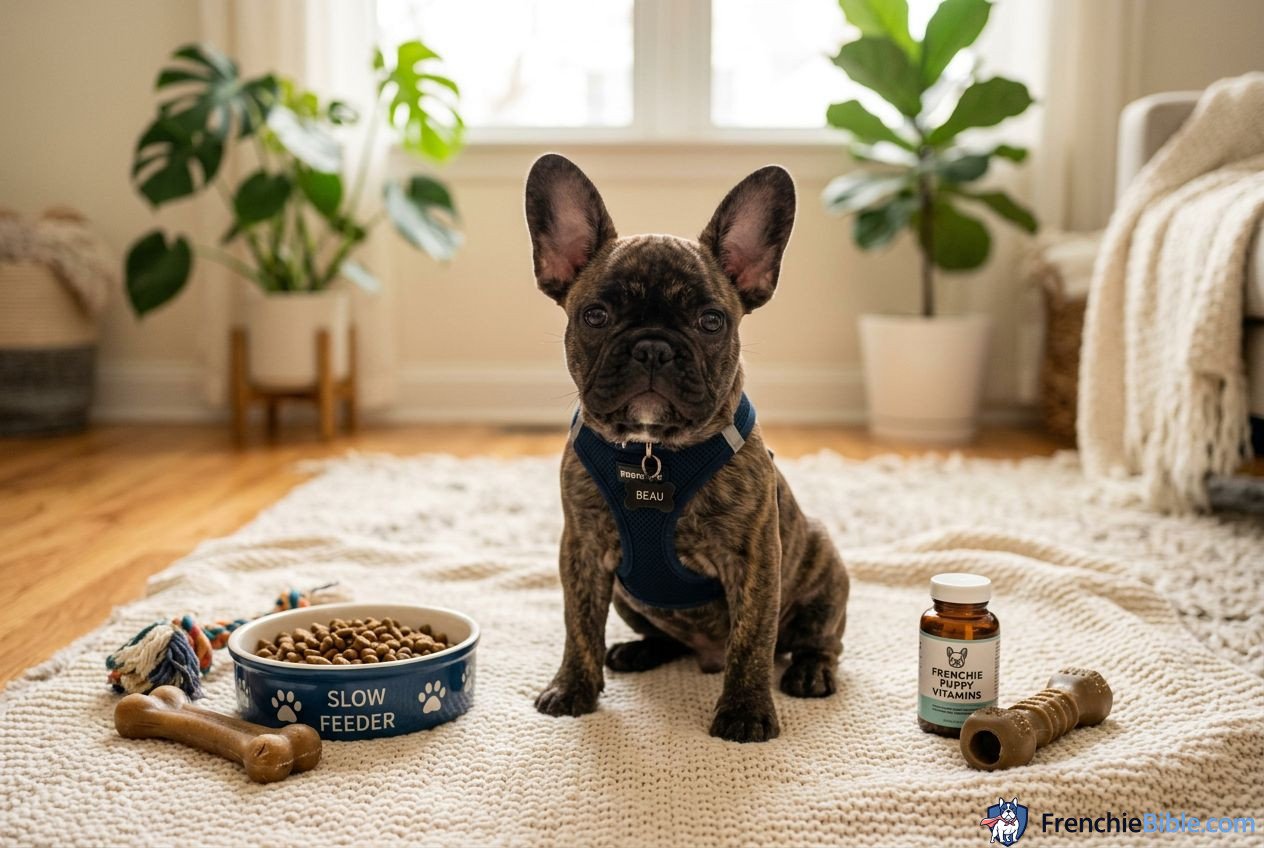
- Feeding and Digestive Mechanics: The brachycephalic anatomy can lead to aerophagia (swallowing excess air) while eating and drinking. This mechanical flaw contributes to severe flatulence, frequent regurgitation, and a higher risk of gastric issues. Feeding schedules must involve multiple small meals utilizing slow-feeder bowls rather than one or two massive meals that encourage gorging.
Growth Stages and Changing Requirements (8 to 24 weeks)
Your puppy’s biological and developmental needs will evolve rapidly during their first few months of life. A schedule that works flawlessly for an 8-week-old will be completely obsolete for a 16-week-old. Understanding these developmental milestones is key to adapting their routine.
- 8 to 12 Weeks (The Foundation Phase): At this stage, your puppy is essentially a highly dependent infant. Their central nervous system is still developing rapidly. They require massive amounts of sleep (up to 18-20 hours a day), frequent meals (3-4 times a day to maintain stable blood sugar levels), and potty breaks every 1-2 hours because their bladder sphincter muscles are weak. Their attention span is incredibly short, meaning training sessions should only last 1-2 minutes to avoid frustration.
- 12 to 16 Weeks (The Exploration Phase): Neurological connections are solidifying. Bladder control begins to improve noticeably, allowing for slightly longer stretches (2-3 hours) between potty breaks. They still need 16-18 hours of sleep. Most importantly, this is the critical window for early socialization. Exposure to new sights, sounds, textures, and experiences during this phase dictates their lifelong temperament and confidence levels.
- 16 to 24 Weeks (The Routine Solidification Phase): Your puppy is entering early adolescence. They are gaining muscle mass and stamina. They can typically hold their bladder for 3-4 hours during the day and often straight through the night (6-8 hours). Meals can safely be reduced to 2-3 times a day. Training can become slightly more advanced, incorporating duration and distance, and physical exercise can be marginally increased, though still strictly monitored for respiratory stress.
Core Components of a French Bulldog Puppy’s Day
A successful, stress-free daily schedule is built upon several foundational pillars. Neglecting any of these core components can lead to behavioral issues, gastrointestinal problems, or a generally chaotic living situation. As a breeder, I tell new owners that consistency in these pillars is the secret to a perfect dog.
Nutrition and Feeding Schedules
Proper nutrition fuels your puppy’s rapid cellular growth, immune system maturation, and cognitive development. Because Frenchies are prone to obesity (which drastically worsens breathing issues) and joint issues like hip dysplasia, strict portion control is mandatory. Furthermore, their notoriously sensitive stomachs require high-quality, highly digestible food.
- Frequency: Up to 12 weeks of age, feed 3 to 4 meticulously portioned meals a day. From 12 to 24 weeks, transition to 3 meals a day. After 6 months of age, you can smoothly move to the adult standard of 2 meals a day.
- Temporal Consistency: Meals should be offered at the exact same times every single day. This not only regulates their delicate digestive system but also makes their bowel movements highly predictable. Predictable bowel movements are the ultimate secret to successful, rapid potty training.
- Hydration Management: Fresh, clean water must be available at all times during the day. However, to aid in nighttime potty training and prevent crate accidents, water is typically removed 1.5 to 2 hours before the final bedtime potty break.
Sleep and Rest Requirements
I cannot emphasize this from a veterinary standpoint enough: puppies need an enormous amount of sleep. Many owners misinterpret behavioral issues—such as excessive ankle biting, frantic “zoomies,” incessant whining, and an inability to settle—as a need for more exercise. In reality, 90% of the time, the puppy is dangerously overtired and overstimulated.
- Total Hours: Expect your Frenchie puppy to sleep 18 to 20 hours a day in their first month home. This is not laziness; it is physiological necessity for brain development.
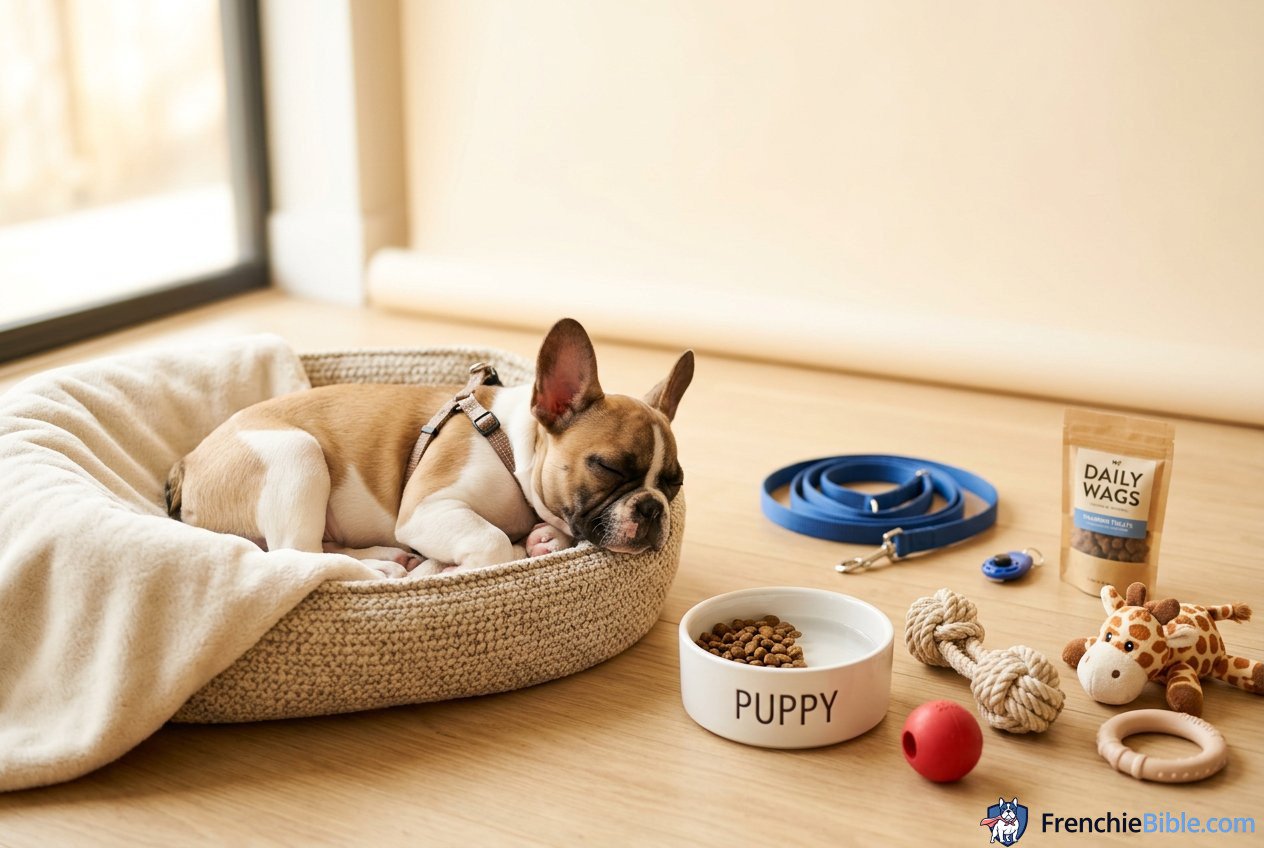
- Enforced Naps: Do not wait for your puppy to simply pass out on the living room floor. They will fight sleep to stay with you. Implement “enforced naps” using a crate or a designated, quiet playpen. A general, highly effective rule of thumb is 1 hour of awake, active time followed immediately by 1.5 to 2 hours of enforced, uninterrupted nap time in a dark, quiet space.
Potty Training Consistency
French Bulldogs are notoriously stubborn, and potty training can often be a test of human patience. They are not naturally predisposed to fast house-training like some working breeds. The key to success is aggressive management, hyper-vigilance, and an unyielding, military-like schedule.
- The Golden Rule of Timing: Take your puppy out immediately upon waking up from a nap, within 10-15 minutes after finishing every meal, immediately after any vigorous play session, and right before bed.
- Active Observation: During their awake time, you must have eyes on your puppy at all times. If they start sniffing the ground intensely, walking in circles, or suddenly wander away from play, scoop them up mid-action and take them outside instantly.
Socialization and Mental Stimulation
Because physical exercise must be strictly restricted to protect a young Frenchie’s joints and airways, mental stimulation becomes your primary tool for tiring them out. A bored French Bulldog is a destructive, vocal French Bulldog.
- Holistic Socialization: This does not just mean letting them play with other dogs. True socialization means exposing your puppy to different walking surfaces (grass, gravel, carpet, wet pavement), environmental sounds (vacuums, sirens, thunder sounds on low volume), handling protocols (touching paws, examining ears, opening the mouth), and people of all shapes, sizes, and ages.
- Mental Workloads: Utilize interactive puzzle toys, snuffle mats, lick mats smeared with dog-safe peanut butter, and short, focused training sessions to mentally exhaust your puppy. Ten minutes of intensive brain work (like learning a new trick) is often more exhausting for a Frenchie than a 20-minute physical walk.
Basic Obedience Training
Obedience training should begin the literal day you bring your puppy home at 8 weeks old. Because of their inherent stubborn streak and “what’s in it for me?” attitude, training must be highly rewarding, incredibly consistent, and kept very brief to maintain engagement.
- Positive Reinforcement: Frenchies respond terribly to harsh corrections, scolding, or physical punishment. They will simply shut down, become fearful, and refuse to cooperate. Use high-value treats (like boiled chicken or freeze-dried liver), enthusiastic verbal praise, and favorite toys to motivate them.
- Micro-Sessions: Keep training sessions to 2-3 minutes at a time, maximum 5 minutes. End every single session on a positive note with a highly successful command to build their confidence.
Playtime and Exercise Limits
Exercise for a young, growing Frenchie is about controlled, safe movement to build muscle tone without stressing their developing skeletal system or vulnerable respiratory tract.
- The 5-Minute Rule: A standard veterinary orthopedic guideline for puppies is 5 minutes of structured exercise (like a leash walk) per month of age, twice a day. Therefore, a 3-month-old puppy needs only about 15 minutes of structured walking twice a day.
- Self-Directed Play: Allow for ample self-directed play indoors where the puppy can stop, lie down, and rest whenever they naturally feel the need to do so. Never force them to keep playing if they lie down panting.
Sample Daily Schedules by Age
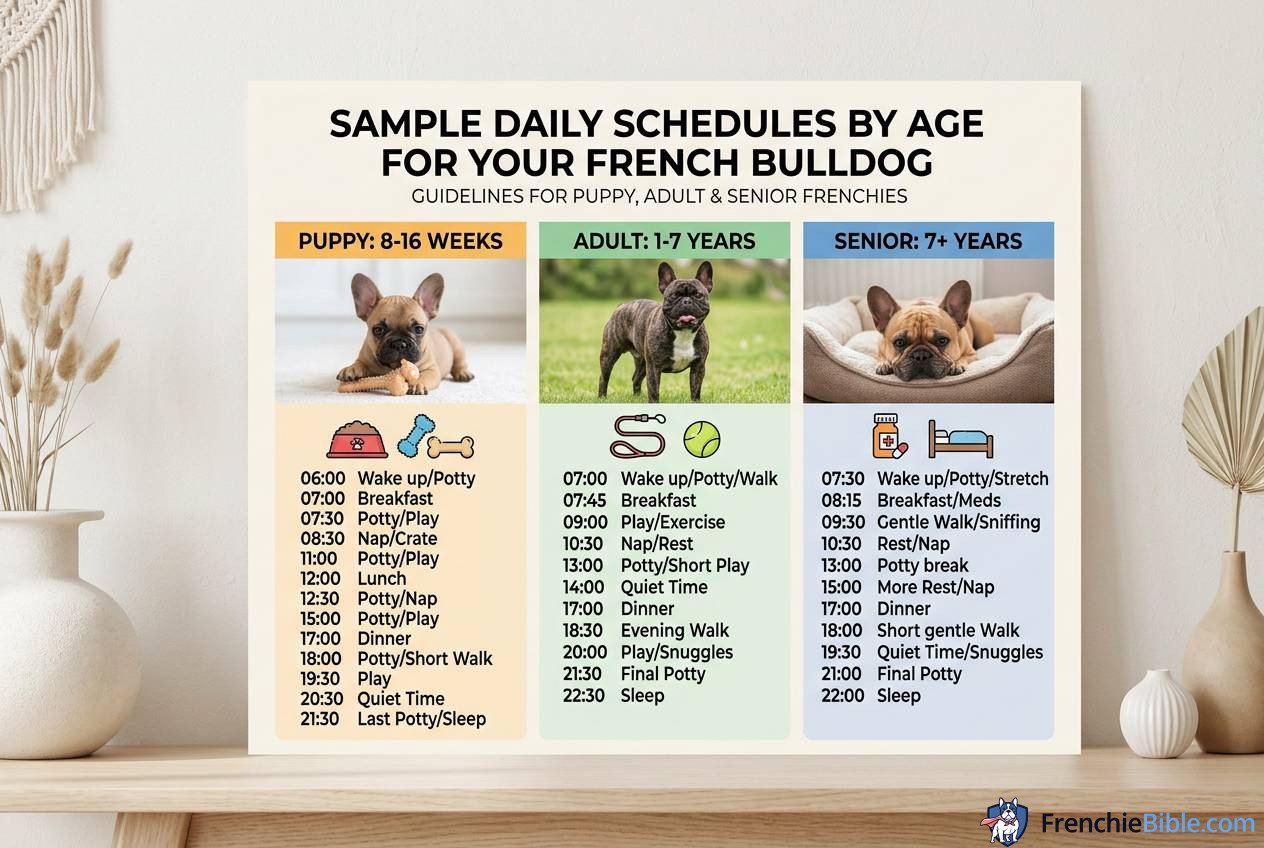
To give you a concrete, actionable starting point, here are meticulously structured daily schedules tailored to different developmental stages. Remember, these are highly optimized templates. You may need to shift the exact hours slightly to align with your own work or sleep schedule, but the intervals between activities and the proportions of sleep, eat, and play should remain rigidly consistent.
8 to 12 Weeks Old: The Foundation Phase
At this stage, the focus is heavily on survival, intensive potty training, establishing the crate as a safe zone, and bonding. Expect to be very hands-on and heavily involved in managing their every waking minute.
- 06:30 AM: Wake up and IMMEDIATE potty break. Do not let them walk to the door; carry the puppy outside to prevent accidents on the way. Praise heavily and offer a treat the second they finish going potty.
- 06:45 AM: Breakfast time. Use a slow-feeder bowl or scatter feed on a mat to prevent gorging and air swallowing.
- 07:00 AM: Potty break #2. (A post-breakfast bowel movement is highly likely due to the gastrocolic reflex).
- 07:15 AM: Gentle playtime and early socialization (handling paws, brushing coat softly). Short training session (e.g., name recognition, teaching the “sit” position).
- 07:45 AM: Potty break #3, then immediately into the crate for an enforced nap.
- 08:00 AM – 10:00 AM: Nap time. (This is when the owner can get ready for the day, shower, or start work).
- 10:00 AM: Wake up, carry immediately for a potty break.
- 10:15 AM: Supervised free time, solo play with a puzzle toy, or a mental stimulation game in their pen.
- 10:45 AM: Potty break, then back into the crate for a nap.
- 11:00 AM – 01:00 PM: Nap time.
- 01:00 PM: Wake up, immediate potty break.
- 01:15 PM: Lunchtime (Portion 2 of 3).
- 01:30 PM: Potty break (post-lunch).
- 01:45 PM: Short interactive play session or a very brief, low-impact stroll in a safe, disease-free area (like your private backyard—do not use public parks yet).
- 02:15 PM: Potty break, then crate for nap.
- 02:30 PM – 04:30 PM: Nap time.
- 04:30 PM: Wake up, immediate potty break.
- 04:45 PM: Interactive play, training session (e.g., “down”, “leave it”, or leash acclimation indoors).
- 05:15 PM: Potty break, then crate for a shorter evening nap to prevent overtired witching hour behavior.
- 05:30 PM – 06:30 PM: Nap time.
- 06:30 PM: Wake up, immediate potty break.
- 06:45 PM: Dinner (Portion 3 of 3).
- 07:00 PM: Potty break (post-dinner).
- 07:15 PM: Calm, structured evening activities. Chewing on a safe, vet-approved chew toy (like a Nylabone or Bully Stick under strict supervision) while you watch TV. Avoid getting the puppy over-aroused with roughhousing before bed.
- 08:00 PM: Remove the water bowl completely to prepare the bladder for nighttime.
- 08:30 PM: Final vigorous (but brief) play session to burn any lingering excess energy, followed immediately by a settling down period.
- 09:30 PM: Final potty break of the night. Make this trip incredibly boring—no talking, no playing, just business.
- 09:45 PM: Placed in the crate for the night. Lights out.
- (Clinical Note: At 8-10 weeks of age, physiologically expect 1 to 2 middle-of-the-night potty breaks. Do not wait for them to cry and soil the crate. Set an alarm to proactively take them out, usually around 2:00 AM and 5:00 AM. Keep these trips silent and dim).
12 to 16 Weeks Old: The Exploration Phase
Physical bladder control is actively improving. You can slightly extend the periods between potty breaks and incrementally increase the duration of training and physical walks, always monitoring their breathing.
- 06:30 AM: Wake up & Potty break.
- 06:45 AM: Breakfast.
- 07:00 AM: Potty break.
- 07:15 AM: Morning walk (10-15 minutes max, weather permitting, ensuring it is not too hot) or structured indoor play.
- 07:45 AM: Potty break, then crate nap.
- 08:00 AM – 10:30 AM: Extended morning Nap time.
- 10:30 AM: Wake up & Potty.
- 10:45 AM: Mental stimulation focus (snuffle mat foraging or an advanced treat puzzle).
- 11:15 AM: Potty, then crate nap.
- 11:30 AM – 01:30 PM: Midday Nap time.
- 01:30 PM: Wake up & Potty.
- 01:45 PM: Lunch.
- 02:00 PM: Potty break.
- 02:15 PM: Short training session focusing on impulse control & a socialization activity (e.g., listening to construction noises on YouTube).
- 02:45 PM: Potty, then crate nap.
- 03:00 PM – 05:00 PM: Afternoon Nap time.
- 05:00 PM: Wake up & Potty.
- 05:15 PM: Evening walk or vigorous indoor play session (fetch, tug-of-war).
- 06:00 PM: Dinner.
- 06:15 PM: Potty break.
- 06:30 PM – 08:30 PM: Calm family time, chewing, supervised relaxation. Remove water promptly at 08:00 PM.
- 09:30 PM: Final Potty break.
- 09:45 PM: Bedtime. (At this stage, many Frenchie puppies can sleep 6-7 hours through the night, but some smaller individuals may still need one middle-of-the-night bathroom break).
16 to 24 Weeks Old: The Routine Solidification Phase
Your puppy is growing stronger, smarter, and is physiologically capable of holding their bladder much longer. They are likely transitioning from three meals a day to two, though some breeders prefer to maintain a small lunch until 6 months. Assuming a standard two-meal schedule:
- 07:00 AM: Wake up & Potty break.
- 07:15 AM: Breakfast.
- 07:30 AM: Potty break.
- 07:45 AM: Morning walk (15-20 minutes). Focus heavily on loose-leash walking training and ignoring distractions.
- 08:15 AM: Rest period. If you work from home, they can sleep on a dog bed nearby. If you leave for the office, they go in the crate or a fully puppy-proofed room.
- 08:30 AM – 12:30 PM: Long morning nap/independent rest period.
- 12:30 PM: Midday potty break (Crucial if you work away from home; hire a dog walker).
- 12:45 PM: Short play session or providing a high-value mental enrichment toy (like a frozen stuffed Kong to occupy them).
- 01:15 PM – 05:00 PM: Afternoon nap/independent rest.
- 05:00 PM: Wake up & Potty.
- 05:15 PM: Evening walk (15-20 minutes) or play session.
- 06:00 PM: Dinner.
- 06:30 PM: Potty break.
- 06:45 PM – 09:30 PM: Relaxed evening, short training bursts to reinforce manners. Remove water at 08:30 PM.
- 09:45 PM: Final Potty break.
- 10:00 PM: Bedtime (Should be sleeping 8 hours straight through the night consistently).
Deep Dive: Feeding Your Frenchie Puppy
Feeding a French Bulldog correctly is paramount to their lifelong health and longevity. Their digestive tracts are notoriously sensitive, and their genetic risk for food allergies (dermatological and gastrointestinal) and intolerances is higher than many other dog breeds.
How Much and How Often?
Do not rely blindly on the generic feeding chart printed on the back of the dog food bag. Those charts are broad estimates and often overestimate the amount of calories required, leading rapidly to puppy obesity, which stresses their joints and worsens breathing.
Your veterinarian should help you determine the exact caloric needs based on your specific puppy’s current weight, Body Condition Score (BCS), and activity level. As a general starting rule, a growing Frenchie puppy consumes between 1 to 1.5 cups of high-quality, nutrient-dense kibble per day, divided evenly into their scheduled meals.
You must visually and physically adjust the food intake weekly. If the puppy looks a bit thick around the middle (you cannot easily feel their ribs without applying significant pressure), reduce the daily portion by 10%. If they look too thin (ribs, spine, and hip bones are visibly protruding), increase the portion by 10%. A healthy Frenchie puppy should have a visible “waist” when viewed from above.
Choosing the Right Food
As a veterinary specialist, I strongly recommend a diet formulated specifically for puppies (which has the correct calcium-to-phosphorus ratio for bone growth), preferably one that addresses sensitive stomachs.
- Protein Source: Look for novel proteins or easily digestible proteins. Chicken and beef are actually common allergens in Frenchies, manifesting as itchy skin, ear infections, or loose stools. Consider lamb, salmon, whitefish, or turkey-based diets.
- Grain vs. Grain-Free: Unless your veterinarian has diagnosed a specific, clinically proven grain allergy, a grain-inclusive diet (containing healthy, complex grains like oats, barley, or brown rice) is generally recommended by veterinary cardiologists due to ongoing FDA investigations linking certain boutique grain-free diets to Dilated Cardiomyopathy (DCM) in dogs.
- Kibble Size: The kibble should be small enough for a puppy’s jaw to chew easily, but large enough that they don’t simply swallow it whole, which exacerbates choking risks and stomach gas.
Preventing Bloat and Digestive Issues
Frenchies are notorious for “inhaling” their food without chewing. This leads to them swallowing massive amounts of air along with their kibble.
- Slow Feeder Bowls: This is an absolute, non-negotiable requirement. A slow feeder bowl forces the puppy to work around plastic ridges and obstacles to get their food, extending a dangerous 30-second meal into a safe 5-to-10-minute meal.
- No Exercise After Eating: To prevent Gastric Dilatation-Volvulus (GDV or bloat)—a fatal condition where the stomach fills with gas and twists—there must be absolutely no vigorous play, running, or walks for at least one full hour after a meal. This is exactly why nap time usually immediately follows breakfast and lunch in the proposed schedules.
- Probiotics: Discuss with your vet the benefits of adding a high-quality, canine-specific probiotic powder to their daily schedule to promote healthy gut flora, improve stool consistency, and drastically reduce the famous “Frenchie flatulence.”
Deep Dive: Sleep Management for Frenchies
Sleep is the ultimate reset button for your puppy’s developing brain and body. However, French Bulldogs often suffer from sleep-disordered breathing due to their anatomy, making the quality of their sleep just as critical as the quantity.
Crate Training for Better Sleep
Crate training is highly recommended by virtually all veterinarians and behavioral experts. It utilizes the dog’s natural canine denning instinct to create a safe, secure, and quiet space that belongs exclusively to them.
- The Setup: The crate should be just large enough for the puppy to stand up fully, turn around without being cramped, and lie down comfortably. If the crate is too large, they will use one corner as a bathroom and sleep comfortably in the other, completely defeating the purpose of potty training. Use crate dividers to adjust the size as they grow.
- Positive Association: Never, ever use the crate as a place of punishment or “time out” when you are angry. Feed all meals inside the crate, give high-value chew toys exclusively in the crate, and praise them warmly when they go in voluntarily.
- Covering the Crate: Many Frenchies sleep significantly better when a breathable, lightweight blanket is draped over the crate to block out visual stimuli from the room and create a dark, womb-like atmosphere. Always ensure adequate airflow remains to prevent overheating.
Monitoring Breathing During Sleep
It is perfectly normal for Frenchies to snore softly or grunt. However, severe respiratory distress during sleep is not normal and is a serious medical issue.
- Veterinary Red Flags: Watch out for signs of sleep apnea (stopping breathing for several seconds, followed by a sudden gasp or choke), sleeping with a toy constantly in their mouth to mechanically keep their airway open, or sleeping in an upright, seated position because they physically cannot breathe when lying flat. If you observe these distressing behaviors, contact your veterinarian immediately to evaluate for surgical intervention for Brachycephalic Obstructive Airway Syndrome (BOAS).
Creating the Ideal Sleep Environment
Because Frenchies cannot regulate their internal body temperature efficiently due to poor panting mechanics, their sleeping environment must be meticulously temperature-controlled.
- Temperature Control: The room where the puppy sleeps should be kept cool, ideally between 65°F and 70°F (18°C – 21°C). Provide a specialized pet cooling mat inside the crate during warmer summer months.
- Orthopedic Bedding: Use high-quality, chew-proof, orthopedic bedding. Frenchies are genetically prone to severe spinal issues like Hemivertebrae and Intervertebral Disc Disease (IVDD); providing proper spinal support from a young age during their 18 hours of daily sleep is highly beneficial.
Deep Dive: Training and Socialization
Training a French Bulldog requires immense finesse, patience, and a sense of humor. They are highly intelligent dogs but are incredibly stubborn. They need to believe that obeying your command was actually their idea in the first place.
Positive Reinforcement Techniques
Force-free, positive reinforcement training is the only scientifically backed method that produces reliable behavioral results without damaging the fragile human-animal bond.
- Finding The Currency: Find out what your specific Frenchie values most in the world. Is it freeze-dried salmon? Tiny pieces of low-fat cheese? A specific squeaky tennis ball? Use these ultra-high-value rewards exclusively for training sessions.
- The Marker Word: Use a clicker or a consistent, sharp marker word (like “Yes!” or “Good!”) the exact millisecond the puppy performs the desired behavior, followed within one second by the treat. This precise timing connects the action to the reward in their brain.
- Keep it Short and Sweet: As mentioned in the schedules, 2-5 minute sessions are optimal. Frenchies lose interest incredibly fast. If you try to drill the exact same “sit” command 20 times in a row, they will simply become bored, walk away, and ignore you.
Managing Separation Anxiety Early On
French Bulldogs are bred to be companion animals. They thrive on being with their humans constantly. Therefore, they are highly susceptible to developing severe separation anxiety, which manifests as destructive chewing, howling, and indoor elimination when left alone. Your daily schedule MUST include periods where the puppy is alone, even when you are home.
- Practice Departures: Put the puppy in their crate or pen with a delicious, frozen stuffed Kong. Leave the room for just 1 minute, then return. Do not make a fuss, do not make eye contact when leaving or returning. Gradually increase the duration of your absence to 5, 10, 30, and eventually 60+ minutes over several weeks.
- Avoid Dramatic Goodbyes: When you actually leave for work, simply leave. Do not engage in prolonged, emotional goodbyes or apologies. This signals to the highly perceptive puppy that your departure is a major, anxiety-inducing, negative event.
Safe Socialization Before Complete Vaccination
The critical socialization window in a puppy’s brain closes rapidly around 14-16 weeks of age. Waiting until all rounds of puppy vaccines are complete at 16 weeks to start socializing your puppy is a massive behavioral risk that leads to fearful, reactive adult dogs. You must strategically balance the risk of infectious diseases (like the deadly Parvovirus) with the risk of creating a psychologically damaged dog.
- Safe Exposures: Carry your puppy in a specialized dog sling, a backpack, or a puppy stroller through busy outdoor areas, hardware stores, and outdoor cafes. They can safely see, hear, and smell the busy world without their paws ever touching potentially contaminated ground.
- Car Ride Acclimation: Incorporate daily, short 5-minute car rides into the schedule to prevent future motion sickness and travel anxiety, making future trips to the vet stress-free.
- Controlled Playdates: Allow them to play with healthy, friendly, fully vaccinated adult dogs belonging to friends or family in private, secure, fenced backyards. Avoid public dog parks entirely until fully vaccinated.
Adjusting the Schedule to Your Lifestyle
The sample schedules provided above are ideals, but real life happens. The key to a successful, sustainable routine is maintaining flexibility within a structured framework.
Balancing Work and Puppy Care
If you work standard 8-to-5 office hours outside the home, managing an 8-week-old puppy’s strict schedule is incredibly difficult, bordering on impossible, without outside help.
- Dog Walkers/Sitters: You will absolutely need to hire a reputable, bonded pet sitter or ask a highly trusted neighbor or family member to come in twice a day (e.g., at 10:00 AM and 1:00 PM) for vital potty breaks and brief, calming interaction.
- Doggy Daycare Warnings: Proceed with extreme caution regarding daycares. Many standard daycares are overwhelming, chaotic, high-energy environments that do not enforce mandatory nap times. A Frenchie puppy in a standard daycare will easily become overtired, overheated, and hyper-stimulated. If you must use a daycare, ensure they have strict, mandatory 2-hour nap periods in quiet crates and separate areas specifically for small breed puppies.
When Routine Goes Off Track
There will inevitably be days when the schedule completely falls apart—you get stuck in massive traffic, you have a medical family emergency, or the puppy has an unexpected bout of diarrhea.
- Don’t Panic: One single bad day of missed naps or a delayed meal will not ruin your puppy’s long-term training.
- The Reset: The very next day, simply revert immediately back to the strict schedule. Dogs are remarkably resilient creatures of habit and will quickly fall back into the established rhythm if you guide them.
- Adjust for Growth Spurts: You may notice periods lasting a few days where your puppy sleeps significantly more than usual or seems ravenously hungry. They are likely going through a physiological growth spurt. Adjust their food slightly if advised by a vet and allow the extra rest, but maintain the overall temporal structure of the day.
Troubleshooting Common Schedule Issues
Even with the most meticulous, perfectly planned schedule, you will encounter frustrating roadblocks. Here is how to handle the most common puppy schedule disruptions from a clinical veterinary perspective.
Nighttime Waking and Crying
- Is it a True Bathroom Need? If the young puppy wakes up crying or whining in the middle of the night, always assume they genuinely need to potty. Take them out on a leash, give them exactly 3 minutes. If they go, praise quietly and immediately return them to the crate. If they don’t go within 3 minutes, put them straight back in the crate without fanfare.
- Attention Seeking Behavior: If you take them out, turn on all the lights, play with them, and cuddle them when they cry at 3:00 AM, you have just successfully trained them to wake you up for playtime every night. Nighttime breaks must be utterly boring, dark, and silent.
- Check the Environment: Is the crate too hot? Do they have a soiled blanket they are trying to avoid? Address any environmental discomforts swiftly and silently.
Potty Accidents in the House
- Evaluate the Schedule: 99% of potty accidents are human error, not the dog’s fault. Did you miss a scheduled break? Were you distracted by your phone? Did you let them free-roam out of your direct line of sight?
- Medical Causes: If a puppy who was previously doing exceptionally well on their schedule suddenly starts having frequent accidents, especially urinating very small amounts frequently or straining, contact your veterinarian immediately. This is a classic clinical sign of a Urinary Tract Infection (UTI) or bladder crystals.
- Enzyme Cleaners Required: You must clean all accidents with a specialized enzymatic cleaner (like Nature’s Miracle). Standard household bleach or ammonia-based cleaners do not break down the uric acid crystals; to the dog’s highly sensitive nose, that spot on the rug will still smell exactly like a bathroom, strongly encouraging repeat offenses.
Refusal to Eat
A puppy casually missing one single meal is usually not a cause for panic. However, a young Frenchie missing multiple meals requires prompt veterinary attention due to the risk of hypoglycemia.
- Teething Pain: Around 12-16 weeks of age, severe teething pain can make crunching on hard kibble very uncomfortable. Try temporarily softening the kibble with warm water or low-sodium, dog-safe chicken broth.
- Overfeeding Treats: If you are giving too many high-value treats during your training sessions throughout the day, the puppy may simply not be hungry for their nutritionally balanced kibble at dinner. Cut back significantly on the volume of training treats.
- Illness: If a skipped meal is accompanied by lethargy, vomiting, diarrhea, or a hot, dry nose, take your puppy to the vet immediately. Frenchies are highly susceptible to gastrointestinal blockages (from swallowing toys or socks) and severe viral infections.
Conclusion
Creating and rigidly adhering to a comprehensive daily schedule for your French Bulldog puppy is one of the most loving, responsible, and impactful things you can do as a pet owner. It requires significant daily dedication, unwavering consistency, and a willingness to adapt the routine as your puppy physically and mentally grows. By deeply understanding their unique brachycephalic physiological needs, prioritizing necessary enforced naps, maintaining strict potty routines, and incorporating positive reinforcement training into their daily lives, you are setting the ultimate stage for a lifetime of health and happiness.
Remember, the puppy phase is exhausting, demanding, but thankfully temporary. The immense effort you put into establishing this schedule now will yield a confident, calm, healthy, and exceptionally well-behaved adult French Bulldog who is an absolute joy to have in your family. Stay patient, stay consistent, and never hesitate to lean on your local veterinarian or a professional dog trainer for guidance along the way.
Frequently Asked Questions (FAQ)
1. How long can a French Bulldog puppy physically hold its bladder?
A general veterinary rule of thumb is one hour for every month of age, plus one. So, a 3-month-old puppy can typically hold it for a maximum of about 4 hours during the day when crated, and slightly longer at night when their metabolism naturally slows down. However, when they are awake, playing, and active, their bladder fills faster, and they will need to go much more frequently (every 1-2 hours).
2. My Frenchie puppy gets crazy “zoomies” every single night at 8 PM. Should I add a longer walk to the schedule?
Counter-intuitively, no. Evening zoomies (often called the “witching hour” or “FRAPs” – Frenetic Random Activity Periods) are usually a classic sign of an overtired and overstimulated puppy, not an under-exercised one. Instead of more exhausting physical exercise, try moving their final evening nap slightly later, or offer a highly calming, repetitive activity like licking a frozen Kong to help their brain decompress before bed.
3. Is it safe to let my Frenchie puppy sleep in my bed with me?
From a behavioral and training standpoint, it is highly recommended to establish independence and prevent separation anxiety by having them sleep in their own crate for at least the first 6-12 months. From a medical safety standpoint, Frenchie puppies are small, dense, and fragile. They can easily fall off a high human bed and sustain serious spinal injuries, or get accidentally rolled on during the night. Crate sleeping is vastly safer.
4. When can I start taking my Frenchie puppy on long hikes or runs?
Never. French Bulldogs are genetically not designed for long hikes, jogging, or endurance activities. Their brachycephalic anatomy makes them incredibly prone to rapid overheating and severe respiratory distress, which can be fatal. Even as healthy adults, walks should be kept to moderate lengths (20-30 minutes maximum), strictly avoiding the heat of the day and intense inclines.
5. Why does my Frenchie puppy try to eat its own poop, and how do I stop it?
This highly unpleasant behavior, clinically known as coprophagia, is surprisingly common in puppies. It can be caused by sheer boredom, a natural instinct to keep their “den” clean, or occasionally an underlying dietary deficiency or malabsorption issue. To prevent it, stick rigidly to your scheduled potty breaks and immediately pick up and dispose of the feces the very second they finish going. Do not give them the physical opportunity to rehearse the behavior. Consult your vet if the behavior persists to rule out medical causes.
6. Do I really have to wake my sleeping puppy up to enforce the schedule?
During the daytime, yes. If they are sleeping past their scheduled mealtime or potty break by more than 30-45 minutes, it is best to gently wake them to keep the temporal rhythm of the day intact and prevent them from staying awake all night. At night, absolutely let them sleep unless you are doing a proactively scheduled middle-of-the-night potty break for a very young (8-10 week old) puppy.