Disclaimer: The information provided in this article is for educational purposes only and does not substitute for professional veterinary advice. As a French Bulldog breeder and specialized veterinarian, I strongly advise consulting your vet if you suspect your Frenchie is experiencing any spinal, mobility, or health issues. Always consult your veterinarian for specific guidance tailored to your dog.
As a French Bulldog specialized veterinarian and a breeder with decades of experience, I am often asked by new and seasoned owners alike: “Can French Bulldogs jump up and down from the couch or bed?”
Related Reading: Training & Behavior | Frenchie Puppy Guide | Best Food for Frenchies
The short, emphatic answer is NO. Absolutely not.
While your Frenchie might seem sturdy, muscular, and perfectly capable of launching themselves off the sofa to greet you, their skeletal structure tells a very different story. French Bulldogs are prone to a devastating and often paralyzing condition known as Intervertebral Disc Disease (IVDD). Their compacted spines, bred for that adorable “cobby” look, are incredibly fragile and predisposed to severe injury.
In this comprehensive, exhaustive guide, we will dive deep into why jumping is a massive risk for French Bulldogs, explore the intricate biomechanics of their spine, and uncover the top 5 everyday actions that are secretly destroying your Frenchie’s back. We will also discuss prevention strategies, dietary advice, and what to do if you suspect a spinal injury.
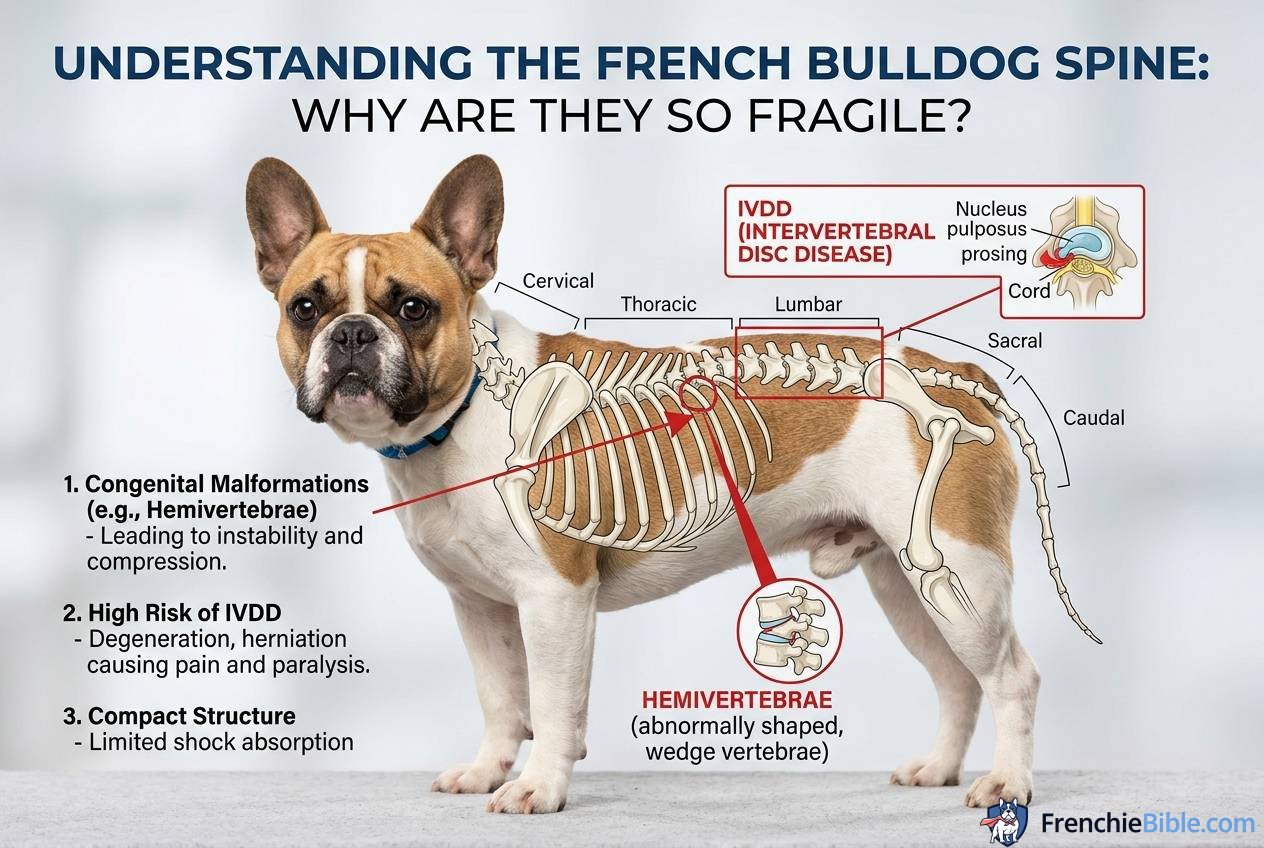
Understanding the French Bulldog Spine: Why Are They So Fragile?
Before we address the specific actions that cause harm, it is crucial to understand the anatomy of a French Bulldog’s spine. Frenchies belong to a group of breeds known as chondrodystrophic dogs. This means they are bred to have shortened limbs and a longer, compacted back. This unique physical structure is what makes them so recognizable, but it is also their greatest vulnerability.
What is Chondrodystrophy?
Chondrodystrophy is a genetic trait that affects cartilage development. While it gives Frenchies their signature compact, muscular appearance, it also means their intervertebral discs—the shock-absorbing cushions between the bones of the spine—are prone to premature aging, calcification, and degeneration. Unlike a normal dog whose discs remain pliable and gelatinous for years, a French Bulldog’s discs begin to harden and lose their elasticity very early in life, sometimes before they are even a year old.
The Threat of IVDD (Intervertebral Disc Disease)
Intervertebral Disc Disease (IVDD) is the leading cause of paralysis in French Bulldogs. When a disc degenerates, it loses its elasticity and shock-absorbing capabilities. A sudden impact—like jumping off a bed—or even a minor awkward movement can cause the brittle, calcified disc to rupture or herniate.
When a disc herniates, the disc material explodes upward into the spinal canal, violently compressing the spinal cord. This cuts off nerve signals and blood supply to the lower half of the body.
Symptoms of IVDD include:
– Unwillingness to jump, climb stairs, or play.
– A severely arched back (a sign of extreme abdominal or spinal pain).
– Dragging of the hind legs or a “drunken sailor” walk.
– Loss of bowel or bladder control.
– Complete, sudden paralysis of the hindquarters.
Treating IVDD often requires emergency spinal surgery (hemilaminectomy), which can cost anywhere from $5,000 to $12,000. Even with prompt surgical intervention, full recovery is not guaranteed, and the rehabilitation process is long, arduous, and emotionally draining. Prevention is absolutely the best—and only—medicine.
Hemivertebrae: The Hidden Complication
In addition to premature disc degeneration, many French Bulldogs are born with hemivertebrae. These are malformed, wedge-shaped vertebrae that cause the spine to curve abnormally (kyphosis or scoliosis). While many dogs with hemivertebrae live normal lives without exhibiting symptoms, these malformations create weak points and unstable zones within the spinal column. When a dog with hemivertebrae jumps or lands awkwardly, the risk of a disc rupturing adjacent to the malformed bone is exponentially higher.
Can French Bulldogs Jump Up and Down? The Biomechanics of the Impact
When a French Bulldog jumps, especially down from a height like a bed, a couch, or even out of a car, the force exerted on their front legs and spine is immense and unnatural for their body type.
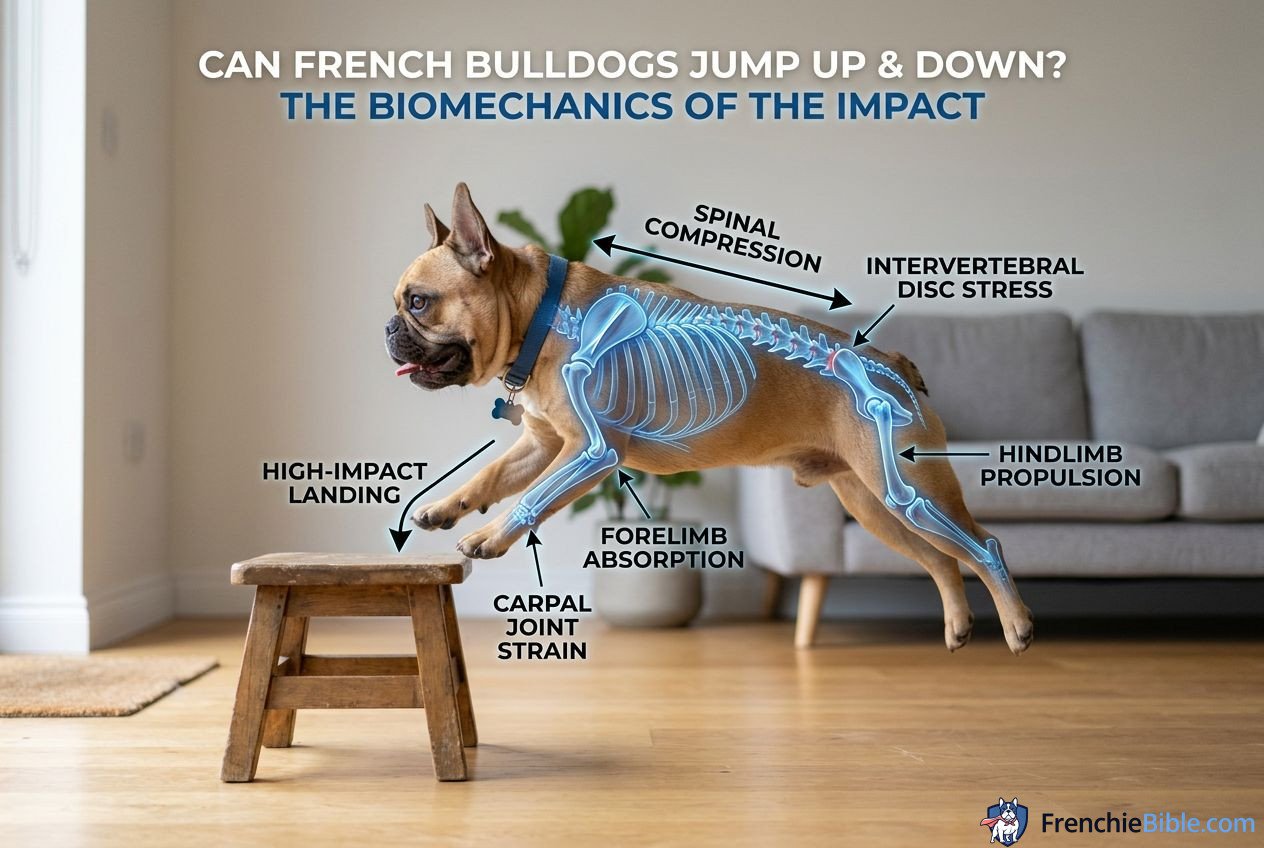
Unlike longer-legged, athletic breeds (like Greyhounds or Retrievers) that can absorb the shock of a landing through the natural angles and spring-like mechanisms of their joints, the Frenchie is built like a brick. Their short, heavy-set front legs and massive chest mean the brunt of the impact is transferred directly upwards into their compacted spine.
Jumping Up vs. Jumping Down
- Jumping Up: While jumping up onto a surface requires explosive strength and can strain the lower back (lumbar spine), it is generally considered slightly less acutely dangerous than jumping down. However, the danger of jumping up lies in the “missed jump.” If a Frenchie attempts to jump onto a bed, slips, and falls backward, the twisting and hyper-extension of the spine can instantly rupture a disc.
- Jumping Down: This is the ultimate danger zone. The downward force of gravity, combined with the dog’s dense, muscular weight, creates a massive shockwave. Because their front legs are short and often bowed, they cannot absorb this shock. The kinetic energy travels straight up their front limbs into their cervical (neck) and thoracic (mid-back) spine. Over time, these repeated, daily micro-traumas weaken the outer layer of the discs (the annulus fibrosus) until one inevitably tears open under the pressure.
A Breeder & Vet Reveals: The 5 Everyday Actions That Destroy Your Frenchie’s Spine
As a specialized veterinarian, my waiting room is frequently filled with anxious owners and paralyzed French Bulldogs. The most heartbreaking part is that the vast majority of these injuries are entirely preventable. Owners often do not realize that their daily, seemingly harmless routines are setting their beloved dogs up for a catastrophic spinal injury.
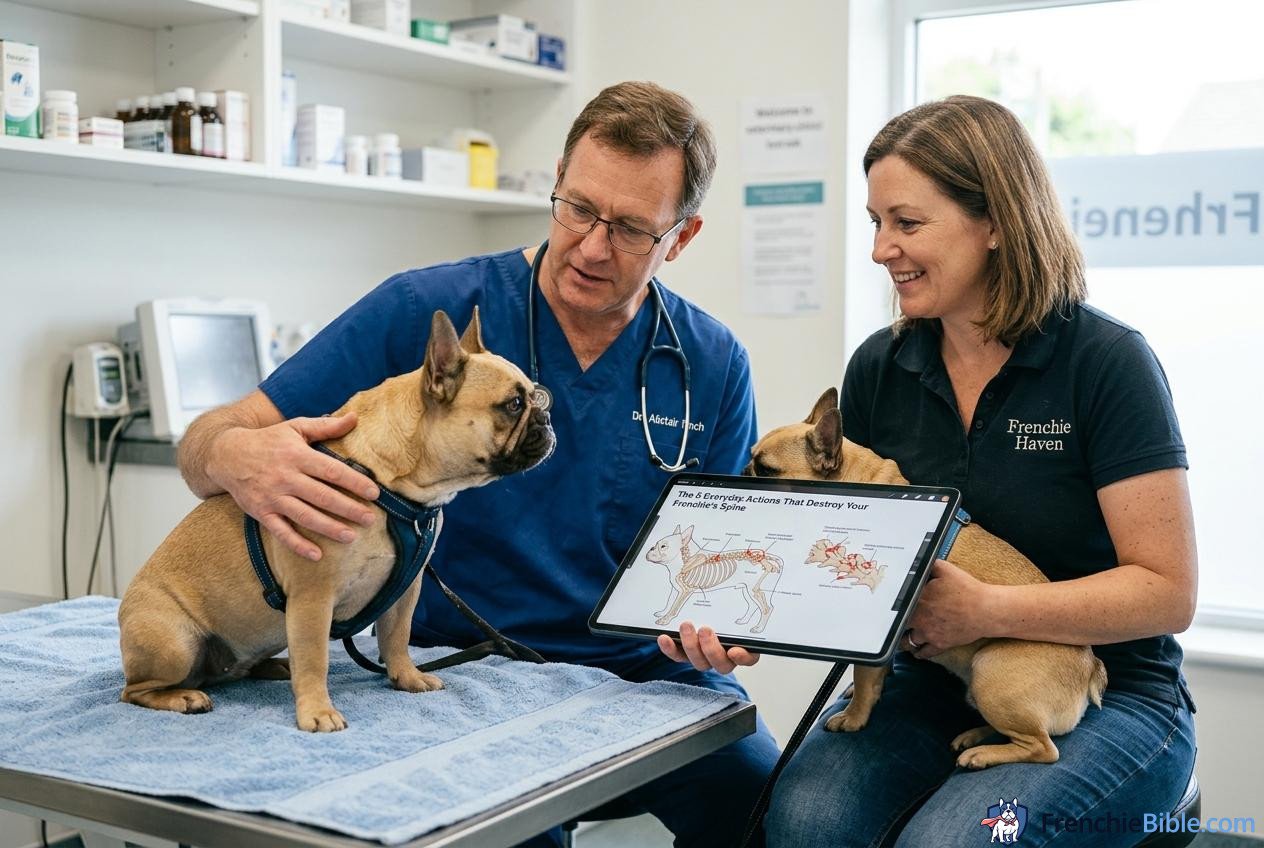
Here are the top 5 everyday actions you must absolutely stop your Frenchie from doing immediately.
1. Jumping On and Off Furniture (The #1 Culprit)
I cannot stress this enough: your French Bulldog should never, under any circumstances, jump on or off the couch, bed, chairs, or any elevated surface. This is the single most common cause of acute disc herniations in the breed. Every time your dog jumps off the sofa, it is like playing Russian Roulette with their spinal cord.
The Solution:
Invest in high-quality dog stairs or, preferably, ramps for every piece of furniture your dog is allowed on. You must actively train them to use these ramps consistently from puppyhood. If they refuse to use the ramp, or if they are prone to bypassing the ramp when excited, you must lift them on and off the furniture yourself, or block their access entirely using playpens or baby gates. There is no compromise here.
2. Going Up and Down Stairs Unassisted
While a single step or two leading into your house might not be a major problem, allowing your French Bulldog to run up and down full flights of stairs on a daily basis is a recipe for disaster. The repetitive, bounding motion of climbing stairs places immense, uneven stress on the spine, causing unnatural flexion and extension.
Going down stairs is particularly harmful. It mimics the downward impact of jumping off furniture, repeated over and over again with every single step. The constant jolting action accelerates disc degeneration.
The Solution:
Install sturdy baby gates at the top and bottom of your staircases. If you live in a multi-level home or an apartment building without an elevator, you must carry your Frenchie up and down the stairs. When carrying them, ensure you are supporting both their chest and their hindquarters simultaneously to keep their spine perfectly level.
3. Playing “Tug-of-War” Aggressively
Tug-of-war can be a highly engaging and fun game, but aggressive shaking, twisting, and pulling can severely damage the cervical (neck) spine. Frenchies are famously strong-willed, stubborn, and have incredibly powerful jaws. They will often lock their bite onto a toy and violently shake their heads side to side during a game of tug.
This violent whipping motion puts massive, unnatural torque on the delicate discs in their neck. Cervical disc herniations are incredibly painful and can lead to paralysis of all four limbs (tetraplegia).
The Solution:
Play gentle, controlled games of tug. Do not lift your dog off the ground by the toy, and immediately stop the game if they begin to violently shake their head side to side. Instead, focus on games of fetch (rolled gently on the ground rather than thrown high in the air) or mental stimulation through snuffle mats and puzzle toys.
4. Using a Neck Collar for Walking
French Bulldogs should never be walked on a traditional neck collar. Period.
Firstly, because they are a brachycephalic (flat-faced) breed, collars put extremely dangerous pressure on their already compromised airways, increasing the risk of tracheal collapse and Brachycephalic Obstructive Airway Syndrome (BOAS) crises.
More importantly for their spine, any pulling, jerking, or lunging on a collar directly yanks the cervical spine. This whiplash effect dramatically increases the risk of slipped discs in the neck.
The Solution:
Always use a high-quality, well-fitted, Y-shaped harness. A proper Y-shaped harness distributes the force of pulling evenly across their robust chest and shoulders, entirely bypassing the delicate structures of the neck, throat, and cervical spine.
5. Slipping and Sliding on Hardwood or Tile Floors
You might notice your Frenchie “drifting” or frantically scrambling to get traction when running around corners on smooth floors, especially when the doorbell rings or they have the “zoomies.” These sudden slips, uncontrolled splits, and scrambles can easily cause a weakened disc to rupture violently. Furthermore, slipping causes micro-tears in muscles, strains ligaments, and can lead to joint luxation (dislocation).
The Solution:
Place non-slip area rugs, carpet runners, or yoga mats in high-traffic zones of your home, especially at the bottom of staircases or the landing zones near the couch. Keep the hair between your Frenchie’s paw pads trimmed extremely short to maximize the grip of their natural paw pads. Additionally, consider using doggie grip socks or applying high-quality anti-slip paw wax if your home consists mostly of hardwood or tile flooring.
How to Properly Lift and Carry a French Bulldog
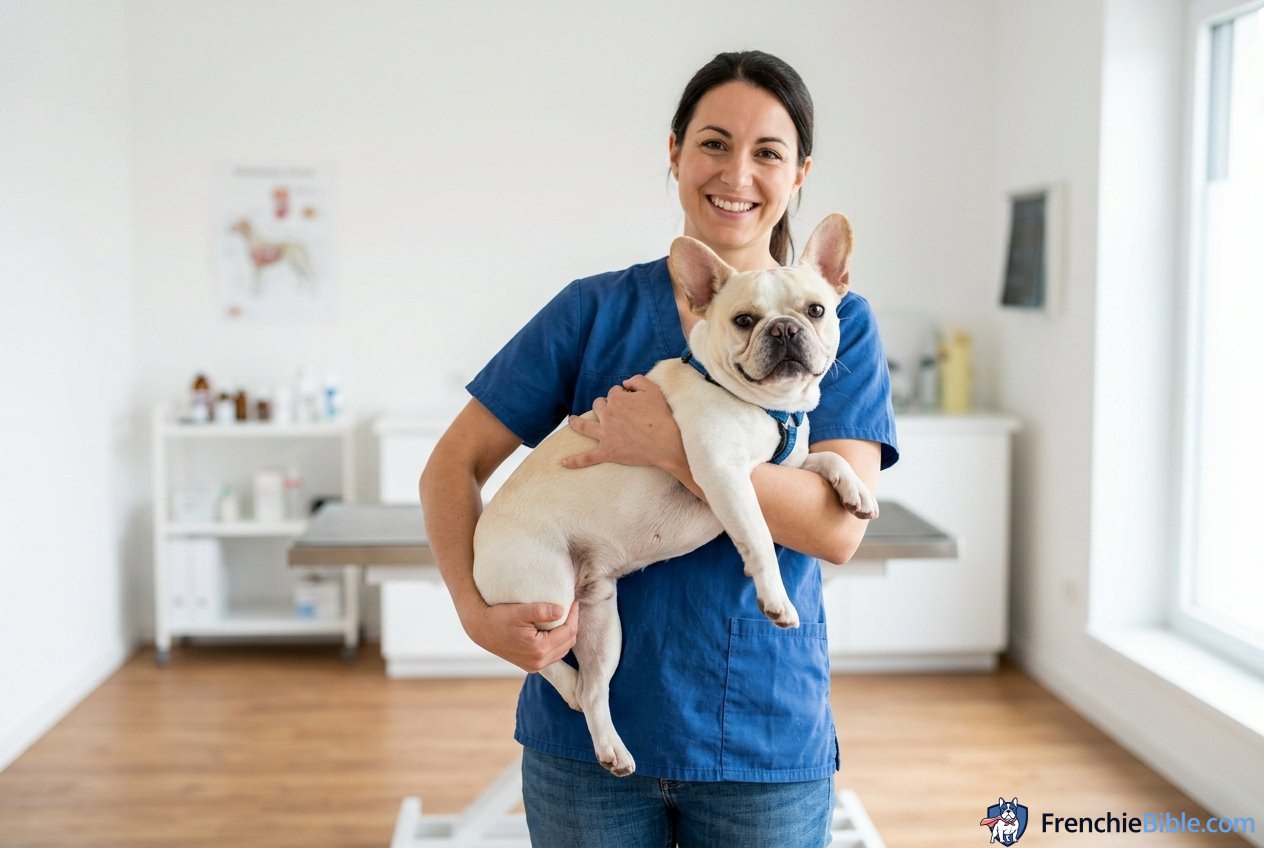
Since you will be preventing your Frenchie from jumping on furniture and navigating full flights of stairs, you will need to carry them frequently. However, lifting a Frenchie incorrectly can cause just as much damage as letting them jump. Picking them up the wrong way can instantly herniate a disc.
The Wrong Way:
Never, ever pick up a French Bulldog by grasping them under their armpits and letting their lower half dangle freely in the air. This pulls intensely on the shoulder joints and puts severe, concentrated traction and bending stress on the mid-to-lower spine. It essentially forces the spine to bend into an unnatural ‘U’ shape under the weight of their dense hindquarters.
The Right Way:
Think of your Frenchie’s spine like a delicate, rigid bridge that must be fully supported at both ends to prevent it from collapsing.
1. Place one hand or forearm firmly under their broad chest, directly between and just behind their front legs.
2. Scoop your other hand or arm completely under their hindquarters, supporting their pelvis and rear end.
3. Lift them smoothly and evenly, keeping their back perfectly parallel to the ground (horizontal).
4. Bring them close to your body and hold them securely against your chest for stability. This prevents them from squirming and twisting while elevated.
Diet and Weight Management: The Invisible Spine Protector
As an SEO content director and a specialized vet, I always ensure my clients understand the holistic, big picture of canine health. You can buy all the expensive ramps, orthopedic beds, and baby gates in the world, but if your French Bulldog is overweight, their spine is still in grave, imminent danger.
Every single extra pound of fat on a Frenchie acts like a heavy, loaded backpack pulling down constantly on their fragile spine. Obesity heavily exacerbates chondrodystrophy, alters their center of gravity, and dramatically increases the load and pressure on the intervertebral discs. An overweight Frenchie is a ticking time bomb for IVDD.
Managing Your Frenchie’s Weight for Spinal Health
- Strict Portion Control: Measure their food accurately with a digital kitchen scale, not a subjective measuring cup. The feeding guidelines on dog food bags are often overestimated.
- High-Quality, Lean Protein: Feed a high-quality diet rich in lean proteins to support strong muscle mass without adding unnecessary fat. Muscle mass helps stabilize the joints and the spinal column.
- Limit High-Calorie Treats: Treat calories count! Use healthy, low-calorie alternatives like small pieces of carrots, green beans, or blueberries instead of fatty commercial treats.
- Joint Supplements: Start your Frenchie on a high-quality joint supplement containing Glucosamine, Chondroitin, MSM, and Omega-3 fatty acids early in life. While supplements cannot reverse calcified discs, they help reduce inflammation and support the surrounding joint cartilage.
- Regular Body Condition Scoring: You should be able to easily feel your Frenchie’s ribs without pressing hard through a thick layer of fat. When viewed from above, they should have a visible, tucked waistline behind their ribs. If they look like a sausage, they are overweight.
Recognizing the Early Warning Signs of Spinal Distress
Early detection of spinal distress can truly mean the difference between a few weeks of strict crate rest recovery and permanent, irreversible paralysis. French Bulldogs are notoriously stoic dogs; they often hide their pain until it is unbearable. If you notice any of the following subtle or overt signs, implement strict crate rest IMMEDIATELY and contact your veterinarian or an emergency veterinary neurologist.
- Uncharacteristic Lethargy: A sudden reluctance to play, go for walks, or a general lack of enthusiasm.
- The “Drunken Sailor” Walk: Wobbly, uncoordinated, or crossing-over movement in the hind legs (ataxia).
- Hunched Posture (Kyphosis): Standing motionless with a severely arched back, a tense abdomen, and a tucked tail. This is a classic stance of a dog experiencing severe spinal pain.
- Vocalization of Pain: Yelping, screaming, or crying out when picked up, petted along the back, or moving suddenly.
- Knuckling: Dragging the tops of their paws on the ground when walking, or failing to immediately right their paw if you flip it upside down.
- Shivering, Trembling, or Panting: In the absence of a cold environment or heat exertion, these are often signs of intense, acute pain.
- Reluctance to Lower the Head: Refusing to bend their neck down to eat or drink from their bowls.
The Emotional and Financial Toll of IVDD
As a breeder and veterinarian, I feel it is my duty to be brutally honest about the reality of Intervertebral Disc Disease. When a French Bulldog suffers a severe disc herniation and loses the ability to walk, the impact on the family is devastating.
The immediate financial cost of an MRI and emergency spinal surgery easily exceeds $8,000 to $10,000 in most major cities. Post-operative care involves physical therapy, hydrotherapy, laser therapy, and acupuncture, all of which add thousands of dollars to the total bill.
Furthermore, the emotional toll of caring for a paralyzed dog cannot be overstated. Expressing their bladder manually every 6 hours, managing fecal incontinence, preventing pressure sores, and watching a previously active dog struggle to move requires immense dedication, time, and emotional resilience.
This is why prevention is not just a recommendation; it is an absolute necessity for anyone who chooses to bring a French Bulldog into their life.
Frequently Asked Questions (FAQ)
At what age do French Bulldogs typically develop IVDD?
While IVDD can occur at any age, the highest risk period for chondrodystrophic breeds like French Bulldogs is between 2 and 6 years of age. However, the cumulative, silent damage from jumping and climbing stairs starts in puppyhood, which is why strict prevention protocols must begin on day one.
Are French Bulldog stairs or ramps better?
Ramps are significantly, undeniably better than stairs. Even small pet stairs require a slight hopping and pushing motion, which impacts the spine. A ramp provides a smooth, continuous incline with zero concussive impact. When purchasing a ramp, ensure it has a highly textured, non-slip surface so they do not slide backward, which could also cause injury.
My Frenchie jumped off the bed and seems totally fine. Should I be worried?
A single jump might not cause an immediate, catastrophic spinal failure, but it absolutely causes micro-trauma to the discs. Over time, these daily micro-traumas weaken the fibrous outer wall of the disc. Your dog may seem perfectly fine today, but the accumulated damage is a ticking time bomb that will eventually lead to a herniation. Stop the jumping immediately, regardless of how “fine” they appear.
Can a French Bulldog recover from IVDD paralysis without surgery?
In mild cases (often graded as Stage 1 or 2 IVDD, where the dog retains deep pain sensation and some voluntary motor function), extremely strict crate rest (typically 6-8 weeks minimum) combined with potent anti-inflammatory medications and muscle relaxants can allow the inflamed disc to scar over and heal. However, if the dog loses deep pain sensation (Stage 5) or is rapidly progressing towards complete paralysis, emergency surgery within a 12-24 hour window offers the only realistic chance of recovery.
Is it safe for my Frenchie to sleep in the big bed with me?
It is only safe if you can 100% guarantee, without a shadow of a doubt, that they will not jump down during the night to get a drink of water or investigate a noise. If you sleep deeply, or your dog tends to wander, they should sleep in a secure, comfortable crate or a designated dog bed on the floor. Alternatively, you can place your mattress directly on the floor to eliminate the height risk entirely.
Does pet insurance cover IVDD surgery?
Most comprehensive pet insurance plans will cover IVDD diagnostics and surgery, provided the policy was purchased before the dog showed any pre-existing signs or symptoms of back pain or mobility issues. Given the extreme prevalence of IVDD in French Bulldogs, securing high-quality pet insurance from the moment you bring your puppy home is one of the smartest financial decisions you can make.
Can I use a wheelchair if my Frenchie becomes paralyzed?
Yes. If surgery is not an option due to financial constraints, or if surgery is unsuccessful, many French Bulldogs adapt incredibly well to life in a custom-fitted canine wheelchair. With proper care, routine bladder management, and physical therapy, a paralyzed Frenchie can still live a very happy, fulfilling, and active life on wheels.
Final Thoughts from a Breeder and Vet
Owning a French Bulldog is an immense joy, but it comes with a heavy, non-negotiable responsibility. Their charismatic, clownish personalities often mask their severe physical vulnerabilities. They do not know what is dangerous for them; they only know they want to play, run, and be as close to you as possible at all times.
As their guardian, you must be the one to set the boundaries. You must be the one to say “no” to jumping. Stop the jumping, install the ramps, carry them properly on the stairs, utilize a harness instead of a collar, and keep them lean and muscular.
By actively avoiding these 5 everyday actions and implementing these preventative measures, you are dramatically reducing the risk of a devastating spinal injury and ensuring your beloved Frenchie lives a long, happy, pain-free, and active life by your side.
Protect their spine today, so they can keep making you smile tomorrow. Their health is literally in your hands.