
Disclaimer: The information provided in this article is for educational and informational purposes only. It is not intended to replace professional veterinary advice, diagnosis, or treatment. Always consult your veterinarian or a board-certified veterinary neurologist immediately if you suspect your French Bulldog has a back injury, Intervertebral Disc Disease (IVDD), or is experiencing pain, hind-leg weakness, or paralysis. Delaying proper medical evaluation can lead to irreversible spinal damage.
As a French Bulldog specialized veterinarian and breeding expert, I cannot stress this enough: if your Frenchie has suffered a back injury or is showing signs of Intervertebral Disc Disease (IVDD), strict crate rest is not just a suggestion—it is the cornerstone of their recovery. It is the literal lifeline that stands between healing and permanent paralysis.
Related Reading: Training & Behavior | Frenchie Puppy Guide | Best Food for Frenchies
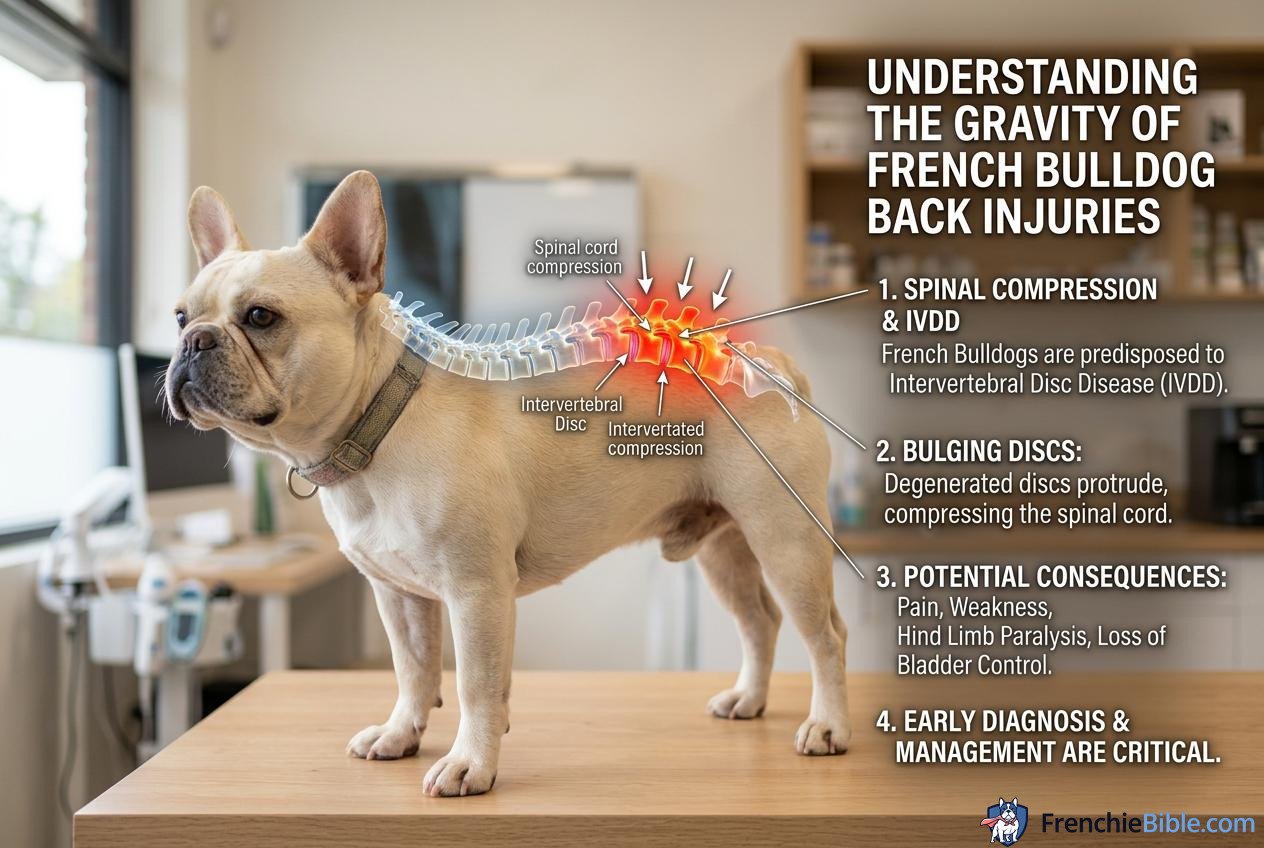
French Bulldogs, with their adorable compact bodies, unfortunately, possess a genetic predisposition to spinal anomalies such as hemivertebrae and chondrodystrophy. This means their spinal discs age prematurely, calcify, and become brittle, making them highly susceptible to bulging, rupturing, or herniating. When a disc herniates, it compresses the spinal cord, leading to excruciating pain, loss of motor function, and potential paralysis.
Whether your Frenchie is undergoing conservative medical management or recovering from spinal surgery (like a hemilaminectomy), the prescription for strict crate rest remains absolute. In this comprehensive, step-by-step guide, we will delve deep into the mechanics, the psychology, and the practical daily execution of crate rest for a French Bulldog.
1. Understanding the Gravity of French Bulldog Back Injuries
To truly appreciate the necessity of absolute rest, you must understand what happens inside your Frenchie’s spine during an injury.
What Actually Happens During a Disc Herniation?
The spinal cord is a delicate bundle of nerves that acts as the information highway between the brain and the body. Between each bony vertebra in the spine lies an intervertebral disc. These discs act as shock absorbers. When a Frenchie jumps off a couch, twists suddenly, or simply moves the wrong way, a degenerated disc can burst. The inner gelatinous material (nucleus pulposus) is forced upward into the spinal canal, smashing against the spinal cord.
This compression cuts off blood supply and causes intense inflammation. The nerves responsible for pain sensation, motor control of the legs, and even bladder/bowel control are suddenly blocked.
Why Micro-Movements Are So Dangerous
When a disc ruptures, the body’s natural healing response is to form scar tissue over the tear in the outer fibrous ring (annulus fibrosus) of the disc. This scar tissue acts like a patch, sealing the rupture and stabilizing the spine.
However, scar tissue takes a significant amount of time to form and harden—typically 6 to 8 weeks. Every time your French Bulldog walks, trots, jumps, or even stretches aggressively, micro-movements occur between the vertebrae. These micro-movements can tear the fragile, newly forming scar tissue. If the seal breaks, more disc material can extrude into the spinal canal, turning a mild injury into a catastrophic, paralyzing event. This is exactly why “taking it easy” around the house is never enough.
2. The Golden Standard: What Exactly Is Strict Crate Rest?
Many owners misunderstand the definition of crate rest. It does not mean confining your dog to a small bedroom. It does not mean letting them sleep on the couch with you. It does not mean carrying them around the house all day.

The 100% Confinement Rule
Strict crate rest means your French Bulldog is confined to a crate 100% of the time, 24 hours a day, 7 days a week, for the entire duration prescribed by your veterinarian (usually 4 to 8 weeks).
The ONLY time your dog should be removed from the crate is for:
1. Short, highly controlled bathroom breaks (lasting no more than 3-5 minutes).
2. Veterinary appointments or prescribed physical therapy sessions.
Crate vs. Playpen vs. “Just Keeping Them Quiet”
I frequently hear owners say, “My Frenchie hates the crate, so I set up a playpen in the living room.” For a spinal injury, a playpen is often too much space. If the dog has enough room to pace, trot to greet you, or jump up against the side of the pen when the doorbell rings, the risk of tearing that vital scar tissue is too high.
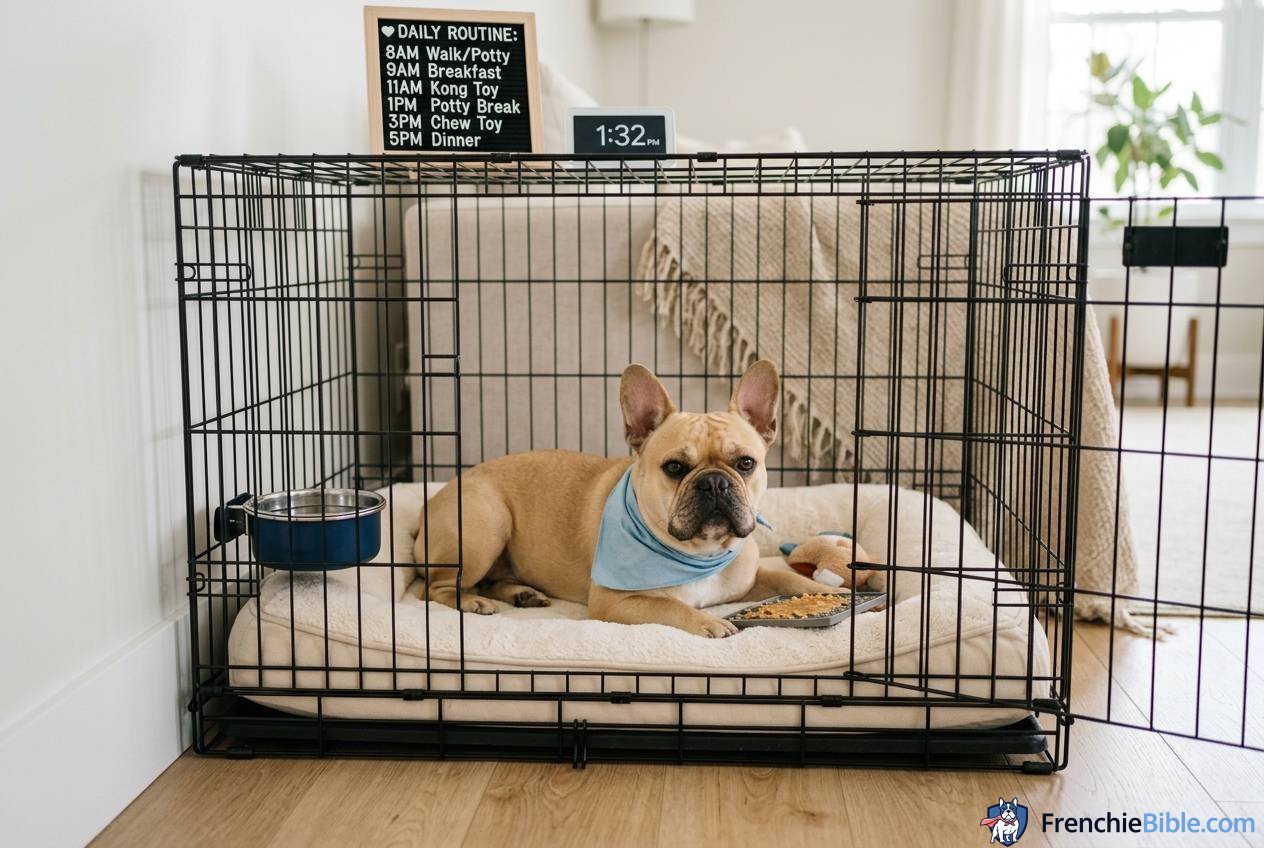
The recovery area should be just large enough for your dog to stand up comfortably, turn around, and lie down fully stretched out. Nothing more.
The Duration: Why 6 to 8 Weeks?
As mentioned, biological healing cannot be rushed. It takes a minimum of 4 weeks for the initial scar tissue to bridge a disc tear, and up to 8 weeks for it to become robust enough to withstand normal daily movements. Stopping crate rest at week 3 because your Frenchie “looks fine” or is no longer in pain is the most common and devastating mistake owners make. The absence of pain does not equal the completion of healing. Pain medications mask the symptoms, giving a false sense of security. Stick to the timeline.
3. Setting Up the Perfect Recovery Sanctuary
Creating a comfortable, safe, and stress-free environment will make the crate rest period significantly easier for both you and your Frenchie.
Choosing the Right Crate
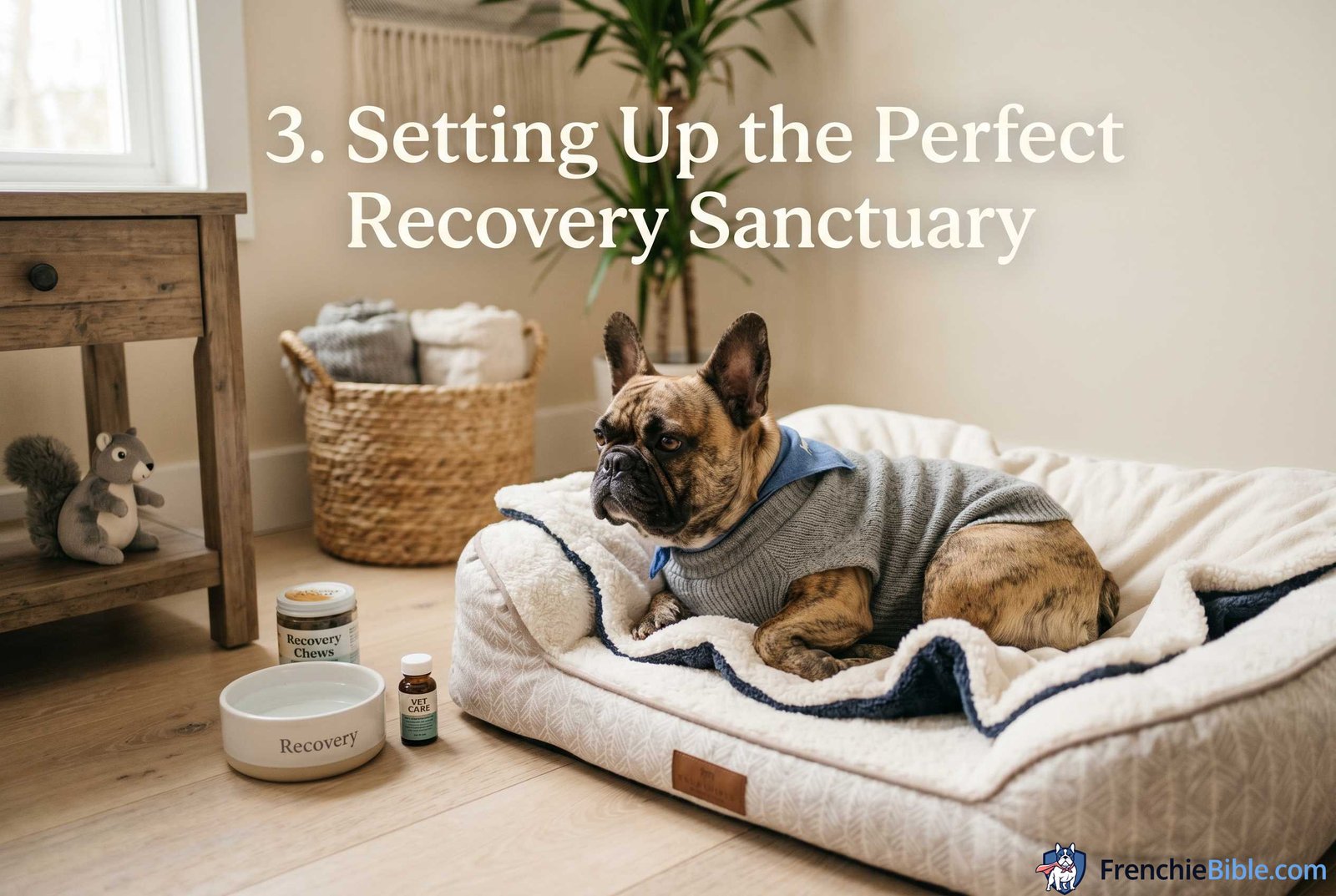
Wire crates or heavy-duty plastic airline-style crates are the best options. Ensure the crate is well-ventilated, especially since French Bulldogs are brachycephalic and prone to overheating.
– Size Matters: Do not use an oversized crate. A standard 30-inch or 36-inch crate is usually appropriate, but use dividers if necessary to restrict pacing.
– Top-Opening Crates: If your dog is entirely paralyzed or in immense pain, a crate with a top-opening door can make lifting them in and out much safer and easier, avoiding the need to drag them through a front door.
Essential Bedding and Mattress Support
Your dog will be lying down for weeks; therefore, orthopedic support is critical to prevent pressure sores (bedsores) and provide comfort to the aching spine.
– Orthopedic Memory Foam: Use a firm, high-quality orthopedic memory foam bed. Avoid overly plush, sink-in beds that require the dog to struggle or twist to get up.
– Avoid Tangling Hazards: Do not use loose, thin blankets or towels that your dog can dig into, bunch up, or trip over.
– Waterproof Covers: Accidents happen, especially if medications cause slight incontinence or if the injury affects bladder control. Always use a waterproof mattress protector under the top layer of bedding.
Location of the Crate
The placement of the crate is a delicate balance. Frenchies are velcro dogs; they want to be with their humans. Isolating them in a quiet, dark room can cause severe separation anxiety, which leads to thrashing, barking, and crying—all of which involve dangerous spinal movements.
– Daytime Placement: Place the crate in a central, yet low-traffic area of your home (like the corner of a living room). They can see you and feel included, but aren’t constantly disturbed by people walking past.
– Nighttime Placement: Move the crate (or have a second crate) in your bedroom at night so they feel safe and you can monitor them.
– Elevate the Crate: Place the crate on a sturdy table or raised platform so your dog is at eye level when you are sitting on the couch. This prevents them from constantly straining their neck upward to look at you.
4. Mastering the Daily Routine During Crate Rest
The day-to-day management of a crate-rested Frenchie requires strict protocols, immense patience, and physical care on your part.
How to Safely Lift and Carry a Frenchie with a Back Injury
Improper lifting can instantly worsen a spinal injury. Never pick your Frenchie up under their armpits, allowing their hind end to dangle. This stretches the spine and puts immense pressure on the injured discs.
– The Proper Technique: Place one arm securely under their chest (between the front legs) to support the front half of their body. Place your other arm firmly under their hindquarters and pelvis, scooping them up from beneath.
– Keep the Spine Level: Keep their back completely parallel to the floor. Hold them snugly against your chest to prevent them from wiggling or suddenly jumping out of your arms.
The Art of the Potty Break
Bathroom breaks are the most dangerous part of the day because the dog is out of the crate.
Using a Support Sling
Always use a hind-end support sling (or a simple rolled-up towel placed under their belly, just in front of their hind legs). This serves two purposes:
1. It supports their weight if their hind legs are weak, preventing them from collapsing.
2. It gives you control, preventing them from darting after a squirrel, attempting to run, or squatting too aggressively.
The 5-Minute Rule and Leash Control
- Leash is Mandatory: Never carry your dog outside and set them down off-leash. Even a paralyzed dog can suddenly try to drag themselves forward in a panic. Keep them on a short, fixed-length leash attached to a harness (never a neck collar, as neck pulling strains the spine).
- Time Limit: Carry them to their designated potty spot. Set them down. Give them 3 to 5 minutes to do their business. If they do not go, calmly pick them up and return them to the crate. Try again in an hour. Do not let them sniff around the yard or go for a “short walk.”
Nutrition and Hydration: Feeding the Resting Frenchie
Because your dog’s activity level has dropped to zero, their caloric needs will drop significantly.
- Weight Management: Obesity is the enemy of IVDD. Carrying extra weight puts excessive mechanical stress on the spine. You must reduce their food intake by 10% to 20% to prevent weight gain during the 6 to 8 weeks of rest. Consult your vet for the exact caloric reduction.
- Feeding in the Crate: All meals should be served inside the crate. Use non-slip bowls or bowls that attach directly to the crate wire so they do not have to stretch or bend awkwardly to eat.
- Hydration: Ensure fresh water is always available. You can add a small amount of low-sodium bone broth to their water to encourage drinking, as proper hydration keeps the spinal discs healthy.
5. Preserving Your Frenchie’s Mental Health
A sudden shift from an active lifestyle to total confinement is incredibly stressful for a smart, active breed like the French Bulldog. Mental decline, depression, and anxiety are common side effects of crate rest. Keeping their brain stimulated without moving their body is essential.
Tackling Anxiety and Whining
If your dog whines, barks, or thrashes in the crate, it defeats the purpose of resting the spine.
– Do Not Reward Whining: If they are whining for attention, do not open the door or coddle them, as this reinforces the behavior. Speak to them calmly from a distance.
– Calming Supplements/Medications: Discuss with your vet the use of anti-anxiety medications (like Trazodone or Gabapentin, which also acts as a nerve pain blocker). Natural supplements like L-theanine, chamomile, or CBD oil (if vet-approved) can also take the edge off.
Low-Movement Enrichment Activities
You must wear them out mentally since you cannot wear them out physically.
– Lick Mats: Smear dog-safe peanut butter, plain yogurt, or wet food onto a silicone lick mat and freeze it. Licking releases endorphins and cortisol-reducing hormones, promoting a state of calm.
– Stuffed KONGs: A classic stuffed KONG can keep a dog occupied for 30-45 minutes.
– Snuffle Mats (Use with Caution): Only use small snuffle mats if your dog doesn’t violently root around with their nose, which can strain the neck and back.
– Chew Toys: Provide high-value, safe chews (like bully sticks or heavy-duty rubber toys) that they can gnaw on while lying flat.
Scent and Sound Therapy
- Pheromone Diffusers: Plug a Dog Appeasing Pheromone (DAP) diffuser (like Adaptil) near the crate to release calming scents.
- Classical Music/White Noise: Studies have shown that classical music or specifically curated “calming dog music” can significantly lower canine heart rates and reduce stress.
6. Medical Management and Working with Your Vet
Crate rest is highly effective, but it must be paired with appropriate medical intervention.
Strict Medication Compliance
Your vet will likely prescribe a cocktail of medications:
– NSAIDs or Steroids: Anti-inflammatories (like Carprofen or Prednisone) to reduce swelling around the spinal cord. NEVER mix the two.
– Pain Relievers: Medications like Gabapentin or Amantadine to block nerve pain.
– Muscle Relaxants: Methocarbamol to stop the severe muscle spasms that accompany back injuries.
Give these medications exactly on schedule. Do not stop giving pain meds just because your dog “seems better.” When the pain stops, they will try to move more. It is your job to ensure they stay quiet even when they feel good.
Monitoring for Deterioration
Conservative treatment (crate rest + meds) is not always successful. You must monitor your Frenchie daily for signs that the spinal cord compression is worsening.
Contact your vet immediately if you notice:
– Worsening pain (crying when picked up, panting, trembling).
– Increased weakness in the hind legs (knuckling over on their paws, dragging toes).
– Loss of deep pain sensation (they don’t react when you gently pinch their toe).
– Inability to urinate or defecate voluntarily.
If these signs occur, conservative treatment has failed, and emergency spinal surgery may be the only option to prevent permanent paralysis.
7. The Transition Phase: Life After Crate Rest
Congratulations, you and your Frenchie have survived the 6 to 8 weeks! However, the end of crate rest does not mean returning to their old life instantly.
Gradual Reintroduction to Movement
Muscles atrophy (shrink) during prolonged rest. Your dog’s core and legs will be weak.
– Week 1 Post-Rest: Allow 5-10 minutes of supervised roaming in a carpeted room. Short 5-minute leash walks outside.
– Week 2 Post-Rest: Increase to 10-15 minute leash walks. Introduce controlled, low-impact physical therapy exercises (like standing balance and slow walking over small obstacles).
– Hydrotherapy: Underwater treadmills are excellent for rebuilding muscle mass without putting weight-bearing stress on the spine.
Modifying Your Home for a Spinal-Care Future
Once a Frenchie has an IVDD episode, their spine is compromised forever. You must change their lifestyle to prevent a relapse.
– Zero Jumping: Install ramps or pet stairs for the couch and bed. Train them strictly to use them.
– No Stairs: Block off staircases with baby gates. Carry them up and down stairs for the rest of their life.
– No Tug-of-War: Avoid aggressive games of tug or fetching frisbees that require jumping and twisting.
– Harnesses Only: Never use a neck collar for walking. Always use a well-fitted, Y-shaped harness that distributes pressure across the chest.
– Rugs on Hard Floors: Hardwood, tile, and laminate floors are dangerous ice rinks for dogs with weak backs. Place non-slip rugs or yoga mats along their high-traffic paths to prevent slipping and splaying.
Frequently Asked Questions (FAQ)
Q: Can I put my Frenchie in a stroller instead of a crate?
A: Strollers can be used for short periods to change scenery and provide mental stimulation, but only if the dog is securely strapped in, lying down, and cannot jump out. The vibrations of a bumpy sidewalk can aggravate the spine, so keep stroller rides brief and on smooth surfaces. It does not replace the primary crate.
Q: My French Bulldog is crying non-stop in the crate. What do I do?
A: Speak to your vet immediately about anxiety medication like Trazodone. Ensure the crate is in a comfortable location, use frozen lick mats, and sit near the crate to provide quiet reassurance. Do not let them out just to stop the crying.
Q: How do I know if the crate rest is working?
A: Signs of improvement include a reduction in pain (less panting, trembling, and crying), an improvement in posture, and the gradual return of steady motor function in the hind legs during potty breaks. However, this progress takes weeks, not days.
Q: If my dog has IVDD surgery, do they still need crate rest?
A: Yes! Post-operative crate rest is mandatory. While the surgery removes the compressing disc material, the spine still needs 4 to 6 weeks to heal from the surgical trauma itself.
Q: Can I do physical therapy exercises with my dog during the crate rest period?
A: Only under the explicit direction of a certified canine rehabilitation therapist or your veterinarian. In the acute early phases of injury, even passive range-of-motion exercises can sometimes be detrimental. Rest is the priority.
Absolute crate rest is one of the most mentally and physically exhausting challenges a French Bulldog owner can face. But your dedication, patience, and strict adherence to the rules will provide your beloved companion with the absolute best chance at a full recovery and a happy, pain-free life.